• About

Brandon Ray Kirk

~ This site is dedicated to the collection, preservation, and promotion of history and culture in my section of Appalachia.

Brandon Ray Kirk

Tag Archives: mandolin

Buddy Griffin at Appalachian Heritage Day in Logan, WV (2019)

21 Saturday Sep 2019

Posted by Brandon Ray Kirk in Logan, Music

≈ Leave a comment

Tags

A Prairie Home Companion, Appalachia, Appalachian Heritage Day, banjo, bluegrass, Bobby Osborne, Branson, Braxton County, Buddy Griffin, Charlie Sizemore, Cincinnati, David O'Dell, fiddler, fiddling, Glenville State College, Goins Brothers, guitar, Jackie Whitley, Jeff Roberts, Jim and Jesse McReynolds, Katie Laur Band, Landon Williams, Larry Sparks, Logan, Mac Wiseman, mandolin, Missouri, music, Nicholas County, photos, Robert C. Byrd, Rocky Top X-Press, Southern West Virginia Community and Technical College, The Hard Times, Vandalia Award, Vetco Records, West Virginia, West Virginia All-Star Bluegrass Band, Wheeling, WWVA Jamboree

DSC_0834

Bluegrass fiddle workshop, AHD, SWVCTC, Logan, WV. Photo by Jackie Whitley. 24 August 2019

DSC_0835

Bluegrass fiddle workshop, AHD, SWVCTC, Logan, WV. Photo by Jackie Whitley. 24 August 2019

DSC_0837

Bluegrass fiddle workshop, AHD, SWVCTC, Logan, WV. Photo by Jackie Whitley. 24 August 2019

Buddy Griffin with Bluegrass Music Workshop

Bluegrass fiddle workshop, AHD, SWVCTC, Logan, WV. Photo by David O’Dell. 24 August 2019

A native of Nicholas and Braxton counties, Buddy Griffin is a master musician on several instruments and a dedicated teacher and mentor. Raised in a musical family, Buddy began performing at an early age, excelling at banjo, fiddle, guitar, and mandolin. In 1973, he was hired in the staff band on the WWVA Jamboree in Wheeling, where he came into contact with Landon Williams, who lured him to Cincinnati to play in his band, The Hard Times. He and banjoist Jeff Roberts joined the Katie Laur Band in 1975. Buddy also played with the Goins Brothers. He later worked as an engineer at Vetco Records in Cincinnati and played in Charlie Sizemore’s band. He recorded with Mac Wiseman and has worked with Jim and Jesse, Larry Sparks, the Heckels, Sen. Robert C. Byrd, and Jesse McReynolds. He played in Branson, MO, for several years. In 1997, he returned to West Virginia and taught music at Glenville State College, where he was instrumental in developing the world’s first degree program in bluegrass music. He is a studio musician and has performed on various radio shows, including NPR’s “A Prairie Home Companion.” In 2011, he was awarded the Vandalia Award, West Virginia’s highest folklife honor. In 2016, he played fiddle with Bobby Osborne and the Rocky Top X-Press. He often performs with the West Virginia All-Star Bluegrass Band.

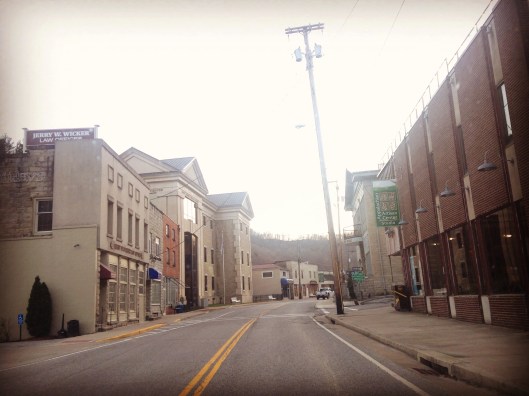
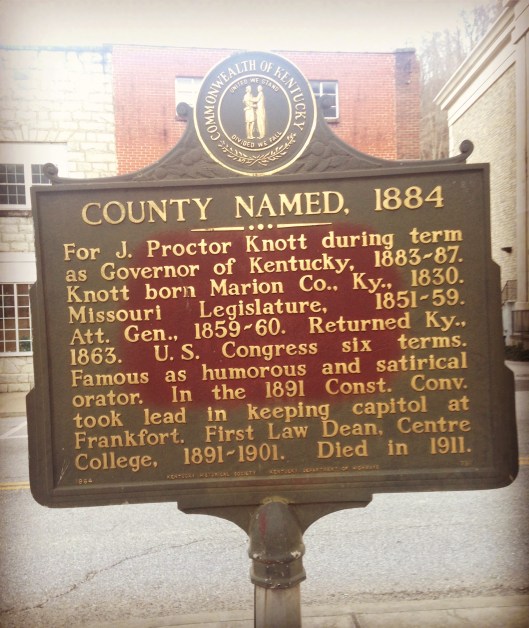
Welcome to Hindman, KY (2019)

09 Saturday Mar 2019

Posted by Brandon Ray Kirk in Music

≈ Leave a comment

Tags

Appalachia, Appalachian Artisan Center, Appalachian School of Luthiery, Carl D. Perkins, Centre College, Douglas Naselroad, Frankfort, Hindman, Hindman Historic District, history, Homer Ledford Award, J. Proctor Knott, Kentucky, Knott County, mandolin, Marion County, music, photos

IMG_4291

Welcome to Hindman, KY. The Appalachian Artisan Center Studio is to the right. 27 February 2019

IMG_4292

Hindman is the county seat for Knott County, KY. 27 February 2019

IMG_4294

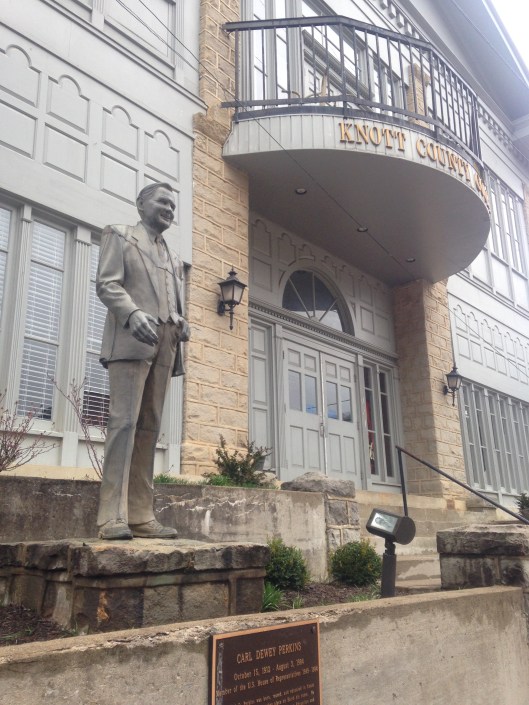
Knott County Courthouse in Hindman, KY. 27 February 2019

IMG_4740

Carl D. Perkins statue at the Knott County Courthouse in Hindman, KY. 1 March 2019

IMG_4239

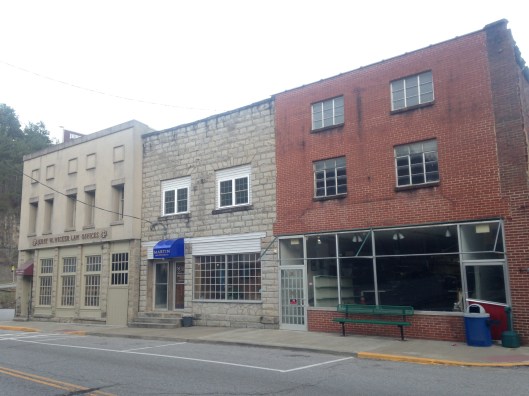
Old business section in Hindman, KY.  27 February 2019

IMG_4262

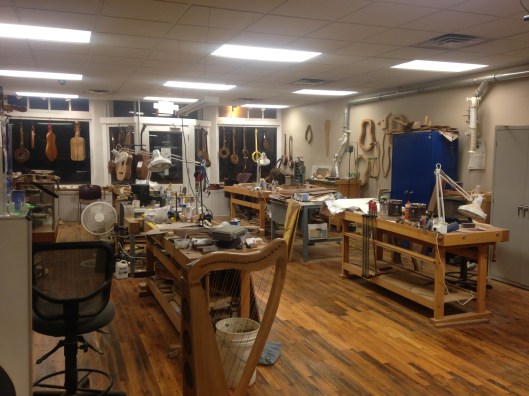
Inside of the Appalachian School of Luthiery in Hindman, KY. 27 February 2019

IMG_4297

Mandolins inside of the Appalachian School of Luthiery in Hindman, KY. 27 February 2019

IMG_4243

Instruments are made here inside of the Appalachian School of Luthiery in Hindman, KY. 27 February 2019

IMG_4253

Inside of the Appalachian School of Luthiery in Hindman, KY. Douglas Naselroad, recipient of the 2017 Homer Ledford Award, conceived of the idea for this school and related ventures. 27 February 2019

Lost John and his Allied Kentuckians

27 Monday Apr 2015

Posted by Brandon Ray Kirk in Ferrellsburg, Music

≈ 1 Comment

Tags

banjo, Ferrellsburg, fiddle, fiddlers, fiddling, guitar, history, Lincoln County, Lost John and His Allied Kentuckians, mandolin, Mullins & Elkins store, music, Triena, West Virginia

Lost John and His Allied Kentuckians

Lost John and his Allied Kentuckians

Mullins & Elkins Store, Ferrellsburg, Lincoln County, WV

Mullins & Elkins Store, Ferrellsburg, Lincoln County, WV

Dingess News 08.13.1891

22 Sunday Mar 2015

Posted by Brandon Ray Kirk in Dingess

≈ Leave a comment

Tags

Appalachia, Commodore Andrew Perry, Dingess, Dingess tunnel, Elias Perry, genealogy, history, immigrants, Jack Mounts, Jim Spaulding, Logan, Logan County Banner, mandolin, miller, Mingo County, music, Perry mill, Peter Dingess, timbering, U.S. South, violin, Wayne County, West Virginia, William Mullins

“Quousquo Tandem,” a local correspondent at Dingess in present-day Mingo County, West Virginia, offered the following items, which the Logan County Banner printed on August 13, 1891:

Presuming upon the absence of any regular correspondent from this place I will give your readers the happenings at Dingess.

For the last few days there has been dearth of rain.

Health in general is good, except among some of those engaged in hard work and addicted to the too free use of water. An indisposition is prevalent at present, something akin to dysentery.

William Mullins, who was lately injured at the sawmill, is rapidly recovering.

Dingess now boasts of a string band, composed of a number of our Italian citizens, who are at present engaged in working in the tunnel, and “oft through the still night” may be heard the dulcet strains of the mandolin and violin cello ringing in harmony as they are gently wafted above.

Commodore Andrew Perry’s mill is running full time and things are speeding along nicely. Although not a large man, Commodore has a heart as big as the whole county, and he deserves all the success he is having.

Peter Dingess is hauling for the Perry mill and keeps an abundant supply of logs in the yard.

Jack Dingess has developed into a full-fledged “Boniface.” He has at present stopping with him some twelve or more men engaged in arching the tunnel. He sets a good table and has pleasant accommodations. At night, after the inner man has been refreshed all adjourn to the front porch, where an open air concert is rendered by the “string band,” in the delectation of all within hearing distance.

“Uncle” Jim Spaulding, son and daughter, and Jack Mounts left for a brief visit to their homes in Wayne county, last week.

Lias Perry is again with us looking well and hearty after his visit home.

In Search of Ed Haley 350

06 Wednesday Aug 2014

Posted by Brandon Ray Kirk in Ed Haley, John Hartford, Lincoln County Feud, Music

≈ Leave a comment

Tags

Ashland, Brandon Kirk, Clyde Haley, Doug Owsley, Ed Haley, fiddle, Green McCoy, Haley-McCoy grave, Harts, Harts Fas Chek, Jimmy Johnson Bring Your Jug Around the Hill, Jimmy McCoy, John Hartford, Kentucky, mandolin, Milt Haley, Mona Haley, Noah Haley, Pat Haley, Salt River, Shove That Hog's Foot, Ugee Postalwait, West Virginia, writing

After the contest, we all gathered at Pat Haley’s. The dining room table was crammed with food and the refrigerator was stuffed with every conceivable drink. People filled the downstairs rooms, many even spilling out onto the front and back porches. Once the kitchen was cleared, I got my fiddle and planted myself in a hard-back chair near Clyde and Noah. I immediately gave Mona a mandolin I’d brought so she could second me with those haunting “Ella chords.” Ugee perched nearby us in a chair where she hollered out the names of tunes and lyrics and even danced when she got too excited. We kept the music going, while Pat served up the food.

There were some new musical developments, little comments here and there that were important to know. When I played “Salt River”, for instance, Mona said it was the same tune as “Shove That Hog’s Foot”. She sang:

Shove that hog’s foot further in the bed,

Further in the bed, further in the bed.

Shove that hog’s foot further in the bed,

Katy, won’t you listen to me now?

Ugee said Ed had a way of making his fiddle sound like moonshine pouring from a jug when he played “Jimmy Johnson Bring Your Jug Around the Hill”. It took me a while to figure out what she meant by that.

As music filled the kitchen, Brandon was busy with Jimmy McCoy in the TV room. Jimmy knew very little about Green’s death, although he’d heard that the Brumfields killed him because they were jealous of his music. At some point, we got Jimmy to sit for pictures with all of Ed’s grandsons, mimicking the Milt and Green picture. Everyone did it, even those who weren’t really sure why they were sitting with a stranger crossing their legs and gripping invisible jacket cuffs.

I headed back to Nasvhille the next day but Brandon went to Harts with Jimmy, where he and Billy Adkins showed him the local sites…including the Haley-McCoy grave. Brandon figured it was the first time any of the McCoys had been to the grave in at least 45 years.

A month or so later, Brandon received a letter from Doug Owsley regarding the exhumation of the Haley-McCoy grave.

“Thanks for the McCoy family permissions for the excavations at the Haley/McCoy Burial Site,” it partly read. “I think that it will be advisable for me to make a short trip to West Virginia in advance of the arrival of the field crew to meet you and Mr. Hartford and to make a quick survey of the site area.”

A few letters and telephone calls later, we learned from Owsley that he wouldn’t be able to make the preliminary trip to Harts. However, he was sending two associates, who we were to meet at the Harts Fas Chek.

Mona Haley and John Hartford (1996)

06 Wednesday Aug 2014

Posted by Brandon Ray Kirk in Ed Haley, John Hartford, Music

≈ Leave a comment

Tags

Ashland, fiddle, fiddling, John Hartford, Kentucky, mandolin, Mona Haley, music, photos, Poage Landing Days

Mona Haley and John Hartford

Mona Haley and John Hartford performing at Poage Landing Days in Ashland, Kentucky, 1996

In Search of Ed Haley 344

26 Saturday Jul 2014

Posted by Brandon Ray Kirk in Ed Haley, John Hartford, Lincoln County Feud, Music

≈ Leave a comment

Tags

Ashland, banjo, Bobby Taylor, Brandon Kirk, Charleston, Clyde Haley, Cultural Center, Deborah Basham, Ed Haley, Ella Haley, Forked Deer, Green McCoy, Grey Eagle, history, Jack Haley, John Hartford, Kentucky, Lawrence Haley, life, mandolin, Michigan, Milt Haley, Mona Haley, music, Pat Haley, Patsy Haley, Ralph Haley, Ralph Mullins, Rounder Records, San Quentin, Scott Haley, Smithsonian Institution, Steve Haley, West Virginia, writing

Around that time, Brandon and I received confirmation from Doug Owsley at the Smithsonian that he was interested in exhuming the Haley-McCoy grave. Doug gave us instructions on what we needed to do before his office could actually become involved — most importantly, to get permission from the state authorities, as well as from Milt’s and Green’s descendants. We felt pretty good about our chances of getting support from the family but weren’t sure what to expect from “officials.” For some guidance in that department, we called Bobby Taylor and Deborah Basham at the Cultural Center in Charleston, who told us all about exhumation law and codes in West Virginia. They felt, considering the interest of the Smithsonian, that we would have no trouble on the bureaucratic end of things.

Meanwhile, Rounder Records was in the final stages of releasing a two-CD set of Ed’s recordings called Forked Deer. The sound quality was incredible on the re-masters although to the uninitiated ear some of the music still sounded like it was coming from behind a waterfall in a cellophane factory. In addition to Forked Deer, Rounder was slated to release two more CDs of Ed’s music under the title of Grey Eagle in the near future.

I was very excited about all of these tunes getting out because I had fantasies of some “young Turk” fiddler getting a hold of them and really doing some damage.

In July, I called Pat Haley to tell her about the CDs, but we ended up talking more about her memories of Ed.

“I know when we lived in 1040 Greenup — when I first came over here — Pop would play very little. Only if he was drinking and maybe Mona would get him to play. I never knew of Pop ever playing sober. I didn’t hear Pop play too much but then his drinking days were just about over. But Mom would play. They had a mandolin and might have been a banjo and Mom would play a little bit. I didn’t know their brother, Ralph. He passed away, I believe, in ’46 or ’47 and I didn’t come into the family until ’48 — when I met Larry — but we married in ’49.”

Pat and I talked more about Ed’s 1951 death.

“Larry and I lived with Mom and Pop on 2144 Greenup Avenue and little Ralph lived with us,” she said. “Clyde had just come home from San Quentin, and a couple of months before Pop died Patsy was due to have Scott and so she moved into the house with us. Her and Jack had the front living room as their bedroom so that Patsy could be close to the hospital. Scott was born January 4th. My Stephen was born January 27th. We were all in the same house when Pop died. But about three days before Pop died, Clyde decided to rob his mother and came in in the middle of the night and stole her sweeper and radio while we were sleeping and he was picked up by the police and he was in jail when his daddy died. He didn’t get to come to his daddy’s funeral. His mother’s either, actually. He was in a Michigan prison when his momma died.”

1st Annual Ed Haley Fiddle Contest

07 Monday Jul 2014

Posted by Brandon Ray Kirk in Ashland, Big Sandy Valley, Ed Haley, John Hartford, Music

≈ 1 Comment

Tags

Annadeene Fraley, Ashland, banjo, Brandon Kirk, Ed Haley, Ed Haley Fiddle Contest, fiddlers, fiddling, history, J P Fraley, John Hartford, Kentucky, mandolin, Mike Compton, music, Nancy McClellan, Paul David Smith, Peter Even, photos

Ed Haley Contest 1

(L-R) Peter Even, Mike Compton, Brandon Kirk, J.P. Fraley, Nancy McClellan, Paul David Smith, and John Hartford.

In Search of Ed Haley 330

02 Wednesday Jul 2014

Posted by Brandon Ray Kirk in Ed Haley, Music

≈ Leave a comment

Tags

Ashland, Ashland Daily Independent, Benny Martin, Brad Leftwich, Bruce Molsky, Buddy Spicher, Charlie Acuff, Earl Scruggs, Ed Haley Fiddle Contest, Ella Haley, fiddling, Fletcher Bright, history, Hoot Hester, Jim Wood, John Hartford, Kentucky, mandolin, Mike Compton, Mona Haley, music, My Happy Childhood Days Down on the Farm, Nashville, Pat Gray, Pat Haley, Patsy Haley, Poage Landing Days, writing

Meanwhile, plans were underway for an “Ed Haley Fiddle Festival” in Ashland. The whole idea was conceived by Pat Gray, a local real estate agent who’d been inspired by an article in the Ashland Daily Independent regarding our interest in Ed’s life. Pat incorporated the “festival” (which was actually a fiddling contest) into Ashland’s Poage Landing Days, a citywide carnival-like celebration centered on the downtown area. The fiddle contest was scheduled to take place in the basement/auditorium of a Presbyterian church in Ashland. Pat declared me the “Grand Marshall” of the Poage Landing Parade, booked my band and I for an evening show and even offered to put us up at her place.

We pulled into Ashland on September 20th, 1996 and parked the bus in a church parking lot just down the hill from Pat Haley’s. Mike Compton, my mandolin player, and I walked up to Pat’s for breakfast (at her invitation) where I found her entertaining Mona and Patsy (Jack’s wife). Mona had written out the words to some of Ed’s songs for me, like “My Happy Childhood Days Down on the Farm”:

When a lad I used to dwell

In a place I loved so well

Far away among the clover and the bees.

Where the morning glory vine

‘Round our cabin door did twine

And the robin red breast sang among the trees.

In my happy boyhood days down on the farm.

There was a father old and gray

And a sister young and gay

And a mother dear to keep us from all harm.

There I passed life’s sunny hours

Running wild among the flowers

In my happy boyhood days down on the farm.

It was obvious that Mona had been thinking a lot about Ed’s music, so I didn’t waste any time getting my fiddle out for her. She caught me a bit off guard when she asked me if she could accompany me using Mike’s mandolin. The next thing I knew, she was playing right along with me — scarily like her mother. After we’d finished a tune everyone got really quiet, then Patsy looked at Mike and said, “You’ve just lost your job.”

Several tunes later, I asked Mona about Ed’s bowing style. There was a lot of conflicting information on that, so I wanted to get her opinion again. She said Ed “mixed things up,” or more specifically, that he varied his bowing between long and short strokes.

I had kinda figured that was true and had even come to think that maybe he had “area bowings,” much like his “area tunes.” It’s really a very natural thing. I play different tunes and different ways when I’m with the Goforths and Hawthornes in Missouri than when I’m with Earl Scruggs and Benny Martin in Nashville, or Fletcher Bright, or Jim Wood, or Bruce Molsky and Brad Leftwich, or Charlie Acuff, or Buddy Spicher, or Hoot Hester.

I should say here that all this business of bow holds, short and long bow strokes, and whether Ed held the fiddle under his chin or not, should never be taken as Scripture. In my own experience, I’ve held the fiddle under my chin, on my arm, on my chest, with all kinds of chin rests, no chin rests, shoulder rests, and used different kinds of bows. (I even used to tape a tin penny nail or two on the bow shaft for weight when I pulled it for long square dances so I wouldn’t have to press down with my index finger.) I’ve bowed heavy, light, long strokes, short strokes, off-string, on-string, and so forth. I’m sure that Ed’s technique — like mine or probably any musician — was constantly changing. What I have tried to document with Ed is who saw him play a certain way, where and when. It’s important to keep that in mind so as to not get lost in the contradictions.

In Search of Ed Haley 325

21 Saturday Jun 2014

Posted by Brandon Ray Kirk in Big Harts Creek, Ed Haley, Logan, Music

≈ Leave a comment

Tags

Billy Adkins, blind, Brandon Kirk, Cacklin Hen, Clyde Haley, Dood Dalton, Ed Haley, Ella Haley, fiddle, fiddling, guitar, Harts, Harts Creek, history, Huntington, John Hartford, Lincoln County, Logan, mandolin, Marshall Kelley, music, West Virginia, writing

That night, Brandon and I congregated at Billy Adkins’ house in Harts Bottom.  In ensuing conversation, Billy told us about Marshall Kelley, an old-timer in the community who remembered Ed. He dialed Marshall up, then put me on the telephone. Marshall said he was seventy-three years old, had been born and raised about three miles up Harts Creek and was the son of a Baptist preacher. He was great: I didn’t have to prod him with questions. He just took off, beginning with a story about seeing Ed walking up toward Dood Dalton’s.

“I was about two or three blocks away from him,” Marshall said. “I lived in a house about 100 yards from the road and I could see the people going and coming up and down the road. And I saw a man — a little bit short — going, walking. It looked like he was carrying a guitar — might have been a mandolin — in one hand and his fiddle in the other hand. Somebody said they believed that was Ed Haley and he was being led by a young man that was just a little taller than him. In other words, this man was holding onto his arm. They were walking side by side. And he went down there and went up a hollow then about half a mile — maybe three quarters of a mile — to the home of Dood Dalton. They were acquainted with each other. Ed played the fiddle the biggest part of the afternoon.”

I asked Marshall if he remembered anything specific about Ed’s fiddling.

“I heard him play the ‘Cacklin’ Hen’ on the fiddle and made her cackle,” he said. “Buddy, he could make that sound just almost exactly like a chicken cackling. And I noticed the sound of that fiddle. And down in those little grooves — places where you could look down in the head of his fiddle — I could see some letters down in there, like a little sticker, that said, ‘Made in Germany.’ And his fiddle looked old cause it didn’t have much varnish on it. Dood made mention about putting new varnish on it and he said he didn’t want to. He said they played better — had a better sound — without any varnish on it. None of them sounded just like his fiddle and he wouldn’t change.”

Marshall said he saw Ed play at Logan and Huntington, too.

Then I heard him two or three times in Logan up around the courthouse singing and playing. One time they was a woman with him somebody said was his wife and she was also blind. I believe she was playing a mandolin. Then the next thing, I grew up a little bit and I went to Huntington. And I was a going down one of the streets and I heard a fiddle a playing. It was far enough away that I couldn’t tell what direction it was in. I stopped once and listened. And after a while, I went on down there and here was a gang of people ganged up and there was him and his wife again a playing. And I thought as I went walking down that way, ‘That sounds just like Ed Haley.’ And sure enough it was.”

Just before Marshall and I hung up, he told me what he knew about the Haley children.

“I only got acquainted with the one named Clyde,” he said. “And I saw him there at Dood Dalton’s house. Just talked with him a little bit. Me and him was approximately the same age. He got to sparking Dood’s girl and I was trying to take her away from him and whenever I seen I couldn’t make no headway I just walked away and left and then she quit him.”

In Search of Ed Haley 306

16 Friday May 2014

Posted by Brandon Ray Kirk in Ed Haley, Music

≈ 1 Comment

Tags

Ashland, Atlanta, Bert Layne, Bill Day, Blackberry Blossom, blind, Clayton McMichen, Dill Pickle Rag, Ed Haley, Ed Morrison, Ella Haley, fiddle, fiddlers, Gary, Goodnight Waltz, Grand Ole Opry, history, Indiana, Jesse Stuart, John Carson, Kentucky, Lowe Stokes, mandolin, music, Ohio, Over the Waves, Portsmouth, Riley Puckett, Slim Clere, South Charleston, South Shore, Sweet Bunch of Daisies, Theron Hale, Vanderbilt University, Wednesday Night Waltz, West Virginia, World War I, WSM

The next day, after a few hours of sleep at Wilson’s house, Brandon and I drove to see fiddler Slim Clere in South Charleston, West Virginia. Slim was born in Ashland around the time of the First World War and knew a lot about Ed. We were parked behind his two-story house and were unloading our “gear” when he appeared out of a back door and led us inside his house (past some type of home recording studio) and up a flight of stairs. We sat down in the living room where we met his wife, a vivacious middle-aged woman who fetched several scrapbooks at Slim’s request. We flipped through the pages while Slim told us about some of his early experiences.

“I knew Jesse Stuart in 1934,” he said. “He lived at South Shore, Kentucky, across the river from Portsmouth, Ohio. He went to Vanderbilt. I believe he did play football. He used to date Theron Hale’s daughter that used to be at WSM at the Grand Ole Opry. I thought maybe he might marry her but he didn’t. Well anyway, I went away. I left my home and went to Atlanta. Well I went to Gary, Indiana, and everywhere, and worked with Bert Layne and Riley Puckett and some of those old-timers. I knew old Fiddlin’ John Carson. I never did meet Lowe Stokes. He lost an arm in a hunting accident. At one time he was a better fiddle player than McMichen. But Mac come out of it. He really could play. I patterned a lot of my style after him.”

Slim pointed to a picture of himself in his youth and said, “That’s back when I had hair and teeth.”

I was anxious to talk about Ed, so I asked Slim if he could remember the first time he ever saw him.

“I grew up knowing him,” Slim said. “He used to come down to the Ashland Park there every Sunday and sit around and fiddle for nickels and dimes on a park bench and I’d sit on there and watch him play.”

Slim said Ed Haley, Ed Morrison, and Bill Day were his primary influences during his younger days in Ashland.

“He was hot stuff,” Slim said of Haley.

He described Ed as a “loner” but said his wife was always with him.

“The old lady chorded a taterbug mandolin,” he said.

Ed played on a little yellow fiddle, which he wouldn’t let anyone “get a hold of,” and kept a cup between his legs for money. Down at his feet on the ground was his old wooden case, “made like a coffin.”

How much would you have to put in the cup to get him to play a tune?

“Didn’t matter,” Slim said.

Could he tell how much you dropped into the cup?

“He’d know just to the tee what it was,” he said. “He could tell the difference between a penny and a dime.”

Would the length of how long he played the tune depend on how much you dropped in the cup?

“No, he liked to play.”

Slim and I got our fiddles out and played a lot of tunes — or parts of tunes — back and forth for about a half an hour. I wanted to know all about Ed’s technique and repertoire. Slim said he “cradled” his fiddle against his chest (“all the old-timers used to do that”) and held the bow way out on the end with his “thumb on the underneath part of the frog.” He moved very little when playing.

“The only action he had was in that arm…and it was smooth as a top,” Slim said. “He fingered his stuff out. He didn’t bow them out. He played slow and beautiful and got the melody out of it. Now, he could play stuff like ‘Dill Pickle Rag’ where you had to cross them strings and that ‘Blackberry Blossom’ was one of his favorites. He played ‘Goodnight Waltz’, ‘Wednesday Night Waltz’. I don’t think ‘The Waltz You Saved For Me’ had been invented yet. He played ‘Over the Waves’ and ‘Sweet Bunch of Daisies’. He didn’t double-stop it, though.”

In Search of Ed Haley 288

14 Monday Apr 2014

Posted by Brandon Ray Kirk in Ed Haley, Music

≈ Leave a comment

Tags

Ashland, Big Foot Keaton, Bill Day, Catlettsburg, Coal Grove, Curly Wellman, Ed Haley, Ella Haley, fiddle, fiddling, history, Horse Branch, Jack's Auto, Jason Summers, John Hartford, Kentucky, Lawrence Drugs, mandolin, Mona Haley, Morehead, music, Ohio, Ralph Haley, The Rowan County Crew, writing

I wondered if Ed had other accompaniment aside from Curly.

“Most of the times that I saw Ed, why, he would be by hisself,” Curly said. “Ed played a whole lot by the church up at 16th Street and across from Lawrence Drugs. I don’t know of him ever playing in a bar. Ed was a fellow that would follow these big court days because there was a lot of people on the ground. Morehead, Kentucky, was one of the places where Ed never missed on court days and he wrote a song about Morehead, Kentucky. It was called ‘The Rowan County Crew’. ‘It was in the town of Morehead on one election day…’ It was like in English minors. And that’s the only song I ever heard him try to sing, and Ralph would be playing. Never heard him sing nothing other than that because he wrote it and because the people wanted to hear it.”

Well that was a new twist: I never heard that Ed wrote “The Rowan County Crew”. Actually, most attributed the song to Bill Day.

I asked if Ed composed any other tunes aside from “The Rowan County Crew” and Curly said he made “Catlettsburg”. He was sure of it.

“Well, Ralph and I talked, you know, later, and Ralph told me, he said, talking about ‘Dad playing so-and-so last night. Well, he wrote that tune,’ something like that,” Curly said. “I know that he wrote it without a doubt. He wrote that while he was on Horse Branch.”

I’d never considered that Ralph might have told Curly anything about Ed’s music. He and Curly were about the same age. I asked about Ralph. What was he like? Curly thought for a few seconds, then said, “Ah, Ralph was different from the rest of the family. Ralph was a little more… I don’t know how to put it. He wasn’t a bad person but he kindly drifted out. He wasn’t a homebody like the rest of the children, I’ll say that. I never remember Ralph being on the street with them.”

I told Curly that Ralph wasn’t really Ed’s son — that he was Ella’s by a previous relationship — and he said, “Oh, I never did know that. He left home pretty early.”

Curly didn’t remember Ed’s other kids very well, except for Mona.

“I do remember Mona but I think I remember Mona from being with her mother when she would play on the streets,” he said. “Mona was never with her father — just her mother — as far as I saw. She would stand beside of her while her mother played the mandolin. Mona held the cup but usually the cup was on the head of the mandolin with a piece of wire or something that hooked it on there.”

What about Ella?

“I used to watch Ella, that poor old soul, out here in town,” Curly said. “She always carried one of them little fold-out canvas bottomed chairs and played about every Saturday night at Jack’s Auto on the 13th Street block on Winchester Avenue. At that time Jack’s Auto handled material like Sears today. They had a variety of all different kinds of stuff and there was a lot of people on Saturday nights that went in and out of that place. And she played terrific chords on the mandolin. Her timing was good. And you know she didn’t sing or anything.”

I pressed Curly for more details about Ed’s music.

“Just about every fiddle player that I talk to — including Big Foot Keaton — they all talk about the long bow that he pulled and how many notes that he would get from the length of the bow,” Curly said. “How many notes was in there with the finger work. It’s very amazing to have watched him. It’s a shame that you didn’t get to see the man or hear him.”

I said, “Well, I stayed with Lawrence, you know, and we worked and talked and everything like that and we discovered quite a bit. I want to show you some of what we discovered and see if it rings bells.”

I got my fiddle out and started playing — holding the bow way out on the end and using the Scotch snap bowing. Curly got excited and said, “There you go. That’s it! Well, you’ve completely changed your bow arm from the last time I’ve saw you. Well now, you’ve got the bow arm down. It’s just like looking at him dragging the bow again.”

Curly added that Ed played a lot of double stops because they gave a tune “more volume, more life.”

I asked him what kind of guitar playing Ed liked behind his fiddling and he took his guitar and played something he called “Riley Puckett style.”

Curly said he remembered that Ed packed his fiddle in a case that looked like “a square box.”

His memories seemed to be right on target so I asked him very specific questions, like who repaired Ed’s fiddle.

“There was an old man here just about that time that did most of the work,” Curly said. “I don’t say that he did the maintenance on Ed’s fiddle. I’m trying to think of that old man’s name. He was supposed to have played for the king and queen of England.”

“Bill Day,” I suggested, even though I figured it unlikely.

“Bill Day worked on fiddles,” Curly confirmed. “Blind man. And there was another old man by the name of Jason Summers that made fiddles. He coulda done Ed’s work. And he lived in this area — either Coal Grove, Ohio, or over in here. That was before my time. I didn’t know Bill Day — never met him in my life — nor Jason Summers, either one.”

In Search of Ed Haley 88

12 Friday Apr 2013

Posted by Brandon Ray Kirk in Ed Haley, John Hartford, Music

≈ Leave a comment

Tags

8th of January, banjo, Battle of New Orleans, Black and Jet, blind, Clyde Haley, Ed Haley, Ella Haley, fiddle, history, Indian Squaw, John Hartford, Lawrence Haley, Lost Indian, mandolin, Matilda Ziegler Magazine for the Blind, measles, moonshine, music, Paddy on the Turnpike, Pigeon on the Gate, Portsmouth, Reader's Digest, The Lightning Express, U.S. Army

Clyde paused, then asked, “Did Lawrence show you them pictures of my dad? Did you ever see him in that big coat?”

Before I could answer, he took off again, “He wore that long as I remember about him, and he’d go to the bootlegger and get him a pint of moonshine — one in each pocket in that overcoat — and he’d go over to Portsmouth. I’ve seen him have an old clay pipe in his coat pocket and he smoked that when he was out playing anywhere. He smoked Strader’s Natural Leaf Tobacco. He’d take out his pocketknife and chop it up real fine and put it in his pipe. He also chewed Brown Mule tobacco and he carried a tobacco can in his pocket to spit in. He always had a cane with him. Always. He’d feel with it. That was his ‘seeing eye-dog.’ And if anybody’d look him in the eyes, his eyeballs were real messed up from the measles. That’s exactly what put him blind. My mother had a accident with her daddy’s wagon. He had a carnival wagon. I think she started out in her life teaching kids, but then she had so many kids herself she got away from that. She could’ve been a music teacher.”

Clyde said, “I wish you could’ve known him personally. He could pin you down somewhere and tell you stories that you wouldn’t believe could happen. And I’ve thought a lot of times about things he told, and it had to be true ’cause how else could they happen without somebody really knowing it?”

I kept hearing these references to Ed’s story-telling abilities and was becoming somewhat fascinated. “What kind of stories did he tell?” I asked Clyde.

“Well, just like a hillbilly mountaineer, you’d get him started on a story and he wouldn’t quit,” Clyde said. “He was a storyteller’s storyteller. I tell you, he could tell some big ones. My dad could walk you down talking the Bible and he wasn’t a religious man. Well, my mother would read that Ziegler Magazine, you know, and that was a lot like blind people’s Reader’s Digest. My mother would read to him. They’d sit for hours and hours at a time and he’d drink and she’d read the magazine to him. Used to be so much of it, it would get monotonous.”

Right away, I thought Clyde’s memory of Ella reading to Ed for hours as he drank was one of the best lines I’d heard up to that point. I mean, it really told an incredible amount about their life at home. As I thought about that image, Clyde told about his father playing music on the streets.

“My dad done most of his street playing over there in Ironton,” he said. “And he didn’t like to go out on the street and play with my mother. He didn’t like to go anywhere with her. It made him feel lower than he was. My mother played a mandolin. She had an old five-string Gibson banjo, too. One of them short ones. Banjo-mandolin, they called it.”

Clyde said Ed sometimes put out a hat for money when he was playing on the street, but never a tin cup. Ella did that.

“She had a Army drinking cup — one of those old-time tin cups,” he said. “My mother would put it out because my mother played an accordion, too. Things like ‘Stackolee’, ‘Black and Jet’… My mother and my father sang that. They had a duo, you know. Did you ever hear ‘The Lightning Express’? About the conductor on the railroad and he got run over by that train in the end of it?”

I hadn’t, so I asked Clyde to name more of his father’s tunes.

“‘Forked Deer’, and all the old-timers,” he said. “He was real well-versed in most of them.”

What about “Indian Squaw”?

“‘Indian Squaw’?” he said. “Yeah, yeah. He knew ‘The Lost Indian’ and all the old tunes like ‘Paddy on the Turnpike’ and ‘Pigeon on the Gate’. And he even made one tune for my brother Lawrence called ‘8th of January’ and that was one of the best tunes I ever heard him play.”

Of course, “8th of January” was an old fiddle tune commemorating Andrew Jackson’s victory against the British at the Battle of New Orleans — not Lawrence Haley’s birthday — but it sure was interesting that Clyde made the correlation.

How about waltzes? I asked.

“Well, he knew quite a few of them, you know,” Clyde said. “He was a fiddler’s fiddler. Most of his tunes that he played, my mother played with him on piano or an accordion. And my dad, you could call the name of a tune, and he knew it by heart. He didn’t have to study about it, he just played it.”

In Search of Ed Haley 58: Slim Clere Recollects Ed Haley

27 Sunday Jan 2013

Posted by Brandon Ray Kirk in Ashland, Ed Haley, Music

≈ Leave a comment

Tags

Appalachia, Ashland, blind, Clark Kessinger, Doc Holbrook, Ed Haley, Ella Haley, fiddle, fiddler, fiddlers, fiddling, Georgia Slim Rutland, history, John Hartford, Kentucky, mandolin, music, Slim Clere

The cassette player was giving Slim fits. I used the opportunity to ask him more about Ed. His answers came swift and sure, leaving little room for doubt.

Me: What kind of strings did Ed Haley use?

Slim: Believe it or not — gut. He used an aluminum-wound A, an aluminum-wound gut D and a silver-wound G. Professional stuff.

Me: Did Ed use a flat bridge or a round bridge?

Slim: I would say a round bridge.

Me: Did he ever talk about who he learned from or any of that?

Slim: No, but I think Clark Kessinger stole some of his stuff.

Me: When Ed played, was it loud?

Slim: He played very soft. He wasn’t rough.

I could hear Slim’s wife talking — she was helping him with the cassette player. Slim told her I was on the other end of the line and she got on the telephone and said, “Are you the one that does the riverboat things? I have seen you on Ralph Emery’s show. I have enjoyed you tremendously because you’re different.” That flattered me, of course, but I had more questions for Slim, who was still battling the tape player.

Me: Did you ever hear Ed sing?

Slim: No, but I’ve heard people say that he could play a guitar well.

Me: Was he easy to get to know?

Slim: He was a very congenial guy. You’d go around where he was playing, he’d hand you his fiddle. “Here,” he’d say. In other words, he was a very cordial guy.

Me: Did you ever see him play away from his wife?

Slim: He always had that woman with him. And when she played with him it seemed like she was straining to keep her eyes closed. She did not have a happy look on her, I remember that. But she played a Taterbug mandolin; they had a good tone.

I asked Slim where he first met Ed and he said, “I knew him a long, long time – maybe 25 years. Down in Ashland, Kentucky. Well, I know exactly where he used to live down there. He lived in a little old four-room house that had a bunch of steps going up on the porch there. And he used to sit out there on the porch and rock and fiddle. I think it was a kind of open rocker. I don’t think the chair had those high handrails on them. It didn’t matter to him. He relaxed that way, see.”

I asked Slim to describe how Ed looked.

“His hair was a kind of a dark brown, I believe,” he said. “He was fair complected and his hands were as soft as a rag. He had a little hand — and his fingers were pointed. It seems to me like his eyes were pretty well blanked out. He didn’t wear glasses, like most blind men do. And his wife didn’t either. He didn’t have too much action. Being blind, he didn’t have any personality or anything like that. You almost had to close your eyes to appreciate the guy. He always had that woman with him. She kept good time. Of course, she didn’t make any runs or nothing. And he had a son that was a good guitar player but he was ashamed to play with Ed and his mother because they were blind.”

Slim remembered Doc Holbrook, although he didn’t necessarily equate him as Ed’s good friend.

“Doc Holbrook is the one that loaned Clark Kessinger a fiddle to play on. See, there was years and years that Clark never did own a fiddle. And when Doc Holbrook wanted his fiddle back, Clark got mad at him for taking his fiddle away from him. Doc said, ‘You’ve had it all this time. Had a chance to buy it and never would.'” I wondered if this was the same fiddle that Ed had given Doc but Slim didn’t know about any of that.

Slim confirmed that Ed was acquainted with Georgia Slim Rutland, the popular radio fiddler. “Yeah, I bumped into Georgia Slim in Macon, Georgia in a contest in 1937 and I was telling him what a great country this was up here and when I came back up here, here he was.” I had heard that Georgia Slim moved to Ashland just to hear Ed Haley and Slim sort of agreed. “Well, he was down there a while. I remember I told him about Ed Haley myself.”

In Search of Ed Haley 5

25 Sunday Nov 2012

Posted by Brandon Ray Kirk in Ed Haley, Logan

≈ 2 Comments

Tags

accordion, Alan Jabbour, American Folklife Center, Appalachia, Ashland, Blackberry Blossom, blind, books, Charles Wolfe, Charleston, Clark Kessinger, Dick Burnett, Ed Haley, Ella Haley, fiddler, Fire on the Mountain, Forks of Sandy, Great Depression, guitar, Gus Meade, history, John Hartford, Kentucky, Ladies on the Steamboat, Lawrence Haley, Leonard Rutherford, Library of Congress, Logan, Man of Constant Sorrow, mandolin, Mark Wilson, Money Musk, Monticello, Murfreesboro, music, Nashville, National Fiddlers Association, Ohio, Parkersburg Landing, Ralph Haley, Rounder Records, Salt River, Tennessee, Tommy Magness, Washington DC, West Virginia, writers, writing

In the early days of my interest in Ed Haley, I did locate one enthusiast of his music. Dr. Charles Wolfe, a foremost country music historian at Murfreesboro, Tennessee regarded Haley as “a misty legend – perhaps the most influential of all the early eastern Kentucky traditional fiddlers…whose contributions [to country music has] been little known or appreciated.” Of the Haley recordings he had written: “The quality of the fiddling comes through even on these scratchy home recordings, and makes us wonder what this man might have sounded like in his twenties or thirties.”

Dr. Wolfe said Clark Kessinger, the famous fiddler from Charleston, West Virginia was a huge fan of Haley’s music. “Ed Haley, an old blind fellow, he was from over around Logan, close to the Kentucky-West Virginia line,” Kessinger said in an interview several years before his 1975 death. “Yeah, he was a great fiddler…he was a smooth fiddler. Oh, that Haley I thought was the best. Him and Tommy Magness used to play around Nashville, Grand Ole Opry.” There was a reference on Parkersburg Landing to Haley liking Kessinger’s fiddling, although he “once complained that Kessinger always shied away from playing in front of him.”

Clark Kessinger, born in 1896, was only slightly younger than Haley. He took up the fiddle at the age of five and was playing for dances when he was ten. By the twenties, he was a local radio star and recording artist. His career fizzled during the Great Depression, although the National Fiddlers Association declared him as the “fiddling champion of the East” in 1936. All of these accolades were in sharp contrast to Haley, who refused to make a commercial record for fear of having his music “stolen” and who sometimes shied away from contests because they were often rigged.

“Ed was always afraid the companies would take advantage of a blind man,” Parkersburg Landing claimed. “This suspicion also kept him from the folklorists recording in Ashland.”

In time, Kessinger was rediscovered. During the folk music revival of the sixties and seventies, he made appearances on the Today show, at the White House and even at the Grand Ole Opry.

Dr. Wolfe also mentioned Dick Burnett, the blind minstrel of Monticello, Kentucky. Burnett traveled extensively through the South with Leonard Rutherford during the early decades of the twentieth century. Haley played Burnett’s “Man of Constant Sorrow”, while Burnett credited him as his source for “Ladies on the Steamboat” and “Blackberry Blossom”.

“Ed Haley was the first man to play that in the State of Kentucky that I know of,” Burnett said, referencing the latter tune. “He was a blind fiddler in Ashland, Kentucky. I played in Ashland different times. He’d go down every day to meet the crowds comin’ in at the river. He was a good fiddler. He played that, and Bob Johnson of Paintsville, Kentucky, he learned it. I never heard any words to it. It’s just an old time hillbilly piece.”

Dr. Wolfe told me about Mark Wilson and Gus Meade, the two scholars who had produced Parkersburg Landing in the mid-seventies. He said they first heard about Haley from older fiddlers in the Tri-State region of West Virginia, Kentucky and Ohio. Inspired by stories of his greatness, they located Haley’s son Lawrence in Ashland, Kentucky. Lawrence Haley had most of his father’s home recordings and he agreed to allow the Library of Congress to copy them. This led to the release of Parkersburg Landing in 1976 by Rounder Records. Since then, Lawrence had made it clear that he wanted to keep his father’s records only in the family. Dr. Wolfe suggested I contact him for more information on Haley’s life and music.

The next time I was in Washington, DC, I visited Gus Meade at his home near Alexandria, Virginia. Gus had spent years of his spare time at the Library of Congress making lists of fiddle tunes, fiddlers, and old-time recordings, scanning newspapers, documenting fiddlers’ contests, studying the evolution of tunes, and going on expeditions with fiddle-buffs John Harrod and Mark Wilson. I spent much of my visit looking through various manifestations of his research, most of which was congested in the basement of his home. He had more copies of Haley’s recordings than what was used on Parkersburg Landing, which he agreed to share with me so long as I didn’t tell anyone about it.

I next went to the Library of Congress to access its complete archive of Haley’s home recordings. I initially spoke with Alan Jabbour, head of the American Folklife Center. Alan had supervised the original copying of the records with Lawrence Haley. Within a few minutes, I was given a mimeographed list of Haley’s recordings, which included the following introductory notes:

Three 10″ reels of tape double-track at 7.5 ips.  Copy of 54 original discs of Ed Haley, fiddle and vocal, Mrs. Haley, mandolin, accordion, and vocal, and their son Ralph Haley, guitar. Recorded April and September 1946 and (probably) other occasions by Ralph Haley. Lent for duplication by Lawrence Haley (son of Mr. and Mrs. Ed Haley), May 23-25, 1973. An interview of Lawrence Haley by Alan Jabbour (May 25, 1973) concludes the B-side of tape 3. The interview concentrates on the musical life of his parents, who were traveling professional musicians throughout eastern Kentucky and southern and central West Virginia during the first half of the 20th century. They were both blind and relied upon music for their livelihood.

     Just before giving me access to the recordings, Alan warned me of their poor sound quality. He said the Library had secured the best copies possible by playing them on a special turntable with weighted tone arms and hi-tech filters and equalization but had been unable to overcome their general overuse and fragility.

A few minutes later, I was lightly searched – no recording equipment was allowed – and placed in a booth with a volume knob, where I communicated with an engineer on the other side of a wall by use of a talkback switch. Referencing the mimeographed list, I called out the names of Ed’s tunes one by one: “Forks of Sandy”, “Money Musk”, “Salt River”, “Fire on the Mountain”… As they played back to me, it seemed like they were coming through the radio on a distant station during a rainstorm.
Feud Poll 1

If you had lived in the Harts Creek community during the 1880s, to which faction of feudists might you have given your loyalty?

Categories

  • Adkins Mill
  • African American History
  • American Revolutionary War
  • Ashland
  • Atenville
  • Banco
  • Barboursville
  • Battle of Blair Mountain
  • Beech Creek
  • Big Creek
  • Big Harts Creek
  • Big Sandy Valley
  • Big Ugly Creek
  • Boone County
  • Breeden
  • Calhoun County
  • Cemeteries
  • Chapmanville
  • Civil War
  • Clay County
  • Clothier
  • Coal
  • Cove Gap
  • Crawley Creek
  • Culture of Honor
  • Dingess
  • Dollie
  • Dunlow
  • East Lynn
  • Ed Haley
  • Eden Park
  • Enslow
  • Estep
  • Ethel
  • Ferrellsburg
  • Fourteen
  • French-Eversole Feud
  • Gilbert
  • Giles County
  • Gill
  • Green Shoal
  • Guyandotte River
  • Halcyon
  • Hamlin
  • Harts
  • Hatfield-McCoy Feud
  • Holden
  • Hungarian-American History
  • Huntington
  • Inez
  • Irish-Americans
  • Italian American History
  • Jamboree
  • Jewish History
  • John Hartford
  • Kermit
  • Kiahsville
  • Kitchen
  • Leet
  • Lincoln County Feud
  • Little Harts Creek
  • Logan
  • Man
  • Matewan
  • Meador
  • Midkiff
  • Monroe County
  • Montgomery County
  • Music
  • Native American History
  • Peach Creek
  • Pearl Adkins Diary
  • Pecks Mill
  • Peter Creek
  • Pikeville
  • Pilgrim
  • Poetry
  • Queens Ridge
  • Ranger
  • Rector
  • Roane County
  • Rowan County Feud
  • Salt Rock
  • Sand Creek
  • Shively
  • Spears
  • Sports
  • Spottswood
  • Spurlockville
  • Stiltner
  • Stone Branch
  • Tazewell County
  • Timber
  • Tom Dula
  • Toney
  • Turner-Howard Feud
  • Twelve Pole Creek
  • Uncategorized
  • Warren
  • Wayne
  • West Hamlin
  • Wewanta
  • Wharncliffe
  • Whirlwind
  • Williamson
  • Women's History
  • World War I
  • Wyoming County
  • Yantus

Feud Poll 2

Do you think Milt Haley and Green McCoy committed the ambush on Al and Hollene Brumfield in 1889?

Blogroll

  • Ancestry.com
  • Ashland (KY) Daily Independent News Article
  • Author FB page
  • Beckley (WV) Register-Herald News Article
  • Big Sandy News (KY) News Article
  • Blood in West Virginia FB
  • Blood in West Virginia order
  • Chapters TV Program
  • Facebook
  • Ghosts of Guyan
  • Herald-Dispatch News Article 1
  • Herald-Dispatch News Article 2
  • In Search of Ed Haley
  • Instagram
  • Lincoln (WV) Journal News Article
  • Lincoln (WV) Journal Thumbs Up
  • Lincoln County
  • Lincoln County Feud
  • Lincoln County Feud Lecture
  • LinkedIn
  • Logan (WV) Banner News Article
  • Lunch With Books
  • Our Overmountain Men: The Revolutionary War in Western Virginia (1775-1783)
  • Pinterest
  • Scarborough Society's Art and Lecture Series
  • Smithsonian Article
  • Spirit of Jefferson News Article
  • The Friendly Neighbor Radio Show 1
  • The Friendly Neighbor Radio Show 2
  • The Friendly Neighbor Radio Show 3
  • The Friendly Neighbor Radio Show 4
  • The New Yorker
  • The State Journal's 55 Good Things About WV
  • tumblr.
  • Twitter
  • Website
  • Weirton (WV) Daily Times Article
  • Wheeling (WV) Intelligencer News Article 1
  • Wheeling (WV) Intelligencer News Article 2
  • WOWK TV
  • Writers Can Read Open Mic Night

Feud Poll 3

Who do you think organized the ambush of Al and Hollene Brumfield in 1889?

Recent Posts

  • Logan County Jail in Logan, WV
  • Absentee Landowners of Magnolia District (1890, 1892, 1894)
  • Charles Spurlock Survey at Fourteen Mile Creek, Lincoln County, WV (1815)

Ed Haley Poll 1

What do you think caused Ed Haley to lose his sight when he was three years old?

Top Posts & Pages

  • Painting: Hatfield-McCoy Feud (2021)
  • Sliger Lumber Company (1895)
  • Stone Mountain Coal Company Headhouse is Burned in Matewan, WV (1921)
  • In Search of Ed Haley 114
  • "Revolutionary" John Mullins Grave in Clintwood, VA (2018)

Copyright

© Brandon Ray Kirk and brandonraykirk.wordpress.com, 1987-2023. Unauthorized use and/or duplication of this material without express and written permission from this blog’s author and/or owner is strictly prohibited. Excerpts and links may be used, provided that full and clear credit is given to Brandon Ray Kirk and brandonraykirk.wordpress.com with appropriate and specific direction to the original content.

Archives

  • February 2025
  • January 2025
  • October 2023
  • September 2023
  • December 2022
  • November 2022
  • May 2022
  • April 2022
  • February 2022
  • November 2021
  • October 2021
  • September 2021
  • June 2021
  • May 2021
  • April 2021
  • March 2021
  • February 2021
  • January 2021
  • December 2020
  • November 2020
  • October 2020
  • July 2020
  • June 2020
  • May 2020
  • April 2020
  • March 2020
  • February 2020
  • January 2020
  • December 2019
  • November 2019
  • October 2019
  • September 2019
  • August 2019
  • July 2019
  • June 2019
  • May 2019
  • April 2019
  • March 2019
  • February 2019
  • January 2019
  • December 2018
  • November 2018
  • October 2018
  • September 2018
  • August 2018
  • July 2018
  • June 2018
  • May 2018
  • April 2018
  • March 2018
  • February 2018
  • January 2018
  • December 2017
  • November 2017
  • October 2017
  • September 2017
  • August 2017
  • July 2017
  • June 2017
  • May 2017
  • April 2017
  • March 2017
  • February 2017
  • January 2017
  • December 2016
  • November 2016
  • October 2016
  • September 2016
  • August 2016
  • July 2016
  • June 2016
  • May 2016
  • April 2016
  • March 2016
  • February 2016
  • January 2016
  • December 2015
  • November 2015
  • October 2015
  • September 2015
  • August 2015
  • July 2015
  • June 2015
  • May 2015
  • April 2015
  • March 2015
  • February 2015
  • January 2015
  • December 2014
  • October 2014
  • September 2014
  • August 2014
  • July 2014
  • June 2014
  • May 2014
  • April 2014
  • March 2014
  • February 2014
  • January 2014
  • December 2013
  • November 2013
  • October 2013
  • September 2013
  • August 2013
  • July 2013
  • June 2013
  • May 2013
  • April 2013
  • March 2013
  • February 2013
  • January 2013
  • December 2012
  • November 2012

Enter your email address to follow this blog and receive notifications of new posts by email.

Join 2,925 other subscribers

Tags

Appalachia Ashland Big Creek Big Ugly Creek Blood in West Virginia Brandon Kirk Cabell County cemeteries Chapmanville Charleston civil war coal Confederate Army crime culture Ed Haley Ella Haley Ferrellsburg feud fiddler fiddling genealogy Green McCoy Guyandotte River Harts Harts Creek Hatfield-McCoy Feud history Huntington John Hartford Kentucky Lawrence Haley life Lincoln County Lincoln County Feud Logan Logan Banner Logan County Milt Haley Mingo County music Ohio photos timbering U.S. South Virginia Wayne County West Virginia Whirlwind writing

Blogs I Follow

  • OtterTales
  • Our Appalachia: A Blog Created by Students of Brandon Kirk
  • Piedmont Trails
  • Truman Capote
  • Appalachian Diaspora

BLOOD IN WEST VIRGINIA is now available for order at Amazon!

Blog at WordPress.com.

OtterTales

Writings from my travels and experiences. High and fine literature is wine, and mine is only water; but everybody likes water. Mark Twain

Our Appalachia: A Blog Created by Students of Brandon Kirk

This site is dedicated to the collection, preservation, and promotion of history and culture in Appalachia.

Piedmont Trails

Genealogy and History in North Carolina and Beyond

Truman Capote

A site about one of the most beautiful, interesting, tallented, outrageous and colorful personalities of the 20th Century

Appalachian Diaspora

  • Subscribe Subscribed
    • Brandon Ray Kirk
    • Join 787 other subscribers
    • Already have a WordPress.com account? Log in now.
    • Brandon Ray Kirk
    • Subscribe Subscribed
    • Sign up
    • Log in
    • Report this content
    • View site in Reader
    • Manage subscriptions
    • Collapse this bar
 

Loading Comments...