• About

Brandon Ray Kirk

~ This site is dedicated to the collection, preservation, and promotion of history and culture in my section of Appalachia.

Brandon Ray Kirk

Tag Archives: logging

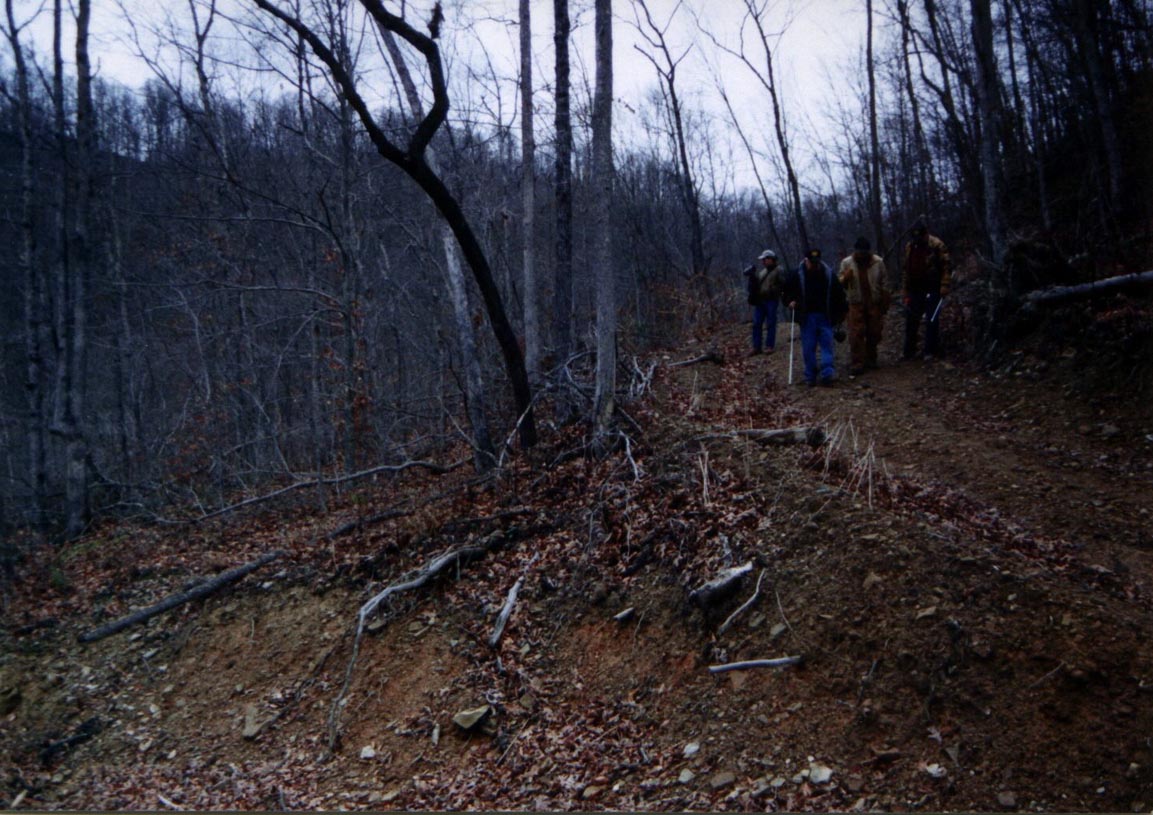
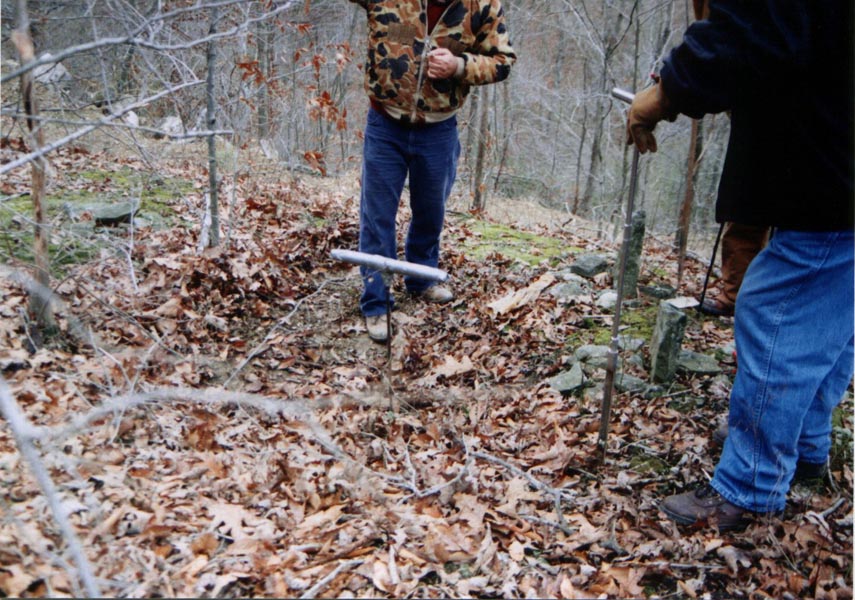
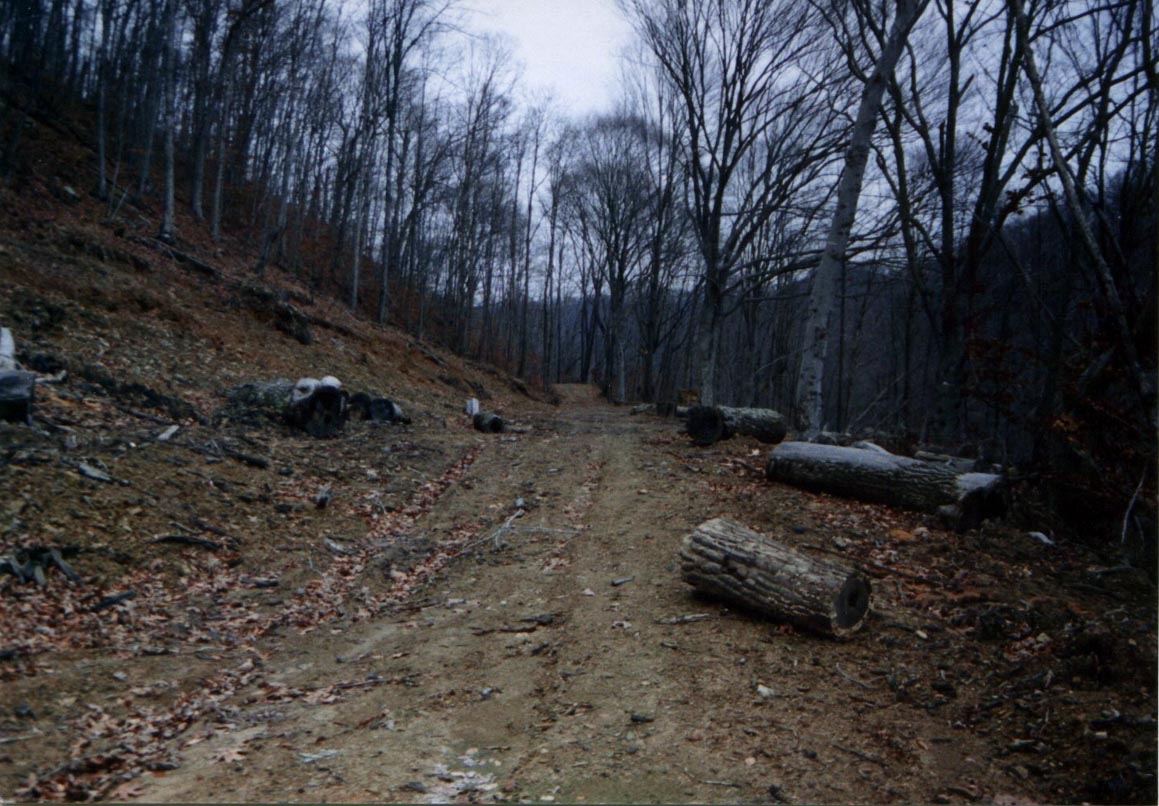
Smithsonian team visits the Haley-McCoy grave (1997)

20 Wednesday Aug 2014

Posted by Brandon Ray Kirk in Big Harts Creek, Culture of Honor, Harts, Lincoln County Feud, Timber

≈ Leave a comment

Tags

Appalachia, archaeology, Brandon Kirk, Haley-McCoy grave, Harts Creek, history, John Hartford, John Imlay, Lincoln County, Lincoln County Feud, logging, Malcolm Richardson, photos, Smithsonian Institution, Steve Haley, timbering, West Fork, West Virginia

John and Steve Haley

John Hartford and Steve Haley at the Haley-McCoy grave, West Fork of Harts Creek, Lincoln County, WV, 1997

Near Grave

John Hartford and Steve Haley with the Smithsonian crew, West Fork of Harts Creek, Lincoln County, WV, 1997

Probe

John Imlay and Malcolm Richardson of the Smithsonian Institution probing the Haley-McCoy grave, 1997

Timber

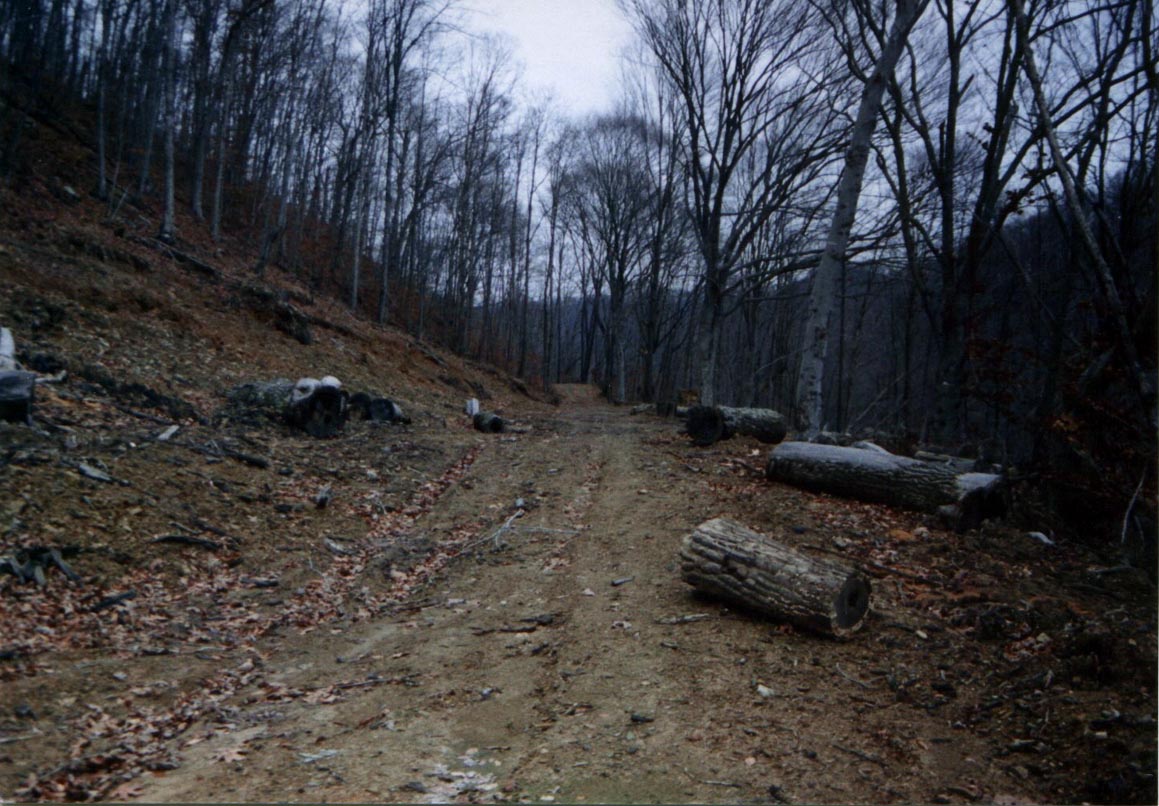
New timber road near the Haley-McCoy grave, West Fork of Harts Creek, Lincoln County, WV, 1997

Harts Creek timber scene

17 Sunday Aug 2014

Posted by Brandon Ray Kirk in Big Harts Creek, Timber

≈ Leave a comment

Tags

Appalachia, culture, Harts Creek, history, life, Logan County, logging, photos, timbering, U.S. South, West Virginia

Harts Creek timber scene, Logan County, WV

Harts Creek timber scene, Logan County, WV

Cecil Brumfield with logs

08 Friday Aug 2014

Posted by Brandon Ray Kirk in Big Harts Creek, Shively, Timber

≈ Leave a comment

Tags

Appalachia, Cecil Brumfield, Harriet Brumfield, history, John Brumfield, Logan County, logging, photos, timbering, U.S. South, West Virginia

Cecil Brumfield, son of John and Harriet (Dingess) Brumfield, stands atop logs, Logan County, WV

Cecil Brumfield, son of John and Harriet (Dingess) Brumfield, stands atop logs, Logan County, WV

John W. Runyon 2

01 Tuesday Jul 2014

Posted by Brandon Ray Kirk in Lincoln County Feud, Timber, Wyoming County

≈ Leave a comment

Tags

A.R. Wittenberg, Anderson Beverly, Baileysville, Buskirk and Wittenberg, Clarence Hinkle, Cole and Crane Company, crime, Dr. C.W. Hall, Dr. S.A. Daniel, E.M. Seuter, genealogy, history, I.E. Christian, James Bertrand Runyon, James Ramey, John W Runyon, Kentucky, logging, Mary Runyon, Porter and Runyon, Reference Book of Wyoming County History, Samuel W. Porter, timbering, Vorheis, West Virginia, writing, Wyoming County, Wyoming Tribune

In that same time frame, John W. Runyon moved his family to Baileysville in Wyoming County, West Virginia, where he opened a business under the name of “Porter and Runyon.” He began to buy various items by credit at a store owned by Buskirk and Wittenberg, a partnership of contractors operating under the powerful Cole and Crane Company.

According to Bowman’s Reference Book of Wyoming County History (1965): “C. Crane and Co., by its contractors, Buskirk and Wittenburg, began a new era of removing timber by water. The company began building dams as soon as possible after taking over the contract.”

Buskirk and Wittenburg were often permitted to construct “roads for their convenience” and to destroy bridges for the purpose of splashing so long as they had them rebuilt. They built the only splash dam ever constructed on the Guyan River around 1903.

“The company maintained well stocked commissaries and logging camps to take care of their men,” according to the Wyoming County history. The main camp in their operation “had a commissary, blacksmith shop, business office, and post office named Vorheis, in honor of Buskirk’s daughter who had married a man named Vorheis. There were camps at Baileysville… Camps and stores were relocated from time to time as needed.” Their stores “carried a large and varied stock, including up-to-date clothing.”

Runyon’s bill at Buskirk’s and Wittenberg’s store began on May 22, 1899, when he bought a nine-dollar suit, and extended until July 17, 1900, when the store debt totaled $6,495.78. According to the bill, Runyon primarily purchased ordinary store items: bacon, beans, fruits, vegetables, coffees, tobacco, herbs, spices, silverware, kitchen utensils, nails, soap, shoes, hats, gloves, watches, candy, and various types of clothing. He also had bought a plethora of luxury items: a case of oysters, Cuban Gentlemen Cigars, several boxes of chewing gum, a box of roasted peanuts, dolls, musical instruments (including a violin), picture frames, guns, locks, turpentine, Castor Oil, clocks, fire crackers, and fishing gear.

Beginning on September 28, 1899, Runyon and Porter paid periodically on the bill (although Porter’s name was seldom mentioned specifically) and Runyon personally contributed $280.00 in January of 1900. The business folded around September 13, 1900, when Runyon made his last payment to Wittenberg and reduced his bill to $640.15.

Meanwhile, the census enumerator registered Runyon as follows: “John W. Ru[n]yon, logger, rents home, born Feb 1856 in KY, age 44, married 20 years, both parents born KY; Mary M. Ru[n]yon, born January 1861 in KY, age 39, married 20 years, mother of 1 child which is living, parents born in KY; Mary M. Ru[n]yon, born March 1889 in KY, age 11, niece, both parents born in KY.” John’s son-in-law Clarence Hinkle was listed two households away as a logger. Sam Porter was not listed in the census — perhaps well aware of the impending debt owed to Buskirk and Wittenberg. Little Mary Runyon was a daughter of John’s twin brother.

There were other legal troubles. In June of 1901, Drs. S.A. Daniel and C.W. Hall sued Runyon for a $50 debt (with interest). Apparently the doctors had rendered services to a James Ramey with the understanding that Runyon would pay his bill. When the trial took place on June 15, Runyon failed to show up. The court waited for an hour, then heard the plaintiff’s case and ruled against him. Curiously enough, Runyon appealed the decision on June 24, with funds for his appeal bond ($120) coming from the very doctors who originally sued him. In September a summons was delivered to an Anderson Beverly to appear as Runyon’s witness. On April 2, 1902 his appeal came before the court and the doctors didn’t appear even “though thrice solemnly called.” As a result, the judge ruled in Runyon’s favor and stated that he was to be paid “$5.00 for their false clamor herein” and that he “recover of the plaintiffs his costs in this behalf expended including an attorneys fee of $5.00 allowed by statute.”

By that time, Runyon was in a more serious lawsuit with Buskirk and Wittenberg over his store debt. In early July of 1901, Wittenberg sued Runyon and Porter, stating that he had not received a payment from them since September of the previous year. Wittenberg’s contacts with area politicians and influential residents had obvious legal implications. Runyon and Porter were issued a summons to appear in court on the first Monday in August to answer “A.R. Wittenberg of a plea of Trespass on the case in assumpsit damages $6,500.00.” Wittenberg’s use of the figure $6,500 referred to the original debt of $6,495.78, although records show the amount actually owed was $640.15. On the outside of this summons the following was written in poor handwriting, probably by a deputy-sheriff: “Serve[d] on the within name John W. Runyon by delivering to him an office copy of the within summon[s] in person on July 12, 1901.” A summons couldn’t be served to S.W. Porter who was “not found within my bailiwick this July 13, 1901.”

Porter was apparently not a resident of West Virginia (probably Kentucky). An affidavit of Non-Residence was filed on his behalf on August 5, 1901.

“This day I.E. Christian Personally appeared before me E.M. Seuter a Notary Public within and for said Wyoming County, West Virginia and upon oath says that S.W. Porter one of the defendants in the above styled action is a Nonresident of the State of West Virginia,” it read.

Because Wyoming County law couldn’t find him to serve a summons, an Order of Publication was issued on the first Monday in August 1901.

“At Rules held in the Clerk’s Office of the Circuit Court of Wyoming County on the first Monday in August 1901 A.R. Wittenberg vs. John W. Runyon and S.W. Porter partners trading and doing business under the firm name and style of Porter and Runyon,” it read. “The object of the above suit is to obtain a Judgment in favor of the plaintiff against the defendants for the sum of $640.15 and it appearing from an affidavit made and filed with the papers of this cause that S.W. Porter defendant in the above signed cause is a non resident of the State of West Virginia, and on motion of the plaintiff it is ordered that said defendant S.W. Porter do appear at Rules to be held in the clerk’s office of the circuit court of Wyoming County within one month after the first publication of this order and do what is necessary to protect his interest in this suit.”

Wittenberg spent five dollars and fifty cents paying for this publication, which was featured in the Wyoming Tribune from August 9th until August 30th.

It did little good. Porter was basically untouchable by Wyoming County authorities barring extradition papers.

Information at the Wyoming County Courthouse indicated that he never showed up to answer for his part in the failed business and, in so doing, crippled Runyon’s case against Wittenberg.

There is little information available on the actual trial, although records show the judge ruled against Runyon for $614.50 on September 30, 1901. Totaled near this figure was a compilation of the plaintiff’s costs ($32.81), which indicated that he was expected to pay that fee as well. Presumably, all of this debt fell on Runyon since his partner had left the state. He decided to appeal the case but as a non-property owner in Wyoming County, the owner of a failed business, and with no local contacts loyal enough to assist him, he was unable to put forth enough money to post the necessary bond. Wittenberg, meanwhile, prepared his case and hired lawyers.

John W. Runyon 1

30 Monday Jun 2014

Posted by Brandon Ray Kirk in Big Harts Creek, Big Sandy Valley, Harts, Inez, Timber, Wyoming County

≈ Leave a comment

Tags

Adam Runyon, Adam Runyon Sr., Alden Williamson Genealogy, Aquillia Runyon, Aubrey Lee Porter, Billy Adkins, Bob Spence, Brandon Kirk, Charleston, civil war, Clarence Hinkle, Crawley Creek, Cultural Center, Ellender Williamson, Enoch Baker, Garrett and Runyon, genealogy, Harts, Hattie Hinkle, Henderson Dingess, history, Inez, Izella Porter, James Bertrand Runyon, James Muncy, John W Runyon, John W. Porter, Kentucky, Land of the Guyandot, Lawrence County, Logan County, Logan County Banner, logging, Martin County, Mary Runyon, Milt Haley, Moses Parsley, Nat's Creek, Nellie Muncy, Nova Scotia, Peach Orchard, Pigeon Creek, Pike County, Pineville, Rockcastle Creek, Runyon Genealogy, Samuel W. Porter, Stephen Williamson, timbering, Wayne, Wayne County, Wealthy Runyon, West Virginia, Wolf Creek, writing, Wyoming County

In the late summer of 1996, Brandon and Billy turned their genealogical sights on John W. Runyon, that elusive character in the 1889 story who seemed to have stirred up a lot of trouble and then escaped unharmed into Kentucky. They arranged a biographical outline after locating two family history books titled Runyon Genealogy (1955) and Alden Williamson Genealogy (1962). Then, they chased down leads at the Cultural Center in Charleston, West Virginia; the Wyoming County Courthouse at Pineville, West Virginia; the Wayne County Courthouse in Wayne, West Virginia; the Martin County Courthouse at Inez, Kentucky; and at various small public libraries in eastern Kentucky. Runyon had left quite a trail.

John W. Runyon was born in February of 1856 to Adam and Wealthy (Muncy) Runyon, Jr. in Pike County, Kentucky. He was a twin to James Bertrand Runyon and the ninth child in his family. His mother was a daughter of James Muncy — making her a sister to Nellie Muncy and an aunt to Milt Haley. In other words, John Runyon and Milt Haley were first cousins.

According to Runyon Genealogy (1955), Adam and Wealthy Runyon left Pike County around 1858 and settled on the Emily Fork of Wolf Creek in present-day Martin County. In 1860, they sold out to, of all people, Milt Haley’s older half-brother, Moses Parsley, and moved to Pigeon Creek in Logan County. John’s grandfather, Adam Runyon, Sr., had first settled on Pigeon Creek around 1811. The family was primarily pro-Union during the Civil War.

At a young age, Runyon showed promise as a timber baron.

“The first lumber industry in Logan County of any importance was started on Crawley Creek by Garrett and Runyon during the year 1876,” Bob Spence wrote in Land of the Guyandot (1978). “Garrett and Runyon deserve credit for their efforts in opening the lumber business in Logan County. They were the first to hire labor in this field. It might be of interest to note here that they originally brought trained men from Catlettsburg… In a few years, Garrett and Runyon left Logan [County], and soon Enoch Baker from Nova Scotia came to Crawley Creek to take their place.”

John may have put his timber interests on hold due to new developments within his family. According to Runyon Genealogy, his mother died around 1878 and was buried at Peach Orchard on Nat’s Creek in Lawrence County, Kentucky. His father, meanwhile, went to live with a son in Minnesota. In that same time frame, on Christmas Day, 1878, Runyon married Mary M. Williamson, daughter of Stephen and Ellender (Blevins) Williamson, in Martin County, Kentucky. He and Mary were the parents of two children: Aquillia Runyon, born 1879; and Wealthy Runyon, born 1881. John settled on or near Nat’s Creek, where his father eventually returned to live with him and was later buried at his death around 1895.

During the late 1880s, of course, Runyon moved to Harts where he surely made the acquaintance of Enoch Baker, the timber baron from Nova Scotia. An 1883 deed for Henderson Dingess referenced “Baker’s lower dam,” while Baker was mentioned in the local newspaper in 1889. “Enoch Baker, who has been at work in the County Clerk’s office and post office for several weeks, is now on Hart’s creek,”  the Logan County Banner reported on September 12. Baker was still there in December, perhaps headquartered at a deluxe logging camp throughout the fall of 1889.

After the tragic events of ’89, Runyon made his way to Wayne County where he and his wife “Mary M. Runyons” were referenced in an 1892 deed. Wayne County, of course, was a border county between Lincoln County and the Tug Fork where Cain Adkins and others made their home. He was apparently trying to re-establish himself in Martin County, where his wife bought out three heirs to her late father’s farm on the Rockhouse Fork of Rockcastle Creek between 1892-1895.

In the late 1890s, John’s two daughters found husbands and began their families. On January 3, 1896, Wealthy Runyon married Clarence Hinkle at “John Runyonses” house in Martin County. She had one child named Hattie, born in 1899 in West Virginia. On March 29, 1896, Aquillia Runyon married Samuel W. Porter at Mary Runyon’s house in Martin County. They had three children: John W. Porter, born in 1897 in West Virginia; Aubrey Lee Porter, born in 1899 in Kentucky; and Izella Porter, who died young.

Walton Brumfield killed

10 Tuesday Jun 2014

Posted by Brandon Ray Kirk in Big Ugly Creek, Hamlin, Timber

≈ Leave a comment

Tags

Appalachia, genealogy, Hamlin, history, Island Creek, Lincoln County, Lincoln Monitor, Logan County, logging, Sampson Brumfield, timbering, U.S. South, Walton Brumfield, West Virginia

"Walton Brumfield Killed," Lincoln Monitor (Hamlin, WV), Thursday, March 19, 1914

“Walton Brumfield Killed,” Lincoln Monitor (Hamlin, WV), Thursday, March 19, 1914

Pat Adkins interview in Harts, WV

09 Monday Jun 2014

Posted by Brandon Ray Kirk in Culture of Honor, Harts, Lincoln County Feud

≈ Leave a comment

Tags

Al Brumfield, Bill Brumfield, Bill Fowler, Billy Adkins, Black John Adkins, Brandon Kirk, crime, Fed Adkins, feud, Green McCoy, Harts, Harts Creek, Harvey "Long Harve" Dingess, history, Hollena "Tiny" Brumfield, Hollene Brumfield, John W Runyon, Lincoln County Feud, logging, Milt Haley, Paris Brumfield, Pat Adkins, writing

Later in the summer, Brandon visited his friend Pat Adkins, who lived in a little trailer just back of where the old Al Brumfield home once sat at the mouth of Harts Creek. Pat was raised in the magnificent Brumfield house and was its owner at the time of its burning. He was a first cousin to Billy Adkins.

Pat first spoke about Al and Hollena Brumfield, who he said charged people a ten-cents-per-log tax at their boom. The tax was a constant source of friction in the community. Even Al’s in-laws weren’t fond of the fee…and apparently weren’t spared from it, either.

“One time, Harvey Dingess had a big huge amount of logs out there and he said he wasn’t gonna pay no ten cents a log tax,” Pat said. “Harvey was Hollene’s brother. They all liked to drink so he come in there being jovial and friendly and brought Al and Hollene in a big special-made malt whiskey. They got a big drunken party going and finally around twelve o’clock they all got so drunk they went to bed. Harve had his men stationed over there on that hillside and when he waved a light from that porch upstairs them men come down there and cut that splash and let his logs through. The Brumfields got up the next morning — all their hangovers — and went out and looked and that splash had been cut and all of his logs had been run through and Harve was gone. He was on his way to Huntington to sell them.”

Brandon asked Pat if the log boom was the root of the 1889 troubles.

“Bill Brumfield’s wife, Aunt Tiny, told me about the famous posse ride to lynch Milt Haley and Green McCoy,” Pat said, cutting to the chase. “Runyon had a store up on Hart and that was among Hollene’s relatives up in there and she had the big timber operations down here — the splash dam, you know — and had a saloon. Runyon had a legal still where people brought their apples in and stuff to make brandy. Somebody else run one of them too up there — a Dingess. They was into it over the business. Runyon thought that if he could kill them, he could take control of the mouth of Hart. When Hollene came into business that was what she done. She killed out her enemy, or never killed him — burned him out. That was Bill Fowler. Bill Fowler was a businessman and he come into possession of the mouth of the creek. He had him a big saloon out there and she burned him out and burned his saloon and then she took it over. So, I guess Runyon got the same idea: ‘You took it. Now I’m going to get it from you.’ So he hired these guys to kill them and if he’d a killed them they’d a been out of the way and that woulda pretty well cinched him for it. He had plenty of money and he’d a rolled in here and coulda bought it. He’d been the top man then.”

According to Pat, locals quickly determined that Haley and McCoy were involved in the ambush of Al and Hollena Brumfield and formed a mob to capture them.

“They formed about sixty men,” he said. “I know Black John Adkins was in it. John was there a holding the horses. He wasn’t taking no part in it — just going along to show he was in support. I think everybody in the country around in this area and all of Hollena’s relatives were in it. Runyon, he left the country when he realized that they might be coming after him because they suspected him as hiring them.”

Pat said Mrs. Brumfield believed that her husband Bill was too young to have participated in the killings but would have “been in on it if he’d a been old enough.” Pat didn’t think his Grandpa Fed Adkins was in the mob either, but then said, “He might have been — probably was. You know, the killing took place there, I think, about where Lon Lambert’s house is, down under that riverbank. Black John said when Paris came out from under that bank he was just as bloody as he could be where he had stabbed on them men. Said, Paris Brumfield was bloody as a hog. Said, he just took a knife and cut them to pieces and I think they gave Paris the honor of killing them because it was a vengeance killing. They dared anybody to ever touch their bodies. I think they laid about nine days and got to smelling so bad they finally give them permission to bury them.”

In Pat’s view, those who participated in the killing of Milt and Green were not typically violent men. Haley’s and McCoy’s apparent guilt in ambushing Al Brumfield provided a justification for their bloody murders in the eyes of locals and ensured that the “peace-keeping” reputations of the vigilantes would endure as stories about the feud were handed down to later generations. For instance, despite the dangerous reputation of Paris Brumfield, Pat said, “Other than the killing of Haley and McCoy, he was really not a mean person. That was understandable that he helped kill Haley and McCoy if somebody was trying to kill your son. I never heard that he was a mean person. I don’t think he deliberately went around plotting up mean things to do. And I don’t think he was a cruel person.”

Just before Brandon left Pat, he asked him about growing up in Al Brumfield’s house. Pat said when he was young he often hid behind some large framed Brumfield family photographs stacked in an upstairs room. There was one in particular that he remembered: a picture of Al Brumfield — worn and blind, sitting in a chair on a porch.

Haley-McCoy grave

06 Friday Jun 2014

Posted by Brandon Ray Kirk in Big Harts Creek, Lincoln County Feud, Timber

≈ Leave a comment

Tags

Appalachia, crime, feud, Green McCoy, Haley-McCoy grave, Harts Creek, history, Lincoln County, Lincoln County Feud, logging, Milt Haley, timbering, U.S. South, West Fork, West Virginia

Haley-McCoy grave, West Fork of Harts Creek, Lincoln County, WV,

Haley-McCoy grave, West Fork of Harts Creek, Lincoln County, WV,

Logging job that nearly destroyed the Haley-McCoy grave

Logging job that nearly destroyed the Haley-McCoy grave

Harts Creek Timber Man

23 Friday May 2014

Posted by Brandon Ray Kirk in Big Harts Creek, Harts, Timber

≈ 1 Comment

Tags

Appalachia, genealogy, Harts Creek, history, Lincoln County, logging, photos, timbering, U.S. South, West Virginia

Harts Creek Timber Man, 1890-1915

Harts Creek Timber Man, 1890-1915

Toney News 9.29.1910

08 Tuesday Apr 2014

Posted by Brandon Ray Kirk in Ferrellsburg, Toney

≈ Leave a comment

Tags

Big Ugly Creek, Charleston, education, farming, Ferrellsburg, Fisher B. Adkins, genealogy, Green Shoal School, Hamlin, history, Jim Brumfield, Kentucky, life, Lincoln County, Lincoln Republican, logging, Lottie Lucas, Louisville, Low Gap, Matthew Farley, Patton Thompson, Philip Hager, Toney, Walt Stowers, West Virginia

“Ruben,” a local correspondent at Toney in Lincoln County, West Virginia, offered the following items, which the Lincoln Republican printed on Thursday, September 24, 1910:

The weather is fine.

The farmers are busily engaged in their tobacco and corn.

Mr. Stowers, the genial merchant at Ferrellsburg, is thinking of resigning the store business and taking up the study of medicine. His many friends will be sorry to see him depart for Louisville.

F.B. Adkins, prominent school teacher and business man, of Ferrellsburg, was calling on friends here Sunday.

Capt. Hill has just returned from a business trip to the Capital City, and made a fine horse trade on his way home.

Quite a number of people attended the funeral of Patterson Thompson at Low Gap Sunday.

M.C. Farley is attending Federal Court at Huntington.

The Lucas Bros.’ log job on Big Ugly is nearing completion.

Philip Hager, of Hamlin, passed through our midst last week, looking after road affairs.

The Green Shoal school is progressing nicely.

Miss Lottie Lucas was shopping in Ferrellsburg last Saturday.

Jim Brumfield had a barn raising Saturday in order to take care of a large crop of tobacco.

Ferrellsburg Items 12.2.1909

05 Saturday Apr 2014

Posted by Brandon Ray Kirk in Ferrellsburg, Green Shoal, Toney

≈ Leave a comment

Tags

Appalachia, Big Ugly Creek, Charley Tomblin, Coon Tomblin, education, farming, Ferrellsburg, genealogy, Green Shoal School, Guyandotte River, Harts Creek, Joseph Gartin, Keenan Ferrell, Keenan Toney, Lincoln County, Lincoln Republican, logging, Lottie Lucas, Low Gap School, Nancy Alford, Strawder Tomblin, timbering, typhoid fever, Ward Lucas, Watson Lucas, West Fork, West Virginia

“Grey Eyes,” a local correspondent at Ferrellsburg in Lincoln County, West Virginia, offered the following items, which the Lincoln Republican printed on Thursday, December 2, 1909:

The tobacco barn of Ferrell & Altizer burned a few days ago. Loss about $1200. It is supposed that it caught from a passing train.

Keenan Toney is doing a very good business with his store, P.O. and grist mill.

The Lucas boys, Ward and Watson, are running a good job of logging on Big Ugly.

Miss Lottie Lucas is teaching the Green Shoal School this year and is having fine success.

The people over this county, are well worked up. They think the Court House will be built on the Guyan River side. Petitions are flying here like straw in a whirl-wind for a chance to get to vote on the question.

Farmers are busy gathering corn.

The sons of Charley Tomblin, Coon and Strawder are getting over a severe spell of typhoid fever.

Rev. Jos. Gartin preached to a large congregation at the Low Gap School House on last Sunday.

Mrs. Nan Alford died at her home on the West Fork of Big Hart the other day.

In Search of Ed Haley 262

10 Monday Mar 2014

Posted by Brandon Ray Kirk in Big Harts Creek, Ed Haley, Timber

≈ Leave a comment

Tags

Al Brumfield, Calhoun County, Chicago, coal, Cole and Crane Company, Dood Dalton, Ed Haley, farming, fiddling, Harts Creek, history, Jake Dalton, Laury Hicks, Lincoln County, Logan County, logging, Stump Dalton, timbering, West Virginia, writing

Just before we left, Stump let us borrow a cassette containing a 1976 interview with his father. Surely, we thought, Dood would speak a lot about fiddling and of his friendship to Ed. Instead, he told about his life in Harts. His voice was very melancholy and he spoke loudly and in spurts. Some of his earliest memories were of the timber industry in Harts and of the Cole and Crane Company, which timbered extensively in the LoganCounty area from about 1893-1908. In 1900, he said, Cole and Crane used splash dams to float logs down to the mouth of the creek “where Al Brumfield had a boom in.” The boom was located at the present-day site of the West Fork Bridge.

“And this boom caught them logs all,” Dood said. “Them logs was piled on top of one another from that boom…to the mouth of Big Branch. At that time, if you owned across the creek, you owned the creek. Al Brumfield owned the other side there and he put this boom in there and bought the Cole and Crane Company and when he bought them he kept that timber there and they gave him a contract on rafting it and running it down to Guyandotte.”

Cole and Crane Company once paid Brumfield $2800 to cut his boom loose and let timber out of the creek, he said.

Dood said he went to work cutting timber for Cole and Crane Company when he was seventeen years old. He also drove oxen and cattle and loved to hunt foxes and raccoons.

After marrying, he supported his family by farming and raising cattle, sheep and hogs at his 300-acre farm on Big Branch.

In subsequent years, he worked as a blacksmith, bricklayer and coal miner.

In 1964, he took a three-month visit to Chicago and hated it about as much as an earlier visit to Michigan. He said, “My days is short. I’ve spent 84 years here and I’m figuring on spending the rest of my life here.”

And that was basically it.

Not one reference to fiddling from a guy who had played all of his life.

Well, in spite of the tape, we were pretty sure that Haley’s good friendship to Dood Dalton was authentic and was perhaps as important as his friendship with Laury Hicks in Calhoun County. We wanted to visit more of Dood’s children, so Stump directed us to the home of his oldest brother, Jake Dalton, an old fiddler on the Big Branch of Harts Creek. Jake lived in his father’s old home — the place where Ed had visited so frequently during the last twenty years of his life.

Blood in West Virginia: Brumfield v. McCoy (2014)

24 Friday Jan 2014

Posted by Brandon Ray Kirk in Big Harts Creek, Culture of Honor, Harts, Lincoln County Feud, Timber

≈ 10 Comments

Tags

Al Brumfield, Appalachia, Brandon Kirk, crime, feud, Green McCoy, Harts Creek, history, logging, Milt Haley, Pelican Publishing Company, photos, timbering, true crime, West Virginia, writers, writing

Blood in WV

In June of 2014, Pelican Publishing Company will release my book detailing the true story of the Lincoln County feud.

In Search of Ed Haley 231

24 Friday Jan 2014

Posted by Brandon Ray Kirk in Ed Haley

≈ Leave a comment

Tags

Andrew D. Robinson, Ben Adams, Boney Lucas, Chloe Mullins, Ed Haley, Harts Creek, Henderson Dingess, history, Imogene Haley, Jackson Mullins, Logan County Banner, logging, McCloud & Company, Paris Brumfield, Peter Mullins, timbering, Turley Adams, Van Prince, Warren, Weddie Mullins, West Virginia, writing

Ed Haley was born in 1885 at Warren, a small post office established the previous year five miles up Harts Creek just below the mouth of Smoke House Fork. It was a place of 300 to 500 people chiefly led in its daily affairs by Henderson Dingess, Andrew Robinson, Anthony Adams, Ben Adams, and Burl Farley — all connected genealogically through the Adams family. At Warren, in 1884, the primary business was a general store called McCloud & Company. Henderson Dingess, father to Hollena and the patriarch of the clan, was a distiller and storekeeper. Ben Adams, a brother-in-law to Dingess, was a general store operator. Andrew Robinson was the local postmaster. Van Prince was a physician, perhaps assisting in Ed Haley’s birth or in the treatment of his measles.

Henderson Dingess, a prominent personality from that era, was the son of pioneer parents, born in 1829 to John and Chloe (Farley) Dingess. His wife, Sarah Adams (1833-1920), was a daughter of Joseph and Dicie (Mullins) Adams, who settled on Harts Creek from Floyd County, Kentucky, in the late 1830s. Henderson and Sarah lived in a two-story log house on land partly granted to him by the Commonwealth of Virginia in 1856. There, at the mouth of Hog Pen Branch, they raised eleven children, many of whom were active in the 1889 troubles. In the late 1880s, roughly the time of Milt Haley’s murder, Henderson and Sarah owned a 93-acre tract of land on Smoke House with a building valued at $100. They also owned an additional 350 acres on main Harts Creek and a 44-acre tract on nearby Crawley Creek worth $6.00 per acre with a $20 building on it.

At that time, Harts was caught up in the regional timber boom. According to The Logan County Banner, an estimated one million dollars worth of timber went out of the area in 1889. Perhaps prompted by this capitalistic invasion of the local economy, violence became the norm in Harts. Beginning with Paris Brumfield’s murder of Boney Lucas “over logs” in the early 1880s, there were at least six area killings before the turn of the century. (The Brumfields were involved in four of them and the Dingesses in three.) It was an era when Harts lost its innocence and began to earn the rough reputation it still carries today.

More than likely, following the horrific events of 1889, little Ed Haley and his mother lived for a brief time with Jackson and Chloe Mullins on Trace Fork. This changed a little later when, in 1891, Jackson and Chloe began to deed property to their three children. On March 18, they deeded their homestead to son Peter for 25 dollars. Deed records specify the property as a 20-acre tract of land, which began somewhere around the mouth of Trace and continued up to the Jackson Mullins Branch (basically the present-day Turley Adams property). The following day, Jackson and Chloe deeded another 20-acre tract to son Weddie Mullins for 25 dollars. This tract basically included everything from Jackson Mullins Branch to Jonas Branch.

On March 19, 1891, Jackson and Chloe deeded Imogene Haley 20 acres of land on Trace Fork for 25 dollars. In the property index, Imogene’s surname was spelled as “Hauley”, while the deed referred to her as “Immagin A. Haley.” Her land began at Jonas Branch and continued on up the creek. In the original deed, it was described as follows:

Beginning at the mouth of William Jonas branch thence up the Branch with the center of the branch to a _______ tree on the right hand side of the Branch as you go up the branch near a Chestnut that ________ on the left side of said branch thence acrosf the fields to some willow bushes at the front of the hill thence up the point with the center of the point to the brow of the Mountain thence with the brow of the Mountain to Mary Mullins line thence down the mountain to a bush thence a strate line crosfing the creek to a ash thence up the hill to the back line of the parties of the first part thence down the creek with the line of the said opposite the mouth of William Jonas branch thence down the hill a strate line to the Beginning supposed to contain 20 acres more or less.

An 1891 tax book listed “Emigene Hawley’s” property as being worth $2.00 per acre and having a total worth of $40. Records do not indicate if there was a house or building located on the property. In any case, Emma died soon after: an 1892 tax book lists her property under the name of “Immogen Hailey heirs”, which would have been Ed Haley. More than likely, seven-year-old Ed remained living in the home of his grandparents, Jackson and Chloe, for several more years.

At that time, Logan County was in the middle of a timber boom, which gave employment to Ed’s family on Trace Fork. “Some of the finest timber in the State is found in Logan county,” writes The Mountain State: A Description of the Natural Resources of West Virginia (1893). “Magnificent forests of oak, poplar, ash, lynn, maples, beech, birch, pines, hickory and other varieties still cover the greater part of the county in their primitive state. For thirty years timber men have been at work, destroying the forests and still in all this time not over a fourth of the timber has been removed. As an estimate of the value of the timber still standing in Logan county, three million dollars will not be far amise.”

In Search of Ed Haley 205

28 Thursday Nov 2013

Posted by Brandon Ray Kirk in Ed Haley

≈ Leave a comment

Tags

Al Brumfield, Andy Thompson, Baptist Fry, Bill Brumfield, Dick Thompson, Ed Haley, George Fry, Green Shoal, history, logging, Millard Adams, Tucker Fry, writing

Brandon kept me up to date on his research by writing me incredibly detailed letters. I was becoming a fan of his writing style. In one letter, he identified the “murder house” where Green McCoy and Milt Haley were killed at Green Shoal.

“As you might recall, when we were trying to locate the George Fry home at Green Shoal, old-timers kept mentioning the homes of Tucker Fry and Baptist Fry as well. To avoid any confusion, I want to clarify so that you might keep the three names and the two houses straight. Baptist Fry was an uncle to George Fry. (His wife, Marinda, was the mother of Ben Walker, who helped bury Haley and McCoy.) Baptist’s home stood against the mountain at Fry across Route 10 where a maroon and white house stands today. When he died in 1881, it passed into the hands of his son Tucker Fry, who lived there with his wife and two children in 1889. The George Fry home — the one where Milt and Green were killed by most accounts — stood across present-day Route 10 and just upriver where Lonnie Lambert’s house is today.”

In another package, Brandon sent this scrap of information from the Doris Miller Papers at the Morrow Library in Huntington, West Virginia. “Al Brumfield — Harts,” it read. “Hollena. Logging people. — tied up logs. Kept overnight. Washed and ironed clothes. They went out and broke off tops of winter onions as they went thru garden to creek.”

Brandon also visited Dick Thompson at Thompson Branch of Harts Creek. Dick was a first cousin to Lawrence Kirk and a grandson to Bill Brumfield. He killed a man back in the early ’30s and served time in the state penitentiary. Dick welcomed Brandon into his home, which, incidentally was just down the hill from the site of the 1889 ambush of Al Brumfield.

Every six months or so, Dick said, Ed Haley and his family came to Harts by train. Not long after they arrived in Harts, somebody would haul them up the creek where they stayed all over. Everyone knew Ed, Dick said, and he “had some of the finest boys you ever seen.” He stayed with Dick’s father Andy Thompson and his grandfather Brumfield, two local moonshiners in the Cole Branch area of Harts Creek. (This was an interesting revelation, of course, because it meant that Ed, son of Milt Haley, visited with Bill, son of Paris Brumfield.)

Dick said Ed “could play anything on that fiddle” but he only remembered “Old Dan Tucker”. Ed used to tell a story about how he’d never stay at Old Dan Tucker’s again because he had to sleep in a feather bed that threw him to the floor. Dick said Ed played a lot in taverns with Bernie Adams, an excellent guitar player. Sometimes they made up to one hundred dollars a night. Ed played periodically in Dick’s tavern on Harts Creek. One night, around 1936-37, Dick closed up and took several men (including Ed) to a tavern in the head of nearby Crawley Creek. A little later, Ed got into it with Millard Adams and hit him over the head with his fiddle. (Another variation of the “fiddle over the head story…” Sol Bumgarner had told me that Ed did that to a Stollings, while Dave Brumfield implied that it happened around 1945, not in the late ’30s. Maybe Ed was just fond of using his fiddle as a weapon in fights.)

In Search of Ed Haley 183

16 Wednesday Oct 2013

Posted by Brandon Ray Kirk in Ed Haley, Timber

≈ Leave a comment

Tags

Appalachia, Cabell County, Doc Suiter, Dolph Spratt, fiddlers, Fred B. Lambert, Guyandotte River, history, John Thomas Moore, logging, Lucian Mitchell, Paris Brumfield, Thomas Dunn English, timbering, W.M. Carter, writing

The weather was also a problem for loggers, who often plied the river in freezing temperatures.

“I was on the water that cold Saturday, about 1900,” W.M. Carter of Ferrellsburg told Fred B. Lambert, regional historian. “People froze to death, finger and toe nails froze off, but we went on.”

Some loggers built fires on their rafts to battle the cold.

“I have had fires on a raft in winter by throwing sand between close logs,” Mitchell said.

For warmth and a little light-hearted comfort, the loggers drank whiskey along the way. A resident of the Salt Rock area told Lambert about hearing “a hundred men passing his home, one night, about 1896” who “were gloriously drunk and filled the air with such cursing and yelling as one hears not more than once in a lifetime.” Johnson’s Representative Men of Cabell County, West Virginia (1929) said “they were often so boisterous that children playing along the banks ran away in fright as they heard these raftsmen sweeping by, yelling and swearing lustily. Yet, they were only a lot of mountaineers taking their trips as high adventure.”

In addition to their whiskey, loggers also used music to alleviate the hardship of their trip. They always had one or two fiddlers with them who sometimes played on the ride downriver. Thomas Dunn English’s poem “Rafting on the Guyandot” hinted at that part of the journey with the line: “Where’s the fiddle? Boys, be gay!” The fiddles were brought out again after dark, when loggers were camped at various points on the riverbank, in the yard of inns or at houses along their route where people made a business of caring for them. Raftsmen spent their evening eating packed lunches (or fresh, home-cooked meals if they were lucky), drinking, dancing, then sleeping it all off in preparation for the next day.

I could just picture Milt Haley playing the fiddle under the stars and lifting the spirits of burly men who were gathered around their campfires.

“If no bad luck overtook them, they could make the whole journey to Guyandotte in one or two days,” according to The Llorrac.

At that location, their timber was caught in a boom, then examined by measuring crews, who paid them based on the quality and usability (per cubic foot) of each log.

“Here they were delivered to sawmills or run into the Ohio where they were gathered into ‘fleets’ containing many rafts,” Lambert wrote. “They were sold to lumber dealers in Cincinnati, Louisville, Jeffersonville, Indiana, or other cities, and floated down the river.”

Having rid themselves of their timber, the loggers found vacant hotel rooms or boarding houses in the town of Guyandotte and set about the business of “having a good time.” Locals had no choice but to surrender to them and prepare for the worst.

Ferrell’s Centennial Program put it thusly: “When the timbermen had anchored their rafts, the good people of the town anchored themselves at home.”

The whole scene was as exciting and dangerous as any thing in the Wild West. There were a lot of horrible atrocities, like when John T. Moore was burned to death after some loggers renting the upstairs of his large house caught the whole place on fire.

“I’ve seen some fancy fights in Huntington among the raftsmen,” Lucian Mitchell said. “Policemen usually didn’t interfere. Dolph Spratt of Mingo County or Paris Brumfield hit Doc Suiter. He toned down after that.”

After several days of hell-raising, loggers bought a final half-gallon of the best whiskey and made plans to return home. Most made their way back upriver on borrowed or rented horses and mules — or less dramatically by walking. (To get to Harts by foot was a six or seven day trip.)

“They often went in crowds of twenty-five to fifty,” Lambert wrote.

It was rare for them to return home sober, and when they did, it often warranted special attention by local newspapers.

“We note with satisfaction that the raftsmen all returned home safely,” one reported, “and we are pleased to say that the absence of drunkedness among them on this trip was indeed gratifying.”

In Search of Ed Haley 182

15 Tuesday Oct 2013

Posted by Brandon Ray Kirk in Ed Haley, Timber

≈ Leave a comment

Tags

Appalachia, Carol Caraco, Fred B. Lambert, history, Logan County, logging, Lucian Mitchell, Milt Haley, rafting, timbering, West Virginia, writing

Milt Haley, by all accounts, made his living as a timber man. He was probably lured “over the mountain” from the Tug River section by the timber industry that evolved in the Guyandotte Valley following the Civil War. It certainly played a role in his death. Really, for all practical purposes, logging was imbedded in the life fabric of every person living around Harts Creek in 1889…including little Ed Haley, who grew up in the era when timbering and steamboats gave way to coal and the railroad.

“Almost from the very beginning of history in this region, logs have been rafted on the Guyandotte and floated to Cincinnati and even to more distant markets,” according to Fred B. Lambert’s The Llorrac (1926). “In autumn, men with saws and axes went into the woods and cut down the trees. At first, the trees were so plentiful that they could be cut and rolled directly into the stream. In some cases, the bark was peeled from the logs and they were allowed to slide down the mountain side. But gradually the timber along the shore became scarce, and timbermen were compelled to go farther and farther into the hills or up the creeks, until now most of the virgin timber has been cut, and they are beginning on the second growth and, in some places, even on the third.”

The logging season began with the construction of logging camps “during the late winter and early spring months before the spring rains began to swell the creeks and rivers,” according to River Cities Monthly.

The men who came into these camps for work “were men in every sense of the word, and their beards of many days growth betrayed the fact that razors as well as some one to use them were quite scarce…,” Lambert wrote. They worked silently but would “yell like wild men” if something “unusual” happened. They were “master hands at swearing” and often fought amongst themselves, be it for sport or in fits of rage. Because of their wild nature, a foreman was often hired to regulate their activity. At night, they slept on bundles in crude log cabins. If the camp was large enough, a mess hall was constructed and a cook was hired to serve them bacon, beans, bread, coffee “or whatever may be brought into the camp from the surrounding country.”

According to Carol Caraco’s The Big Sandy (1979), loggers marked their timber by branding it with their initials. After branding their logs, they got them out of the hollow and to the river, usually by use of horse or oxen and cant hooks. Another often-used method involved splash dams. “When thousands of logs accumulated behind the timber and stone splash dam, a key wedge would be removed and the timber spewed forth,” Caraco wrote. As the logs made their way down the creek, many were jammed or land-locked along the bank.

At the mouth of creeks and rivers were “taker-ups” and booms. “The taker-ups were free-lance agents who caught and held unrafted logs until the owners appeared,” according to Caraco. “When their charge for this service proved excessive, the legislature standardized fees. Other times loose logs were stopped by a boom, a dam of huge poplar logs reinforced by a giant chain stretched across the stream.”

This boom concept, as well as questions about branding, were apparently at the heart of the 1889 troubles.

According to The Llorrac, “After the logs were all in the river, they were arranged into a raft and held in position by hickory pins driven through the small tiepoles. Later they were made more secure by the use of iron ‘chain dogs.’ Three men were required to build a raft; one to sight or place the logs, one to carry poles, and one to drive pins or chaindogs. They received a dollar a day each and it took about a day. The rafting was done in the fall and winter so as to be ready to go out on the first ‘log-tide’ of spring or early summer. An experienced raftsman always knew when it was safe to go. And well he did, for below him were the treacherous falls and shoals and eddies ready, without a moment’s notice, to hurl him to a terrible death. When the day came for the trip and the oarsmen decided that the river was at safe ‘log tide,’ the great ropes were loosened, the men took their places, the raft slowly moved into the current, and the wild ride was on.”

Based on Lambert’s notes, rafts moved at speeds of eight or nine miles per hour in convoys of fifty or more.

“There was an oarsmen at the bow’ and another behind, directing, with their strokes, every movement of the raft,” he wrote. “No one who has ever been near the river when rafts were passing, can fail to have heard the strange calls of the raftsmen to each other as they rounded the bends of the river or passed through dangerous chutes or rapids.”

“The man on the bow didn’t have to know much,” according to Lucian Mitchell, an old rafter who spoke with Lambert. “The man at the stern knew where to go, where the shoals were, and how to work up to the point on a hard bend and knew the Jordan sands at the mouth of Bear Creek. Sometimes a raft would cork the river by bowing and swing around in such a position as to get both ends afoul. If another raft came down it was rulable to hit this raft in the middle and cut it in two pieces.”

“This was a thrilling time,” The Llorrac claimed. “The front oar was often broken, leaving the raft unmanageable and, in the language of the raftsmen, it sometimes ‘swarped’ or turned completely around and even went to pieces. Let no one minimize the danger. If by accident, a man lost his balance and fell into the water, he was generally carried at once by the eddies to the bottom of the river; or, he drifted under the raft and was seen no more until his body was found, drifting far below, after many days or even months. In case they escaped these dangers they were still subject to sunken logs or great stones.”

Lucian Mitchell of Logan County downplayed the drowning aspect, saying, “Not many drowned. Most could swim.”

Rafting Scene

26 Sunday May 2013

Posted by Brandon Ray Kirk in Big Sandy Valley, Timber

≈ Leave a comment

Tags

Appalachia, Catlettsburg, culture, history, Kentucky, life, logging, photos, steamboats, timbering, U.S. South

Six steamboats with log rafts, Catlettsburg, Kentucky, 1901

Six steamboats with log rafts, Catlettsburg, Kentucky, 1901

Low Gap Timber Scene

19 Sunday May 2013

Posted by Brandon Ray Kirk in Timber

≈ 2 Comments

Tags

Appalachia, culture, Ferrellsburg, genealogy, life, Lincoln County, logging, Low Gap, Pat Kirk, photos, timbering, U.S. South, West Virginia

Pat Kirk hauling timber, Low Gap, Lincoln County, West Virginia, 1908-1920

Pat Kirk hauling timber, Low Gap (near Ferrellsburg), Lincoln County, West Virginia, 1908-1920

West Virginia Timber Contract

18 Saturday May 2013

Posted by Brandon Ray Kirk in Timber

≈ 1 Comment

Tags

Alex Burton, Bill Farley, Catlettsburg, Crawley Creek, culture, history, Kentucky, Logan County, logging, Samuel S. Vinson, timbering, Vinson Goble and Prichard, West Virginia

Bill Farley timber contract (page 1 of 3), 1882

Bill Farley timber contract (page 1 of 3), 1882

← Older posts
Newer posts →

Feud Poll 1

If you had lived in the Harts Creek community during the 1880s, to which faction of feudists might you have given your loyalty?

Categories

  • Adkins Mill
  • African American History
  • American Revolutionary War
  • Ashland
  • Atenville
  • Banco
  • Barboursville
  • Battle of Blair Mountain
  • Beech Creek
  • Big Creek
  • Big Harts Creek
  • Big Sandy Valley
  • Big Ugly Creek
  • Boone County
  • Breeden
  • Calhoun County
  • Cemeteries
  • Chapmanville
  • Civil War
  • Clay County
  • Clothier
  • Coal
  • Cove Gap
  • Crawley Creek
  • Culture of Honor
  • Dingess
  • Dollie
  • Dunlow
  • East Lynn
  • Ed Haley
  • Eden Park
  • Enslow
  • Estep
  • Ethel
  • Ferrellsburg
  • Fourteen
  • French-Eversole Feud
  • Gilbert
  • Giles County
  • Gill
  • Green Shoal
  • Guyandotte River
  • Halcyon
  • Hamlin
  • Harts
  • Hatfield-McCoy Feud
  • Holden
  • Hungarian-American History
  • Huntington
  • Inez
  • Irish-Americans
  • Italian American History
  • Jamboree
  • Jewish History
  • John Hartford
  • Kermit
  • Kiahsville
  • Kitchen
  • Leet
  • Lincoln County Feud
  • Little Harts Creek
  • Logan
  • Man
  • Matewan
  • Meador
  • Midkiff
  • Monroe County
  • Montgomery County
  • Music
  • Native American History
  • Peach Creek
  • Pearl Adkins Diary
  • Pecks Mill
  • Peter Creek
  • Pikeville
  • Pilgrim
  • Poetry
  • Queens Ridge
  • Ranger
  • Rector
  • Roane County
  • Rowan County Feud
  • Salt Rock
  • Sand Creek
  • Shively
  • Spears
  • Sports
  • Spottswood
  • Spurlockville
  • Stiltner
  • Stone Branch
  • Tazewell County
  • Timber
  • Tom Dula
  • Toney
  • Turner-Howard Feud
  • Twelve Pole Creek
  • Uncategorized
  • Warren
  • Wayne
  • West Hamlin
  • Wewanta
  • Wharncliffe
  • Whirlwind
  • Williamson
  • Women's History
  • World War I
  • Wyoming County
  • Yantus

Feud Poll 2

Do you think Milt Haley and Green McCoy committed the ambush on Al and Hollene Brumfield in 1889?

Blogroll

  • Ancestry.com
  • Ashland (KY) Daily Independent News Article
  • Author FB page
  • Beckley (WV) Register-Herald News Article
  • Big Sandy News (KY) News Article
  • Blood in West Virginia FB
  • Blood in West Virginia order
  • Chapters TV Program
  • Facebook
  • Ghosts of Guyan
  • Herald-Dispatch News Article 1
  • Herald-Dispatch News Article 2
  • In Search of Ed Haley
  • Instagram
  • Lincoln (WV) Journal News Article
  • Lincoln (WV) Journal Thumbs Up
  • Lincoln County
  • Lincoln County Feud
  • Lincoln County Feud Lecture
  • LinkedIn
  • Logan (WV) Banner News Article
  • Lunch With Books
  • Our Overmountain Men: The Revolutionary War in Western Virginia (1775-1783)
  • Pinterest
  • Scarborough Society's Art and Lecture Series
  • Smithsonian Article
  • Spirit of Jefferson News Article
  • The Friendly Neighbor Radio Show 1
  • The Friendly Neighbor Radio Show 2
  • The Friendly Neighbor Radio Show 3
  • The Friendly Neighbor Radio Show 4
  • The New Yorker
  • The State Journal's 55 Good Things About WV
  • tumblr.
  • Twitter
  • Website
  • Weirton (WV) Daily Times Article
  • Wheeling (WV) Intelligencer News Article 1
  • Wheeling (WV) Intelligencer News Article 2
  • WOWK TV
  • Writers Can Read Open Mic Night

Feud Poll 3

Who do you think organized the ambush of Al and Hollene Brumfield in 1889?

Recent Posts

  • Logan County Jail in Logan, WV
  • Absentee Landowners of Magnolia District (1890, 1892, 1894)
  • Charles Spurlock Survey at Fourteen Mile Creek, Lincoln County, WV (1815)

Ed Haley Poll 1

What do you think caused Ed Haley to lose his sight when he was three years old?

Top Posts & Pages

  • Early Coal Mines in Logan County, WV
  • Hatfield-McCoy Feud: Tom "Guerilla" Mitchell grave at Meador, WV (2019)
  • Madam Wonder Advertisement (1927)
  • Tom Dula: Ferguson, NC (2020)
  • In Search of Ed Haley 64

Copyright

© Brandon Ray Kirk and brandonraykirk.wordpress.com, 1987-2023. Unauthorized use and/or duplication of this material without express and written permission from this blog’s author and/or owner is strictly prohibited. Excerpts and links may be used, provided that full and clear credit is given to Brandon Ray Kirk and brandonraykirk.wordpress.com with appropriate and specific direction to the original content.

Archives

  • February 2025
  • January 2025
  • October 2023
  • September 2023
  • December 2022
  • November 2022
  • May 2022
  • April 2022
  • February 2022
  • November 2021
  • October 2021
  • September 2021
  • June 2021
  • May 2021
  • April 2021
  • March 2021
  • February 2021
  • January 2021
  • December 2020
  • November 2020
  • October 2020
  • July 2020
  • June 2020
  • May 2020
  • April 2020
  • March 2020
  • February 2020
  • January 2020
  • December 2019
  • November 2019
  • October 2019
  • September 2019
  • August 2019
  • July 2019
  • June 2019
  • May 2019
  • April 2019
  • March 2019
  • February 2019
  • January 2019
  • December 2018
  • November 2018
  • October 2018
  • September 2018
  • August 2018
  • July 2018
  • June 2018
  • May 2018
  • April 2018
  • March 2018
  • February 2018
  • January 2018
  • December 2017
  • November 2017
  • October 2017
  • September 2017
  • August 2017
  • July 2017
  • June 2017
  • May 2017
  • April 2017
  • March 2017
  • February 2017
  • January 2017
  • December 2016
  • November 2016
  • October 2016
  • September 2016
  • August 2016
  • July 2016
  • June 2016
  • May 2016
  • April 2016
  • March 2016
  • February 2016
  • January 2016
  • December 2015
  • November 2015
  • October 2015
  • September 2015
  • August 2015
  • July 2015
  • June 2015
  • May 2015
  • April 2015
  • March 2015
  • February 2015
  • January 2015
  • December 2014
  • October 2014
  • September 2014
  • August 2014
  • July 2014
  • June 2014
  • May 2014
  • April 2014
  • March 2014
  • February 2014
  • January 2014
  • December 2013
  • November 2013
  • October 2013
  • September 2013
  • August 2013
  • July 2013
  • June 2013
  • May 2013
  • April 2013
  • March 2013
  • February 2013
  • January 2013
  • December 2012
  • November 2012

Enter your email address to follow this blog and receive notifications of new posts by email.

Join 2,927 other subscribers

Tags

Appalachia Ashland Big Creek Big Ugly Creek Blood in West Virginia Brandon Kirk Cabell County cemeteries Chapmanville Charleston civil war coal Confederate Army crime culture Ed Haley Ella Haley Ferrellsburg feud fiddler fiddling genealogy Green McCoy Guyandotte River Harts Harts Creek Hatfield-McCoy Feud history Huntington John Hartford Kentucky Lawrence Haley life Lincoln County Lincoln County Feud Logan Logan Banner Logan County Milt Haley Mingo County music Ohio photos timbering U.S. South Virginia Wayne County West Virginia Whirlwind writing

Blogs I Follow

  • OtterTales
  • Our Appalachia: A Blog Created by Students of Brandon Kirk
  • Piedmont Trails
  • Truman Capote
  • Appalachian Diaspora

BLOOD IN WEST VIRGINIA is now available for order at Amazon!

Blog at WordPress.com.

OtterTales

Writings from my travels and experiences. High and fine literature is wine, and mine is only water; but everybody likes water. Mark Twain

Our Appalachia: A Blog Created by Students of Brandon Kirk

This site is dedicated to the collection, preservation, and promotion of history and culture in Appalachia.

Piedmont Trails

Genealogy and History in North Carolina and Beyond

Truman Capote

A site about one of the most beautiful, interesting, tallented, outrageous and colorful personalities of the 20th Century

Appalachian Diaspora

  • Subscribe Subscribed
    • Brandon Ray Kirk
    • Join 789 other subscribers
    • Already have a WordPress.com account? Log in now.
    • Brandon Ray Kirk
    • Subscribe Subscribed
    • Sign up
    • Log in
    • Report this content
    • View site in Reader
    • Manage subscriptions
    • Collapse this bar
 

Loading Comments...