• About

Brandon Ray Kirk

~ This site is dedicated to the collection, preservation, and promotion of history and culture in my section of Appalachia.

Brandon Ray Kirk

Tag Archives: Lincoln County

Caleb Headley 2

09 Wednesday Oct 2013

Posted by Brandon Ray Kirk in Fourteen

≈ Leave a comment

Tags

Appalachia, Caleb Headley, Fourteen Mile Creek, Henry Farley, history, Lincoln County, medicine, Sarah Headley, Ward Adkins, West Virginia, Will Headley, writing

The new “Mrs. Headley” — Sarah Farley — was born on May 26, 1849 to William Floyd and Elizabeth Jane (Clark) Jones-Farley in Logan County, (West) Virginia. She was a full 21 years younger than Caleb’s oldest child and barely older than his youngest child by his first wife. Her grandfather was Captain Henry Farley, who led an Indian raid down the Guyandotte River through present-day Logan County in the early 1790s and was one of the county’s earliest settlers.

Caleb and Sarah Headley had the following children: Lat. Headley, born May 1, 1866, died before 1870; John Timothy Headley, born April 20, 1867, married Emaline Susan Sias then Emarine Elkins in 1930, died March 29, 1956; Ida Cosby Headley, born March 23, 1869, married John Christian Henon Frye, died September 22, 1948; Caleb David Headley, born February 22, 1872, died about 1895; William Franklin “Will” Headley, born August 25, 1875, married Caroline Lucas, died January 1960; Margaret Headley, born March 28, 1878, married Zachary T. Neace, died 1911; and Ballard P. Headley, born April 14, 1880, married Claire D. Clark in 1924, died circa 1958.

Headley, a doctor, and Sarah, a midwife, combined to serve the medical needs of the community.

“Doctor Headley treated whatever ailed people,” said Ward Adkins, in a 2003 interview. “And Grandma Sarah was a midwife from the time she was young. She delivered way over a hundred babies, practically all of us. People paid them with whatever they had: chickens, garden stuff.”

In the 1870 Lincoln County Census (Harts Creek District, Household #16), Headley was listed as 62 years old, while Sarah was 27, John was 3 and Cosby was 1. Caleb had $160 worth of real estate and $350 of personal property.

Two years later, in 1872, Headley bought 145 acres of land valued at one dollar per acre from George Hager.

“Beginning at a chestnut oak, corner to Harman Stroud on the ridge between the Big Branch and the Sulphur Spring Branch,” according to the deed, “thence N. 20 W. 100 poles to a white oak and ash on the middle point of Big Branch, thence S. 87 E. 85 poles to a stake a corner to Daniel Messer, thence with his line, S. 70 E. 196 poles to a white oak and beech, a corner to Brumfield’s heirs lands, thence S. 5 W. 160 poles to a double beech, thence N. 55 W. 84 poles to a maple corner to Corbin Estep, thence with his line, S. 71 W. 43 poles to a locust, thence N. 45 W. 155 poles more or less and with Stroud’s calls to the beginning.”

In 1879, Headley purchased 62 acres worth one dollar per acre from a land company.

“Beginning at a poplar on the John Fry Branch,” reads the deed, “thence south 52 poles to a white oak S. 30 E. 40 poles to a ‘sour gum’ E. 70 W. 156 poles to a stake, N. 45 E. 153 poles to a poplar and beech in the old Hager Line, then with it S. 16 E. 77 poles to the beginning.”

In 1880, Caleb was listed in the Harts Creek District of Lincoln County as a 72-year-old physician. Interestingly, this was the first instance in which Headley, who claimed to have been a practicing physician for nearly fifty years in an interview conducted during the early 1880s, declared his occupation as anything other than farming.

“I know Will said he could cure cancer,” said Adkins. “He said he was born with a cancer on his stomach and he had to sleep on a pillow until he was four years old. He had to wait until that sore was large enough for his daddy to take it off. Will had a scar as big as a fifty-cent piece on his stomach. He showed it to me several times. He said, ‘That’s where Paw took the cancer off of me.’ Grandpaw Neace told me that, too. He took one off of some of their family. He died with his secret, though. He never did tell nobody what he knew.”

In 1881, Headley bought 150 acres of land worth two dollars per acre from G.W. Hager, giving him a total property acreage of 357.

The following year, he either purchased more land or surveyed his existing properties. Tax books record him with the following tracts: 210 acres worth two dollars per acre containing a $100 building; 200 acres worth $1.50 per acre; and 45 acres worth $1.50 per acre. In total, according to tax records, he owned 455 acres worth $888.

Around that time, Henry H. Hardesty published a biographical sketch on Headley and several of his neighbors in a Lincoln County history.

“Caleb Headley is now a prosperous farmer, owning 600 acres of good land on Fourteen-mile creek, a portion of which is heavily timbered with oak, poplar and pine; coal and iron ore in abundance. There is a fine sulphur spring upon the land, on the creek three miles from Guyan river, which has been visited by people from many parts of the United States, and it is pronounced of excellent medicinal quality by all.”

This sulfur spring, which provided the entire creek with a name and generated some interest as a spot for healing is still remembered by older residents of the area today.

“It was just up here around the curve from my house,” said Adkins. “It’s not there now. It’s been destroyed. It had a round rock and that rock was about two feet high and it was dressed all the way around. And someone had hollowed it out about two inches from the edge and it sat right down in that spring. People used to gather there when I was growing up to play marbles and pitch horseshoes. Dad used to send us up there to get him a bucket of water after we come out of the field. Sulfur is a blood purifier, they said.”

Not long after providing his biography to Hardesty, Caleb Headley passed away.

“Doctor Headley died in, I believe it was 1881,” said Adkins. “Will said his dad died when he was about six years old and he was born in August of 1875. I think he finally died of a Civil War wound.”

Tax records do not list Headley’s property as being in his estate until 1886.
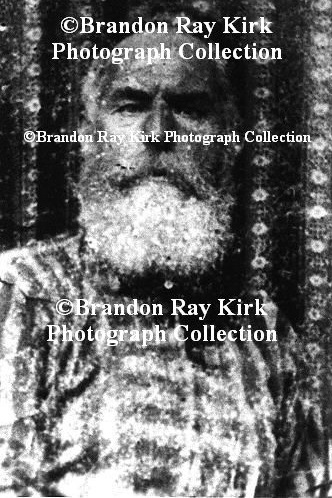
James Wilson Sias

09 Wednesday Oct 2013

Posted by Brandon Ray Kirk in Civil War, Fourteen, Wewanta

≈ Leave a comment

Tags

Appalachia, civil war, Fourteen, Fourteen Mile Creek, Fourteen Post Office, genealogy, history, James Wilson Sias, Lincoln County, photos, Union Army, West Virginia

James W Sias

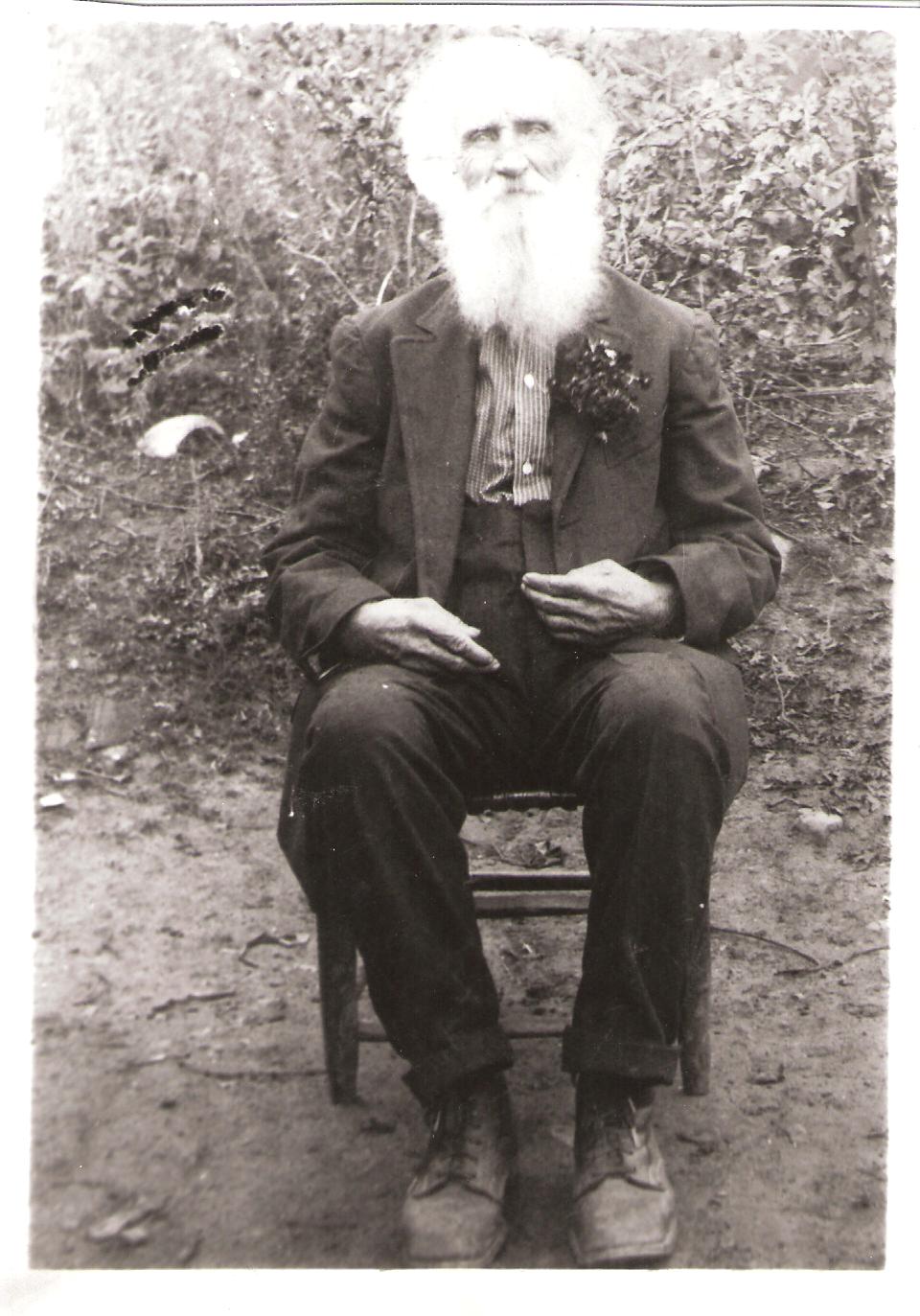
James Wilson Sias, Union veteran and postmaster of Fourteen in Lincoln County, WV


Ike Gartin

08 Tuesday Oct 2013

Posted by Brandon Ray Kirk in Civil War, Little Harts Creek

≈ 4 Comments

Tags

Appalachia, civil war, culture, genealogy, history, Isaac Gartin, life, Lincoln County, Little Harts Creek, photos, U.S. South, West Virginia

Isaac G. "Ike" Gartin, Confederate veteran and resident of Little Harts Creek, West Virginia.

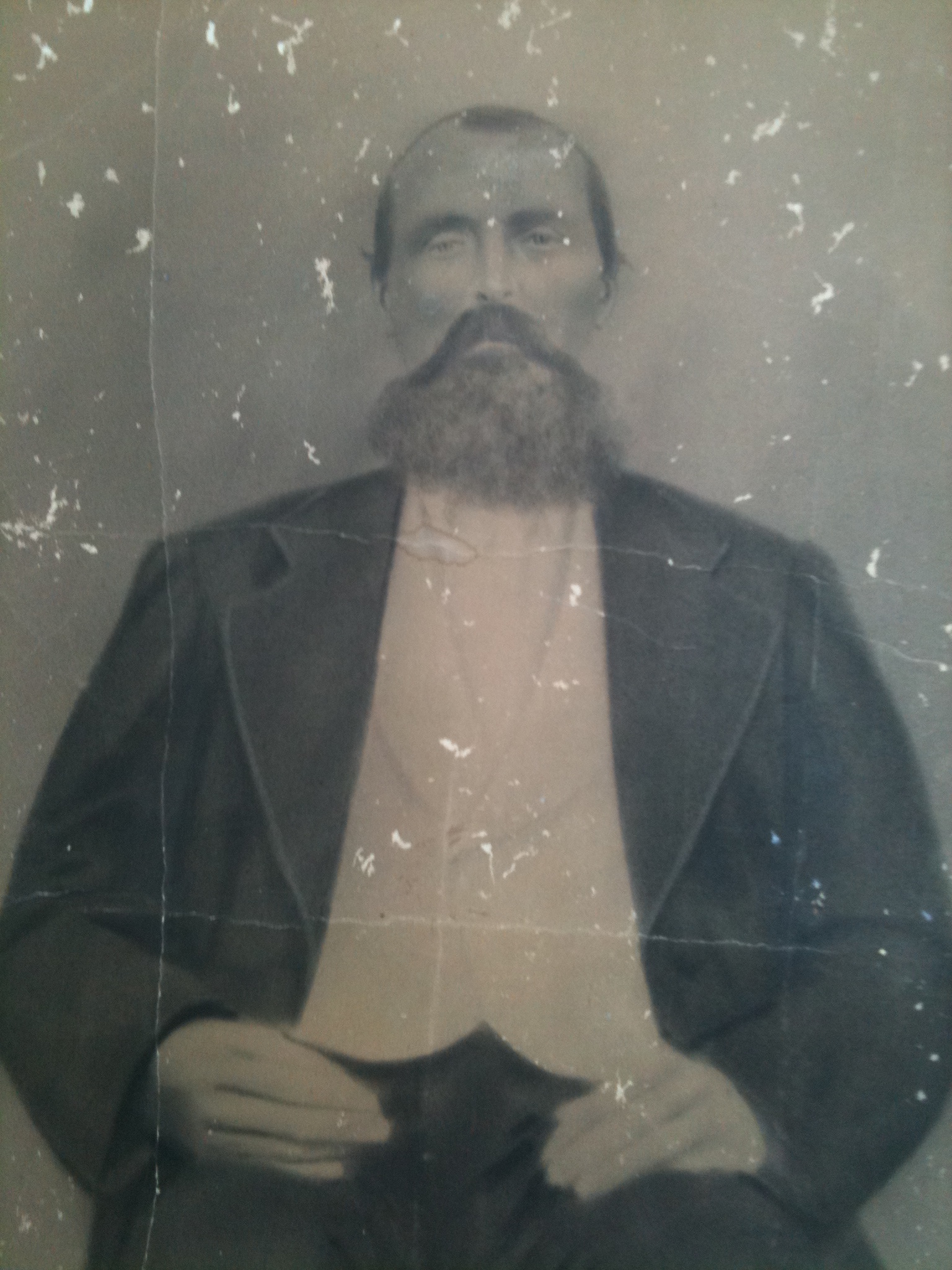
Isaac G. “Ike” Gartin, Confederate veteran and resident of Little Harts Creek in Lincoln County, West Virginia.

Caleb Headley 1

08 Tuesday Oct 2013

Posted by Brandon Ray Kirk in Civil War, Fourteen

≈ Leave a comment

Tags

154th Regiment, Appalachia, Caleb Headley, civil war, Fourteen Mile Creek, genealogy, Hardesty's History of Wetzel County, history, Lincoln County, Mexican War, Monongalia County, Nancy Ann Headley, New Jersey, Revolutionary War, Sarah Headley, Thomas Headley, Tyler County, U.S. South, Ward Adkins, West Virginia, Wetzel County, Will Headley

In the years following the Civil War, Caleb Headley migrated from Wetzel County, West Virginia to the Sulphur Spring Fork of Fourteen Mile Creek in Lincoln County, bringing with him a young wife and some degree of knowledge about medicine. Behind him were Pennsylvania roots, a soldier’s experience in the Mexican and Civil wars, as well as a failed marriage. About fifteen years later, he passed away and was buried on a hill near his home.

Today, Ward Adkins, an 81-year-old walking encyclopedia of Sulphur Spring history, is the best source on Dr. Headley’s life. He was partly raised by Headley’s son, Will, his step-grandfather, who told Adkins what little he knew about his father and eventually gave him a very important family heirloom: a geography book containing genealogical information in his father’s handwriting.

Caleb Headley was born on April 11, 1808, the first son and second child of Dr. Thomas and Sarah (Asher) Headlee, in Pennsylvania. Thomas was born around 1775 in New Jersey and was the son of a Revolutionary War veteran. Sarah was born around 1785 in Virginia.

Caleb had seven known or suspected brothers and sisters: Elizabeth Headley, born about 1807, Mary Headley (c.1811-1881), Anthony Headley (August 11, 1812 – January 1, 1894), Jerusha Headley (March 16, 1815 – May 16, 1884), Sarah Headley (August 22, 1817 – June 18, 1900), Elisha Headley (August 24, 1820 – August 2, 1895), and Nancy Headley, born about 1822.

In 1822, according to Hardesty’s History of Wetzel County, Thomas Headley settled in Tyler County, (West) Virginia with his family where he taught young Caleb what he knew about doctoring prior to his death, which reportedly occurred around 1830 in Monongalia County, (West) Virginia.

On November 2, 1826, Caleb married Nancy Ann Wright in Pennsylvania. Nancy was born on October 15, 1808 in Virginia. Her parents were born in Maryland.

Caleb and Nancy had ten children: Charity Headley, born March 1, 1828; Elizabeth Jane Headley, born June 2, 1829; Thomas J. Headley, born November 23, 1831; Joshua Headley, born April 7, 1832; Sarah A. Headley, born December 8, 1833; Caleb Samuel Headley, born March 30, 1836 or 1837; George Washington Headley, born May 21, 1839; Benjamin Franklin Headley (May 31, 1841 – April 11, 1918), Anthony Headley, born June 3, 1844, and Elijah Headley, born August 1, 1850.

During the 1830s and ’40s, Caleb lived in Tyler County where he was, by his own admission, a practicing physician, member of the Methodist Church and for sixteen years a justice of the peace.

“I don’t think Caleb had any schooling to be a doctor,” Adkins said, in a 2003 interview. “As far as I know, the only thing he had as far as a medical education was studying under his daddy. His daddy was a doctor.”

In 1846, the portion of Tyler County occupied by Headley became Wetzel County.

Some time between 1846 and 1848, Headley reputedly served as a lieutenant in the Mexican War. While no military records have been located at the present time to verify his service, one of his sons made the claim that he had been an officer in the war.

“His son Will told me that he was an officer in a war with Mexico,” said Adkins.

In the 1850 Wetzel County Census, Caleb appeared in the Green District as a 40-year-old farmer (not physician) with $200 worth of real estate. His wife was 32 years old, while the children were listed as follows: Thomas (age 17, farmer, in school), Sarah (age 16, in school), Samuel (age 13, in school), Washington (age 10, in school), Franklin (age 9, in school), and Anthony (age 6).

In 1860, the Headleys maintained their residence in Green District.

When the Civil War began in 1861, Headley joined with most of his neighbors and sided with the North.

“Wetzel County, Virginia, was one of the counties which supported the Union during the War Between the States,” Mary Curtis, a genealogist, wrote in 1959. “The large majority of the settlers were from Pennsylvania and the Piedmont areas of Virginia where slaves were not common, so that their interests lay with the North.”

According to Hardesty’s History of Lincoln County, Headley was captain of a company in the Union army. According to military records, he was captain of Company C, 154th Regiment.

“He was captain of a company in the Civil War,” said Adkins. “That’s in Hardesty’s. And Will said he was an officer. He didn’t know what rank, you know. I was told that he was shot in the back. His backbone was just barely hanging together. I think he was discharged in Ohio.”

Several of Headley’s sons fought for the North. Caleb Samuel, later a resident of Porters Falls in Wetzel County, “served a short time in the Union army as lieutenant,” according to Hardesty’s History of Wetzel County. Anthony, later a resident of Pine Grove in Wetzel County, “was a soldier with the Federal army, serving in Company I, 15th West Virginia Infantry, and he participated in all the fortunes of that regiment, engaging in its battles and witnessing the surrender of Lee at Appomattox.” His term of service was from August 24, 1862 until June 30, 1865.

In 1866, 50-something-year-old Headley settled in present-day Lincoln County and joined the Christian church. By that time, he had separated from his wife Nancy and was involved in an intimate relationship with 16-year-old Sarah Farley of Logan County. The two had their first child on May 1 then married on May 25 in Catlettsburg, Kentucky.

Headley’s separation from his first wife has been a hot topic of conversation among his local descendants.

“They had a rumor going that Dr. Caleb run off and left his first wife, but Will said it wasn’t so,” said Adkins. “I heard his wife died when their son Elijah was fifteen years old, which would have been around 1865.”

However, according to Wetzel County census records, Nancy was very much alive after the separation. In 1870 and 1880, she referred to herself in both census schedules as a widow.

Lincoln County Feud

08 Tuesday Oct 2013

Posted by Brandon Ray Kirk in Ed Haley, Harts, Lincoln County Feud

≈ Leave a comment

Tags

Appalachia, crime, culture, feud, genealogy, Harts, history, life, Lincoln County, Paris Brumfield, photos, West Virginia

Paris Brumfield (1838-1891), Lincoln County feudist.

Paris Brumfield, Lincoln County feudist, 1880-1891.

In Search of Ed Haley 175

24 Tuesday Sep 2013

Posted by Brandon Ray Kirk in Ed Haley, Music, Timber

≈ Leave a comment

Tags

Don Lambert, fiddling, Henry Pauley, Henry Peyton, history, Irvin Lucas, Jack McComas, Jim Franklin, Johnny Dalton, Leander Fry, Lincoln County, Tom Cooper, West Virginia

In 1925, likely stirred by Pomp Wentz’s comment, Fred B. Lambert interviewed Blind Bill Peyton of One Mile Creek, near West Hamlin in Lincoln County. Initially, Mr. Peyton spoke a great deal of his father, Henry Peyton, a fiddler, farmer, and timber man in the Guyandotte Valley.

“My father was among the first settlers on this creek,” Peyton said. “He settled about a mile and a half up from the river and raised all his 13 children in the same house. He followed farming mostly, and timbered some and sold some timber. Raised all kinds of stock — sheep, cows, hogs, horses — one dog at a time. Raised chickens, turkeys, guineas, pea fowls, geese, ducks, etc. My father was a good canoe maker. He made them out of poplar trees by digging out and shaping them, at $12 to $25, according to size. I often went to Logan for rafts. Henry Peyton, my father, Walter Lewis, Bob Lewis, and Dick Cremeans took a big barge of lumber to Cincinnati. Lumber was sawed early by a whip saw.”

“My father was a fiddler — played many a night,” Peyton said. “Young folks had a good many parties. Had all night dances. Uncle John Spears was the oldest fiddler I knew. He lived on Nine Mile Creek of Lincoln up on creek toward head. He was a good one. Some of the old-time tunes were: Maysville, Rebel Raid, Dalton Raid, Sourwood Mountain, Getting Off the Raft, Shelvin’ Rock, Dover, The Coquette, Leather Breeches Full of Stitches, Betsy Walker, Frosty Morning, Rollin’ Down the Sheets, The Grand Spy, Daniel Boone, Capt. Johnson, Cincinnati Belle, Rose in the Mountain, Rocky Mountain, The Blue Rooster, The Morning Star, The Butterfly, Tinpot Alley, Bonaparte Crossing the Alps, Butcher’s Row, The Brush Creek, Peach Tree, Waynesburg, The Basket, Nancy Rowland, The Arkansaw Traveler, and Cumberland Gap.”

Peyton spoke of other Lincoln County fiddlers, some of whom lived in the Harts area during Milt Haley’s time.

“Johnny Dalton, a blacksmith, came from East Virginia, settled at Falls, was a fiddler. Did your work and then played you a tune. Went to Mud River and died. Jack McComas of 6 mi. and Jim Franklin from Upper Two Mile were also fiddlers. Tom Cooper lived on Mud River, in Lincoln, above Hamlin. Morris Wentz and Ben France, who lived in Cabell, often came to Lincoln. Tom Peyton, my brother, Mig Sturgeon, Don Lambert, Irvin Lucas, and Leander Fry were fiddlers. The latter was a good one. Henry Pauley came from Boone County; settled on Parsoner Creek, and removed to near Four Mile of Guyan. He was well liked. Mr. Billy McKendree told of Dangerfield Bryant being a good fiddler and teacher of singing and instrumental music. A shoemaker by trade. He was lame. A good man and perfect gentleman.”

In Search of Ed Haley 174

23 Monday Sep 2013

Posted by Brandon Ray Kirk in African American History, Civil War, Ed Haley, Music

≈ Leave a comment

Tags

Babe McCallister, banjo, Ben France, Billy Walker, Charley Dodd, civil war, fiddling, Henry France, Henry Peyton, history, J.T. "Pomp" Wentz, Jack McComas, Lincoln County, Morris Wentz, West Virginia, William S. Rogers

By the time of the Civil War, Benjamin France of Cabell County was the chief fiddler in the lower Guyandotte Valley. One person interviewed by Fred B. Lambert referred to him as “the best of all” in a list of fiddlers that included even Ed Haley. Of course, I was immediately interested in him.

According to Lambert’s notes, France was born in 1844. He “learned on a gourd fiddle, and was able to play when he entered the army. He served as a Rebel soldier, throughout the Civil War, entering the army, at the age of 17 years. He was noted as one of the best fiddlers of his time. He won two or three times, in contests, but his medals do not show when, nor whether they were first rank. Henry France, his nephew, says he could play all the old fiddle tunes, and could play all night without repeating the same tunes even once.”

France was a resident of Long Branch, near the Lincoln County line and died in 1918.

“From Cabell County, the principal fiddlers were Morris Wentz, Ben France, William S. Rogers and Charley Dodd,” according to J.T. “Pomp” Wentz, a riverboat captain who spoke with Lambert. “Banjoes were not used so much, in those days, but later Rev. Billy Walker and others used to play them very well. As a fiddler, Ben France played with the most ease of any man I ever saw. Morris Wentz played with some difficulty compared with Mr. France, but he could play almost anything. Morris Wentz used to play: ‘The Cold Frosty Morning’, ‘Going Back to Dixie’, ‘The Arkansas Traveler’, ‘Bonaparte’s Retreat’ (this pleased Billy Bramblett, the Frenchman), ‘Ducks in the Pond’, ‘The Puncheon Floor’, ‘Hop Light Ladies’, ‘The Boatsman’, ‘The Cackling Hen’, ‘Sourwood Mountain’, ‘Soldiers Joy’, ‘Little Birdie’, ‘Old Dan Tucker’, ‘Granny Will Your Dog Bite?’, ‘Liza Jane’, ‘The Shelvin’ Rock’, ‘Knock Kneed Nannie’, ‘Chippy, Get Your Hair Cut’, ‘The Rebel Raid’, ‘Turkey in the Straw’, ‘Sugar In the Gourd’, ‘Ginny, the Gal With the Blue Dress On’, ‘Old Joe Clark’, ‘Birdie’, ‘Old Napper’, ‘The Forked Duck’. After dancing the ‘set’ down, they would close with the ‘winder’.”

Apparently, the popular tunes of the day were “Forked Deer” and “The Peach Tree”.

“Babe McCallister, ‘a darkey’ owned by a farmer named McCallister from upper Mud River, was a master of ‘Forked Deer’,” one fiddler raved. “He ‘played the fiddle with the ‘free arm movement,’ the wrist joint only working, the elbow joint still, while the wrist joint was in active movement. To hear the coon on ‘Forked Deer’, his favorite tune, and call the cotillion figure was a great treat. Could I have inherited such talent with my fondness of and for the violin, it would have been dead easy that I should tour the universe and earn a million playing only ‘Forked Deer’ and ‘Peach Tree’.”

Further up the Guyandotte River from the Cabell County towns, in present-day Lincoln County, were fiddlers of lesser note.

“Some of the best fiddlers I ever knew in Lincoln County, were Henry Peyton, father of ‘Blind’ Bill Peyton, and Jack McComas, both of whom played before the Civil War,” said Pomp Wentz.

West Virginia Timber Scene

21 Saturday Sep 2013

Posted by Brandon Ray Kirk in Harts, Timber

≈ 1 Comment

Tags

Appalachia, Clyde Holton, culture, genealogy, Harts, history, life, Lincoln County, photos, timbering, U.S. South, Ward Brumfield, West Virginia

Deputy Sheriff Ward Brumfield with nephew Clyde Holton, taken in Harts, West Virginia, 1915-1920

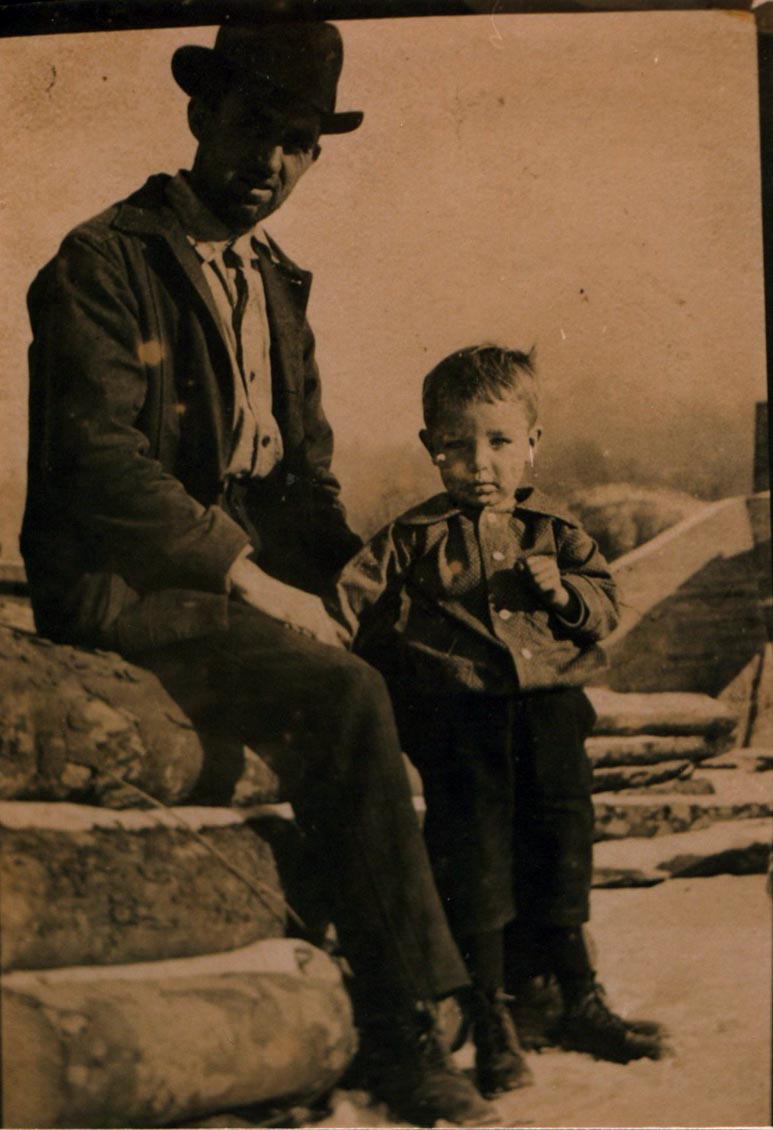
Deputy Sheriff Ward Brumfield with nephew Clyde Holton, taken in Harts, West Virginia, 1918-1920

What Happened to John Fleming?

20 Friday Sep 2013

Posted by Brandon Ray Kirk in Fourteen

≈ Leave a comment

Tags

Appalachia, culture, Fourteen Mile Creek, genealogy, history, John Henan Fry, life, Lincoln County, photos, U.S. South, West Virginia

JohnHFry

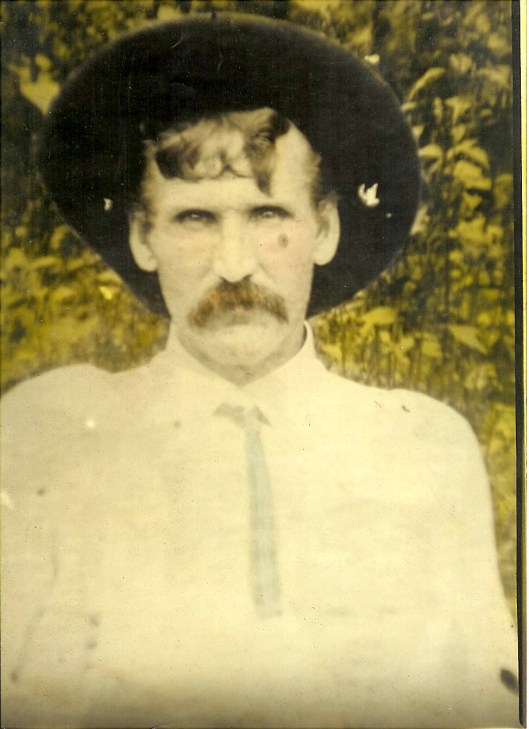
John Henan Fry

Leet, West Virginia

18 Wednesday Sep 2013

Posted by Brandon Ray Kirk in Big Ugly Creek, Timber

≈ Leave a comment

Tags

Appalachia, Big Ugly Creek, culture, genealogy, history, Leet, life, Lincoln County, photos, timbering, West Virginia

Leet, West Virginia, 1905-1920

Leet, West Virginia, 1905-1920

In Search of Ed Haley 155

21 Wednesday Aug 2013

Posted by Brandon Ray Kirk in Ed Haley

≈ 3 Comments

Tags

Abner Vance, Baptist Fry, Ben Walker, Ferrellsburg, George Fry, Hezekiah "Carr" Adkins, history, Jake Adkins, Lincoln County, Low Gap, West Virginia, writing, Yantus Walker

Benjamin Wade Walker, the man who organized the Milt Haley burial party, was born in June of 1851 in southwest Virginia. He came to Harts when he was very young with his mother Marinda (Steele) Davis and a few siblings. The family settled near Green Shoal where Marinda soon married Baptist T. Fry. Baptist was the uncle of George Fry — at whose home the Haley-McCoy murders took place — as well as his closest neighbor in 1889. Walker, then, was a step-first cousin (and former neighbor) to George Fry, perhaps explaining why he was inclined to remove Milt Haley and Green McCoy’s battered corpses from his yard and bury them.

Around 1877, Walker married Juliantes Adkins, a daughter of Enos “Jake” and Leticia McKibbon (Toney) Adkins, large landowners at Douglas Branch. Julia was also a first cousin to Al Brumfield. Mr. and Mrs. Walker settled on Walker’s Branch at Low Gap near West Fork. About 1883, Hezekiah “Carr” Adkins sold them this property, 25 acres on Guyan River originally part of a 260-acre 1855 survey for Abner Vance. The Walkers raised nine daughters and a grandson.

In 1889, following Milt and Green’s murder, Walker risked harm by organizing a burial party for them. He reportedly buried the men on his property. A year later, in 1890, he was ordained a minister in the United Baptist Church. In 1898, he was a founding member of the Low Gap United Baptist Church, which met for over forty years in a school building that still stands near the site of the old Walker homestead. He was president of the district board of education in 1902, 1911, 1912, and 1914. He died in December 1917.

“Rev. B.W. Walker, one of the best known citizens of the county, died at his home at Ferrellsburg, on last Wednesday, after a lingering illness of dropsy,” according to a front page story in the Lincoln Republican dated Thursday, January 3, 1918. “Rev. Walker was a great worker in the Master’s vineyard and had been a consistent Christian for years. He is survived by his wife and eight daughters. Burial services were conducted at the Low Gap cemetery.”

At the funeral, Walker’s beard was full of snow.

Sias men at Fourteen, WV

28 Friday Jun 2013

Posted by Brandon Ray Kirk in Culture of Honor, Fourteen, Wewanta

≈ Leave a comment

Tags

Appalachia, culture, Fourteen, Fourteen Mile Creek, genealogy, Great Depression, history, life, Lincoln County, moonshine, photos, U.S. South, West Virginia, Wewanta

14 Mile Creek men pose with a rifle and jar of moonshine, 1930s

14 Mile Creek men pose with a rifle and jar of moonshine, 1930s

Low Gap Timber Scene

19 Sunday May 2013

Posted by Brandon Ray Kirk in Timber

≈ 2 Comments

Tags

Appalachia, culture, Ferrellsburg, genealogy, life, Lincoln County, logging, Low Gap, Pat Kirk, photos, timbering, U.S. South, West Virginia

Pat Kirk hauling timber, Low Gap, Lincoln County, West Virginia, 1908-1920

Pat Kirk hauling timber, Low Gap (near Ferrellsburg), Lincoln County, West Virginia, 1908-1920

Clifford Dalton, James Browning, and Jake Dalton

18 Saturday May 2013

Posted by Brandon Ray Kirk in Big Harts Creek, Music

≈ Leave a comment

Tags

banjo, Clifford Dalton, culture, Ezra Jake Dalton, fiddler, Harts Creek, history, James Browning, life, Lincoln County, music, photos, West Virginia

Clifford Dalton, James Browning, and Ezra "Jake" Dalton of Harts Creek, Lincoln County, West Virginia, 1935-1950

Clifford Dalton, James Browning, and Ezra “Jake” Dalton of Harts Creek, Lincoln County, West Virginia, 1935-1950

West Virginia Timber Scene

27 Saturday Apr 2013

Posted by Brandon Ray Kirk in Timber

≈ Leave a comment

Tags

Appalachia, culture, genealogy, Lafayette Maynard, life, Lincoln County, Milton Maynard, photos, timbering, U.S. South, West Virginia, Winferd Lucas

West Virginia Timber Scene

Milton Maynard, Winferd Lucas, Lafayette Maynard, and unknown man, of Lincoln County, 1905-1928

P.B. “Fed” Adkins home

04 Thursday Apr 2013

Posted by Brandon Ray Kirk in Harts, Pearl Adkins Diary

≈ 1 Comment

Tags

Appalachia, Fed Adkins, genealogy, Harts, history, life, Lincoln County, Pearl Adkins, photos, West Virginia

Pearl Adkins home, 1980s

P.B. “Fed” Adkins home in Harts, Lincoln County, WV, 1980s

In Search of Ed Haley 81

18 Monday Mar 2013

Posted by Brandon Ray Kirk in Ed Haley

≈ Leave a comment

Tags

Belle Fowler, creative nonfiction, crime, feud, history, Iris Williams, John Fowler, John Hartford, Lawrence Haley, Lincoln County, Milt Haley, Shelby Kirk, writing

Back at Iris Williams’, we met another of her brothers, Shelby Kirk. We told Shelby a little of what we’d heard about Milt’s death from Roxie Mullins, who he said had recently died, then listened to his version of the trouble.

“They brought them in there sometime that night and they said they was killed at the edge of daylight,” he said. “There was a boy John Fowler told me once, he said, ‘I’ve heard my aunt Belle Fowler tell about that.’ Said she was there, a little girl. Said in one of them rooms they had apples picked off of a tree and had them stored, poured out you know, up there in a room. And said she got in that pile of apples and covered her head up with them apples to keep from hearing that when they was getting ready to kill them. They said they was a crying and a begging, wanting not to be killed away from their families and their children but they went right on and did it anyhow. They said they led them out the back door one at a time and as they come out that back door they was a fellow hit them with a double-headed axe — sideways, top of the head.”

I asked Shelby where the killing took place and he said it occurred on the Green Shoal side of the river, opposite where Mr. Kirk had showed us.

“The old house is still standing right there,” he said. “It’s just got some weather-boarding on it. An old log house.”

Shelby tried to describe the way law and order worked around Harts in Milt Haley’s day.

“Boy, they used to have mobs,” he said. “Used to have an outfit called the Night Riders down in here. If they got it in for me or you one — if we’d done something, you know — why, they’d pull straws to see who was gonna do the killing.”

In Search of Ed Haley 78

07 Thursday Mar 2013

Posted by Brandon Ray Kirk in Ed Haley

≈ Leave a comment

Tags

Bernie Adams, blind, Ed Belcher, Harts Creek, history, Iris Williams, John Hartford, Lawrence Haley, Lawrence Kirk, Lincoln County, Logan, Milt Haley, music, West Virginia, writing

The next day, Lawrence and I went to find Milt Haley’s grave on the West Fork of Harts Creek. It had been two years since our initial trip up the Guyandotte Valley and I was excited to once again plant my feet on the grounds of Ed Haley’s childhood. We followed Bob Adkins’ directions to the West Fork of Harts Creek, where we found a confusing sign labeled “East Fork Road” pointing us across a stone bridge and past a somewhat large red brick church. Lower West Fork was very much different from my memories of main Harts Creek — more sparsely settled. It was surprisingly beautiful farm country with a view of an almost-forgotten agrarian way of life. There were old barns, cattle and tiny farms all along the nice little road.

Not surprisingly, Lawrence and I were unable to find the Milt Haley grave, which we figured was located in a thicket on top of one of the surrounding mountains. Hoping for the best, we decided to ask for directions at a nice-looking house. We chose a neat little white home, where an older lady came out and showed almost complete confusion as we asked about Ed Haley, Milt Haley and a grave. Once she figured out what we were talking about, though, she introduced herself as Iris Williams, said she was part-Brumfield and pointed toward the grave just down the road and to the right on a hill. She said her older brother Lawrence Kirk would know all about it. She went back inside and called Lawrence, who said he’d come right over and tell us what he knew about Ed Haley and the Haley-McCoy murders.

It wasn’t long until Lawrence Kirk pulled into the driveway and popped out of his car. He was a short stocky 70-something-year-old fellow with thinning hair and glasses. He made his way toward the porch, grinning and waving a newspaper. He said he had seen me on TV and unraveled the paper, which featured a front-page story about our recent visit to see Lynn Davis in Huntington.

In one of those “strange contact moments,” I introduced him to Lawrence Haley. It was a first-ever meeting of men whose ancestors had shot it out along Harts Creek over one hundred years earlier. They seemed to like each other right away and made it clear they held no grudges over their ancestors’ troubles. This was great news — no barriers to information flow. However, I have to admit, I got a little adrenaline rush in thinking that Lawrence and I were now in “enemy territory.” In my mind, the 1889 feud was still smoldering in the hearts and minds of at least a few people.

Instead, we all sat on Mrs. Williams’ front porch with Mr. Kirk, who remembered Ed well.

“I’ve heard Ed Haley play up there at the courthouse square many of a time in Logan with Ed Belcher,” he said. “They’d get together up there sometimes and play all day. I’d be with my dad up there when I was a youngster. I kinda got acquainted with the old man, enough to speak to him. He’d always ask you who it is. ‘Yeah, I know some Kirks,’ he’d say.”

Mr. Kirk said he used to see Ed and his wife on the Logan-Williamson bus that ran between the coalfields and Huntington.

“I felt sympathetic towards them,” he said. “They were blind — handicapped — and I’d notice them. I can’t remember that well about him. I can’t remember too much how he was dressed. It bears on my mind about ever time I ever saw him he was bald-headed. I’m not sure…but he played that fiddle.”

Mr. Kirk last saw Ed play music on a Sunday just before the election of 1948 or ’50 at the Harts Tavern. His uncle Taylor Brumfield was the owner of the tavern. Ed was there with Bernie Adams, who Mr. Kirk called “a pretty good guitar player.”

“Bernie was bad to drink,” he said. “He just drunk liquor until it finally killed him, I reckon.”

Ed was “being pretty sassy” at the tavern.

“They wasn’t giving him enough money to please him, you know,” Mr. Kirk said. “They was buying him a few drinks but he felt like fellows ought to throw him in a few dollars of money along. But that bunch there, they had to have their quarters to buy some beer with.”

Ed told Bernie, “Well hell, let’s go. This tight bunch here won’t buy a man no beer. Can’t get a crowd together no how.”

Bernie said, “Now, Ed. Don’t get to talking too rough about these fellows around Harts. Some of your folks didn’t have too good a relation with these Brumfields around here.”

“Aw, to hell with these damn Brumfields,” Ed said. “There’s nobody afraid of these Brumfields.”

I almost fell off the porch laughing.

In Search of Ed Haley 68

19 Tuesday Feb 2013

Posted by Brandon Ray Kirk in Ed Haley

≈ Leave a comment

Tags

Al Brumfield, Bob Adkins, Brooke Dingess, Cat Fry, feud, Green McCoy, Harts Creek, history, Hugh Dingess, Jake Adkins, John Hartford, Lawrence Haley, Lincoln County, Milt Haley, West Virginia

The next day, Al and his posse headed for Hugh Dingess’ “great old big house” on Harts Creek. Bob’s mother Brooke Dingess was a witness to events that followed.

“They stayed all night there and they wanted to be awful sure that they were right, you know,” Bob said. “See, they didn’t want to kill somebody that was innocent. Well they took Haley outside and put handcuffs behind him and gagged him so he couldn’t make a noise and stuck a gun in his back and told him if he made any noise they’d shoot him, see? And a funny thing happened out there, though. He broke loose from them and pretty near got away.

“And then they told McCoy that they had taken Milton down there to hang in the orchard, and if he had anything to say he had better be saying it, see? He broke down and cried and he told them the truth about it. And he told them that they pulled straws on which one would do the shooting and it fell on Green and he got sick — vomited — and he just couldn’t do it. So Haley said, ‘You ain’t got no nerve. Give me the gun and I’ll do it.’ And he claimed Haley was the one that shot. He didn’t do it.”

As if to prove his story, Green then said something to the effect of, “You go down there and check at that sinkhole and you’ll see a pile of shavings that I whittled with my long razor.”

Bob said, “Well, Haley came out and cursed McCoy and told him he didn’t have any nerve and said everything to him. Said that fellow just cried and said, ‘Now, you know I’m telling every bit the truth.'”

Bob said the mob was convinced by McCoy’s confession, but I felt it had a few holes in it. First of all, what if Green skewed the truth by blaming everything on Milt — who he thought was dead — in the hopes of saving his own life? Second of all, why would he and Milt have only had one gun between them for their ambush? Of course, maybe these details were worked out by subsequent confessions not remembered by any living person today. In any case, the mob was apparently satisfied.

Bob said, “They didn’t do anything to them there. They weren’t nobody’s fool, now. They didn’t want any murder going on around their home; then it would be too easy to pin it on them. They’d go to somebody else’s home.”

Bob said his aunt Catherine Fry — an eyewitness to subsequent events — told him the rest of the story about Milt’s murder. He said she was nineteen years old at the time and lived at the mouth of Green Shoal on the Guyandotte River. She said a mob arrived at her home during the night and woke her from her sleep.

“Well, Cat said the first thing she knew she was sitting in the living room — the front room, you know,” Bob said. “They had whiskey there. A lot of drinking going on and a whole bunch of them… Must have been ten to fifteen maybe. The Brumfields and Dingesses all mixed up, you know. Haley and McCoy were back in the bedroom under guard. They had them both in bed.”

Milt continued to verbally abuse Green for admitting their guilt.

“Around ten o’clock, somebody shot the lamp out and Cat run and jumped behind a flour barrel over in the kitchen corner until the fracas was over.”

Milt and Green were shot in bed then pulled out in the yard where the mob “took an axe and cut their heads open and shot them all up — shot them all to pieces.”

I asked Bob what happened next and he said, “They got on their horses and left — walked off and left them. Al Brumfield was one of the head fellows who was there and he was a first cousin of Dad’s. Evidently somebody else took his horse. He came down to Grandfather’s house, which was his uncle by marriage and he told Grandpaw what they had done. Grandpaw told him to go on upstairs and go to bed. No, he did not want to do that because he was afraid those McCoy and Haley people might come in on him, friends or something, [and trap him in the house]. He slept up in the hollow under a beech tree up there. It was summertime, you know. I bet he didn’t sleep good and if he did he shouldn’t have. And the next morning he got out and he ate his breakfast with Grandpaw and then he went on to Harts — home, you know?”

In the next few days, someone hauled Milt and Green’s bodies to the West Fork of Harts Creek and buried them in a single, unmarked grave.

Bob gave us directions to the grave, which he’d last seen as a boy.

“You go up main Harts Creek. It’s not over a mile, I don’t think. It’s the first big creek that turns off to your left. You turn to the left there across the creek and go up that road about a mile or a mile and a quarter and they’s a little hollow there and they’s a house right in there. It’s been a good while since I been up there. If you’ll ask some of them people there, they’ll tell you right where it is.”

Lawrence and I planned to go to Harts in a few days and find it.

Bob said, “We lived there in a house right down below there for one year before we came down here. We sold our old farm up there and we had no where to go and we moved over there on an uncle of mine’s farm. And I farmed one summer right down below there. I went up there and saw that. Had just a little stone. Two of them there. They was buried in the same grave. Them stones may be torn down and gone now. We left there in 1919 or ’20.”

What Happened to John Fleming?

18 Monday Feb 2013

Posted by Brandon Ray Kirk in Big Harts Creek, Culture of Honor

≈ 2 Comments

Tags

Appalachia, Charlie McCoy, crime, Frank Fleming, genealogy, Harts Creek, history, John Fleming, John Henan Fry, life, Lincoln County, U.S. South, West Virginia, writing

Newspaper article, 1908

Newspaper article, 1909

← Older posts
Newer posts →

Feud Poll 1

If you had lived in the Harts Creek community during the 1880s, to which faction of feudists might you have given your loyalty?

Categories

  • Adkins Mill
  • African American History
  • American Revolutionary War
  • Ashland
  • Atenville
  • Banco
  • Barboursville
  • Battle of Blair Mountain
  • Beech Creek
  • Big Creek
  • Big Harts Creek
  • Big Sandy Valley
  • Big Ugly Creek
  • Boone County
  • Breeden
  • Calhoun County
  • Cemeteries
  • Chapmanville
  • Civil War
  • Clay County
  • Clothier
  • Coal
  • Cove Gap
  • Crawley Creek
  • Culture of Honor
  • Dingess
  • Dollie
  • Dunlow
  • East Lynn
  • Ed Haley
  • Eden Park
  • Enslow
  • Estep
  • Ethel
  • Ferrellsburg
  • Fourteen
  • French-Eversole Feud
  • Gilbert
  • Giles County
  • Gill
  • Green Shoal
  • Guyandotte River
  • Halcyon
  • Hamlin
  • Harts
  • Hatfield-McCoy Feud
  • Holden
  • Hungarian-American History
  • Huntington
  • Inez
  • Irish-Americans
  • Italian American History
  • Jamboree
  • Jewish History
  • John Hartford
  • Kermit
  • Kiahsville
  • Kitchen
  • Leet
  • Lincoln County Feud
  • Little Harts Creek
  • Logan
  • Man
  • Matewan
  • Meador
  • Midkiff
  • Monroe County
  • Montgomery County
  • Music
  • Native American History
  • Peach Creek
  • Pearl Adkins Diary
  • Pecks Mill
  • Peter Creek
  • Pikeville
  • Pilgrim
  • Poetry
  • Queens Ridge
  • Ranger
  • Rector
  • Roane County
  • Rowan County Feud
  • Salt Rock
  • Sand Creek
  • Shively
  • Spears
  • Sports
  • Spottswood
  • Spurlockville
  • Stiltner
  • Stone Branch
  • Tazewell County
  • Timber
  • Tom Dula
  • Toney
  • Turner-Howard Feud
  • Twelve Pole Creek
  • Uncategorized
  • Warren
  • Wayne
  • West Hamlin
  • Wewanta
  • Wharncliffe
  • Whirlwind
  • Williamson
  • Women's History
  • World War I
  • Wyoming County
  • Yantus

Feud Poll 2

Do you think Milt Haley and Green McCoy committed the ambush on Al and Hollene Brumfield in 1889?

Blogroll

  • Ancestry.com
  • Ashland (KY) Daily Independent News Article
  • Author FB page
  • Beckley (WV) Register-Herald News Article
  • Big Sandy News (KY) News Article
  • Blood in West Virginia FB
  • Blood in West Virginia order
  • Chapters TV Program
  • Facebook
  • Ghosts of Guyan
  • Herald-Dispatch News Article 1
  • Herald-Dispatch News Article 2
  • In Search of Ed Haley
  • Instagram
  • Lincoln (WV) Journal News Article
  • Lincoln (WV) Journal Thumbs Up
  • Lincoln County
  • Lincoln County Feud
  • Lincoln County Feud Lecture
  • LinkedIn
  • Logan (WV) Banner News Article
  • Lunch With Books
  • Our Overmountain Men: The Revolutionary War in Western Virginia (1775-1783)
  • Pinterest
  • Scarborough Society's Art and Lecture Series
  • Smithsonian Article
  • Spirit of Jefferson News Article
  • The Friendly Neighbor Radio Show 1
  • The Friendly Neighbor Radio Show 2
  • The Friendly Neighbor Radio Show 3
  • The Friendly Neighbor Radio Show 4
  • The New Yorker
  • The State Journal's 55 Good Things About WV
  • tumblr.
  • Twitter
  • Website
  • Weirton (WV) Daily Times Article
  • Wheeling (WV) Intelligencer News Article 1
  • Wheeling (WV) Intelligencer News Article 2
  • WOWK TV
  • Writers Can Read Open Mic Night

Feud Poll 3

Who do you think organized the ambush of Al and Hollene Brumfield in 1889?

Recent Posts

  • Logan County Jail in Logan, WV
  • Absentee Landowners of Magnolia District (1890, 1892, 1894)
  • Charles Spurlock Survey at Fourteen Mile Creek, Lincoln County, WV (1815)

Ed Haley Poll 1

What do you think caused Ed Haley to lose his sight when he was three years old?

Top Posts & Pages

  • Big Coal Deals for Logan County, WV (1917)
  • Civil War Gold Coins Hidden Near Chapmanville, WV
  • White Family History at Pecks Mill, WV (1937)
  • West Virginia Banjo Player 5
  • William Lucas, Revolutionary War Veteran of Giles County, VA

Copyright

© Brandon Ray Kirk and brandonraykirk.wordpress.com, 1987-2023. Unauthorized use and/or duplication of this material without express and written permission from this blog’s author and/or owner is strictly prohibited. Excerpts and links may be used, provided that full and clear credit is given to Brandon Ray Kirk and brandonraykirk.wordpress.com with appropriate and specific direction to the original content.

Archives

  • February 2025
  • January 2025
  • October 2023
  • September 2023
  • December 2022
  • November 2022
  • May 2022
  • April 2022
  • February 2022
  • November 2021
  • October 2021
  • September 2021
  • June 2021
  • May 2021
  • April 2021
  • March 2021
  • February 2021
  • January 2021
  • December 2020
  • November 2020
  • October 2020
  • July 2020
  • June 2020
  • May 2020
  • April 2020
  • March 2020
  • February 2020
  • January 2020
  • December 2019
  • November 2019
  • October 2019
  • September 2019
  • August 2019
  • July 2019
  • June 2019
  • May 2019
  • April 2019
  • March 2019
  • February 2019
  • January 2019
  • December 2018
  • November 2018
  • October 2018
  • September 2018
  • August 2018
  • July 2018
  • June 2018
  • May 2018
  • April 2018
  • March 2018
  • February 2018
  • January 2018
  • December 2017
  • November 2017
  • October 2017
  • September 2017
  • August 2017
  • July 2017
  • June 2017
  • May 2017
  • April 2017
  • March 2017
  • February 2017
  • January 2017
  • December 2016
  • November 2016
  • October 2016
  • September 2016
  • August 2016
  • July 2016
  • June 2016
  • May 2016
  • April 2016
  • March 2016
  • February 2016
  • January 2016
  • December 2015
  • November 2015
  • October 2015
  • September 2015
  • August 2015
  • July 2015
  • June 2015
  • May 2015
  • April 2015
  • March 2015
  • February 2015
  • January 2015
  • December 2014
  • October 2014
  • September 2014
  • August 2014
  • July 2014
  • June 2014
  • May 2014
  • April 2014
  • March 2014
  • February 2014
  • January 2014
  • December 2013
  • November 2013
  • October 2013
  • September 2013
  • August 2013
  • July 2013
  • June 2013
  • May 2013
  • April 2013
  • March 2013
  • February 2013
  • January 2013
  • December 2012
  • November 2012

Enter your email address to follow this blog and receive notifications of new posts by email.

Join 2,927 other subscribers

Tags

Appalachia Ashland Big Creek Big Ugly Creek Blood in West Virginia Brandon Kirk Cabell County cemeteries Chapmanville Charleston civil war coal Confederate Army crime culture Ed Haley Ella Haley Ferrellsburg feud fiddler fiddling genealogy Green McCoy Guyandotte River Harts Harts Creek Hatfield-McCoy Feud history Huntington John Hartford Kentucky Lawrence Haley life Lincoln County Lincoln County Feud Logan Logan Banner Logan County Milt Haley Mingo County music Ohio photos timbering U.S. South Virginia Wayne County West Virginia Whirlwind writing

Blogs I Follow

  • OtterTales
  • Our Appalachia: A Blog Created by Students of Brandon Kirk
  • Piedmont Trails
  • Truman Capote
  • Appalachian Diaspora

BLOOD IN WEST VIRGINIA is now available for order at Amazon!

Blog at WordPress.com.

OtterTales

Writings from my travels and experiences. High and fine literature is wine, and mine is only water; but everybody likes water. Mark Twain

Our Appalachia: A Blog Created by Students of Brandon Kirk

This site is dedicated to the collection, preservation, and promotion of history and culture in Appalachia.

Piedmont Trails

Genealogy and History in North Carolina and Beyond

Truman Capote

A site about one of the most beautiful, interesting, tallented, outrageous and colorful personalities of the 20th Century

Appalachian Diaspora

  • Subscribe Subscribed
    • Brandon Ray Kirk
    • Join 789 other subscribers
    • Already have a WordPress.com account? Log in now.
    • Brandon Ray Kirk
    • Subscribe Subscribed
    • Sign up
    • Log in
    • Report this content
    • View site in Reader
    • Manage subscriptions
    • Collapse this bar
 

Loading Comments...