
• About

Brandon Ray Kirk

~ This site is dedicated to the collection, preservation, and promotion of history and culture in my section of Appalachia.

Brandon Ray Kirk

Tag Archives: Johnny Hager

In Search of Ed Haley 81

20 Wednesday Mar 2013

Posted by Brandon Ray Kirk in Big Harts Creek, Cemeteries, Ed Haley, John Hartford, Music, Spottswood

≈ 1 Comment

Tags

accordion, Bernie Adams, blind, Clifford Belcher, Ed Belcher, Ed Haley, Ewell Mullins, fiddle, guitar, harmonica, history, Hoover Fork, Inez, John Adams, John Hartford, Johnny Adams, Johnny Hager, Kentucky, Liza Mullins, Milt Haley, music, Peter Mullins, Robert Martin, Turley Adams, Violet Adams, West Fork

Satisfied with our stop on West Fork, Lawrence and I said our farewells to the Kirks and went to see Turley and Violet Adams on Trace Fork. After some small talk about new developments, Turley told us about his uncle Johnny Hager and father Johnny C. Adams traveling with Ed in the early days. He said Uncle Johnny was the one who got Haley to take his music on the road, while his father just traveled around with them.

“They left here playing music together,” Turley said. “My father just helped them take care of their musical instruments — carried it around and stuff — but they done the music. He would sing with somebody but he never did sing by hisself. And Ed Belcher, I think, played with them then. He could play anything but played a guitar mostly.”

So where all did they travel to?

“They played up at Logan on the radio at one time,” Turley said. “They had a program on up there, Ed Belcher did. Oh man, that’s been back in the thirties. Maybe ’36, ’35. I was just a little bitty boy. I just heard these tales — I don’t know them for sure.”

I asked about Johnny Hager.

“I was just a great old big boy the last time I seen Johnny Hager,” Turley said. “He came to our house, stayed around a little while and left. He was kindly a small fella. My dad was, too. Ed would make two of ary one of them. He was a great big feller, Ed was. Now Ewell Mullins, they was all buddies. Now Johnny Hager and Ed could play music. I heard an old guy on television one day talking about how him and Ed used to play in front of a church somewhere together. Yeah, he called him ‘Blind Fiddling Ed Haley.’ Said he’s just a real good friend to him. But he lives in Inez, Kentucky, that feller does.”

I said, “Well, isn’t Inez where Milt is supposed to be from?”

Turley said, “Milt, now my dad just could remember him. He said he was a hard-working fellow and when he’d come in home he’d just tell them boys, ‘Right now, we got to have a fight and get everything settled and we’ll be all right.’ They liked to fight. I guess that was Ed and he had how many more — two more?”

I said, “You mean Ed had brothers?” and Turley said, “I think he did. I believe my dad said he had a brother and one of them got in a fight one time and he bit Milt’s ear off right in the yard right down there. Now, they was Milt’s boys. I guess Ed is Milt’s boy, ain’t he?”

Lawrence said he’d never heard of his father ever having any brothers or sisters, but it sure was a strange coincidence that we heard a story about “Milt’s ear” right after hearing Bob Adkins’ account of Green and “the nick.” Maybe Milt had the nick — which would’ve reversed their roles in Bob’s story of their final days.

So Ed had brothers?

“Far as I know, they was two or three more of them from the tales they told, you know,” Turley said. “Uncle Peter and Aunt Liza used to tell it. Said every time they come home — Milt and them boys — said he’d just fight with all of them at one time. Have a good time. Say, ‘Now we’re friends.’ Back then, that’s what they believed in.”

This was a major development.

“I just heard these tales,” Turley said. “I don’t know how true they are. About Milt coming home and say, ‘Now, we’ll straighten ‘er out right now and we won’t have no more problems while I’m here.’ That’s the way he run his family, you know. That old woman said, ‘I’ll agree to that. That’s the way it ought to be done.’ I don’t guess she could do anything with them boys.”

Hoping for clues about Ed’s “brothers,” I asked if any of the old gravestones in the cemetery behind Turley’s had any writing on them. Unfortunately, Violet said all the markers had rolled down the hill in recent years and the land had leveled out to where it didn’t even resemble a cemetery. All she knew about the cemetery was that there was a “big grave” in it at one time that belonged to a woman with the last name of Priest (she was the only person buried there who her mother-in-law had actually known).

Turley said he last heard Ed play the fiddle at Clifford Belcher’s tavern on Harts Creek where he played for money and drinks. Violet remembered him playing music all night at her father’s home on Hoover Fork with Robert Martin (her great-uncle) and Bernie Adams. She described Bernie as a “real skinny” bachelor who sang “a little bit but not much” and who “was a real good guitar player, but he never would hardly play.”

“He’d get to drinking and he’d play but if he wasn’t drinking he wouldn’t play,” she said.

Turley said Bernie could also play the banjo, harmonica, fiddle and accordion.
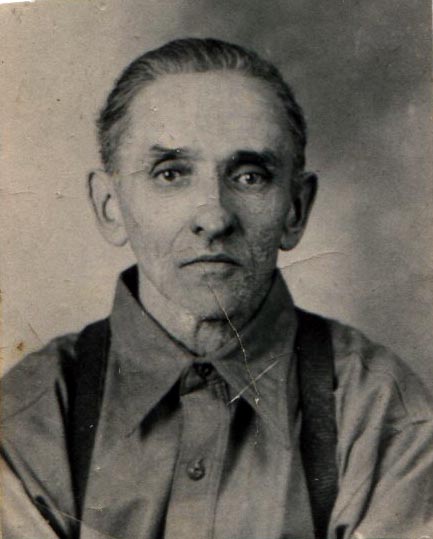
Johnny Hager

04 Monday Mar 2013

Posted by Brandon Ray Kirk in Big Harts Creek, Ed Haley, Music

≈ Leave a comment

Tags

Appalachia, banjo, Boone County, Ed Haley, fiddler, genealogy, history, Johnny Hager, Logan County, music, photos, U.S. South, West Virginia

Johnny Hager, about 1900-1930

Johnny Hager (1876-1955), a banjo player and fiddler who lived in Boone County, West Virginia

In Search of Ed Haley 35

21 Friday Dec 2012

Posted by Brandon Ray Kirk in Ed Haley

≈ Leave a comment

Tags

Appalachia, Calhoun County, Ed Haley, fiddler, history, John Hartford, Johnny Hager, Laury Hicks, Logan County, music, U.S. South, Ugee Postalwait, West Virginia, writing

     A few weeks later, I met Ugee Postalwait at her home in Akron, Ohio. An energetic, feisty woman with a band-aid on her nose, she didn’t look nearly as old as she said she was (eighty-something). She was very anxious to talk about Ed Haley and her memories seemed sharper than when I’d first called her. She bragged about him right away.

     “He had the brain of music,” she said. “He’s one of the best I ever heard. You could name a tune and if he didn’t know it and you sang it to him one time he knowed it then, and when you heard it the next time he’d blow your stack.”

     “Now they is some people’ll tell you my dad was better — Laury Hicks,” she continued, wasting no time in bragging on her father. “He and Ed was about the same age. Both born in about 1880.”

     I asked Ugee to recall her childhood, when she first saw Ed Haley.

     “The first time I ever seen Ed Haley, I was about five years old,” she said. “Dick Joblin told him that he wanted him to hear a boy that he knowed played music and he brought him there to Dad. Ed was about — oh, he must’ve been around twenty maybe, something like that. He was a young man. Dick had my dad to play the fiddle and he played three pieces: ‘Arkansas Traveler’ and another’n I can’t remember right now and ‘Sally Goodin’. Ed said, ‘If that next’n had come up as strong as the first few I heard, I’d never pulled my bow across that fiddle as long as I lived.’ And Dad at the time had his first fiddle. My dad made his first fiddle out of a cigar box and that’s what he learned on and he had that up till I was about ten or twelve years old.”

     Ugee said, “Then the next time I seen Ed, he come there with John Hager.”

     I asked her how Ed looked and she said he had on a suit and plug hat and had his fiddle in a flour sack.

     “They stayed all winter, and they left on the first day of spring,” she said. “I’ll never forget that. There was a little narrow country road and as long as I live I’ll always see Ed, and Johnny leading him around a mud hole. We went out on the bank and watched them as they left and I stood there and cried after him and just cut a shine. Well, Ed then sent back a card — I think I still got it. ‘I love your wife, but oh your kids’ — from White Sulphur Springs.”

     I asked Ugee if she had seen the picture of Ed and Johnny at White Sulphur Springs.

     “Oh, yeah, I got that someplace in a box with a bunch of my pictures,” she said, before correcting herself. “Well, I think I give Larry all the pictures I had of Ed and Ella.”

     When I pulled out the one of Ed and Johnny, she said, “Yeah, that’s John Hager. He was a little fella. That banjo had the longest neck I ever seen.”

    She then pointed to Ed and said, “That looks just exactly like him. He wore dark glasses then. After he got married he stopped wearing dark glasses. Ed was six foot or something like that. Well Dad was a real little skinny guy like Ed Haley when he was young. He weighed about 144 pounds and then he had pneumonia fever and come near to dying. When he got over that, he gained weight. Went up to 175 pounds. But he weighed about 200 pounds. Dad was tall.”

     Ugee said Ed stopped wearing his derby and gained a little weight after marrying Ella. I was surprised to hear her describe him as a “little skinny guy” but she insisted, “Yeah, looked like you put a pair of britches up on a fence rail. Ed said to me one day, ‘Ugee, can you make a shirt?’ I said, ‘Well sure I can make a shirt.’ Well, he come back from the store with material and I made him three shirts. He laughed about it. He said, ‘I want long tails. They won’t slip out of my pants.'”

     Ugee said, “Yeah, I’ve seen these pictures.”

     “This one,” she said, pointing to the picture of Ed used on the cover of Parkersburg Landing, “I don’t remember ever seeing that one of Ed. He looks to me like he’s been on a drunk.”

     Ugee tried to describe the way things were when she was a girl in Calhoun County.

     “When I was growing up and in the cornfield hoeing corn, you could hear singing on the mountains,” she said. “There was music in that country and very few people didn’t play some kind of music. My brother Russell played the banjo. My brother Shirley played the guitar and would’ve made a good fiddle player if he’d went ahead at it. I used to pick up the fiddle and see-saw a little bit. I can’t any more. We had a string band at our house, you might say. Mom played the organ and I went to playing the guitar. Anyway, they was nobody that come in that country that played the fiddle within thirty, forty or fifty miles away that wouldn’t come to our place and play music.”

     The Hicks home took on a party atmosphere when Haley arrived.

     “When Ed Haley was in the country, they come from miles around to our house,” Ugee said. “Dad would get out and tell everybody that Ed was there or Ed was gonna be there a certain day. They’d come through the day. Everybody did. Dad and them would play music all day — half a night.”

     Ugee said she used to get up around two o’clock in the morning to see who’d be eating breakfast in a few hours.

     Some of her happiest memories were of Haley’s visits to her father’s home.

     “Dad’d go out there on the porch and if Ed was a playing music and if I was in the kitchen a cooking he’d go out and tell Ed to play ‘Carroll County Blues’,” she said. “Oh, I’d come out of that kitchen just a hitting that floor and a dancing all the way out there on the porch. I’d say, ‘Ed, don’t do that. You’ll not get no dinner ’cause I can’t hold my feet when you play that.’ Every time he played that, I’d dance. And Dad, when he played ‘Sally Goodin’, that’s when I’d dance for him. Mom didn’t want me to dance. She tried to keep me from it but I’d go out under them old oak trees out there on them old flat rocks and just dance, you know.”

     I asked how far the Hicks home was from Harts Creek and Ugee said, “I would say that’s pretty close to a hundred mile. I never was in around Logan. I always wanted to go because Nora and Aunt Rosie lived up there. Dad and the boys, they used to go see them.” Aunt Rosie, she said, was Bill Day’s wife, while Nora was her daughter. I never knew the Days lived around Logan, West Virginia.

Parkersburg Landing 34

20 Thursday Dec 2012

Posted by Brandon Ray Kirk in Ed Haley

≈ Leave a comment

Tags

Akron, Calhoun County, Ed Haley, history, John Hartford, Johnny Hager, Laury Hicks, Lawrence Haley, music, Ohio, Rector Hicks, Ugee Postalwait, West Virginia, writing

     By some accounts, Dr. Lawrence Hicks was Ed Haley’s best friend. Hicks was a well-known fiddler who practiced veterinary medicine in Calhoun County, West Virginia. Ed thought enough of Hicks to name his youngest son after him and, according to Parkersburg Landing, came to play the fiddle at his grave when he died in 1937. With Lawrence Haley’s encouragement, I telephoned Ugee Postalwait, a widow of advanced age and the only daughter of Dr. Hicks. Ugee (pronounced “you-gee”) was a resident of Akron, Ohio — one of those industrial towns flooded by job-seeking mountaineers some four decades ago.

     “I’m a friend of Lawrence Haley’s in Ashland and I’m very much interested in his father, Ed Haley,” I told her. “I was just visiting with Lawrence and he said you knew him real well. I was wondering if you would tell me about him.”

     “Well, I don’t know what you want me to tell you about,” Ugee said. “My dad and him was two of the finest fiddlers I ever heard. My dad’s name was Laury Hicks. Well, Lawrence was his name but they called him Laury. A lot of them called him Dr. L.A. He was a veterinarian, but he was a fine fiddler. Him and Ed were very close friends for years and years — ever since I was a little girl. They was both born in 1880. They loved each other. And Mom and Ella got along the same way. Mom was born in 1882. She lived to be a hundred years old. She played the organ. She was a good singer.”

     I said, “Now, there’s a story on that album where Ed went to this grave and played over it. Was that your dad?”

     “Yes,” she said. “They was talking one time, whichever one died first the other one was supposed to play the fiddle at their funeral. Dad requested that he play ‘When Our Lord Shall Come Again’ and said that he wouldn’t meet his Lord in the air until Ed played. Dad died on the 18th day of January in ’37 but Kentucky and Ashland was under water. The water was up so high in ’37 that Ed and Ella couldn’t get there until after that and they played the song that dad requested.”

     I asked Ugee where all that went down and she said, “Dad’s buried up there at the home place on Route 16 in Calhoun County between Chloe and Stinson — as you come up from Arnoldsburg. Him and Mom and my brothers.”

     Calhoun County, I discovered, is a rural spot wedged in the backcountry between the Little Kanawha and Elk rivers northeast of Charleston, the state capitol. It is some 75 miles away from Haley’s birthplace on Harts Creek, at least as the crow flies. In Ed Haley’s time, it was a real hot bed of musicians.

     I wondered if Laury Hicks made any recordings. No, Ugee said, although his fiddle was still around. She gave it to Harold Postalwait, her son in Rogersville, Alabama.

     “He just had it refinished and everything,” she said.

     Ugee’s memories were warming up: “Ed and Ella and all the family used to come stay at our home — not for days — but for maybe months. We had some beautiful music there. I tell you, they ain’t nothing that I’ve ever heard on the TV or any place else to beat Ed Haley and my dad playing the fiddle. Ed Haley was one of the best I ever heard. Well, I thought my dad was too, but Ed was smoother. I’m always glad to talk about Ed Haley. He’s the only one that I ever heard where my dad would play and he’d second on the fiddle. Like, you’re singing a song and somebody singing alto behind it.”

     I told Ugee what Lawrence said about Ed being able to play the banjo and she agreed. “Ed could play a guitar like crazy, too. There’s where Ralph learned to play a guitar — Ed learned him. And Ed could play a mandolin, too. He could play any kind of music, anything that had a string. Now Dad could thump a banjo a little but he wasn’t what you’d call a banjo player.”

     Ugee said, “I wish you coulda been around through that country back when I was a girl a growing up so you coulda heard the music that was in that country. They really had good musicians. Rector Hicks, he was a cousin of mine, born and raised right across the hill. That was Clay Hicks’ boy. He used to come over and Dad would learn him to play. He lived across the hill on White Oak and there’s where Ed and Ella went all the time to visit.”

     I wondered if Rector was still around and she said no — that he had died a few years ago in 1989. She promised to talk with his widow in Akron, who supposedly had recordings of his music. Maybe such recordings would provide clues about Ed’s fiddling.

     I asked Ugee if she ever met John Hager, the banjo-player shown with Ed in the White Sulphur Springs photograph.

     “Oh, I sure did,” she said. “Played the banjo. They stayed at our house one whole winter, Ed and John, and then the next time that Ed come back he had a fella playing the guitar with him. I can’t think of his name but I can see his face. Ed was a tall slender fella then.”

     I invited Ugee to my upcoming show in Akron but all I could get out of her was, “I’m always glad to talk about Ed Haley. And Lawrence, you can’t meet a nicer person. He was named after my dad. And his wife is an awful nice person. I hope I can get down to see them this year. Nice talking to you because nobody loves to watch you any more than I do on TV.”

In Search of Ed Haley 24

09 Sunday Dec 2012

Posted by Brandon Ray Kirk in Big Harts Creek, Ed Haley, Spottswood

≈ Leave a comment

Tags

Appalachia, Ashland, Ashland Cemetery, Buck Fork, Clifford Belcher, Connie Woods, Dingess, Ed Belcher, Ed Haley, Ella Haley, fiddle, fiddler, fiddling, genealogy, George Greasy Adams, guitar, Harts Creek, history, Hoover Fork, Jackson Mullins, Jeff Baisden, John Frock Adams, John Hartford, Johnny Hager, Kentucky, Lawrence Haley, Liza Mullins, Logan, Logan County, Maynard's Store, music, Nashville, Peach Creek, Peter Mullins, Ralph Haley, Sol Bumgarner, square dances, Trace Fork, Turley Adams, Violet Mullins, Weddie Mullins, West Virginia

At some point, Connie showed up with a small entourage of women toting some of Joe Mullins’ old pictures. My eyes immediately went to a large, framed photograph of two serious mustachioed men. Turley said one was Weddie Mullins — his grandfather on “both sides” of the family tree — while the other was Ed Haley’s Uncle Peter Mullins. Both men were brothers. Turley said his grandfather Weddie — Ed’s uncle — was murdered at the little town of Dingess just after the turn of the century.

Lawrence said, “Mom and Pop used to play at Dingess — just a little community over in MingoCounty.”

That got us back on the subject of Ed, although most of the commentary was choppy and mixed between looking at photographs. One of the girls said, “We’ve heard talk of Ed all our lives.” Another made the unusual remark, “He could see lightning. Some way he could feel it or something and tell it was hitting.” Someone said Ella could tell the difference between the Haley children by their smell.

Turley, who had been fairly quiet throughout our visit, said to Lawrence, “Bernie Adams used to play a lot of music with your dad.”

Violet said, “Bernie’s the one took him in the chicken house for the toilet. They stayed all night up at our house. Robert Martin and Bernie and Ed and them played music all night. I can remember it. I was just a little girl. Mother said Ed played many a time where she was raised up over in the head of Francis Creek.”

Lawrence said, “You know, these different places like Hoover and places like that don’t ring a bell to me. I can remember going down here to the end of Trace, and maybe down to Smoke House, and up to George Adams’ who lived on up this way, and up to that store — Maynard’s Store — and buying candy, but that’s about the limit of my travel, except coming up from the mouth of Harts.”

Basically, the next half-hour or so was a giant “get to know everybody session” — mostly between Lawrence and the locals. I sort of hung back a little, taking it all in, while Lawrence spoke of and listened to stories about his father. There was a glow about his face that had been absent in Ashland.

At one juncture, he told Connie how her grandparents, Peter and Liza Mullins, raised his father.

“Oh, really?” she said. “I didn’t know that. Now I remember Granny. They wanted me to stay all night with her and I was always afraid she’d die in her sleep or something. That’s terrible.”

She asked Lawrence if he remembered Uncle Jeff — “he was Granny’s brother and he was kinda slow.”

Violet said, “He liked to go to all these dinner meetings they’d have out in the country. He’d walk for miles and miles.”

Connie asked Lawrence if Ed ever played at Logan — the seat of government for Logan County — and he said, “Yeah, he used to play around Logan quite a bit and Peach Creek. He’d play up there during court days especially. Back in them days, the town would load up. I’ve been there with him during those times. The old courthouse, I think it faced toward the river. One side of it was on Stratton Street.”

Connie asked where Ed was buried and Lawrence said, “He’s buried in the Ashland Cemetery in Ashland. Mom’s buried in the same cemetery but not with him. By the time my mother died — she died three years after Pop — they’d filled that section up.”

I’d never really thought about that. Ed and his wife were not buried together, the kind of seemingly minor detail tossed out randomly that took on somewhat of a greater meaning at a later date. I made a note to myself right then that I would visit Ed’s grave in Ashland before heading back to Nashville.

Violet wondered about Lawrence’s older brother, Clyde.

“Clyde’s out in Stockton, California,” he said. “He’s what I call the black sheep of the family. Never married. He just followed the sun for work. When it was summertime, he’d go north; when it was wintertime, he’d go south.”

Just then, an old man called Bum showed up at Turley’s. Bum remembered Ed and his family well. He asked Lawrence about the Haleys. It was hard to focus on their conversation — everyone in the room seemed to be talking at once — but I heard Bum mention something about how Lawrence’s brother Ralph used to hang from tree limbs by his “sticky toes” and would “do anything.”

“That’s exactly how he got killed,” Lawrence said. “He was hanging by his toes and he was gonna let go with his toes and flip over and land on his feet but he didn’t make it. He was just active like that. See, Ralph danced around these carnivals and fairs and places.”

A few minutes later, things quieted down a little. I moved over near Bum to ask him about Haley. His answers seemed to come through his nose more than his mouth and were usually followed by a little chuckle. He was great. Bum said he was 67 years old and first saw “Uncle Ed” in the thirties.

“He lived down in Ashland and he’d come up pretty often,” Bum said. “People come from everywhere to listen at him play whenever they’d have them big dances and stuff. He’d play half the night. Yeah, I’ve been right there.”

I asked Bum about Ed’s tunes and he said, “Ah, he played so many… There was one religious tune he’d put the bow under the fiddle, and the hair, he’d turn it right over and slip his fiddle between it, and play that. I forgot what it was.”

Bum told me all about the old dances.

“They used to have a big working,” he said. “About every family on this creek and Harts Creek down here, they’d all gather up and hoe one man’s field out and then move to the next one. And they’d all go to each other’s farms that way and help each other, and when they got done one man would have a big dance. They’d have a dance on Saturday night. They’d have them at just about every home, mostly at Uncle Peter’s up here, in the house. Like one room in there, they’d gather everything up and take it outside and they’d have a dance in there, and when they got through they’d put the furniture all back in. Anybody that wanted to come was invited. They’d have food right in the house. There were usually three or four around to call the reel: ‘Dosy doe and here she comes and there she goes.'”

“It’d just be Uncle Ed and John Hager playing?” I asked.

“Well, Ed mostly,” Bum said. “Uncle Johnny, he played some with him. Uncle Ed, he played by himself most all of these dances. Mrs. Haley played with him a lot. She played the mandolin, guitar or accordion.”

“Did Johnny Hager play the banjo about like Grandpa Jones?” Turley asked Bum.

“Yeah, over-handed they call it,” Bum said. “Molly O’Day, she played that way. My grandpaw would whittle out two little sticks and he’d sit and beat on them strings and Ed a playing the fiddle.”

“Ed played with Ed Belcher,” Turley said.

“Yeah, I’ve heard Pop talk about Ed Belcher,” Lawrence said.

Now who was Ed Belcher?

“He played the guitar,” Bum said. “He could play the piano, too. They’d get together at times and play together. They’d go up Buck Fork.”

Bum said he last saw Ed Haley “over here on that mountain yonder” at Clifford Belcher’s beer joint.

“He’d go down there and play and people’d give him beer and stuff. That’s about all he wanted. I run into him over there one night. I said, ‘Uncle Ed, where you been?’ He said, ‘I ain’t been no where but right here. I come up here to sit around and play music a while.’ I bought him a beer and he sat there and played music. Well, a Conley boy run in and went to playing and thought he was better than Ed and everything. Ed finally told that boy, said, ‘Why don’t you quit playing that music? You can’t play. You’re cutting my music up too much.’ That boy come back at him, you know, and aimed to fight him. He said, ‘Shut up, old man. You don’t know what you’re a talking about.’ I was standing there and I told him, I said, ‘Now listen. If you jump on that man, you’ll have me to fight and him both.’ And Ed took his fiddle and hit that feller right down over the head with it and busted that fiddle all to pieces.”

Lawrence laughed.

Turley said Ed Haley was high-tempered, as well as strong, and hinted at his mean streak.

“Dad said Peter had a dog that Ed couldn’t get along with at all. Ed told Uncle Johnny, ‘You get me close to him and I’ll hit him in the mouth. I’ll knock him out.’ And he said Ed hit that dog and killed him with his fist. Hit him in the ear and killed him. That’s what my daddy told.”

Bum was very familiar with Ed Haley’s family on Trace. He said Uncle Peter Mullins was “pretty bad to get out and get drunk and get into it with people.” He knew all about Ed’s uncle Weddie Mullins’ murder at an election in Dingess. “There used to be a train come in there and they’d bring flour and stuff over there and people’d go over there to Dingess and get it,” he said. “They’d take wagons and go through these hills, like up Henderson and all them places and they got into it over there.” Bum wasn’t sure who shot Weddie but knew that his killer survived the fracas. Once the news reached Harts Creek, John Adams got a pistol from Jackson Mullins and rode to Dingess where he found Weddie’s killer laid up in a bed clinging to life. Someone told him the guy probably wouldn’t make it so (like something out of a Hollywood Western) he pulled out a .38 pistol and said, “I know he won’t,” and shot him in cold blood.

I wasn’t exactly sure who any of these people were — Jackson Mullins, John Adams — but I had the impression that they were some relation to Ed Haley. At that juncture, I just let the tape recorder roll and tried to take notes and absorb everything, figuring that what seemed like unimportant details would perhaps later develop into major items of interest.

In Search of Ed Haley 23

09 Sunday Dec 2012

Posted by Brandon Ray Kirk in Ed Haley, Spottswood

≈ Leave a comment

Tags

Adeline Adkins, Appalachia, blind, Buck Fork, Connie Woods, Ed Haley, George W. Adams, Harts Creek, history, Jack Mullins, Joe Mullins, John Hartford, Johnny Hager, Lawrence Haley, life, Logan County, Louie Mullins, Milt Haley, music, Peter Mullins, Roxie Mullins, Trace Fork, Turley Adams, U.S. South, Victoria Adams, Violet Adams, West Virginia, Yellow Leg Spaulding

Connie suggested we go see her neighbor Turley Adams, who lived just down the creek near the mouth of a branch. She pointed toward a man working in his yard a few hundred yards away at his one-story white home. That’s Turley? We took off right away. As we approached the place, Lawrence mentioned that Turley lived at the same approximate location of Milt Haley’s old cabin. While the cabin was long gone, I noticed the front yard still had the same beautiful roll to it I had seen in an old picture at Lawrence’s house. I tried to imagine how the cabin would have looked in Ed Haley’s day.

Turley met us near the porch, where Lawrence introduced us and told our reason for visiting him. Turley was immediately friendly and, in his gruff voice, invited us inside. At first, our conversation went pretty slow. Then Lawrence said, “I never did get much about my granddad, Milton Haley. Joe said he’s buried down here somewhere in a graveyard and I thought maybe he was talking about down at the mouth of Trace somewhere.”

Turley’s wife Violet said there was an old cemetery just back of their house, although it had been in terrible condition for many years.

“Well now, they was some graves out there. Turley’s mom told me that some of them were Mullinses and some of them were Haleys. They was some babies and then they was some older people. All unmarked. They was sort of in a row and they was rocks up to them but by the time I married Turley they’d rolled down the hill so you couldn’t tell where the graves really were.”

Oh god. I could just imagine someone finding a Milt Haley tombstone (probably no more than a rock with “MH” carved on it) lying at the foot of the hill and just tossing it in the creek.

“Well one grave we could tell pretty well where it was at, the others we couldn’t,” Violet said. “It had all growed up so we started cutting the bushes and keeping it mowed and cleaned up but we still don’t know where the graves are.”

We walked outside briefly to survey the site.

“They’s eleven graves,” Turley said. “I used to help Uncle Jack Mullins keep them cleaned up a little bit.”

Was this little embankment with a sunken spot the final resting place of Ed Haley’s parents?

Back inside, Turley said he remembered Ed, which seemed to please Lawrence somewhat. He told this story about a local girl who danced to Ed’s music.

“When I was in high school, Ed was around my house and he said, ‘I’d like to fiddle for somebody to dance.’ And I asked this girl, Adeline Adkins from around here on Buck Fork, if she could dance and she said, ‘I can dance to anything.’ She danced three or four tunes and my dad come in. Ed said, ‘By god, John, she’s just like Yellow Leg Spaulding. She can hit ever thing I do on this fiddle. And Dad said that they was a guy that used to go with them and dance that he called Yellow Leg Spaulding.”

“Well I didn’t know whether we’d even find anybody up here now, except Joe,” Lawrence said. “I thought I’d come up and see if I could find him, maybe introduce John to somebody that could give us some information on my dad. I know they couldn’t be very many people old enough to probably appreciate his music.”

“He come to my mom and dad’s house one time and played music all night,” Violet said. “Robert Martin was with him. I guess they’d been drinking or whatever because they was gonna take him out to the toilet and instead of taking him to the toilet they took him into the chicken house. They didn’t pay no attention to what they was doing. But they played all night. I never will forget.”

I had never really considered the possibility that Ed’s cousins and neighbors played jokes on him. I saw him as this great musician — an elevated status that may not have been shared by many of his contemporaries. All of a sudden, I was flooded with images of this little blind orphan — alone in the world — victimized mercilessly throughout his childhood. How did he take it? And how would Lawrence react to hearing these kind of stories? In quick time, I had this latter question answered. Lawrence immediately countered Violet’s story about the outhouse with a tale that cast his father in a more triumphant light.

“Joe said when Pop was just a little kid he got to the point to where he could travel from this house over to Uncle Peter’s,” Lawrence said. “Uncle Peter kept cattle in the field out here or something — a bull or two. Well, the boys teased him. You know, he’d get about half way across that field and then they’d go to snorting like a bull — scare him — and then stand way back and laugh at him. Pop took that for a while and finally found a pistol over here at the old house and he went across the field and they started doing that to him. Well, he just pulled that pistol and, where that sound was coming from, he started shooting that pistol. I guess that broke that little game up.”

Lawrence was obviously determined to guard his father’s legacy, which was a perfectly legitimate thing to do.

Violet got out a few albums filled with old photographs of Ed’s kinfolk from up and down the creek, which stirred Lawrence’s memories.

“Seemed to me like we walked down here to Trace to go up the hill there and there was a store down there,” he said.

Violet said, “Turley’s dad run a store around on Hart at one time and Ewell Mullins had a store up here.”

Lawrence remembered Ewell’s store. “Yeah, he had a store up here, I know that. And then they was one on up and over the hill there where you could go and buy a nickel’s worth of brown sugar. We’d get one of them little penny-paper pokes full of brown sugar and we thought we was having a big time.”

Lawrence’s mind was starting to click in high gear. “I heard Pop talk about how he’d ride a horse up the hollow going up through there,” he said.

Lawrence asked Turley if he knew anything about a George Adams. Turley said his grandfather was named George Washington Adams but he went by the nickname of “Ticky George” to distinguish him from a cousin, “Greasy George.” Ticky George spent most of his life in the woods hunting for ginseng where he apparently acquired a great number of ticks.

“He didn’t have good mind,” Violet said later. “He just knowed enough to get by.”

Turley said his grandmother Adams was a sister to Ed’s friend, Johnny Hager.

“Well, there’s how Johnny Hager came into this,” Lawrence said.

Turley didn’t know much about his genealogy but said his aunt Roxie Mullins could tell us the “whole history” of the Hagers.

“She lives around there above Louie on Harts Creek there,” he said.

Louie Mullins was a grandson to Uncle Peter, making him a third cousin to Lawrence (at least by our count).

This was sort of a confusing moment. Names of people I’d never heard of were popping into the conversation and converging upon one another in seemingly irrelevant connections.

It was great.

There was an unmatchable poetry in it: Turley, Yellow Leg Spaulding, Ticky George… I mean nobody could make this kind of stuff up.

In Search of Ed Haley 22

08 Saturday Dec 2012

Posted by Brandon Ray Kirk in Ed Haley

≈ Leave a comment

Tags

Appalachia, Big Sandy River, Ceredo, Clifton Mullins, Connie Mullins, culture, Ed Haley, fiddler, genealogy, Guyandotte River, Harts, Harts Creek, Hatfield-McCoy Feud, history, Huntington, Imogene Haley, John Hartford, Johnny Hager, Kenova, Lawrence Haley, Logan County, Loretta Mullins, music, Pat Haley, Peter Mullins, Trace Fork, U.S. South, West Virginia, writing

Early the next morning, Lawrence and I boarded my Cadillac and drove out of Ashland across the Big Sandy River into West Virginia. We drove past little towns named Kenova and Ceredo on I-64 then turned off onto Route 10 just south of Huntington. For the next hour, we weaved our way on this curvy, two-lane road toward Harts, cruising past small settlements named Salt Rock, West Hamlin, Pleasant View, Branchland, Midkiff and Ranger — all situated on the Guyandotte River. Finally, after what seemed like an eternity, we saw a tiny green and white sign planted to the right of the road reading “Harts, Unincorporated.” Just past it was a beautiful two-story white home, which Lawrence quickly pointed out as the place where Ed’s mother was murdered in the Hatfield-McCoy Feud. Excited, I quickly pulled over and took a picture, then took off in a cloud of gravel and dust.

Lawrence and I turned right onto a narrow paved road and snaked our way up Harts Creek, bypassing a high school, trailers, Depression-era framed houses and newer brick homes. It was beautiful country. Cold weather was barely gone and the hillsides were a faint blush of green buds. Lawrence motioned toward the creek — which was up somewhat due to spring rains — and told again how difficult it was to get up Harts Creek in his younger days.

“Biggest part of the time, you was down in the creek bed there, if the weather was right. If it was times like this you had to take to the hillside but the road usually followed the creek bed. It seemed like it took us all day walking up here, but they didn’t have the roadway up on the side of the hill like this.”

After a ride of some fifteen minutes, we reached Trace Fork, the place where Ed Haley was born over one hundred years ago. We drove a short distance up the branch to the site of Peter Mullins’ cabin, which had burned or been torn down about fifteen years earlier. Lawrence pointed out the only remaining relics from the original farm: a lonely tree and an old smokehouse.

After taking in the sights and smells, we went to see Joe Mullins, who lived in a small white house just down the bottom. We first met Joe’s daughters, Connie and Loretta, who said Joe had gone to Chapmanville and would probably be out for most of the day. Lawrence introduced himself as “Ed Haley’s son,” which caused Connie to giggle and say, “Oh, yeah. Don’t we have a picture of him?”

Loretta said, “We got a lot of pictures.”

“The old fiddle,” Connie said. “Remember the old fiddle that used to be up there in that old house?”

What old house?

“That old smokehouse up there at the old house,” Connie said. “There was an old fiddle up in the top of it.”

There was more giggling, as if the two had just shared a secret joke.

I said to Connie, “You don’t think you could find that do you, just to see it?”

She said, “No, I doubt it.”

Loretta said, “We could probably find the picture.”

Boy that would be great.

“I don’t know about right this minute. How long are you gonna be around?”

“Long enough for you to find that picture,” I said.

The next thing I knew, Connie walked us to Uncle Peter Mullins’ old smokehouse and flung open a door. I took a few steps inside — past old furniture and piles of God-knows-what — and quickly spotted a decorative metal lid with Ed and Johnny Hager’s picture on it. In the picture, a copy of which I had first seen at Lawrence’s, Haley was slim and decked out in a suit with a derby and dark glasses. Hager stood beside him with a banjo. Lawrence said it was taken at White Sulphur Springs in eastern West Virginia.

At some point, Connie showed us a large, framed portrait of a woman she identified as Ed’s mother, Emma Jean Haley — the same picture Pat Haley had seen on her visit to Harts Creek several years ago. Connie said Lawrence could have both pictures.

In Search of Ed Haley 17

04 Tuesday Dec 2012

Posted by Brandon Ray Kirk in Ed Haley

≈ Leave a comment

Tags

Appalachia, Ashland, banjo, Chapmanville, Charley Gore, East Tennessee Blues, Ed Haley, Ethel, fiddle, fiddler, fiddling, Fire on the Mountain, Great Depression, Harts, Harts Creek, Hell Among the Yearlings, history, Ira Gore, John Hartford, Johnny Hager, Kentucky, Lawrence Haley, Lee Trick Gore, Liza Mullins, Logan County, Mag Gore, Mona Haley, music, Ode Curry, Peter Mullins, Stoney Ferrell, The Dying Californian, U.S. South, West Fork, West Virginia, Wild Horse

Later in the evening, Pat put me in touch with Lee “Trick” Gore, an Ashland preacher and musician who remembered Ed Haley from his childhood days on Harts Creek. We met Gore the following day at his home in what was my first meeting with someone from Ed’s birthplace. He was a polite man with a loud clear voice, somewhat thick in stature and decked out in a tie and button-up sweater.

“I understand what you’re trying to do,” Gore said right away.

It wasn’t long until he and Lawrence were in a deep discussion about the people and places in and around Harts.

“We used to spend a week or two with Aunt Liza or Uncle Peter,” Lawrence said, prompting Gore. “Most of the time we’d ride the train up there and get off at Harts. They run passenger trains up into coalfields then. We’d get off there at the mouth of Hart and walk up and it was nothing but creek. You’d ford that creek a dozen times trying to stay close to the road and the road was in the creek half the time. You had to wade the creek half the way up through there. It’d take us half the day it seemed like.”

Lawrence said his father spent some time in Chapmanville, a town upriver from Harts about nine miles.

“I remember staying in Chapmanville, too. There was a beer joint or something that Pop wanted to stop at. They was some guy in there got to down-mouthing Pop. Stoney Ferrell, that’s exactly who it was. This guy kept aggravating him and Pop just edged toward his voice, you know. Instead of carrying a blind man’s cane, Pop carried a big heavy cattle cane. He got pretty close to him and he reached out and grabbed him around the neck with that cane.”

Gore said Ed used to come see his uncle Charley Gore at Ferrellsburg, a settlement about two miles upriver from Harts.

“Uncle Charley was a fiddler,” he said. “Charley was the principal of the school and Ed stayed with him. Well, once a year he’d happen by. That was right on the heels of the Depression. I was twelve. I was just learning to play the guitar then.”

Gore looked at Lawrence and said, “Either you or Mona was leading him.”

I asked Gore what Ed looked like at that time and he said, “He just dressed ordinary. He never dressed up, but he wasn’t dirty looking or nothing like that — just old-fashioned.”

He stopped for a moment, lost in thought, then said, “He was just something else. He was far ahead of a lot of fiddlers, buddy. There wasn’t none of this grinding on that violin. When he played it, it was just as smooth in that bow hand. I know he played ‘Hell Among the Yearlings’, ‘Fire on the Mountain’ and ‘The Wild Horse’. Uncle Charley played those tunes, too. I guess he learned them from Ed Haley.”

“I wish my daddy was alive,” Gore said. “Boy, he could tell you about Ed Haley because he loved him. Uncle Charley loved him dearly. And Ed knew that he was welcome at our house and that’s where he hung his hat buddy — where he was welcome. Do you know how I think of him? I think of him as kind of a mountain poet. He sung religious songs and them old mournful mountain tunes. It seems to me like he sung a song called ‘The Dying Californian’. I can’t remember the poetry to it, but it was a mile long.”

Ed sang while fiddling it.

Gore said Ed sometimes traveled with “Little Johnny” Hager, a banjo player who used to stay weeks at a time with his family when he was a boy. Lawrence Haley had shown me a picture earlier of Ed with Johnny Hager in Webster Springs in 1914.

I asked Gore if he knew that Ed could play the banjo and he said, “Seems like I heard him play it when him and Johnny was together. No doubt he could play it.”

Gore asked Lawrence if he remembered a man his father used to play with named Ode Curry (he didn’t), then said, “Ode Curry was just a fella that played the banjo and sang and he had a big nose, as well as I remember, and it’d vibrate when he’d sing because he sung through his nose. But let me tell you something: they would give him all he could drink to play and Ode knew some of the lonesomest, heart-breaking songs you ever listened to.”

Gore got his guitar and sang several songs for me, then whistled the melody for “East Tennessee Blues” and named it as one of Haley’s tunes. He said, “That’s funny how things come back to you when you sit down and get to talking about it, and reminiscing.”

I encouraged him to “play another tune and see what it stirs up,” so he strummed and whistled out a few more melodies.

At some point, Gore’s wife said she remembered seeing Haley play at Logan Court House and in a nearby coal town named Ethel.

Just before Lawrence and I left, Gore called his 85-year-old aunt, Mag Gore, about Haley. “Mag was a singer,” he said. “She married Ira Gore, her third cousin. She couldn’t get out of the Gore family.” He spoke with her briefly on the phone, then told us: “The only thing she remembers was that her husband Ira went to town one day and Ed Haley come home with him because Ira had a little bit of that good ol’ ‘moon’ they make over on the West Fork. They was a sipping that a little bit.”

West Fork, Gore said, was a tributary of Harts Creek with its headwaters in Logan County.

Johnny Hager and Ed Haley

01 Saturday Dec 2012

Posted by Brandon Ray Kirk in Ed Haley

≈ Leave a comment

Tags

Appalachia, culture, Ed Haley, fiddler, history, John Hartford, Johnny Hager, life, music, photos, U.S. South, West Virginia

Johnny Hager and Ed Haley, about 1914

Johnny Hager and Ed Haley, about 1914

Newer posts →

Feud Poll 1

If you had lived in the Harts Creek community during the 1880s, to which faction of feudists might you have given your loyalty?

Categories

  • Adkins Mill
  • African American History
  • American Revolutionary War
  • Ashland
  • Atenville
  • Banco
  • Barboursville
  • Battle of Blair Mountain
  • Beech Creek
  • Big Creek
  • Big Harts Creek
  • Big Sandy Valley
  • Big Ugly Creek
  • Boone County
  • Breeden
  • Calhoun County
  • Cemeteries
  • Chapmanville
  • Civil War
  • Clay County
  • Clothier
  • Coal
  • Cove Gap
  • Crawley Creek
  • Culture of Honor
  • Dingess
  • Dollie
  • Dunlow
  • East Lynn
  • Ed Haley
  • Eden Park
  • Enslow
  • Estep
  • Ethel
  • Ferrellsburg
  • Fourteen
  • French-Eversole Feud
  • Gilbert
  • Giles County
  • Gill
  • Green Shoal
  • Guyandotte River
  • Halcyon
  • Hamlin
  • Harts
  • Hatfield-McCoy Feud
  • Holden
  • Hungarian-American History
  • Huntington
  • Inez
  • Irish-Americans
  • Italian American History
  • Jamboree
  • Jewish History
  • John Hartford
  • Kermit
  • Kiahsville
  • Kitchen
  • Leet
  • Lincoln County Feud
  • Little Harts Creek
  • Logan
  • Man
  • Matewan
  • Meador
  • Midkiff
  • Monroe County
  • Montgomery County
  • Music
  • Native American History
  • Peach Creek
  • Pearl Adkins Diary
  • Pecks Mill
  • Peter Creek
  • Pikeville
  • Pilgrim
  • Poetry
  • Queens Ridge
  • Ranger
  • Rector
  • Roane County
  • Rowan County Feud
  • Salt Rock
  • Sand Creek
  • Shively
  • Spears
  • Sports
  • Spottswood
  • Spurlockville
  • Stiltner
  • Stone Branch
  • Tazewell County
  • Timber
  • Tom Dula
  • Toney
  • Turner-Howard Feud
  • Twelve Pole Creek
  • Uncategorized
  • Warren
  • Wayne
  • West Hamlin
  • Wewanta
  • Wharncliffe
  • Whirlwind
  • Williamson
  • Women's History
  • World War I
  • Wyoming County
  • Yantus

Feud Poll 2

Do you think Milt Haley and Green McCoy committed the ambush on Al and Hollene Brumfield in 1889?

Blogroll

  • Ancestry.com
  • Ashland (KY) Daily Independent News Article
  • Author FB page
  • Beckley (WV) Register-Herald News Article
  • Big Sandy News (KY) News Article
  • Blood in West Virginia FB
  • Blood in West Virginia order
  • Chapters TV Program
  • Facebook
  • Ghosts of Guyan
  • Herald-Dispatch News Article 1
  • Herald-Dispatch News Article 2
  • In Search of Ed Haley
  • Instagram
  • Lincoln (WV) Journal News Article
  • Lincoln (WV) Journal Thumbs Up
  • Lincoln County
  • Lincoln County Feud
  • Lincoln County Feud Lecture
  • LinkedIn
  • Logan (WV) Banner News Article
  • Lunch With Books
  • Our Overmountain Men: The Revolutionary War in Western Virginia (1775-1783)
  • Pinterest
  • Scarborough Society's Art and Lecture Series
  • Smithsonian Article
  • Spirit of Jefferson News Article
  • The Friendly Neighbor Radio Show 1
  • The Friendly Neighbor Radio Show 2
  • The Friendly Neighbor Radio Show 3
  • The Friendly Neighbor Radio Show 4
  • The New Yorker
  • The State Journal's 55 Good Things About WV
  • tumblr.
  • Twitter
  • Website
  • Weirton (WV) Daily Times Article
  • Wheeling (WV) Intelligencer News Article 1
  • Wheeling (WV) Intelligencer News Article 2
  • WOWK TV
  • Writers Can Read Open Mic Night

Feud Poll 3

Who do you think organized the ambush of Al and Hollene Brumfield in 1889?

Recent Posts

  • Logan County Jail in Logan, WV
  • Absentee Landowners of Magnolia District (1890, 1892, 1894)
  • Charles Spurlock Survey at Fourteen Mile Creek, Lincoln County, WV (1815)

Ed Haley Poll 1

What do you think caused Ed Haley to lose his sight when he was three years old?

Top Posts & Pages

  • Early Anglo Settlers of Logan, WV (1937)
  • Alice Dingess piano
  • History for Boone County, WV (1928)
  • Battle of Curry Farm (1864)
  • Thomas C. Whited

Copyright

© Brandon Ray Kirk and brandonraykirk.wordpress.com, 1987-2023. Unauthorized use and/or duplication of this material without express and written permission from this blog’s author and/or owner is strictly prohibited. Excerpts and links may be used, provided that full and clear credit is given to Brandon Ray Kirk and brandonraykirk.wordpress.com with appropriate and specific direction to the original content.

Archives

  • February 2025
  • January 2025
  • October 2023
  • September 2023
  • December 2022
  • November 2022
  • May 2022
  • April 2022
  • February 2022
  • November 2021
  • October 2021
  • September 2021
  • June 2021
  • May 2021
  • April 2021
  • March 2021
  • February 2021
  • January 2021
  • December 2020
  • November 2020
  • October 2020
  • July 2020
  • June 2020
  • May 2020
  • April 2020
  • March 2020
  • February 2020
  • January 2020
  • December 2019
  • November 2019
  • October 2019
  • September 2019
  • August 2019
  • July 2019
  • June 2019
  • May 2019
  • April 2019
  • March 2019
  • February 2019
  • January 2019
  • December 2018
  • November 2018
  • October 2018
  • September 2018
  • August 2018
  • July 2018
  • June 2018
  • May 2018
  • April 2018
  • March 2018
  • February 2018
  • January 2018
  • December 2017
  • November 2017
  • October 2017
  • September 2017
  • August 2017
  • July 2017
  • June 2017
  • May 2017
  • April 2017
  • March 2017
  • February 2017
  • January 2017
  • December 2016
  • November 2016
  • October 2016
  • September 2016
  • August 2016
  • July 2016
  • June 2016
  • May 2016
  • April 2016
  • March 2016
  • February 2016
  • January 2016
  • December 2015
  • November 2015
  • October 2015
  • September 2015
  • August 2015
  • July 2015
  • June 2015
  • May 2015
  • April 2015
  • March 2015
  • February 2015
  • January 2015
  • December 2014
  • October 2014
  • September 2014
  • August 2014
  • July 2014
  • June 2014
  • May 2014
  • April 2014
  • March 2014
  • February 2014
  • January 2014
  • December 2013
  • November 2013
  • October 2013
  • September 2013
  • August 2013
  • July 2013
  • June 2013
  • May 2013
  • April 2013
  • March 2013
  • February 2013
  • January 2013
  • December 2012
  • November 2012

Enter your email address to follow this blog and receive notifications of new posts by email.

Join 2,925 other subscribers

Tags

Appalachia Ashland Big Creek Big Ugly Creek Blood in West Virginia Brandon Kirk Cabell County cemeteries Chapmanville Charleston civil war coal Confederate Army crime culture Ed Haley Ella Haley Ferrellsburg feud fiddler fiddling genealogy Green McCoy Guyandotte River Harts Harts Creek Hatfield-McCoy Feud history Huntington John Hartford Kentucky Lawrence Haley life Lincoln County Lincoln County Feud Logan Logan Banner Logan County Milt Haley Mingo County music Ohio photos timbering U.S. South Virginia Wayne County West Virginia Whirlwind writing

Blogs I Follow

  • OtterTales
  • Our Appalachia: A Blog Created by Students of Brandon Kirk
  • Piedmont Trails
  • Truman Capote
  • Appalachian Diaspora

BLOOD IN WEST VIRGINIA is now available for order at Amazon!

Blog at WordPress.com.

OtterTales

Writings from my travels and experiences. High and fine literature is wine, and mine is only water; but everybody likes water. Mark Twain

Our Appalachia: A Blog Created by Students of Brandon Kirk

This site is dedicated to the collection, preservation, and promotion of history and culture in Appalachia.

Piedmont Trails

Genealogy and History in North Carolina and Beyond

Truman Capote

A site about one of the most beautiful, interesting, tallented, outrageous and colorful personalities of the 20th Century

Appalachian Diaspora

  • Subscribe Subscribed
    • Brandon Ray Kirk
    • Join 787 other subscribers
    • Already have a WordPress.com account? Log in now.
    • Brandon Ray Kirk
    • Subscribe Subscribed
    • Sign up
    • Log in
    • Report this content
    • View site in Reader
    • Manage subscriptions
    • Collapse this bar
 

Loading Comments...