Tags
Appalachia, culture, guitar, Harts Creek, history, Joe Adams, life, Logan County, music, photos, U.S. South, West Virginia

Joe Adams of Harts Creek, 1945-1955

27 Thursday Dec 2012
Posted in Music
Tags
Appalachia, culture, guitar, Harts Creek, history, Joe Adams, life, Logan County, music, photos, U.S. South, West Virginia
Joe Adams of Harts Creek, 1945-1955
27 Thursday Dec 2012
Posted in Big Harts Creek, Ed Haley, Spottswood
Tags
Appalachia, culture, genealogy, Harts Creek, history, Lawrence Haley, life, Liza Mullins, Logan County, photos, U.S. South, West Virginia

Lawrence Haley with Aunt Liza on Harts Creek, 1950-1953
27 Thursday Dec 2012
Posted in Ed Haley
Tags
Ed Haley, fiddle, Harts Creek, history, John Hartford, John Hedgecoth, Lawrence Haley, Logan County, music, Nashville, Noah Mullins, Steve Haley, U.S. South, West Virginia, writing
When I got back in Nashville, I ranted and raved over Haley’s fiddle before taking it downtown to John Hedgecoth, an instrument repairman. John and I went over its every detail. We fitted a bridge to it and put Black Diamond strings on it (the brand Haley supposedly used), then I brought it home and played on it for about two weeks. I focused on learning Ed’s version of a fabulous tune called “Half Past Four”.
“It just sounds like a dream,” I said to Lawrence when I called him. “You play on it real light and it’s got that sound in it.”
“Well, that’s great, John,” he said.
“Now I had to put a chin rest on it and I am using a shoulder rest with it because that’s what I’m used to and I had to put tuners on it because I like to keep it in tune,” I said.
“Okay. Well, that’s all right,” Lawrence laughed.
I said, “I tell you what’s interesting about it. It looks like at one time the back had been taken off and re-glued.”
Lawrence said, “Yeah, it got damp and the glue came loose on it and I guess that back warped or something. I don’t think it was completely off. Well, my son Steve had somebody down there in Nashville to repair it but that bridge — that thing looked real odd to me. I had an old bridge here. It’s in a drawer around here somewhere, I’d say, and I’ll look for it. I never really got it strung up since then. I just figured, well, there’s enough glue on that old fiddle that it ain’t gonna sound right anyway. If you use too much glue, you’re gonna lose a lot of the resonance in the wood.”
I said, “Now, it also looks like at one time the neck was broken out of it and reglued.”
Lawrence said, “Well now, it was not in the best of shape when Steve snuck it out of here. He took it out and had it repaired for me for a Christmas present. I just figured it’s gonna lay around here and just deteriorate again, maybe draw dampness some way or it’ll fall apart anyway. I just thought since you showed so much interest in it I’ll just let you have it.”
I said, “Well, I sure appreciate that. One of the things… The fingerboard, when you look at it straight on, lays over to the right in a funny kind of an angle.”
Lawrence said, “Yeah, that’s what I figured. I don’t remember it being like that. That fingerboard, it looked to me like it had some wear on it where my dad had fingered it so much. It looked like it had slight indentations from his fingers. I didn’t know whether it would fret right.”
I said, “And also, the sound post is an inch back from where it ought to be.” I wasn’t sure if Ed had kept it there or not; I felt it likely that it had fallen over in the decades after his death and been misplaced by some half-wit repairman.
I got Ed’s fiddle and played “Half Past Four” for Lawrence, who said, somewhat amused, “You’re trying to play one of his pieces. Sounds pretty good. Well, maybe some time down the line you’ll get that ‘Cacklin’ Hen’ down. It’s just working at it. And that fiddle does sound good from over the phone.”
I said, “It’s got a little overtone in it that none of these other fiddles have and when I go back and listen to those tapes I hear that overtone in there.”
Lawrence said, “Maybe you got a prize there. I don’t know. I think everybody agrees that you should have it. Steve seems to know more about you than what we do. I don’t know how he does but he’s a musician too, you know. He taught high school band for a while and he plays in a jazz band some. Plays the trumpet. His wife’s a musician. She’s a church organist — used to be. Two of the children… One of them’s in some kind of Nashville junior symphony. Plays the cello. The other plays the violin.”
I told Lawrence I wanted to be sure and go back to Harts Creek in the fall and find out more about his dad’s early years there.
“All right,” he said. “We’ll go back up there. I don’t think anybody up there, once they find out who you are will have any objections. One of my second cousins, Noah Mullins, he killed one of the revenuers that come up through there and that give Harts Creek a bad name, I guess. Those days are gone. I believe the second time up there everybody’d be glad to see you and talk to you like they were this last time. They won’t be any problem about that. People are a little suspicious if they don’t know who you are. But if they know you got a purpose and reason for being up there that isn’t detrimental to their causes they ain’t gonna jump you or anything or give you problems.”
27 Thursday Dec 2012
Posted in Ed Haley
Tags
Appalachia, culture, Ed Haley, Harts Creek, history, John Hartford, Lawrence Haley, life, Logan County, music, photos, Roxie Mullins, West Virginia, writing

Lawrence Haley (right) with Roxie Mullins and Family, 1991
26 Wednesday Dec 2012
Posted in Ed Haley
Tags
Appalachia, blind, Calhoun County, Ed Haley, Ella Haley, Harts Creek, history, John Hartford, Kentucky, Lawrence Haley, Milt Haley, music, Ugee Postalwait, West Virginia, writing
The next thing I knew, Ugee was up at the stove cooking a big meal and singing “Maggie and Albert” — Haley’s version of “Frankie and Johnny”. When she was finished, she said, “Now that’s some old songs. Ed played them and when he played them, you’d be glad to sit and listen to them, too. And he patted his foot.”
During dinner, Ugee told me about her own musical experience.
“I started off on the five-string banjo then graduated myself to the guitar,” she said. “The first guitar that I ever seen, Howard Alexander brought it in the country. He’d been over to his mother-in-law’s around Rosedale and when he come back he brought a guitar. Howard didn’t play the guitar or banjo either. He come down and said, ‘Ugee, I brought you something. A guitar.’ And I said, ‘Well, I never tuned one of them things.’ I suppose I’d been playing the banjo about three or four years. Dad said, ‘Well, you tune the banjo. Go ahead and tune it up there.’ Howard said, ‘Aw, just keep it as long as you want to. I’m in no hurry fer it.’ He’d traded something for it. I forget what it was. I went to fooling with that guitar, you know, picking around with it, this that and another, running a knife down it. Well, I tuned it up like a banjo. First thing you know I found me a chord, and then Dad come in with a mandolin.”
“We went to play music around at the schoolhouse and places like that for pie suppers and cake walks,” Ugee said of herself and her father. “My dad thought there wasn’t nobody in the world like me. Nobody could do like I could. We went to a place and played for a schoolhouse and the teacher down there… He was a Glenville graduate — you know, went to college and everything — thought he knew it all. He said, ‘Mr. Hicks, play ‘Soldiers Joy’. So Dad played it for him. Just as soon as he got done playing it, he said, ‘Mr. Hicks, play ‘Soldiers Joy’. Dad played it for him again. I think he played it about five times. By that time, Dad was getting tired of it. And he come there and said, ‘Mr. Hicks would you please play ‘Soldiers Joy’? Dad said, ‘Hell, I’ve played it for you five times and you didn’t know it when you heard it.’ Made Dad mad. Every once in a while, me and Dad’d be a sitting playing, practicing, you know, and I’d look over, I’d say, ‘Dad, would you please play ‘Soldiers Joy’?’ He said, ‘I’ll mash you in the mouth.'”
Ugee said, “One time, a teacher taught at our school and he made me mad the way he treated me in school. He was having a doing going on at his school and Dad said, ‘I’m supposed to play at the White Oak School.’ And I went to the White Oak School. Well, me and Dad went over and I decided I wasn’t gonna play any music. When I sat down, the teacher said, ‘Oh, I’m so proud you come to play, Ugee,’ and just going on. I just reached down with my finger on that guitar and I broke that string. Dad reached down in his pocket and pulled out another one and said, ‘Now put that on and don’t you do that again, either.’ I never will forget it as long as I live. Jasper McCune was playing the five-string banjo. He was Dad’s first cousin. He said, ‘Why don’t you do that again, Ugee? Laury’ll slap your ears, too.'”
After supper, I asked Ugee what she knew about Ed’s blindness.
“They said Ed went blind when he was three or four years old. He had the measles. Well, he was sick and had a high fever. I don’t know whether you ever knowed it or not but the gypsies used to come around in the country and he had a high fever and they told his dad and them to take him down to the creek and throw him in the cold water and that would break the fever on him and he’d never have a fever again. And that’s what he done and it put him blind. But you know measles will put you blind because I almost went blind too when I had the measles. I was about twelve years old. And that’s what Ed said that put him blind. I asked him, I said, ‘Was you born blind?’ He wasn’t.”
Ugee said Ed occasionally talked about his father — a growing source of interest for me — although she didn’t remember much about it.
“I think his dad was a pretty mean man, the way he talked. And the way I understood him to say his mother got killed by some of them Hatfields and McCoys or some of them when that feud was going on. But I believe he said his dad was a pretty mean man. I don’t know what he meant by that. I never did hear what happened to his dad. I never heard him say about that. I believe he said he was raised by a aunt.”
I told Ugee about Lawrence and I going to Harts Creek and she said, “Lawrence, he was little all the way around. He thought an awful lot of his dad and mother. Larry’s the only one that turned out real good. Noah, he gambles and I don’t know what all. And Clyde, he’s been in a little bit of everything. Mona’s been the same way. Poor old Larry, he’s looked after all of them. He don’t care whether he hears from them or not because every time he hears from them it’s money or have to help them out or get them out of something. Jack died. Jack was a nice looking man, too. He was taller than Lawrence. He was a nice boy like Larry.”
I asked Ugee if she thought maybe some of Ed’s kids took after his father Milt, who she called “a pretty bad feller.” She said, “I have an idea they did. And I heard Ed say one time that Ella had some awful mean people on her side. He said Noah was turned just exactly like his mother’s people. They was a lot of mean people down there in Kentucky. Lot of murdering and lot of killing.”
25 Tuesday Dec 2012
Posted in Big Harts Creek, Music
Tags
Appalachia, banjo, culture, Harts Creek, history, Joe Mullins, life, Logan County, music, photos, West Virginia
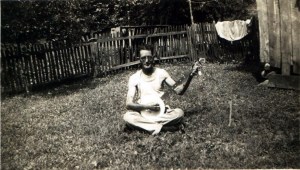
Joe Mullins, 1950-1968
24 Monday Dec 2012
Posted in Harts, Pearl Adkins Diary, Women's History
Tags
Appalachia, Cora Adkins, culture, Harts Creek, history, inspiration, life, Lincoln County, love, Margaret Adkins, Pearl Adkins, thoughts, West Virginia
“Alone on Xmas Eve with my thoughts centered on my one love,” Pearl wrote. “I was thinking of writing to a friend. Some folks came in. He was with them. They were all enjoying their selfs, all but me and I couldn’t help but be sad. He was looking rather sad, too. He walked around and after a while he said some thing about his girl. They laughed about her and he said, ‘She’s one of these girls that can talk.’ And, ‘I don’t like a girl that sits in the corner and smokes and talks to the cats.’ Well that caused a loud laugh but no one ever knew the wound those thoughtless words caused on my tender heart. No one shall ever know till I’m through with this life. There was no more pleasure for me that evening. He went away not knowing the hurt feelings he left behind or cared as little as he knew I supposed.”
“He come early in the morning and stayed till late in the afternoon — but he stayed in the next room,” Pearl wrote later. “Oh God, what I have to suffer just to think he was in the room and I didn’t have the strength to walk to where I could see him. What misery is some people don’t know, but if they were in my place they would soon learn. For instance, if some of you was in love and in my standing and in love and not a single hope of him ever being in love with you. If it wasn’t who it is I would have some hope, but as it is I’m in despair. What would you do, dear friend, if you were like me? Do nothing as I am doing? I know with out asking but the Lord above may change him and make him love me by and by.”
“We hadn’t any guests all day,” Pearl wrote on a Sunday in February. “Cora and I was setting by the fire. When he came in it was like the ray of sunshine drifting through a window pane on a bleak day for my life was as bleak as the day. Cora was rather friendly to him, some thing she hardly ever is. She asked him where he had been. He told her he was just walking around and thought he would stop in to see them all. He kept eating some thing. She asked what it was. He told her and said, ‘Don’t you want some?’ but never offered me any. I don’t guess he thought of me for I was as cold as an ice burg in those days. But I’m not one bit colder than he is but I’m not much better yet. Dear reader, don’t judge me too harshly for I have enough to bear and enough to make me cold and bitter for I didn’t have any girlfriends to talk to. Cora didn’t seem to care whether I was happy or not then. Aunt Marg had died then and Ma had to work so I didn’t have any one to talk to. All I had to do was to nurse my misery and think I was the most unfortunate girl in the world. You know, while Aunt Marg lived she could tell me of many things which helped to while away the hours. And I never was so bitter till after she was gone. I don’t blame my mother for my growing so hard and cold at life, for her life is a hard life to live any way. Aunt Flor was the only one that ever talked to me. She told me all the news and I liked for her to come. She seemed to understand me, but she didn’t stay much with us in them days. You see, I had a lot of time to keep growing bitter and crosser for I thought they didn’t care any thing about me, whether I lived or died. The Lord only knows what I could have been like by now if a certain thing hadn’t happened. Well, that changed me a little for a while but I soon grew cold again, but not so bad as at first. Kind friend, believe me. I spent a many a sad and lonely day then without one glimpse of happiness only when he came, not to say anything about the ones I spend now.”
24 Monday Dec 2012
Posted in Culture of Honor
Tags
Appalachia, crime, culture, Fed Adkins, Harts Creek, history, life, Lincoln County, photos, U.S. South, West Virginia

Fed Adkins, 1870s
20 Thursday Dec 2012
Posted in Music
Tags
Appalachia, Cary Mullins, culture, guitar, Harts Creek, life, Logan County, music, photos, U.S. South, West Virginia, writing
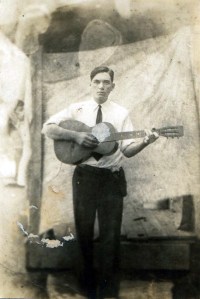
Cary Mullins of Harts Creek, 1930s
18 Tuesday Dec 2012
Tags
Appalachia, culture, Harts Creek, history, life, Logan County, photos, U.S. South, West Virginia
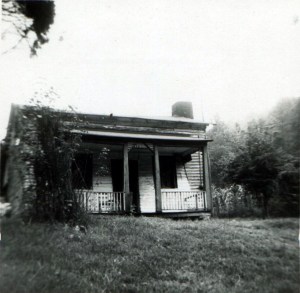
Mullins Cabin on Trace Fork, 1945-1955
18 Tuesday Dec 2012
Posted in Harts, Pearl Adkins Diary, Women's History
Tags
Appalachia, Cora Adkins, culture, Harts, Harts Creek, history, life, Lincoln County, photos, U.S. South, West Virginia
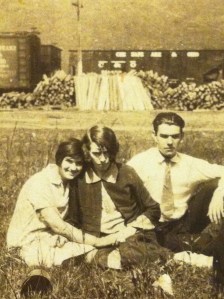
Cora Adkins (center), 1920-1925
17 Monday Dec 2012
Posted in Music
Tags
Appalachia, culture, guitar, Harts Creek, history, life, Lola Gore, music, photos, U.S. South, West Virginia

Lola Gore of Harts Creek, 1928-1932
17 Monday Dec 2012
Posted in Ed Haley
Tags
Al Brumfield, Appalachia, Charles Wolfe, Ed Haley, Green McCoy, Harts Creek, history, John Hartford, Kentucky, Lawrence Haley, Milt Haley, music, Paris Brumfield, West Virginia, writing
I was elated the entire trip home. As soon as I got back in Nashville, I called Dr. Wolfe and said, “I don’t even know where to begin to start telling you everything. I’ve got records and I got leads on where the rest of the recordings are. They just took me in and everything and as I got ready to go they gave me one of his canes for a souvenir. I’ve held one of his fiddles in my hand and looked at it. Now the other thing that Lawrence let me bring back are his reel-to-reel dubs of everything the Library of Congress has. There’s a bunch of tunes on there we haven’t heard: ‘Sourwood Mountain’ and ‘Dora Dean’.
“Yesterday we went up to Harts Creek in West Virginia, his birthplace. He’s a West Virginian; he’s not a Kentuckian. And in fact, Lawrence, because of the way his dad was treated when he was alive around Ashland, says he prefers to think of him as being a West Virginian. Lawrence, being the youngest of the five brothers, he’s kind of the keeper of the flame more or less. I think being around him I really get a flavor of what the old man was like. Even when we went up into Harts Creek, why the old-timers up there said he talked just like Ed.”
Dr. Wolfe asked me what my intentions were and I said, “I think what it amounts to is doing everything we can to preserve the music and the history because the story is incredible.”
I wasted little time in listening to all of Ed’s recordings on a reel-to-reel player borrowed from Doug Dillard. It was an incredible experience. I thought I’d died and gone to heaven. I immediately focused in on Ed’s recording of “Brownlow’s Dream”, the tune Roxie Mullins said was Milt Haley’s last tune. It was an amazing four part version of a tune I had learned from Elmer Bird called “Jimmy Johnson”. Lawrence had recalled his father singing, “Old Jimmy Johnson bring your jug around the hill. If you can’t bring your jug, bring your still if you will.” Not long after going through the reels, I took them to Bruce Nemerov at the Center for Popular Culture in Murfreesboro. I had promised Lawrence I would get him good copies.
A few weeks later, Dr. Wolfe called me with news of an old West Virginia ballad that mentioned the name of Milt Haley. It was titled “A West-Virginia Feud Song” and published in Professor J.H. Cox’s Folk-Songs of the South (1924). T.M. Martin of Marlinton, Pocahontas County, West Virginia, informed Cox about the tune in 1916, while S.S. Workman of Seebert, West Virginia, was the source for events surrounding it.
“The fight, out of which this song grew, occurred, as near as he could remember, in 1890, at the house of George Fries, eleven miles east of Hamlin, Lincoln County, and the trial took place at Hamlin,” Cox wrote. “The trouble between the factions was of long standing. The McCoy mentioned was a close relative of the McCoys that fought with the Hatfields. George Pack helped Mr. Workman get this song together. They never saw it in print.”
Events chronicled in the song lyrics seemed to be about Ed’s father, who was reportedly killed with a McCoy, but the account was so confusing that I really wasn’t sure.
Come all you men and ladies, and fathers and mothers too;
I’ll relate to you the history of the Lincoln County crew;
Concerning bloody rowing, and a many a threatening deed;
Pray lend me your attention, and remember how it reads.
It was all in the month of August, all on a very fine day,
Ale Brumfield he got wounded, they say by Milt Haley;
But Brumfield he recovered; he says it was not so,
He says it was McCoy that fired that fatal shot.
Two months have come and passed, now those men have met at last,
Have met at George Fries’ house, at George Fries’ house at last;
McCoy and Milt Haley, it’s through the yard did walk,
They seemed to be uneasy, with no one wished to talk.
They went into the house, sit down by the fire,
But little did they think they had met their fatal hour.
As the mob came rushing on them, the ladies left the room;
A ball from some man’s pistol lay McCoy in his tomb.
They shot and killed Boney Lukes, a sober and innocent man,
And left his wife and children to do the best they can;
They wounded old Ran Sawyers, although his life was save[d];
He seems to shun the drugshops, since he stood so near the grave.
Tom Feril was soon arrested and confined in jail;
He was put in jail in Hamlin to bravely stand his trial;
The Butchers threatened to lynch him, and that was all his fears;
The trial day it came on, Tom Feril he came clear.
There is poor old Perries Brumfield, he died among the rest;
He got three balls shot through him, they went through his breast.
The death of poor old Parris so lately has been done,
They say it was a hired deed, it was done by his son.
So go tell the nation around you it will never, never cease;
I would give this whole world around me to reach my home in peace;
In the bottom of a whiskey glass there is a lurking devil dwells,
It burns the breath of those who drink it and sends their souls to hell.
16 Sunday Dec 2012
Posted in Harts
Tags
Appalachia, blind, Cat Fry, culture, genealogy, Harts Creek, history, life, Lincoln County, photos, U.S. South, West Virginia, writing
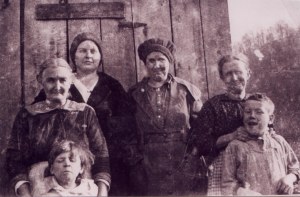
Adkins Women with Children, 1910-1920
16 Sunday Dec 2012
Posted in Pearl Adkins Diary
Tags
Appalachia, Cora Adkins, culture, genealogy, Harts Creek, history, Inez Adkins, life, Lincoln County, photos, West Virginia, writing

Inez (McCann) Adkins and Cora Adkins, circa 1920s
15 Saturday Dec 2012
Tags
Aaron Adkins, Appalachia, civil war, culture, fiddler, Harts Creek, history, life, Lincoln County, music, photos, West Virginia, writing

Aaron Adkins, Confederate veteran and fiddler
15 Saturday Dec 2012
Posted in Ed Haley
Tags
Ed Haley, feud, Harts Creek, history, John Hartford, Lawrence Haley, Milt Haley, music, Peter Mullins, Ralph Haley, Roxie Mullins, Ticky George Adams, West Virginia, writing
It was clear to Lawrence and I that Roxie really knew her stuff. Her memories went back to the Bull Moose era — some twenty years before Lawrence’s — and while they were a little hazy they were clearer than anything else we had heard up to that point. I think Lawrence was satisfied with Roxie’s stories but maybe a little intimidated because she just knew things about his father that went beyond his years. He really wanted to keep everything we heard about his dad in this certain context and someone like Roxie could really just carry it outside of his realm of knowledge.
“John keeps asking me about my dad,” he said. “I told him I couldn’t tell him too much about my dad, because half of his life was over before I was ever born.”
That got Roxie going again.
“All of his fun days was all over. I know he played music right on, but I mean all of his fun — when he married, he laid down part of it.”
Roxie caught Lawrence and I off-guard when she said Ed tried to get a local preacher to baptize him one time. “He joined the church once down on the hill with Cecil. And Uncle Charley Curry said, ‘Ed, will you lay down your music?’ and Ed said, ‘No, Uncle Charley. That’s the only way I’ve got to live is my music, but I can just play sacred songs, good songs.’ And Uncle Charley said, ‘Now listen, you’re drunk. You go off and get sober and come back to me tonight. I’ll take you in but I can’t take you in like you are.’ Sure did. Ed shook hands with him but I don’t guess he ever went back.”
Lawrence said, “Well, that’s news to me. I’m not sure he was ever baptized. The only baptism he got was Milt Haley’s baptism, and that didn’t amount to much.”
That got us to talking about Ed’s father again. I really wanted to know why he was killed, but Roxie had no idea.
“I don’t know why they killed him, son. They was just all into it. Now, Aunt Liza coulda told you all about it.”
She looked at Lawrence and said, “You’re like me. You waited too long to come to talk to any of his people to find out anything about it. All the old people’s dead, you see, and gone. My mother, she was a Hager, and her mother went to the Western States and died there and was buried on the banks of the Wabash River. Uncle John told us — he was with her. He said she just lived there six months till she died. I know who my grandmother was — she was a Baisden — but I don’t know a thing on earth about my grandmother, and I don’t know nothing about Joe — that’s my grandpa — nothing about who he was, who his brothers was. Daddy died in ’40 and my mother died in ’42. I’m the only one that’s living. I can’t go ask nobody nothing. People never ask nobody nothing when they’re young.”
Lawrence agreed, “That’s right. That’s exactly why I didn’t find anything out. You’re just young, happy to be alive.”
Roxie’s mind was still on her father, Ticky George Adams.
“My dad could play the accordion,” she said. “He could play ‘The Golden Slipper’ and he could play ‘John Morgan’. He could play ‘John Henry’. He could play just anything he wanted to play and how he learned it I just don’t know. And ‘Old Joe Clark’, that’s another one he could play. ‘Nelly Gray’, that’s another one he played. He could make them ring.”
I asked Roxie if Ticky George ever played with Ed.
“No, he never played with Ed. He wouldn’t let Ed hear him play, I guess. He could really play and sing. He had a song he sung. ‘Nothing Between My Soul and Heaven’ is the name of the song. They was four verses to that and buddy he could sing every word of that, and how he learnt that I don’t know. He couldn’t read. He didn’t know his letters.”
Roxie told us about her uncle Peter, saying, “Uncle Peter, you know, was a crippled man. His foot was turned backwards. When he bought him a pair of shoes, he had to cut the toe off here and sew it up, and his foot turned back in here.”
I said to her, “And that’s the man that raised up Ed Haley?” and she said, “Yeah, he helped raise him. He stayed with Uncle Peter’s fellers and Grandma and Grandpa Jackson. See, she was married twice. When John Adams was killed, she married Andrew Jackson Mullins, and he kept Ed a long time, him and her. And he stayed with us. He just stayed with first one and then another. Wherever he wanted to go, he went. He was just his own boss.”
Okay, so the Jackson Mullins I’d heard about from Bum was Ed’s grandfather and the John Adams involved in Weddie Mullins’ death must have been a Jr.
I asked Roxie if she knew how old Ed was when he stayed with his grandparents and she said, “Well, when he was with Grandpa and Grandma Jackson, he was a young man. I guess he was twenty years old, maybe more. Grandpa and Grandma kept him a long time, and then he stayed with Uncle Peter and Aunt Liza. And he stayed with us some every now and then. He come and stayed with us two or three days at a time — with John and the boys. He musta left here about the age of thirty and went to Ashland, Kentucky. West Greenup, Kentucky, is where I wrote to them. I wrote to Ralph, Ralph wrote to me. Man he was smart, I’ll tell you that. Take anything you wanted to ask him about the books.”
Roxie bragged on how smart Ella was, saying she tried to get her to move to Kentucky with the Haleys.
“She graduated from college, she told us. She said The Pied Piper of Hamlin – they’s eight pages of it, on both sides. She’d beg me and Annie to go home with her and said she would learn us to play the piano. Man she could make that harmonica… Listen, she could put it in her mouth and she had things fastened under here. She didn’t have to have her hands on it. Man she’d just run that mouth over that the best you ever heard in your life. She played that mandolin right along with her fingers and then had that harp in her mouth.”
Right before Lawrence and I left Roxie’s, she asked my name again and said she’d be watching for me on Hee Haw. She said Roy Clark used to come through “back when he was a chunk of a boy,” but Violet said she was confused — that it had been Roy Acuff.
“That was back when he traveled through here some. He had some people or something that lived up on Buck Fork.”
To say that Lawrence and I were blown away by our experience with Roxie would be a huge understatement. Lawrence had never heard anything about his grandfather being murdered. Maybe Ed had wanted to distance his kids from that part of his painful past on Harts Creek.
15 Saturday Dec 2012
Posted in Culture of Honor
Tags
Appalachia, crime, culture, Harts Creek, history, life, Logan County, photos, U.S. South, West Virginia

Harts Creek men with guns, 1905-1940
14 Friday Dec 2012
Posted in Ed Haley
Tags
Appalachia, Brownlow's Dream, Ed Haley, feud, Harts Creek, history, John Hartford, Lawrence Haley, Logan County, Milt Haley, music, Roxie Mullins, U.S. South, West Virginia, writing
Roxie wasn’t sure how Ed learned to play the fiddle.
“It was just gifted to him, I guess. Lord man, he could make that fiddle talk. He had one song he sung, I’d give anything in the world to know it. If I could remember now… Man, it was really pretty. People’d ask him every now and then to play it but man listen, he got mad if you asked him to play again something when he got tired. He’d get tired. He’d say, ‘I ain’t no steam engine.’ He’d jump up man and maybe get a knife man and go to quarreling with a knife. Yes, sir. He told me, he’d say, ‘I ain’t no steam engine.’ And your mommy man she stayed with us some.”
I asked Roxie if she remembered Haley playing at any dances on Harts Creek and she said, “Well, I don’t know. We never had many dances around here nowhere. He always played away from here. He went several places — big dances, you know — dance halls and played. We had a few little dances here, but he never was at them.”
Roxie remembered Ed playing “Blackberry Blossom”.
“Yeah, Lord he could play that, and he could play anything on earth you named to him. Anything. He played the ‘Brownlow’s Dream’. I could pick it on a banjo when I was young, but I ain’t picked none in a long time, honey.”
I offered Roxie my banjo to see if she could play out any of “Brownlow’s Dream” (I’d never heard of it), but she said, “I belong to the church now and I don’t fool with no banjo or nothing like that.”
I asked if she remembered Ed playing the banjo and she said, “I never did see Ed play no banjo. Uncle John Hager’s the one played the banjo. He run around with Ed a long time. I’ve got his picture a sitting in there. He was funnier than a monkey.”
I asked Roxie more about Haley’s tunes.
“Ed would play ‘Old Joe Clark’, you know, and pluck up on them strings. He had one he played he called ‘Devil in the Yearlings’. I don’t know what it was, but boy he could pluck up on them strings and Ralph would jump up. That little boy’d hop up and dance. Man he beat anything I ever seen in my life a dancing. Ralph was about eight years old or ten when they was at our house — Ed and his wife. First time we ever seen her. And they stayed two or three nights with us then they went to Uncle Peter’s and stayed all night. And that woman really had them trained. She had a whistle she could blow. Didn’t matter where they was at buddy, they’d come up in line.”
I asked if Ed played “Ragtime Annie” and Roxie said, “‘Ragtime Annie’ — I heard Bernie Adams talk about that, but I don’t know whether Ed played that or not. Can you play ‘Red Wing’? That’s one of his tunes. ‘Blue-Dressed Girl’. He had something another about ‘Blue-Eyed Beauty’. Aw, he played all kinds of tunes. He’d tell us the names.”
Talking about Ed’s tunes caused Roxie to say, “‘Brownlow’s Dream’ — it was the last tune his daddy ever played on the fiddle. Ed told us that. Right down there in Hugh Dingess’ house they was kept upstairs till they took him to kill him. French Bryant was the man that was in it — he’s dead. They said they was thirty of them, man, a whole mob of them that killed him. They was afraid of him, you see, because he had a pretty bad name.”
I asked Roxie how Ed’s father was killed and she said, “Beat them to death, I reckon, ’cause they said the chickens was running through the yard and a pecking their brains laying in the yard. That’s what people told us children when we was little.”
Listening to Roxie tell all these tales found me wondering about her life. I asked if she’d lived “here” — meaning Harts Creek — all of her life and she said, “No, Lord, no. We’ve lived different places. We lived across the creek there over yonder on that bank. George Baisden’s home, I bought there and lived there awhile. Moved out here on a point and the State came in and told me they’d have to condemn me if I didn’t sell to them and move out. Well, I just sold it to them and bought this then. When Floyd left me — he left me in 1940 — I been a widow woman since that. I’ll soon be 86. I didn’t have no divorce from him, and I got his railroad retirement. That’s all we had to live on. He’s been dead now — he died in ’86 — and his woman he left here with’s been dead fifteen year or sixteen, about eighteen. She didn’t last very long. I told them the Lord don’t let things prosper like people thinks they will. The Lord has blessed me a long time to live a man’s life and a woman’s life, too. I’ve raised three children myself and helped Violet raise her three.”
At that point, I heard Violet singing to Lawrence off in the corner. She said it was one of Ed’s tunes, “The Drunkard’s Hell”, then sang it again for me, this time with Roxie:
I started out one stormy night
To see my poor neglected wife.
I found her weeping by her bed
Because her only babe was dead.
I started out one stormy night.
I thought I saw an awful sight.
The lightning flashed, the thunder rolled
Upon the poor old drunkard’s soul.
Roxie stopped and said, “We can’t remember it. You might find that in libraries in books or something another but honey we don’t know it. It’s been fifty or sixty years since he sung that to us.”
14 Friday Dec 2012
Posted in Culture of Honor
Tags
Appalachia, crime, culture, Harts Creek, history, life, Logan County, Noah Mullins, photos, U.S. South, West Virginia, writing

Noah Mullins, 1927-1940
Writings from my travels and experiences. High and fine literature is wine, and mine is only water; but everybody likes water. Mark Twain
This site is dedicated to the collection, preservation, and promotion of history and culture in Appalachia.
Genealogy and History in North Carolina and Beyond
A site about one of the most beautiful, interesting, tallented, outrageous and colorful personalities of the 20th Century
 Brandon Ray Kirk