Tags
Appalachia, culture, Ed Zane Adkins, genealogy, guitar, history, life, Lincoln County, music, photos, U.S. South, Watson Adkins Jr., West Virginia
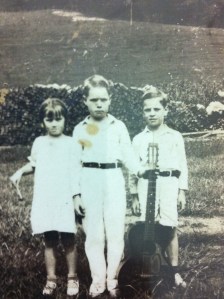
Adkins Family in Harts, about 1932

26 Wednesday Dec 2012
Posted in Music
Tags
Appalachia, culture, Ed Zane Adkins, genealogy, guitar, history, life, Lincoln County, music, photos, U.S. South, Watson Adkins Jr., West Virginia
Adkins Family in Harts, about 1932
20 Thursday Dec 2012
Posted in Music
Tags
Appalachia, Cary Mullins, culture, guitar, Harts Creek, life, Logan County, music, photos, U.S. South, West Virginia, writing
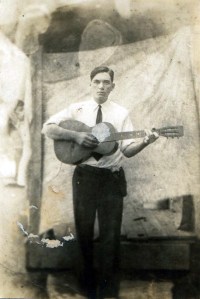
Cary Mullins of Harts Creek, 1930s
17 Monday Dec 2012
Posted in Music
Tags
Appalachia, culture, guitar, Harts Creek, history, life, Lola Gore, music, photos, U.S. South, West Virginia

Lola Gore of Harts Creek, 1928-1932
09 Sunday Dec 2012
Posted in Big Harts Creek, Ed Haley, Spottswood
Tags
Appalachia, Ashland, Ashland Cemetery, Buck Fork, Clifford Belcher, Connie Woods, Dingess, Ed Belcher, Ed Haley, Ella Haley, fiddle, fiddler, fiddling, genealogy, George Greasy Adams, guitar, Harts Creek, history, Hoover Fork, Jackson Mullins, Jeff Baisden, John Frock Adams, John Hartford, Johnny Hager, Kentucky, Lawrence Haley, Liza Mullins, Logan, Logan County, Maynard's Store, music, Nashville, Peach Creek, Peter Mullins, Ralph Haley, Sol Bumgarner, square dances, Trace Fork, Turley Adams, Violet Mullins, Weddie Mullins, West Virginia
At some point, Connie showed up with a small entourage of women toting some of Joe Mullins’ old pictures. My eyes immediately went to a large, framed photograph of two serious mustachioed men. Turley said one was Weddie Mullins — his grandfather on “both sides” of the family tree — while the other was Ed Haley’s Uncle Peter Mullins. Both men were brothers. Turley said his grandfather Weddie — Ed’s uncle — was murdered at the little town of Dingess just after the turn of the century.
Lawrence said, “Mom and Pop used to play at Dingess — just a little community over in MingoCounty.”
That got us back on the subject of Ed, although most of the commentary was choppy and mixed between looking at photographs. One of the girls said, “We’ve heard talk of Ed all our lives.” Another made the unusual remark, “He could see lightning. Some way he could feel it or something and tell it was hitting.” Someone said Ella could tell the difference between the Haley children by their smell.
Turley, who had been fairly quiet throughout our visit, said to Lawrence, “Bernie Adams used to play a lot of music with your dad.”
Violet said, “Bernie’s the one took him in the chicken house for the toilet. They stayed all night up at our house. Robert Martin and Bernie and Ed and them played music all night. I can remember it. I was just a little girl. Mother said Ed played many a time where she was raised up over in the head of Francis Creek.”
Lawrence said, “You know, these different places like Hoover and places like that don’t ring a bell to me. I can remember going down here to the end of Trace, and maybe down to Smoke House, and up to George Adams’ who lived on up this way, and up to that store — Maynard’s Store — and buying candy, but that’s about the limit of my travel, except coming up from the mouth of Harts.”
Basically, the next half-hour or so was a giant “get to know everybody session” — mostly between Lawrence and the locals. I sort of hung back a little, taking it all in, while Lawrence spoke of and listened to stories about his father. There was a glow about his face that had been absent in Ashland.
At one juncture, he told Connie how her grandparents, Peter and Liza Mullins, raised his father.
“Oh, really?” she said. “I didn’t know that. Now I remember Granny. They wanted me to stay all night with her and I was always afraid she’d die in her sleep or something. That’s terrible.”
She asked Lawrence if he remembered Uncle Jeff — “he was Granny’s brother and he was kinda slow.”
Violet said, “He liked to go to all these dinner meetings they’d have out in the country. He’d walk for miles and miles.”
Connie asked Lawrence if Ed ever played at Logan — the seat of government for Logan County — and he said, “Yeah, he used to play around Logan quite a bit and Peach Creek. He’d play up there during court days especially. Back in them days, the town would load up. I’ve been there with him during those times. The old courthouse, I think it faced toward the river. One side of it was on Stratton Street.”
Connie asked where Ed was buried and Lawrence said, “He’s buried in the Ashland Cemetery in Ashland. Mom’s buried in the same cemetery but not with him. By the time my mother died — she died three years after Pop — they’d filled that section up.”
I’d never really thought about that. Ed and his wife were not buried together, the kind of seemingly minor detail tossed out randomly that took on somewhat of a greater meaning at a later date. I made a note to myself right then that I would visit Ed’s grave in Ashland before heading back to Nashville.
Violet wondered about Lawrence’s older brother, Clyde.
“Clyde’s out in Stockton, California,” he said. “He’s what I call the black sheep of the family. Never married. He just followed the sun for work. When it was summertime, he’d go north; when it was wintertime, he’d go south.”
Just then, an old man called Bum showed up at Turley’s. Bum remembered Ed and his family well. He asked Lawrence about the Haleys. It was hard to focus on their conversation — everyone in the room seemed to be talking at once — but I heard Bum mention something about how Lawrence’s brother Ralph used to hang from tree limbs by his “sticky toes” and would “do anything.”
“That’s exactly how he got killed,” Lawrence said. “He was hanging by his toes and he was gonna let go with his toes and flip over and land on his feet but he didn’t make it. He was just active like that. See, Ralph danced around these carnivals and fairs and places.”
A few minutes later, things quieted down a little. I moved over near Bum to ask him about Haley. His answers seemed to come through his nose more than his mouth and were usually followed by a little chuckle. He was great. Bum said he was 67 years old and first saw “Uncle Ed” in the thirties.
“He lived down in Ashland and he’d come up pretty often,” Bum said. “People come from everywhere to listen at him play whenever they’d have them big dances and stuff. He’d play half the night. Yeah, I’ve been right there.”
I asked Bum about Ed’s tunes and he said, “Ah, he played so many… There was one religious tune he’d put the bow under the fiddle, and the hair, he’d turn it right over and slip his fiddle between it, and play that. I forgot what it was.”
Bum told me all about the old dances.
“They used to have a big working,” he said. “About every family on this creek and Harts Creek down here, they’d all gather up and hoe one man’s field out and then move to the next one. And they’d all go to each other’s farms that way and help each other, and when they got done one man would have a big dance. They’d have a dance on Saturday night. They’d have them at just about every home, mostly at Uncle Peter’s up here, in the house. Like one room in there, they’d gather everything up and take it outside and they’d have a dance in there, and when they got through they’d put the furniture all back in. Anybody that wanted to come was invited. They’d have food right in the house. There were usually three or four around to call the reel: ‘Dosy doe and here she comes and there she goes.'”
“It’d just be Uncle Ed and John Hager playing?” I asked.
“Well, Ed mostly,” Bum said. “Uncle Johnny, he played some with him. Uncle Ed, he played by himself most all of these dances. Mrs. Haley played with him a lot. She played the mandolin, guitar or accordion.”
“Did Johnny Hager play the banjo about like Grandpa Jones?” Turley asked Bum.
“Yeah, over-handed they call it,” Bum said. “Molly O’Day, she played that way. My grandpaw would whittle out two little sticks and he’d sit and beat on them strings and Ed a playing the fiddle.”
“Ed played with Ed Belcher,” Turley said.
“Yeah, I’ve heard Pop talk about Ed Belcher,” Lawrence said.
Now who was Ed Belcher?
“He played the guitar,” Bum said. “He could play the piano, too. They’d get together at times and play together. They’d go up Buck Fork.”
Bum said he last saw Ed Haley “over here on that mountain yonder” at Clifford Belcher’s beer joint.
“He’d go down there and play and people’d give him beer and stuff. That’s about all he wanted. I run into him over there one night. I said, ‘Uncle Ed, where you been?’ He said, ‘I ain’t been no where but right here. I come up here to sit around and play music a while.’ I bought him a beer and he sat there and played music. Well, a Conley boy run in and went to playing and thought he was better than Ed and everything. Ed finally told that boy, said, ‘Why don’t you quit playing that music? You can’t play. You’re cutting my music up too much.’ That boy come back at him, you know, and aimed to fight him. He said, ‘Shut up, old man. You don’t know what you’re a talking about.’ I was standing there and I told him, I said, ‘Now listen. If you jump on that man, you’ll have me to fight and him both.’ And Ed took his fiddle and hit that feller right down over the head with it and busted that fiddle all to pieces.”
Lawrence laughed.
Turley said Ed Haley was high-tempered, as well as strong, and hinted at his mean streak.
“Dad said Peter had a dog that Ed couldn’t get along with at all. Ed told Uncle Johnny, ‘You get me close to him and I’ll hit him in the mouth. I’ll knock him out.’ And he said Ed hit that dog and killed him with his fist. Hit him in the ear and killed him. That’s what my daddy told.”
Bum was very familiar with Ed Haley’s family on Trace. He said Uncle Peter Mullins was “pretty bad to get out and get drunk and get into it with people.” He knew all about Ed’s uncle Weddie Mullins’ murder at an election in Dingess. “There used to be a train come in there and they’d bring flour and stuff over there and people’d go over there to Dingess and get it,” he said. “They’d take wagons and go through these hills, like up Henderson and all them places and they got into it over there.” Bum wasn’t sure who shot Weddie but knew that his killer survived the fracas. Once the news reached Harts Creek, John Adams got a pistol from Jackson Mullins and rode to Dingess where he found Weddie’s killer laid up in a bed clinging to life. Someone told him the guy probably wouldn’t make it so (like something out of a Hollywood Western) he pulled out a .38 pistol and said, “I know he won’t,” and shot him in cold blood.
I wasn’t exactly sure who any of these people were — Jackson Mullins, John Adams — but I had the impression that they were some relation to Ed Haley. At that juncture, I just let the tape recorder roll and tried to take notes and absorb everything, figuring that what seemed like unimportant details would perhaps later develop into major items of interest.
02 Sunday Dec 2012
Posted in Ed Haley
Tags
2144 Greenup Avenue, Appalachia, Ashland, Ashland Cemetery, Bake Lee, Bill Bowler, Charlie Ferguson, Ed Haley, Ella Haley, fiddle, fiddler, fiddling, Freeman's Shoe Store, Ghost Riders in the Sky, guitar, history, Imogene Haley, Ironton, John Hartford, Kentucky, Lawrence Colliver, Lawrence Haley, Lazear Funeral Home, Logan County, Milt Haley, music, Noah Haley, Ohio, Over the Waves, Pat Haley, Patsy Haley, radio, Steve Haley, The Shadow, U.S. South, West Virginia, Winchester Avenue, writers, writing
I asked about Ed during that time period. Lawrence said he stayed in a little room just back of the kitchen, which was furnished with a chair, cot, wardrobe and small radio. His fiddle was always on top of the wardrobe, although he seldom played it.
“He listened to the radio quite a bit,” Lawrence said. “You surely have heard of Vaughn Monroe, his version of ‘Ghost Riders in the Sky’. Pop had a transistor radio he carried up to his ear. ‘Goddamn,’ he’d let out, ‘That’s some tune.’ Cause he felt hell was a place where you had to do something you done all your life. I never heard him try to play it but he’d listen to it and listen to it. He’d say, ‘That’s some hell, ain’t it?'”
Pat said, “Pop would shiver when he would hear ‘Ghost Riders in the Sky’. Pop heard it once or twice on that little radio he carried, and he kept his ear right to it.”
I found it strangely odd that Haley had such a high opinion of the tune — maybe he just liked the words.
The cowpokes loped on past him and he heard one call his name,
If you want to save your soul from hell a-riding on our range,
Then, cowboy, change your ways today, or with us you will ride,
A-trying to catch the devil’s herd across these endless skies.
Yippee-yi-ya, yippee-yi-yo, ghost riders in the sky.
Lawrence said Ed eventually gave up on music broadcast over the radio and started tuning in to programs like “The Shadow.”
“We had a great old big crank-up record player and we had a great old big stack of thick RCA records a quarter of an inch thick, I guess,” he said. “They played a lot of them. I guess they learned some pieces of music off of that. ‘Over the Waves’, I guess that’s been around for a hundred years. Pop was pretty good at those slow pieces, too.”
Pat said she never had a real conversation with Ed, so I guess he kind of kept to himself. She remembered him having a white, foot-long beard, which he was very proud of and combed out every day. She said she had a picture of him with Lawrence and Ella in the back yard at 2144 Greenup but couldn’t find it. It was taken in the fall of 1950, when Lawrence was called back into the service.
Around that time, Bill Bowler, a blind guitar player in town, came and asked Ed to play a gig for the grand opening of Freeman’s Shoe Store in Ironton, Ohio. It was kind of a big deal — there was some type of parade going on. Pat said, “We were so happy somebody had finally got him out because he just all of a sudden stopped playing.” Lawrence drove the two over in his brother Noah’s car, then came home. Pat said, “Larry had hardly got back and was telling his mother, ‘Yes, he sat Pop down with Bill Bowler,’ and the next thing we knew Pop came through the front door just cursing a blue streak.” Something had really upset Ed at the shoe store, but the family never did know what happened or how he made it home. Lawrence said, “He just saw that they wasn’t nothing over there for him. He didn’t tell me that I done wrong by taking him over there or anything. He just wasn’t happy, so he didn’t stay.”
Not long afterwards, Lawrence saw his dad play for the last time at Charlie Ferguson’s. He said Noah got him so drunk that he sat down on the floor and played until he fell over. I wanted Lawrence to show me how Ed was playing at Ferguson’s, which he did after joking, “Now John, I don’t want you to involve me in what my dad did.” As he sat there in the floor with my fiddle, Pat laughed and said, “Oh boy, this was a good idea.”
Pat told me about February 3, 1951, the snowy day Ed passed away at home.
“It was very, very cold. My son Stephen was born January 27th, and it was exactly a week later. Pop was in the front room listening to the radio and he came through our bedroom around three o’clock. He had my daughter Beverly on his shoulders and he took her off and he rubbed his head in her tummy and he said, ‘Mmm, you smell so good. You don’t smell like those pissy-ass babies out in the country.’ The children in the country apparently didn’t wear diapers a lot of times and we always kept rubber pants on Beverly and of course the baby powder. After my father-in-law had played with my little girl, he went through and asked my sister-in-law, ‘Patsy, when will supper be ready?’ She was fixing dinner and she said, ‘Aw shortly, Pop.’ And he said, ‘Well I’m going to take a nap.’ He had a room in the back of the house. And we had a nephew Ralph Mullins living with us. He was born in 1946, so he was about five years old. And he took little cars and he was running them up and down while Poppy was napping.”
Pat said, “And when Patsy got dinner ready, she called for Pop to come to the table. My mother-in-law got a little bit irritated because Pop didn’t come. Larry and his brother Jack had been working on a car outside and they went in to check Pop.” Lawrence said, “Mom went in and lifted up his hand and said, ‘Ed.’ Shook his hand, you know. She said, ‘I can’t get him awake. I know he’s alive. I can hear him breathe.’ Well, when she was lifting up his hand, you know, she was pumping out his last breath of air.” Pat said, “And the boys told their mother then that Pop was dead. But the whole time Ralphy had been playing with his cars, so Pop apparently did not cry out in pain. That was it. He just passed away. It was a massive coronary that took him.”
“Pop died just as peaceful a death as could be, I reckon,” Lawrence said. “He died in his sleep.”
When the Ashland newspaper ran Ed’s obituary on Sunday, February 4, 1951, it mistakenly referred to him as the “flower huckster” of Winchester Avenue. Much to the embarrassment of the family, the newspaper had confused Ed with Bake Lee, a blind man in the area who sold pencils and flowers on sidewalks. Bake usually worked the streets with his wife, Lula Lee, an old schoolmate of Ella’s who played the mandolin and French harp.
“Mr. Haley, who had been blind for 65 years, was a familiar figure on Ashland’s streets, having sold flowers in the 1400 block on Winchester Avenue for several years,” the paper partially read. “A resident of Ashland for 35 years, he was born in Logan County, W.Va., a son of Milton and Emma Mullins Haley.”
Lawrence showed me a copy of his father’s corrected obituary: “HALEY: Funeral services for James Edward Haley, 67, retired musician, who died Saturday at his home, 2144 Greenup Avenue, will be conducted at 2 p.m. tomorrow at the Lazear Funeral Home with the Rev. Lawrence Colliver officiating. Burial will be in AshlandCemetery. The body is at the funeral home.”
No one played the fiddle at Ed’s funeral.
“Had a little organ music,” Lawrence said. “I don’t reckon they was anybody he’d care for playing at his funeral.”
Pat said she heard that Ed didn’t look “natural” because the funeral home had shaved off his white beard. Ella had his favorite flower, morning glory, carved on his tombstone.
25 Sunday Nov 2012
Tags
accordion, Alan Jabbour, American Folklife Center, Appalachia, Ashland, Blackberry Blossom, blind, books, Charles Wolfe, Charleston, Clark Kessinger, Dick Burnett, Ed Haley, Ella Haley, fiddler, Fire on the Mountain, Forks of Sandy, Great Depression, guitar, Gus Meade, history, John Hartford, Kentucky, Ladies on the Steamboat, Lawrence Haley, Leonard Rutherford, Library of Congress, Logan, Man of Constant Sorrow, mandolin, Mark Wilson, Money Musk, Monticello, Murfreesboro, music, Nashville, National Fiddlers Association, Ohio, Parkersburg Landing, Ralph Haley, Rounder Records, Salt River, Tennessee, Tommy Magness, Washington DC, West Virginia, writers, writing
In the early days of my interest in Ed Haley, I did locate one enthusiast of his music. Dr. Charles Wolfe, a foremost country music historian at Murfreesboro, Tennessee regarded Haley as “a misty legend – perhaps the most influential of all the early eastern Kentucky traditional fiddlers…whose contributions [to country music has] been little known or appreciated.” Of the Haley recordings he had written: “The quality of the fiddling comes through even on these scratchy home recordings, and makes us wonder what this man might have sounded like in his twenties or thirties.”
Dr. Wolfe said Clark Kessinger, the famous fiddler from Charleston, West Virginia was a huge fan of Haley’s music. “Ed Haley, an old blind fellow, he was from over around Logan, close to the Kentucky-West Virginia line,” Kessinger said in an interview several years before his 1975 death. “Yeah, he was a great fiddler…he was a smooth fiddler. Oh, that Haley I thought was the best. Him and Tommy Magness used to play around Nashville, Grand Ole Opry.” There was a reference on Parkersburg Landing to Haley liking Kessinger’s fiddling, although he “once complained that Kessinger always shied away from playing in front of him.”
Clark Kessinger, born in 1896, was only slightly younger than Haley. He took up the fiddle at the age of five and was playing for dances when he was ten. By the twenties, he was a local radio star and recording artist. His career fizzled during the Great Depression, although the National Fiddlers Association declared him as the “fiddling champion of the East” in 1936. All of these accolades were in sharp contrast to Haley, who refused to make a commercial record for fear of having his music “stolen” and who sometimes shied away from contests because they were often rigged.
“Ed was always afraid the companies would take advantage of a blind man,” Parkersburg Landing claimed. “This suspicion also kept him from the folklorists recording in Ashland.”
In time, Kessinger was rediscovered. During the folk music revival of the sixties and seventies, he made appearances on the Today show, at the White House and even at the Grand Ole Opry.
Dr. Wolfe also mentioned Dick Burnett, the blind minstrel of Monticello, Kentucky. Burnett traveled extensively through the South with Leonard Rutherford during the early decades of the twentieth century. Haley played Burnett’s “Man of Constant Sorrow”, while Burnett credited him as his source for “Ladies on the Steamboat” and “Blackberry Blossom”.
“Ed Haley was the first man to play that in the State of Kentucky that I know of,” Burnett said, referencing the latter tune. “He was a blind fiddler in Ashland, Kentucky. I played in Ashland different times. He’d go down every day to meet the crowds comin’ in at the river. He was a good fiddler. He played that, and Bob Johnson of Paintsville, Kentucky, he learned it. I never heard any words to it. It’s just an old time hillbilly piece.”
Dr. Wolfe told me about Mark Wilson and Gus Meade, the two scholars who had produced Parkersburg Landing in the mid-seventies. He said they first heard about Haley from older fiddlers in the Tri-State region of West Virginia, Kentucky and Ohio. Inspired by stories of his greatness, they located Haley’s son Lawrence in Ashland, Kentucky. Lawrence Haley had most of his father’s home recordings and he agreed to allow the Library of Congress to copy them. This led to the release of Parkersburg Landing in 1976 by Rounder Records. Since then, Lawrence had made it clear that he wanted to keep his father’s records only in the family. Dr. Wolfe suggested I contact him for more information on Haley’s life and music.
The next time I was in Washington, DC, I visited Gus Meade at his home near Alexandria, Virginia. Gus had spent years of his spare time at the Library of Congress making lists of fiddle tunes, fiddlers, and old-time recordings, scanning newspapers, documenting fiddlers’ contests, studying the evolution of tunes, and going on expeditions with fiddle-buffs John Harrod and Mark Wilson. I spent much of my visit looking through various manifestations of his research, most of which was congested in the basement of his home. He had more copies of Haley’s recordings than what was used on Parkersburg Landing, which he agreed to share with me so long as I didn’t tell anyone about it.
I next went to the Library of Congress to access its complete archive of Haley’s home recordings. I initially spoke with Alan Jabbour, head of the American Folklife Center. Alan had supervised the original copying of the records with Lawrence Haley. Within a few minutes, I was given a mimeographed list of Haley’s recordings, which included the following introductory notes:
Three 10″ reels of tape double-track at 7.5 ips. Copy of 54 original discs of Ed Haley, fiddle and vocal, Mrs. Haley, mandolin, accordion, and vocal, and their son Ralph Haley, guitar. Recorded April and September 1946 and (probably) other occasions by Ralph Haley. Lent for duplication by Lawrence Haley (son of Mr. and Mrs. Ed Haley), May 23-25, 1973. An interview of Lawrence Haley by Alan Jabbour (May 25, 1973) concludes the B-side of tape 3. The interview concentrates on the musical life of his parents, who were traveling professional musicians throughout eastern Kentucky and southern and central West Virginia during the first half of the 20th century. They were both blind and relied upon music for their livelihood.
Just before giving me access to the recordings, Alan warned me of their poor sound quality. He said the Library had secured the best copies possible by playing them on a special turntable with weighted tone arms and hi-tech filters and equalization but had been unable to overcome their general overuse and fragility.
A few minutes later, I was lightly searched – no recording equipment was allowed – and placed in a booth with a volume knob, where I communicated with an engineer on the other side of a wall by use of a talkback switch. Referencing the mimeographed list, I called out the names of Ed’s tunes one by one: “Forks of Sandy”, “Money Musk”, “Salt River”, “Fire on the Mountain”… As they played back to me, it seemed like they were coming through the radio on a distant station during a rainstorm.
Writings from my travels and experiences. High and fine literature is wine, and mine is only water; but everybody likes water. Mark Twain
This site is dedicated to the collection, preservation, and promotion of history and culture in Appalachia.
Genealogy and History in North Carolina and Beyond
A site about one of the most beautiful, interesting, tallented, outrageous and colorful personalities of the 20th Century
 Brandon Ray Kirk