• About

Brandon Ray Kirk

~ This site is dedicated to the collection, preservation, and promotion of history and culture in my section of Appalachia.

Brandon Ray Kirk

Tag Archives: Clayton McMichen

John’s epilogue 2

31 Sunday Aug 2014

Posted by Brandon Ray Kirk in Ed Haley, John Hartford, Music

≈ 2 Comments

Tags

Arthur Smith, banjo, Ben Walker, Benny Martin, Bernie Adams, Billy Adkins, blind, Brandon Kirk, Buddy Emmons, Clayton McMichen, Doug Owsley, Durham, Ed Haley, fiddlers, fiddling, Green McCoy, Haley-McCoy grave, Harts, history, Imogene Haley, Indiana, Jeffersonville, John Hartford, Johnny Hager, Lawrence Haley, Mark O'Connor, Matt Combs, Melvin Kirk, Michael Cleveland, Milt Haley, Mona Haley, music, Nashville, North Carolina, Smithsonian, Snake Chapman, Tennessee, Texas Shorty, Ugee Postalwait, Webster Springs, West Virginia, Wilson Douglas, writing

When Ed first went out into the neighborhood with his dad’s fiddle and armed with his melodies (as interpreted by his mother) I think he probably caused not a small sensation amongst family and neighbors and his ear being as great as it was I think he picked up an incredible amount of other music really fast. I think he played with a lot of ornaments when he was a teenager and up into maybe even his thirties. Snake Chapman and Ugee Postalwait have alluded to this. Snake said the dining room recordings just didn’t sound as old-timey as he remembered Ed playing and Ugee said she remembered him and her dad talking about the little melodies between the notes. Of course Ed had to have been through a lot of subtle changes in style since that time. I think in later years he stripped a lot of the ornaments out of his fiddling in order to appeal to the Arthur Smith-Clayton McMitchen crowd who loved the radio style that was so much in vogue at that time. This might have helped make a little more money on the street. People have always liked to hear someone play and sound just like what they hear on the radio or a record. But I think if someone had asked Ed if he had done that consciously that he would have denied it and if he was in a bad mood they might have even had a fight on their hands.

I keep having this idea of Ed imitating other instruments on the fiddle because I’ve tried it myself and wouldn’t it be something that some of these great parts was really an imitation of John Hager’s banjo playing. I’d love to know where that passage is or whether it even exists.

It’s obvious that when Ed had good firm second that wouldn’t slow down for anything, he really leaned back on the beat and got in that little pocket where so many great musicians like to be. Ella and Mona really held up a good solid beat, but I’ll bet Ed was hard on them — a real taskmaster. It’s all in that rhythm section. Wilson Douglas told me one time that Ed always told him to play it real lazy. Texas Shorty, Benny Martin, and Buddy Emmons refer to it as holding on to the note as long as you can before you start the next one. This is an important part of Ed’s feel and sound and it really comes through on the dining room recordings. I get it by playing as slow as I can against a beat I hope is not gonna move, and then I swing the notes with a dotted note feel — a real lilt if I can get it — and just drag on the beat as hard as I can ’cause I know it’s not gonna slow down. I’d love to know just when Ed figured that out or if it was always there. I always think of Ed in his younger years playing on top of the beat or even ahead of it like I did when I was young and full of piss and vinegar. Actually when you’re playing alone you do hafta pretty well stay on top of the beat to hold the time or at least set it, cause you are the beat but you have to keep from rushing which we will tend do when we get to hard passages in order to get them over with. We’ll not do that no more. Mark O’Connor told me one time that while he is playing a tune he’ll play on top of and behind the beat on purpose. He described playing behind it as letting the beat drag you along…almost like water skiing. Oh, to have known what Ed and John Hager or Bernie Adams sounded like together.

I think Ed worked on his fiddling probably daily most of his life so it is fair to say that it was changing all the time. This would explain the varying descriptions of his playing that have come down. I’m sure they’re probably all accurate. Lawrence, Ugee, and Mona always said Ed played with great smooth long bow strokes and Snake Chapman always was adamant about him playing with short single strokes and Slim Clere said the same thing — that he bowed out everything — no bow slurs. Of course, in the dining room sessions you can hear both ways. It’s amazing how well Ed did without the feedback of working with a tape recorder. What an incredible ear he had. As far as I know, the only time he probably heard himself played back was the recordings we have. I hope there are others out there but I’ve come to doubt it.

Brandon and I have always had a gut feeling that if we’d dug down into the hillside a little further at Milt and Green’s grave we might have found something. We only went down five feet and then we were defeated by the rain. What if we had gone down the requisite six feet? What if, like the probe, Owsley had misjudged the bottom of the grave shaft due to the mud and water? What if it hadn’t rained and muddied up the work area? If Melvin Kirk and Ben Walker went so far as to bury the men in a deep grave, why not assume they would have gone for the standard six feet grave traditionally dug? In the following weeks, old timers around Harts kept telling Brandon and Billy, “If they didn’t dig at least six feet, it’s no wonder they didn’t find anything.” We didn’t want to question the professionalism of experts like the Smithsonian forensic team or seem like we wanted to find Milt and Green so badly that we couldn’t accept the concept that they were gone…but what if? The explanation that Doug Owsley gave us about the coal seam and underground stream made a lot of sense. Needless to say we were really disappointed. I had started to rationalize that not finding anything might indicate that they were buried in the nude and just thrown in the hole with no box or winding sheet or anything.

I was in Durham, North Carolina, the other day and I saw a fiddler on the street and I automatically found myself thinking of Ed. I didn’t have to fill in or rearrange much in my imagination to see him there playing on the street — even though this man was standing up, and played nothing like him. Of course when Ed was younger he probably stood up to play all the time like in the Webster Springs picture…dapper and wearing his derby. I always seem to picture Ed sitting down. Another great thrill for me is a young blind fiddler from Jeffersonville, Indiana, named Michael Cleveland who when he plays I can see Ed at nineteen. He stands up so straight he almost looks like he’s gonna fall over backward the way Lawrence said his dad did. When he plays I can’t take my eyes off of him thinking of Ed. Now my friend Matt Combs, who has done a lot of the transcriptions for this book, sits with me and plays Ed’s notes off of the paper, and I play off the top of my head, so in that sense it’s like playing with him.

I guess it’s time to just leave this alone and get back to my study of the fiddle. Maybe get geared up for “Volume Two.” I spend long hours here at the dining room table with my tape recorder and I can hear Lawrence and feel Ed as I try and play my way back into the past. I find that the study of Ed’s music leads me to the study of all music and the way it’s played.

In Search of Ed Haley 306

16 Friday May 2014

Posted by Brandon Ray Kirk in Ed Haley, Music

≈ 1 Comment

Tags

Ashland, Atlanta, Bert Layne, Bill Day, Blackberry Blossom, blind, Clayton McMichen, Dill Pickle Rag, Ed Haley, Ed Morrison, Ella Haley, fiddle, fiddlers, Gary, Goodnight Waltz, Grand Ole Opry, history, Indiana, Jesse Stuart, John Carson, Kentucky, Lowe Stokes, mandolin, music, Ohio, Over the Waves, Portsmouth, Riley Puckett, Slim Clere, South Charleston, South Shore, Sweet Bunch of Daisies, Theron Hale, Vanderbilt University, Wednesday Night Waltz, West Virginia, World War I, WSM

The next day, after a few hours of sleep at Wilson’s house, Brandon and I drove to see fiddler Slim Clere in South Charleston, West Virginia. Slim was born in Ashland around the time of the First World War and knew a lot about Ed. We were parked behind his two-story house and were unloading our “gear” when he appeared out of a back door and led us inside his house (past some type of home recording studio) and up a flight of stairs. We sat down in the living room where we met his wife, a vivacious middle-aged woman who fetched several scrapbooks at Slim’s request. We flipped through the pages while Slim told us about some of his early experiences.

“I knew Jesse Stuart in 1934,” he said. “He lived at South Shore, Kentucky, across the river from Portsmouth, Ohio. He went to Vanderbilt. I believe he did play football. He used to date Theron Hale’s daughter that used to be at WSM at the Grand Ole Opry. I thought maybe he might marry her but he didn’t. Well anyway, I went away. I left my home and went to Atlanta. Well I went to Gary, Indiana, and everywhere, and worked with Bert Layne and Riley Puckett and some of those old-timers. I knew old Fiddlin’ John Carson. I never did meet Lowe Stokes. He lost an arm in a hunting accident. At one time he was a better fiddle player than McMichen. But Mac come out of it. He really could play. I patterned a lot of my style after him.”

Slim pointed to a picture of himself in his youth and said, “That’s back when I had hair and teeth.”

I was anxious to talk about Ed, so I asked Slim if he could remember the first time he ever saw him.

“I grew up knowing him,” Slim said. “He used to come down to the Ashland Park there every Sunday and sit around and fiddle for nickels and dimes on a park bench and I’d sit on there and watch him play.”

Slim said Ed Haley, Ed Morrison, and Bill Day were his primary influences during his younger days in Ashland.

“He was hot stuff,” Slim said of Haley.

He described Ed as a “loner” but said his wife was always with him.

“The old lady chorded a taterbug mandolin,” he said.

Ed played on a little yellow fiddle, which he wouldn’t let anyone “get a hold of,” and kept a cup between his legs for money. Down at his feet on the ground was his old wooden case, “made like a coffin.”

How much would you have to put in the cup to get him to play a tune?

“Didn’t matter,” Slim said.

Could he tell how much you dropped into the cup?

“He’d know just to the tee what it was,” he said. “He could tell the difference between a penny and a dime.”

Would the length of how long he played the tune depend on how much you dropped in the cup?

“No, he liked to play.”

Slim and I got our fiddles out and played a lot of tunes — or parts of tunes — back and forth for about a half an hour. I wanted to know all about Ed’s technique and repertoire. Slim said he “cradled” his fiddle against his chest (“all the old-timers used to do that”) and held the bow way out on the end with his “thumb on the underneath part of the frog.” He moved very little when playing.

“The only action he had was in that arm…and it was smooth as a top,” Slim said. “He fingered his stuff out. He didn’t bow them out. He played slow and beautiful and got the melody out of it. Now, he could play stuff like ‘Dill Pickle Rag’ where you had to cross them strings and that ‘Blackberry Blossom’ was one of his favorites. He played ‘Goodnight Waltz’, ‘Wednesday Night Waltz’. I don’t think ‘The Waltz You Saved For Me’ had been invented yet. He played ‘Over the Waves’ and ‘Sweet Bunch of Daisies’. He didn’t double-stop it, though.”

In Search of Ed Haley 289

16 Wednesday Apr 2014

Posted by Brandon Ray Kirk in Ed Haley, Music

≈ Leave a comment

Tags

Ashland, Big Foot Keaton, Blackberry Blossom, blind, Cartersville, Catlettsburg, Clayton McMichen, Curly Wellman, Ed Haley, fiddle, fiddling, Georgia, Georgia Wildcats, Great Depression, guitar, history, John Hartford, Kentucky, Maude Johnson, moonshine, music, Sweet Georgia Brown, Ward Hollow, WCMI, Winchester Avenue, writing

Curly said he lost contact with Ed Haley in the mid-thirties (other than seeing him on a street corner or at court days).

“When I got about fourteen, fifteen years old, I went to playing around with younger musicians and I left Catlettsburg and I come down to Ashland,” he said. “I started playing bars at fifteen.”

Curly told me all about how he “rediscovered” Ed toward the end of the decade.

Along about 1937, we were working WCMI and Mother and I was talking one day and I asked her, I said, “Well Mother, do you know anything about Ed Haley or the Haley family or where they’re at? I haven’t heard from them in years.” And my mother told me, said, “Why, they live right up there at Ward Hollow.” I said, “Well, I didn’t know that.” See, what I used to do, I’d get lonesome to hear him. And I knew him and he knew my voice and he knew my mother and my father and all my brothers and sisters and I’d get lonesome to play with him. And I’d get a pint of “moon” — bought it from old Maude Johnson down there at 29th Street — and walk all the way to Ward Hollow. The front door was never locked. And when I’d open the door — I’d know where he was gonna be, in that rocking chair — I’d say, “Uncle Ed?” “Well Curly, come in.” And I’d go in — wouldn’t even carry a guitar or nothing — and I’d go in and I’d sit down. He’d go get the straight chair when he played, but he would be sitting in there. A little old fireplace. I’d say, “How are you, Uncle Ed?” “Well, I don’t feel so good today. I’m not as pure as I should be.” And I’d say, “Well, do you think maybe a little hooter…?” And he’d say, “Well, uh, yes.” Talked loud then. I’d say, “Well, I brought one along.” Moonshine. I’d go out and get it and come in and give it to him and he’d hit it.

We’d sit there and talk a little more — about this and that and the weather and so forth and so on — and I’d say, “You better getcha another little drink there, Ed. Maybe if you got a cold it’ll help you.” He’d hit it again and he’d sit there and all at once he’d say, “Say, did I ever play ‘Blackberry Blossom’ for ya?” And while he was saying this, he was getting up… He knew exactly where his fiddle was on the mantle, he knowed where the bow was on the mantle, and he never touched a thing that was on that mantle — just them two things. I never saw him finger for the fiddle: he always picked it up by the neck and got the bow with his right hand. And then he’d throw that fiddle under there — the chin was holding it — and he never even had a chin-rest — then he’d sit down and he’d say, “Well, you brought your old box along, didn’t ya?” I’d say, “Yeah, it’s out there in the car.” I think it was a D-18 Martin. Sixty-five bucks. Go get the guitar, come in, sit down, tune up with him. And that’s another thing about that man. I often wondered how he kept the fiddle at 440 tuning. I know he didn’t use a pitch pipe.

Curly said it was during that time that Ed met Bernice “Sweet Georgia” Brown, who he called “Brownie.” He elaborated: “Brownie’s father owned a business here, which was in the making of tombstones, right down on Winchester Avenue, and his mother was from Cartersville, Georgia. And he was a tremendous old-time… The old English fiddle tunes and a lot of that stuff — the hornpipes. He was just marvelous on them. He would’ve loved to have played jazz fiddle, but he didn’t have it. Because he was from Georgia, Big Foot said, ‘I’ll teach you how to play ‘Sweet Georgia Brown’, so from then on that was his name. We had him and Big Foot playing twin fiddles. During the time that he was here, I wanted him to hear Ed Haley. Neither one of us had a car at that time, but we were in walking distance of Ward Hollow, which was just up the road from me about eight, nine blocks. We’d walk up there and take a little hooter along and finally get him started. Well, Georgia wouldn’t pull a bow in front of Ed Haley, but he would watch him awful close. Every move — even the way he tuned the fiddle with his chin and his knee mostly. He was an amazing man.”

I asked Curly if Ed played “Sweet Georgia Brown” and he said, “Never. I don’t think he woulda even rosined his bow to play a thing like that.”

Thinking back about that time in his life caused Curly to talk about his personal memories of Ed.

“I had a lot of experiences with that old man. I loved the old man. Really loved him. He was a swell old man. He was a dear friend. So timid. He was easy to be around and knew a joke as quick as he heard it. He wasn’t boastful or pushy — just a very little timid man that would sit in the corner for hours. He let everything out with the fiddle. He turned everything loose that was inside and he done it with the instrument. I think his first love really was his music.”

I asked Curly if Ed got along with other fiddlers like Clayton McMichen and he said, “I don’t think he woulda even talked to him. When Clayton mouthed off like he did — and was all mouth — I just think Ed would have set back and not taken any part in anything. Brassy and forward — Clayton was awful bad for that. I didn’t care for Clayton McMichen myself other than I appreciated the group he had together, The Georgia Wildcats.”

In Search of Ed Haley 275

28 Friday Mar 2014

Posted by Brandon Ray Kirk in Ed Haley, Music

≈ Leave a comment

Tags

Alabama, Arthur Smith, Calhoun County, Clayton McMichen, Douglas, Ed Haley, fiddlers, fiddling, Harold Postalwait, history, Ivydale, John Hartford, John Hicks, Johnny Hager, Josh Joplin, Laury Hicks, Lawrence Haley, Minnie Hicks, music, Rogersville, Ugee Postalwait, West Virginia, writing

Early one fall morning, I loaded up the Cadillac and drove south to the home of Harold Postalwait in Rogersville, Alabama. Harold, I knew, had a very special visitor — his mother, 88-year-old Ugee Postalwait of Akron, Ohio. Ugee remembered Ed Haley as far back as the Bull Moose era when he used to visit her father in Calhoun County, West Virginia. I hadn’t seen her since a visit to her home four years earlier and was anxious to pick her brain for new stories or tunes and show her what I had learned about Ed’s fiddling. Not long after my arrival, after we’d all said our “hellos,” Harold pulled out the picture of Laury Hicks and his family at John Hicks’ in Douglas, West Virginia.

“That’s my dad,” Ugee said, pointing to her father’s image. “I can remember when he wore the mustache.”

I wondered if the picture was taken before Ed was acquainted with Laury.

“Dad met Ed before I can remember,” Ugee said. “I don’t know whether that was before Mom and him was married. It was after Grandpap died, they said. Dad musta been about eighteen or something like that. Josh Joplin brought Ed into that country and told him they was a boy down there he wanted him to hear play the fiddle. Said, ‘He thinks he can play but he can’t play,’ and went in and had Dad to tune up his fiddle and played them two pieces. He played ‘Sally Goodin’ and I think it was the ‘Cacklin’ Hen’. Ed said, ‘Boy he’s showin’ me off.’ That was all they was to it. And that old man you know had told him a lie.”

I asked Ugee, “So Ed was coming to Ivydale before you were born?” and she said, “I have an idea he was because I wasn’t quite old enough to go to school when I first remember him. The first time I ever remember seeing him was when him and John Hager was there. I bet he wasn’t over 27 years old, when I think about it. I would say that was — I was born in 1907 — that was about 1913 or something like that. He was tall, slender. I can remember back when I was four years old real good and I remember him just as plain as if it was yesterday. We had a dirt road to the house and when he went to leave in the spring — they stayed all winter — he was walking behind John Hager and me and my brother Harvey run right to the bank and waved by at him. We’d been crying after him. I can see him walking along… But he carried that there fiddle in a flour bag. I never seen Ed with a fiddle in a case till after him and Ella was married. He always carried it in a flour poke.”

I told Ugee that I had worked a lot with Lawrence Haley in his last days trying to find out about Ed’s technique. Before I could show her what I had come up with, she started telling me what she remembered along those lines. She said Ed played with the fiddle under his chin — he hated when musicians “put the fiddle down low” — and turned it occasionally. He held the bow way out on its end, she said, and played a lot smoother than her father, a tremendous concession for a daughter to make. I asked if Ed played smoothly when she first saw him.

“Oh naturally he got better as years went by, but he was good then,” she said.

She gave me the impression that Ed’s fiddling had a lot of Irish-style “ornaments” in his early days (in the older, more European tradition), which gradually disappeared over the years — probably due to artistic peer pressure from radio fiddlers like Arthur Smith and Clayton McMichen. Smith and McMichen were extremely popular during the last few decades of Haley’s life.

In Search of Ed Haley

21 Tuesday May 2013

Posted by Brandon Ray Kirk in Ed Haley

≈ Leave a comment

Tags

Clayton McMichen, culture, fiddle, fiddler, Georgia, Georgia Wildcats, history, life, music, photos, Skillet Lickers

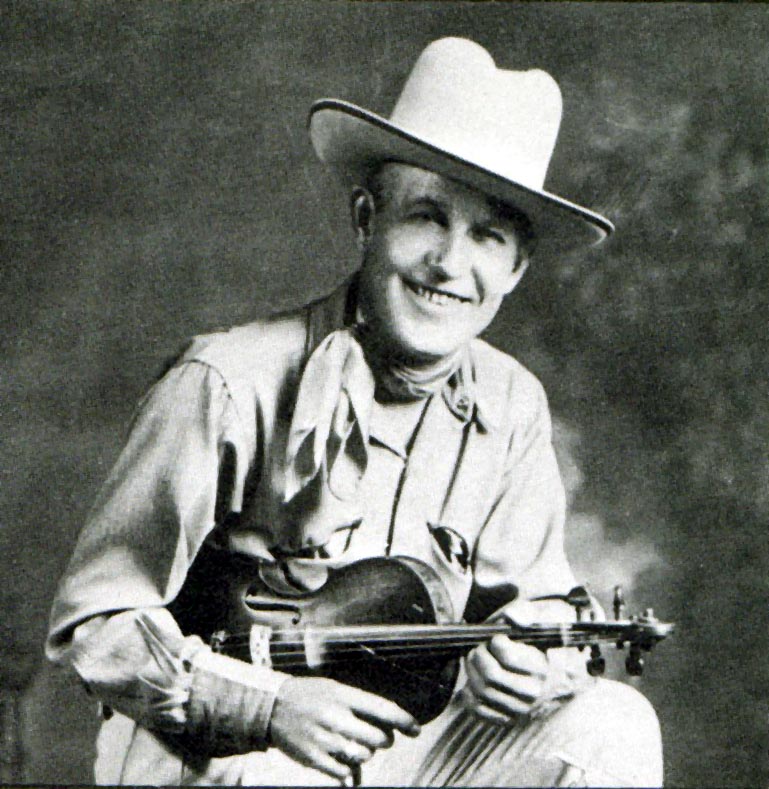
Clayton McMichen of Georgia

Clayton McMichen of Georgia

Parkersburg Landing 57

26 Saturday Jan 2013

Posted by Brandon Ray Kirk in Ed Haley

≈ Leave a comment

Tags

Appalachia, Ashland, blind, Clayton McMichen, Ed Haley, fiddler, history, John Hartford, Kentucky, life, music, Riley Puckett, Slim Clere, U.S. South, writing

     Curly Wellman had also recommended that I talk with Slim Clere, an Ashland-born fiddler whose telephone number I secured from a friend, Curly Fox. As I told him about my interest in Ed Haley, he was very rigid and formal; he kept referring to me as “sir.” Things loosened up once I mentioned the name Curly Wellman and asked if he had learned anything from watching Ed play.

     “Well, I would say yes that I did,” he said. “He had a style of his own. Now I picked up my backward bowing from him. What he would do, he noted out a lot of stuff. Like he was playing ‘Devil’s Dream’, he bowed it out with a straight slur all the way down. And you didn’t hear him return his bow from one end to the other. Ed was the smoothest violin player. Mostly always long bow, but you never would know it. He never made a bobble and he wasn’t a double-noter. Now, he was not a waltz man. He could play a waltz, though.”

     Slim said Ed had a unique bow hold.

     “What he did when he bowed his violin… You know when you put your finger under the frog on the stick? He gripped the whole thing with his thumb under the whole frog, like you’d do a butcher knife.” As for Ed’s fiddle placement: “He played it right on top of his collar bone there. He let it sit on his wrist.”

     “He was hot stuff,” Slim said. “He didn’t know what a different position was — he just reached up and got it — but he knew where it was. His favorite tune was ‘Blackberry Blossom’ and ‘Cacklin’ Hen’. And there was nobody in the world that could beat him playing ‘Dill Pickle Rag’.”

     Slim remembered playing against Ed in a contest one time at the Paramount Theatre in Ashland during the Depression.

     “Every contest Ed ever got into, he won. They had a contest down there at the Paramount Theatre at Ashland one time — that’s our home. He and I was both born in the same place. There was four or five fiddle players in the contest and they drew numbers: 1, 2, 3, 4, 5… They didn’t allow anybody else to play the same tune the guy played before and his heart was set on playing ‘Cacklin’ Hen’. A guy got up and he said, ‘I’m gonna play ‘Cacklin’ Hen’.’ Ed smiled. I told the guy that was playing with me, I said, ‘He’s got a trick up his sleeve.’ He said, ‘Why?’ and I said, ‘This guy played his tune. When he looks like that, you know that he’s thinking and he’s gonna win.’ And they came around to Ed and said, ‘What’re you gonna play Mr. Haley?’ and he said, ‘I’m gonna play ‘The Speckled Pullet’ and she cackles, too.’ And he played ‘Cacklin’ Hen’ and cackled himself into first place. I thought that was the cutest thing I ever heard in my life.”

     Slim’s memories of Ed were broken up with stories about his own musical career. We knew a lot of the same people. I asked him again about Ed playing in contests — something no one seemed to remember in great detail.

     “Oh yea, he played in contests all the time,” Slim said. “He liked the money. They had them a bunch of theatres in Ashland. They had the Paramount and the Grand and the Capital and they would have contests in county fairs. Then he used to do a lot of barnstorming on courthouse steps. See, by being blind he didn’t have to get permits or anything like that.”

     Slim said he bumped into Ed all over West Virginia.

     “I’ve seen him in Logan, I’ve seen him in Williamson, in Grantsville, seen him in Spencer, in Charleston, Huntington. And he could always smell me when I was around him. He’d say, ‘I smell Slim Clere.’ Everybody had a smell to him and all you had to do was say, ‘How’re you doing, Ed?’ and he knew you by name just right now, see. He was an old trooper. He knew what it was all about. He wasn’t a dummy. He used to come down there to Central Park and I’d go down there and sometimes I’d play his fiddle. He liked to hear other people play because he got his ideas that way.”

     Slim said he wanted to play me some music by Ernie Hodges, an old fiddling teacher who he felt was as good as Ed. I could hear him over the telephone trying to get a tape working in the cassette player — buttons popping, an occasional “dad-burn-it,” etc. As he struggled with the tape, he talked more about some of the people he’d worked with back in his radio days. “Curly Fox, he was with the old school that I was with. McMichen and John Carson and Gid Tanner — all of them. I worked with them down in Georgia. I worked with Bert Layne and Riley Puckett in Gary, Indiana, till they sent for me to come to Atlanta. Ed reminded me so much of Riley.”

In Search of Ed Haley 50

13 Sunday Jan 2013

Posted by Brandon Ray Kirk in Ed Haley

≈ Leave a comment

Tags

Appalachia, Ashland, banjo, Billy in the Lowground, Blackberry Blossom, blind, Cacklin Hen, Catlettsburg, Clark Kessinger, Clayton McMichen, culture, Curly Wellman, Curt Polton, Ed Haley, Elvis Presley, fiddler, Floyd Collins, Forked Deer, Grand Ole Opry, guitar, Hatfield-McCoy Feud, history, Horse Branch, Huntington, Ivan Tribe, John Hartford, Kentucky, Lawrence Haley, Logan County, Mid-Day Merry-Go-Round, Morehead, Mountain Melody Boys, Mountaineer Jamboree, music, National Fiddling Association, Old Sledge, Poplar Bluff, Rowan County Crew, Ugee Postalwait, Ward Hollow, WCHS, WCMT, Westphalia Waltz, writing, WSAZ

I asked Curly if he remembered any of Ed’s tunes and he said, “Ah, I remember ‘Forked Deer’ and I remember ‘Billy in the Lowground’ and I remember the ‘Old Sledge’ and I remember ‘Poplar Bluff.’ ‘Blackberry Blossom.’ The longer he played a tune, the meaner he got on it. If he got the feel, it hit him. And the more he played the better he got and the more tunes come to him. He played one waltz — ‘Westphalia Waltz’ — and that’s really the only waltz that I can recall that he played. And it was all double stop fiddle.”

Curly never heard Ed sing a note — a very surprising recollection considering the way that Ugee Postalwait had hyped Haley’s singing abilities.

“I got a copy of a song from him,” Curly said. “He had somebody to write it down. Because at this time, out at Morehead, Kentucky, they had a feud out there. And they had a shoot-out there on the steps and then somebody wrote this song called ‘Rowan County Crew.’ And Ed, they tell me, would sing that at different places throughout Kentucky. At that time, it was like Floyd Collins that was in the cave and like the Hatfields and the McCoys — only this was called the ‘Rowan County Crew.’ Well, at that time it was hot as a pistol through the state. Now evidently he sang that song, but he never sang it for me.”

Curly said, “Ed could have been as great as the Blue Yodeler or any of those people. He could have been right on those records with them but under no reason did he want to record commercially. Had he been living today and with the equipment they’ve got today, he would’ve been in more demand than Elvis Presley ever was. Nobody played ‘Cacklin’ Hen’ like him. And a very humble man. I never heard Ed down anybody else, I never heard him put anybody below him and I never had him to tell me how good he was. In fact, I wonder sometimes if he knew how good he was. But I knew it. He was a brilliant man. He’d just about keep a check up on everything during his lifetime. He knew the news, he knew the political field, he knew what was going on in the state.”

I asked Curly about the first time he ever saw Haley play.

“I played with Ed when I was a kid — twelve, thirteen years old — and we lived at a place called Horse Branch. That’s as you enter Catlettsburg, Kentucky. And I was a kid carrying an old flat-top guitar — no case — trying to learn how to play. In the evening, he’d come out on the front porch after dinner and Ralph would get the guitar and the mother would get the mandolin and the neighborhood would gather because at that time radio was just coming into being. And I’d go down there and sit and bang while they were playing. And that’s where I first heard Ed Haley.”

Curly lost track of Ed when he started playing music out on his own at the age of fifteen. Throughout the mid-thirties, he played over the radio on Huntington’s WSAZ and Ashland’s WCMT with the “Mountain Melody Boys,” then made several appearances on the Grand Ole Opry and Knoxville’s Mid-Day Merry-Go-Round with Curt Polton’s band. It was during that time, he said, around 1936, that Ed got into a contest with Clark Kessinger and Clayton McMichen at the WCHS radio station in Charleston. Clayton was the National Fiddling Champion, while Clark was the National Fiddling Association’s champion of the East. The whole thing was “built up for months — it was a showdown.” In the contest, each fiddler got to play two tunes and someone named Banjo Murphy seconded every one using a three-finger picking style on a four-string banjo. First prize was a “live baby” (a little pig) and the winner was determined by a clapping meter. Curly wasn’t sure what tunes Ed played (probably “Cacklin’ Hen,” his contest specialty) but remembered the results clearly.

“Ed Haley beat the two men on stage,” he said. “McMichen was out of it in a little bit but it took several rounds to eliminate Clark Kessinger.”

Curly returned to Ashland in the early forties and found Ed living in the bottom of a weather-boarded, two-story apartment building on 37th Street (Ward Hollow). He started visiting Haley again, usually on cold days when he knew that he’d be close to home. He’d put his D-18 flat-top Martin guitar in the trunk of his car and “go pick up a pint or a half a pint of moonshine,” then head on over to Ed’s house.

I’d go in. I wouldn’t take the guitar in at all. I’d just knock on the door and go in and I’d say, “Hi, Uncle Ed.” “Hi, Curly.” He knew me by my voice. And I’d go in and sit down, you know, and say, “How’s the weather?” and “How’s things?” and “How’s the family?” and so forth and so on. We’d sit around there and talk a little bit. I’d say, “Ed, been playing any lately?” “No, I haven’t felt like it. I just haven’t felt like it.” I’d say, “Well, how about a little nip? You think that would help?” “Well now you know you might have something there.” So I’d go on to the car and I’d get the bottle and come in and we’d sit back down and I’d pass it to him. He’d hit it. He’d sit right there a little bit you know and I’d say, “Take another little nip, Ed.” “Well, I believe I will,” he’d say. “It’s too wet to plow.” And he’d sit there and he’d rock a little bit in that chair and… Being blind, he talked a little loud. “Hey, did I ever play that ‘Old Sledge’ for you?” I’d say, “Well, I can’t remember Ed. Just can’t remember.” Well, he’d get up and he’d go over and he’d lay his hand right on that fiddle laying on the mantle of the fireplace. By that time I’d be out the door and getting the Martin. I’d come back in and he’d tune ‘er up there and feel her across you know and touch her a little bit here and there. He’d take off on it.

Curly and I got our instruments out and played a few of Haley’s tunes. He showed me the type of runs he used to play behind Ed and gave me a few more tips about his fiddling. He said Ed was “all fingers…so smooth” and could play all over the fingerboard — even in second and third positions. He “put a lot of his upper body into the fiddling” and patted one foot to keep time. If he fiddled for a long time, he put a handkerchief under his chin for comfort (never a chinrest) and dropped the fiddle down to his arm and played with a collapsed wrist.

Just before Lawrence and I left, Curly said, “I’ll tell you somebody that’s still living in Charleston and he’s a hell of a fiddle player — or was. They called him Slim Clere. He’s about 82. He knew Ed. In fact, he was the man that Clere looked up to as he was learning. And he could probably give you more information than I could because he’s followed the fiddle all of his life.”

Curly also recommended Mountaineer Jamboree (1984), a book written by Ivan Tribe that attemped to detail West Virginia’s contributions to country music. It briefly mentioned Ed: “Blind Ed Haley (1883-1954), a legendary Logan County fiddler who eventually settled in Ashland, Kentucky, repeatedly refused to record, but did belatedly cut some home discs for his children in 1946.”

In Search of Ed Haley 9

28 Wednesday Nov 2012

Posted by Brandon Ray Kirk in Ed Haley

≈ Leave a comment

Tags

Appalachia, Arthur Smith, Benny Thomasson, books, Cacklin Hen, Clark Kessinger, Clayton McMichen, Dr. Charles Wolfe, Earl Spielman, Eck Robertson, Ed Haley, fiddler, Forked Deer, Georgia Slim Rutland, history, J P Fraley, John Hartford, Ladies on the Steamboat, music, Nashville, National Folklore Festival, Parkersburg Landing, Skeets Williamson, Snake Chapman, Tennessee, Texas, The Devil's Box, Tug Boat, U.S. South, writers, writing

Back in Nashville, I thought a great deal about Ed Haley’s place in relation to other fiddlers of his time. I’m not much on categorizing people but I agreed with Dr. Wolfe, who put Ed in a “creative” class of fiddlers that included Eck Robertson, Clark Kessinger, Arthur Smith and Clayton McMichen. These fiddlers, according to Dr. Wolfe, felt that technique was just as important as repertoire – one of the trademarks of the Texas contest fiddling style so popular today.

“I like to flavor up a tune so that nobody in the world could tell what I’m playing,” Haley once told Skeets Williamson.

For creative fiddlers, writes forensic musicologist Earl Spielman in The Devil’s Box, “a fiddle tune is not just an ornamented melody; a melody is merely the raw, undeveloped, unprocessed material out of which a tune can grow and reach maturity. In Texas, instead of playing a repetition of the melody, the fiddler plays a variation of the original material. Each new variation can be radically different from the preceding one. The object of the fiddler is to avoid duplication and to be as innovative as possible within the limits of what is acceptable. As might be expected, any regular pattern of bowing is avoided. The bowing characteristic of Texas fiddling consists of fairly long bow strokes executed very smoothly with the bow rarely leaving the strings and with the number of notes played on each stroke varying from a single note to as many as seven or eight.”

Creation of the Texas contest style is accredited to Benny Thomasson, who competed with rival Major Franklin to such a fierce degree that he started improvising tunes and adding new parts onto them.

“Back when I started they had only two part tunes, and that was it,” Thomasson said in a 1982 interview. “In the older days when I began to come up I took these old tunes and began to build different sections to them. Like there would be two parts. Well, I’d add another. It would be the same part but in a different position. The old-timey fiddling that they try and hang onto nowadays, it’s all right. It’s good to listen to but we take those same tunes and just weave a web around them and make it come out real pretty.”

Many fiddle scholars agree that Benny Thomasson got his ideas about adding onto tunes from Texas fiddler, Eck Robertson. He was inspired enough by Robertson’s multi-part version of “Sally Gooden” (recorded in 1922) to say that Eck played it “better than anyone else in the world.” Haley was also proficient at adding parts; his “Forked Deer” had four parts, while his “Cacklin’ Hen” had eleven.

While there is no documented evidence that Ed Haley ever met Eck Robertson or Benny Thomasson, there is a link between Thomasson and Ed through Clark Kessinger and Georgia Slim Rutland. Benny borrowed heavily from Kessinger’s Haley-like early records, particularly “Tug Boat”, which Kessinger had gotten from Haley’s “Ladies on the Steamboat”. Likewise, Georgia Slim Rutland – one of radio’s top fiddlers in the 1940s – “allegedly spent one year in Ashland listening to Ed Haley play,” according to Parkersburg Landing, and was personally acquainted with Thomasson.

Because of Haley’s connection to Clark Kessinger and Georgia Slim, and their subsequent influence on Benny Thomasson, I began to formulate a theory that Haley was a “grandfather” of the Texas contest fiddling style. I must have been onto something because when I later mentioned it to J.P. Fraley, he said, “Well see, I knew Benny Thomasson and he knew about Ed Haley because I was playing at the National Folklore Festival and he wanted to know about that fella.”

Aside from such speculation, I also tried to discover more about Haley’s music from Parkersburg Landing. Hearing Snake Chapman and J.P. Fraley’s account of their experiences with him made my thirst to know more about his life and music overwhelming. I hated that I would never be able to see him play or talk to him. My family kidded me about trying to make up for that impossibility by doing everything short of digging him up and screwing him back together. They were aware – even before I – that I was obsessed with his story. My wife often poked her head into my office thinking I’d gone crazy listening to his recordings over and over. To her, they were nothing more than a bunch of surface noise and static, but the music was there and the feelings and pictures it made were unforgettable.

In Search of Ed Haley 6

26 Monday Nov 2012

Posted by Brandon Ray Kirk in Ashland, Big Sandy Valley, Ed Haley, Matewan, Music, Pikeville, Williamson

≈ 1 Comment

Tags

Appalachia, Art Stamper, Arthur Smith, Ashland, Big Sandy River, Billy Lyons, Blackberry Blossom, blind, Charles Wolfe, Clark Kessinger, Clayton McMichen, Duke Williamson, Ed Haley, fiddle, fiddler, fiddlers, fiddling, Fox in the Mud, Frazier Moss, Fred Way, Ft. Gay, Grand Ole Opry, history, Huntington, Joe Williamson, John Hartford, Kentucky, Kermit, Kirk McGee, Levisa Fork, Louisa, Mark Howard, Matewan, Mississippi River, Molly O'Day, music, Nashville, Natchee the Indian, Ohio River, Old Sledge, Packet Directory, Paintsville, Parkersburg Landing, Pikeville, Prestonsburg, Red Apple Rag, River Steamboats and Steamboat Men, Robert Owens, Roy Acuff, Sam McGee, Skeets Williamson, Snake Chapman, square dances, St. Louis, Stacker Lee, Stackolee, steamboats, Tennessee Valley Boys, Tri-State Jamboree, Trouble Among the Yearlings, Tug Fork, West Virginia, Williamson, WSAZ

Back in Nashville, I was knee-deep in Haley’s music, devoting more time to it than I care to admit. I talked so much about it that my friends began to tease me. Mark Howard, who was producing my albums at the time, joked that if Ed’s recordings were of better quality, I might not like them so much. As my obsession with Haley’s music grew, so did my interest in his life. For a long time, my only source was the liner notes for Parkersburg Landing, which I had almost committed to memory. Then came Frazier Moss, a fiddling buddy in town, who presented me with a cassette tape of Snake Chapman, an old-time fiddler from the Tug Fork of the Big Sandy in eastern Kentucky. On the tape, Snake said he’d heard Haley play the “old original” version of “Blackberry Blossom” after he “came in on the boats” at Williamson, West Virginia.

The boats?

This was making for a great story. I was already enthralled by Haley’s fiddling…but to think of him riding on “the boats.” It was the marriage of my two loves. I immediately immersed myself in books like Captain Fred Way’s Packet Directory 1848-1983: Passenger Steamboats of the Mississippi River System Since the Advent of Photography in Mid-Continent America (1983) to see which boats ran in the Big Sandy Valley during Haley’s lifetime. Most of the boats were wooden-hulled, lightweight batwings – much smaller than the ones that plied the Mississippi River in my St. Louis youth – but they were exciting fixtures in the Big Sandy Valley culture.

“I have seen these boats coming down the river like they were shot out of a cannon, turning these bends, missing great limbs hanging over the stream from huge trees, and finally shooting out of the Big Sandy into the Ohio so fast that often they would be nearly a mile below the wharf boat before they could be stopped,” Captain Robert Owens wrote in Captain Mace’s River Steamboats and Steamboat Men (1944). “They carried full capacity loads of sorghum, chickens and eggs. These days were times of great prosperity around the mouth of Sandy. Today, great cities have sprung up on the Tug and Levisa forks. The railroad runs on both sides, and the great activity that these old-time steamboats caused has all disappeared.”

During the next few weeks, I scoured through my steamboat photograph collection and assembled pictures of Big Sandy boats, drunk with images of Haley riding on any one of them, maybe stopping to play at Louisa, Paintsville, Prestonsburg and Pikeville, Kentucky on the Levisa Fork or on the Tug Fork at Ft. Gay, Kermit, Williamson, and Matewan, West Virginia.

Finally, I resolved to call Snake Chapman and ask him about his memories. It was a nervous moment – for the first time, I was contacting someone with personal memories of Ed Haley. Snake, I soon discovered, was a little confused about exactly who I was and why I was so interested in Haley’s life and then, just like that, he began to offer his memories of Ed Haley.

“Yeah, he’s one of the influences that started me a fiddling back years ago,” Snake said, his memories slowly trickling out. “I used to go over to Molly O’Day’s home – her name was Laverne Williamson – and me and her and her two brothers, Skeets and Duke, used to play for square dances when we first started playing the fiddle. And Uncle Ed, he’d come up there to old man Joe Williamson’s home – that’s Molly’s dad – and he just played a lot for us and then us boys would play for him, me and Cecil would, and he’d show us a lot of things with the bow.”

Molly O’Day, I knew, was regarded by many as the most famous female vocalist in country music in the 1940s; she had retired at a young age in order to dedicate her life to the church.

“And he’s the one that told me all he could about old-time fiddling,” Snake continued. “He said, ‘Son, you’re gonna make a good fiddler, but it takes about ten years to do it.'”

I told Snake about reading in the Parkersburg Landing liner notes how Haley reportedly wished that “someone might pattern after” him after his death and he totally disagreed. He said, “I could have copied Uncle Ed – his type of playing – but I didn’t want to do it because he told me not to. He told me not to ever copy after anyone. Said, ‘Just play what you feel and when you get good, you’re as good as anybody else.’ That was his advice.”

I didn’t really know what to make of that comment. I mean, was Haley serious? Was he speaking from personal experience or was it just something he told to a beginning fiddler for encouragement?

After that, my conversation with Snake consisted of me asking questions – everything from how much Haley weighed to all the intricate details of his fiddling. I wondered, for instance, if Ed held the bow at the end or toward the middle, if he played with the fiddle under his chin, and if he ever tried to play words in his tunes. I wanted to know all of these things so that I could just inhabit them, not realizing that later on what were perceived as trivial details would often become major items of interest.

Snake answered my questions precisely: he said Haley held the bow “up a little in the middle, not plumb on the end” and usually played with the fiddle at his chest – “just down ordinarily.” He also said Haley “single-noted” most of his bow strokes, played frequently in cross-key, hated vibrato and used a lot of “sliding notes.” He seldom got out of first position, only occasionally “going down and getting some notes” that he wanted to “bring in the tune” and he definitely tried to play words in his music.

“The old fiddlers through the mountains here – and I guess it’s that way everywhere – they tried to make the fiddle say the words of the old tunes,” Snake said.

“Uncle Ed, he was a kind of a fast fiddler,” he went on. “Most old-time fiddlers are slow fiddlers, but he played snappy fiddling, kindly like I do. Ah, he could do anything with a fiddle, Uncle Ed could. He could play a tune and he could throw everything in the world in it if he wanted to or he could just play it out straight as it should be. If you could just hear him in person because those tapes didn’t do him justice. None of them didn’t. To me, he was one of the greatest old-time fiddlers of all time. He was telling me, when I was young, he said, ‘Well, I could make a fiddle tune any time I want to,’ but he said he just knowed so many tunes he didn’t care about making any more. He played a variety of tunes that a lot of people didn’t play, and a lot of people couldn’t play. He knew so many tunes he wouldn’t play one tune too long.”

I asked Snake about Haley’s repertoire and he said, “He played an old tune called ‘Old Sledge’ and it was one of his good ones. He played tunes like ‘Trouble Among the Yearlings’, but when he was gonna play it he called it ‘Fox in the Mud’. He made that up himself. One of the favorite tunes of mine he played was the old-time way of playing ‘Blackberry Blossom’ and he played it in G-minor. Ed could really play it good. They was somebody else that made the tune. Uncle Ed told me who it was – Garfield. He said he was a standing fiddling near a big blackberry patch and it was in bloom at the mouth of the hollow one time and this fella Garfield played this tune and he asked this fella Garfield what the name of the tune was. He said, ‘Well, I ain’t named it, yet,’ and he turned around and spit in that blackberry patch with a big bunch of ambeer and said, ‘We’ll just call it ‘Blackberry Blossom’.”

Snake laughed.

“Yeah, Uncle Ed, he had tales behind every one of them like that, but that’s where he said he got the name of it. He said he named it there…spitting in the blackberry blossom.”

Snake only remembered Haley singing “Stacker Lee”, a tune I’d heard him fiddle and sing simultaneously on Parkersburg Landing:

Oh Stacker Lee went to town with a .44 in his hand.

He looked around for old Billy Lyons. Gonna kill him if he can.

All about his John B. Stetson hat.

Stacker Lee entered a bar room, called up a glass of beer.

He looked around for old Billy Lyons, said, “What’re you a doin’ here?

This is Stacker Lee. That bad man Stacker Lee.”

Old Billy Lyons said, “Stacker Lee, please don’t take my life.

Got a half a dozen children and one sweet loving wife

Looking for my honey on the next train.”

“Well God bless your children. I will take care of your wife.

You’ve stole my John B. Stetson hat, and I’m gonna take your life.”

All about that broad-rimmed Stetson hat.

Old Billy Lyons said, “Mother, great God don’t weep and cry.”

Oh Billy Lyons said, “Mother, I’m bound to die.”

All about that broad-rimmed Stetson hat.

Stacker Lee’s mother said, “Son, what have you done?”

“I’ve murdered a man in the first degree and Mother I’m bound to be hung.”

All about that John B. Stetson hat.

Oh Stacker Lee said, “Jailor, jailor, I can’t sleep.

Old Billy Lyons around my bedside does creep.”

All about that John B. Stetson hat.

Stacker Lee said, “Judge, have a little pity on me.

Got one gray-haired mother dear left to weep for me.”

All about that broad-rimmed Stetson hat.

That judge said, “Old Stacker Lee, gonna have a little pity on you.”

I’m gonna give you twenty-five years in the penitentiary.”

All about that John B. Stetson hat.

It was one awful cold and rainy day

When they laid old Billy Lyons away

In Tennessee.  In Tennessee.

Snake said Haley used to play on the streets of Williamson, West Virginia where he remembered him catching money in a tin cup. In earlier years, he supposedly played on the Ohio River and Big Sandy boats and probably participated in the old fiddlers’ contests, which Snake’s father said was held on boat landings. These impromptu contests were very informal and usually audience-judged, meaning whoever got the most applause was considered the winner. Sometimes, fiddlers would just play and whoever drew the biggest crowd was considered the winner.

I asked Snake if he ever heard Ed talk about Clark Kessinger and he said, “Skeets was telling me Ed didn’t like Clark at all. He said, ‘That damned old son-of-a-gun stands around and tries to pick up everything he can pick up from you.’ And he did. Clark tried to pick up everything from Uncle Ed. He was a good fiddler, too.”

Snake said Clayton McMichen (the famous Skillet Licker) was Haley’s favorite fiddler, although he said he knew just how to beat him. This made me think of the line from Parkersburg Landing, “In regard to his own fiddling, Haley was not particularly vain, although he was aware that he could put ‘slurs and insults’ into a tune in a manner that set him apart from all other fiddlers.” (I wasn’t exactly sure he meant by slurs and insults.)

Snake could tell that I was really into Haley.

“Try to come see me and we’ll make you as welcome as we possibly can,” he said. “I tell you, my wife is poorly sick, and I have a little trouble with my heart. I’m 71. Doctors don’t want me to play over two or three hours at a time, but I always like to meet other people and play with them. I wouldn’t have no way of putting you up, but you can come any time.”

Just before hanging up, I asked Snake if he had any Haley recordings. He said Skeets Williamson had given him some tapes a few years back and “was to bring more, but he died two years ago of cancer.” Haley had a son in Ashland, Kentucky, he said, who might have more recordings. “I don’t know whether he’s got any of Uncle Ed’s stuff or not. See, most of them old tapes they made, they made them on wire recordings, and I don’t know if he’s got any more of his stuff than what I’ve got or not.”

I told Snake I would drive up and see him in the spring but ended up calling him a week later to ask him if he knew any of Ed’s early influences. He said Ed never talked about those things. “No sir, he never did tell me. He never did say. Evidently, he learned from somebody, but I never did hear him say who he learned from.” I felt pretty sure that he picked up tunes from the radio. “Ed liked to listen to the radio, preferring soap operas and mystery chillers, but also in order to hear new fiddle tunes,” the Parkersburg Landing liner notes read. “A good piece would cause him to slap his leg with excitement.” I asked Snake if he remembered Haley ever listening to fiddlers on the radio and he said, “I don’t know. He must have from the way he talked, because he didn’t like Arthur Smith and he liked Clayton McMichen.”

What about pop tunes? Did he play any of those?

“He played ragtime pretty good in some tunes,” Snake said. “Really you can listen to him play and he slides a little bit of ragtime off in his old-time fiddling – and I never did hear him play a waltz in all the time I ever heard him play. He’d play slow songs that sound old lonesome sounds.”

Snake quickly got into specifics, mentioning how Haley only carried one fiddle around with him. He said, “He could tune right quick, you know. He didn’t have tuners.  He just had the keys.”

Did fiddlers tune low back in those days?

“I’d say they did. They didn’t have any such thing as a pitch-pipe, so they had to tune just to whatever they liked to play.”

Haley was the exception.

“Well, it seemed like to me he tuned in standard pitch, I’m not sure. But from hearing his fiddling – like we hear on those tapes we play now – I believe he musta had a pitch-pipe at that time.”

I wondered if Haley spent a lot of time messing around with his fiddle, like adjusting the sound post, and Snake said, “No, I never did see him do that. He might have did it at home but when he was out playing he already had it set up the way he wanted to play.”

Surprisingly, Snake didn’t recall Haley playing for dances. “I don’t think he did because I never did know of him playing for a dance. He was mostly just for somebody to listen to, and what he did mostly was to make money for a living playing on the street corner. I seen him at a fiddling contest or two – that was back before I learned to play the fiddle. That’s when I heard him play ‘Trouble Among the Yearlings’. He won the fiddling contest.”

What about playing with other fiddlers?

“Well, around in this area here he was so much better than all the other fiddle players, they all just laid their fiddles down and let him play. The old fiddlers through here, they wasn’t what I’d call too good fiddlers. We had one or two in the Pikeville area over through there that played a pretty good fiddle. Art Stamper’s dad, he was a good old-time fiddler, and so was Kenny Baker’s dad.”

After hanging up with Snake, I gave a lot of thought to Haley reportedly not liking Arthur Smith. His dislike for Smith was documented on Parkersburg Landing, which stated plainly: “Another fiddler he didn’t care for was Arthur Smith. An Arthur Smith record would send him into an outrage, probably because of Smith’s notoriously uncertain sense of pitch. Cecil Williamson remembers being severely lectured for attempting to play like ‘that fellow Smith.'”

Haley probably first heard Smith over the radio on the Grand Ole Opry, where he debuted in December of 1927. Almost right away, he became a radio star, putting fiddlers all over the country under his spell. His popularity continued to skyrocket throughout the 1930s, during his collaboration with Sam and Kirk McGee. In the late thirties, Haley had a perfect chance to meet Smith, who traveled through southern West Virginia and eastern Kentucky with the Tennessee Valley Boys. While unlikely, Haley may have met him at fiddling contests during the Depression. “In the thirties, Haley occasionally went to fiddle contests to earn money,” according to Parkersburg Landing. At that same time, Smith was participating in well-publicized (usually staged) contests with Clark Kessinger, Clayton McMichen and Natchee the Indian. Haley, however, tended to avoid any contest featuring Natchee the Indian, who “dressed in buckskins and kept his hair very long” and was generally a “personification of modern tendencies toward show fiddling.”

In the early 1940s, Haley had a perfect opportunity to meet Smith, who appeared regularly on WSAZ’s “Tri-State Jamboree” in Huntington, West Virginia. Huntington is located several miles up the Ohio River from Ashland, Kentucky and is West Virginia’s second largest city.

In the end, Haley’s reported low opinion of Smith’s fiddling was interesting. Arthur Smith was one of the most influential fiddlers in American history. Roy Acuff regarded him as the “king of the fiddlers,” while Dr. Wolfe referred to him as the “one figure” who “looms like a giant over Southern fiddling.” Haley even had one of his tunes – “Red Apple Rag” – in his repertoire. Maybe he got a lot of requests for Smith tunes on the street and had to learn them. Who knows how many of his tunes Haley actually played, or if his motives for playing them were genuine?

Feud Poll 1

If you had lived in the Harts Creek community during the 1880s, to which faction of feudists might you have given your loyalty?

Categories

  • Adkins Mill
  • African American History
  • American Revolutionary War
  • Ashland
  • Atenville
  • Banco
  • Barboursville
  • Battle of Blair Mountain
  • Beech Creek
  • Big Creek
  • Big Harts Creek
  • Big Sandy Valley
  • Big Ugly Creek
  • Boone County
  • Breeden
  • Calhoun County
  • Cemeteries
  • Chapmanville
  • Civil War
  • Clay County
  • Clothier
  • Coal
  • Cove Gap
  • Crawley Creek
  • Culture of Honor
  • Dingess
  • Dollie
  • Dunlow
  • East Lynn
  • Ed Haley
  • Eden Park
  • Enslow
  • Estep
  • Ethel
  • Ferrellsburg
  • Fourteen
  • French-Eversole Feud
  • Gilbert
  • Giles County
  • Gill
  • Green Shoal
  • Guyandotte River
  • Halcyon
  • Hamlin
  • Harts
  • Hatfield-McCoy Feud
  • Holden
  • Hungarian-American History
  • Huntington
  • Inez
  • Irish-Americans
  • Italian American History
  • Jamboree
  • Jewish History
  • John Hartford
  • Kermit
  • Kiahsville
  • Kitchen
  • Leet
  • Lincoln County Feud
  • Little Harts Creek
  • Logan
  • Man
  • Matewan
  • Meador
  • Midkiff
  • Monroe County
  • Montgomery County
  • Music
  • Native American History
  • Peach Creek
  • Pearl Adkins Diary
  • Pecks Mill
  • Peter Creek
  • Pikeville
  • Pilgrim
  • Poetry
  • Queens Ridge
  • Ranger
  • Rector
  • Roane County
  • Rowan County Feud
  • Salt Rock
  • Sand Creek
  • Shively
  • Spears
  • Sports
  • Spottswood
  • Spurlockville
  • Stiltner
  • Stone Branch
  • Tazewell County
  • Timber
  • Tom Dula
  • Toney
  • Turner-Howard Feud
  • Twelve Pole Creek
  • Uncategorized
  • Warren
  • Wayne
  • West Hamlin
  • Wewanta
  • Wharncliffe
  • Whirlwind
  • Williamson
  • Women's History
  • World War I
  • Wyoming County
  • Yantus

Feud Poll 2

Do you think Milt Haley and Green McCoy committed the ambush on Al and Hollene Brumfield in 1889?

Blogroll

  • Ancestry.com
  • Ashland (KY) Daily Independent News Article
  • Author FB page
  • Beckley (WV) Register-Herald News Article
  • Big Sandy News (KY) News Article
  • Blood in West Virginia FB
  • Blood in West Virginia order
  • Chapters TV Program
  • Facebook
  • Ghosts of Guyan
  • Herald-Dispatch News Article 1
  • Herald-Dispatch News Article 2
  • In Search of Ed Haley
  • Instagram
  • Lincoln (WV) Journal News Article
  • Lincoln (WV) Journal Thumbs Up
  • Lincoln County
  • Lincoln County Feud
  • Lincoln County Feud Lecture
  • LinkedIn
  • Logan (WV) Banner News Article
  • Lunch With Books
  • Our Overmountain Men: The Revolutionary War in Western Virginia (1775-1783)
  • Pinterest
  • Scarborough Society's Art and Lecture Series
  • Smithsonian Article
  • Spirit of Jefferson News Article
  • The Friendly Neighbor Radio Show 1
  • The Friendly Neighbor Radio Show 2
  • The Friendly Neighbor Radio Show 3
  • The Friendly Neighbor Radio Show 4
  • The New Yorker
  • The State Journal's 55 Good Things About WV
  • tumblr.
  • Twitter
  • Website
  • Weirton (WV) Daily Times Article
  • Wheeling (WV) Intelligencer News Article 1
  • Wheeling (WV) Intelligencer News Article 2
  • WOWK TV
  • Writers Can Read Open Mic Night

Feud Poll 3

Who do you think organized the ambush of Al and Hollene Brumfield in 1889?

Recent Posts

  • Logan County Jail in Logan, WV
  • Absentee Landowners of Magnolia District (1890, 1892, 1894)
  • Charles Spurlock Survey at Fourteen Mile Creek, Lincoln County, WV (1815)

Ed Haley Poll 1

What do you think caused Ed Haley to lose his sight when he was three years old?

Top Posts & Pages

  • Baisden Family Troubles
  • Jeff Baisden
  • Man High School Girls' Basketball Team (1928)
  • Jeff and Harriet Baisden
  • Origin of Place Names in Logan County, WV (1937)

Copyright

© Brandon Ray Kirk and brandonraykirk.wordpress.com, 1987-2023. Unauthorized use and/or duplication of this material without express and written permission from this blog’s author and/or owner is strictly prohibited. Excerpts and links may be used, provided that full and clear credit is given to Brandon Ray Kirk and brandonraykirk.wordpress.com with appropriate and specific direction to the original content.

Archives

  • February 2025
  • January 2025
  • October 2023
  • September 2023
  • December 2022
  • November 2022
  • May 2022
  • April 2022
  • February 2022
  • November 2021
  • October 2021
  • September 2021
  • June 2021
  • May 2021
  • April 2021
  • March 2021
  • February 2021
  • January 2021
  • December 2020
  • November 2020
  • October 2020
  • July 2020
  • June 2020
  • May 2020
  • April 2020
  • March 2020
  • February 2020
  • January 2020
  • December 2019
  • November 2019
  • October 2019
  • September 2019
  • August 2019
  • July 2019
  • June 2019
  • May 2019
  • April 2019
  • March 2019
  • February 2019
  • January 2019
  • December 2018
  • November 2018
  • October 2018
  • September 2018
  • August 2018
  • July 2018
  • June 2018
  • May 2018
  • April 2018
  • March 2018
  • February 2018
  • January 2018
  • December 2017
  • November 2017
  • October 2017
  • September 2017
  • August 2017
  • July 2017
  • June 2017
  • May 2017
  • April 2017
  • March 2017
  • February 2017
  • January 2017
  • December 2016
  • November 2016
  • October 2016
  • September 2016
  • August 2016
  • July 2016
  • June 2016
  • May 2016
  • April 2016
  • March 2016
  • February 2016
  • January 2016
  • December 2015
  • November 2015
  • October 2015
  • September 2015
  • August 2015
  • July 2015
  • June 2015
  • May 2015
  • April 2015
  • March 2015
  • February 2015
  • January 2015
  • December 2014
  • October 2014
  • September 2014
  • August 2014
  • July 2014
  • June 2014
  • May 2014
  • April 2014
  • March 2014
  • February 2014
  • January 2014
  • December 2013
  • November 2013
  • October 2013
  • September 2013
  • August 2013
  • July 2013
  • June 2013
  • May 2013
  • April 2013
  • March 2013
  • February 2013
  • January 2013
  • December 2012
  • November 2012

Enter your email address to follow this blog and receive notifications of new posts by email.

Join 2,925 other subscribers

Tags

Appalachia Ashland Big Creek Big Ugly Creek Blood in West Virginia Brandon Kirk Cabell County cemeteries Chapmanville Charleston civil war coal Confederate Army crime culture Ed Haley Ella Haley Ferrellsburg feud fiddler fiddling genealogy Green McCoy Guyandotte River Harts Harts Creek Hatfield-McCoy Feud history Huntington John Hartford Kentucky Lawrence Haley life Lincoln County Lincoln County Feud Logan Logan Banner Logan County Milt Haley Mingo County music Ohio photos timbering U.S. South Virginia Wayne County West Virginia Whirlwind writing

Blogs I Follow

  • OtterTales
  • Our Appalachia: A Blog Created by Students of Brandon Kirk
  • Piedmont Trails
  • Truman Capote
  • Appalachian Diaspora

BLOOD IN WEST VIRGINIA is now available for order at Amazon!

Blog at WordPress.com.

OtterTales

Writings from my travels and experiences. High and fine literature is wine, and mine is only water; but everybody likes water. Mark Twain

Our Appalachia: A Blog Created by Students of Brandon Kirk

This site is dedicated to the collection, preservation, and promotion of history and culture in Appalachia.

Piedmont Trails

Genealogy and History in North Carolina and Beyond

Truman Capote

A site about one of the most beautiful, interesting, tallented, outrageous and colorful personalities of the 20th Century

Appalachian Diaspora

  • Subscribe Subscribed
    • Brandon Ray Kirk
    • Join 787 other subscribers
    • Already have a WordPress.com account? Log in now.
    • Brandon Ray Kirk
    • Subscribe Subscribed
    • Sign up
    • Log in
    • Report this content
    • View site in Reader
    • Manage subscriptions
    • Collapse this bar
 

Loading Comments...