• About

Brandon Ray Kirk

~ This site is dedicated to the collection, preservation, and promotion of history and culture in my section of Appalachia.

Brandon Ray Kirk

Tag Archives: Canada

Absentee Landowners of Magnolia District (1890, 1892, 1894)

18 Tuesday Feb 2025

Posted by Brandon Ray Kirk in Big Sandy Valley, Matewan, Tazewell County

≈ Leave a comment

Tags

A.D. Bright, A.M. Bailey, Alex McClintock, Anthony Lawson, Appalachia, C.B. Taylor, C.R. McNutt, Canada, Charleston, Cincinnati, Cora McInturff, E.H. Stewart, Egbert Mills Jr., Elkhorn Sandy River Trust Company, George W. Duty Jr., Grayton Mining Company, Grayton Water Works and Improvement Company, H.R. Phillips, H.S> White, H.W. Sibley, Howard S. Graham, J.C. Williamson, J.D. Sergeant, J.E. Price, Jacob Smith, James Hatfield, James OKeeffe, L.M. Hall, Lewis Ferrell, Logan County, M.F. Meighen, Magnolia District, McDowell County, Mercer County, Mingo County, Morehead, Moundsville, New York, Philadelphia, Pike County, Richard Torpin Jr., Roanoke, Rowan County, Sauel Walton, Stuart Wood, Tazewell County, Virginia, W.E. Chilton, W.W. Adams, Warren Alderson, West Virginia, Wheeling, William P. Payne

What follows is a list of absentee landowners in Magnolia District of Logan County, WV, for 1890, 1892, and 1894… There are three significant types of absentee landowners: 1) those who live outside of Logan County; 2) those who live in Logan County but outside of Magnolia District; and 3) those who own property, for example, at Mate Creek but reside, for example, at Grapevine Creek (both within the district). This list does not include the latter type.

1890

J.D. Sergeant, Philadelphia, PA, 9495.91 acres

James O’Keeffe, Tazewell County, VA, 2963 acres

Stuart Wood, Philadelphia, PA, 2813 acres

Walton and O’Keeffe, Tazewell County, VA, 1933 acres

Elkhorn Sandy River Trust Company, no address given, 1699 acres

Warren Alderson, Morehead, KY, 800 acres

J.C. Alderson, Wheeling, 792 acres

J.D. Sergeant and James O’Keeffe, ________, 783.5 acres

E.H. Stewart, trustee, Roanoke, VA, 684 acres

Lewis Ferrell heirs, Pike County, KY, 600 acres

W.B. Payne, McDowell County, 582 acres

F. Stukenburgh, Cincinnati, OH, 350 acres

1892

Richard Torpin, Jr. et al, trustee, no residence given, 9326.66 acres

H.R. Phillips, NY, 6095 acres

J.E. Price, trustee, NY, 5853 acres

Samuel Walton, Tazewell County, VA, 4439.5 acres

Walton and O’Keeffe, Tazewell County, VA, 4102 acres

W.E. Chilton, trustee, Charleston, 3953.5 acres

Stuart Wood, Philadelphia, PA, 2813 acres

J.D. Sargeant, Philadelphia, PA, 1668.5 acres

James O’Keeffe, Tazewell County, VA, 1650 acres

C.R. McNutt, Mercer County, 1509 1/16 acres

H.S. White, Charleston, 1500 acres

Alderson and Adams, Wheeling, 920.5 acres

Alex McClintock, Lexington, KY, 843 acres

E.H. Stewart, Roanoke, VA, 684 acres

Jacob Smith, Pike County, KY, 550 acres

W.B. Payne, McDowell County, 532 acres

J.F. Paull, trustee, Wheeling, 509 acres

James Hatfield, Rowan County, KY, 147 acres

J.C. Alderson, Wheeling, 59 acres

H.W. Sibley, Tazewell County, VA, 36 acres

George W. Dewty, Jr., Pike County, KY, 22 acres

1894

Richard Torpin, Jr., trustee, no address given, 9326.66 acres

H.R. Phillips, trustee, NY, 6345 acres

Grayton Mining Company, Philadelphia, PA, 6022.5 acres

J.E. Price, trustee, NY, 5853 acres

Egbert Mills, Jr., trustee, NY, 4374.5 acres

Walton and O’Keeffe, Tazewell County, VA, 4052 acres

Stuart Wood, Philadelphia, PA, 3097 acres

C.R. McNutt, Mercer County, 3018 1/8 acres

L.M. Hall et al, Towanda, PA, 2572 acres

Howard S. Graham et al, trustee, Philadelphia, PA, 1790 acres

J.F. Poull, trustee, Wheeling, 954 acres

Alderson and Adams et al, Wheeling, 920.5 acres

J.D. Sergeant, Philadelphia, PA, 877.5 acres

Grayton Water Works and Improvement Company, Philadelphia, PA, 767 acres

E.H. Stewart, trustee, Roanoke, VA, 684 acres

W.B. Payne, McDowell County, 532 acres

J.C. Williamson, Pike County, KY, 470.5 acres plus three lots in Matewan

A.D. Bright, NY, 374 acres

Jacob Smith, Pike County, KY, 350 acres

C.B. Taylor, Canada, 200 acres

J.C. Alderson, Wheeling, 193 acres

H.W. Sibley, Tazewell County, VA, 36 acres

George W. Duty, Jr., Pike County, KY, 22 acres

Cora McInturff, KY, 1 acre

A.M. Bailey, McDowell County, 0.5 acres

B.F. Meighen, Moundsville, two lots in Matewan

Source: Land Book 1887-1892 and Land Book 1893-1899.
Jerry “Dad” Crowley: Logan’s Irish Repairman (1937)

02 Saturday Feb 2019

Posted by Brandon Ray Kirk in Huntington, Irish-Americans, Logan

≈ Leave a comment

Tags

baseball, Brazil, Canada, England, genealogy, history, Huntington, Ireland, Jerry Crowley, Logan, Logan Banner, Logan County, Marietta, Mt. Gay, Murphy's Restaurant, New York, Ohio, repairman, Stratton Street, Syracuse, Wales, West Virginia

From the Logan Banner of Logan, WV, comes this bit of history about J.E. “Dad” Crowley, a familiar Irish repairman, in 1937:

J.E. “Dad” Crowley Here Since 1884 As Repairman

Ninety-Year-Old Irishman Worked on Sewing Machines In Brazil, England, Ireland, Wales and Canada; Never Sick A Day

This will be the first time that Jerry E. “Dad” Crowley’s name has been in a newspaper.

Not that Dad doesn’t have an interesting story to tell, but just because no one ever “discovered” him before. (Dad has never been in jail, either, though he has walked twice across the continent and calls himself a “tramp.”)

Dad Crowley, 90-year-old sewing machine repairman who has been working spasmodically in Logan county since 1884, was born in Syracuse, New York, member of a family of 14 children.

During the 90 years since the time of his birth he has walked twice across the United States, gone across the continent more than 100 times by rail and has repaired sewing machines in Brazil, Wales, England, Canada, and Ireland.

Dad says he has never been sick more than a half day in his life, has had only one contagious illness, has never taken a drop of medicine to date and up to now has had no ache or pain more serious than a toothache or a corn.

His only illness was whooping cough. He had this affliction at Marietta, Ohio, when he was 76 years old.

“I guess the Master just figured I was entering my second childhood and had better give me something to remind me of the fact,” Dad said with a chuckle.

“I just whooped ‘er out, though. No doctor, no medicine, no thing.”

“Dad” says he’s not bothered with any aches or pains now.

“I haven’t any teeth no, so—toothache won’t bother me, and my feet are so battered up that a pain there wouldn’t be noticeable.”

When asked how many miles he believed he had walked during his 90 years, the leathery, little Irishman—he’s “Shelalaigh Irish” and proud of it—rattled off the figure of 23, 367, 798, 363 miles without a blink of the eye, then later admitted that “I lost track of mileage after the first 20 billion miles.”

Dad declared that in his first and last job of work that he held for a person other than for himself he walked more than 10,000 miles.

He was operator of a treadmill for a Syracuse citizen named Hamilton from whom he learned the mechanism of the sewing machine, thus making it possible for him later to be independent of all bosses.

The whitehaired old chap repaired his first sewing machine on the Mounts farm in Mount Gay in 1884 when he first came into this section of West Virginia from Huntington.

Since that time during his intermittent visits to Logan county he has canvassed nearly every home here and has worked on many of the sewing machines in the county.

Dad is a close friend of the Murphys who operate a restaurant and poolroom on Stratton street. He affectionately calls Mrs. Murphy “Mom” because he thinks she looks like his mother, who died when he was only two years old.

Dad can be found at Murphy’s Restaurant any afternoon when the baseball scores are coming in. Baseball next to repairing sewing machines, is his consuming passion. One will find Dad wearing a cap on his graying locks, smiling broadly and ever ready to spin a yarn or talk baseball.

Source: Logan (WV) Banner, 1 July 1937

West Virginia Once Part of Iroquois Domain (1927)

21 Tuesday Aug 2018

Posted by Brandon Ray Kirk in American Revolutionary War, Native American History

≈ Leave a comment

Tags

Andrew P. Price, Appalachia, Canada, Cayuga, Chillicothe, Cumberland River, Dekanawida, Five Nations, Great Lakes, Greenbrier Valley, Hiawatha, history, Iroquois, Jackson River, James Fenimore Cooper, Kanawha River, Lancaster, Logan Banner, London, Marlinton, Mingo Flats, Mohawk, New York, Ohio, Oneida, Onondago, Ototarha, Pennsylvania, Revolutionary War, Rio Grande River, Seneca, Seneca Trail, Shawnee, St. Lawrence River, Tennessee, Tuscarora, Virginia, Warrior's Road, West Virginia, Winchester

From the Logan Banner of Logan, WV, comes this bit of history about the Iroqouis and West Virginia dated October 7, 1927:

West Virginia Part of Iroquois Domain

Confederation of Five Nations, Pledged to Peace, Endured For Two Centuries — Hiawatha One of Founders — Vast Indian Drama Told By Andrew P. Price, “Sage of Marlinton.”

You keep hearing of the Shawnees who overran this country prior to the Revolutionary War, and you keep hearing of them to the east and then to the west. You know that when 72 men went from this (Greenbrier) valley to fight them at the mouth of Kanawha, that they were living in Chillicothe.

The mystery of the Shawnee being to the east and then to the west is explained as follows:

When the whites first began to record history the Shawnees were far to the south and were split into two tribes. One lived on the Atlantic seaboard, around Savannah, and the other west of the mountains in the Tennessee country. They were forced north by their enemies and they were sometime after that found with towns at Winchester, in the valley of Virginia, and Lancaster, Pennsylvania, and in other places in Pennsylvania, while those from the Cumberland basin in Tennessee came north into Ohio. The eastern tribe moved first and no doubt the communicating road between the settlements at Winchester and eastern Pennsylvania traversed West Virginia. They would have to cross Seneca Trail, or Warrior’s Road, and the military town of Mingo Flats lay in their line of travel and that is the occasion of the corrupting of that place and making the garrison traitor to the Five Nations.

The whole of the Appalachia Range of mountains was owned, policed and controlled by the Iroquois or Five Nations. This was the highest type of Indian north of the Rio Grande. For centuries they held a commanding position, their country extending from the mouth of the St. Lawrence river, west on both sides to the Great Lakes and turning there took all the mountain country as far south as Georgia, and they had at least 50 towns along the way from north to south. History deals more with the Mohawks around New York, but the westernmost part in which we live was occupied and kept by the Senecas. The list of the Iroquois or Five Nations: Mohawk, Oneida, Onondago, Cayuga and Seneca. When the Tuscaroras came in in 1726 they were called the Six Nations.

Government Older Than Ours

This conference lasted for more than two centuries and was perhaps the most notable government ever set up by savages. They are the Indians that James Fennimore Cooper wrote about and they are entitled to every bit of praise that he gives them. They had a council that was noted for its dignity, faith, and ability. The kinds of Europe sent ambassadors to that council for many generations which made treaties, and it was well known in the London of that day as the American Congress is now. The Nations early agreed with the whites to allow the Europeans to settle and thrive on the Atlantic seaboard and they, the Five Nations, kept the mountains and western part of their countries.

Probably the first fraud practiced on the Five Nations was the Greenbrier Colony grant of 100,000 acres on waters that flowed into the Ohio, and this was held up for more than 30 years and only matured after the colonies had gained their independence. It is evident that it was first granted on the mistake of fact, that is, that the Greenbrier, like the Jackson River, flowed into the Atlantic.

Hiawatha an Organizer

The formation of the Five Nations was accomplished about the history the year 1750 and was the work of two Indians of great fame, Dekanawida and Hiawatha. The name of Hiawatha is famous by reason of Longfellow’s poem, but it does not contain a single fact of the history of Hiawatha. The two Indians posed as medicine men and magicians and spent their lives to bring about the league to promote peace and to end war. At the time they commenced their work, war was the religion of the tribes. Hiawatha was a Mohawk, and at times the Mohawks were cannibals. The two Indians traveled from council to council, proposing the scheme of the league to promote peace, and it was debated on the council fires, and it encountered the most bitter opposition. The name of the tyrant Ototarha comes down in history as the most formidable opponent to the peace makers.

The first success they had was to make it unlawful to prosecute family feuds and murders generally. For every murder the killer was required to pay the family of the dead man ten strings of wampum, as the value of a human life. Later the law was amended to require the payment of an additional ten strings of wampum, on the construction that the first payment was compensatory, and the second string to take the place of the life of the murderer which was forfeited under the old law to the blood kin of the slain man.

In time the confederation was formed. First by the Mohawk, Cayuga and Oneida. Then the Onondaga came in and last, the Senecas came in with reservations, and plenty of them. The Senecas refused to disband their armies and were thereupon made the police force of the Iroquois nations, and kept to themselves the department of war and foreign affairs. They gave up murder and cannibalism but clung to their military life.

The league got along pretty well until the introduction of fire-water and gunpowder. After that it was hard to keep the peace. The end of the league of the Iroquois came when they joined the British to fight the colonists. They came out of the Revolutionary War, doomed, and most of the survivors moved into Canada, though some are still to be found on the reservations in the State of New York.

Frank Desoer (2016)

25 Tuesday Oct 2016

Posted by Brandon Ray Kirk in Logan

≈ Leave a comment

Tags

Appalachia, Brandon Kirk, Canada, Frank Desoer, history, Logan, Logan County, Montreal, politics, radio, Southern West Virginia Community and Technical College, West Virginia

img_1041

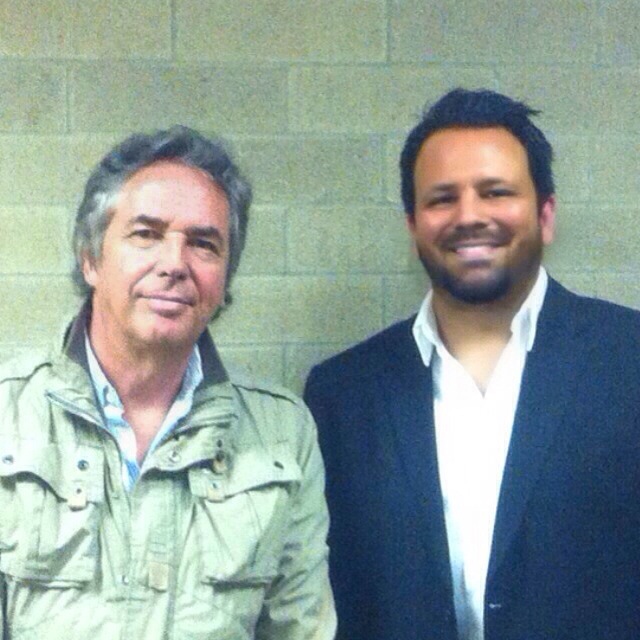
I recently met Montreal radio journalist Frank Desoer, who traveled to Logan, WV, to explore political trends in my part of Appalachia. Mr. Desoer and I enjoyed a two-hour conversation about Logan County’s political history and culture. My hope is that he found his story. 13 October 2016.

Enoch Baker

03 Sunday May 2015

Posted by Brandon Ray Kirk in Lincoln County Feud, Timber

≈ Leave a comment

Tags

Appalachia, Blood in West Virginia, Canada, culture, Enoch Baker, genealogy, history, Lincoln County Feud, logging, Nova Scotia, photos, timbering

Enoch Baker (center), a timber boss on Harts Creek in West Virginia during the 1880s

Enoch Baker (center), a timber boss on Harts Creek in West Virginia during the 1880s

Enoch Baker

16 Monday Feb 2015

Posted by Brandon Ray Kirk in Big Harts Creek, Lincoln County Feud, Logan, Timber

≈ Leave a comment

Tags

Appalachia, Blood in West Virginia, Cabell County, Canada, Enoch Baker, genealogy, Harts Creek, history, Huntington, Lincoln County Feud, Logan County, logging, Nova Scotia, photos, timbering, West Virginia

Enoch Baker, a native of Nova Scotia who once worked timber on Harts Creek, is shown here years later at his Huntington office.

Enoch Baker, a native of Nova Scotia who once worked timber on Harts Creek, is shown here years later at his Huntington, WV, office.

Snake Chapman

30 Friday Nov 2012

Posted by Brandon Ray Kirk in Ed Haley

≈ Leave a comment

Tags

Appalachia, Canada, Ed Haley, fiddler, fiddling, history, John Hartford, Kentucky, music, Pike County, Snake Chapman, U.S. South

Snake Chapman, 1991

Snake Chapman, Canada, Kentucky, 1991

In Search of Ed Haley 8

27 Tuesday Nov 2012

Posted by Brandon Ray Kirk in Ed Haley

≈ Leave a comment

Tags

Annadeene Fraley, Appalachia, Ashland, Ballad Makin' in the Mountains of Kentucky, Bert Hatfield, Bill Day, Birdie, Black Mountain Rag, Bloody Ground, Bonaparte's Retreat, books, Canada, Catlettsburg, David Haley, Dick Fraley, Doc Chapman, Dry and Dusty, Ed Haley, fiddler, fiddlers, fiddling, Gallagher's Drug Store, Grey Eagle, history, Horse Branch, J P Fraley, Jean Thomas, Jilson Setters, John F. Day, John Hartford, Kentucky, Lawrence Haley, Maysville, music, New Money, Paul David Smith, Pikeville, Snake Chapman, The Singin' Fiddler of Lost Hope Hollow, The Wheel, Wee House in the Wood, White Rose Waltz, writers, writing

As soon as my schedule cleared, I loaded my car and traveled north on I-65 out of Nashville toward the home of J.P. and Annadeene Fraley in Carter County, Kentucky. I took the Bluegrass Parkway northeast to Lexington, where I boarded I-64 and drove eastward past Winchester, Mt. Sterling and Owingsville. In a short time, I was in “Ed Haley country,” passing by Morehead — birthplace of Mrs. Ed Haley — and through the northern end of the Daniel Boone National Forest. A little later, I took the Grayson exit, where I found J.P. and Annadeene at their beautiful log home in a small settlement called Denton.

In the initial small talk, J.P. told about seeing Ed Haley play on the streets of Ashland. He specifically remembered him playing at Gallagher’s Drug Store where he sat cross-legged “like an Indian” with his back against the wall “right by the doors where you go in.” Ed kept a hat out for money and knew people by the sound of their voices. In the cold months, he played inside for square dances, Kiwanis Club events, and at local beer joints like “The Wheel.” J.P. said, “Now business people treated him good but the general public, they didn’t know what they was doing.”

At that point, we got our instruments out and squared up to play some tunes. As J.P. worked through his repertoire — “Birdie” (Haley’s version), “New Money”, “White Rose Waltz” — he sang little ditties and gave some of the history behind his tunes. He played a great tune called “Maysville” and said, “Daddy played it. What it was, they wasn’t no tobacco warehouses in Morehead or Flemingsburg so they had to haul their tobacco plumb into Maysville to sell it. When they was going there, they played the tune fast because they was happy. They were going to get that tobacco check, see? On the way back, they was playing it slow because they were drunk. They all had hangovers.”

J.P. also played “Grey Eagle”, “Black Mountain Blues” and “Bonaparte’s Retreat”. His treatment of this latter piece was somewhat unique — he began it with “Dry and Dusty” (“Daddy’s introduction”) — although he really bragged on Haley’s version. “If you listen to that record you got, you can hear… It’s just like cannons going off. I mean he was doing it on the fiddle. Man he had the best version of that. Ed Haley was colorful with his fiddle tunes.”

In between all of the fiddling and reminiscing, little comments spilled out about Haley. Things like, “His fingers was like a girls.” Then more fiddling.

Some time later, J.P. and I put our instruments away and sat down to dinner. Between bites, I asked him where he remembered Haley playing in Ashland.

“His range was right along 15th – 16th Street on Winchester Avenue. When you went down between Winchester and Greenup, there was shoe shops and a saloon or two and a poolroom where mostly a congregation of men were. Then over on Greenup the women’d be shopping. Sometimes he played on Front Street, but that was a wild part of town. I don’t ever remember his wife being over in there but I seen him there when the boy was picking with him. Down by the railroad over on Front Street, there used to be stores over there — and on Greenup. I mean, grocery stores, family stores. I can remember seeing him play in front of one — had to be down there. I guess around 14th Street on Greenup. I guess hunting season was going on because wild rabbits was hung up out there for sale…with the fur still on them. And stocks of bananas. Slabs of bacon, hams. I mean they wasn’t bound up to keep the flies off of them.”

After dinner, I played some of Haley’s music on cassette tapes for J.P. He casually told how people sometimes griped about Ella’s accompaniment being too loud. He also brought up how people occasionally complained when Haley played inside Ashland businesses. J.P.’s father once confronted a store owner who had asked Ed to leave his store. “Daddy told me he’d went in that hardware store, you know, to take up for Ed,” J.P. said. “The storeowner knowed Dad. He said, ‘Now Dick, you forget about it ’cause I’d ruther for him to be out there a fiddling as all them people to come in here that’s been a complaining about him.’ It wasn’t really a problem.” I said, “So he fiddled outside the hardware store all the time?” and J.P. said, “Right in that vicinity. If it was rainy or a real hot sun, you’d find him along there playing.”

Annadeene and I made plans to visit Ed’s son, Lawrence Haley, in Ashland the following day. J.P. showed me to a guest bedroom, presumably to turn in for the night, but we were soon playing music again. He cranked out “Goin’ Back to Kentucky”, then said, “I bet you money Ed Haley played that because Asa Neal did.”

The next morning, Annadeene and I hopped onto US Route 60 and made the thirty-minute drive into Ashland, the place where Ed Haley lived the last thirty years of his life. In those days, Ashland was a somewhat affluent industrial town on the Ohio River. Today, its population has dwindled to around 20,000 and its once prominent river culture seems long gone. It is best known as the hometown of country music stars, Naomi and Wynonna Judd, as well as movie actress Ashley Judd. It was clear that the place seemed to be somewhat depressed in the way most river towns are in this section of the Ohio River, outside of a budding shopping center to the northeast.

Annadeene and I drove around town for about an hour. She pointed out all the places she remembered Ed playing and told me all about his relationship with Jean Thomas, the late Ashland folklorist. I had heard of Jean Thomas and was roughly aware of the arguments for and against her work in Ashland to preserve and perpetuate mountain culture. She was the creator of the American Folksong Festival, an annual production held at the “Wee House in the Wood.” The central character in Thomas’ festival was Jilson Setters, a blind fiddler character “from Lost Hope Hollow” who Annadeene said had been inspired by Haley. She was sure of this, having served as Thomas’ personal secretary years ago.

In The Singin’ Fiddler of Lost Hope Hollow (1938), Thomas gave an account of her first encounter with ‘Jilson’ at a local courthouse: “There under the great leafy oak in the court house yard, the sun gleaming on its wet leaves, stood an old man, tall, gaunt, with a hickory basket on his arm, a long oil cloth poke clutched in his hand. It was the poke that caught my eye. Already a crowd was gathering about him. He put down the basket, then took off his dilapidated wide-brimmed felt and placed it, upturned, on the wet grass at his feet. Carefully he untied the string on the oilcloth poke and – to my surprise – took out a fiddle! In another moment, fiddle to chin, his sightless eyes raised to heaven, he swept the bow across the strings with masterly ease…and sang in a strong, a vibrant voice for one so old. While he fiddled a measure, before starting the next stanza, I fairly flew across the road. I wanted to be close at the old minstrel’s side, lest I lose a word that fell from his lips. When the song was ended I clapped loud and long, like the rest, and like them, too, tossed a coin into the old fellow’s hat.”

Annadeene said Thomas first offered Haley the opportunity to role-play Jilson Setters but he refused. He likely agreed with writer John F. Day, who offered a scathing criticism of Thomas in Bloody Ground (1941). “The trouble with most ballad-pushers, as well as of the other ‘native culturists,’ is that they’re seeking their own exultation under a guise of working for the benefit of the mountain people,” Day wrote. “One wonders as he watches the American Folksong Festival whether it’s all for the glory of God, art, and mountain balladry, or Jean Thomas, Jean Thomas and Jean Thomas. After reading one of Jean Thomas’ books I feel ill. Everything is so lovely and quaint; so damnably, sickeningly quaint. Writers like Jean Thomas would have one believe that every-other mountaineer goes around singing quaint, beautiful sixteenth-century ballads as he plunks on a dulcimer. The people of Kentucky laugh at Miss Thomas’ stuff, but the people outside the state are willing to lap it up. Now in the first place thousands of hill dwellers know no old ballads and other thousands know the old ones but prefer the newer ones. In the second place 90 per cent of the ballads and 90 per cent of the ballad singers stink. Further, the only dulcimers left in the hills are gathering dust on the walls of the settlement schools. The mountain people found out long ago there wasn’t any music in the damned things, and so they discarded them for fiddles, banjos, and guitars.”

After Haley refused to play the part of Jilson Setters, Thomas chose Blind Bill Day, a left-handed fiddler and migrant to Ashland. At some point, she took him to play his fiddle for the Queen of England. Based on Thomas’ book, Ballad Makin’ In The Mountains of Kentucky (1939), Day met his future wife “Rhuhamie” (actually named Rosie) on Horse Branch in Catlettsburg, Kentucky.

I went to Ed Haley’s the day it was bright

I met with a woman I loved at first sight.

I asked her some questions about her past life.

She told me she was single – but had been a wife.

 In deep conversation I studied her mind,

She had come down to Brushy to wait on the blind;

The labor was hard and the wages was small,

I soon saw that she did not like Horse Branch at all.

Needless to say, the entire concept of Jilson Setters went a long way in destroying Thomas’ credibility as an authentic folklorist. John F. Day wrote: “The mountaineers had to be quaint. Such determination led to hoaxes like the one Jean Thomas perpetrated with ‘Jilson Setters, the Singing Fiddler of Lost Hope Hollow.’ She took this ‘typical representative of the quaint mountain folk of Kentucky’ to New York and to London and made quite a name for herself and him. But though he might have been Jilson Setters to the New Yorkers and the English he was James William Day (nicknamed ‘Blind Bill’ Day) to the people of Kentucky who knew him. There may be a ‘Lost Hope Hollow’ – they name them everything – but nobody in the Kentucky mountains ever heard of it. There was no particular harm of course in changing Bill Day’s name to Jilson Setters if the latter sounded more poetic – or something. Names are changed every day in Hollywood. The harm came in pawning off Bill, well-coached in quaintness, as a representative of the Kentucky mountain people. But the most laughable part of the whole affair was that Bill Day had lived for years in Ashland and Catlettsburg, and of all the sections of the Kentucky mountains, that in which the two cities lie is the most modern. Ashland is an industrial city of more than 30,000 population, and Catlettsburg is almost a suburb. The Big Sandy Valley was opened up years before southeastern Kentucky, and thus if one is to find any ‘quaintness’ at all he must get out of the Big Sandy country.”

Annadeene and I drove around Ashland for about an hour discussing such things before heading to nearby Catlettsburg, Kentucky on US Route 23. According to J.P. Fraley, Catlettsburg — a former boomtown for loggers who rafted timber out of the Big Sandy River at the turn of the century — served as Ed Haley’s place of residence during the twenties and early thirties. Today, its historic and interesting downtown area — featuring the Boyd County Courthouse and other buildings that attest to its short prosperous history — is almost hidden from view due to a railroad to the south and a large floodwall to the north. Its most visible section is a modern strip along US Route 23, consisting of a slow-moving four-lane road dotted with gas stations, old dwelling houses and fast-food restaurants. A sign proclaims Catlettsburg as a town of 6000 residents and maps show it situated across the Big Sandy River from the town of Kenova, West Virginia and across the Ohio River from South Point, Ohio.

After looking over the place, Annadeene and I drove back to Ashland on Winchester Avenue and turned onto 45th Street at a large, brick Presbyterian church. We drove up a narrow and curvy street until it crested at Gartrell Street, where Annadeene pointed out the home of Lawrence Haley, an unpretentious white one-and-a-half-story residence. We parked on the street and eased out of the car toward the Haley porch. As I stood there preparing to ring the doorbell, I noticed the original picture of Ed Haley featured on Parkersburg Landing hanging just inside a window on the living room wall. I had goose bumps in realizing how much this experience meant to me. After a few rings of the bell, it was clear that no one was home.

Just as we were ready to step off of the porch, a young girl with a wonderful smile came up from next door and said that her grandparents had gone over into Ohio. I realized just then that she was Ed’s great-granddaughter and was instantly as impressed as if I’d just met the daughter of the President of the United States. A stocky man with a dark mustache followed her over and introduced himself as her father, David Haley. Annadeene and I talked with him briefly, then said we’d come back some time when his parents were home. I walked out of the Haley yard wondering if the girl or her father had inherited any of Ed’s musical talent.

Later in the day, after parting ways with the Fraleys, I drove south through the Big Sandy Valley on US Route 23 to see Snake Chapman, the fiddler who remembered seeing Ed Haley so often during his youth in Pike County, Kentucky. At Pikeville, I took US Route 119 to Snake’s mountain home up Chapman Hollow near a settlement called Canada. Snake was a retired coalminer who spent most of his time caring for his sick wife. He was very mild-spoken — almost meek — and had what seemed like hundreds of cats all over his yard (even on the roof of his house). Once we began playing music, it was clear that he was a great old-time fiddler. I had a blast with his buddies, Bert Hatfield (a relative of the feuding Hatfields) and Paul David Smith.

Snake told me a little about his father, Doc Chapman. “He was an herb doctor, Dad was. Everybody knowed him by Doc Chapman. He knowed every herb that growed here in the mountains and what they was for and doctored people all around.” Doc was also a fiddler.

Snake took up his fiddle and played several more tunes, including Haley’s version of “Birdie”. Snake was a man of few words, so most of my visit consisted of playing old-time tunes. I spent the night at Bert Hatfield’s, then left eastern Kentucky on US 119 and US 25E via the Cumberland Gap.

Feud Poll 1

If you had lived in the Harts Creek community during the 1880s, to which faction of feudists might you have given your loyalty?

Categories

  • Adkins Mill
  • African American History
  • American Revolutionary War
  • Ashland
  • Atenville
  • Banco
  • Barboursville
  • Battle of Blair Mountain
  • Beech Creek
  • Big Creek
  • Big Harts Creek
  • Big Sandy Valley
  • Big Ugly Creek
  • Boone County
  • Breeden
  • Calhoun County
  • Cemeteries
  • Chapmanville
  • Civil War
  • Clay County
  • Clothier
  • Coal
  • Cove Gap
  • Crawley Creek
  • Culture of Honor
  • Dingess
  • Dollie
  • Dunlow
  • East Lynn
  • Ed Haley
  • Eden Park
  • Enslow
  • Estep
  • Ethel
  • Ferrellsburg
  • Fourteen
  • French-Eversole Feud
  • Gilbert
  • Giles County
  • Gill
  • Green Shoal
  • Guyandotte River
  • Halcyon
  • Hamlin
  • Harts
  • Hatfield-McCoy Feud
  • Holden
  • Hungarian-American History
  • Huntington
  • Inez
  • Irish-Americans
  • Italian American History
  • Jamboree
  • Jewish History
  • John Hartford
  • Kermit
  • Kiahsville
  • Kitchen
  • Leet
  • Lincoln County Feud
  • Little Harts Creek
  • Logan
  • Man
  • Matewan
  • Meador
  • Midkiff
  • Monroe County
  • Montgomery County
  • Music
  • Native American History
  • Peach Creek
  • Pearl Adkins Diary
  • Pecks Mill
  • Peter Creek
  • Pikeville
  • Pilgrim
  • Poetry
  • Queens Ridge
  • Ranger
  • Rector
  • Roane County
  • Rowan County Feud
  • Salt Rock
  • Sand Creek
  • Shively
  • Spears
  • Sports
  • Spottswood
  • Spurlockville
  • Stiltner
  • Stone Branch
  • Tazewell County
  • Timber
  • Tom Dula
  • Toney
  • Turner-Howard Feud
  • Twelve Pole Creek
  • Uncategorized
  • Warren
  • Wayne
  • West Hamlin
  • Wewanta
  • Wharncliffe
  • Whirlwind
  • Williamson
  • Women's History
  • World War I
  • Wyoming County
  • Yantus

Feud Poll 2

Do you think Milt Haley and Green McCoy committed the ambush on Al and Hollene Brumfield in 1889?

Blogroll

  • Ancestry.com
  • Ashland (KY) Daily Independent News Article
  • Author FB page
  • Beckley (WV) Register-Herald News Article
  • Big Sandy News (KY) News Article
  • Blood in West Virginia FB
  • Blood in West Virginia order
  • Chapters TV Program
  • Facebook
  • Ghosts of Guyan
  • Herald-Dispatch News Article 1
  • Herald-Dispatch News Article 2
  • In Search of Ed Haley
  • Instagram
  • Lincoln (WV) Journal News Article
  • Lincoln (WV) Journal Thumbs Up
  • Lincoln County
  • Lincoln County Feud
  • Lincoln County Feud Lecture
  • LinkedIn
  • Logan (WV) Banner News Article
  • Lunch With Books
  • Our Overmountain Men: The Revolutionary War in Western Virginia (1775-1783)
  • Pinterest
  • Scarborough Society's Art and Lecture Series
  • Smithsonian Article
  • Spirit of Jefferson News Article
  • The Friendly Neighbor Radio Show 1
  • The Friendly Neighbor Radio Show 2
  • The Friendly Neighbor Radio Show 3
  • The Friendly Neighbor Radio Show 4
  • The New Yorker
  • The State Journal's 55 Good Things About WV
  • tumblr.
  • Twitter
  • Website
  • Weirton (WV) Daily Times Article
  • Wheeling (WV) Intelligencer News Article 1
  • Wheeling (WV) Intelligencer News Article 2
  • WOWK TV
  • Writers Can Read Open Mic Night

Feud Poll 3

Who do you think organized the ambush of Al and Hollene Brumfield in 1889?

Recent Posts

  • Logan County Jail in Logan, WV
  • Absentee Landowners of Magnolia District (1890, 1892, 1894)
  • Charles Spurlock Survey at Fourteen Mile Creek, Lincoln County, WV (1815)

Ed Haley Poll 1

What do you think caused Ed Haley to lose his sight when he was three years old?

Top Posts & Pages

  • U.B. Buskirk of Logan, WV (1893-1894)
  • Vance Homeplace and Cemetery on West Fork (2017)
  • Tice Elkins in Ferrellsburg, WV
  • Civil War Gold Coins Hidden Near Chapmanville, WV
  • Origin of Place Names in Logan County, WV (1937)

Copyright

© Brandon Ray Kirk and brandonraykirk.wordpress.com, 1987-2023. Unauthorized use and/or duplication of this material without express and written permission from this blog’s author and/or owner is strictly prohibited. Excerpts and links may be used, provided that full and clear credit is given to Brandon Ray Kirk and brandonraykirk.wordpress.com with appropriate and specific direction to the original content.

Archives

  • February 2025
  • January 2025
  • October 2023
  • September 2023
  • December 2022
  • November 2022
  • May 2022
  • April 2022
  • February 2022
  • November 2021
  • October 2021
  • September 2021
  • June 2021
  • May 2021
  • April 2021
  • March 2021
  • February 2021
  • January 2021
  • December 2020
  • November 2020
  • October 2020
  • July 2020
  • June 2020
  • May 2020
  • April 2020
  • March 2020
  • February 2020
  • January 2020
  • December 2019
  • November 2019
  • October 2019
  • September 2019
  • August 2019
  • July 2019
  • June 2019
  • May 2019
  • April 2019
  • March 2019
  • February 2019
  • January 2019
  • December 2018
  • November 2018
  • October 2018
  • September 2018
  • August 2018
  • July 2018
  • June 2018
  • May 2018
  • April 2018
  • March 2018
  • February 2018
  • January 2018
  • December 2017
  • November 2017
  • October 2017
  • September 2017
  • August 2017
  • July 2017
  • June 2017
  • May 2017
  • April 2017
  • March 2017
  • February 2017
  • January 2017
  • December 2016
  • November 2016
  • October 2016
  • September 2016
  • August 2016
  • July 2016
  • June 2016
  • May 2016
  • April 2016
  • March 2016
  • February 2016
  • January 2016
  • December 2015
  • November 2015
  • October 2015
  • September 2015
  • August 2015
  • July 2015
  • June 2015
  • May 2015
  • April 2015
  • March 2015
  • February 2015
  • January 2015
  • December 2014
  • October 2014
  • September 2014
  • August 2014
  • July 2014
  • June 2014
  • May 2014
  • April 2014
  • March 2014
  • February 2014
  • January 2014
  • December 2013
  • November 2013
  • October 2013
  • September 2013
  • August 2013
  • July 2013
  • June 2013
  • May 2013
  • April 2013
  • March 2013
  • February 2013
  • January 2013
  • December 2012
  • November 2012

Enter your email address to follow this blog and receive notifications of new posts by email.

Join 2,925 other subscribers

Tags

Appalachia Ashland Big Creek Big Ugly Creek Blood in West Virginia Brandon Kirk Cabell County cemeteries Chapmanville Charleston civil war coal Confederate Army crime culture Ed Haley Ella Haley Ferrellsburg feud fiddler fiddling genealogy Green McCoy Guyandotte River Harts Harts Creek Hatfield-McCoy Feud history Huntington John Hartford Kentucky Lawrence Haley life Lincoln County Lincoln County Feud Logan Logan Banner Logan County Milt Haley Mingo County music Ohio photos timbering U.S. South Virginia Wayne County West Virginia Whirlwind writing

Blogs I Follow

  • OtterTales
  • Our Appalachia: A Blog Created by Students of Brandon Kirk
  • Piedmont Trails
  • Truman Capote
  • Appalachian Diaspora

BLOOD IN WEST VIRGINIA is now available for order at Amazon!

Blog at WordPress.com.

OtterTales

Writings from my travels and experiences. High and fine literature is wine, and mine is only water; but everybody likes water. Mark Twain

Our Appalachia: A Blog Created by Students of Brandon Kirk

This site is dedicated to the collection, preservation, and promotion of history and culture in Appalachia.

Piedmont Trails

Genealogy and History in North Carolina and Beyond

Truman Capote

A site about one of the most beautiful, interesting, tallented, outrageous and colorful personalities of the 20th Century

Appalachian Diaspora

  • Subscribe Subscribed
    • Brandon Ray Kirk
    • Join 787 other subscribers
    • Already have a WordPress.com account? Log in now.
    • Brandon Ray Kirk
    • Subscribe Subscribed
    • Sign up
    • Log in
    • Report this content
    • View site in Reader
    • Manage subscriptions
    • Collapse this bar
 

Loading Comments...