• About

Brandon Ray Kirk

~ This site is dedicated to the collection, preservation, and promotion of history and culture in my section of Appalachia.

Brandon Ray Kirk

Tag Archives: Calhoun County

In Search of Ed Haley 278

31 Monday Mar 2014

Posted by Brandon Ray Kirk in African American History, Ed Haley, Music

≈ Leave a comment

Tags

Appalachia, Big Bear Fork, Black Bill, Bone Ratliff, Brown Hicks, Calhoun County, genealogy, Glenville, Harold Postalwait, Harvey Hicks, history, Jake Catlip, John Hartford, Laury Hicks, Little Bear Fork, Minnie Hicks, music, Sadie Hicks, Shock, Stumptown, Ugee Postalwait, West Virginia, writing

I asked Ugee if there were any black musicians in Calhoun County and she said she remembered some living around Big Bear Fork and Little Bear Fork.

“That’s in between Stumptown and Shock. They was two families lived out there: Jake Catlip and Bone Ratliff. They were black people. Lived out there in the country. First ones I ever seen. They called and wanted Dad to come to Bear Fork. Well, this boy had a guitar there. Maybe he was eight years old. They called him ‘Black Bill’ later. Dad said, ‘I can’t play it but I’ll show you something.’ Dad tuned it up and showed him three chords. Said, ‘Now learn that and come up and we’ll play music some day.'”

Ugee said she met Black Bill a little later.

“Well, when I was carrying Harold before Harold was born, I walked up the road and was going up to Dad’s and Mom’s and down there at what they call Hog Run there was a pile of rock there by the side the road and a paw paw tree,” she said. “And up jumped that black boy with a guitar on his back — liked to scared me to death. He said, ‘Lady, could you tell me where Dr. L.A. Hicks lives?’ I just pointed up to the house and said, ‘That house right there.’ I couldn’t speak I got scared so bad. Well, he just started out running. I was so weak I had to sit down. Got up there and here was that boy that Dad had showed how to chord. Now, you ought to heard him play. They kept him around there for a month. Well, the boys liked to hear him play the guitar. That’s where I got that ‘Down the road, down the road. Everybody going off down the road. Down the road, far as I can see. All the pretty girls look alike to me.’ Dad said to him, ‘Bill, you made a good guitar player but you can’t play with a fiddle. Now, let my daughter show you how to play the guitar with a fiddle.'”

Ugee’s meeting with Black Bill made a real impression on her.

“I’m not the type to get scared bad but that scared me: just come around a corner and there sat a black man — jump right out like that,” she said. “Now, I was only seven months along with Harold and when he was born he was so blue I thought I had ‘marked’ him with Black Bill. You know, you hear people ‘marking’ their kids? I raised up and they had him up to show me and I said, ‘Oh my god, I marked him to Black Bill.’ Mom said, ‘He’s not marked. He’s just blue.’ Me and Black Bill had many a laugh over it.”

I asked Ugee what happened to Black Bill and she said, “Brown Hicks was down sick and he went there and helped them out and everything. He stayed there one whole winter with them. Someone told me that he took up with Brown Hicks’ wife, Sadie. They lived together, I guess, over there toward Glenville and she had one kid by him. My brother Harvey seen the kid. Harvey said Sadie’s boy was ‘just a Black Bill made over.’ I don’t know what ever become of him after that. I never heard no more about him.”
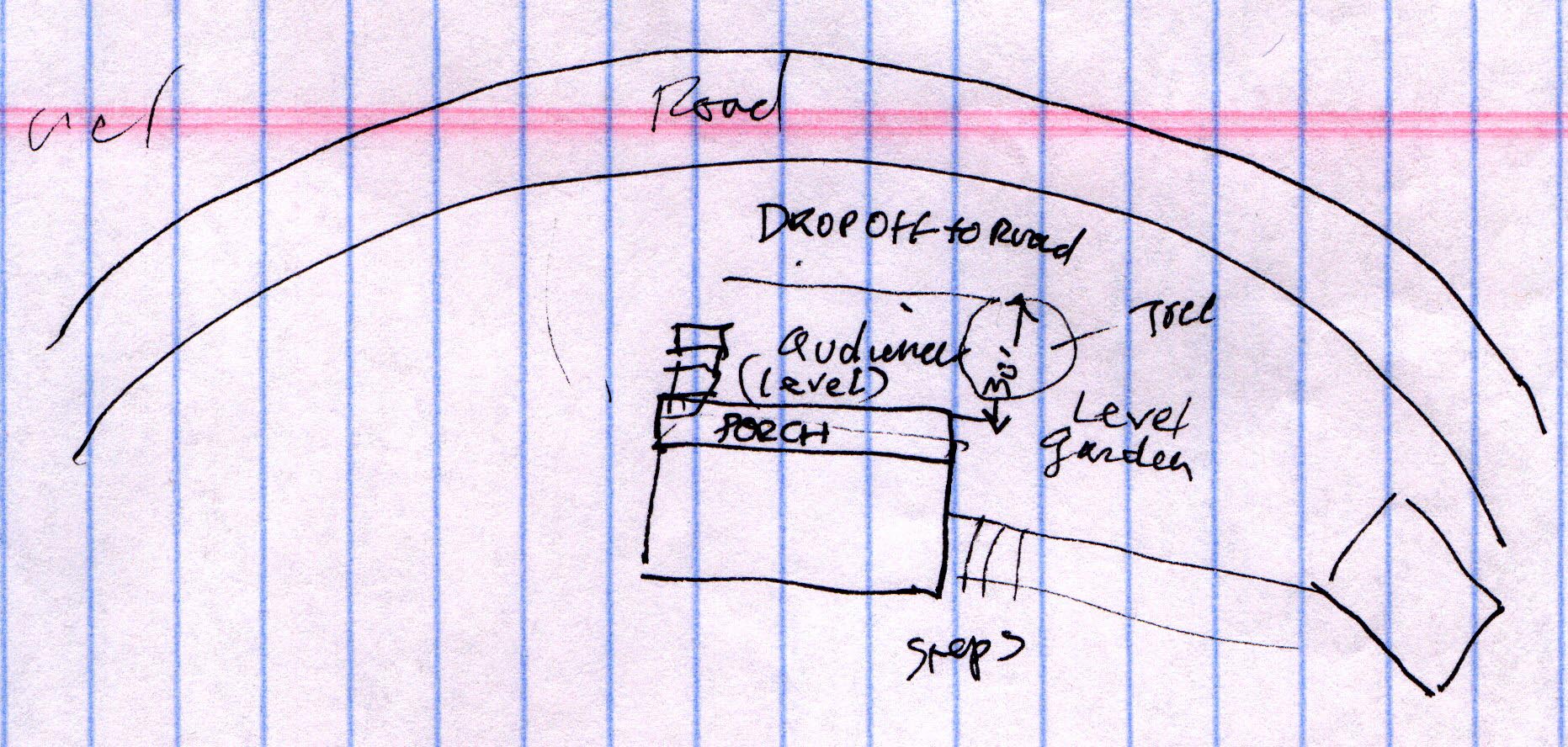
Hartford Sketch of the Hicks Home

30 Sunday Mar 2014

Posted by Brandon Ray Kirk in Ed Haley, John Hartford

≈ Leave a comment

Tags

Appalachia, art, Calhoun County, fiddlers, fiddling, history, John Hartford, Laury Hicks, Minnie Hicks, music, Ugee Postalwait, West Virginia

John Hartford's sketch of the Laury Hicks home in Calhoun County, WV, 1996

John Hartford’s sketch of the Laury Hicks home in Calhoun County, WV, 1996

In Search of Ed Haley 277

30 Sunday Mar 2014

Posted by Brandon Ray Kirk in Ed Haley, Music

≈ Leave a comment

Tags

Appalachia, Calhoun County, Cincinnati, Ed Haley, fiddlers, fiddling, Grand Ole Opry, Great Depression, Harold Postalwait, history, John Hartford, Laury Hicks, Minnie Hicks, music, Nashville, Ohio, Ugee Postalwait, West Virginia, Wilson Douglas, writing

I said, “Now when they played, would they play at the same time?”

“Oh yeah,” Ugee said. “Sometimes they played at the same time. Then one time maybe one would be a playing and the other would be a listening. Say, ‘Oh, you pulled that bow the wrong way.’ ‘Now that didn’t sound right to me. Go back over that again.’ They’d sit maybe not for ten minutes but for hours at a time when I was a growing up. Trying to out-beat the other. Which could make the best runs and which could do this. They never was mad at each other or anything like that, but they’d argue about it. ‘I know I beat you on it.’ ‘Well, you put that run in it at the wrong place.’ But Ed Haley is the only man I ever heard in my life second the fiddle. Dad’d play the fiddle and he’d second his with the fiddle. Like if you’re playing the ‘fine,’ why he might be playing the bass. That’s the prettiest stuff ever you heard. I heard Dad try to do it but Dad never got that good on it.”

I asked her if Ed ever played “Flannery’s Dream” and she said, “Oh, yeah. I’ve heard that.”

When I played “Wild Hog in the Red Brush”, she said Ed definitely played it, although she didn’t remember it having that title.

Just before I played another tune, Ugee said, “This is my birthday gift. My birthday’s the 19th. I’ll be 88 years old. Oh, I do pretty good, I reckon, for the shape I’m in. I remember pretty good but I’ve got trouble on this here voice box.”

“You remember pretty good, like your mother,” Harold said. “She was a hundred years old and she remembered when every kid was borned in that part of the country.”

Ugee said, “Mom delivered over five hundred children. She knowed every one of them and their name.”

Harold said, “And where they come from and up what hollow she had to walk and everything else. She never forgot nothing, that woman.”

Ugee said, “I don’t want to be that old. It’s all right if you can walk and get around. But if you’re down sick in the nursing home, let the good Lord take me away. I don’t wanna be there. My dad had leukemia and cancer of the stomach when he died. And it’s hard to see someone suffer like that.”

I told Ugee what Wilson Douglas had said about people gathering at her father’s home and listening to music on the porch and she said, “Sure, you ought to have seen my home. We had one porch run plumb across the front of the house. Ed and Dad just sat right along behind the railing.”

She pointed to the picture of John Hicks’ house and said, “Our house was even bigger than that. It was plank. But I remember when they all come over there and they’d gang around on that porch. Everybody. When Ed Haley was in the country, they come from miles around to our house. Word would get out that Ed was there or Ed was gonna be there a certain day.”

Inspired by Ugee’s memories, I got some paper from Harold and tried to sketch the Laury Hicks place. Ugee said things like, “It didn’t have no fireplace — we had gas then. And over on this end the steps went plumb down the hill to the road. That’s after they put the paved road down there, you see. Our house sat almost in a curve. Garage is down there at the road.”

I said, “So people gathered in front of the porch to hear all the music?” and Harold said, “They didn’t have much room. The yard only went out there maybe thirty or forty feet and then it dropped off down to the road. A pretty steep bluff — fifteen-, eighteen-, twenty-foot drop. On this side of the house was the garden spot and out the other end the yard didn’t go very far.”

Were there shade trees around the house?

“Yeah, three or four big oak trees over to one side and then we had apple trees on the other side,” Ugee said.

I asked if the crowds came at day or night or only on weekends and Ugee said, “They’d come through the day and Dad and Ed would play music all day and half the night. Weekends, why, it was always a big crowd. I’ve studied about them so much, about how good a friends Ed and Dad was. And always was that way. And they’d have the most fun together.”

Ugee said Ed never put a cup out for money.

“I never seen him put a cup out in my life. Maybe they’d be somebody to come around and put a cigar box to the side and everybody would go through and put money in it. Course when he was playing in the city — Cincinnati or some place like that — why he’d make quite a bit of money there. Whenever he played them religious songs, the hair’d stand on your neck. You’d look at two blind people sitting and singing.”

I interrupted, “Did he play Cincinnati a lot?”

Ugee said, “He played Cincinnati a lot. He went to Cincinnati to make records one time, too. That’d a been in the thirties. He fell out with them. They wanted to pick the tunes. Ain’t nobody picked tunes for Ed — Ed picked his own tunes. When he found out what they was trying to hook him on, he quit right then. Ed went down to Nashville once. I don’t know that he went to the Grand Ole Opry but he went to Nashville. When he found out what they done, he didn’t have no use for that.”

Minnie and Lawrence Hicks

29 Saturday Mar 2014

Posted by Brandon Ray Kirk in Ed Haley, Music

≈ Leave a comment

Tags

Appalachia, Calhoun County, culture, genealogy, history, Laury Hicks, life, Minnie Hicks, photos, U.S. South, West Virginia

Minnie and Lawrence Hicks, Calhoun County, West Virginia

Minnie and Lawrence Hicks, Calhoun County, West Virginia

In Search of Ed Haley 276

29 Saturday Mar 2014

Posted by Brandon Ray Kirk in Ed Haley, Music

≈ Leave a comment

Tags

Ab Moss, Alabama, Calhoun County, Calhoun County Blues, Carey Smith, Catlettsburg, Ed Haley, Ella Haley, Euler, fiddlers, fiddling, guitar, Harold Postalwait, Hell Among the Yearlings, history, Homer Moss, John Hartford, Laury Hicks, music, Rogersville, Ugee Postalwait, West Virginia, writing

I took my fiddle out of the case and played for Ugee. A few tunes later, she said she liked my bow hold.

“Him and Dad both held the bow down there on the end,” she said. “Dad and Ed neither one never had no use for anyone that took hold of the bow way up toward the middle. They didn’t like that at all. And Ed and Dad neither one didn’t like for someone to put their fiddle down against their chest.”

Ugee paused, then said, “You’re with the fiddle like I was with the guitar after I got it. I set and fooled with it all the time — any time I had time away from dishes or anything, I’d set on the porch and play that guitar. I wanted to learn it and nobody to learn me and I learned it myself. I done the same thing with the banjo. Of course, Dad could thump the banjo some and play it a little bit. But when I got that guitar and changed over to it, then I wanted to learn that guitar.”

When I played “Yellow Barber” for Ugee she got choked up and said, “That sounds so good, John. You don’t know how good that sounds. I’ve been thinking about my dad and them all morning. I’d just have given anything if we’d had tapes of Dad.”

I told her that I’d been researching some tunes I suspected of being in Ed’s repertoire (many from the Lambert Collection) and she said, “Ed knew a lot of them. I’ve heard so many of his pieces, now I’m getting to where I’m forgetting a lot of pieces.”

When I played “Girl With the Blue Dress On”, she said, “I can’t get that one in my head. Some part of it sounds natural. Yeah, I’ve heard that song. There’s words to that: ‘She come down from Arkansas with a blue dress on. Prettiest girl I ever saw, she came down from Arkansas.’ Who was that old man that used to come and play that on the banjo? I believe it was Carey Smith from around Euler.”

I next played “Flying Cloud” for Ugee, who said, “Ed didn’t call it that. I can’t remember what he called it but he never called it ‘Flying Cloud’. Course Ed was pretty good to change names on you, too.”

I told her that Lawrence and I had always figured Ed’s “Catlettsburg” had another name, and she agreed.

“Well in fact he almost said he put the name on that piece ’cause they lived down there, you know,” Ugee said. “You see, most of them old fellas, if they’d hear a tune and they learnt to play it, then they’d change the name. Just like ‘Carroll County Blues’, we called it ‘Calhoun County’. Just whatever county you was a living in.”

I started playing “Calhoun County Blues”, fully aware that it was one of Ugee’s favorite tunes. She watched me quietly with an excited expression on her face.

“That’s my piece,” she said to Harold. “I could crack my heels to that.”

The next thing I knew, she rose out of her chair and started dancing.

I stopped and said, “Now, wait a minute. Don’t hurt yourself.”

She told me to go on, though.

“I didn’t think you could get your feet up that high,” Harold joked her.

Ugee said, “I was a dancer at one time. Never got tired.”

I continued playing the tune for a few minutes, then asked if Ed ever danced.

“I never seen Ed dance, but I’ll tell you what,” she said. “He could keep time with his feet. I can remember so well that foot coming down and then when he got older he’d pat his feet. He’d keep both of them going. He didn’t make a big noise with them or anything. Just give him a drink of whiskey or two and then he’d come down on that there fiddle and you ought to hear Ella then.”

I asked Ugee if Ed was pretty good at making up parts to tunes.

“Oh, yeah,” she said, not quite understanding my question. “He made up a lot of his tunes and then give them a name. And Dad would do the same. They was sitting around and they’d try different things. ‘Listen to this’ and ‘Put that note in there.’ I always did think they made up that ‘Hell Among the Yearlings’. Ab Moss lived down below us — very religious man — and he was there with his wife and Homer, the oldest boy, and Abner looked over to Ed and said, ‘That’s a pretty piece. What do you call that?’ and they said ‘Hell Among the Yearlings’. I always did think they made that up to aggravate him. Then they just cackled and laughed after they left. ‘Hell Among the Yearlings’, said, ‘That’s a pretty good name for it.’ I can see them yet a sitting on the porch laughing about it.”

John Hicks Home

28 Friday Mar 2014

Posted by Brandon Ray Kirk in Ed Haley, Music

≈ Leave a comment

Tags

Appalachia, banjo, Calhoun County, culture, Douglas, fiddler, history, John Hicks, Laury Hicks, life, Minnie Hicks, music, photos, Ugee Postalwait, West Virginia, Willie Smith

John Hicks Home, Douglas, Calhoun County, West Virginia, c.1908

John Hicks Home, Douglas, Calhoun County, West Virginia, c.1908

In Search of Ed Haley 275

28 Friday Mar 2014

Posted by Brandon Ray Kirk in Ed Haley, Music

≈ Leave a comment

Tags

Alabama, Arthur Smith, Calhoun County, Clayton McMichen, Douglas, Ed Haley, fiddlers, fiddling, Harold Postalwait, history, Ivydale, John Hartford, John Hicks, Johnny Hager, Josh Joplin, Laury Hicks, Lawrence Haley, Minnie Hicks, music, Rogersville, Ugee Postalwait, West Virginia, writing

Early one fall morning, I loaded up the Cadillac and drove south to the home of Harold Postalwait in Rogersville, Alabama. Harold, I knew, had a very special visitor — his mother, 88-year-old Ugee Postalwait of Akron, Ohio. Ugee remembered Ed Haley as far back as the Bull Moose era when he used to visit her father in Calhoun County, West Virginia. I hadn’t seen her since a visit to her home four years earlier and was anxious to pick her brain for new stories or tunes and show her what I had learned about Ed’s fiddling. Not long after my arrival, after we’d all said our “hellos,” Harold pulled out the picture of Laury Hicks and his family at John Hicks’ in Douglas, West Virginia.

“That’s my dad,” Ugee said, pointing to her father’s image. “I can remember when he wore the mustache.”

I wondered if the picture was taken before Ed was acquainted with Laury.

“Dad met Ed before I can remember,” Ugee said. “I don’t know whether that was before Mom and him was married. It was after Grandpap died, they said. Dad musta been about eighteen or something like that. Josh Joplin brought Ed into that country and told him they was a boy down there he wanted him to hear play the fiddle. Said, ‘He thinks he can play but he can’t play,’ and went in and had Dad to tune up his fiddle and played them two pieces. He played ‘Sally Goodin’ and I think it was the ‘Cacklin’ Hen’. Ed said, ‘Boy he’s showin’ me off.’ That was all they was to it. And that old man you know had told him a lie.”

I asked Ugee, “So Ed was coming to Ivydale before you were born?” and she said, “I have an idea he was because I wasn’t quite old enough to go to school when I first remember him. The first time I ever remember seeing him was when him and John Hager was there. I bet he wasn’t over 27 years old, when I think about it. I would say that was — I was born in 1907 — that was about 1913 or something like that. He was tall, slender. I can remember back when I was four years old real good and I remember him just as plain as if it was yesterday. We had a dirt road to the house and when he went to leave in the spring — they stayed all winter — he was walking behind John Hager and me and my brother Harvey run right to the bank and waved by at him. We’d been crying after him. I can see him walking along… But he carried that there fiddle in a flour bag. I never seen Ed with a fiddle in a case till after him and Ella was married. He always carried it in a flour poke.”

I told Ugee that I had worked a lot with Lawrence Haley in his last days trying to find out about Ed’s technique. Before I could show her what I had come up with, she started telling me what she remembered along those lines. She said Ed played with the fiddle under his chin — he hated when musicians “put the fiddle down low” — and turned it occasionally. He held the bow way out on its end, she said, and played a lot smoother than her father, a tremendous concession for a daughter to make. I asked if Ed played smoothly when she first saw him.

“Oh naturally he got better as years went by, but he was good then,” she said.

She gave me the impression that Ed’s fiddling had a lot of Irish-style “ornaments” in his early days (in the older, more European tradition), which gradually disappeared over the years — probably due to artistic peer pressure from radio fiddlers like Arthur Smith and Clayton McMichen. Smith and McMichen were extremely popular during the last few decades of Haley’s life.

In Search of Ed Haley 262

10 Monday Mar 2014

Posted by Brandon Ray Kirk in Big Harts Creek, Ed Haley, Timber

≈ Leave a comment

Tags

Al Brumfield, Calhoun County, Chicago, coal, Cole and Crane Company, Dood Dalton, Ed Haley, farming, fiddling, Harts Creek, history, Jake Dalton, Laury Hicks, Lincoln County, Logan County, logging, Stump Dalton, timbering, West Virginia, writing

Just before we left, Stump let us borrow a cassette containing a 1976 interview with his father. Surely, we thought, Dood would speak a lot about fiddling and of his friendship to Ed. Instead, he told about his life in Harts. His voice was very melancholy and he spoke loudly and in spurts. Some of his earliest memories were of the timber industry in Harts and of the Cole and Crane Company, which timbered extensively in the LoganCounty area from about 1893-1908. In 1900, he said, Cole and Crane used splash dams to float logs down to the mouth of the creek “where Al Brumfield had a boom in.” The boom was located at the present-day site of the West Fork Bridge.

“And this boom caught them logs all,” Dood said. “Them logs was piled on top of one another from that boom…to the mouth of Big Branch. At that time, if you owned across the creek, you owned the creek. Al Brumfield owned the other side there and he put this boom in there and bought the Cole and Crane Company and when he bought them he kept that timber there and they gave him a contract on rafting it and running it down to Guyandotte.”

Cole and Crane Company once paid Brumfield $2800 to cut his boom loose and let timber out of the creek, he said.

Dood said he went to work cutting timber for Cole and Crane Company when he was seventeen years old. He also drove oxen and cattle and loved to hunt foxes and raccoons.

After marrying, he supported his family by farming and raising cattle, sheep and hogs at his 300-acre farm on Big Branch.

In subsequent years, he worked as a blacksmith, bricklayer and coal miner.

In 1964, he took a three-month visit to Chicago and hated it about as much as an earlier visit to Michigan. He said, “My days is short. I’ve spent 84 years here and I’m figuring on spending the rest of my life here.”

And that was basically it.

Not one reference to fiddling from a guy who had played all of his life.

Well, in spite of the tape, we were pretty sure that Haley’s good friendship to Dood Dalton was authentic and was perhaps as important as his friendship with Laury Hicks in Calhoun County. We wanted to visit more of Dood’s children, so Stump directed us to the home of his oldest brother, Jake Dalton, an old fiddler on the Big Branch of Harts Creek. Jake lived in his father’s old home — the place where Ed had visited so frequently during the last twenty years of his life.

In Search of Ed Haley 213

20 Friday Dec 2013

Posted by Brandon Ray Kirk in Ed Haley

≈ Leave a comment

Tags

Appalachia, Calhoun County, Doc White, Ed Haley, fiddling, history, Laury Hicks, life, moonshine, music, West Virginia, Wilson Douglas, writing

The next day, Wilson Douglas and Kim Johnson came on the bus where Wilson spun another one of his great stories, this time about Ed and Doc White.

Ed was already over at Laury Hicks’, but Laury was gone somewhere. That mail carrier brought the word through that Ed wanted Doc to come over and go down there to Bear Fork and play some music for that dance. Well, Doc lived in Ivydale. He played the fiddle a little, the banjo a little. He come down there and he got me one evening. Doc said, “Now, if you’ll drive, we’ll both go. We’ll hear Ed fiddle.” I said, “All right.” So we started. It must’ve been four o’clock in the evening. It was warm, you know. It was maybe the middle of August.

We stopped over on the Calhoun County line. That’s between Calhoun and Clay. Doc said, “Stop here. I know this old lady here. We’ll get some wine.” She had a bunch of green beans and set them out along the road selling them you know in little baskets. She said, “Now Doc, I’m gonna sell them beans right there for six dollars a basket.” Doc said, “My god, I don’t want to buy them beans.” So she kept on, you know. She looked at me and winked. Said, “Now Doc, better take a couple of baskets. Well, I’m gonna rake in here and show you how nice they are.” She had a quart jar of moonshine in each one of them. She was a bootlegging and Doc said, “Yeah, by god, yeah, I’ll take two baskets.”

We got down the road a little bit, Doc he pulled them two-quart fruit jars out and throwed them baskets and green beans over the hill. I said, “Now, look, Doc. If you get too drunk and cause trouble over there, they’ll throw all of us in jail.” Time we got to Bear Fork they was all drunk but me and I was a driving. Some old man there was calling that dance and Ed Haley was fiddling some of the prettiest fiddling I ever heard, but as the evening progressed the alcohol went to working on him. He lost his coordination. And he got so high, he was a making bad notes. Doc did, too. Doc was a talking fine — his glasses way down on the end of his nose. And Doc said, “Well, we better go home.” They liked Ed. They wanted to keep him all night. He said, “I gotta go with Doc and this boy. I gotta get back over to Laury Hicks’.” We come in the next morning. He was so drunk when we got back to Hicks’ I had to lead him up the steps. That’s the way it happened, all them things over there.

Rector Hicks

30 Friday Aug 2013

Posted by Brandon Ray Kirk in Calhoun County, Ed Haley, Music

≈ Leave a comment

Tags

Akron, Appalachia, Calhoun County, culture, fiddler, fiddlers, fiddling, history, Kerry Blech, life, music, Ohio, photos, Rector Hicks, U.S. South, West Virginia

James Ward Jarvis (b.1894), fiddler from Braxton County, West Virginia, 1970s

Rector Hicks, fiddler from Calhoun County, West Virginia, c.1976. Photo courtesy of Kerry Blech

In Search of Ed Haley 161

28 Wednesday Aug 2013

Posted by Brandon Ray Kirk in Ed Haley

≈ 2 Comments

Tags

Ashland, Calhoun County, Ed Haley, Ella Haley, history, John Hartford, Kentucky, Laury Hicks, Manuel Martin, music, Ugee Postalwait, West Virginia, writing

After hanging up with Pat, I called Ugee Postalwait — Laury Hicks’ daughter in Akron, Ohio — to tell her about getting the picture of Ed from Maxine McClain. Ugee was full of energy. Her memory was obviously working in overdrive.

“I used to know all of them,” she said of the old musicians in her part of the country. “They was all to our house. They’d come from miles around to hear Dad play, especially when Ed was in the country. Maybe they’d stay two or three days at our house. I’d get up of a morning to look see who was in the house asleep and who all I was gonna have to cook breakfast for, when I was a girl growing up. The young men would sleep in the boys’ room and they’d sleep in the floor. Then they’d sleep four crossways in the bed, too. As I get old, I get to thinking about all of them and wonder how in the world my dad ever fed them all. I been a cooking ever since I was nine years old for workhands and people like that. One morning — I never will forget I wasn’t very old, then — got up and got breakfast. We’d had cabbage the day before for supper. A big pot of cabbage. And Ed and Ella was there. I never put cabbage on the table for breakfast. Ed looked at me and he said, ‘Ugee, what did you do with that cabbage last night?’ I said, ‘It’s in there.’ ‘Well why didn’t you put it on the table for breakfast?’ I said, ‘Well who eats cabbage for breakfast?’ He said, ‘I do.’ Now I never seen anyone eat such a mess of cabbage for breakfast. Him and Ella did. Ella said, ‘Oh, we always eat the same thing we had for supper.’ I never will forget that. From that time on, whatever was left over from supper, I’d warm it up, you know, and fix it for their breakfast ’cause they would eat it. They liked cabbage or kraut.”

Ugee really laughed telling about that, then started in with another tale.

“One time they was some Baileys there and I believe they was some of them McClain boys, and I was peeling tomatoes for supper — you know, slicing them and putting them on the plate — and I had a plate on one end [of the table] and one on the other end. And Manuel Martin was there too, and Commodore Cole. And I looked in both places and them tomatoes was gone. ‘What in the world? Some of them’s come in and hid my tomatoes.’ I looked out and Ed was standing there sitting on the walk — I never will forget — a laughing, and he said, ‘Wait till she finds out.’ I said, ‘Ed did you get them tomatoes in there?’ He said, ‘We ate every one of them.’ I said, ‘If I could find the plate, I’d break it over your head.’ That Commodore Cole, he said, ‘You wouldn’t dare do that.’ Ed said, ‘Don’t dare her too much, Commodore. I know her.’ And they was a eating them tomatoes as fast as I was a peeling them. Them ornery birds, I never will forget that.”

“The last time I ever seen Ed was at his house,” Ugee said. “He looked at me and he said, ‘Ugee, can you still make a rhubarb pie?’ I said, ‘Why lord yes, I reckon I can. Why?’ He said, ‘Well, I want a rhubarb pie.’ And I made four and I never seen no such eating as he done that evening, him and Ella, on them rhubarb pies while they was hot — with milk cream over them. I can see them yet. I went down to Ashland, Kentucky. They lived on 45th Street.”

In Search of Ed Haley 142

09 Tuesday Jul 2013

Posted by Brandon Ray Kirk in Ed Haley

≈ Leave a comment

Tags

Calhoun County, Ed Haley, Ella Haley, fiddling, Frank Santy, French Carpenter, Jenes Cottrell, Laury Hicks, Senate Cottrell, Ugee Postalwait, West Virginia, Will Jarvis, writing

For the rest of the summer, I was busy on the telephone with Ugee Postalwait, Wilson Douglas and of course Lawrence Haley. I first called Ugee to tell her about peering up at the old Hicks homeplace in Calhoun County with Wilson Douglas. I also wanted to cross-check a lot of what Wilson had told me about Haley’s time in that part of the country with Ugee, who was about 20 years his senior. Together, they represented most of my research on Ed’s life in northcentral West Virginia.

“Well, it was beautiful when I was a growing up,” she said. “All them hills was clean then, but the brush has grown down to the road now. I got to go down last September and visit around. Went up on Coal River and up through there. Places I hadn’t been for 20-some years. My dad’s old home burned down in 1966 or ’67. I owned the place when it was burnt down. Then they came back about a year after that and burnt my garage down at the road. They was a burning houses down there like crazy till I got the law in on them. They even burnt barns with horses in them.”

I’d been re-reading the story in Parkersburg Landing where Haley played at Laury’s grave in 1937 (and had heard Wilson’s version), so I asked Ugee if she remembered who came there with him.

“Ed and Ella and the kids,” she said, contradicting what Wilson Douglas had said about Bernard Postalwait being there. “Well, let’s see, now. Ralph wasn’t with them. Noah and Clyde and Lawrence and the girl and I believe Jackie might’ve come with him, too.”

And what happened at the grave?

“Oh, he didn’t stay out there very long,” she said. “He played some fiddling tunes and he played some songs that he wanted. ‘Sally Goodin’ and things — old songs they liked. You know, fiddling pieces. ‘Hell Among the Yearlings’, and something like that. He didn’t play very many up there. He was tore up pretty bad over that, he really was. Him and Ella both. They thought an awful lot of my dad, and Mom and Dad thought an awful lot of them, too. It was a very sad occasion when they got there that evening, I can tell you that, for all of us.”

After Laury’s death, Ed and Ella made other trips to Calhoun County.

“They was back the next summer,” Ugee said. “I lived up at what they call Stinson up above there. I’d moved over there. They played music on the hill where I held a Sunday school. A Hardshell Baptist Church. I was the first one ever had Sunday School there and it was called the Metheny Church. The first year that I had Sunday School, they wasn’t there — they went somewhere else, I think, playing music — but he come to that Sunday School for my Children’s Day, him and Ella. You oughta seen that hill when they found out Ed and Ella was a gonna be there. They come from the head of Walker and every place around.”

I told Ugee what Wilson Douglas had said about Ed always requesting a certain banjo-picker at Laury’s named Chennison.

“Cottrells,” she said immediately. “Jenes Cottrell, the younger one, he was from over around Rosedale and he was a good banjo-picker. He made his banjos out of drums. Old Senator Cottrell, I knowed him, too. They was all good musicians. Will Jarvis, he had a thumb off at the first joint and he was a good banjo-picker, too.”

What about French Carpenter?

“Yeah, I knowed about French Carpenter. He lived over towards — oh, I expect about fifteen miles. Maybe more than that. And there was another one too named Frank Santy. They both played the fiddle. Frank was a left-handed fiddle player. I used to know about every thing that went in that country — them old people playing music — ’cause they always come to Dad’s and sit on that porch and played music. And if Ed was in the country they’d just come from miles around to hear Dad and him play. I hate to say this, but Nashville down there ought to have some of the players that’s been in that country.”

I told Ugee a little bit about learning that Ed may have had a sister and brother named Josie Cline and Mont Spaulding in the Tug Valley.

“I don’t know of Ed a having any brother,” she said, “but it’s just like a dream that I heard him say something about having a sister. I believe he did say he had a sister.”

Ugee could tell I had been fishing for new details in Ed’s background.

“Ed wasn’t blind when he was born,” she said. “Neither was Ella. She got sore eyes, Ella did, when she was a baby. And the old people washed their eyes with blue vitteral and that ate her eyeballs out. Ed, he had the measles that put him blind when he was a baby.”

Just before we hung up, I mentioned that Ed supposedly learned some of French Carpenter’s tunes.

“Well, I don’t think he got that many tunes from him,” Ugee said. “I have an idea he got more tunes from Ed than Ed ever got from him, if you want to know the truth about it. But you know, when Ed went back through the country — the only way they got out of that country was going to Ivydale and catch a train and they’d walk and go and maybe they’d stay a night or two a going, so they might’ve stayed over at French Carpenter’s and might’ve got some music.”

I guess French’s house was on the way to the station.

In Search of Ed Haley 130

16 Sunday Jun 2013

Posted by Brandon Ray Kirk in Ed Haley

≈ Leave a comment

Tags

Calhoun County, fiddler, French Carpenter, Ivy Helmick, Jarvis Hicks, Jesse Hicks, John Hartford, John McCune, Laury Hicks, music, Tom Carpenter, Wilson Douglas, writing

About that time, we loaded up in my car and headed to the old Hicks homeplace in Calhoun County. On the way, we stopped at a plain brick building situated at the mouth of Stinson Creek. Wilson said it was the location of an old tavern called “Copperhead Junction” — one of the roughest places around in Ed’s time.

“I would’ve rather went to Vietnam than in there,” Wilson said.

Ugee Postalwait later told me that it was called the “Bloody Bucket” — a scene of excessive drinking, fighting, and shootings — and partly inspired a tune Ed played called “The Mouth of Stinson”.

“Tom Carpenter and French played that,” Wilson said. “John McCune was supposed to have composed it. They said John wouldn’t work a lick at nothing. All he ever did was fiddle. In the old days when they were logging that country they had a picnic at the mouth of Stinson. Old Harmon Carpenter was there that day. They had some musicians there. One of these fellows was a Hamrick and one was a Cheneth. They was loggers, lumberjacks, bull of the woods — strong men. They got to wrestling. I don’t know if they were drinking or not. They weighed over 200 pounds apiece. They wrestled three or four hours; finally they just quit. The next day this Cheneth got sick — evidently pulled something inside. That night he died. It was a sad time. That’s how the ‘Mouth of Stinson’ started.”

The Laury Hicks place was just a short distance away from Stinson. It was so overgrown and snaky-looking that we had to settle for just staring at it up the hill from the road. Just up through the weeds, we knew, was the family cemetery where Ed had played at Laury’s grave in the winter of 1937.

“Laury Hicks was a good rough fiddler,” Wilson said. “The first time Ed come over there nobody could take Hicks on the ‘Blackberry Blossom’ or the ‘Arkansas Traveler’. Ed said, ‘Wilson, I heard that feller fiddling when I come up the road. By God, I thought I was up against it. I thought I’d done come to the wrong place. But after he played them two tunes, I seen I was all right.'”

Hearing that was a little surprising based on what I’d heard from Ugee Postalwait about Ed and Laury playing tunes together almost note for note.

But Wilson was sure about it.

“John, it’d sound like shit. Now that’d be just like me playing against Ed Haley. That’d be the biggest joke in the world.”

From there, Wilson, Kim, Steve and I went to a nearby hollow and talked on the porch with ninety-six-year-old Ivy (Postalwait) Helmick, a tiny, skinny lady with silver hair and a black cat planted on her lap. Her daughter Maxine remembered Ed coming around and keeping everyone up playing music.

We drove on down the road and turned up Wilson’s Branch to visit Jesse Hicks, Laury’s daughter-in-law who lived in a nice wooden house. We sat with her on the porch for a few minutes before a man stopped and hollered at us from his car in the road. He said he was Jarvis Hicks, Jesse’s grandson, and it was clear that he was wondering who all the strangers were hanging out on his grandmother’s porch. We walked down and told him who we were and what we were doing and said he’d heard that Ed and his great-grandfather Hicks made a deal that whoever lived longer would sit on the other’s coffin and play the fiddle. Jarvis got out of his car at that point, mentioning something about having one of Ed’s records (a “great big record on fast speed”), which sounded suspiciously like Parkersburg Landing. Unfortunately, I never got to find out because he seemed unwilling to let us listen to it. After some small talk, he said he was in a hurry to “go eat an elk from Wyoming,” and raced away.

In Search of Ed Haley 128

13 Thursday Jun 2013

Posted by Brandon Ray Kirk in Ed Haley

≈ Leave a comment

Tags

Bernard Postalwait, Calhoun County, Ed Haley, fiddler, history, Laury Hicks, Logan, music, Natchee the Indian, Roane County, West Virginia, Wilson Douglas, writing

Wilson said Ed hung out with his buddies for a month or so, then made plans to head back down to Ashland or to Logan County.

“About a week before he’d get ready to go to Logan, we’d say, ‘Now Ed, stay another week. They is some big farmers coming out of Roane County, and you can make a little money there’,” Wilson said. “And that Postalwait, a week or two before he knew about when Ed was gonna leave, he’d [give Ed] some homebrew — and ah God it’d knock your hat off. Bernard would say, ‘Now Ed, hang on a few days, now. We’ll help you get some more money.’ Aw, he’d cuss around, ‘Well, I’ll stay another week, and that’s it.’ When that homebrew’d work off, Postalwait would bring him just a little bit about noon that day before the session. By God, he’d just lick his lips, you know, and he’d say, ‘That’s fine,’ but he’d never let him get none before the session. Well he’d stay that week and we’d tell all the aristocrats that had money. Some of them old retired ladies, they liked to hear him and they would bring a little money.”

“Well, he’d leave over there maybe with sixty or seventy dollars,” Wilson said. “Then he’d head for Logan and the coalfields, and they would begin to make money, stay up there two or three weeks. Back to Ashland, and then in the fall, he’d come back to Calhoun County. Let everybody build up a little, you know? And if they was nobody down there to meet him, he’d catch that what we call the ‘mail hack’ — a man that carried the mail with a little buggy and a team of horses. Everybody hollered, ‘Well where’re you gonna be?’ ‘I’m over at Hicks’, boys!’ That danged house was full. The yard was full. Minnie Hicks’d have a big pot of beans and three gallon of coffee. And it was just about every night.”

Wilson had really specific memories of Ed playing at Laury Hicks’ house.

“He’d sit there in an old split-backed chair, by god, and never miss a note,” he said. “And his endurance never slowed up. He patted his feet a little bit, but not in excess. Any time Haley was just sitting around, his fingers constantly moved all the time just like he was playing the fiddle. And there was no fine tuners. The man didn’t have a chin rest — he didn’t have no use for a chin rest.”

What kind of strings did he use?

“John, in them days, there were no super sensitive strings,” Wilson said. “It was the old Bird, and the old Gibson, and them Black Diamonds. They cost twenty-five cents. And he played them strings and them white bone keys and that old fiddle. And I tried to remember what kind of fiddle he had but it didn’t matter much whether it was any good or not. He could make it play. Now John, another thing I want to mention to ya. Now, Ed Haley’s bridge was almost flat. He didn’t have much roll in his bridge.”

Wilson said Ed didn’t have a lot of rosin on his fiddle because he didn’t use much on his bow.

What was he like?

“You couldn’t punch the wrong button,” Wilson said. “He didn’t want you to ask him about any ‘Orange Blossom Special’ or ‘Boil the Cabbage Down’. You had to be real careful. We didn’t talk a lot, but he took a liking to me. I picked up enough nerve to ask him why he didn’t go onto WSM way back there in ’37 and ’38. ‘Well,’ he said,’‘I don’t like them people. I don’t trust them. And another thing, they’ve got no soul about their music.’ And if you mentioned Natchee the Indian, you punched the wrong button. Ah, there’s so much stuff about him — I don’t want to leave nothing out. I remember this one night in particular it was about 3:30 in the morning. Some lady come in there. She was about half-stooped on that homebrew. Said, ‘Ed, I wanna hear the ‘Old Spinning Wheel in the Parlor’.” He said, ‘Damn the ‘Old Spinning Wheel in the Parlor’. I’m tired. I’m quitting.’ That’s the way he was.”

In Search of Ed Haley 127

11 Tuesday Jun 2013

Posted by Brandon Ray Kirk in Ed Haley, Music

≈ 1 Comment

Tags

Ashland, banjo, Bernard Postalwait, Calhoun County, Clay County, Clay Court House, Doc White, Ed Haley, fiddler, fiddlers, fiddling, Ivydale, Kim Johnson, Laury Hicks, Lawrence Haley, Minnora, music, Riley Puckett, Roane County, Steve Haley, West Virginia, Wilson Douglas, writing

In mid-summer of 1994, I was back in Ashland visiting Lawrence Haley. Lawrence, I noticed right away, was indeed in poor health. His overall appearance wasn’t good; actually, he seemed convinced that he probably wouldn’t get any better. Pat was ever so cheerful, saying that he would be back to his old self soon enough. Lawrence’s son Steve had driven in from Hendersonville, Tennessee, to serve as his replacement on any “Ed Haley trips.”

Early the next morning, Steve Haley and I left Ashland to see Wilson Douglas, the old-time fiddler who remembered Ed Haley in Calhoun County, West Virginia. We drove east on I-64 past Charleston, West Virginia, where we exited off onto a winding, two-lane road leading to Clendenin, an old oil town on the Elk River. We soon turned onto a little gravel driveway and cruised up a hill to Wilson’s nice two-story home. We parked and walked up to the porch where we met Wilson and his banjo-picker, Kim Johnson. Inside, he told me more about seeing Ed at Laury Hicks’ home. He was a great storyteller, so we naturally hung onto his every word.

“Laury Hicks got in touch with Ed Haley,” he began. “So, in them days, you come to Charleston by train and from Charleston to Clay Court House by train. All right, when you got to Clay Court House, you caught the B&O train on up to Otter, which is Ivydale. Well, the word would come out and they’d be somebody there in an old car or something to pick him up and take him about fifteen, 20 miles over to Hicks’ in Calhoun County. Well, the word’d get around, you know, and my god, it was just like a carnival a coming to town. And my dad had an old ’29 model A Ford pick-up truck. Well, gas was 11 cents a gallon. So, what we’d do, we’d take our pennies or whatever we had, we’d get us that old truck up — had a big cattle rack on it — and everybody’d load in that thing. Say, ‘Well, Ed Haley’s over at Laury Hicks’. Let’s go, boys!’ Everybody would grab their loose pennies, which were very few, and we’d get over there.

“Well, it’d be probably dark, or a little before, when he would start fiddling — about maybe eight o’clock — and last until three in the morning. And he would never repeat hisself unless somebody asked him. We just sat and never opened our mouth and he’d scare [them other fiddlers]. I’d sit there till I’d get so danged sleepy, I’d think I couldn’t make it. He’d start another tune and it’d just bring me up out of there. And that Chenneth on that banjo. And then they was a fellow, he lived down the road about seven or eight miles, a fellow by the name of Bernard Postalwait. And this man was a “second Riley Puckett” on the guitar. Well, Ed’d send for him. By god, they’d never miss a note. Ed had a little old tin cup sitting there. Everybody’d put some money in it, you know. And they was some rich feller, but I can’t think of that danged guy’s name, he liked fiddle music. He’s the only man in Roane County that had any money. Well, he’d give a few one-dollar bills, you know, and he’d mention a tune. Well, if he give him a dollar, he’d play it for fifteen minutes. Well, by the time the night ended, he’d have five or six dollars, which was equivalent to fifty now. Well the next night, we’d go over — all of us’d work that day. Next night, the same thing: we’d be right back over.”

Wilson said Ed would get drunk with Bernard Postalwait and “disappear” to some rough establishments. Bernard was with Ed when he played his fiddle at Laury Hicks’ grave.

Ed also ran around with a casual fiddler named Benjamin F. “Doc” White (1885-1973) of Ivydale. Doc was a banjo-picker, veteran of the Indian Wars, schoolteacher, midwife, doctor, photographer, local judge and dentist (he even pulled his own teeth). He took Ed to “court days” and other events where he could make money.

“I was around old Doc a lot,” Wilson said. “God, he was a clown. He had kids all over West Virginia. He couldn’t fiddle much but he tried.”

Doc asked Ed one night, “Ed, how do you play them tunes without changing keys?” and Ed said, “Well Doc, I change them with my fingers!”

Wilson said Ed wasn’t being sarcastic.

It seemed like Wilson knew a lot of stories about Ed’s “running around days” with guys like Postalwait and White — which would have been great to hear to get a better understanding of him — but he refused to be very specific. He did tell one story:

They went over to a place called Minnora. That’s over where Laury Hicks lived. Doc White and Ed. Somebody else was with them, I think that Bernard Postalwait. They went down there to a Moose Lodge or something and they had a little fiddle contest or something. Well, now, Ed said, “I ain’t gonna play in this contest.” Said, “I’d ruther be a judge.” Now Old Doc White, you know, he had quite a bit of money. I don’t know, they’s four or five fiddlers that played. Old Doc played a tune, you know. They said, “What do you think, Ed?” Well, Ed said, “Boys, I hate to say it. By God, old Doc’s gotcha all mastered.” Course Ed was wanting a drink of liquor, you know. After it was over, by God, they got drunk, all of them. Doc couldn’t play much, but Ed said, “Well, that old Doc’s got you boys bested.”

In Search of of Ed Haley 123

03 Monday Jun 2013

Posted by Brandon Ray Kirk in Ed Haley

≈ Leave a comment

Tags

Appalachia, Calhoun County, Ed Haley, Harts Creek, history, John Hartford, Josie Cline, Laury Hicks, Logan County, music, West Virginia, Wilson Douglas, writing

     I spent the spring of 1994 triangulating the many different versions I had heard of Ed Haley’s life and trying to make some sense of the direction of my research. There were so many avenues to explore: Ed’s background and the story of his father’s death on Harts Creek; Ed’s family and professional life in Ashland; Ed’s experience in places like Portsmouth or Calhoun County… Really, I seemed to only be scraping the tip of the iceberg — and it appeared to be a large one at that. It was amazing to consider how much I might learn about someone who I had first read about as being “a misty legend.” Almost daily, some little scrap of information came in.

     I called Wilson Douglas several times with very specific questions in mind. I asked him if Ed played a lot in the second and third position and he said, “Oh, yeah, he did a lot of that. Well, you know it’s like this, John. When he wanted to show off he would play in the standard position then he would let loose and get down the violin neck — way down — and play down there a while. He’d do a lot of that where he had competition, you know, and more or less to show off. That is, if somebody provoked him that’s the way he would do. I don’t know how he did it, but you wouldn’t detect any change, any hesitation, any loss of time, or nothing like that. But the man was a genius, they’s no question about it. He played the fiddle so many different ways, you had to listen close to tell what he was a doing.”

     I asked Wilson if he knew anything about Ed’s personal history.

     “No, not too much,” he said. “You know, he had the measles when he was two or three years old and that put him blind. He told me, ‘Wilson, where I was born and raised there on Harts Creek in Logan County, we almost starved to death.’ Said, ‘All we had was greens and green onions to eat of a summer and practically nothing of a winter.’ He said, ‘Now you know what the Depression is.’ I said, ‘Yeah.’ He said, ‘Well that was a picnic to what I was raised on .'”

     I said to Wilson, “Well, let me tell you a little bit about Ed’s background and see if that rings any bells. His daddy was lynched.”

     “Right,” he interrupted. “They was mean people. They were mean, violent people.”

     I asked if Ed ever talked about his father.

     “Not too much,” he said. “He didn’t want you to ask him too many questions about a thing like that, you know? He did mention one thing to me one time — said something about his dad, but he didn’t comment much, you know. Not enough to make any sense of it. Ed Haley wouldn’t tell you too much. You had to be in his confidence strongly before he’d tell you much of anything.”

     When I mentioned my theory about Josie Cline being Ed’s half-sister, Wilson said, “Well, I heard him telling Laury Hicks that he had a sister, but he didn’t say his ‘half.’ He said his sister.”

In Search of Ed Haley

08 Wednesday May 2013

Posted by Brandon Ray Kirk in Ed Haley

≈ Leave a comment

Tags

Appalachia, Calhoun County, culture, genealogy, history, life, Minnie Hicks, photos, Russell Shaver, U.S. South, West Virginia

Minnie Hicks (right) with son, Russell Shaver, and unknown woman, Calhoun County, West Virginia, 1900-1920

Minnie Hicks (right) with son, Russell Shaver, and unknown woman, Calhoun County, West Virginia, 1905-1915

In Search of Ed Haley 105

08 Wednesday May 2013

Posted by Brandon Ray Kirk in Ed Haley

≈ Leave a comment

Tags

Appalachia, blind, Calhoun County, Ed Haley, fiddle, fiddler, history, Laury Hicks, music, U.S. South, West Virginia, Wilson Douglas, writing

Taking Bobby Taylor’s advice, I decided to call Wilson Douglas and ask him more about Ed Haley.

“You know, he’d come to Calhoun County, West Virginia, which borders Clay County,” Wilson said. “And there was an old gentleman over there by the name of Laury Hicks. He played the banjo for him a lot and also the fiddle. Now, he was a hell of a fiddler. Ed said the first time he went over there, Hicks was setting on the porch playing the ‘Arkansas Traveler’ — him and Cheneth on the banjo. And he said, ‘Wilson, I thought I was up against it right there. That old Hicks was a powerful hoedown fiddler.’ I knew it when I was a boy.”

I asked Wilson how Ed looked back in those early days, hoping to glean more personal and less-musical memories this time around.

“He would weigh about 185 pounds and he had a large-like stomach on him and he had little tiny feet,” he said. “When he went to a strange place, he would have me to lead him one time to the kitchen, one time to the living room, one time to the outhouse and that was all after that. He didn’t ask you to go no place with him and he walked like a cat, you know — very quick, very active man. He moved like a mountain lion. I’d say, ‘Now slow down a little bit Ed, and I’ll let you get the feel.’ But he picked his feet up fast, you know what I mean? And he could tell if you was a tidy housekeeper or a messy housekeeper. When he wasn’t playing the fiddle, he was continually moving his fingers — just like he did it so much that he did it unconsciously. He was an oddball. He didn’t fool with very many people — very withdrawn. Now when he got with a gang of mountain people playing music, he was very talkative then.”

Wilson said, “I was sixteen or seventeen years old and he saw I was interested in the fiddle and he sorta took a liking to me and he talked to me quite a bit. He treated me nice but he was a very obnoxious, sarcastic man if he didn’t like you. If he liked you, fine, and if he didn’t, he’d do his thing and that was it. And I’m gonna tell you something about Ed Haley. In as much as he was blind, especially if he’d had a drink or two, he was a dangerous man. He was a mean man. But he had an awful sense of feel. He had this sense of knowing when anything was close. He knew when he wasn’t in danger. He said, ‘Wilson, I went to a place one time,’ and he said, ‘it was rough, the people was rough.’ And said, ‘This man took me to the outhouse. I come back and I thought I could go myself.’ And said, ‘I must’ve got a little bit out of the path. I was fixing to make a step and something told me not to do it and I pulled back.’ And said, ‘I turned around and went back,’ and said, ‘I just liked one step of falling in that big, dug well.’ Now, that was the kind of good sense of feeling he had, you see?”


In Search of Ed Haley 99

29 Monday Apr 2013

Posted by Brandon Ray Kirk in Ed Haley

≈ Leave a comment

Tags

Appalachia, Calhoun County, fiddler, history, music, U.S. South, West Virginia, Wilson Douglas, World War II, writing

     I played a little for Wilson over the telephone to see what he thought of my bow stroke and he said, “You’ve got a lot of nice bow technique there. Now, that’s very close to Haley. Now, he plays a longer bow, but now you’re right on it as well as I remember. That’s the first time I’ve been reminded of him since ’55. You know, he died in ’55.” Hearing that made me feel good about my Scotch snap theory regarding Ed’s bowing, which I had been wearing out at home, although I noted that Wilson was off four years on Ed’s death date.

     Wilson said Ed played for dances all over Calhoun County.

     “Now when he got in a square dance where they was wound up, he played ‘Pigeon on the Gate’. That was a odd fiddle tune. He said it came out of Missouri somewhere. He’d play all night, you know. I believe he had more endurance at a dance than I used to have when I was younger. I’ve been around him when he would play for hours and never play the same tune twice, unless it was requested by somebody. But now what amazed me, he would play all night and maybe not play the same tune twice. And he told me, he said, ‘I know over a thousand fiddle tunes’.”

     I wondered if Ed drank at those dances, as Mona had said he was wont to do.

     “Now, if anybody had any alcoholic beverages around them places, they always kept that hid until after the fiddling session was over,” Wilson said. “If Haley took one drink of liquor, he could not play a bit. He would sort of get a chip on his shoulder and then he’d become violent, too. However, I could understand that. The man was blind and maybe he would go through a depressing stage.”

     Ed was deeply depressed during World War II, Wilson said, because his sons were away in the fighting.

     “We would go over to this place to hear him fiddle and he would not play one bit till I informed him what all Hitler was a doing, what the U.S. was doing, where all they were invading.”

     Wilson’s memories of Ed’s family were limited.

     “I saw one of his boys one time and I didn’t talk to him too much. He didn’t seem interested in music.”

     I asked Wilson if Ed ever told any stories and he said, “Na, he wouldn’t tell you nothing or he wouldn’t show ya nothing. He was real touchy, you know. You had to be careful not to punch the wrong buttons. He did not have the patience to show you anything on the violin. He wouldn’t show you where to slow up and show you no notes. He just wanted you to listen and think about it. He said a man ought to comprehend a tune and if he heard it a few times he ought to start at the outer edge of it and then finally it will dawn on you what to do. He said, ‘If you’re determined enough, you’ll finally get it.’ And in them days, you know, there was no tape recorders, so you just had to hear it over and over and do the best you could. I kind of believe his theory: I think fiddle playing is a gift and if you ain’t got a little of the gift, I don’t think you’ll get it.”

In Search of Ed Haley 98

28 Sunday Apr 2013

Posted by Brandon Ray Kirk in Ed Haley

≈ Leave a comment

Tags

Appalachia, Calhoun County, Doc White, fiddler, French Carpenter, history, Ivydale, Laury Hicks, music, West Virginia, Wilson Douglas, writing

After some thought, I called Wilson Douglas, whose voice sounded “robotic,” like someone singing through an electric shaver. He said he had to talk through one of those little buzz boxes because he had lost his vocal chords to throat cancer several years ago. I asked him what he remembered about Ed coming to Laury Hicks’ house and he repeated a lot of what I had already read.

“Well now that’s a pretty long story,” Wilson began. “I knew him way back in ’38, ’39. As you know, he was a resident of Ashland, Kentucky, and he was born in Logan County, West Virginia. Well, he would come up to Ivydale, West Virginia, by train and then he would ride over on up into Calhoun County with the mail carrier. And he would get a ride with somebody over to Laury Hicks’, like with an old gentleman who used to be a country doctor, Dr. White. And while he was up in Calhoun County and Clay County, we’d go ever night — if we could get there anyway — and he’d play that fiddle about four or five hours at a time. Well, he’d go back to Ashland and stay a couple of months. I guess he was playing somewhere around in Kentucky. And then along in the fall he’d come back and maybe stay a month and then he’d catch the train to Logan County.”

I asked Wilson if he played a lot with Ed and he said, “Oh, well. No, I didn’t play a lot with him. I was just beginning to fiddle, you know, and he was my idol of a fiddler player. He mostly inspired me to fiddle, him and David French Carpenter of Clay County, West Virginia. I’m going to tell you, that there album [Parkersburg Landing] don’t give him credit.”

I asked Wilson if he remembered any of Ed’s tunes and he said, “Oh god, he played all the old tunes. Well, as you know, they all played the ‘Billy in the Lowground’, the ‘Tennessee Wagner’. I play one of Haley’s tunes: he called it the ‘Morning Flower’. Played in the key of A. I’ll have to think. Well, as you know, he called the ‘Stony Point’, the ‘Gilroy’. I learned that off of him. You know, all these tunes has got four or five different titles. And I played a little bit of his ‘Devil’s Dream’. He would play that to get warmed up.”

Did you ever hear him play “Blackberry Blossom”? I asked.

“Oh, by god yeah,” he said. “I remember him playing that. You know, Ed Haley told me he could hear a tune twice and play it, and I believe it.”

I said to Wilson, “Now, Ed Haley improvised a lot, didn’t he? Like take a tune and play it different kinda ways.”

“Well, he could play it about any way,” he said. “I’ll tell you what. He’d do a lot of that to show his skill, I think, but when you settled him down he didn’t vary the bow from one time to another. Now where they’s a gang of fiddlers around, you know, a little distant to him, trading tunes and messing around, he would show them up. I don’t think he did it just to be smart: he did it to show them that he could do it, you know. And what I liked about him: if he heard somebody play a tune, they’d say, ‘Well now Ed, am I getting it?’ And he’d say, ‘No, you’re not getting it.’ And if you were to get it, he’d say, ‘Yeah, that’s good enough. Drop it. Don’t try to do it no better than that.’ I liked that. He went straight to the point, and he told it like it was. If a fiddler got to fiddling too fast, he’d say, ‘Well, you’re losing the soul.’ Oh, he’d just cuss. Only tune to my knowledge that he really played fast was ‘Forked Deer’.”

I asked Wilson what he remembered about Ed’s bowing and he said, “Now, he played a long straight bow, but he put in the bow whatever the tune required. Every tune requires a different bow technique, as you know. Oh God, he played a long shuffle bow. I always thought he had the longest fiddle bow I’d ever seen. You know, he could tell if a fiddler was playing the short bow. He’d say, ‘Well son, don’t hold your bow up in the middle. Catch back on the frog of the bow. By god, you need to have bow if you’re gonna play that kind of music.'”

I asked Wilson if he thought Vassar Clements’ bowing was anything like Ed’s and he said, “No, no. By god, no. No, not in my book. Now, you know everybody’s entitled to his own opinion.”

Did Ed play with a tight or loose bow?

“He played a half-tight bow. He didn’t want any bouncing or want any wobbling.”

← Older posts
Newer posts →

Feud Poll 1

If you had lived in the Harts Creek community during the 1880s, to which faction of feudists might you have given your loyalty?

Categories

  • Adkins Mill
  • African American History
  • American Revolutionary War
  • Ashland
  • Atenville
  • Banco
  • Barboursville
  • Battle of Blair Mountain
  • Beech Creek
  • Big Creek
  • Big Harts Creek
  • Big Sandy Valley
  • Big Ugly Creek
  • Boone County
  • Breeden
  • Calhoun County
  • Cemeteries
  • Chapmanville
  • Civil War
  • Clay County
  • Clothier
  • Coal
  • Cove Gap
  • Crawley Creek
  • Culture of Honor
  • Dingess
  • Dollie
  • Dunlow
  • East Lynn
  • Ed Haley
  • Eden Park
  • Enslow
  • Estep
  • Ethel
  • Ferrellsburg
  • Fourteen
  • French-Eversole Feud
  • Gilbert
  • Giles County
  • Gill
  • Green Shoal
  • Guyandotte River
  • Halcyon
  • Hamlin
  • Harts
  • Hatfield-McCoy Feud
  • Holden
  • Hungarian-American History
  • Huntington
  • Inez
  • Irish-Americans
  • Italian American History
  • Jamboree
  • Jewish History
  • John Hartford
  • Kermit
  • Kiahsville
  • Kitchen
  • Leet
  • Lincoln County Feud
  • Little Harts Creek
  • Logan
  • Man
  • Matewan
  • Meador
  • Midkiff
  • Monroe County
  • Montgomery County
  • Music
  • Native American History
  • Peach Creek
  • Pearl Adkins Diary
  • Pecks Mill
  • Peter Creek
  • Pikeville
  • Pilgrim
  • Poetry
  • Queens Ridge
  • Ranger
  • Rector
  • Roane County
  • Rowan County Feud
  • Salt Rock
  • Sand Creek
  • Shively
  • Spears
  • Sports
  • Spottswood
  • Spurlockville
  • Stiltner
  • Stone Branch
  • Tazewell County
  • Timber
  • Tom Dula
  • Toney
  • Turner-Howard Feud
  • Twelve Pole Creek
  • Uncategorized
  • Warren
  • Wayne
  • West Hamlin
  • Wewanta
  • Wharncliffe
  • Whirlwind
  • Williamson
  • Women's History
  • World War I
  • Wyoming County
  • Yantus

Feud Poll 2

Do you think Milt Haley and Green McCoy committed the ambush on Al and Hollene Brumfield in 1889?

Blogroll

  • Ancestry.com
  • Ashland (KY) Daily Independent News Article
  • Author FB page
  • Beckley (WV) Register-Herald News Article
  • Big Sandy News (KY) News Article
  • Blood in West Virginia FB
  • Blood in West Virginia order
  • Chapters TV Program
  • Facebook
  • Ghosts of Guyan
  • Herald-Dispatch News Article 1
  • Herald-Dispatch News Article 2
  • In Search of Ed Haley
  • Instagram
  • Lincoln (WV) Journal News Article
  • Lincoln (WV) Journal Thumbs Up
  • Lincoln County
  • Lincoln County Feud
  • Lincoln County Feud Lecture
  • LinkedIn
  • Logan (WV) Banner News Article
  • Lunch With Books
  • Our Overmountain Men: The Revolutionary War in Western Virginia (1775-1783)
  • Pinterest
  • Scarborough Society's Art and Lecture Series
  • Smithsonian Article
  • Spirit of Jefferson News Article
  • The Friendly Neighbor Radio Show 1
  • The Friendly Neighbor Radio Show 2
  • The Friendly Neighbor Radio Show 3
  • The Friendly Neighbor Radio Show 4
  • The New Yorker
  • The State Journal's 55 Good Things About WV
  • tumblr.
  • Twitter
  • Website
  • Weirton (WV) Daily Times Article
  • Wheeling (WV) Intelligencer News Article 1
  • Wheeling (WV) Intelligencer News Article 2
  • WOWK TV
  • Writers Can Read Open Mic Night

Feud Poll 3

Who do you think organized the ambush of Al and Hollene Brumfield in 1889?

Recent Posts

  • Logan County Jail in Logan, WV
  • Absentee Landowners of Magnolia District (1890, 1892, 1894)
  • Charles Spurlock Survey at Fourteen Mile Creek, Lincoln County, WV (1815)

Ed Haley Poll 1

What do you think caused Ed Haley to lose his sight when he was three years old?

Top Posts & Pages

  • About
  • Perry A. Cline Deed to Anderson Hatfield (1877)
  • U.B. Buskirk of Logan, WV (1893-1894)
  • Civil War Hanging in Logan County, WV (1937)
  • Ran'l McCoy's Final Months (1914)

Copyright

© Brandon Ray Kirk and brandonraykirk.wordpress.com, 1987-2023. Unauthorized use and/or duplication of this material without express and written permission from this blog’s author and/or owner is strictly prohibited. Excerpts and links may be used, provided that full and clear credit is given to Brandon Ray Kirk and brandonraykirk.wordpress.com with appropriate and specific direction to the original content.

Archives

  • February 2025
  • January 2025
  • October 2023
  • September 2023
  • December 2022
  • November 2022
  • May 2022
  • April 2022
  • February 2022
  • November 2021
  • October 2021
  • September 2021
  • June 2021
  • May 2021
  • April 2021
  • March 2021
  • February 2021
  • January 2021
  • December 2020
  • November 2020
  • October 2020
  • July 2020
  • June 2020
  • May 2020
  • April 2020
  • March 2020
  • February 2020
  • January 2020
  • December 2019
  • November 2019
  • October 2019
  • September 2019
  • August 2019
  • July 2019
  • June 2019
  • May 2019
  • April 2019
  • March 2019
  • February 2019
  • January 2019
  • December 2018
  • November 2018
  • October 2018
  • September 2018
  • August 2018
  • July 2018
  • June 2018
  • May 2018
  • April 2018
  • March 2018
  • February 2018
  • January 2018
  • December 2017
  • November 2017
  • October 2017
  • September 2017
  • August 2017
  • July 2017
  • June 2017
  • May 2017
  • April 2017
  • March 2017
  • February 2017
  • January 2017
  • December 2016
  • November 2016
  • October 2016
  • September 2016
  • August 2016
  • July 2016
  • June 2016
  • May 2016
  • April 2016
  • March 2016
  • February 2016
  • January 2016
  • December 2015
  • November 2015
  • October 2015
  • September 2015
  • August 2015
  • July 2015
  • June 2015
  • May 2015
  • April 2015
  • March 2015
  • February 2015
  • January 2015
  • December 2014
  • October 2014
  • September 2014
  • August 2014
  • July 2014
  • June 2014
  • May 2014
  • April 2014
  • March 2014
  • February 2014
  • January 2014
  • December 2013
  • November 2013
  • October 2013
  • September 2013
  • August 2013
  • July 2013
  • June 2013
  • May 2013
  • April 2013
  • March 2013
  • February 2013
  • January 2013
  • December 2012
  • November 2012

Enter your email address to follow this blog and receive notifications of new posts by email.

Join 2,925 other subscribers

Tags

Appalachia Ashland Big Creek Big Ugly Creek Blood in West Virginia Brandon Kirk Cabell County cemeteries Chapmanville Charleston civil war coal Confederate Army crime culture Ed Haley Ella Haley Ferrellsburg feud fiddler fiddling genealogy Green McCoy Guyandotte River Harts Harts Creek Hatfield-McCoy Feud history Huntington John Hartford Kentucky Lawrence Haley life Lincoln County Lincoln County Feud Logan Logan Banner Logan County Milt Haley Mingo County music Ohio photos timbering U.S. South Virginia Wayne County West Virginia Whirlwind writing

Blogs I Follow

  • OtterTales
  • Our Appalachia: A Blog Created by Students of Brandon Kirk
  • Piedmont Trails
  • Truman Capote
  • Appalachian Diaspora

BLOOD IN WEST VIRGINIA is now available for order at Amazon!

Blog at WordPress.com.

OtterTales

Writings from my travels and experiences. High and fine literature is wine, and mine is only water; but everybody likes water. Mark Twain

Our Appalachia: A Blog Created by Students of Brandon Kirk

This site is dedicated to the collection, preservation, and promotion of history and culture in Appalachia.

Piedmont Trails

Genealogy and History in North Carolina and Beyond

Truman Capote

A site about one of the most beautiful, interesting, tallented, outrageous and colorful personalities of the 20th Century

Appalachian Diaspora

  • Subscribe Subscribed
    • Brandon Ray Kirk
    • Join 787 other subscribers
    • Already have a WordPress.com account? Log in now.
    • Brandon Ray Kirk
    • Subscribe Subscribed
    • Sign up
    • Log in
    • Report this content
    • View site in Reader
    • Manage subscriptions
    • Collapse this bar
 

Loading Comments...