• About

Brandon Ray Kirk

~ This site is dedicated to the collection, preservation, and promotion of history and culture in my section of Appalachia.

Brandon Ray Kirk

Tag Archives: banjo

Parkersburg Landing 69

21 Thursday Feb 2013

Posted by Brandon Ray Kirk in Ed Haley

≈ Leave a comment

Tags

Appalachia, Ashland, banjo, Bonaparte's Retreat, Ed Haley, fiddler, history, John Hartford, Kentucky, Lawrence Haley, music, Pat Haley, Red Apple Rag, U.S. South, writing

     That night, I played some of Ed’s tunes for Lawrence in his kitchen. In spite of the great story opening up about Milt Haley, I didn’t lose sight of the music and my quest to understand it. As I played, Lawrence was brutally honest.

     “Notice how you’re using a fourth of the bow?” he said. “Pop played all over it.”

     “Did you hear a few real strong driving notes in that and then some really weak ones that didn’t hardly get out?” he asked.

     “Pretty good — but never just like my dad,” he stated flatly.

     The closest I came to gaining his approval was when I played “Bonaparte’s Retreat”.

     “You got a pretty good version of that,” he said. “Nothing too wrong with that.”

     “Your cannons sounded very good,” Pat added politely.

     When I played Ed’s “Red Apple Rag”, Lawrence said there was one part — what I call the “House of David Blues” part — that didn’t belong in the song, even though I knew Ed had played it there in the home recordings. He remembered his father playing “House of David Blues” as a separate tune and singing:

Bring it on down to my house honey,
Ain’t nobody home but me.
Bring it on down to my house honey,
I need the company.

Now a nickel is a nickel
And a dime’s a dime.
You show me yours and I’ll show you mine.
Bring it on down to my house honey,
Ain’t nobody home but me.

     I asked again about Haley’s banjo and Pat said she remembered that it was still around when she first came to Ashland in the late 1940s. She thought it belonged to Ella, but Lawrence said, “No, Mom played what they call a banjo-mandolin. It wasn’t too many years that I remember her playing one. Pop probably had a banjo. He’d just as soon sit down and play the banjo a lot of times. Or he’d play the guitar a lot. He played it like he did the fiddle. He’d make runs and everything else. He could sit down and play a organ or piano if he wanted to. I’ve seen him sit down on that old pump organ we had and he’d start pumping and he’d just play it for a while.”

     I wondered if Ed’s talent as, or even fondness for, being a multi-instrumentalist had been somewhat overstated. It seemed a little odd that, among the hundreds of home recordings, there was not one single sample of him playing anything but the fiddle. Of course, I didn’t bring this up to Lawrence because I totally believed him. Besides, he seemed a little cranky.

     Pat said she remembered Ed playing something about “going down the Mississippi” and Lawrence said it was the “Battle of New Orleans”.

     “Pop used to play that a long time ago,” he said. “That and ‘Soldier’s Joy’ and all those old pieces like that. ‘Arkansas Traveler’ and ‘Mississippi Sawyer’.”

In Search of Ed Haley 50

13 Sunday Jan 2013

Posted by Brandon Ray Kirk in Ed Haley

≈ Leave a comment

Tags

Appalachia, Ashland, banjo, Billy in the Lowground, Blackberry Blossom, blind, Cacklin Hen, Catlettsburg, Clark Kessinger, Clayton McMichen, culture, Curly Wellman, Curt Polton, Ed Haley, Elvis Presley, fiddler, Floyd Collins, Forked Deer, Grand Ole Opry, guitar, Hatfield-McCoy Feud, history, Horse Branch, Huntington, Ivan Tribe, John Hartford, Kentucky, Lawrence Haley, Logan County, Mid-Day Merry-Go-Round, Morehead, Mountain Melody Boys, Mountaineer Jamboree, music, National Fiddling Association, Old Sledge, Poplar Bluff, Rowan County Crew, Ugee Postalwait, Ward Hollow, WCHS, WCMT, Westphalia Waltz, writing, WSAZ

I asked Curly if he remembered any of Ed’s tunes and he said, “Ah, I remember ‘Forked Deer’ and I remember ‘Billy in the Lowground’ and I remember the ‘Old Sledge’ and I remember ‘Poplar Bluff.’ ‘Blackberry Blossom.’ The longer he played a tune, the meaner he got on it. If he got the feel, it hit him. And the more he played the better he got and the more tunes come to him. He played one waltz — ‘Westphalia Waltz’ — and that’s really the only waltz that I can recall that he played. And it was all double stop fiddle.”

Curly never heard Ed sing a note — a very surprising recollection considering the way that Ugee Postalwait had hyped Haley’s singing abilities.

“I got a copy of a song from him,” Curly said. “He had somebody to write it down. Because at this time, out at Morehead, Kentucky, they had a feud out there. And they had a shoot-out there on the steps and then somebody wrote this song called ‘Rowan County Crew.’ And Ed, they tell me, would sing that at different places throughout Kentucky. At that time, it was like Floyd Collins that was in the cave and like the Hatfields and the McCoys — only this was called the ‘Rowan County Crew.’ Well, at that time it was hot as a pistol through the state. Now evidently he sang that song, but he never sang it for me.”

Curly said, “Ed could have been as great as the Blue Yodeler or any of those people. He could have been right on those records with them but under no reason did he want to record commercially. Had he been living today and with the equipment they’ve got today, he would’ve been in more demand than Elvis Presley ever was. Nobody played ‘Cacklin’ Hen’ like him. And a very humble man. I never heard Ed down anybody else, I never heard him put anybody below him and I never had him to tell me how good he was. In fact, I wonder sometimes if he knew how good he was. But I knew it. He was a brilliant man. He’d just about keep a check up on everything during his lifetime. He knew the news, he knew the political field, he knew what was going on in the state.”

I asked Curly about the first time he ever saw Haley play.

“I played with Ed when I was a kid — twelve, thirteen years old — and we lived at a place called Horse Branch. That’s as you enter Catlettsburg, Kentucky. And I was a kid carrying an old flat-top guitar — no case — trying to learn how to play. In the evening, he’d come out on the front porch after dinner and Ralph would get the guitar and the mother would get the mandolin and the neighborhood would gather because at that time radio was just coming into being. And I’d go down there and sit and bang while they were playing. And that’s where I first heard Ed Haley.”

Curly lost track of Ed when he started playing music out on his own at the age of fifteen. Throughout the mid-thirties, he played over the radio on Huntington’s WSAZ and Ashland’s WCMT with the “Mountain Melody Boys,” then made several appearances on the Grand Ole Opry and Knoxville’s Mid-Day Merry-Go-Round with Curt Polton’s band. It was during that time, he said, around 1936, that Ed got into a contest with Clark Kessinger and Clayton McMichen at the WCHS radio station in Charleston. Clayton was the National Fiddling Champion, while Clark was the National Fiddling Association’s champion of the East. The whole thing was “built up for months — it was a showdown.” In the contest, each fiddler got to play two tunes and someone named Banjo Murphy seconded every one using a three-finger picking style on a four-string banjo. First prize was a “live baby” (a little pig) and the winner was determined by a clapping meter. Curly wasn’t sure what tunes Ed played (probably “Cacklin’ Hen,” his contest specialty) but remembered the results clearly.

“Ed Haley beat the two men on stage,” he said. “McMichen was out of it in a little bit but it took several rounds to eliminate Clark Kessinger.”

Curly returned to Ashland in the early forties and found Ed living in the bottom of a weather-boarded, two-story apartment building on 37th Street (Ward Hollow). He started visiting Haley again, usually on cold days when he knew that he’d be close to home. He’d put his D-18 flat-top Martin guitar in the trunk of his car and “go pick up a pint or a half a pint of moonshine,” then head on over to Ed’s house.

I’d go in. I wouldn’t take the guitar in at all. I’d just knock on the door and go in and I’d say, “Hi, Uncle Ed.” “Hi, Curly.” He knew me by my voice. And I’d go in and sit down, you know, and say, “How’s the weather?” and “How’s things?” and “How’s the family?” and so forth and so on. We’d sit around there and talk a little bit. I’d say, “Ed, been playing any lately?” “No, I haven’t felt like it. I just haven’t felt like it.” I’d say, “Well, how about a little nip? You think that would help?” “Well now you know you might have something there.” So I’d go on to the car and I’d get the bottle and come in and we’d sit back down and I’d pass it to him. He’d hit it. He’d sit right there a little bit you know and I’d say, “Take another little nip, Ed.” “Well, I believe I will,” he’d say. “It’s too wet to plow.” And he’d sit there and he’d rock a little bit in that chair and… Being blind, he talked a little loud. “Hey, did I ever play that ‘Old Sledge’ for you?” I’d say, “Well, I can’t remember Ed. Just can’t remember.” Well, he’d get up and he’d go over and he’d lay his hand right on that fiddle laying on the mantle of the fireplace. By that time I’d be out the door and getting the Martin. I’d come back in and he’d tune ‘er up there and feel her across you know and touch her a little bit here and there. He’d take off on it.

Curly and I got our instruments out and played a few of Haley’s tunes. He showed me the type of runs he used to play behind Ed and gave me a few more tips about his fiddling. He said Ed was “all fingers…so smooth” and could play all over the fingerboard — even in second and third positions. He “put a lot of his upper body into the fiddling” and patted one foot to keep time. If he fiddled for a long time, he put a handkerchief under his chin for comfort (never a chinrest) and dropped the fiddle down to his arm and played with a collapsed wrist.

Just before Lawrence and I left, Curly said, “I’ll tell you somebody that’s still living in Charleston and he’s a hell of a fiddle player — or was. They called him Slim Clere. He’s about 82. He knew Ed. In fact, he was the man that Clere looked up to as he was learning. And he could probably give you more information than I could because he’s followed the fiddle all of his life.”

Curly also recommended Mountaineer Jamboree (1984), a book written by Ivan Tribe that attemped to detail West Virginia’s contributions to country music. It briefly mentioned Ed: “Blind Ed Haley (1883-1954), a legendary Logan County fiddler who eventually settled in Ashland, Kentucky, repeatedly refused to record, but did belatedly cut some home discs for his children in 1946.”

Image

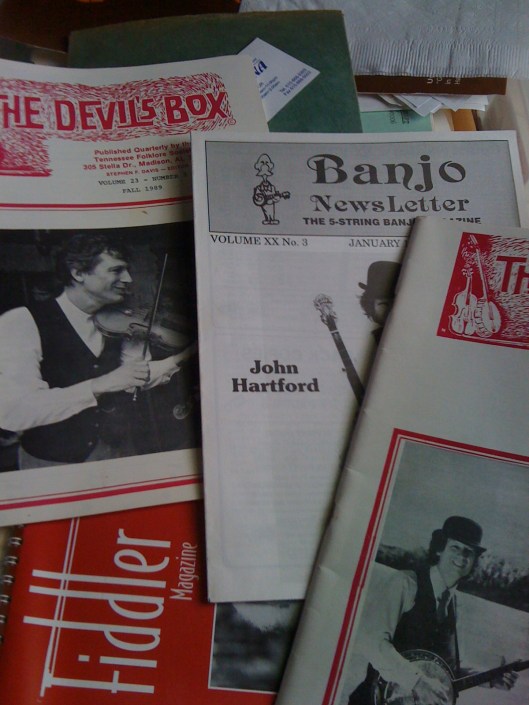
John Hartford

25 Tuesday Dec 2012

Tags

banjo, Banjo News Letter, bluegrass, fiddler, Fiddler Magazine, history, John Hartford, magazines, Mississippi River, music, Nashville, photos, Tennessee, Tennessee Folklore Society, The Devil's Box, U.S. South

John Hartford Magazines

Posted by Brandon Ray Kirk | Filed under John Hartford, Music

≈ Leave a comment

Joe Mullins with banjo

25 Tuesday Dec 2012

Posted by Brandon Ray Kirk in Big Harts Creek, Music

≈ Leave a comment

Tags

Appalachia, banjo, culture, Harts Creek, history, Joe Mullins, life, Logan County, music, photos, West Virginia

Joe Mullins, 1950-1968

Joe Mullins, 1950-1968

West Virginia Banjo Players

13 Thursday Dec 2012

Posted by Brandon Ray Kirk in Music

≈ Leave a comment

Tags

Appalachia, banjo, culture, Harts Creek, history, life, Lincoln County, music, photos, U.S. South, West Virginia, writing

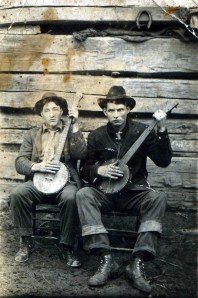
Dockie Vance and John Alan Farley, West Virginia banjo players

Dockie Vance and John A. Farley, 1910-1920

In Search of Ed Haley 17

04 Tuesday Dec 2012

Posted by Brandon Ray Kirk in Ed Haley

≈ Leave a comment

Tags

Appalachia, Ashland, banjo, Chapmanville, Charley Gore, East Tennessee Blues, Ed Haley, Ethel, fiddle, fiddler, fiddling, Fire on the Mountain, Great Depression, Harts, Harts Creek, Hell Among the Yearlings, history, Ira Gore, John Hartford, Johnny Hager, Kentucky, Lawrence Haley, Lee Trick Gore, Liza Mullins, Logan County, Mag Gore, Mona Haley, music, Ode Curry, Peter Mullins, Stoney Ferrell, The Dying Californian, U.S. South, West Fork, West Virginia, Wild Horse

Later in the evening, Pat put me in touch with Lee “Trick” Gore, an Ashland preacher and musician who remembered Ed Haley from his childhood days on Harts Creek. We met Gore the following day at his home in what was my first meeting with someone from Ed’s birthplace. He was a polite man with a loud clear voice, somewhat thick in stature and decked out in a tie and button-up sweater.

“I understand what you’re trying to do,” Gore said right away.

It wasn’t long until he and Lawrence were in a deep discussion about the people and places in and around Harts.

“We used to spend a week or two with Aunt Liza or Uncle Peter,” Lawrence said, prompting Gore. “Most of the time we’d ride the train up there and get off at Harts. They run passenger trains up into coalfields then. We’d get off there at the mouth of Hart and walk up and it was nothing but creek. You’d ford that creek a dozen times trying to stay close to the road and the road was in the creek half the time. You had to wade the creek half the way up through there. It’d take us half the day it seemed like.”

Lawrence said his father spent some time in Chapmanville, a town upriver from Harts about nine miles.

“I remember staying in Chapmanville, too. There was a beer joint or something that Pop wanted to stop at. They was some guy in there got to down-mouthing Pop. Stoney Ferrell, that’s exactly who it was. This guy kept aggravating him and Pop just edged toward his voice, you know. Instead of carrying a blind man’s cane, Pop carried a big heavy cattle cane. He got pretty close to him and he reached out and grabbed him around the neck with that cane.”

Gore said Ed used to come see his uncle Charley Gore at Ferrellsburg, a settlement about two miles upriver from Harts.

“Uncle Charley was a fiddler,” he said. “Charley was the principal of the school and Ed stayed with him. Well, once a year he’d happen by. That was right on the heels of the Depression. I was twelve. I was just learning to play the guitar then.”

Gore looked at Lawrence and said, “Either you or Mona was leading him.”

I asked Gore what Ed looked like at that time and he said, “He just dressed ordinary. He never dressed up, but he wasn’t dirty looking or nothing like that — just old-fashioned.”

He stopped for a moment, lost in thought, then said, “He was just something else. He was far ahead of a lot of fiddlers, buddy. There wasn’t none of this grinding on that violin. When he played it, it was just as smooth in that bow hand. I know he played ‘Hell Among the Yearlings’, ‘Fire on the Mountain’ and ‘The Wild Horse’. Uncle Charley played those tunes, too. I guess he learned them from Ed Haley.”

“I wish my daddy was alive,” Gore said. “Boy, he could tell you about Ed Haley because he loved him. Uncle Charley loved him dearly. And Ed knew that he was welcome at our house and that’s where he hung his hat buddy — where he was welcome. Do you know how I think of him? I think of him as kind of a mountain poet. He sung religious songs and them old mournful mountain tunes. It seems to me like he sung a song called ‘The Dying Californian’. I can’t remember the poetry to it, but it was a mile long.”

Ed sang while fiddling it.

Gore said Ed sometimes traveled with “Little Johnny” Hager, a banjo player who used to stay weeks at a time with his family when he was a boy. Lawrence Haley had shown me a picture earlier of Ed with Johnny Hager in Webster Springs in 1914.

I asked Gore if he knew that Ed could play the banjo and he said, “Seems like I heard him play it when him and Johnny was together. No doubt he could play it.”

Gore asked Lawrence if he remembered a man his father used to play with named Ode Curry (he didn’t), then said, “Ode Curry was just a fella that played the banjo and sang and he had a big nose, as well as I remember, and it’d vibrate when he’d sing because he sung through his nose. But let me tell you something: they would give him all he could drink to play and Ode knew some of the lonesomest, heart-breaking songs you ever listened to.”

Gore got his guitar and sang several songs for me, then whistled the melody for “East Tennessee Blues” and named it as one of Haley’s tunes. He said, “That’s funny how things come back to you when you sit down and get to talking about it, and reminiscing.”

I encouraged him to “play another tune and see what it stirs up,” so he strummed and whistled out a few more melodies.

At some point, Gore’s wife said she remembered seeing Haley play at Logan Court House and in a nearby coal town named Ethel.

Just before Lawrence and I left, Gore called his 85-year-old aunt, Mag Gore, about Haley. “Mag was a singer,” he said. “She married Ira Gore, her third cousin. She couldn’t get out of the Gore family.” He spoke with her briefly on the phone, then told us: “The only thing she remembers was that her husband Ira went to town one day and Ed Haley come home with him because Ira had a little bit of that good ol’ ‘moon’ they make over on the West Fork. They was a sipping that a little bit.”

West Fork, Gore said, was a tributary of Harts Creek with its headwaters in Logan County.

In Search of Ed Haley 10

28 Wednesday Nov 2012

Posted by Brandon Ray Kirk in Ed Haley

≈ Leave a comment

Tags

Annadeene Fraley, Appalachia, Ashland, banjo, Benny Thomasson, blind, books, Catlettsburg, Charleston, Cherry River Rag, Clark Kessinger, Cripple Creek, DC, Dunbar, Ed Haley, fiddler, fiddling, Georgia Slim Rutland, Gus Meade, Harts Creek, history, J P Fraley, John Hartford, Kentucky, Lawrence Haley, Library of Congress, life, Liza Mullins, Logan County, Marietta, music, Ohio, Ox in the Mud, Parkersburg, Parkersburg Landing, Pat Haley, Ralph Haley, Rouder Records, Sourwood Mountain, Steve Haley, Washington, West Virginia, Wilcox-Gay, writing

I spent the next two months thinking about the best way to approach Lawrence Haley. It was imperative that I made the right impression — should I call or write? Should I ease into the situation or just tell him how great I thought his father was? It was a fantastic moment — a period of time just before “contact” when I was mostly daydreaming and not nearly so swept away. In that instant, I was content to just talk with Ed Haley’s son and find out as much as I could about one of the world’s greatest fiddlers.

I finally decided to write Lawrence a letter, a perfectly natural thing to do since he was a retired postman. I had a million questions but limited myself to this:

Dear Mr. Haley,

 I am deeply inspired by your father and his music. I’ve almost completely worn out the Parkersburg Landing album and have become very interested in him. I believe him to be the best as well as the most important fiddler of our time. Through his influence on Clark Kessinger and Georgia Slim who in turn influenced Benny Thomasson he could be considered the grandfather of the present Texas contest fiddling style.

 I would have given anything to have heard him and seen him. I’ve read everything I can find and have talked to J.P. and Annadene Fraley at length for any little tidbit about him. I would love to meet you and hear you talk of him.

Yours very truly,

John Hartford

Because of my promise to Gus Meade, I was careful not to divulge the fact that I had heard any of Ed’s tunes not featured on Parkersburg Landing and had resolved that if I should be so lucky that Lawrence would at some future time play some of them I would act surprised.

A few days later, after getting the “go-ahead” from Annadeene Fraley by telephone, I gave Lawrence a call. He was extremely nice and seemed happy that I was interested in his father. He said he used to watch me on TV years ago.

“You’re the guy with the derby that danced and played the fiddle at the same time,” he said in a somewhat raspy voice.

I hesitantly asked about his father’s records. He said he had most of his dad’s original home recordings, as well as reel-to-reel copies made by the Library of Congress.

“I got four little seven-inch tapes here with some music on them,” he said, before reading the titles. I carefully wrote each title down, taking special note of the ones I had never heard of. Lawrence said his father sometimes named tunes after places where he played, like with “Catlettsburg”, a small river town near Ashland, or with “Parkersburg Landing”, a West Virginia city just below Marietta, Ohio.

“I don’t know where Pop gets all these names from,” Lawrence said, as if Ed were still alive to name them. “I think when my dad went somewhere and played, and if people liked what they heard, that’s the way he named them. Like that ‘Parkersburg Landing’, he was probably up in Parkersburg, West Virginia, playing and people liked it so that’s what he called it. I’m not sure how they got named but that’s what I’d say.”

There were other tunes like “Dunbar”, named for a small town near Charleston, West Virginia, and “Cherry River Rag”, named after a river in eastern West Virginia.

After reading Ed’s titles, Lawrence said, “Pop played quite a few more pieces than that, of course. It’s really hard to say how many of his records are out there that I don’t know about. Several years ago, this guy brought me one of his records with a tune on it called ‘Ox in the Mud’. He said he had wanted it on a record so bad he took Pop to one of these recording studios and had it made. Well, I traded him one of those Parkersburg Landing albums for it and I guess he was satisfied with that because he got quite a bit more music.”

Wow – the prospect of finding more Ed Haley records was exciting. I could just imagine digging through a box in some antique store along the Ohio River and finding Haley records mixed in with old Big Band orchestra albums and selling at a quarter each.

Putting such thoughts aside, I turned my mind back to Lawrence, who was actually holding Ed Haley records at that moment in Ashland, Kentucky. I asked him about the type of records and their general condition.

“The records are mostly Wilcox-Gay plastic records,” he said. “When I took them to the Library of Congress in Washington, some of them was in pretty bad shape. The hole where the spindle was, some of them was wore oblong and they had to put weights and everything else on them and they come up with a flutter in them. I allowed Rounder Records to make a copy of them because they said they was gonna put out a couple of albums.”

I said, “Well, I’ll tell you what. I’ve never heard anything like it. I’ve heard a lot of fiddling that was made on old records at that time and your dad was so far ahead of any of them it’s not funny. In the one sense, he’s an old-time musician. In the other, he’s modern. That knocked me out. He may be the heaviest musician I ever heard. His syncopation and his timing and his intonation… Because them old-timey notes, you know, you can’t hit them right on the head. You’ve got to shade them. And to shade them, you’ve got to really know if they’re in tune or not and not just anybody can do that. And boy, he is a master of it.”

I was obviously a little carried away and caught up in the moment.

Lawrence sort of laughed and said, “I know he was a good, fine fiddler. My dad held the fiddle out onto his left side right at the top of his bicep where his arm and chest met – the armpit, just about. It was more of a classical violinist’s stance than the old mountain fiddler holding it down towards his knee or close to his knee and right in front of him. I’ve seen him lean his chin over on the base of the violin at times. You know, like people trying to hold that fiddle up there on their shoulder and under their chin, they can’t get their fingers right if they don’t let go of the fiddle on the neck of it. Well, Pop didn’t have to dip the bow a lot of times. What he did, he’d rock the fiddle to that string to meet the bow, see? And that was tricky, too.”

I said, “I’ll tell you what, he’s got one of the best bow arms I’ve ever heard. He gets those notes out so clear.”

Lawrence interjected, “He used all the bow, too. A lot of people, they’ve got to saw the bow back and forth. My dad used every inch of the bow from one end to the other. He didn’t grab the bow up on the strings like a lot of fiddlers. You know, half way up the bow. He got right back on the bow where you tighten the string and his finger was on that tightening fret. His little finger was wrapped around that, more or less.”

I said, “It sounds like he long-bowed a lot, where he’d pull that bow down and get four or five notes on a bow stroke.”

“Yes he did,” Lawrence said without hesitation. “Pop would use every bit of that bow to get it.”

Discussing Ed’s bowing prompted me to think about Ed’s fiddle. I had looked at it many times in the Parkersburg Landing picture and wondered if it survived fifty years after his death.

“I’ve got the old fiddle,” Lawrence said, “but it’s really not playable. We lived at a place one time where we had an excess of moisture and it got to this old fiddle and it started coming apart. My son Steve took it and had some instrument re-builder to put it back together but they never could get it back together right so it’s lost all of its intonation. I’ve got it but it’s not really worth playing because it hasn’t got the resonance to it.”

I told Lawrence I was hoping to be back in Ashland in a few days and would love to visit him and see his father’s records.

“Well, if you come up and you can get a hold of some kind of portable tape player I don’t care to let you copy Pop’s records,” he said. “They will probably just set here till some kind of magnetism comes along and takes all the information off of them. But they’re here and I hope nothing happens to them.”

Well, this was an unexpected offer from someone who was reportedly so over-protective of his father’s music.

I asked Lawrence how old Ed was when he passed away and he said, “Let’s see. I was about 23 or 24. Right now, I’m an old man. I’ve had quite a bit of heart problems. I spent the biggest part of November in the hospital on a ventilator. I was having congestive heart failure. I guess you hear how my voice sounds. They rammed something down my vocal box between my vocal chords and I’ve never got my voice back right. Well, I’m more or less living one day at a time. I’m 63 now.”

I said, “Well, you’re exactly ten years older than I am.”

“Well, you’re getting up there, too, aren’t you? Not the young man we remember on TV,” Lawrence said.

Hoping to get more at the source of Ed’s music, I asked Lawrence if his dad talked about where he learned to play.

“Not to me, no,” he said. “I’ve heard some stories but just like all other legendary people whenever a story is told twice it’s been embellished quite a bit. One fella said to keep from starving to death my dad sat out and eat wild onions with a piece of cold cornbread that he’d take out of the kitchen of my great-aunt Liza’s house, who raised him. But that wasn’t true. I’ve heard Pop tell me personally that he’d take a salt-shaker and a big onion and something like that and a piece of cornbread and go out in the garden and get him a tomato and eat that. I’ve never heard him talk about eating wild onions.”

I had given little thought to Ed’s childhood and birthplace.

“Where he was raised it was kind of rough country up in West Virginia,” Lawrence said. “He come out of Logan County, West Virginia, out in a country called Harts Creek. We used to go up there quite often until I was about nine or ten years old because my dad would go back there. He’d go around courthouse days and play music out in the courthouse lawn for change and things and that’s the way he made his living. He’d go to fairs and any other activities that might draw a crowd where he could play music. That’s how him and my mother made their money and raised us kids.”

How many kids were there in the family?

“They was seven of us all together,” Lawrence said. “I was the youngest boy and then I had a sister younger than me. But I had one brother to die when he was in infancy so really there was only five boys and one girl they raised. They got us up one way or the other without jerking us too hard.”

I asked Lawrence if he remembered his father playing for dances.

“I remember one afternoon we walked from Morehead, Kentucky down to Farmers,” he said. “That’s four or five miles. At that time they didn’t have too good a roads through there so we walked the railroad tracks. I was just a kid. We went to these people’s house and they rolled back the rugs and things and Pop sat there and played all night until the sun come up. I don’t know when Pop made the arrangements. Just him and my mother.”

For the next minute or so, I really bragged on Ed’s music. I had listened to it for years and had a lot of emotion about it. Finally, Lawrence said, “Well, I’ve heard him make a sour note on a few of these records but I think he learned his violin real good.”

Lawrence said his father played the fiddle from the time he was a small child.

“The way I understood it, he become blind when he was a couple of years old and they couldn’t figure out what to do with my dad,” he said. “He was blind and living out on the farm and somebody made him a violin out of a cigar box and he started out from there and just self-taught hisself, I reckon. As he went along, he got a hold of old instruments, I guess, and showed some promise and somebody looked after him and saw that he got the right things any way.”

I was very interested in Haley’s early travels, particularly before he married and settled in Ashland.

“I guess by the time Pop was eighteen, nineteen years old — that’s back at the turn of the century — he was traveling all over West Virginia and eastern Tennessee and western Old Virginia and parts of Ohio and eastern Kentucky,” Lawrence said. “He went to White Sulphur Springs and Webster Springs — these places that were pretty well known as spas and health resorts. He went to the state capital around Charleston. I’ve heard Pop talk about when he’d be in Charleston. He said he’d guarantee if he was at the Capitol building or somewhere playing music, Clark Kessinger would be there a listening trying to learn his style. I think that’s the way that Clark Kessinger got his style of Ed Haley, just watching him around Charleston, West Virginia.”

I told Lawrence that Kessinger was a great fiddle player but that he wasn’t even close to his dad.

That seemed to delight Lawrence, who was quiet for a moment before saying, “I’m glad to hear somebody say that. That’s one reason I agreed to let Rounder Records make an album or two. I thought there might be somebody out there that would appreciate that type of music and want to preserve it some way or the other. Once bluegrass and country rock and all that took off the old mountain-type music that came over from England and Ireland and Scotland and some of the Dutch and Scandinavian countries has just about been lost.”

Easing into more musical dialogue, I told Lawrence about my theory that Haley was a grandfather of the modern Texas contest fiddling style.

“Well, I don’t know about all of that John,” he said, “but when he’d start a piece over — he’d play each piece about four or five times — he had a different variation. It would still be the same piece of music but it always seemed to vary some from the first run through to the second run through. Well, I’ve seen him vary the speed even. When he is getting toward the end — maybe the last run — he’ll speed up the tempo and things like that or make some different finger work. And that was some of the difficulties my brother had about making records with him. My brother played the mandolin or guitar and my mother played the mandolin some.”

Lawrence said his father’s blindness, as well as his distaste for the up-and-coming commercial music industry, hindered his willingness to record music.

“When radio first took off they tried to get my dad to make records, but he always felt he couldn’t do it because they had to cue him in as to when to start,” he said. “My brother had quite a bit of problems like that when he made those home-made records with my dad. And on top of that, my dad felt that recordings were just some way for somebody to take him. After so many records had been sold over a thousand, he might get two cents on the record or something like that. He felt like he’d rather get out on the street and play it for free among friends. I’ve come to the conclusion, Why not?”

I asked Lawrence if Ed played around the house and he said, “Yeah, he’d practice sometimes. I’ve seen him get out the fiddle and just play for himself. He’d listen to a piece of music… One that I can think of real good, but I don’t think he ever really come out and made any version of it for hisself was Vaughn Monroe’s ‘Ghost Riders in the Sky’. I think he figured the afterlife was about like Vaughn Monroe’s ‘Ghost Riders in the Sky’: what you did all your life was gonna be your hell if you didn’t do it right, if you didn’t enjoy it.”

While crediting some of Ed’s contemporaries, Lawrence seemed to regard his father as a highly gifted prodigy surrounded by mediocrity. He implied that his father humbly felt the same way, although it was an occasional source of aggravation, especially in his later years. “A lot of guys would get around Pop and aggravate him,” Lawrence said, “but I think he enjoyed music.”

I told Lawrence I would give almost anything to have seen his father play.

“Well, it’s a shame there’s no kind of video of Pop because he had an easy style of violin playing. It didn’t look strenuous to him.”

Ever conscious of genetics, I asked Lawrence if any of his family played music. He said his son Steve Haley — who lived just north of me in Hendersonville — was a former band instructor.

“He graduated from Morehead as a music major and taught high school band in Knoxville. His two daughters are taking violin lessons and are in whatever little junior symphony they have there in Hendersonville. They play semi-classical stuff.”

I asked Lawrence if Ed played any instruments aside from the fiddle and he said, “My dad was an old hammer-thumb banjo-picker like Pappy Jones. He played ‘Cripple Creek’ and ‘Sourwood Mountain’ — really just about anything he played on the fiddle. And he put just about as many notes in on the banjo as he did on the fiddle. I’m not a bragger about my dad but he was a good banjo player, too.”

This was a new twist: I hadn’t even considered that Haley might have been a multi-instrumentalist.

“I never seen Pop play a piano,” Lawrence said, “but he could set down and play a piece of music on our old pump organ. And he taught my older brother Ralph how to play the guitar. Sometimes my dad would be playing the fiddle and my brother would be trying to pick up a piece of music with him and he’d tell Ralph what chords to hit, how to change chords and all that. He could make a run between notes and my dad could, too. Yeah, Pop could play any instrument, or I guess a little bit on anything that was handy to him anyway.”

I wondered if there were any recordings of Haley playing the banjo.

“No, not a thing on the banjo. My brother Ralph, when he come out of the service — in 1946, I guess it was — he got a hold of one of these Army surplus machines that had a cutting needle on it that cut the grooves and that’s what he made all these records on. Some of them are paper with a plastic coat on them. Others are a solid plastic. But most of them are all scratched and some of the paper ones are wore completely through the plastic into the paper. I’ve tried to keep them here at home. Some parts of the records are good.”

Just before hanging up, Lawrence said, “It was kind of a surprise to us to have got your letter. Annadeene called here and told us that you’ve been trying to get a hold of us. Our daughter, when you was here, she’d just had her operation, I guess. I think they’re gonna give her some radiation treatment and we will be making some trips back up there to Ohio but we’ll try to be here if you come.”

At that point, Lawrence turned the telephone over to his wife Pat who said in a pleasant British accent, “I do invite you and whoever you’re bringing with you to stay with us overnight or whatever. I have a front bedroom with two double beds and it’s just Larry and I that live here and we appreciate you showing an interest.”

Newer posts →

Feud Poll 1

If you had lived in the Harts Creek community during the 1880s, to which faction of feudists might you have given your loyalty?

Categories

  • Adkins Mill
  • African American History
  • American Revolutionary War
  • Ashland
  • Atenville
  • Banco
  • Barboursville
  • Battle of Blair Mountain
  • Beech Creek
  • Big Creek
  • Big Harts Creek
  • Big Sandy Valley
  • Big Ugly Creek
  • Boone County
  • Breeden
  • Calhoun County
  • Cemeteries
  • Chapmanville
  • Civil War
  • Clay County
  • Clothier
  • Coal
  • Cove Gap
  • Crawley Creek
  • Culture of Honor
  • Dingess
  • Dollie
  • Dunlow
  • East Lynn
  • Ed Haley
  • Eden Park
  • Enslow
  • Estep
  • Ethel
  • Ferrellsburg
  • Fourteen
  • French-Eversole Feud
  • Gilbert
  • Giles County
  • Gill
  • Green Shoal
  • Guyandotte River
  • Halcyon
  • Hamlin
  • Harts
  • Hatfield-McCoy Feud
  • Holden
  • Hungarian-American History
  • Huntington
  • Inez
  • Irish-Americans
  • Italian American History
  • Jamboree
  • Jewish History
  • John Hartford
  • Kermit
  • Kiahsville
  • Kitchen
  • Leet
  • Lincoln County Feud
  • Little Harts Creek
  • Logan
  • Man
  • Matewan
  • Meador
  • Midkiff
  • Monroe County
  • Montgomery County
  • Music
  • Native American History
  • Peach Creek
  • Pearl Adkins Diary
  • Pecks Mill
  • Peter Creek
  • Pikeville
  • Pilgrim
  • Poetry
  • Queens Ridge
  • Ranger
  • Rector
  • Roane County
  • Rowan County Feud
  • Salt Rock
  • Sand Creek
  • Shively
  • Spears
  • Sports
  • Spottswood
  • Spurlockville
  • Stiltner
  • Stone Branch
  • Tazewell County
  • Timber
  • Tom Dula
  • Toney
  • Turner-Howard Feud
  • Twelve Pole Creek
  • Uncategorized
  • Warren
  • Wayne
  • West Hamlin
  • Wewanta
  • Wharncliffe
  • Whirlwind
  • Williamson
  • Women's History
  • World War I
  • Wyoming County
  • Yantus

Feud Poll 2

Do you think Milt Haley and Green McCoy committed the ambush on Al and Hollene Brumfield in 1889?

Blogroll

  • Ancestry.com
  • Ashland (KY) Daily Independent News Article
  • Author FB page
  • Beckley (WV) Register-Herald News Article
  • Big Sandy News (KY) News Article
  • Blood in West Virginia FB
  • Blood in West Virginia order
  • Chapters TV Program
  • Facebook
  • Ghosts of Guyan
  • Herald-Dispatch News Article 1
  • Herald-Dispatch News Article 2
  • In Search of Ed Haley
  • Instagram
  • Lincoln (WV) Journal News Article
  • Lincoln (WV) Journal Thumbs Up
  • Lincoln County
  • Lincoln County Feud
  • Lincoln County Feud Lecture
  • LinkedIn
  • Logan (WV) Banner News Article
  • Lunch With Books
  • Our Overmountain Men: The Revolutionary War in Western Virginia (1775-1783)
  • Pinterest
  • Scarborough Society's Art and Lecture Series
  • Smithsonian Article
  • Spirit of Jefferson News Article
  • The Friendly Neighbor Radio Show 1
  • The Friendly Neighbor Radio Show 2
  • The Friendly Neighbor Radio Show 3
  • The Friendly Neighbor Radio Show 4
  • The New Yorker
  • The State Journal's 55 Good Things About WV
  • tumblr.
  • Twitter
  • Website
  • Weirton (WV) Daily Times Article
  • Wheeling (WV) Intelligencer News Article 1
  • Wheeling (WV) Intelligencer News Article 2
  • WOWK TV
  • Writers Can Read Open Mic Night

Feud Poll 3

Who do you think organized the ambush of Al and Hollene Brumfield in 1889?

Recent Posts

  • Logan County Jail in Logan, WV
  • Absentee Landowners of Magnolia District (1890, 1892, 1894)
  • Charles Spurlock Survey at Fourteen Mile Creek, Lincoln County, WV (1815)

Ed Haley Poll 1

What do you think caused Ed Haley to lose his sight when he was three years old?

Top Posts & Pages

  • New Year's Raid (1888): Randolph McCoy's Testimony
  • Civil War Gold Coins Hidden Near Chapmanville, WV
  • Feudist Jim McCoy (1929)
  • Paw Paw Incident: Dan Whitt Deposition (1889)
  • Paw Paw Incident: Ellison Mounts Deposition (1889)

Copyright

© Brandon Ray Kirk and brandonraykirk.wordpress.com, 1987-2023. Unauthorized use and/or duplication of this material without express and written permission from this blog’s author and/or owner is strictly prohibited. Excerpts and links may be used, provided that full and clear credit is given to Brandon Ray Kirk and brandonraykirk.wordpress.com with appropriate and specific direction to the original content.

Archives

  • February 2025
  • January 2025
  • October 2023
  • September 2023
  • December 2022
  • November 2022
  • May 2022
  • April 2022
  • February 2022
  • November 2021
  • October 2021
  • September 2021
  • June 2021
  • May 2021
  • April 2021
  • March 2021
  • February 2021
  • January 2021
  • December 2020
  • November 2020
  • October 2020
  • July 2020
  • June 2020
  • May 2020
  • April 2020
  • March 2020
  • February 2020
  • January 2020
  • December 2019
  • November 2019
  • October 2019
  • September 2019
  • August 2019
  • July 2019
  • June 2019
  • May 2019
  • April 2019
  • March 2019
  • February 2019
  • January 2019
  • December 2018
  • November 2018
  • October 2018
  • September 2018
  • August 2018
  • July 2018
  • June 2018
  • May 2018
  • April 2018
  • March 2018
  • February 2018
  • January 2018
  • December 2017
  • November 2017
  • October 2017
  • September 2017
  • August 2017
  • July 2017
  • June 2017
  • May 2017
  • April 2017
  • March 2017
  • February 2017
  • January 2017
  • December 2016
  • November 2016
  • October 2016
  • September 2016
  • August 2016
  • July 2016
  • June 2016
  • May 2016
  • April 2016
  • March 2016
  • February 2016
  • January 2016
  • December 2015
  • November 2015
  • October 2015
  • September 2015
  • August 2015
  • July 2015
  • June 2015
  • May 2015
  • April 2015
  • March 2015
  • February 2015
  • January 2015
  • December 2014
  • October 2014
  • September 2014
  • August 2014
  • July 2014
  • June 2014
  • May 2014
  • April 2014
  • March 2014
  • February 2014
  • January 2014
  • December 2013
  • November 2013
  • October 2013
  • September 2013
  • August 2013
  • July 2013
  • June 2013
  • May 2013
  • April 2013
  • March 2013
  • February 2013
  • January 2013
  • December 2012
  • November 2012

Enter your email address to follow this blog and receive notifications of new posts by email.

Join 2,925 other subscribers

Tags

Appalachia Ashland Big Creek Big Ugly Creek Blood in West Virginia Brandon Kirk Cabell County cemeteries Chapmanville Charleston civil war coal Confederate Army crime culture Ed Haley Ella Haley Ferrellsburg feud fiddler fiddling genealogy Green McCoy Guyandotte River Harts Harts Creek Hatfield-McCoy Feud history Huntington John Hartford Kentucky Lawrence Haley life Lincoln County Lincoln County Feud Logan Logan Banner Logan County Milt Haley Mingo County music Ohio photos timbering U.S. South Virginia Wayne County West Virginia Whirlwind writing

Blogs I Follow

  • OtterTales
  • Our Appalachia: A Blog Created by Students of Brandon Kirk
  • Piedmont Trails
  • Truman Capote
  • Appalachian Diaspora

BLOOD IN WEST VIRGINIA is now available for order at Amazon!

Blog at WordPress.com.

OtterTales

Writings from my travels and experiences. High and fine literature is wine, and mine is only water; but everybody likes water. Mark Twain

Our Appalachia: A Blog Created by Students of Brandon Kirk

This site is dedicated to the collection, preservation, and promotion of history and culture in Appalachia.

Piedmont Trails

Genealogy and History in North Carolina and Beyond

Truman Capote

A site about one of the most beautiful, interesting, tallented, outrageous and colorful personalities of the 20th Century

Appalachian Diaspora

  • Subscribe Subscribed
    • Brandon Ray Kirk
    • Join 787 other subscribers
    • Already have a WordPress.com account? Log in now.
    • Brandon Ray Kirk
    • Subscribe Subscribed
    • Sign up
    • Log in
    • Report this content
    • View site in Reader
    • Manage subscriptions
    • Collapse this bar
 

Loading Comments...