Tags
Appalachia, culture, Frank Davis, genealogy, Harts Creek, history, life, Lincoln County, photos, U.S. South, West Virginia, writers
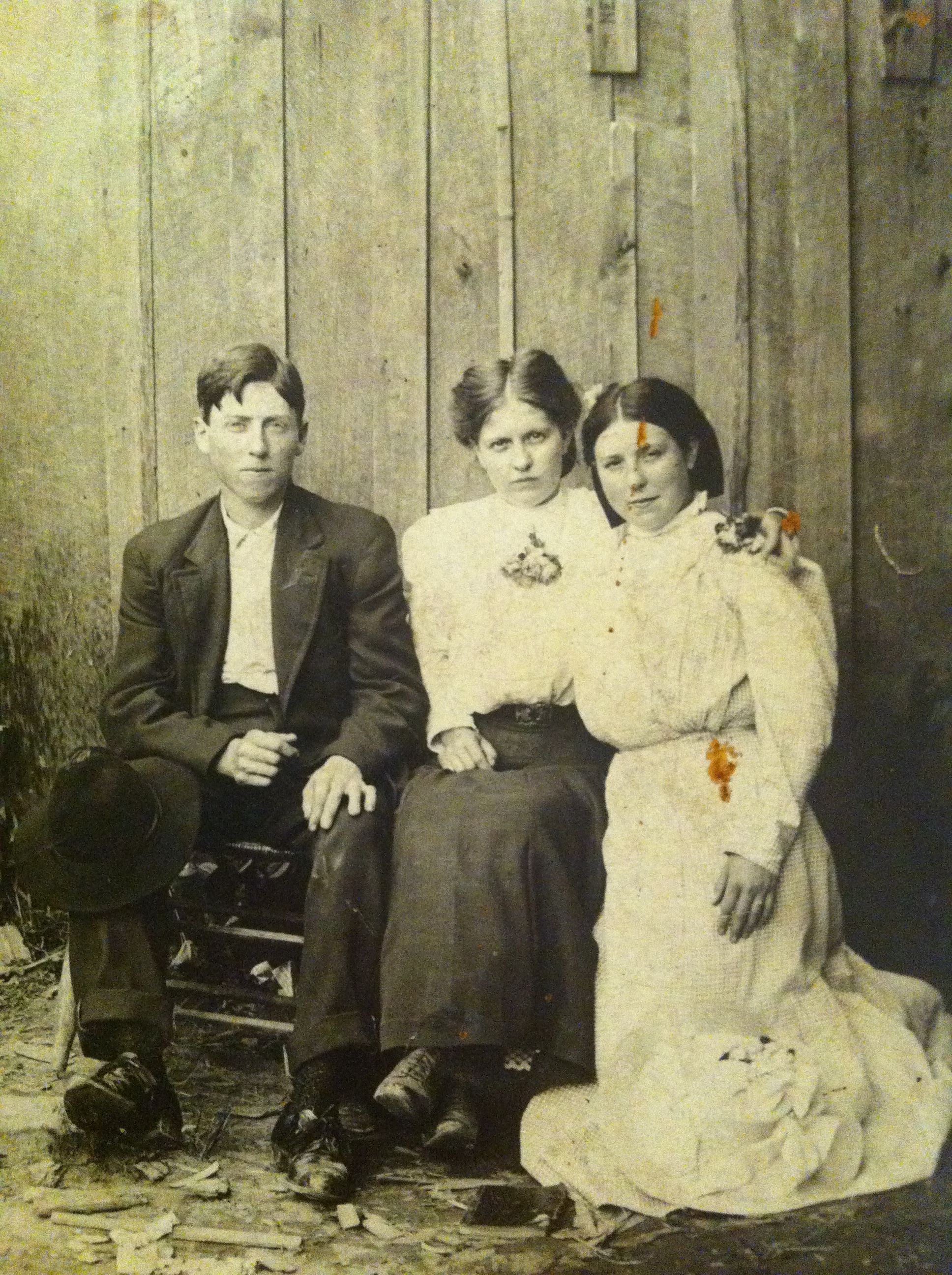
Harts Creek Residents, 1910-1920
05 Saturday Jan 2013
Posted in Ferrellsburg
Tags
Appalachia, culture, Frank Davis, genealogy, Harts Creek, history, life, Lincoln County, photos, U.S. South, West Virginia, writers
Harts Creek Residents, 1910-1920
05 Saturday Jan 2013
Posted in Ed Haley
Tags
Al Brumfield, Appalachia, Bob Adkins, feud, Green McCoy, Harts Creek, Henderson Dingess, history, Hollene Brumfield, John Hartford, John W Runyon, Lincoln County, Milt Haley, West Virginia, writing
Several months later, I spotted a follow-up article about Milt Haley’s murder in the Spring 1992 edition of Goldenseal titled “Settling Family Differences.” It was based on an interview with Bob Adkins, a Lincoln County gas driller born just after the turn of the century at Ferrellsburg, West Virginia. It was rough country in there during his childhood.
“I know of 18 murders within ten miles of where I grew up,” Bob said. “Never knew of anyone to kill a stranger. They were settling their own family differences. People lived by the gun. Never saw but one fistfight. I made it a point to tend to my own business.”
Bob’s great-grandfather Henderson Dingess was the father of the Hollena Brumfield (spelled “Haline” in the article) shot in the face by Milt Haley and Green McCoy. Henderson and his wife Sally (Adams) Dingess lived on the Smoke House Fork of Harts Creek in what was then Lincoln County (but is today Logan County).
“The Dingesses made part of their living floating logs downstream,” Bob said. “They also had an orchard and a federal licensed brandy making operation.”
Al and Hollena Brumfield were wealthy businessmen at the mouth of Harts Creek on the Guyandotte River. Al’s father Paris Brumfield “lived half a mile below there on good bottom land,” Bob said. Al and Hollena “built a boom across [Harts] Creek to catch logs that were floated into the Guyan in the spring. Al charged by the log and prospered. They built an eight-room house and put in a store. Haline ran the store and offered food and lodging to travelers.”
There was a picture of the Brumfield home in the article — it was the same place where Lawrence had said his grandmother was shot in a feud.
Bob gave a great account of Milt’s murder, expounding on what I already knew while opening up a few new leads.
A fellow named Runyan [spelled “Runyon” in other sources] came in from Kentucky and put in a store and saloon and made competition for Haline and Al Brumfield. Well, when that fellow came and put in a store it was believed that he would like to get rid of Al.
Every Sunday Al and Haline rode up the hollow to Harts Creek to see her daddy, Henderson Dingess. They both rode on one horse. Runyan gave some men a side of bacon and a barrel of flour to kill them. They got in a sinkhole and shot at Al on the way back. Al jumped off, but they hit Haline in the cheek and the bullet went out the other cheek. Al ran and got away and then came back for Haline. She knew there were two men but she didn’t know who they were. Thought it was Burl Adams but became convinced it wasn’t him.
The men got away, but when it was found out that Milt Haley and Green McCoy had disappeared suddenly that night everyone agreed that they had been hired by Runyan to kill Al Brumfield. Runyan also left Harts that night. Runyan just left, and they looked for him the rest of their lives. Then they missed Milt Haley and Green McCoy. They just left their families and disappeared. Figured it was by steamboat on the Ohio.
News got to Cincinnati that $1,500 was offered for Haley, Runyan, and McCoy. A detective there found [Haley and McCoy] and when Al heard they had his men he went down posing as sheriff, paid the reward, got them on the N&W train to Wayne County by Kenova, then up Twelve Pole Creek to Tug River. Breeden was a railroad stop and they walked from there to Harts by Left Fork of Twelve Pole.
Haline’s brother, John Dingess, had a saloon at Dingess on the way. They stayed there and stayed the next night at Grandpa’s [Hugh Dingess]. His daughter Brooke was 14 at the time. That night they took Milt Haley out, told McCoy they had hanged him, then McCoy told the whole story. Haley was held and made to listen to McCoy. Then they brought Haley in and he called McCoy yellow and still denied all of it.
Next day they went along West Fork of Harts to Fry. Stayed at Aunt Catherine Fry Adkins’s house at Fry. She was in the kitchen with the two men tied together, everyone drinking. Someone shot the lamp out over her head. Then they shot the men and took axes to their heads. This wasn’t much strange. They took the law into their own hands but made sure it was the right people.
Al Brumfield come to Grandpa [Adkins]’s that night but slept up the hollow. [They] took the bodies to West Fork of Harts and buried them in the same grave. Their relatives kept quiet.
After repeatedly studying Bob Adkins’ story in Goldenseal, I concocted a theory about Ed’s mother that coincided somewhat with Lawrence’s story about her shooting at the Brumfield place. Bob told in the article how his father Albert Adkins met his mother Brooke Dingess while boarding at Hollena’s in the 1890s. They were married after Albert’s first wife Emma Jane Hager died of tuberculosis in 1901. Well…what if this Emma Jane Hager had been Emma Jean Haley? Had Emma Haley abandoned Ed and changed her last name so as to lose her identity as the widow of a man accused of attempted murder? Was the transportation slow enough and the memories of locals distorted enough by time to make such a transition of identity? It seemed a plausible enough theory, so I resolved to explore it by contacting Bob the next time I was in West Virginia.
03 Thursday Jan 2013
Posted in Harts, Pearl Adkins Diary, Women's History
Tags
Appalachia, culture, Harts, history, inspiration, life, Lincoln County, Pearl Adkins, photos, U.S. South, West Virginia, writers, writing
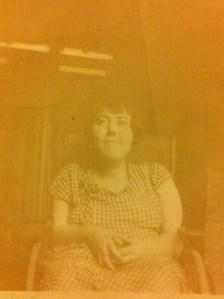
Pearl Adkins, West Virginia diarist, 1920-1950
03 Thursday Jan 2013
Posted in Big Harts Creek, Culture of Honor
Tags
Abbotts Branch, Appalachia, Ben Workman, Buster Stollings, crime, Doc Workman, Flora Workman, Gene Wilson Dingess, Harlen Mullins, Harts Creek, history, Logan County, murder, mystery, true crime, U.S. South, Weddie Mullins, West Virginia, Workman Fork, writers, writing
In the early morning hours of April 20, 1956, someone shot Doc Workman in the abdomen with a 20-gauge shotgun as he stood at the doorway to his little house on Workman Fork. “I heard the shot fired that killed him,” said Gene Wilson Dingess, a neighbor, in a 2004 interview. “It was way up in the morning. My sister Mildred and Mommy heard it, too. No one thought anything about it. People roamed all hours of the night with guns and shot rabbits and possoms.”
Upon learning the true nature of the incident, residents of Workman Fork reacted with shock and surprise. Nothing like this had ever happened on Workman Fork. Located somewhat remotely in the headwaters of Harts Creek, the fork constituted one of the most peaceful sections of the community. Moonshining was quite common, but murder? Doc’s killing — any killing — was unprecedented on Workman Fork. People were horrified.
Most everyone agreed that Doc knew the identity of his killer. “Doc knew the person at his door,” Dingess said. “He answered the door in his pajamas.” The killer’s choice of weaponry was a source of great interest. First of all, the 20-gauge shotgun used to commit the murder reportely belonged to Mr. Workman himself. Secondly, a 20-gauge shotgun was the type of low-powered firearm that a teenager or woman (or an old man) might use at close range, say, within 30-40 yards. And, oddly, it was left lying across Workman’s leg presumably without fingerprints. “It looked like someone had been standing by his door where they stood and plotted,” said the late late Roma Elkins in a 2004 interview.
One of the initial suspects in the murder was Doc’s former wife, Flora Lilly. Police also questioned Doc’s former brother-in-law, Weddie Mullins, a son of Harlen Mullins. Buster Stollings, who boarded with Flora, was another suspect. Other suspects were two men named Jake and Bill who were out that night riding mules and stealing corn. Apparently locals were so incensed by the tragedy that they investigated the matter themselves. Early the morning of the murder, one eyewitness saw two young men, dubbed as “Frank” and “Jesse” here to hide their true identities, run by as she milked cows on Abbott’s Branch. “Ben Workman said he saw tracks from a woman in high-heeled shoes leading from the mouth of Workman Fork up to the mouth of Long Branch,” Dingess said. “Now who would’ve wore high heels on this creek back then?”
Today, so many years later, it appears that two young men dubbed as “Frank” and “Jesse” were involved in the murder. Although suspects at the time of the killing, they were never questioned by authorities. Jesse’s own mother believed him to be the killer. “When Jesse come in at the house that morning he had a whole roll of money as big as your fist,” his mother later said. “Him and Wed Mullins was in on that killing together.” Reportedly, Frank was haunted by the murder years later when he was on his deathbed. “My uncle went up to Logan and Frank was in the hospital about to die,” Dingess said. “There was a preacher there and Frank said he couldn’t get forgiveness because he’d helped kill a man.”
03 Thursday Jan 2013
Posted in Ed Haley
Tags
Appalachia, Ashland, culture, Ed Haley, history, John Hartford, Kentucky, Lawrence Haley, Lee Trick Gore, life, music, photos, writing
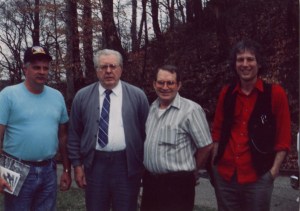
Lee “Trick” Gore (center, wearing tie) with Lawrence Haley and John Hartford, Ashland, Kentucky, 1991.
03 Thursday Jan 2013
Posted in Ed Haley
Tags
Appalachia, Blackberry Blossom, civil war, Ed Haley, fiddler, history, James A Garfield, Jean Thomas, John Hartford, Junius Martin, Kentucky, Lawrence Haley, music, writing
A few weeks after finding this article, Lawrence Haley called me with the news that he had found four more of his father’s records. These were not from the home recording sessions of the mid-forties. Instead they were from Junius Martin, a man who “ran with Pop some.” Martin had brought them to Lawrence in the late ’70s and traded them for a Parkersburg Landing album. I was extremely excited — what tunes were on these records? Were they dated? Lawrence said two of the Martin records, titled “Blackberry Blossom”/”Poplar Bluff” and “Bluegrass Meadows”/”Ox in the Mud” were dated December 1947. The other two, “Indian Eat the Woodchuck”/Unnamed and “Cabin Creek”/”Indian Eat the Woodchuck”, were undated.
Inspired by the find, I read up on some history behind “Garfield’s Blackberry Blossom” in Jean Thomas’ Ballad Makin’ in the Mountains of Kentucky. According to Thomas, a French harpist named Christopher Columbus learned the tune from General Garfield in the Big Sandy Valley during the War Between the States. Upon returning home, he told his wife, “Americkee, I’ve learnt another tune! I ketched it from General Garfield his own self. The General whistled it a heap o’ times as he rode ahead of our troops right off yonder at the mouth of Big Sandy.”
According to Thomas’ account, General Garfield heard Christopher Columbus play the tune on a harp one night at camp.
“One night I was sent to his headquarters with a message and whilst I was waitin’ for orders I set down on the far end of the stoop and played a tune. I had not played the piece oncet through till I hear-ed behind me a heavy tread and the clickin’ of sword agin’ boot top. I poked my harp in my pocket quick as I could and riz to my feet in salute. For there stood General Garfield his own self lookin’ down at me. ‘Let’s hear that tune again,’ said the General, as friendly as a private, ‘that’s my favorite tune though I can’t recall the name of it.’ With that, he [the General] let fly a stream of tobacco juice into a clump of blackerry bushes growin’ nigh the foreyard. The amber splattered all over the snow white blossoms on the bush and from then on we called the piece Blackberry Blossom.”
02 Wednesday Jan 2013
Posted in Timber
Tags
Appalachia, culture, history, Huntington, life, logging, photos, timbering, U.S. South, West Virginia
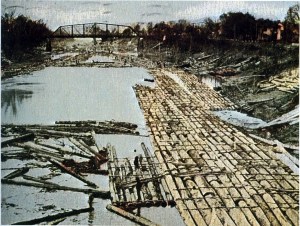
Log Rafts at Huntington, West Virginia, 1895-1905
01 Tuesday Jan 2013
Posted in Ed Haley
Tags
Appalachia, culture, genealogy, Harts Creek, history, Jack Haley, Lawrence Haley, life, Liza Mullins, Logan County, photos, West Virginia

Jack Haley, Aunt Liza, Lawrence Haley, 1948-1953
01 Tuesday Jan 2013
Posted in Ed Haley
Tags
Appalachia, culture, family, genealogy, history, Kentucky, life, Morehead, music, photos, Ralph Haley, U.S. South

Ralph Haley, 1915-1920
01 Tuesday Jan 2013
Posted in Big Harts Creek, Culture of Honor, Halcyon
Tags
Appalachia, Buck Mullins, crime, Dennie Workman, Doc Workman, Flora Workman, Gene Wilson Dingess, Harlen Mullins, Harts Creek, history, Lloyd Farley, Logan, Logan County, Martha Workman, murder, mystery, Thomas B. Workman, true crime, U.S. South, Weddie Mullins, West Fork, West Virginia, Workman Fork, World War I, writing
Doc Workman was born on January 20, 1893 at Halcyon in Logan County, West Virginia. His parents were Thomas B. and Martha (Hill) Workman. Doc served in the First World War. According to his draft registration record, he was blue-eyed, had dark brown hair and was of medium build. “I think he got gased over there and he just barely made it,” said Gene Wilson Dingess, a close relative and namesake, in a 2004 interview. “They were in foxholes most of the time.” A decorated veteran and prisoner of war, Mr. Workman spoke little of his war experience after returning home. “He never told big tales about his service,” Dingess said. “If you asked him about it, he’d answer you in about thirty seconds and then change the subject.”
In 1919, Doc married Flora Mullins, the pretty red-haired daughter of Harlen Mullins, a local farmer. For many years, the couple enjoyed a happy marriage. By the early 1930s however, according to neighborhood gossip, both began affairs. Doc, who some called “Slick” because of his charms with women, reportedly courted a sister-in-law, while Flora reportedly sparked a Dingess. The family remained intact until at least 1940. Some time thereafter, Doc and Flora separated and eventually divorced. Mr. Workman built himself a small dwelling house just below his wife where he lived with a stepson, Dennie. Around that time, perhaps in related events, a few homes were burned in the neighborhood.
A 1942 draft registration record described Dock as six-feet tall, 178 pounds, of ruddy complexion, with gray hair and blue eyes. In the opinion of most people on Workman Fork, he made for a good neighbor. Lloyd Farley, a son-in-law, in a 2005 interview, said, “Doc was a fine fellow. He was hard to get to know but he would give you the shirt off of his back.” Mr. Dingess also had fond memories of the old gentleman. “We stopped there at Doc’s every day after school to see him,” he said. “He had candy and marshmallows and he always offered us a dollar to let him bust an egg between our eyes.” Dingess recalled that Doc was an excellent marksman. “Doc kept a loaded gun just inside his door to shoot foxes when they got after his chickens,” Dingess said. “He could shoot a fox from 100 yards away.”
In his last days, Doc received a pension for his service in the Great War and began to carry a significant amount of cash on his person. “He drew a veteran’s pension,” said Mr. Farley. “He often packed one-thousand dollars on him.” Not long before his murder, he loaned fifty dollars to his brother-in-law, Buck Mullins, who then lived in Logan. (Mullins soon repaid the loan.) Neighbors spoke of Dock’s money, of his pension… Family members cautioned him against keeping so much cash on hand, afraid that someone might rob him. Adding fuel to the fire of neighborhood gossip, Doc occasionally disappeared from the creek. “Doc would go out of here and be gone for a month at a time when I was young,” Dingess said. “We never did know why he left.” Just a few weeks before the murder, his son Dennie moved away to find a job. “Dennie had just left to work away from here two or three weeks when Dock was killed,” Dingess said. About one week before the killing, according to Farley, Weddie Mullins, Doc’s former brother-in-law, caught him with his arm around his wife’s waist. He told him that he “better not do it again.”
31 Monday Dec 2012
Posted in Ed Haley
Tags
Appalachia, culture, Ella Haley, genealogy, history, Kentucky, life, Morehead, music, photos, U.S. South

Ella Trumbo Haley, 1908-1920
31 Monday Dec 2012
Posted in Harts, Pearl Adkins Diary, Women's History
Tags
Appalachia, culture, Ed Zane Adkins, life, Lincoln County, Pearl Adkins, photos, Rinda Adkins, U.S. South, West Virginia, writers, writing
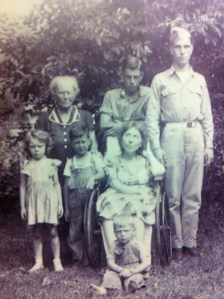
Pearl Adkins (center), 1940s
31 Monday Dec 2012
Posted in Big Harts Creek, Culture of Honor
Tags
Appalachia, crime, Doc Workman, Ferrellsburg, Flora Workman, genealogy, Harts Creek, history, life, Logan Banner, Logan County, murder, mystery, Ray Watts, Roma Elkins, Simpkins Cemetery, true crime, U.S. South, West Fork, West Virginia, Workman Fork, World War I, writing
Fifty-six years ago, someone shot Wilson “Doc” Workman in cold blood at the front door of his little frame house on Harts Creek. Today, his unsolved murder is largely forgotten.
“Workman, 63, was found dead by his estranged wife, Mrs. Flora Workman, at 6 a.m. Friday at his home on Workman Fork of the West Fork of Harts Creek in Logan County,” the Logan Banner reported on Monday, April 23, 1956. “The victim died as a result of a stomach wound inflicted by a 20-gauge single barrel shotgun which was found lying across his left leg.”
Doc Workman was a man in the twilight of his life. By all accounts, he was a well-liked resident of the community. He was a quiet farmer, a former timberman, a veteran of the Great War and the father of nine children.
“Daddy and Mommy sure liked him,” said the late Roma Elkins, a native of nearby Ferrellsburg, in a 2004 interview. “He’d bring us a big water bucket full of eggs and wouldn’t let us pay him for them.”
Initially, Logan County sheriff Ray Watts and state law enforcement officers suspected robbery as the motive for Workman’s murder.
“Reports said Workman had been known to carry large sums of money around on his person and was believed to have between $400 and $500 at the time of his death,” the Banner reported. “Only a few dollars was found in the home after the shooting.”
On Sunday, April 22, Workman’s funeral was held at his home on Workman Fork. The service began at 2 p.m. and concluded with the burial at Simpkins Cemetery on West Fork.
On Monday, the Banner ran Workman’s obituary on its front page, listing his wife, nine children, four brothers and three sisters, most of whom lived in Logan County.
29 Saturday Dec 2012
Posted in Music
Tags
Appalachia, culture, Ferrellsburg, guitar, history, Jap Mullins, life, Lincoln County, music, photos, U.S. South, West Virginia
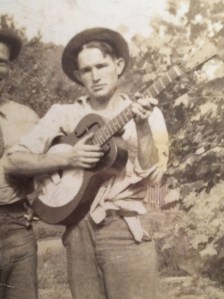
Jap Mullins of Ferrellsburg, 1936-1945
29 Saturday Dec 2012
Posted in Harts, Pearl Adkins Diary, Women's History
Tags
Appalachia, Cora Adkins, history, inspiration, life, Lincoln County, love, Pearl Adkins, U.S. South, West Virginia, writers, writing
“My dear, dear dream boy came one evening,” Pearl wrote in May or June. “He stayed all night. After supper I was sitting on the porch. Cora was out there. My heart dearest came and sit down at my feet. He talked to Cora of first one thing then another. He changed the subject all at once and asked Cora if the doctors thought there was any chance for me ever to walk. I don’t remember the talk for I felt slighted and hurt. To think he would sit at my feet and then ask some one else about my walking powers, if there was any chance of me ever.
“Well, I spent another sleepless night for he slept in the next room. I can now see him as I write next morning at the breakfast table. I looked across the table straight into those clear but sad eyes — those eyes which sent the blood over my neck and face to burn my fevered brain. He is gone and left a heavier heart and a sadder face behind him than was there when he came. I don’t guess he ever thought of the joy he brings to a sad and lonely woman when he comes or even dreamed of such a thing that I loved him. Well, I don’t care if he ever knows. I love him just the same.”
29 Saturday Dec 2012
Posted in Ed Haley
Tags
Appalachia, blind, culture, Ed Haley, Ella Haley, fiddler, fiddling, history, life, music, photos, U.S. South

Ella and Ed Haley, 1925-1945
27 Thursday Dec 2012
Posted in Music
Tags
Appalachia, culture, guitar, Harts Creek, history, Joe Adams, life, Logan County, music, photos, U.S. South, West Virginia

Joe Adams of Harts Creek, 1945-1955
27 Thursday Dec 2012
Posted in Big Harts Creek, Ed Haley, Spottswood
Tags
Appalachia, culture, genealogy, Harts Creek, history, Lawrence Haley, life, Liza Mullins, Logan County, photos, U.S. South, West Virginia

Lawrence Haley with Aunt Liza on Harts Creek, 1950-1953
27 Thursday Dec 2012
Posted in Ed Haley
Tags
Appalachia, culture, Ed Haley, Harts Creek, history, John Hartford, Lawrence Haley, life, Logan County, music, photos, Roxie Mullins, West Virginia, writing

Lawrence Haley (right) with Roxie Mullins and Family, 1991
26 Wednesday Dec 2012
Posted in Music
Tags
Appalachia, culture, Ed Zane Adkins, genealogy, guitar, history, life, Lincoln County, music, photos, U.S. South, Watson Adkins Jr., West Virginia
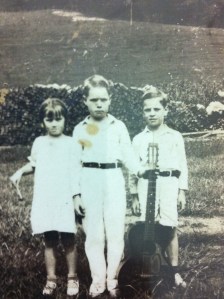
Adkins Family in Harts, about 1932
Writings from my travels and experiences. High and fine literature is wine, and mine is only water; but everybody likes water. Mark Twain
This site is dedicated to the collection, preservation, and promotion of history and culture in Appalachia.
Genealogy and History in North Carolina and Beyond
A site about one of the most beautiful, interesting, tallented, outrageous and colorful personalities of the 20th Century

