• About

Brandon Ray Kirk

~ This site is dedicated to the collection, preservation, and promotion of history and culture in my section of Appalachia.

Brandon Ray Kirk

Tag Archives: Appalachia

In Search of Ed Haley 144

29 Monday Jul 2013

Posted by Brandon Ray Kirk in Ed Haley

≈ Leave a comment

Tags

Appalachia, Ed Haley, Guyandotte River, Harts Creek, history, James White, Joseph Gore, Logan County, Richard Elkins, Stephen Hart, West Virginia, William West, writing

As far as can be ascertained, Harts — the place of Ed Haley’s birth — first appeared in written history as “Heart Creek” on a John Wood map sketched some time between 1809 and 1824. Reportedly, the creek was named for Stephen Hart — an early settler — or perhaps for his father, who was reportedly scalped by Indians at the mouth of Little Harts Creek. Stephen Hart first appeared in Logan County records in the late 1830s, settling on Crawley Creek, near Harts. Some claim that he lived at the mouth of Harts Creek on a hill in a rock cave, while others say he lived in Dock Bottom near the mouth of Smoke House Fork. More than likely, he had shanties constructed along various creeks at different times used for hunting camps. All historians agree that the Smoke House Fork of Harts Creek was so named because it contained Hart’s smoke house.

“At the forks of Hart’s Creek, where Henderson Dingess now lives, Stephen Hart had a cabin,” writes Henry Clay Ragland in his 1896 Logan County history. “He cared nothing for the soil, but put in his time hunting the deer which were so abundant on the creek. On the left-hand fork, a short distance from his cabin, he built a house in which to cure his venison, in order to take it to the settlement whenever an opportunity would offer itself.”

According to written record, the first settler of present-day Harts was Richard Elkins, a hunter, farmer and ginseng digger. Elkins migrated to the mouth of the creek from “The Islands of Guyandotte” (Logan) in 1809 or 1815, some fifteen years after the last Indian had roamed the valley. At that time, Harts Creek was in Cabell County, Virginia. Jacob Stollings, who was granted 185 acres in the lower section of the creek by the State of Virginia in 1812, soon joined Elkins. Other neighbors along the Guyan River were William W. Brumfield, who lived at the mouth of Ugly Creek, and Squire Toney, who lived in the bottoms above Douglas Branch. Brumfield was the grandfather of Paris Brumfield.

“At the coming of white men, this region was a wilderness inhabited only by wild animals,” wrote Fred B. Lambert, an early local historian. “There was a buffalo trail extending in the general direction from the Guyan Valley to Mud River and buffalo passed up the valleys in the summer. Wild game was plentiful — deer, turkey, bear and also such animals as panthers, wild cats, and wolves. The otter and beaver were found on Guyan River at an early day. Wild hogs roamed the woods. At times in the early morning the air would be darkened by pigeons. There were elk in this region, but they were exterminated as early as 1815.”

During the later teens, Peter Dingess, Garland Conley, Charles Spurlock, Abner Vance, and Richard Vance settled in the vicinity of Harts Creek. These men were the ancestors of many persons involved in the Milt Haley story.

“The first settlers to find homes in Hart’s District were from the counties of northern Virginia,” according to Kile Topping, an early historian. “Many of these settlers belonged to the hardy class of hunters and ginseng diggers, who later gave up this occupation to become timbermen. They came here from Virginia through the mountains on foot, or down the Kanawha Valley in covered wagons. Some came in push boats from nearby counties and Ohio. Most of the traveling was done on horseback. There was no salt here and the old settlers dug their ‘seng’ and carried it on horses to the Salt Licks of the great Kanawha River, where they exchanged it for salt and other merchandise.”

During the early 1820s, there were minor improvements locally. James White built the first grist mill around 1821. “It was a small tub-wheel mill, water being the propelling power,” according to Hardesty’s History of Lincoln County, West Virginia (c.1884). In 1823, a Methodist minister named William West preached the first sermon in Harts (and became the namesake for West Fork). In 1824, Harts was incorporated into the new county of Logan. By that time, William Thompson lived in the head of West Fork, Isham Tomblin lived on Harts Creek, Joseph Gore (Ed Haley’s great-great-grandfather) lived on West Fork and Isaac Brown lived across the Guyandotte River from Green Shoal. Moses Workman and John Abbott were perhaps in the area as well, the latter located near Isaac Brown.

In Search of Ed Haley 138

30 Sunday Jun 2013

Posted by Brandon Ray Kirk in Ed Haley

≈ Leave a comment

Tags

Appalachia, Ashland, Bonaparte's Retreat, Ed Haley, fiddler, history, John Hartford, Kentucky, Lawrence Haley, Lost Indian, music, Napoleon Bonaparte, writing

Later that evening, back in Ashland, Lawrence and I talked about Haley’s tunes. Ed told him all about “Bonaparte’s Retreat”.

“When the French first went in, they was pushing the Russians pretty hard,” Lawrence said. “The high string going in. The Russians were retreating. When they got to a certain point, the cannons started booming and the Russians started turning the tide on them. Part of the highs, I guess, was the French Napoleon troops coming out in a hurry and the Russians right behind them and then they’d be a spell of like an old dirge or something, like they was coming out defeated. They was slacking off on ’em and letting them retreat back out of there. They knew they wasn’t gonna make it on account of the weather. Just gonna let them freeze to death. Then they’d boom the cannon and push them a little bit faster. Then the dirge come up again. That’s the way Pop kinda explained it to me. He’d say, ‘Now you listen to these cannons boom. The Russians are getting ready to turn the tide on Napoleon’s troops’.”

Lawrence had no idea where Ed heard that story.

“Same way with ‘Lost Indian’,” he said. “It seemed like, the way he explained it, this old Indian would look at something and see a far off peak that he recognized and he’d be happy and hooping and hollering and trying to get over to it and then whenever he’d get over there he would find out it wasn’t the place he thought it was. And he’d sit down and kind of reminisce, I guess, and feel bad towards his self because he wasn’t where he thought he was at so he could get home. He’d stand up and look around again and maybe see another peak or familiar point as being close to his tribe and he’d go to it with a little bit of enthusiasm and glee because he thought he’s getting home and it’d turn out the same way. He wasn’t getting no where. He was still a ‘lost Indian’.”

Sias men at Fourteen, WV

28 Friday Jun 2013

Posted by Brandon Ray Kirk in Culture of Honor, Fourteen, Wewanta

≈ Leave a comment

Tags

Appalachia, culture, Fourteen, Fourteen Mile Creek, genealogy, Great Depression, history, life, Lincoln County, moonshine, photos, U.S. South, West Virginia, Wewanta

14 Mile Creek men pose with a rifle and jar of moonshine, 1930s

14 Mile Creek men pose with a rifle and jar of moonshine, 1930s

In Search of Ed Haley

25 Tuesday Jun 2013

Posted by Brandon Ray Kirk in Ed Haley

≈ Leave a comment

Tags

Appalachia, art, Ed Haley, fiddler, fiddling, history, Kentucky, music

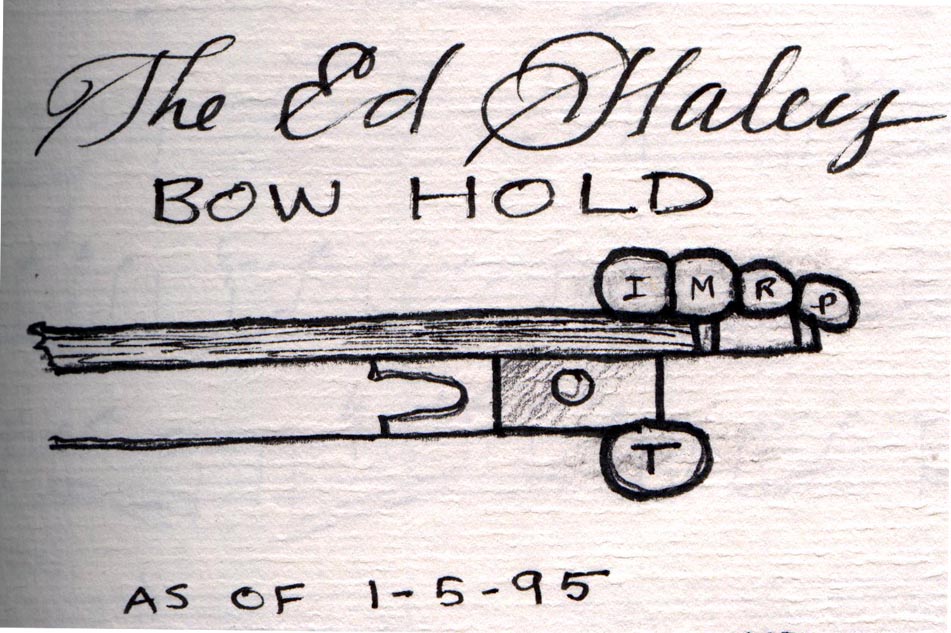
Ed Haley bow hold, 1995

Ed Haley bow hold, 1995

In Search of Ed Haley 131

17 Monday Jun 2013

Posted by Brandon Ray Kirk in Ed Haley

≈ Leave a comment

Tags

Appalachia, culture, Ed Haley, fiddler, French Carpenter, history, John Hartford, Kim Johnson, music, Steve Haley, West Virginia, Wilson Douglas, writing

That evening, we all gathered in Wilson’s kitchen and played music. It was clear in watching Wilson play that his style was different from Ed’s, but he knew all kinds of great tunes: “Abe’s Retreat”, “Coo Coo’s Nest”, “Fourteen Days in Georgia”, “Walkin’ in the Parlor”, “Boatin’ Up Sandy”, and “Brushy Run”. He had a real sense of humor. When I played “Stony Point”, he just kinda looked at me laughing, then said, “John, that ain’t ‘Stony Point’. Can I kid you a little? Now, Ed Haley wouldn’t like that.”

Every now and then, between tunes, Wilson told me more little things about Ed. He said Ed wouldn’t change his style for anyone and hated when someone asked him to play fast. He said Ed used to tell him to sometimes play it “lazy” and slow a piece down for different effects, such as at the end of “Birdie”. Wilson remembered that he played “Billy in the Lowground” with a double wind-up.

Wilson really bragged on Ed’s version of “Forked Deer”.

“Anybody that tried to play ‘Forked Deer’ with Ed Haley had to be crazy,” he said. “Oh god, he’d put that B-flat in there and he’d have a little grin on his face. He didn’t laugh very much. I’d watch that fiddle like a hawk. I’d watch them notes but god they were fast. And he;d play that ‘Sweet Sixteen’…”

Now, what was “Sweet Sixteen”?

“Well now, that’s got three titles,” Wilson said. “‘Too Young to Marry’, ‘Chinky Pin’, and all that. Ed said most people just smothered it to death on the bass, but he didn’t. Him and Clark Kessinger both played it about the same. Now John, he just used two notes on that bass.”

Wilson said Ed played “Callahan” in the key of A, then said, “And he played ‘Charleston Number One’ but he called it ‘Goin’ to Charleston’. I tell you where he got it from. He borrowed it from them old Possum Hunters in Nashville way back in ’37 and ’38.”

Wilson said Ed also got a lot of tunes from French Carpenter, the last of the old-time Carpenter fiddlers (and Wilson’s distant cousin) in central West Virginia. Ed used to spend a week or two at a time with French listening to him play cross-key tunes, like “Camp Chase”.

“There was one thing about Carpenter,” Wilson said. “Now Ed Haley was a better fiddler all around, but what Carpenter played he was good. He didn’t have no inferiority complex. He done a good job playing in front of Ed Haley. He’d say, ‘Well, now Ed, if you want to hear me, fine. I’ll give you what I’ve got.'”

I asked Wilson if Ed played “Shelvin’ Rock” and he said, “He liked it, but he never did play it. He liked to get French to play it. He’d sit, you know, and grin. He’d say, ‘By god, you got the bow, Carpenter, to play that tune.'”

Ed and French played “Devil in Georgia”, although Haley called it “Deer Walk”.

Over the next few hours, Wilson played me a lot of tunes, many of which he’d heard Ed play. The tunes had strange names, some familiar but most not: “Elzic’s Farewell”, “Little Rose”, “Mouth of Old Stinson”, “Old Aunt Jenny With Her Nightcap On”, “Run Here Granny”, and “What Are We Gonna Do With the Baby-O” (in the key of E).

There were other tunes that he only remembered Ed playing, like “Bostony”, “Brickyard Joe”, “Dusty Miller”, “Jimmy in the Swamp”, “Katy Hill”, “Lost Indian”, “Old Joe”, “Pumpkin Ridge”, “Snowbird on the Ashbank”, “Sweet Georgia Brown”, “Twinkle Twinkle Little Star”, and “Waynesboro Reel”.

Wilson thought Ed fiddled “Red-Haired Boy” in the key of A, “Mississippi Sawyer” in G, and “Coo Coo’s Nest” in A or G, and said he played “Running Up the Stairs” so well “it’d make a person cry.”

Wilson remembered that Ed had some strange titles for his tunes. He said he used to call some tune with a common name “Dance Around Molly”, then added, “And he played another tune, I never could get it in my mind. Ed called it ‘Raccoon in a Pine Top’. I’ll be danged if he wouldn’t break that bass out — it’d sound like ‘Over the Waves’ or something.”

Wilson said, “You know, John, if I had a lot of time, like a week, I could tell you a lot of things about Ed Haley. When you get old, all that stuff comes to you, then you forget it.”

Hoping to pull something from his memory, I played tunes I knew from long ago and asked, “Did Ed play anything like this?”

He came up with something almost every time.

Ed also played “Fine Times at Our House” but called it “George Booker”, which is interesting in that the old-time Texas fiddlers also call it that.

I told Wilson what Lawrence Haley had said about Ed loving Scott Joplin and ragtime. He thought for a moment, then said, “Well, he may’ve done it, but now, he stayed with hoedowns all the time I heard him. Course he’s afraid to play anything else: them old people didn’t know what that kind of music was.”

In other words, he played what they wanted to hear.

“Absolutely. And he made money by it. And he played straight. He didn’t fancy it up no way. He didn’t want you to change a tune one note. He wanted it like it was. He said, ‘Cut it off at the stump like it is.'”

I said, “He didn’t take tunes and add stuff to it?” and Wilson said, “If he thought it was appropriate he would. The man had enough skill, he could play anything he wanted to.”

Steve and I hung around with Wilson until late that night, talking more about Ed’s music and playing tunes. We eventually pried ourselves away and headed back to Lawrence’s in Ashland.

In Search of Ed Haley

16 Sunday Jun 2013

Posted by Brandon Ray Kirk in Ed Haley

≈ Leave a comment

Tags

Appalachia, Ed Haley, history, Lawrence Haley, life, Minnie Hicks, photos, West Virginia

Jack Haley and Lawrence Haley at the bedside of Minnie Hicks

Lawrence Haley (right) at the bedside of Minnie Hicks, about 1980

In Search of Ed Haley 129

15 Saturday Jun 2013

Posted by Brandon Ray Kirk in Ed Haley

≈ Leave a comment

Tags

A.P. Carter, Appalachia, Arthur Smith, Chubby Wise, Earl Scruggs, Ed Haley, fiddler, Georgia Slim Rutland, history, John Hartford, music, Wilson Douglas, writing

Wilson’s memories seemed to be flowing, so I tried not to interrupt him with questions.

“You know, Ed would talk to me after he figured out I was gonna try to play the fiddle,” he said. “He’d say, ‘Now, play your fiddle with some soul about it. Don’t start these trembling notes. That’s for some violinist in Germany.’ And another thing he would do, you can’t fiddle with the other man’s tricks. There’d be some little old chicken fiddlers around and come over and play about like I do. They’d rear back. Ed would listen at it and never criticize them and then when he started to play he would drop them to the floor. The man would come down on the fingerboard, playing half way down on that neck. It was so clear I couldn’t get over it. But the bow was as smooth. It must have been an imported bow. That danged bow was six inches longer than any bow I ever saw. But I didn’t want to ask him about it. You couldn’t interrogate him no way. And don’t ask him to show you how to play a tune. He didn’t show nobody nothing.”

I asked Wilson if Ed ever heard Bill Monroe and he said, “He talked about all them guys. Now John don’t get me wrong. He said Monroe was a pretty good singer. He said pretty good. Well I’d say Monroe was a A-1 singer, but I wasn’t gonna disagree with Ed. He liked the Carter family. And he said, ‘That old A.P. Carter and Mother Maybelle and them they got the soul about it.’ And he said, ‘Wilson, you know I don’t trust none of them Nashville people. I don’t wanna get involved with them.’ He said, ‘They’ll knife you. They’ll play your tunes, then walk somewhere and make a lot of money out of it.'”

What about banjo-pickers, like Earl Scruggs?

“Oh, no. By god, you’d push the wrong button. He didn’t like Scruggs. No, he liked the clawhammer banjo. He said they could get in and they could get out where it belongs. But I didn’t say nothing. I claimed the Fifth Amendment. I liked both of them, but I wasn’t gonna tell him nothing. I learned Ed Haley. I knowed when to talk and when not to talk. Now he’d cuss you out, don’t you think he wouldn’t.”

Wilson said he only heard Ed compliment a few Nashville musicians over the years. He said Georgia Slim Rutland, who stayed a lot with him in Ashland during the winter of 1937-38, was great on “Southern tunes” and couldn’t be beaten on “Billy in the Lowground”. He felt that Arthur Smith was “hell on them Blues,” complemented his versions of “Bonaparte’s Retreat” and “Katy Hill”, and even played his “Blackberry Blossom”.

“And now he did say a little something about Chubby Wise,” Wilson said. “He liked a few of Wise’s tunes, but he didn’t go in excess about it. But now that was it. Them Possum Hunters and them Fruit Jar Drinkers, he couldn’t stand them.”

In Search of Ed Haley

13 Thursday Jun 2013

Posted by Brandon Ray Kirk in Ed Haley

≈ Leave a comment

Tags

Appalachia, culture, Doc White, Ed Haley, fiddle, fiddler, history, life, music, photos, West Virginia

Doc White, West Virginia fiddler

Doc White, West Virginia fiddler

In Search of Ed Haley

05 Wednesday Jun 2013

Posted by Brandon Ray Kirk in Ed Haley

≈ Leave a comment

Tags

Appalachia, culture, fiddle, fiddler, history, life, music, photos, U.S. South, West Virginia, Wilson Douglas

Wilson Douglas, West Virginia fiddler

Wilson Douglas, West Virginia fiddler

In Search of Ed Haley 124

05 Wednesday Jun 2013

Posted by Brandon Ray Kirk in Ed Haley

≈ Leave a comment

Tags

Appalachia, Bobby Taylor, Ed Haley, fiddle, fiddler, Forked Deer, history, John Hartford, music, Webster County, West Virginia, Wilson Douglas, writing

I told Wilson about working on Ed’s long bow and the Scotch snap — about the little stops between notes — and he said, “Right, right. That’s hesitation in the notes. That is correct. He talked about ‘chopped notes.’ That’s a quick note. But you know, what I liked about Haley, whenever he would settle down and fiddle… I like to hear a fiddle drive a straight, hard, flat note. A clear note. This skipping over the notes, I don’t go for that. And Haley didn’t do that. Every note he got was clear, or he would make a ‘chopped note,’ he called it, and the hesitation was with the — well the hand was quicker’n the eye. He could make a quick hesitation with the bow.”

I was very impressed with Wilson’s memory of such details, which improved with each passing minute. Apparently, Bobby Taylor was right: after he thought about something for a while his memories became sharp as a knife.

Wilson said, “But now I didn’t tell you about the kind of strings he played, did I? He played the old Blue Bird. They quit making them back in ’42 or ’43. They was a steel string, something like a Black Diamond. I believe they’s a little better toned. They wasn’t so sharp. And they cost one quarter in them days, for I bought one as a kid. Now that was the string that Ed Haley played. He liked these solid bone keys in his fiddle, white bone keys. And I always thought about where he got that dang fiddle bow, but it must’ve been four-and-a-half foot long. I never will forget it: that’s the longest fiddle bow I ever saw. I’ve thought about that many a times. It looked to me like it was six inches longer than any other kind of bow, and he played it from one end to the other.”

I said, “You don’t reckon it was just the way he was pulling it that made it look long, do you?”

“No, it was long,” Wilson answered. “You know, a boy sixteen years old don’t miss nothing for he’s eager to learn, you see? I know a fiddler over here in Webster County, and he’s good, too. He’s a top fiddler. And me and him talked about that, and he said, ‘Ed Haley pulled the longest fiddle bow I ever saw.’ And he said his notes was plain. I said, ‘Absolutely.’ Now the frog on that bow was some kind of a bone, if that means anything. White bone.”

Wilson really bragged on Ed’s repertoire.

“Now the man, John, what amazed me, he would play all night and maybe not play the same tune twice,” he said. “And he told me, said, ‘I know over a thousand fiddle tunes.’ Old Ed played ‘Callahan’ out of this world. I can’t remember the key. I wasn’t far enough along. But now, Ed sometimes would put that B-flat in the ‘Forked Deer’ and sometimes he wouldn’t. He would run that B-flat in there if he was showing off, you know. He played the ‘Paddy on the Pike’ in standard tuning. ‘Paddy on the Handcar’, Ed played that cross-key. Two different tunes. And he played ‘Poplar Bluff’ and the ‘Hole in the Poplar’ and all that kind of stuff.”

In Search of Ed Haley

03 Monday Jun 2013

Posted by Brandon Ray Kirk in Ed Haley

≈ Leave a comment

Tags

Appalachia, Bertha Mullins, culture, Ewell Mullins, genealogy, Harts Creek, history, life, Logan County, photos, West Virginia

Bertha (Adams) Mullins family, Harts Creek, Logan County, West Virginia, 1925-1940

Bertha (Adams) Mullins and siblings, Harts Creek, Logan County, West Virginia, 1920s

In Search of of Ed Haley 123

03 Monday Jun 2013

Posted by Brandon Ray Kirk in Ed Haley

≈ Leave a comment

Tags

Appalachia, Calhoun County, Ed Haley, Harts Creek, history, John Hartford, Josie Cline, Laury Hicks, Logan County, music, West Virginia, Wilson Douglas, writing

     I spent the spring of 1994 triangulating the many different versions I had heard of Ed Haley’s life and trying to make some sense of the direction of my research. There were so many avenues to explore: Ed’s background and the story of his father’s death on Harts Creek; Ed’s family and professional life in Ashland; Ed’s experience in places like Portsmouth or Calhoun County… Really, I seemed to only be scraping the tip of the iceberg — and it appeared to be a large one at that. It was amazing to consider how much I might learn about someone who I had first read about as being “a misty legend.” Almost daily, some little scrap of information came in.

     I called Wilson Douglas several times with very specific questions in mind. I asked him if Ed played a lot in the second and third position and he said, “Oh, yeah, he did a lot of that. Well, you know it’s like this, John. When he wanted to show off he would play in the standard position then he would let loose and get down the violin neck — way down — and play down there a while. He’d do a lot of that where he had competition, you know, and more or less to show off. That is, if somebody provoked him that’s the way he would do. I don’t know how he did it, but you wouldn’t detect any change, any hesitation, any loss of time, or nothing like that. But the man was a genius, they’s no question about it. He played the fiddle so many different ways, you had to listen close to tell what he was a doing.”

     I asked Wilson if he knew anything about Ed’s personal history.

     “No, not too much,” he said. “You know, he had the measles when he was two or three years old and that put him blind. He told me, ‘Wilson, where I was born and raised there on Harts Creek in Logan County, we almost starved to death.’ Said, ‘All we had was greens and green onions to eat of a summer and practically nothing of a winter.’ He said, ‘Now you know what the Depression is.’ I said, ‘Yeah.’ He said, ‘Well that was a picnic to what I was raised on .'”

     I said to Wilson, “Well, let me tell you a little bit about Ed’s background and see if that rings any bells. His daddy was lynched.”

     “Right,” he interrupted. “They was mean people. They were mean, violent people.”

     I asked if Ed ever talked about his father.

     “Not too much,” he said. “He didn’t want you to ask him too many questions about a thing like that, you know? He did mention one thing to me one time — said something about his dad, but he didn’t comment much, you know. Not enough to make any sense of it. Ed Haley wouldn’t tell you too much. You had to be in his confidence strongly before he’d tell you much of anything.”

     When I mentioned my theory about Josie Cline being Ed’s half-sister, Wilson said, “Well, I heard him telling Laury Hicks that he had a sister, but he didn’t say his ‘half.’ He said his sister.”

In Search of Ed Haley

02 Sunday Jun 2013

Posted by Brandon Ray Kirk in Ed Haley

≈ Leave a comment

Tags

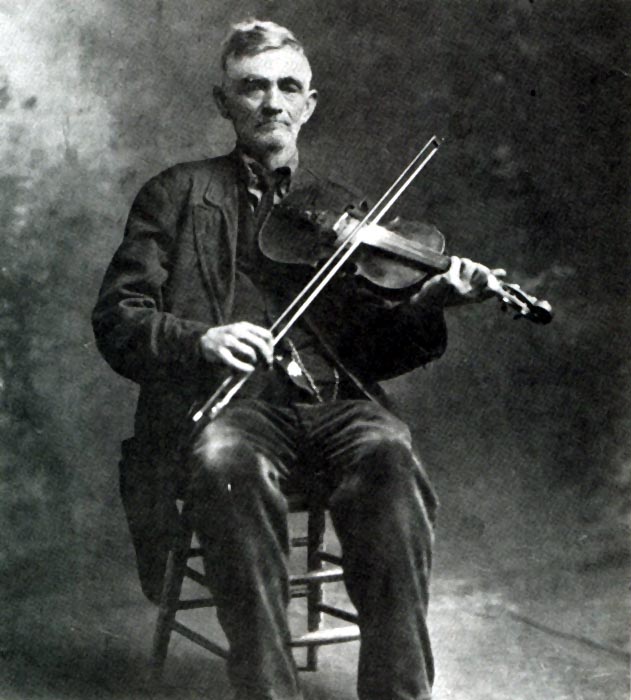
Appalachia, culture, fiddle, fiddler, history, Jack McElwain, life, music, photos, U.S. South, Webster County, West Virginia

Lewis Johnson "Uncle Jack" McElwain (1856-1938), fiddler from Webster County, West Virginia

Lewis Johnson “Uncle Jack” McElwain (1856-1938), fiddler from Webster County, West Virginia

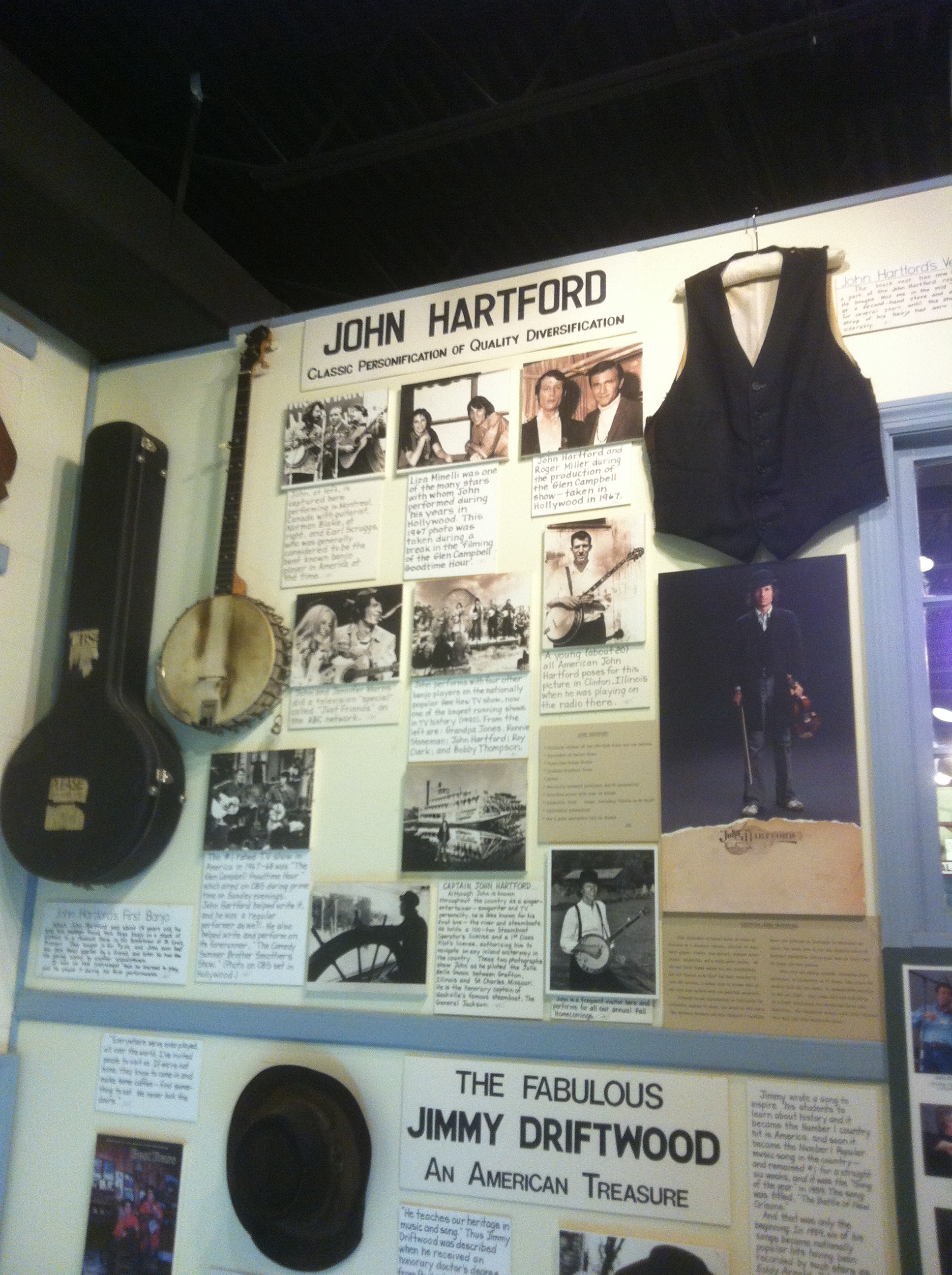
John Hartford display at the Museum of Appalachia

02 Sunday Jun 2013

Posted by Brandon Ray Kirk in John Hartford, Music

≈ Leave a comment

Tags

Appalachia, banjo, bluegrass, culture, fiddle, fiddler, history, John Hartford, Museum of Appalachia, music, Norris, photos, Tennessee

John Hartford display, Museum of Appalachia, Norris, Tennessee, 2011-2012

John Hartford display, Museum of Appalachia, Norris, Tennessee, 2011-2012

H.M. Stafford

31 Friday May 2013

Posted by Brandon Ray Kirk in Big Sandy Valley

≈ Leave a comment

Tags

Appalachia, Big Sandy River, H.M. Stafford, history, Johnson County, Kentucky, photos, pushboat, steamboats

HM Stafford and pushboat Johnson County 1904

H.M. Stafford and pushboat, Johnson County, Kentucky, 1904

In Search of Ed Haley 121

31 Friday May 2013

Posted by Brandon Ray Kirk in Ed Haley

≈ Leave a comment

Tags

Appalachia, Ed Haley, Ella Haley, fiddler, Forked Deer, guitar, history, Kentucky, Lawrence Haley, music, Pat Haley, Ralph Haley, writing

I kept in close touch with Lawrence, who Pat said always perked up at my calls.  His comments about his father’s music were very helpful. At times, I felt as if I might be talking to Ed.

“I guess Pop learned any time he was sitting around jamming. Anytime he was just sitting around making music with a bunch of friends, they was practicing and learning new pieces. How it would sound this a way and how it would sound that a way. You try different styles and things or you just try for speed. I’ve watched Bill Monroe and some of his stuff and it seems like that’s part of his aim is to see how fast he can play sometimes. Well, that might have been my dad’s. I know in that piece of music, ‘Forked Deer’, I think there’s a certain spot in it Pop changes his speed right there at the last a little bit. And I guess that’s the way most fiddlers do to see if people can keep up with them.”

I said to Lawrence, “Well, you know, a lot of that fiddling and everything, it was a competition. I bet if somebody came along that thought they could beat your dad, I bet your dad threw them a few loops to let them know who’s boss.”

Lawrence agreed.

“Yeah, I guess he did. He’d probably set and help somebody. Say, ‘Now you’d better do it this way,’ or something. If he liked who he was with, that’s the way he’d be. He’d play with them, and if the guitar player wasn’t doing it right… I’ve heard him a lot of times when Ralph — him and Mom would be a playing — he’d tell Ralph to change chord ‘so-and-so.’ And Ralph finally got to the point where he could chord it properly, but then he wanted to make those runs between chords. Pop would tell him how to get to a certain place, or what chord to be at. He’d tell him to change chords, so I guess he told everybody that if they wasn’t getting to where they should be at the right times. He’d let them know, if he wanted to teach anybody. If he played with you for a little while and saw that you weren’t going to make it, he’d probably tell you, ‘You just might as well put it up.’ That’s the way I think about my dad. I’m maybe like Clyde: I didn’t know him enough really to know what kind of a man he was. A lot of my knowledge of him is hearsay, too.”

In Search of Ed Haley

31 Friday May 2013

Posted by Brandon Ray Kirk in Ed Haley

≈ Leave a comment

Tags

Appalachia, culture, folk medicine, Harts Creek, history, life, Logan County, photos, U.S. South, West Virginia

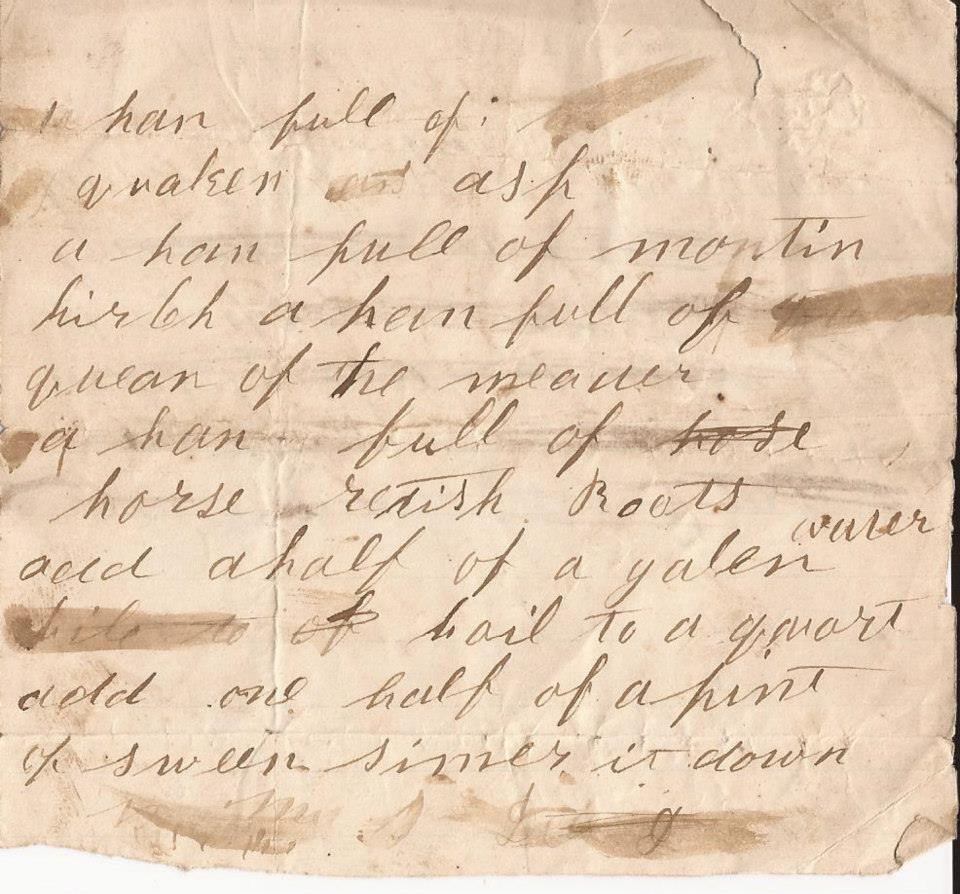
Old Mullins herbal remedy, Harts Creek, Logan County, West Virginia

Old Mullins herbal remedy, Harts Creek, Logan County, West Virginia

Rafting Scene

26 Sunday May 2013

Posted by Brandon Ray Kirk in Big Sandy Valley, Timber

≈ Leave a comment

Tags

Appalachia, Catlettsburg, culture, history, Kentucky, life, logging, photos, steamboats, timbering, U.S. South

Six steamboats with log rafts, Catlettsburg, Kentucky, 1901

Six steamboats with log rafts, Catlettsburg, Kentucky, 1901

Rifle 2

26 Sunday May 2013

Posted by Brandon Ray Kirk in Culture of Honor

≈ Leave a comment

Tags

Appalachia, culture, Harts Creek, history, life, Logan County, Mason Adams, photos, U.S. South, West Virginia

Harts Creek child, 1916-1920

Harts Creek child, 1916-1920

In Search of Ed Haley 118

26 Sunday May 2013

Posted by Brandon Ray Kirk in Ed Haley

≈ Leave a comment

Tags

Appalachia, blind, Ed Haley, fiddler, genealogy, history, Josie Cline, Kermit, Mont Spaulding, music, U.S. South, West Virginia, writing

Later that night, I got back on the phone with Grace Marcum. I just had to know more about Josie Cline.

“She was a little round-faced woman…a little short, chubby woman,” Grace said. “And she wore her hair twisted up on top of her head, a little roll, you know, in a pin. Seem to me like she was blue-eyed, as good as I can remember. Josie Cline’s been dead for years. She collected bridge toll on this here… Well, it’s a free bridge now. They freed it, but when it was first built, they let Josie collect the toll. And she lived there in that little house, her and her husband. Her husband was a paralyzed man, and he couldn’t talk. I don’t know what happened to him.”

I asked Grace if Josie was supposed to be Ed’s older or younger sister and she said, “I guess she was an older sister. She was a funny old woman. She could make anybody laugh. Fine person.”

I asked her again about Josie being a fiddler and she said, “Oh yeah, her and Mont both.”

     Who?

“Her and her brother Mont.”

So she had another brother?

“Oh yeah. Seemed to me like — Mont Spaulding. He wore colored glasses. He wasn’t very tall.”

How could Josie be a sister to Ed and Mont Spaulding when everyone all had different last names? Was she a half-sister?

“Well, she could’ve been, yeah,” Grace said. “But I know they was awful close. Yeah, they had a time. Mont was a pretty good fiddler, and Josie was, too. I couldn’t say which one was the best, but now they played at square dances and everything. Yeah, my dad hired them to play a many a Saturday night down there at the hotel.”

I asked Grace how often Ed came through the area and she said, “Oh, I don’t know. You know, I was just a small girl, and I couldn’t tell you nothing like that ‘cause my father had a grocery store on this side of the railroad — between the railroad and the county road — and I worked there with Dad. He put us all to work. Raised a big family of us, so we all worked, you know, we all helped out.”

After hanging up with Grace, I formulated a theory that maybe Milt Haley had Josie Cline by another woman before coming to Harts and marrying Ed’s mother. It was just a hunch, like the “Emma Jane Hager-Emma Jean Haley” thing. I also wondered if Grace hadn’t partially confused Ed with Mont Spaulding or if Ed was in fact a boyfriend to the widowed Josie.

← Older posts
Newer posts →

Feud Poll 1

If you had lived in the Harts Creek community during the 1880s, to which faction of feudists might you have given your loyalty?

Categories

  • Adkins Mill
  • African American History
  • American Revolutionary War
  • Ashland
  • Atenville
  • Banco
  • Barboursville
  • Battle of Blair Mountain
  • Beech Creek
  • Big Creek
  • Big Harts Creek
  • Big Sandy Valley
  • Big Ugly Creek
  • Boone County
  • Breeden
  • Calhoun County
  • Cemeteries
  • Chapmanville
  • Civil War
  • Clay County
  • Clothier
  • Coal
  • Cove Gap
  • Crawley Creek
  • Culture of Honor
  • Dingess
  • Dollie
  • Dunlow
  • East Lynn
  • Ed Haley
  • Eden Park
  • Enslow
  • Estep
  • Ethel
  • Ferrellsburg
  • Fourteen
  • French-Eversole Feud
  • Gilbert
  • Giles County
  • Gill
  • Green Shoal
  • Guyandotte River
  • Halcyon
  • Hamlin
  • Harts
  • Hatfield-McCoy Feud
  • Holden
  • Hungarian-American History
  • Huntington
  • Inez
  • Irish-Americans
  • Italian American History
  • Jamboree
  • Jewish History
  • John Hartford
  • Kermit
  • Kiahsville
  • Kitchen
  • Leet
  • Lincoln County Feud
  • Little Harts Creek
  • Logan
  • Man
  • Matewan
  • Meador
  • Midkiff
  • Monroe County
  • Montgomery County
  • Music
  • Native American History
  • Peach Creek
  • Pearl Adkins Diary
  • Pecks Mill
  • Peter Creek
  • Pikeville
  • Pilgrim
  • Poetry
  • Queens Ridge
  • Ranger
  • Rector
  • Roane County
  • Rowan County Feud
  • Salt Rock
  • Sand Creek
  • Shively
  • Spears
  • Sports
  • Spottswood
  • Spurlockville
  • Stiltner
  • Stone Branch
  • Tazewell County
  • Timber
  • Tom Dula
  • Toney
  • Turner-Howard Feud
  • Twelve Pole Creek
  • Uncategorized
  • Warren
  • Wayne
  • West Hamlin
  • Wewanta
  • Wharncliffe
  • Whirlwind
  • Williamson
  • Women's History
  • World War I
  • Wyoming County
  • Yantus

Feud Poll 2

Do you think Milt Haley and Green McCoy committed the ambush on Al and Hollene Brumfield in 1889?

Blogroll

  • Ancestry.com
  • Ashland (KY) Daily Independent News Article
  • Author FB page
  • Beckley (WV) Register-Herald News Article
  • Big Sandy News (KY) News Article
  • Blood in West Virginia FB
  • Blood in West Virginia order
  • Chapters TV Program
  • Facebook
  • Ghosts of Guyan
  • Herald-Dispatch News Article 1
  • Herald-Dispatch News Article 2
  • In Search of Ed Haley
  • Instagram
  • Lincoln (WV) Journal News Article
  • Lincoln (WV) Journal Thumbs Up
  • Lincoln County
  • Lincoln County Feud
  • Lincoln County Feud Lecture
  • LinkedIn
  • Logan (WV) Banner News Article
  • Lunch With Books
  • Our Overmountain Men: The Revolutionary War in Western Virginia (1775-1783)
  • Pinterest
  • Scarborough Society's Art and Lecture Series
  • Smithsonian Article
  • Spirit of Jefferson News Article
  • The Friendly Neighbor Radio Show 1
  • The Friendly Neighbor Radio Show 2
  • The Friendly Neighbor Radio Show 3
  • The Friendly Neighbor Radio Show 4
  • The New Yorker
  • The State Journal's 55 Good Things About WV
  • tumblr.
  • Twitter
  • Website
  • Weirton (WV) Daily Times Article
  • Wheeling (WV) Intelligencer News Article 1
  • Wheeling (WV) Intelligencer News Article 2
  • WOWK TV
  • Writers Can Read Open Mic Night

Feud Poll 3

Who do you think organized the ambush of Al and Hollene Brumfield in 1889?

Recent Posts

  • Logan County Jail in Logan, WV
  • Absentee Landowners of Magnolia District (1890, 1892, 1894)
  • Charles Spurlock Survey at Fourteen Mile Creek, Lincoln County, WV (1815)

Ed Haley Poll 1

What do you think caused Ed Haley to lose his sight when he was three years old?

Top Posts & Pages

  • Boling Baker and Princess Aracoma (1937)
  • Origin of Place Names in Logan County, WV (1937)
  • Ranger, Lincoln County, WV (1953)
  • Giles County, VA (2016)
  • Dorothy, WV (1910s)

Copyright

© Brandon Ray Kirk and brandonraykirk.wordpress.com, 1987-2023. Unauthorized use and/or duplication of this material without express and written permission from this blog’s author and/or owner is strictly prohibited. Excerpts and links may be used, provided that full and clear credit is given to Brandon Ray Kirk and brandonraykirk.wordpress.com with appropriate and specific direction to the original content.

Archives

  • February 2025
  • January 2025
  • October 2023
  • September 2023
  • December 2022
  • November 2022
  • May 2022
  • April 2022
  • February 2022
  • November 2021
  • October 2021
  • September 2021
  • June 2021
  • May 2021
  • April 2021
  • March 2021
  • February 2021
  • January 2021
  • December 2020
  • November 2020
  • October 2020
  • July 2020
  • June 2020
  • May 2020
  • April 2020
  • March 2020
  • February 2020
  • January 2020
  • December 2019
  • November 2019
  • October 2019
  • September 2019
  • August 2019
  • July 2019
  • June 2019
  • May 2019
  • April 2019
  • March 2019
  • February 2019
  • January 2019
  • December 2018
  • November 2018
  • October 2018
  • September 2018
  • August 2018
  • July 2018
  • June 2018
  • May 2018
  • April 2018
  • March 2018
  • February 2018
  • January 2018
  • December 2017
  • November 2017
  • October 2017
  • September 2017
  • August 2017
  • July 2017
  • June 2017
  • May 2017
  • April 2017
  • March 2017
  • February 2017
  • January 2017
  • December 2016
  • November 2016
  • October 2016
  • September 2016
  • August 2016
  • July 2016
  • June 2016
  • May 2016
  • April 2016
  • March 2016
  • February 2016
  • January 2016
  • December 2015
  • November 2015
  • October 2015
  • September 2015
  • August 2015
  • July 2015
  • June 2015
  • May 2015
  • April 2015
  • March 2015
  • February 2015
  • January 2015
  • December 2014
  • October 2014
  • September 2014
  • August 2014
  • July 2014
  • June 2014
  • May 2014
  • April 2014
  • March 2014
  • February 2014
  • January 2014
  • December 2013
  • November 2013
  • October 2013
  • September 2013
  • August 2013
  • July 2013
  • June 2013
  • May 2013
  • April 2013
  • March 2013
  • February 2013
  • January 2013
  • December 2012
  • November 2012

Enter your email address to follow this blog and receive notifications of new posts by email.

Join 2,927 other subscribers

Tags

Appalachia Ashland Big Creek Big Ugly Creek Blood in West Virginia Brandon Kirk Cabell County cemeteries Chapmanville Charleston civil war coal Confederate Army crime culture Ed Haley Ella Haley Ferrellsburg feud fiddler fiddling genealogy Green McCoy Guyandotte River Harts Harts Creek Hatfield-McCoy Feud history Huntington John Hartford Kentucky Lawrence Haley life Lincoln County Lincoln County Feud Logan Logan Banner Logan County Milt Haley Mingo County music Ohio photos timbering U.S. South Virginia Wayne County West Virginia Whirlwind writing

Blogs I Follow

  • OtterTales
  • Our Appalachia: A Blog Created by Students of Brandon Kirk
  • Piedmont Trails
  • Truman Capote
  • Appalachian Diaspora

BLOOD IN WEST VIRGINIA is now available for order at Amazon!

Blog at WordPress.com.

OtterTales

Writings from my travels and experiences. High and fine literature is wine, and mine is only water; but everybody likes water. Mark Twain

Our Appalachia: A Blog Created by Students of Brandon Kirk

This site is dedicated to the collection, preservation, and promotion of history and culture in Appalachia.

Piedmont Trails

Genealogy and History in North Carolina and Beyond

Truman Capote

A site about one of the most beautiful, interesting, tallented, outrageous and colorful personalities of the 20th Century

Appalachian Diaspora

  • Subscribe Subscribed
    • Brandon Ray Kirk
    • Join 789 other subscribers
    • Already have a WordPress.com account? Log in now.
    • Brandon Ray Kirk
    • Subscribe Subscribed
    • Sign up
    • Log in
    • Report this content
    • View site in Reader
    • Manage subscriptions
    • Collapse this bar
 

Loading Comments...