Tags

17 Thursday Feb 2022
Tags
23 Tuesday Nov 2021
Posted in Big Sandy Valley, Hatfield-McCoy Feud
Tags
Appalachia, Bob Hatfield, Cap Hatfield, Charles Gillespie, Christmas, Court of Appeals, crime, Daniel Whitt, Devil Anse Hatfield, Elias Hatfield, Elliot Hatfield, feuds, Frankfort, Hatfield-McCoy Feud, Henry Mitchell, history, Jim McCoy, Jim Vance, Johnse Hatfield, Kentucky, Pike County, Pocahontas, Randolph McCoy, Tom Chambers, Tom Mitchell, true crime
Daniel Whitt’s testimony in the Johnse Hatfield murder trial provides one version of the Hatfield raid upon Randolph McCoy’s home on January 1, 1888:
Q. “Do you know Randolph McCoy?”
A. “Yes sir.”
Q. “Do you know Cap Hatfield?”
A. “Yes sir.”
Q. “Do you know Robert Hatfield, Ellison Mounts, Elliot Hatfield, Charles Gillespie, Thomas Mitchell, and Anderson Hatfield?”
A. “Yes sir.”
Q. “Do you remember of the old man McCoy’s house being burned?”
A. “Yes sir, I heard of it.”
Q. “Where were you a short time before that occurred?”
A. “Three days before Christmas I was in the neighborhood of the Hatfield’s.”
Q. “Who was with you?”
A. “Ance Hatfield, Jim Vance, Johnson Hatfield, Cap Hatfield, Charles Gillespie, and Tom Mitchell, I believe about all of the bunch.”
Q. “What were you doing together and how long had you been together?”
A. “About three days and nights.”
Q. “Were all of you armed?”
A. “Yes sir.”
Q. “What were you doing armed and together?”
A. “Just traveling in the woods most of the time.”
Q. “What did you sleep on?”
A. “We carried our quilts with us.”
Q. “Who was your captain?”
A. “Jim Vance.”
Q. “What was the purpose of your getting together?”
A. “They claimed the purpose was to get out of the way of the Kentucky authorities.”
Q. “What else did they claim?”
A. “When I left them we came to Henry Mitchell’s to get dinner. They wouldn’t let me hear what they had to talk about. Cap asked me if I was going to Kentucky with them. Said they were going to Kentucky to kill Randolph and Jim McCoy and settle the racket. He asked me if I was going with them and I said that I was not. He said that I would go or I would go to hell. I said that I would go to hell. Elias came and took me off. We slept in a shuck pen. When he got to sleep I ran away and went to Pocahontas and was there when this occurred.”
Q. “Was Johnson present when Cap was talking?”
A. “He was in the yard close enough to hear, and he came up to me when Cap was talking and took Cap out and had a talk with him.”
Source: Bill of exceptions at the office of the Clerk of the Court of Appeals in Kentucky, Frankfort, KY.
23 Tuesday Nov 2021
Tags
Appalachia, architecture, history, Joe Rimkus, Logan, Logan County, radio station, West Virginia, WVOW
Posted by Brandon Ray Kirk | Filed under Logan
31 Sunday Oct 2021
Posted in Big Harts Creek, Queens Ridge
Tags
Appalachia, Belle Dora Adams, Big Harts Creek, Carl Mullins, Cecil McCloud, Charley Adams, Garnet Martin, Garnet Mullins, genealogy, history, Hoover Fork, Howard Adams, Ireland Mullins, Lincoln County, Logan County, Lucy McCloud, New Orleans, Paralee Browning, Queens Ridge, Troy Town, West Virginia
An unnamed correspondent from Queens Ridge serving Upper Hart in Logan County, West Virginia, offered the following items, which the Logan Banner printed on May 13, 1927:
Mrs. Paralee Browning and Garnet Mullins of Lower Hoover were the evening guests of Cecil McCloud Sunday.
Ireland and Carl Mullins went up Hoover late Sunday enroute to Troy Town.
Mrs. Belle Dora Adams is going to have a son-in-law some one said. Gee, the girls will have to quiet fliring with Charley.
Lucy McCloud was visiting her aunt Mrs. Garnet Martin here Saturday.
Howard Adams made a business trip to New Orleans. Many tears were shed on account of his long absence.
30 Saturday Oct 2021
Posted in Logan
30 Saturday Oct 2021
Tags
Appalachia, Aracoma, Highland Avenue, history, Kanada Street, Lee Street, Logan, Logan County, Oak Hill Addition, Pine Street, West Virginia
Posted by Brandon Ray Kirk | Filed under Logan
30 Saturday Oct 2021
Posted in Big Sandy Valley, Hatfield-McCoy Feud, Logan, Matewan, Women's History
Tags
Appalachia, attorney, attorney general, Big Sandy River, Bill Smith, Cap Hatfield, Catlettsburg, Devil Anse Hatfield, feuds, genealogy, Georgia, Hatfield-McCoy Feud, history, Howard B. Lee, Huntington, Jim Comstock, Joe Glenn, Kentucky, Logan, Logan County, logging, Mate Creek, Matewan, Mingo County, Nancy E. Hatfield, Ohio, Ohio River, Portsmouth, Tennessee, timbering, Tug Fork, University Law School, Wayne County, West Virginia, Wyoming County
Howard B. Lee, former Attorney General of West Virginia, provided this account of Nancy Hatfield (widow of Cap) in the early 1970s:
“Mrs. Hatfield, we have talked much about an era that is gone. Feuds are ended, railroads and paved highways have come, the huge coal industry has developed, churches and schools are everywhere, and people are educated. Now, I would like to know something about you.”
This is the brief life-story of the remarkable and unforgettable Nancy Elizabeth Hatfield, as she related it to me.
She was Nancy Elizabeth Smith, called “Nan” by her family and friends, born in Wayne County, West Virginia, September 10, 1866. (She died August 24, 1942). In her early years, she lived “close enough to the Ohio River,” she said, “to see the big boats that brought people and goods up from below.” She attended a country school three months out of the year, and acquired the rudiments of a common school education, plus a yearning for wider knowledge.
While she was still a young girl her parents moved by push-boat up the Big Sandy and Tug rivers into what is now Mingo County, then Logan County. They settled in the wilderness on Mate Creek, near the site of the present town of Matewan.
“Why they made that move,” said Nancy Elizabeth, “I have never understood.”
In her new environment, in the summer of 1880, when she was 14 years old, Nancy Elizabeth married Joseph M. Glenn, an enterprising young adventurer from Georgia, who had established a store in the mountains, and floated rafts of black walnut logs, and other timber, down the Tug and Big Sandy rivers to the lumber mills of Catlettsburg, Ky., and Portsmouth, Ohio.
Two years after their marriage Glenn was waylaid and murdered by a former business associate, named Bill Smith–no relation to Nancy Elizabeth. Smith escaped into the wilderness and was never apprehended. The 16-year-old widow was left with a three-weeks old infant son, who grew into manhood and for years, that son, the late Joseph M. Glenn, was a leading lawyer in the city of Logan.
On October 11, 1883, a year after her husband’s death, at the age of 17, Nancy Elizabeth married the 19-year-old Cap Hatfield, second son of Devil Anse.
“He was the best looking young man in the settlement,” she proudly told me.
But at that time Cap had little to recommend him, except his good looks. He was born Feb. 6, 1864, during the Civil War, and grew up in a wild and lawless wilderness, where people were torn and divided by political and sectional hatreds and family feuds–a rugged, mountain land, without roads, schools, or churches.
When he married, Cap could neither read nor write, but he possessed the qualities necessary for survival in that turbulent time and place–he was “quick on the draw, and a dead shot.”
“When we were married, Cap was not a very good risk as a husband,” said Nancy Elizabeth. “The feud had been going on for a year, and he was already its most deadly killer. Kentucky had set a price on his head. But we were young, he was handsome, and I was deeply in love with him. Besides, he was the best shot on the border, and I was confident that he could take care of himself–and he did.”
Nancy Elizabeth taught her handsome husband to read and write, and imparted to him the meager learning she had acquired in the country school in Wayne County. But, more important, the she instilled into him her own hunger for knowledge.
Cap had a brilliant mind, and he set about to improve it. He and Nancy Elizabeth bought and read many books on history and biography, and they also subscribed for and read a number of the leading magazines of their day. In time they built up a small library or good books, which they read and studied along with their children.
At the urging of Nancy Elizabeth, Cap decided to study law, and enrolled at the University Law School at Huntington, Tennessee. But six months later, a renewal of the feud brought him back to the mountains. He never returned to law school, but continued his legal studies at home, and was admitted to the bar in Wyoming and Mingo counties. However, he never practiced the profession.
Nancy Elizabeth and Cap raised seven of their nine children, and Nancy’ss eyes grew moist as she talked of the sacrifices she and Cap had made that their children might obtain the education fate had denied to their parents. But her face glowed with a mother’s pride as she said:
“All our children are reasonably well educated. Three are college graduates, and the others attended college from one to three years. But, above everything else, they are all good and useful citizens.”
As I left the home of the remarkable and unforgettable Nancy Hatfield, I knew that I had been in the presence of a queenly woman–a real “Mountain Queen.”
Source: West Virginia Women (Richwood, WV: Jim Comstock, 1974), p. 153-154.
09 Thursday Sep 2021
Posted in Logan

09 Thursday Sep 2021
Posted in Logan, Williamson
Tags
Appalachia, Aracoma Drug Company, Charles Bennett, Ford McDonald, history, J.G. Hunter, K & H Drug Store, Logan, Logan Banner, Mingo County, O.D. Griffith, Omar, sheriff, Tennis Hatfield, Valley Drug Store, Victor N. Griffith, West Virginia, Williamson
From the Logan Banner of Logan, West Virginia, comes this item of history relating to Aracoma Drug Company, dated May 20, 1927:
K. & H. Drug Store is Sold to New Co.
A new company composed of local business men has purchased of F. Kerwood the K. & H. drug store fronting the northeast corner of the Court House. An inventory of the stock was completed last night but the store will not be re-opened before June 1. Meanwhile, elaborate improvements will be made in the front and the interior.
The purchaser is the Aracoma Drug Company, newly incorporated, among the organizers being Victor N. Griffith, office deputy under Sheriff T.S. Hatfield, and his cousin, O.D. Griffith, present manager of the Valley Drug Store. The latter will be in charge of the business. He has been here about three years and is widely known in this section.
Mr. Kerwood, who has been engaged in this business for three years, has made no definite plans for the future, he said last night.
The founder of this store was W.O. Poole, now in the drug business in Williamson, and formerly of Omar. From him Ford McDonald acquired it. Then it passed to Charles Bennett by whom it was sold to Mr. Kerwood and J.G. Hunter, hence its name K. and H.
09 Thursday Sep 2021
Posted in Big Harts Creek, Whirlwind
Tags
Appalachia, Bernie Adams, Big Harts Creek, Burl Mullins, Daniel McCloud, Dixie Adams, education, genealogy, history, Hoover Fork, Howard Adams, Jackson McCloud, James Carter, Logan Banner, Logan County, Lucy McCloud, Monaville, Shade Smith, West Virginia, Whirlwind, whooping cough, Will Adams
An unnamed correspondent from Whirlwind on Big Harts Creek in Logan County, West Virginia, offered the following items, which the Logan Banner printed on April 12, 1927:
Sunday school is progressing nicely at Trace.
A large crowd attended the last days of Howard Adams’ school Friday. All reported a fine time.
James Carter of Monaville was visiting home folks of Hoover Sunday.
Wonder if Daniel McCloud got all the news Sunday evening.
Howard Adams went up Hoover whistling “Hard Times.” His mustache caught on fire.
Wonder what Burl Mullins was interested in Saturday evening that he forgot to shave.
There are several sick children in our town with whooping cough at present.
Jackson McCloud is making his home at Daniel McCloud’s.
We are all listening for the wedding bells to ring on Hoover. Look out Burl, you will be sure to hear them.
Shade Smith of Whirlwind was calling on friends at Daniel McCloud’s Sunday.
Burnie Adams is very ill with whooping cough at this writing.
Wonder why Will Adams was stepping so high Saturday? He must have been afraid of getting his sox muddy.
Wonder why Lucy McCloud looks so down hearted these days? Cheer up Lucy, you have made a bad mistake.
The funniest thing we heard last week was Mrs. Dixie Adams making Howard change beds.
Daily happenings: Daniel losing his cane; Earl and his potatoes; Lucy lost her ___; May got disappointed; Alice and her job; Uncle Jack chewing his tobacco; Tilda going to see __; Charlie and his black eye; Clyde going to the store.
26 Saturday Jun 2021
Posted in Big Sandy Valley, Timber
Tags
Appalachia, art, Big Sandy River, Blennerhassett Museum, history, logging, Parkersburg, rafting, timber, timbering, West Virginia

26 Saturday Jun 2021
Posted in Huntington, Logan
Tags
Appalachia, Ben F. Donley, Cabell County, Claypool Chapel, Crump and Reardin, Dan Westfall, Giles County, Guyandotte, history, Huntington, J.S. Thornburg, Kanawha County, Kenova, Logan, Logan Banner, Logan County, Orville, Pittsburgh, Tazewell County, W.T. Workman, West Virginia
From the Logan Banner of Logan, WV, comes this bit of history about Methodists in Logan County, WV. The story is dated April 26, 1927:
PLANS FOR SUNDAY’S DEDICATION OF FIRST M.E. CHURCH PROMPT REVIEW OF 100 YEARS OF METHODISM HERE
Methodists from all parts of Logan county and even more distant points are expected to attend the dedication next Sunday of the new First M.E. Church in this city. As previously announced, an impressive program for the day has been arranged. Dr. Daniel Westfall, of Pittsburgh, Rev. J.E. Bird, of Huntington, and Rev. J.S. Thornburg, of Kenova, will be here to assist the pastor, Rev. Ben F. Donley.
It is more than a century ago that Methodism took root in Logan county. There are authentic records telling of the activities of the followers of the Wesleys as far back as 1825, the year the county was carved out of Tazewell, Giles, Cabell and Kanawha. Students of local church history are convinced that Methodist ministers labored in this field prior to that date. Their first goings and comings antedate the West Virginia Conference, which was established by the General Conference while assembled in Pittsburgh in 1848.
For the following review of the history of Methodism in Logan, the Banner is indebted to an adherent of the church who has just been delving into the subject:
First Church Prepares for Dedication
Methodism had its beginning in what is now Logan county in the year 1825 of which we have record, but we feel sure that even before that there were Methodist preachers in the confines of the county.
The History of Methodism in Logan county beings even before we have a West Virginia Conference. It was established by the General Conference while assembled in Pittsburgh in 1848.
Methodism, like all other denominations in Logan county and elsewhere, has been intermittent, not always able to have ministers enough to supply all its work; but wherever possible having local men to exhort the people, and some of these men became great ministers of the church.
Logan County’s Methodism has fared somewhat like that. It has been intermittent in its work. They have had many ministers and many times they have been without a minister. Because of this a large portion of the history has been lost, so far as records are concerned, but in the heart and mind of Methodist people there remains the story of Methodism in Logan county which has been given to them by their ancestors.
At Guyandotte in 1804
We know from the general church history that Bishop Asbury preached in this section of the country before the year 1825 and the minister who was preaching in Guyandotte at the mouth of our river came into the county and preached as early as 1804.
The local church has within the jurisdiction property that was deeded to the church as early as the year 1844 and at this time is defending in the Circuit Court of Mingo county title to property that was deeded to the church in 1882.
The First Methodist Church has been using the old church building or 21 years. It was started by the Reverend J.W. Bedford, who is now living at Parsons, W.Va., and who is still active in serving a church. He began traveling this field in 1872. His circuit included these places as some of the appointments: Claypoool Chapel, Logan, Orville, Starr Chapel, and others that made a circuit of over a hundred miles in length. He walked most of the time and won for himself the name “Walking Joe,” which holds to this day.
The Rev. J.S. Thornburg, a brother of the Rev. Thornburg of this city, was the first preacher in the new church built in 1904. This building has served its people well, but now the needs of the present congregation are so great that they cannot be served in the old building.
In 1924 the Rev. Ben F. Donley was appointed pastor of the local congregation. Upon arrival he found a very much discouraged people, but that willingness that has characterized the Christian people from the beginning–a willingness to arise and work.
Without much ado, or even any shouting from the housetops as to what they were going to do, they set themselves to the task of doing what seemed the impossible.
Planning for Future
The church board made a survey of the community and of the church to find out its needs and to see if it were possible for them to supply them. The first one that arose was the need of a new church building, Sketches were drawn of a building that would care for the church for a number of years, but upon consideration it was decided that the coat was prohibitive. It was then decided to build a part now and complete the plans in the near future. This included departmental rooms and a modern parsonage.
Contract was let to the firm of Crump and Reardin, of Huntington, and ground was broken on November 23, 1926. The corner stone was laid January 13, this year by W.T. Workman, the Most Worshipful Grand Master of the A.F. & A.M., of West Virginia.
The new edifice to be presented for dedication on Sunday, May 1, is of English architecture, a very beautiful structure.
26 Saturday Jun 2021
Tags
Appalachia, Brandon Kirk, civil war, history, James A. Garfield, Kentucky, Pike County, Pikeville, Union Army

26 Saturday Jun 2021
Posted in Battle of Blair Mountain, Matewan, Williamson
Tags
Appalachia, Battle of Blair Mountain, Democratic Party, Don Chafin, Ed Chambers, Ephraim Morgan, history, Logan Banner, Logan County, Matewan, Mingo County, Mingo Republican, politics, sheriff, Sid Hatfield, United Mine Workers of America, West Virginia, Williamson
From the Logan Banner of Logan, WV, comes this item about Don Chafin, sheriff of Logan County during the Armed March. The story is dated November 6, 1925.
Don Chafin Renowned as Sheriff of Logan
His Prowess During Threatened Invasion of Union Miners is Recalled in Mingo Republican
Bids Friends Goodbye
Don Chafin, former sheriff of Logan county, paid what might be his farewell visit to Williamson for a long time on Tuesday. While here he expressed to many his appreciation of their concern for him in his present plight.
Chafin was the most famous sheriff in the United States during his regime in Logan county, where he ruled with an iron hand. He was the main prop in the Democratic machine there and a prominent figure in the life of the county.
Sheriff Chafin won his greatest fame during the threatened invasion of Logan county by the armed march of 5,000 or more miners bent on destroying the Logan court house and finally reaching Williamson to release from the local jail a number of union men charged with violations of Gov. Morgan’s martial law.
Sid Hatfield and Ed Chambers, two well known union men of Matewan, had just been killed on the court house steps at Welch and the passions of the miners were thoroughly aroused. The armed march was once halted but was resumed after a midnight battle between the officers and miners on the county road near Sharples.
The invasion then began with forts and vigor. The defenders of Logan under the leadership of Sheriff Chafin were intrenched along a wide front and several clashes took place. The fame of the the doughty sheriff caused many from the outside to rally to his banner.
Mr. Chafin has numerous relatives and friends here to whom the parting was one of real regret. They are steadfast in their belief in his innocence, claiming that he is the victim of a frameup. Chafin was profuse in his expressions of gratitude over the loyalty of his friends on this side of the Logan line.
11 Friday Jun 2021
Posted in Hatfield-McCoy Feud
11 Friday Jun 2021
Posted in Big Sandy Valley, Hatfield-McCoy Feud, Matewan
Tags
Alifair McCoy, Appalachia, Calvin McCoy, Court of Appeals, Frankfort, Hatfield-McCoy Feud, Hence Chambers, history, Johnse Hatfield, Kentucky, Melvin McCoy, Pike County, Randolph McCoy, Sarah McCoy
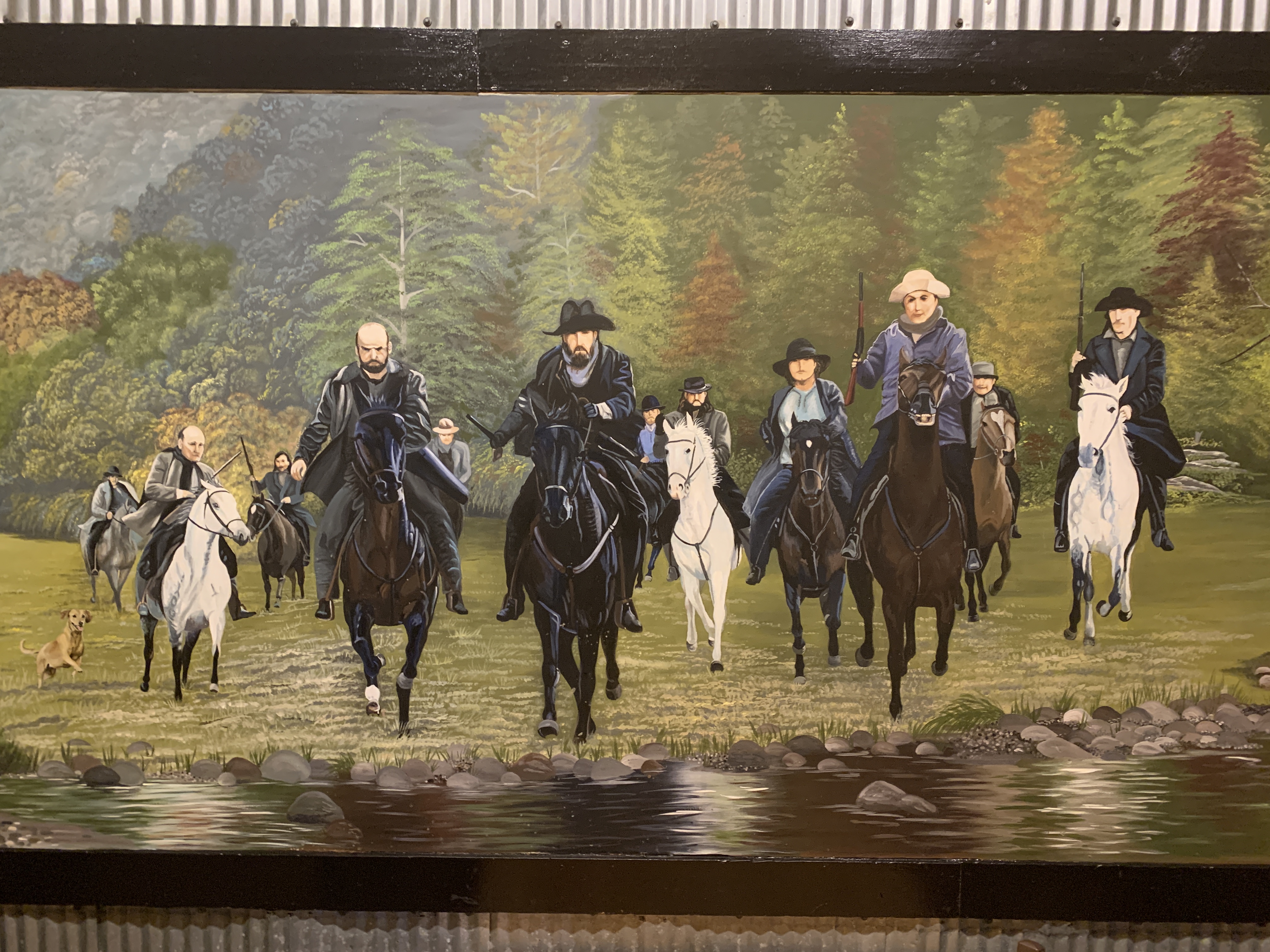
Randolph McCoy’s testimony in the Johnse Hatfield murder trial provides one version of the Hatfield raid upon McCoy’s home on January 1, 1888:
Q. “How old are you?”
A. “I was born in 1825.”
Q. “Begin in your own way, and tell all about the case that you know.”
A. “The first thing I knew about it the dogs woke me up. My boy came to the bed and said, ‘Pa, they are coming. Get up.’ And by that time I was up on the floor, and they had surrounded the house and 1 heard one of them say, ‘God damn ye, come out and surrender yourselves, prisoners of war.’ We never spoke. By that time, they had come past the upper house as we called it. We got behind that door that broke. They fired a volley each way in the house and I moved for I saw that I could not stay there. Next, I went to the fireplace. Calvin went to the back of the house. They shot cross shots from each side of the door, through the doors. I stayed there a good while. They kept shooting and, finally, I went into the loft. The firing kept up a long time. I thought it a long time. Finally, they fired the house, the room that I was in, me and my wife, Calvin, and Melvin was in the same room. I took a cup and when the blaze would come through the house I would throw water on it and it out. Finally, the water gave out. The boy had gone up in the loft and I went up where he was. We stayed in the house until three of the joists had burned and the end of the joists had fell down before we had attempted to leave the house. The boy then came to me and said, ‘Pa, ye stay here, I can out-run you and I will go to the barn and try to attract their attention in that direction and maybe I can save you.’ He started and got past the corner of the house when they began firing again. He never got to the barn. The little boy hung onto me but I shoved him loose at the door and went out among them. I stepped out of the house and saw Johnson Hatfield standing eight or ten steps from the rest of them, and just as I stepped out of the house and looked up his gun fired in the direction of Calvin. I discovered that his gun had caught fowl and he was humped down working on it. I fired into the crowd then turned and fired at Johnson. I aimed to shoot him in the neck, but I aimed too low and shot him in the shoulder. The burning house made it as light as day and I know that it was Johnson.”
Q. “What did you do when you shot Johnson, the defendant?”
A. “I ran down the creek.”
Q. “Where did you go then?”
A. “I crawled into the shuck pen.”
Q. “Did you have on your night clothes?”
A. “Yes sir.”
Q. “Where was Alafair McCoy?”
A. “She was in the upper part of the house. They did not fire that until the shots were fired at the other—the room we were in.”
Q. “What did you hear at that time?”
A. “I heard Alafair say, ‘Cap Hatfield and Hence Chambers, you would not shoot a poor innocent woman, would you?’ Then they said, ‘Shoot her, God damit, shoot her down. Spare neither men nor woman,’ and they shot her in the left breast. I heard her fall and struggle near the door. This was all before I came out of the house.”
Q. “Where did you stay that night?”
A. “In the shuck pen, I went back at daylight.”
Q. “What did you find?”
A. “I found my son lying there dead. My daughter dead with her hair froze in her blood to her heart.”
Q. “Was the house there?”
A. “No sir, it was burned up. The little girl had dragged her sister off from the house.”
Q. “How far from the house?”
A. “About thirty yards.”
Q. “How many shots did they fire?”
A. “No man could count them. They came in volleys and platoons.”
Q. “Did you have a gun too?”
A. “Yes sir.”
Q. “Was your wife in her night clothes?”
A. “Yes sir, they thought they had killed her, no doubt, or I think they would have done so.”
Source: Bill of exceptions at the office of the Clerk of the Court of Appeals in Kentucky, Frankfort, KY.
11 Friday Jun 2021
Tags
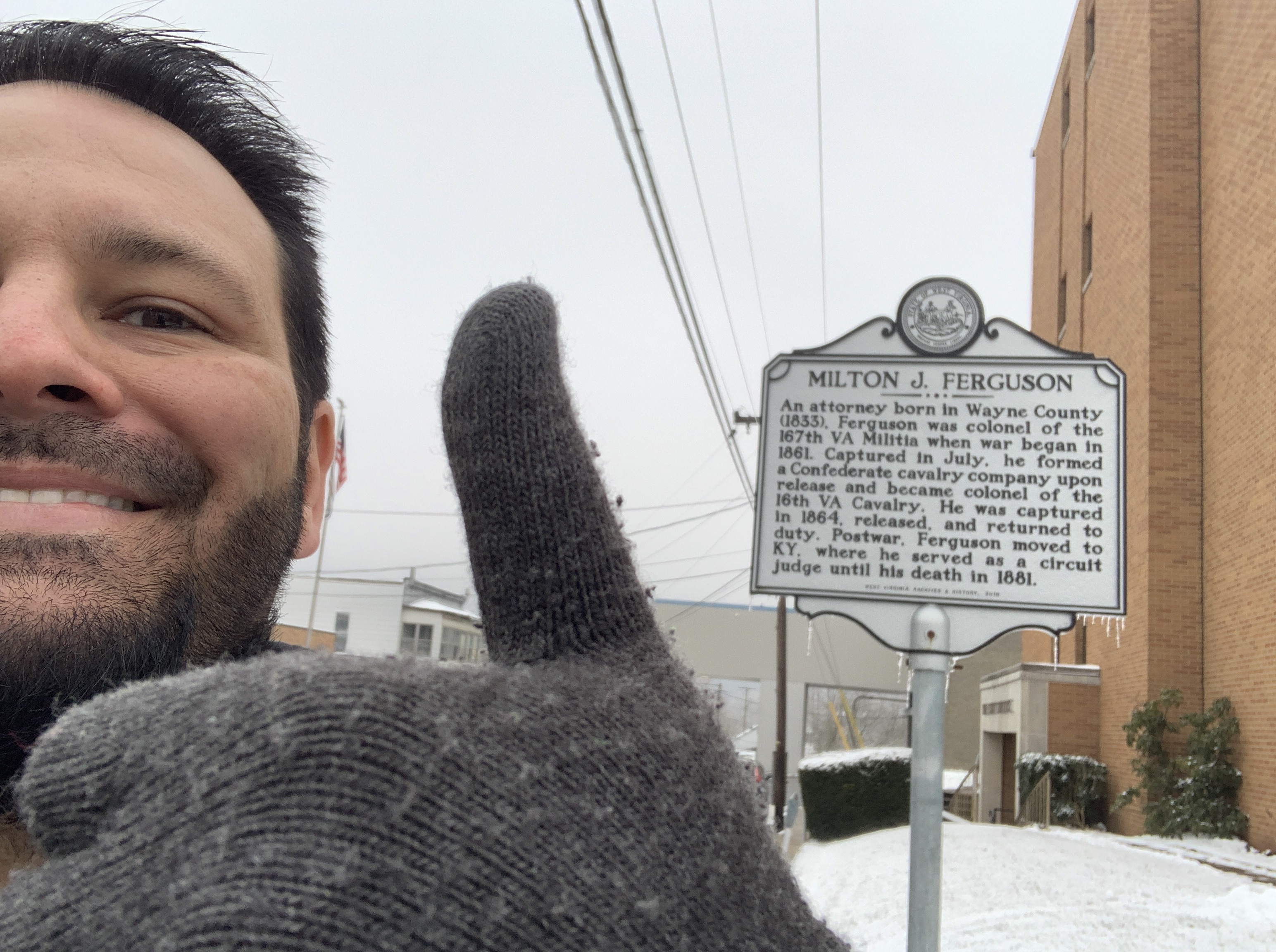
16th Virginia Cavalry, Appalachia, attorney, Brandon Kirk, civil war, Confederate Army, history, judge, Milton J. Ferguson, Wayne County, West Virginia
11 Friday Jun 2021
Posted in Civil War, Hatfield-McCoy Feud
Tags
Appalachia, Cap Hatfield, civil war, Devil Anse Hatfield, Hatfield-McCoy Feud, history, Howard B. Lee, Island Creek, Kentucky, Logan, Logan County, Nancy E. Hatfield, Pikeville, Randolph McCoy, Tennis Hatfield, West Virginia
Howard B. Lee, former Attorney General of West Virginia, provided this account of Nancy Hatfield (widow of Cap) in the early 1970s:
“Mrs. Hatfield, your husband and his father bore the same given names: ‘William Anderson’. How did they get the nicknames of ‘Cap’ and ‘Devil Anse’?”
“It is very simple,” she replied. “Early in life Devil Anse’s name was shortened to ‘Anse.’ During and after the Civil War he was called ‘Captain Anse’. The son, because he had the same name as his father, was called ‘Little Cap’. As the boy grew larger, the word ‘Little’ was dropped. Also, because of their fierceness in feud combats, the McCoys called the father ‘Devil Anse’ and the son ‘Bad Cap’. The newspapers took up the names and they stuck. Devil Anse liked and cultivated the title; but eventually the word ‘Bad’ was dropped from Cap’s nickname.
“Was I afraid? For years, day and night, I lived in fear. Afraid for my own safety, and for the safety of my loved ones. Constant fear is a terrible emotion. It takes a heavy toll, mentally and physically.
“I now think that my most anxious moments, as well as my greatest thrill, came years after the feud was over. In 1922, Tennis Hatfield and another deputy sheriff went over to Pikeville, Kentucky, to return a prisoner wanted in Logan County. While there, Tennis visited the aged Randolph McCoy1, surviving leader of his clan during the feud. (Tennis was born long after the feud was over.) The old man was delighted to see Devil Anse’s youngest son’, and Tennis spent the night with him.
“The next morning, Randolph told Tennis that he was going home with him. ‘I want to see Cap,’ he said, ‘and tell him how glad I am that I didn’t kill him. I am sorry Devil Anse is gone. I would like to see him, too.’ Tennis was worried. He didn’t know how Cap would receive his old enemy. So he left Randolph in Logan while he acme up to our place to consult Cap.
“Cap listened to Tennis’ story, and said: ‘Does he come in peace?’ ‘Yes,’ said Tennis. ‘He comes in peace.’ ‘Does he come unarmed?’ ‘Yes, he comes unarmed.’ ‘Then I shall be happy to greet him in the same way. Bring him up for supper and he shall spend the night with us.
“My anxious moments were just before these two strong-willed men met. I knew how they had hated each other, that each had tried to kill the other, more than once, that each had killed relatives and friends of the other, and I was afraid of what they might do when they stood face to face.
“My thrill came when I saw them clasp hands, and heard each one tell the other how happy he was to see him. They talked far into the night, and bother were up early the next morning, eager to continue their talks. Tennis came about one o’clock to drive Randolph back to his Kentucky home. Cap watched them until they passed out of sight up the creek, and then remarked, ‘You know, I always did like that cantankerous old cuss.’
“Cap and Randolph never saw each other again.”
1Should be Jim McCoy, son of Randolph.
Source: West Virginia Women (Richwood, WV: Jim Comstock, 1974), p. 152-153
20 Thursday May 2021
12 Wednesday May 2021
Tags
Albert G. McCoy, Appalachia, Asa McCoy, genealogy, history, Logan County, Mingo County, Nellie McCoy, Selkirk McCoy, Sulphur Creek, West Virginia
The following land information is derived from Land Book 1880-1886 and Land Book 1887-1892 at the Logan County Clerk’s Office in Logan, WV:
Albert G. McCoy (of Logan County)1
[On April 15, 1880, Asa and Nellie McCoy deeded 75 acres to A.G. McCoy for $200. References the first hollow below the forks of Sulphur Creek. A.W. Ferrell was a justice of the peace. Deed Book __, page 189-190.]
[On April 15, 1880, Asa and Nellie McCoy deeded 50 acres to Albert G. McCoy for $50. References the first hollow on the right hand side of Sulphur. Deed Book __, page __.]
1881: Magnolia District
75 acres Sulphur Creek Sandy River $1.75 per acre no building $131.25 total
[transferred from Asa McCoy]
1882: Magnolia District
Pages missing.
1883: Magnolia District
Pages are mostly blank
1884-1885 Magnolia District
75 acres Sulphur Creek Sandy River $2 per acre no building $150 total
50 acres Sulphur Creek Sandy River $2 per acre $20 building $100 total
1886-1887: Magnolia District
125 acres Sulphur Creek Sandy River $2 per acre $20 building $250 total
***
1Son of Asa McCoy, brother of Selkirk McCoy.
Writings from my travels and experiences. High and fine literature is wine, and mine is only water; but everybody likes water. Mark Twain
This site is dedicated to the collection, preservation, and promotion of history and culture in Appalachia.
Genealogy and History in North Carolina and Beyond
A site about one of the most beautiful, interesting, tallented, outrageous and colorful personalities of the 20th Century


 Brandon Ray Kirk