Tags
Appalachia, Big Ugly Creek, culture, fiddle, Green Shoal, history, Jim Lucas, life, Lincoln County, music, photos, West Virginia

Jim Lucas fiddle, Green Shoal, Lincoln County, WV. Photo taken in the 1990s.

04 Tuesday Mar 2014
Posted in Big Ugly Creek, Ed Haley, Green Shoal, Music
Tags
Appalachia, Big Ugly Creek, culture, fiddle, Green Shoal, history, Jim Lucas, life, Lincoln County, music, photos, West Virginia
Jim Lucas fiddle, Green Shoal, Lincoln County, WV. Photo taken in the 1990s.
04 Tuesday Mar 2014
Posted in Big Ugly Creek, Ed Haley, Music
Tags
Big Ugly Creek, Bill Monroe, Boney Lucas, Carl Toney, charlie paris, Clarence Lambert, Durg Fry, fiddler, fiddlers, fiddling, Frank Fry, Grand Ole Opry, Green Shoal, Guyandotte River, history, Irvin Lucas, Jack Lucas, Jim Lucas, Jupiter Fry, Leander Fry, music, Paris Brumfield, Sam Lambert, writing
At the turn of the century, Jim Lucas was the best fiddler on Big Ugly Creek — that peculiarly named creek located a few miles downriver from Harts Creek. Jim was born in 1881 to Irvin Lucas (a fiddler), and was a nephew to Boney Lucas and Paris Brumfield. Based on interviews with Jim’s family, Jim always went clean-shaven and wore an overcoat year round because “whatever’d keep the cold out would keep the heat out.” He was also an avid hunter and cowboy — he could supposedly command cattle from across the Guyan River. As for his fiddling, Jim either cradled the fiddle on the inside of his shoulder or held it under his chin. He gripped the bow with two or three fingers right on its very end, used a lot of bow, and patted one of his feet when playing. He sometimes sang, typically played alone, and devoted a great deal of his time fiddling for children. Every Saturday, he’d get with Clarence Lambert at his home on the Rockhouse Fork of Big Ugly or at Sam Lambert’s porch on Green Shoal. Some of Sam’s daughters sang and played the guitar. Jim’s grandson Jack Lucas said they played a lot of gospel and bluegrass music but could only remember one tune Jim played: “Ticklish Reuben.” Jim had to give up the fiddle when he got old but always put an almost deaf ear up against the radio and listened to Bill Monroe on the Grand Ole Opry. He died in 1956.
Charlie Paris, a long-time resident of the Laurel Fork of Big Ugly Creek, remembered Jim Lucas coming to visit his grandfather Durg Fry in the thirties. He said his grandpa Durg lived on Laurel Fork in a home with cracks between the logs so large that “you could throw a dog through” them. He was a fiddler himself, as were his brothers Leander and Jupiter and his nephew Frank Fry. Charlie said Durg played with the fiddle under his chin and never sang or played gospel or bluegrass. He patted his feet when playing and, in his old age, would hold himself up by a chair and dance to music. One time, when he and Jim were hanging out on Laurel Fork, Jim reached his fiddle to a younger fella named Carl Toney and said, “Your turn.” Carl was a very animated fiddler and when he took off playing “Orange Blossom Special” Jim just shook his head and said, “I’ve quit.”
03 Monday Mar 2014
Tags
Appalachia, Bill Adkins, culture, fiddler, Harts, history, life, Lincoln County, photos, timbering, West Virginia

Bill Adkins of Harts, Lincoln County, WV
03 Monday Mar 2014
Tags
Appalachia, Bill Adkins, Billy Adkins, Black John Adkins, Brandon Kirk, Dood Dalton, Fed Adkins, fiddlers, fiddling, Harts, history, Lincoln County, music, West Virginia
Meanwhile, Brandon and Billy were back at the bedside of Bill Adkins. Bill said Ed used to visit his father Fed Adkins for two or three days at a time when he was a boy. Fed and his family lived in Harts with Black John Adkins, a mulatto cousin who had neen present at the Haley-McCoy executions in 1889. When Haley came by, he usually traveled with Dood Dalton, a fiddler from Big Branch who played with a similar style. Ed and Dood played for all night dances at Fed’s but never sang anything. Bill said Ed played fast and smooth and was a “long bow” fiddler. He tapped his feet while playing.
Fed and Black John were both fiddlers, Bill said, but they never played with Ed and Dood. Instead, they tried to copy them after they left.
Bill said Ed didn’t drink at his father’s home and was a very serious person, never carrying on much. People led him around. When he stayed overnight, he slept in the same bed as Bill and the other Adkins boys.
02 Sunday Mar 2014
Posted in Big Sandy Valley, Ed Haley, Music, Women's History
Tags
Appalachia, culture, fiddle, fiddler, history, Josie Cline, Kentucky, Kermit, life, music, photos, Tug River, Warfield, West Virginia

The fiddle of Josie (Spaulding) Cline, “Lady Champion Fiddler of Kentucky, Virginia, Ohio & West Virginia”
02 Sunday Mar 2014
Posted in Big Sandy Valley, Ed Haley, Music
Tags
blind, Charleston, Ed Haley, Ella Haley, fiddlers, history, John Spaulding, Josie Cline, Kentucky, Kermit, Martin County, Mont Spaulding, music, Norton, Virginia, Warfield, Wayne County, West Virginia, writing
John and Mary A. Spaulding were the parents of Josie Cline and Mont Spaulding, two fiddlers in Kermit, West Virginia, somehow affiliated with Ed Haley. In all, John and Mary had six children: Mont Spaulding (1860), Josephine Spaulding (c.1864), Virginia Spaulding (c.1867), Linsy Spaulding (1870), Nickiti Spaulding (c.1873) and Lizzie Spaulding (1878). In 1870, the Spauldings lived in the Lincoln District of Wayne County, West Virginia. In the late 1870s, they moved over to the Warfield area of Martin County, Kentucky. John died around 1878. In 1880, Mont was listed in census records as a blind person. In 1900, he and his mother Mary lived with his sister Lizzie Fitzpatrick in Martin County.
In 1910, according to census records, “Monterville Spaulding” lived in the Big Elk Precinct of Martin County where he was listed as a 48-year-old widowed traveling musician. Listed with him in that census were five children, including 20-year-old Dora Spaulding and 11-year-old James Spaulding. Based on this census, there was a solid (although not genealogical) connection between Ella Haley and the Spauldings. Between 1911-12, Ella received several postcards from a “Mont, Dora, and Jim Spaulding” from various places — Richmond, Virginia; Charleston, West Virginia; and Norton, Virginia. In light of the 1910 census, which gave Mont’s occupation as that of a traveling musician while listing him with two children named Dora and James, it seemed obvious that Ella knew Mont from her early years. Mont was gone from Martin County in 1920.
01 Saturday Mar 2014
Posted in Big Harts Creek, Culture of Honor, Ed Haley, Music
Tags
Ben Adams, Billy Adkins, Brandon Kirk, Cas Baisden, Clyde Haley, crime, Dingess, Ed Haley, Ella Haley, Ewell Mullins, genealogy, Greasy George Adams, Harriet Baisden, Harts Creek, history, Jeff Baisden, John Frock Adams, Johnny Hager, Maggie Mullins, murder, music, Peter Mullins, Ticky George Adams, Weddie Mullins, West Virginia, writing
One fall day, Brandon and Billy drove to see 80-something-year-old Cas Baisden, a son of Jeff and Harriet (Jonas) Baisden. Cas lived on a farm near the mouth of Smoke House with a relative of Uncle Peter Mullins. He had been mostly raised by Uncle Peter and had vivid memories of watching Ed Haley play in his yard, as well as in the house. He said Ed didn’t usually have a very big crowd around him. “People didn’t care a bit, even though he was about as good as they was,” Cas said. He said Ed and his wife could play anything. “He was real skinny and would drink anything he could get his hands on.” He added that Ed knew all the roads and trails up around the creek and could walk them as well as a sighted person.
Ed’s uncle Weddie Mullins married Cas’ aunt, Maggie Jonas. Cas said Weddie went to Dingess to get some booze one time and was killed in a shooting scrape. The man who shot him was laid up in bed when Weddie’s half-brother John Adams came in and asked, “Do you think he’ll make it?” Someone said he might live so Adams pulled out his gun and said, “I know he won’t,” and opened fire on him. Later, in unrelated events, Adams “blew his wife’s head off.”
Cas said Ed’s uncle Ticky George Adams was harmless. He was a small man, short and chubby, who dug ginseng a lot on Big Creek. George was a brother-in-law to Ed’s friend Johnny Hager, who came from the North Fork of Big Creek and stayed a lot with Ewell Mullins and others around Harts. Johnny was a good fellow, a musician and a non-drinker.
Cas knew that Ed sold his homeplace on Trace to Uncle Peter’s son, Ewell Mullins. It was a plank building with two long rooms. In the rear of the eating room there was a flat-rock chimney with a long fireplace. The other room was used for sleeping. Later, an old store building was pushed up against the sleeping room to make a kitchen. The house had no porch.
Cas said Ed’s son Clyde Haley was “like a monkey” when it came to climbing trees; one time, he climbed 40 feet up into a tree and all the other kids ran away because they didn’t want to see him fall.
Cas remembered sketches about Ben Adams but didn’t know if he had been involved in the 1889 feud. At one time, he operated a store on main Harts Creek below the mouth of Smoke House. Across the creek, he had a saloon made entirely of rock. Later, he lived on Trace. Cas said part of his old mill-dam could be seen in the creek at the Greasy George Adams place.
28 Friday Feb 2014
Posted in Big Harts Creek, Chapmanville, Ed Haley, Music
Tags
Anna Adams, Billy Adkins, Brandon Kirk, Chapmanville, Ed Haley, Ella Haley, fiddling, Gaynelle Thompson, history, Imogene Haley, John Adams, Kiahs Creek, Little Harts Creek, Logan County, Milt Haley, Mona Haley, music, Roxie Mullins, Ticky George Adams, Wayne County, West Virginia, writing
In Chapmanville, Brandon and Billy dropped in on Gaynelle (Adams) Thompson, a granddaughter of Ticky George Adams who spent a lot of time with Aunt Roxie Mullins during her “last days.” Gaynelle said Ed Haley’s mother never remarried after Milt’s death and died prematurely when Ed was eight to ten years old. She said Ed used to visit her parents, John and Anna Adams, on Trace Fork during the summers in the ’30s and ’40s. “Everybody in the country thought they was nothing like him,” she said. Gaynelle heard that Ed was a drinker and could get rough but said he was well mannered at the Adams home. He never cursed or drank and talked mostly to Gaynelle’s mother. He came with his daughter and wife and stopped visiting when he became too sick to travel just a few years before his death. In earlier years, he played on Kiah’s Creek and Little Harts Creek near the Wayne County line.
26 Wednesday Feb 2014
Posted in Ed Haley, Lincoln County Feud, Music
Tags
Admiral S. Fry, Al Brumfield, Arena Ferrell, Boney Lucas, Burbus Toney, Cat Fry, Charles Lucas, Christian Fry, crime, Eliza Fry, Evermont Ward Fry, genealogy, George Fry, George McComas, George W. Ferrell, Green Shoal, Guyandotte, history, James L. Caldwell, Jesse James, John Brumfield, Milt Haley, Paris Brumfield, The Lincoln County Crew, Watson Lucas, West Virginia, writing
According to the Fry history, A.S. Fry eventually moved to Guyandotte, a river town in Cabell County, “where he built and owned a hotel. The Jesse James gang, who robbed a Huntington bank, stayed in his hotel for several nights.” His son George, meanwhile, took control of the family interests at Green Shoal. He presumably lived in the family homestead, where he was located at the time of Milt and Green’s murder in 1889. Deed records refer to it “as the old A.S. Fry homestead above the mouth of Green Shoals” and describe it as follows:
BEGINNING at the mouth of Green Shoals Creek, thence up with the meanderings of said creek to a survey made by C.T. fry, thence with the line of same to a white oak corner on a point, thence up the said point with the line of Chas. Lucas to the top of the mountain, thence running with the ridge to the head of a little ravine to a dog-wood corner made by C.T. Fry, thence down the hollow with C.T. Fry’s and B.C. Toney’s lands to a walnut corner made by said C.T. Fry, thence down the hill with John Fry’s and B.C. Toney’s line to the river, thence down with meanderings of the river to the place of beginning, containing seventy-five acres, more or less.
Although the deed was vague in giving its coordinates, it clearly proved that the “A.S. Fry homestead” — and thus the site of Milt and Green’s murder — was on the same side of the river as the railroad tracks.
By 1889, when the Brumfield gang took over the Fry house, George and his wife Eliza had a six-year-old daughter and a one-year-old son. Cat Fry, a niece, also lived in the home. The family was connected to various participants in the 1889 troubles. Eliza’s older brother was married to Paris Brumfield’s sister, while two of her sisters were married to Brumfield’s nephews. These marriages were perhaps complicated when Paris murdered Mrs. Fry’s brother, Boney Lucas.
Following the Haley-McCoy murders, George Fry suffered some bad luck. In 1892, his wife reportedly had an illegitimate child by John Brumfield (Al’s younger brother). Four years later, his father sold the family homestead on Green Shoal to Arena Ferrell, a local storekeeper. George’s wife died around 1902 “when her children were young” (according to one source) and was buried in the old Fry Cemetery at Green Shoal. A.S. Fry himself was murdered at his hotel in 1904. George afterwards moved to Guyandotte where he died on May 19, 1905. Control of family businesses thereafter went to his brother Evermont Ward Fry, who was still alive as late as October 1939.
As for the “murder house” itself, Arena Ferrell deeded it to her adopted son George W. Ferrell, who is credited with writing “The Lincoln County Crew” — the song about Milt’s death. In 1899, he sold it to George R. McComas, who in turn sold it to J.L. Caldwell three years later. (This was probably the same J.L. Caldwell referred to in George Fry’s 1880 letter.) It was around that time (1902-04) when the railroad came through the Guyan Valley, which apparently had a direct effect on the “murder house.”
“The railroad now runs through one side of the house as well as that of the school building,” Ward told Fred Lambert. “This school was about one fourth mile above our residence.”
In 1915, Caldwell sold the property back to Arena Ferrell. Then, in 1919, it was transferred to Watson Lucas, whose heirs sold it to the current owners, the Lamberts, in the 1960s.
13 Thursday Feb 2014
Posted in Big Sandy Valley, Ed Haley, Music
Tags
Billy Adkins, Cain Adkins, fiddle, fiddler, Grand Ole Opry, Harts Creek, Lincoln County, Mingo Ramblers, Norfolk and Western, Stiltner, Tom Atkins, Wayne County, West Virginia, Williamson, Winchester Adkins, writing
A week later, I followed up on a lead from Billy Adkins and called Tom Atkins. Tom was a great-grandson of Cain Adkins and a genealogist in Williamson, West Virginia. It was a chance lead: Billy had called him to ask about Ed Haley’s genealogical connections in the Tug Valley only to discover that Tom’s grandfather was Winchester Adkins — a son to Cain.
When I called Tom, he said he knew almost nothing about Cain and only a little about his grandfather, Winchester Adkins. He said Winchester left the West Fork of Harts Creek at a young age and settled at Stiltner in Wayne County. He eventually moved to Williamson and worked as an engineer on the N&W Railroad. At that location, after a repeated “mix-up over his checks” he changed the spelling of his surname from “Adkins” to “Atkins.” He was also a well-known fiddler who tried his hand at professional music.
“I heard my mother tell someone here while back how many tunes my grandfather played,” Tom said. “It was a hundred and some. See, he just knew them by ear. And I believe that at one time he had a fiddle that was made by Cain — his father — and I don’t know who has that or whether it’s even in existence now ’cause we’ve had floods here. And I do know at one time he was a member of a group in Mingo County called the ‘Mingo Ramblers’ and they were on the Grand Ole Opry way back in the early days.”
Tom said that was all he knew because his grandfather died when he was four years old.
12 Wednesday Feb 2014
Tags
Cincinnati, Doc White, Ed Haley, Ella Haley, Harts Creek, history, Jeff Duty, Laury Hicks, music, Ugee Postalwait, West Virginia, writing
A few days later, I called Ugee Postalwait with a whole bunch of questions, mostly related to my recent trip to Harts. I asked her if Laury Hicks ever went to Harts Creek with Ed.
“Oh, yeah,” she said immediately. “All through them places. Dad had a car and he had a driver, and they’d go a lot of places. Anybody was willing to take Dad any place.”
“Did Doc White ever take them anywhere?” I asked.
“Oh, yeah,” Ugee said. “They’ve all run around together. He was a photographer, he could make teeth, he was a doctor, he was everything — and he learned it all in the penitentiary. He was a mid-wife. He could do anything. Played the fiddle. He was crazy about the railroad. He had a railroad steam engine and all that stuff back of his house. He was a smart man. Even my dad doctored with him.”
Ugee remembered Ed playing a tune called “Getting off the Raft” and figured her father also played it.
“I don’t remember Dad ever playing it but if Ed played it he played it, too,” she said. “Whatever one played, the other’n played. They was just that close together, John. They was just that way.”
I asked if Laury ever talked about a fiddler named Jeff Duty and she said, “Yeah, he talked about a fiddler by that name.”
What about Cain Adkins?
“Adkins. That sounds right.”
“Ought to be some people in Cincinnati to know Ed Haley real well,” Ugee said, kind of changing the direction of our conversation. “Him and Ella went down there and played music a lot. They made some money there. Whenever they’d get close and need some money they would go to Cincinnati and stay maybe for three or four days.”
10 Monday Feb 2014
Tags
Blackberry Blossom, Cacklin Hen, Charleston, Ed Haley, fiddler, Forked Deer, Great Depression, Hell Among the Yearlings, history, Huntington, life, music, photos, Ragged John, WOBU

Ed Haley records offered for sale during the Depression, Charleston, WV
10 Monday Feb 2014
Tags
Appalachia, Billy Adkins, Boone County, Brandon Kirk, Chapmanville, Ed Haley, fiddler, Guyandotte Voice, history, John Hartford, Johnny Hager, Louise Johnson, music, Simeon Bias, West Virginia, writing
As Brandon and Billy dug up more information in West Virginia, I received a letter in the mail from Louise (Adkins) Johnson of Powderly, Texas. She’d read an article about my Ed Haley search in a now-defunct Chapmanville newspaper called The Guyandotte Voice.
“I was so pleased to hear some one mention Blind Ed & his wife,” Johnson wrote. “I’m 72 yrs. old, was born and raised, in Boone Co. just over the hill from Chapmanville, W.V. My Uncle Simeon Bias & his wife Bertha (Baisden) & my family were (I guess you could say backwood singers & musicians) but Ed & his wife came to my Uncle Sim’s often & everyone played. I remember my brother was 3 1/2 or 4 (he’s 65 now) had the most beautiful blonde curls, & Ed would feel his head and say how pretty he was. They would stay a couple of wks. at a time. If you would contact the older people of Bias Branch in Boone Co. you may be able to find out more about them.”
“Now Johnny Hager lived with my mother & Daddy my sister, my Brother & me all our growing up yrs. @ home,” Louise continued. “He was a handy man, & a fiddle player. I also have his picture. He had no family as my Parents knew of, & he stayed more with us, some time’s a neighbor would need him to come live with them, to build them an out house for them. He was noted for the best out houses, he earned his keep by living with & helping others. A very neat man.”
09 Sunday Feb 2014
Posted in Civil War, Logan, Music, Women's History
Tags
Appalachia, banjo, Cathy Grant, Chief Logan State Park, civil war, fiddler, fiddling, life, Logan, Logan County, music, photos, Union Army, West Virginia
 A Civil War re-enactor plays the banjo while Cathy Grant plays the fiddle at Chief Logan State Park in Logan County, WV, September 2002.
06 Thursday Feb 2014
Tags
Appalachia, Bill Adkins, culture, genealogy, Harts, history, life, Lincoln County, photos, West Virginia
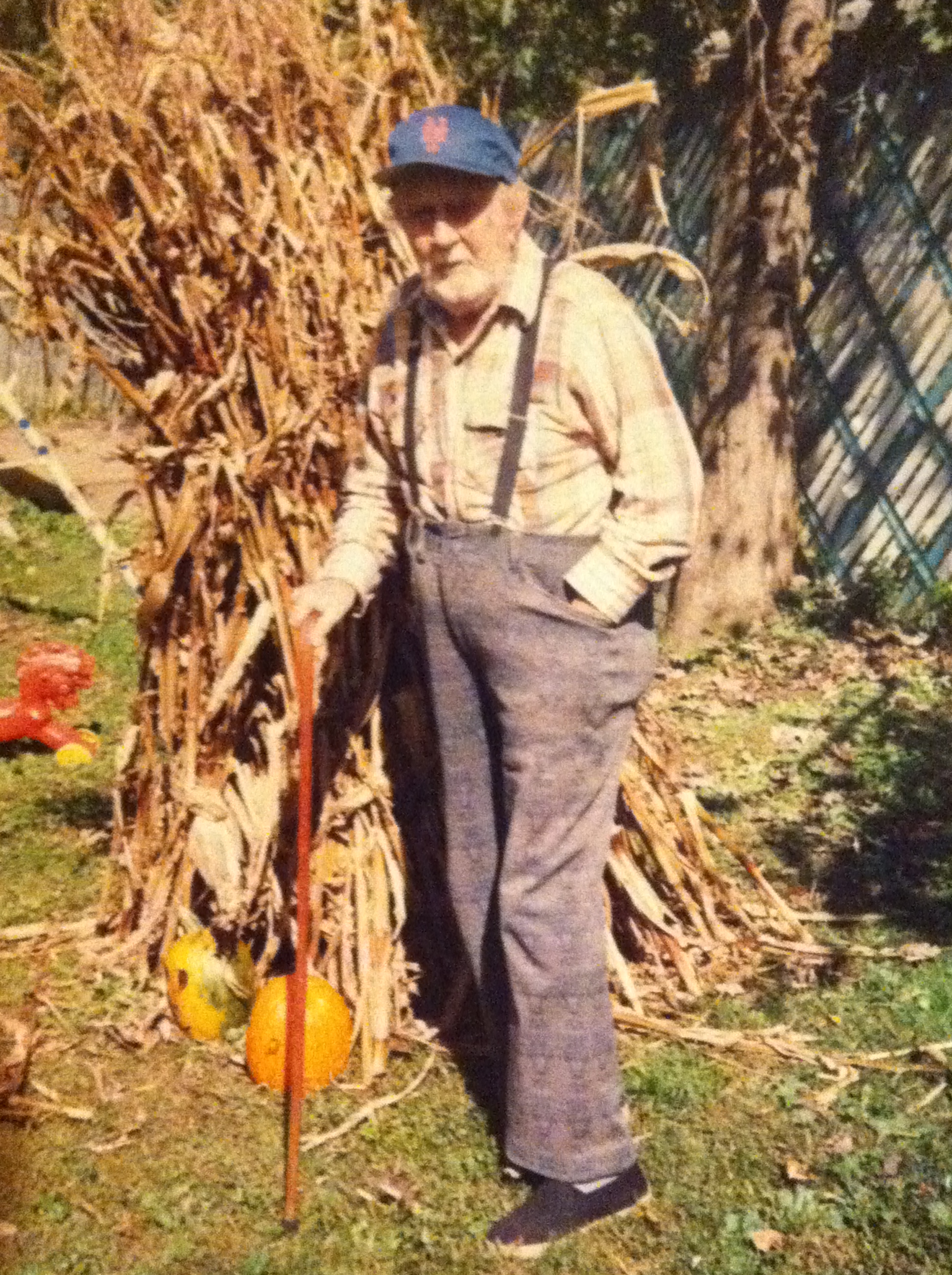
Bill Adkins of Harts, Lincoln County, West Virginia, c.1992
24 Friday Jan 2014
Posted in John Hartford, Music
Tags
bluegrass, fiddlers, fiddling, Gillian Welch, John Hartford, Larry Cordle, music, Nashville, Nashville Bluegrass Band, photos, Ronnie McCoury, Station Inn, Tennessee
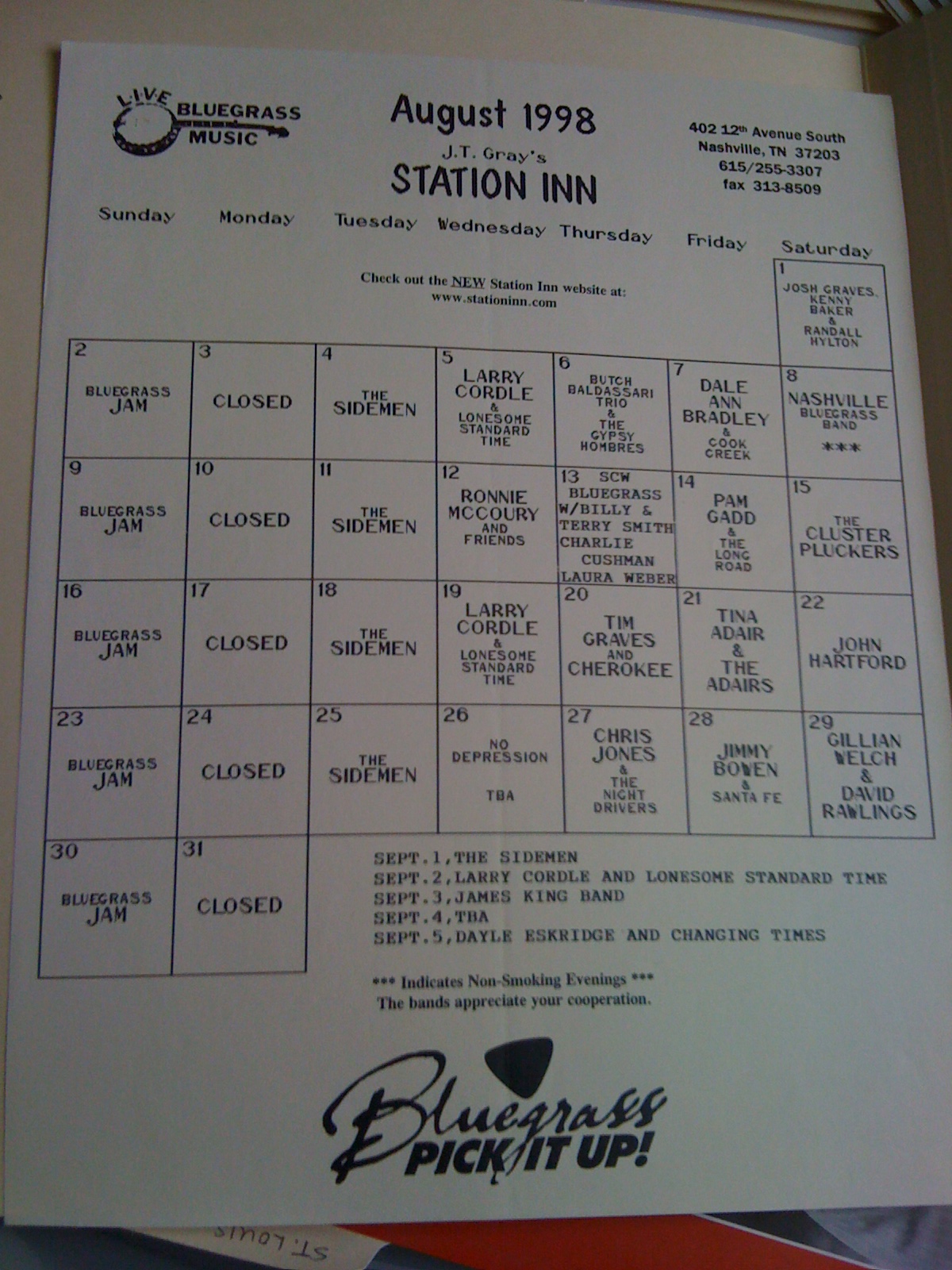
Station Inn, Nashville, TN, August 1998
22 Wednesday Jan 2014
Posted in John Hartford, Music
22 Wednesday Jan 2014
Posted in Ed Haley, John Hartford, Music
Tags
Carol Hardway, Cliff Top, culture, fiddlers, fiddling, history, John Hartford, life, music, photos, West Virginia, Wilson Douglas

Carol Hardway, Wilson Douglas, and John Hartford at the Appalachian String Band Festival in Cliff Top, West Virginia, 1995
17 Friday Jan 2014
Tags
Appalachia, culture, East Lynn, guitar, history, life, music, photos, Ralph McCoy, Spicie McCoy, Wayne County, West Virginia

McCoy Time Quartet of Wayne County, West Virginia, c.1940
07 Tuesday Jan 2014
Posted in Ed Haley, Green Shoal, Harts, Lincoln County Feud, Music, Toney
Tags
Appalachia, banjo, Bell Morris, Billy Adkins, Brandon Kirk, Bud Workman, Bumble Bee, Charley Davis, crime, Dave Dick, Don Morris, Ed Haley, Greasy George Adams, Green McCoy, Green Shoal, Harts, history, Hollena Brumfield, Hollene Brumfield, Hugh Dingess, Irvin Workman, Milt Haley, Peter Mullins, Ranger, Route 10, Toney, writing
Back at Billy’s, the subject of the “murder table” came up again. Supposedly, the table upon which Milt and Green had eaten their last meal somehow eventually ended up in the possession of Billy’s family. He suggested visiting his aunt Don Morris, who as a child had eaten from the table many times. Taking the cue, we loaded in the car and drove up Route 10 to Don’s house. Don lived at Toney, a small residential settlement just upriver from Green Shoal.
Don was a pleasant lady — very eager to help — and was aged probably in her seventies. After all the introductions, I asked her about the table. She said her grandfather Irvin Workman must have gotten it soon after the 1889 troubles. “He had it way back when he was raising his family,” Don said. “Then my dad, Bud Workman, when he moved out with my mother, they took the table with them.”
I asked, “Who told you that table was the Haley-McCoy table?” and she said, “My dad. It was in his father’s house before it was in his.”
“And you said that people would come by to see it?” I asked. “Who would come to see it?”
Don said, “I imagine it was relatives of the people that was involved in it.”
Don seemed to remember the table well, so I asked her for some paper so I could try to sketch it based on her memories. I started out asking about the length of the table, the style of its legs, and so forth…estimating everything by comparing it to Don’s current table. It was like doing a police sketch. After I had a rough drawing of the table, I asked her about the size and angle of the bullet holes.
Satisfied, I asked Don if she’d heard anything about Milt and Green’s death.
“It was pretty complicated,” she said. “Well, they got those men in and fed them. They knew they was gonna kill them all the time and they let them eat first. I can’t remember too much about the actual thing, because they didn’t talk too much about it in the family. Grandpa did sometimes. Well, I understood they shot them around the table after they ate. But it was execution style. Now, I couldn’t swear to it.”
Don figured the only light in the room was a kerosene lamp in the middle of the table. There was a story, Brandon said, that Hugh Dingess “shot out the lights” just before the murders — which presumably meant this lamp. While this may have occurred (perhaps so no one could witness the subsequent murders and thus testify in a future trial), it seemed unlikely. I mean, the room was probably really crowded if only half the people supposedly there were actually there and shooting in the room would have seemed dangerous. Of course, shooting a kerosene lamp could have set the whole house on fire.
“Well, I have heard they did, and I’ve heard they didn’t, so I couldn’t say which is true,” Don said of the lights. “I don’t think they could have without burning down the table.”
Brandon asked, “Was one of the men supposed to have played music before they killed him?” and she said, “He sang, didn’t he? It seems to me he played the banjo and sang a song. I guess they thought since they was going out anyway they might as well go out in style.”
I said, “Now, I heard that the wives went down there to try to plead for their lives and they turned them away. Have you ever heard that?”
Don answered, “Yes, I’ve heard that, but whether or not it’s true I’m not sure. My husband’s mother Bell Morris was related to the McCoys.”
I said, “Just for the record, what happened to that old house?” and she said, “I bet it burned.”
Don wondered why I was so interested in Milt Haley and I explained that I was researching the story of his son, Ed Haley, of which he was a very important part. I asked if she ever heard Ed play and she said, “I’m not sure, seems that maybe I did a long time ago. I think Haley played with Dave Dick. Dave played banjo. He was blind.” Brandon said Charley Davis had described Dick as a “pretty good” banjo-picker who mostly played “little ditties” like “Bumble Bee”. He lived downriver around Ranger but stayed in Harts for a week or so at a time with different families, sometimes playing for dances. Kids used to imitate him by bumping into things.
After mentioning Ed’s name to Don our conversation dwindled off to me asking if she knew people like Peter Mullins, Greasy George, or Hollena Brumfield. She gave answers like, “Well, I used to know a Peter Mullins. His foot was turned back. I remember watching him go up the hill there at the house.” As for Hollena Brumfield: “I knew one down here at this big old house at Hart. They put in a restaurant and you know it didn’t do too well. She said, ‘We got hotdogs on ice.’ Yeah, I knew those people.”
Writings from my travels and experiences. High and fine literature is wine, and mine is only water; but everybody likes water. Mark Twain
This site is dedicated to the collection, preservation, and promotion of history and culture in Appalachia.
Genealogy and History in North Carolina and Beyond
A site about one of the most beautiful, interesting, tallented, outrageous and colorful personalities of the 20th Century

 Brandon Ray Kirk