• About

Brandon Ray Kirk

~ This site is dedicated to the collection, preservation, and promotion of history and culture in my section of Appalachia.

Brandon Ray Kirk

Category Archives: Battle of Blair Mountain

Armed March Trial (1923)

29 Wednesday Jan 2020

Posted by Brandon Ray Kirk in Battle of Blair Mountain, Boone County, Coal, Logan

≈ Leave a comment

Tags

A.M. Belcher, Appalachia, Battle of Blair Mountain, Bill Blizzard, Blair Mountain, Boone County, C.W. Osenton, coal, Coal River, crime, deputy sheriff, Dingess Run, Edgar Combs, George Muncy, H.W. Houston, history, J.E. Wilburn, James Cafalgo, John Gore, Lewisburg, Logan Banner, Logan County, Nellis, Ottawa, T.C. Townsend, United Mine Workers of America, Velesco Carpenter, W.B. Mullens

From the Logan Banner of Logan, WV, comes this story dated June 29, 1923 about the trial that resulted from the “armed march” on Logan County, WV, by UMWA miners:

Widow Is Introduced At The Blizzard Trial

LEWISBURG, W.Va., June 27 — Two word pictures, one from the lips of the widow of George Munsy, coal digger who “never came back” from guarding his county, the other from one of the party that met and killed the outpost on the mountain side, lay tonight before 12 men who are to determine whether Sub-District President William Blizzard, of the miners’ union, was an accessory to the murder of Munsy.

Before these word pictures the jurors had heard counsel on both sides outline the story of the labor trouble of Southern West Virginia coal fields, the march of thousands against the Logan border, the interruption of that march after a brigadier general of the United States Army had intervened a midnight clash between miners and deputy sheriffs and state police, resumption of the march, fighting on the mountain ridges that separated the non-union Logan coal fields from the then union fields on Coal River, the meeting of 30 or 40 marchers with Deputy Sheriff John C. Gore, of Logan county, and two companions one of whom was Munsey, the volley of shots that answered the Logan pass-word, “amen,” and a wealth of detail about the march presented from point of view of both prosecution and defense.

Review Blair Battle

All the morning was spent in the opening of the attorneys, A.M. Belcher and C.W. Osenton, for the prosecution, and H.W. Houston and T.C. Townsend, for the defense. Then in the afternoon the jurors turned their attention to the witness box. First they saw W.B. Mullens point out the battle line and the points of interest in the march on a map that was tacked to the courthouse wall above the witness stand. Next Velesco Carpenter, facing an inexhaustible stream of questions in direct and cross-examinations told how he had gone from his home in Nellis to Blair, how in a party of about 35 he marched up Blair mountain, spent the night, and early the next morning set out and from his place in line watched the meeting with three men, one of whom he learned was Gore, heard the shots and saw the bodies after they had fallen. Then just before court adjourned Mrs. Munsy took the stand for her brief examination so that she might return tomorrow to her seven children in her home on Dingess Run Creek in Logan county.

Widow on Stand

“The night before he was killed was his time to come home but he never came,” Mrs. Munsy testified that her husband had been digging coal for about fifteen years before his death and that they had been married about 20 years. He had been “guarding for about a week, working for Logan county, for the coal operators,” she went on, but later when Mr. Houston cross-examined her on that statement her formerly quiet tone rose to the ringing declaration “he was defending his county.”

Carpenter did not know who fired the shots that killed Gore, Munsy and James Cafalgo. When the shooting began he ran back a few steps and dropped to the ground, he said. After it was over he went to a point near the body of “the foreigner,” and saw that of Gore, but could not see the third body. Edgar Combs told him he had killed the one Carpenter had designated as “the large man in the middle,” and later told another of the party this man was Gore.

He left Nellis, where he was employed as a pump man, on August 29, 1921, he said, after a man had come to the mines and threatened to “knock off” the “yellow” men who did not go. A journey on foot and by rail took about 30 in his party to Ottawa, and there Edgar Combs picked him and three others he named to go to Blair. The next day from the schoolhouse steps in Blair, he said, Rev. J.E. Wilburn made a speech and a party was organized that went into the hills. Some threw down their guns and refused to go but threats were made, and the men were lined up in single file, with leaders for squads of eight men. The original party of 50 or 60 divided, and the group of about 35, in which he went, camped on the top of the mountain until daybreak. They heard firing in the direction of the “gap,” through which previous testimony had shown the road from Blair to Logan ran and set out in that direction.

Then he told of the meeting with the “large man” and his two companions, and by pre-arranged signal the leader lifted his hat three times to indicate there was no danger. The large man beckoned to them to come on, and when the parties met there were mutual demands for the password. The shots were fired, Carpenter testified, when somebody said “amen,” and in the opening statements prosecution counsel had told the jury that it would be shown that “amen” was the Logan password. Wilburn, the preacher, was in the lead of the marchers column, and Combs next behind him, the witness said.

State v. Edgar Combs (1923): Statement of Clarence H. Frey, No. 17

12 Sunday Jan 2020

Posted by Brandon Ray Kirk in Battle of Blair Mountain, Logan

≈ Leave a comment

Tags

Appalachia, Blair Mountain, Clarence H. Frey, coal, editor, history, Logan, Logan Banner, Logan County, Lola Herald, Mine Wars, West Virginia

Document 17-1Document 17-2

Armed March: Logan County Officers Thwarted in Pomeroy, OH (1921)

16 Saturday Nov 2019

Posted by Brandon Ray Kirk in Battle of Blair Mountain, Coal, Logan, Matewan

≈ Leave a comment

Tags

A.M. Belcher, Appalachia, Charleston, coal, deputy sheriff, Ed Reynolds, Edgar Combs, George Munsey, Harold W. Houston, Harry R. Barnes, history, Jackson Arnold, James Miller, James Swanner, John Chafin, John Gore, justice of the peace, Lee Belcher, Logan, Logan Banner, Mason City, Matewan, Meigs County, Mine Wars, Ohio, Point Pleasant, Pomeroy, Savoy Holt, U.S. Cantley, United Mine Workers of America, W.M. Swanner, Wallace Chafin, Welch, West Virginia, William Chafin

From the Logan Banner of Logan, WV, comes this bit of history about the armed march of 1921:

OFFICERS SAY OHIO MOB THREATENED LIVES

“Let’s Make It a Matewan-Welch Affair,” Yells Citizens of Pomeroy

Officers Say Lives Were Threatened

Another tragic sequel to the miners “armed march” on Logan was narrowly averted at Pomeroy, Ohio, Monday, when a mob of about three hundred persons are said to have threatened the lives of Deputy Sheriffs Wallace Chafin and Lee Belcher, and Mr. Chafin’s son William, who went to Pomeroy to visit his grandfather. The officers were sent to Pomeroy with requisition papers for the removal of Savoy Holt, and U.S. Cantley, who are wanted in Logan on the charge of being accessory before the fact of the killing of George  Munsey and John Gore, during the “armed march.”

A statement was given out by Officer Chafin Wednesday, which he described in detail the affair at Pomeroy. Bearing requisition papers for the removal of Holt drawn by the Governor of Ohio and later held up by the agreement of attorneys of both the defense and prosecution till after the trial of James Miller. Officers Chafin and Belcher reported to the sheriffs of Meigs county. They were sent to the Prosecuting Attorney’s office of the county where they were advised that they would have to get other papers for their purpose. They then went before Justice of Peace Harry R. Barnes and swore out a fugitive warrant for the two men wanted. “A crowd of seventy-five or a hundred gathered around the jail. All of the men wore coats and did not  seem friendly,” Mr. Chafin said. “We returned to the Prosecuting Attorney’s office, and as I came out there was considerable commotion among the large crowd of men. Persons were  being waved back and told to stand aside. These directions were being made by members of the crowd,” Officer Chafin said. Chafin returnerd to the Sheriff’s office and was told that he had been called away, and that he could not see Holt.

“Officer Belcher, myself and my son were directed to the Mayor’s office. We were told that the Mayor had a telegram for us from Governor Donahey, which said that Holt should not be delivered and that if we were ___ to run us out of town and tell us not to return. We did not go to the Mayor’s office, and thought if we were really causing trouble it would be best for us to leave immediately. From the time I arrived in town I noticed that the atmosphere had changed since I was last there. Not an officer could be found anywhere. People gazed out on the streets from their houses in great numbers. And several people were noticed to follow us from the time we arrived in town.”

“When we decided to leave, we hired a taxi cab with the intention of going to Point Pleasant. Again, the crowd which seemed to be growing surrounded the cab, and the driver fled, leaving us standing amidst the crowd in the middle of the street. We heard some one in the crowd say, ‘Let’s make it another Welch or Matewan affair.’ A man who said he was a newspaper reporter began to ask questions as the crowd pushed in against the cab. We were asked if we weren’t Logan county thugs, and if we were not in the gang that opposed the ‘armed march.’ We told them that we were regular Logan county officers and had been serving as Deputy Sheriffs for some time, also that we had been sent there with the proper papers to return Savoy Holt to Logan. They were told that I had been a Deputy for two years and that Belcher had been in office for six years. The crowd dropped back and we got our bags and endeavored to hire another taxi, but evidently the drivers had been given instructions not to drive us. They all refused and we were forced to go to the ferry. The crowd continued to swell and they followed us to the ferry. The ferry boat was on the West Virginia side and we were forced to endure the jeers and threats of the crowd until the boat returned to the Ohio side.

While on the ferry ten or twelve men came in a group and demanded me to get off, saying that I had given a false name. I told them if they wanted me they would have to come and get me. They approached and requested me to show further identifications and I compiled by showing them my Masonic cards.”

“Upon arriving on the West Virginia side I saw several of the same men I had seen in Pomeroy. Another taxi was hired to take us to Point Pleasant. As we started we were hailed. The taxi was stopped and we were told that the driver could not take us. We concluded that we would walk to the next station to avoid trouble. A short distance below the town we were surrounded by about twelve men in automobiles. Heading for the river, and afraid that they would kill my son, we returned to the station at Mason City to wait for a train. While sitting in the station group after group of men came to the doors and men swarmed around. I believe they would have fired on us in the station if there had not been several women sitting near us. The first train to arrive was an east bound train which we took to Parkersburg. The last words we heard from the crowd was from a large man who seemed to act in capacity of spokesman. He yelled, ‘I’m damn sorry boys we did not make this another Welch or Matewan affair.'”

Mr. Chafin reported the affair to Governor Morgan at Charleston Tuesday. He was instructed by the governor that the removal of Holt and Cantley would be affected by the state authorities. It is understood that Colonel Jackson Arnold has been sent to Columbus, Ohio, to get the proper extradition papers for the men’s removal. Cantley is still at large and Holt is being held in the county jail at Pomeroy, where he has been held as a witness in the case of James Miller who was sentenced from two to twenty years for the killing of E. Reynolds and W.M. Swanner. Holt was in the Miller home in Pomeroy at the time of the shooting which took place in Miller’s front yard.

Logan (WV) Banner, 3 August 1923

***

POMEROY, OHIO, IS A REFUGE AFTER CRIMES ARE COMMITTED, SAID

A.M. Belcher, Attorney, Says the Failure of Meigs County to Relinquish Prisoners Is Proof.

MAKES STATEMENT WHILE CALLING ON PROSECUTOR

“The attack on Deputy Sheriffs Wallace Chafin and Lee Belcher, at Pomeroy, Ohio, where they were threatened by a mob when they attempted to return Savoy Holt to West Virginia for trial in connection with the armed march on Logan, in 1921, is only added proof to the claim that the Pomeroy Band is serving as a refuge for various crimes in West Virginia,” said A.M. Belcher, state counsel in the prosecution of the so-called armed march cases.

Mr. Belcher was here Thursday to assist Prosecuting Attorney John Chafin resist an application for a change of venue for Harold W. Houston, chief counsel for District 17, United Mine Workers and Edgar Combs, a member of the mine workers union, for their alleged connection with the murders which grew out of the armed march.

“The refusal of the Meigs county authorities to turn over Holt to the custody of the Logan county sheriffs was in a direct violation of an agreement we had made with attorneys representing the defense,” said Mr. Belcher.

“At the time J.E. Miller was indicted for the murder of James Swanner and Ed Reynolds, Holt was indicted as an accessory to that crime. He was also wanted by the Logan county authorities for his participation in the march, but an agreement was made with Miller’s attorneys that if he were allowed to remain in Meigs county until after the Miller trial that he would immediately be returned to Logan.”

Requisition papers for Holt’s return were honored at the time by Governor Donahey but at the request of Miller’s attorneys West Virginia decided not to insist upon Holt’s immediate return, relying on the defense’s promise that he would be surrendered as soon as the trial was over.

“When Deputies Chafin and Belcher went to Pomeroy Tuesday they had in their possession the requisition papers issued at the time we instituted the original proceedings. They were signed by Governor Donahey on May 15. Neither of the two deputies expected any resistance but to their surprise they were met by a mob of 300 men who not only drove them out of town but pursued them across the river into West Virginia territory.

It would appear that there is something radically wrong with the state’s government that would permit a mob’s action to override its official decisions. The Pomeroy Band has become the refuge of scores of miners who took part in the uprising against Logan county. The entire section apparently is in sympathy with the band of radicals who fostered the march against the citizens of a peaceful county.

The temper of the mob which threatened the two Logan county deputies is seen in the fact that it was only by a miracle that the two officers escaped with their lives. “Let’s make it another Matewan affair” was their battle cry; and the reason that two more West Virginians did not meet death in Pomeroy as did Jim Swanner and Ed Reynolds is due to the courage and coolness of the two officers.

Holt was once in custody of the Logan county officers but was released on bail. Soon after his release he is said to have gone to the headquarters of the United Mine Workers at Charleston and then on the following day left for Pomeroy. It was on the next day that Swanner and Reynolds went to Pomeroy to offer Miller immunity if he would return to Logan county and testify for the state in the armed march cases.

Miller met the two men at the door of his home near Pomeroy and shot both of them to death, though neither of the Logan deputies were armed. Holt, it is said, was in the house at the time of the shooting.

Logan (WV) Banner, 10 August 1923

Armed March on Logan County, WV (1921)

21 Saturday Sep 2019

Posted by Brandon Ray Kirk in Battle of Blair Mountain, Boone County, Logan

≈ Leave a comment

Tags

A.C. Rouse, A.R. Browning, Appalachia, Battle of Blair Mountain, Bill Blizzard, Blair Mountain, Charleston, crime, deputy sheriff, District No. 17, Don Chafin, Ferndale, Frank Keeney, George Munsy, H.M. Miller, history, Hubert Ferrell, J.E. Wilburn, J.L. Workman, John Gore, Lens Creek, Logan, Logan Banner, Madison, Marmet, merchant, Mine Wars, Mother Jones, Savoy Holt, sheriff, T.C. Townsend, United Mine Workers of America, Warren G. Harding, West Virginia

Here is one article from the Logan Banner relating to Bill Blizzard and the Armed March on Logan County, WV, popularly remembered today as the Battle of Blair Mountain:

Blizzard Gloated at Gore’s Death, Said

“That’s fine! What’s the matter you haven’t killed any others?” William Blizzard, mine workers’ officer, was quoted as saying after he heard of the death of Deputy Sheriff John Gore and two companions at the hands of a party of union miners, according to testimony Monday at Blizzard’s trial upon an accessory to murder indictment growing out of the armed march against Logan county in 1921. Blizzard is charged with having participated in the plans that caused the death of George Munsy, one of the Logan defenders killed with Gore.

Hubert Ferrell, of Ferndale, the witness who quoted Blizzard’s words, declared the mine workers’ office made the statement in a speech to the armed miners gathered at Blair on the afternoon of the day after they had returned from Blair mountain where the Logan “defenders” were killed.

“It don’t seem like it would take any  more nerve to kill Don Chafin (Logan county sheriff) and his thugs than it would a sheep-killing dog,” Ferrell testified Blizzard continued in his speech. “Right tomorrow I want you to fix up to go over the top. It don’t matter about losing a few men. I want you to go over to Logan and let the men out of jail and tear the thing down to the ground.”

Under cross-examination Ferrell added that Blizzard had told the men he wanted them to eat dinner the next day “on the jail house step.”

Ferrell, according to his testimony, failed in his first effort to visit the men who participated in the armed march when he was stopped by guards at the mouth of Lens Creek where the marchers first assembled. He denied that he had ever desired to join the march and said he went there only to see if there were any men there whom he knew. T.C. Townsend, one of the defense attorneys, cross-examined Ferrell vigorously upon that point. The witness said he was on his way to Charleston to buy clothing at the time. Later he said he went to Blair intending to go on to Logan and visit his half-brother, but was prevented by the armed men in Blair from either going on or returning and eventually returned home on a special train after federal troops took charge of the situation.

While he was at Marmet at the mouth of Lens Creek and unable to go farther up the creek because he could not give the guards the password and did not belong to a union, Ferrell said Fred Mooney, secretary treasurer of District No. 17, United Mine Workers, and a man who was said to be C. Frank Keeney, the district president, were there in an automobile. Mooney, the young man told the jury, asked the guards if any guns and ammunition had arrived and on being told he had none informed them that two truck loads had left Charleston. The man pointed out as Keeney told the men he did not believe they were sufficiently prepared and that they would do better to go home, “get prepared and then go over and get Don Chafin and his thugs.”

On the day before Gore and Munsy were killed, Ferrell said Blizzard also made a speech from the porch of the school house that served as base for the armed forces on the union side at the mountain and asked what was the matter that they were not having more success and told them they ought to go over and “get Chafin and the thugs and get it over with.”

Mrs. J.E. Wilburn, wife of the miner-preacher who was one of the principal witnesses for the state now serving a sentence of 12 years for his part in the killings on Blair mountain, testified that guns and ammunition were stored in the parlor of their home. She did not know Blizzard, she said, but men who took the arms into the house said Blizzard had brought them, she testified.

A.R. Browning, a merchant at Blair, told the court that members of the armed forces there got merchandise at his store and told him to charge it to the United Mine Workers of America. The things they got, he said, included shoes, overalls, and other clothing and also some women’s clothing, which he thought, they got for their wives and daughters.

H.M. Miller, a constable at Madison, said that just before Keeney made a speech at the ball park near there which he counselled the marchers to return to their homes, he had a conversation with the union president in which Keeney said that “if the federal troops would keep out he would take these men and go through Logan with them.”

Earlier in the day, J.L. Workman and A.C. Rouse of Marmet had testified as to the occurrence during the assembling of the men on Lens Creek. Workman told of “Mother” Jones’ efforts to get the men to go back to their homes and her declaration that she had a telegram from the President of the United States, which he said Keeney called a “fake.” Later that day both Workman and Rouse said Savoy Holt in a speech from the running board of an automobile said the union officials were their but could not address the men and that he had been instructed to tell them that the telegram was not genuine and that they were to “go on.” Rouse said Keeney and Mooney were in this automobile and that Blizzard was in another nearby. A man he did not know spoke from the running board of the automobile in which Blizzard was riding, telling the men to go on, and Blizzard’s car drove up Lens Creek followed by the armed hordes.

Source: Logan (WV) Banner, 6 July 1923

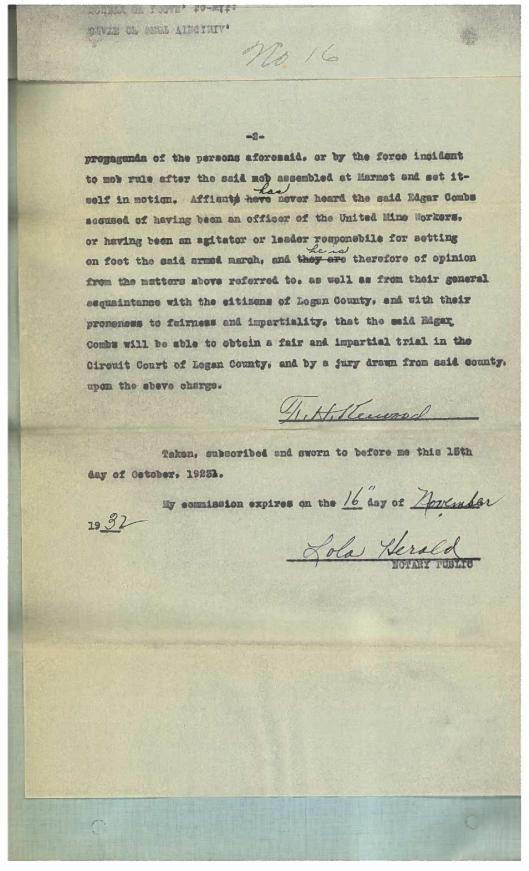
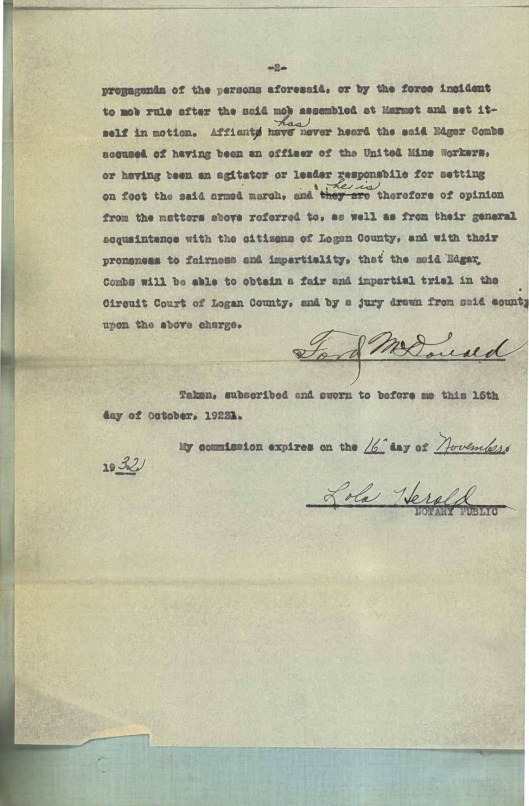
State v. Edgar Combs (1923): Statement of F.H. Kerwood, No. 16

01 Monday Jul 2019

Posted by Brandon Ray Kirk in Battle of Blair Mountain, Coal, Logan

≈ Leave a comment

Tags

Appalachia, Blair Mountain, F.H. Kerwood, history, Logan, Logan County, Lola Herald, merchant, Mine Wars, United Mine Workers of America, West Virginia

Document 16-1Document 16-2

State v. Edgar Combs (1923): Statement of Ford McDonald, No. 14

11 Tuesday Jun 2019

Posted by Brandon Ray Kirk in Battle of Blair Mountain, Coal

≈ Leave a comment

Tags

Appalachia, Blair Mountain, coal, Edgar Combs, Ford McDonald, history, Logan, Logan County, Lola Herald, United Mine Workers of America, West Virginia

Document 14-1Document 14-2

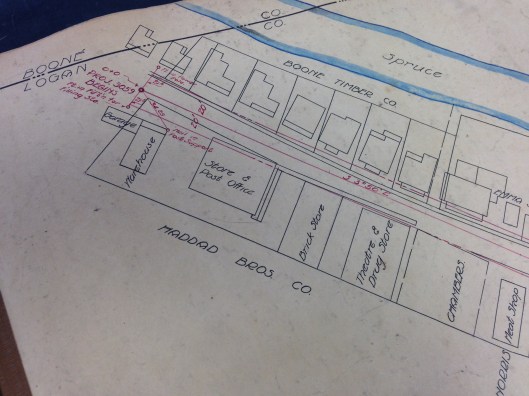
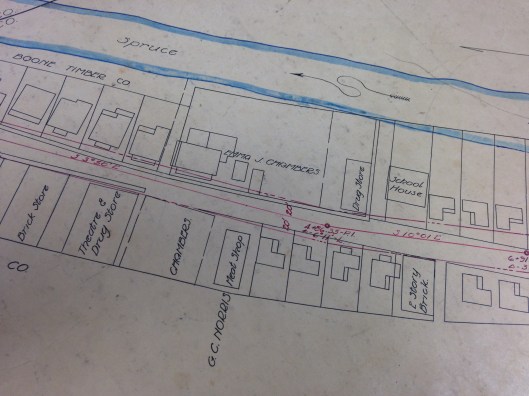
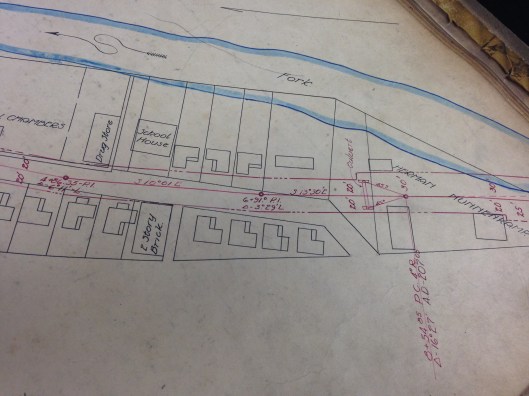
Clothier, WV (1925)

08 Wednesday May 2019

Posted by Brandon Ray Kirk in Battle of Blair Mountain, Boone County, Clothier, Coal, Timber

≈ Leave a comment

Tags

Appalachia, Boone County, Boone Timber Company, Clothier, Coal River, Emma J. Chambers, Haddad Brothers Company, history, Logan County, Spruce Fork, West Virginia

IMG_5485IMG_5486IMG_5487IMG_5488IMG_5489

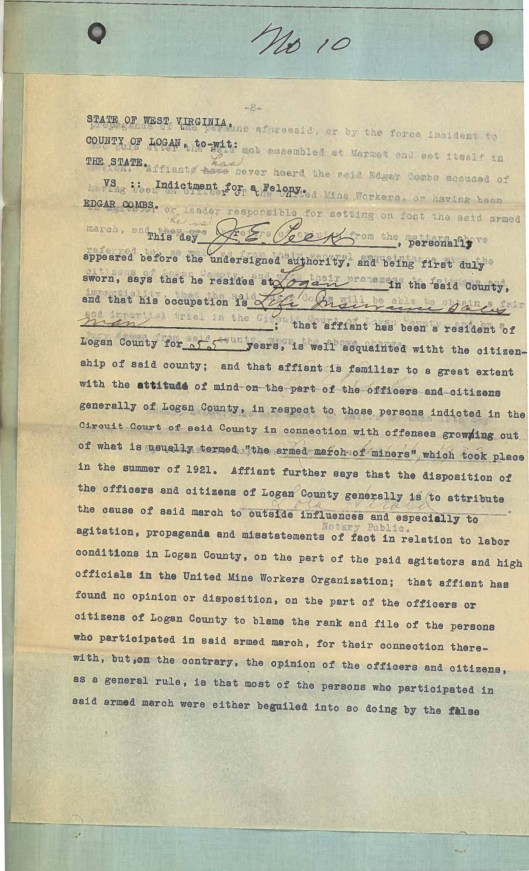
State v. Edgar Combs (1923): Statement of J.E. Peck, No. 10

29 Monday Apr 2019

Posted by Brandon Ray Kirk in Battle of Blair Mountain, Coal, Logan

≈ Leave a comment

Tags

Appalachia, Battle of Blair Mountain, Blair Mountain, coal, Edgar Combs, history, insurance salesman, J.E. Peck, Logan, Logan County, Lola Herald, notary public, United Mine Workers of America, West Virginia

Document 10-1Document 10-2

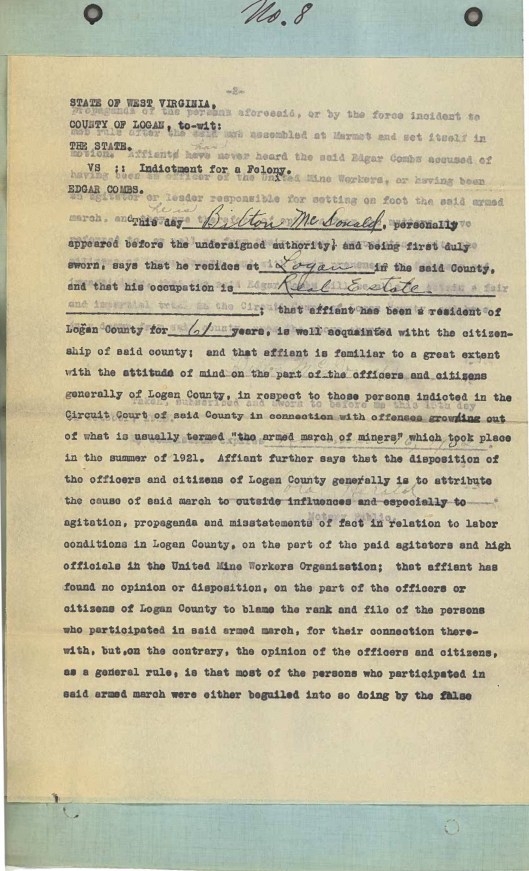
State v. Edgar Combs (1923): Statement of Bilton McDonald, No. 8

05 Friday Apr 2019

Posted by Brandon Ray Kirk in Battle of Blair Mountain, Coal, Logan

≈ Leave a comment

Tags

Appalachia, Bilton McDonald, crime, genealogy, history, Logan, Logan County, Lola Herold, Mine Wars, United Mine Workers of America, West Virginia

Document 8-1Document 8-2

State v. Edgar Combs (1923): Statement of J.G. Hunter, No. 3

19 Tuesday Mar 2019

Posted by Brandon Ray Kirk in Battle of Blair Mountain, Coal, Logan

≈ Leave a comment

Tags

Appalachia, Blair Mountain, druggist, Edgar Combs, genealogy, history, J.G. Hunter, Logan, Logan County, Lola Herald, Mine Wars, United Mine Workers of America, West Virginia

Document 3-1Document 3-2

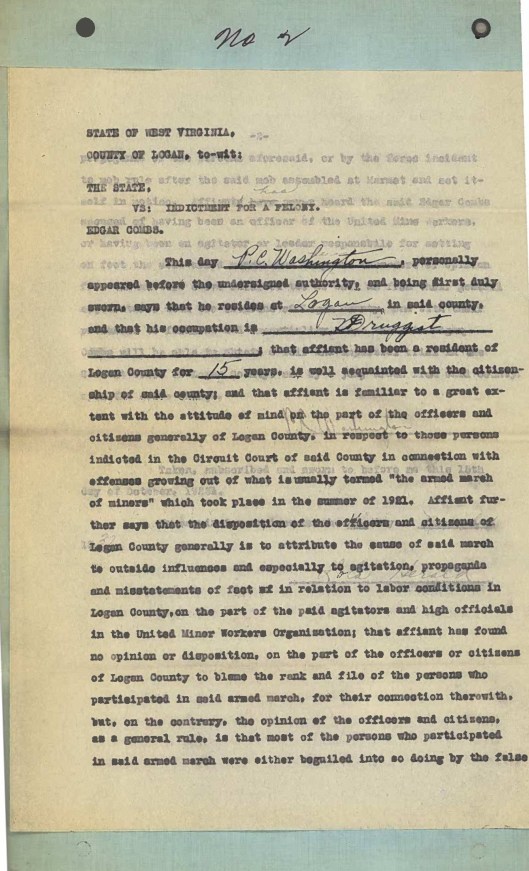
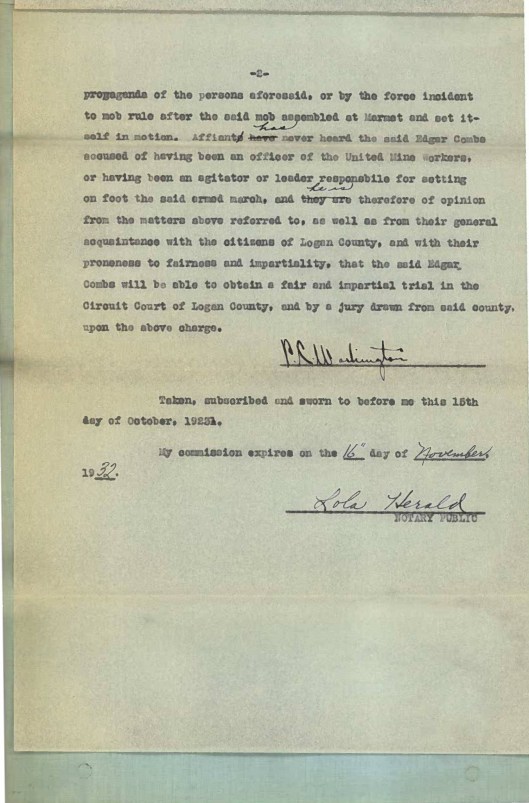
State v. Edgar Combs (1923): Statement of P.C. Washington, No. 2

12 Tuesday Feb 2019

Posted by Brandon Ray Kirk in Battle of Blair Mountain, Coal, Logan

≈ Leave a comment

Tags

Appalachia, Blair Mountain, druggist, Edgar Combs, genealogy, history, Logan, Logan County, Lola Herald, P.C. Washington, United Mine Workers of America, West Virginia

Document 2-1Document 2-2

Image

State v. Edgar Combs (1923): Statement of Thomas West, No. 11

29 Tuesday Jan 2019

Tags

Appalachia, Blair Mountain, Cabell County, coal, crime, deputy sheriff, Edgar Combs, H.W. Houston, history, Huntington, lawyer, Logan County, Mine Wars, Thomas West, United Mine Workers of America, West Virginia

document 11-1

Posted by Brandon Ray Kirk | Filed under Battle of Blair Mountain, Coal, Huntington, Logan

≈ Leave a comment

State v. Edgar Combs (1923): Statement of Frank R. Remlinger, No. 9

25 Friday Jan 2019

Posted by Brandon Ray Kirk in Battle of Blair Mountain, Coal, Logan

≈ Leave a comment

Tags

Appalachia, Aracoma Hotel, crime, Edgar Combs, Frank R. Remlinger, history, hotel manager, Logan, Logan County, Lola Herald, Mine Wars, United Mine Workers of America, West Virginia

document 9-1

Mr. Remlinger was a native of New York. He appears in the 1920 census for Logan County, WV.

document 9-2

Image

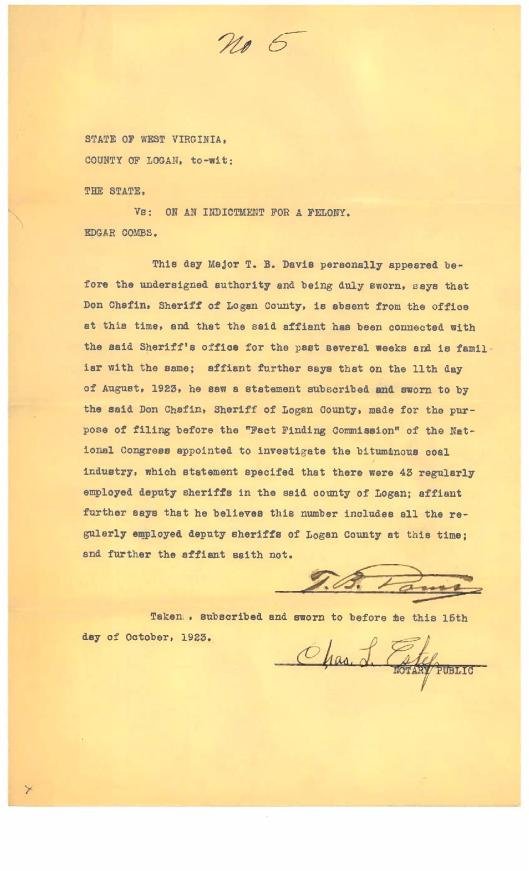
State v. Edgar Combs (1923): Statement of Major T.B. Davis, No. 5

23 Wednesday Jan 2019

Tags

Appalachia, Blair Mountain, Charles L. Estep, coal, Don Chafin, Edgar Combs, genealogy, history, Logan County, sheriff, T.B. Davis, West Virginia

document 5-1

Posted by Brandon Ray Kirk | Filed under Battle of Blair Mountain, Coal, Logan

≈ Leave a comment

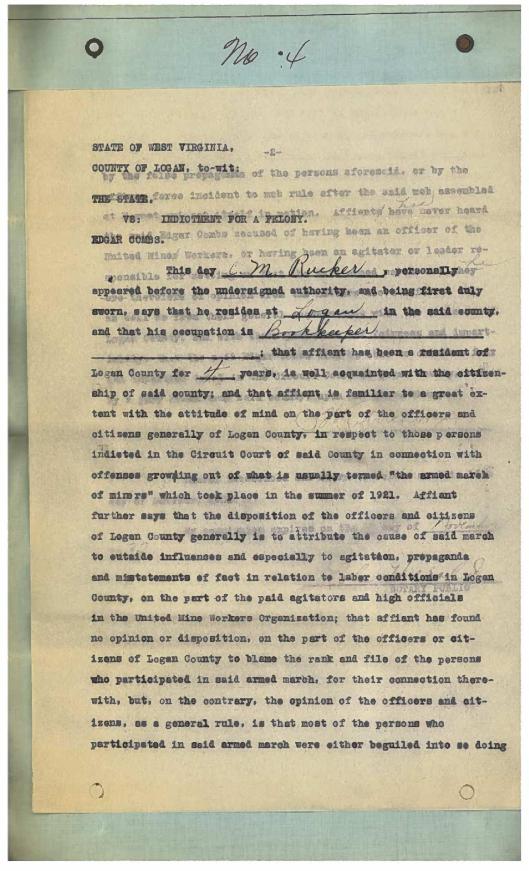
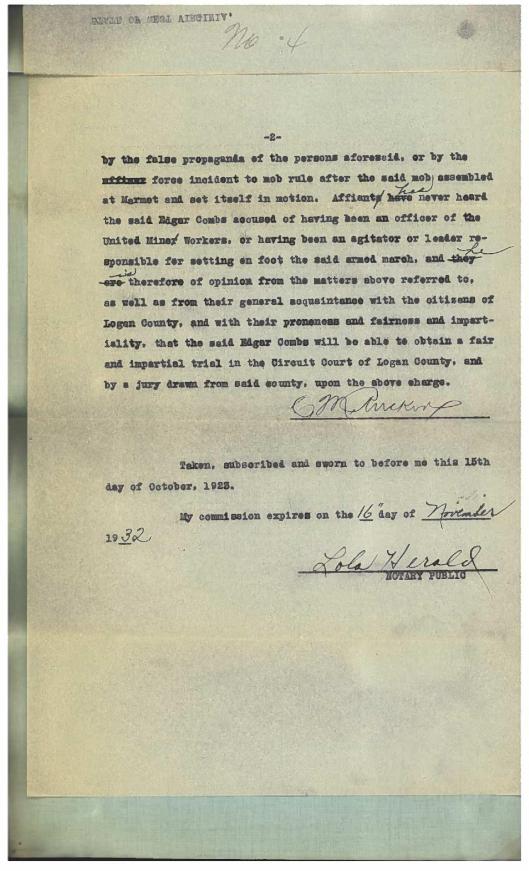
State v. Edgar Combs (1923): Statement of C.M. Rucker, No. 4

18 Friday Jan 2019

Posted by Brandon Ray Kirk in Battle of Blair Mountain, Coal, Logan

≈ Leave a comment

Tags

Appalachia, Blair Mountain, C.M. Rucker, Edgar Combs, history, Logan, Logan County, Lola Herald, Mine Wars, United Mine Workers of America, West Virginia

document 4-1document 4-2

State v. Edgar Combs (1923): Statement of Augustine Washington, No. 1

16 Wednesday Jan 2019

Posted by Brandon Ray Kirk in Battle of Blair Mountain, Coal, Logan

≈ Leave a comment

Tags

Appalachia, Augustine Washington, Blair Mountain, Chafin and Estep, crime, druggist, Edgar Combs, history, Logan, Logan County, Lola Herold, Marmet, United Mine Workers of America, West Virginia

document 1-1document 1-2

Harrison Blair Was Early Sheriff in Logan County, WV (1937)

12 Wednesday Dec 2018

Posted by Brandon Ray Kirk in American Revolutionary War, Battle of Blair Mountain, Logan, Williamson

≈ 1 Comment

Tags

American Revolution, Anderson Blair, Anderson Dempsey, Appalachia, Battle of Blair Mountain, Blair Mountain, Chlorina Blair, civil war, Democratic Party, Edward Baisden, Frances Baisden, genealogy, genelaogy, Harrison Blair, history, Jean Schmidt Baisden, Joe Blair, John Blair, John McCoy, Joseph Baisden, Joseph Blair, Laurel Fork, Logan County, Lucinda Osborne, Mahulda Blair, Marquis de Lafayette, Mary Chafin, Mingo County, Moses Parsley, Polly Baisden, Powells Valley, Republican Party, Rhoda Blair, sheriff, Solomon Baisden, Susan Bennett, Thomas Copley, West Virginia, Williamson

From the Logan Banner of Logan, WV, comes this bit of history about Harrison Blair, an early sheriff in Logan County, WV:

Harrison Blair Was First Democrat Sheriff In Logan

Son of Namesake Of Town Of Blair Served Shortly After Civil War; Democrats Held Office Continuously Until 1924

Harrison Blair Appointed Sheriff 1.JPG

John Blair, namesake of the little mining town which nestles at the foot of Blair Mountain on the headwaters of Laurel Fork, was the father of Logan county’s first Democratic sheriff.

He was a native of Powells Valley in Virginia and first settled just above the present site of Williamson. He married Polly Baisden and later settled near his father-in-law, Jean Schmidt Baisden, at the Mouth of Laurel.

Blair died in 1860 after rearing a family of three sons and three daughters. His son, Harrison, was Logan county’s first Democratic sheriff after the Civil War.

Harrison was married twice. He first married a Miss Johnson and later a Miss Chafin. His brothers Anderson and Joe married McCoy sisters and made their home near their brother and father on Laurel Fork.

Jean Schmidt Baisden, father-in-law to John Blair, was one of the first settlers at the Mouth of Laurel. He came with Lafayette to America and served under him during the Revolution.

After the war he located at Richmond, Va., and then moved to Reeds Island, New York, where he married a Miss Burnham. At the beginning of the 19th century he moved to the mouth of Laurel and reared a family.

He had three sons and two daughters. His sons were Joseph, who married Lucinda Osborne; Solomon, who married Mary Chafin; and Edward, who married Susan Bennett.

His daughters were Polly, who married Harrison Blair; and Frances, who married Thomas Copley.

John Blair’s daughters were Mahulda, who married Anderson Dempsey; Chlorina, who married John McCoy; and Rhoda, who married Moses Parsley.

The Blairs and Baisdens are a well-known family on the Laurel Fork side of Blair Mountain, though few have crossed the divide and settled on the Guyan river watershed.

Early county history has it that the Blairs were active politically in the county following the Civil War, but no definite facts can be found of individuals holding any official position other than Harrison, who was the first of a long line of Democratic sheriffs, which ruled the county up until 1924, when the Republicans broke the power of Democrats and began their regime which ended in 1932.

Source: Logan (WV) Banner, 4 May 1937.

Rev. J.H. Burns (1929)

06 Saturday Oct 2018

Posted by Brandon Ray Kirk in African American History, Battle of Blair Mountain

≈ Leave a comment

Tags

African-Americans, Appalachia, Atlanta, Augusta, genealogy, Georgia, history, J.H. Burns, Logan Banner, Logan County, Morehouse College, Sharples, Shiloh Baptist Church, Walker Baptist Institute, West Virginia

In April of 1929, the Logan Banner profiled numerous prominent African-American residents of Logan County, West Virginia.

Rev. J.H. Burns

Pastor, Shiloh Baptist Church, Sharples

The Reverend Burns has been pastor for five consecutive years. The church of his charge has an enrolled membership of 175, and is one of the best organized congregations in the field. All of its departments, missionary society, Sunday school, B.Y.P.U. and other branches are active and effective. His services in the community and county, as a moral and spiritual influence, are constructive and uplifting. Rev. Burns has been in the ministry for twenty-one years, covering numerous fields of activity in his long period of service to the cause of religion among his people. The reverend’s educational qualifications embrace studies at Walker Baptist Institute, Augusta, and Morehouse College, Atlanta. All matters pertaining to the welfare of his people, enlist Rev. Burns’ support and he wields a large measure of power among his people in the community and county.

Source: Logan (WV) Banner, 16 April 1929

Sociologist Jerome Davis Letter about Labor Conditions in Logan County, WV (1923)

25 Tuesday Sep 2018

Posted by Brandon Ray Kirk in Battle of Blair Mountain, Coal, Logan

≈ Leave a comment

Tags

American Sociological Society, Appalachia, coal, Colorado, Dartmouth College, deputy sheriff, Don Chafin, Edgar Combs, Edward F. Moore, H.W. Houston, Hanover, history, Industrial Management, Jerome Davis, Logan, Logan County, Macmillan Company, New Hampshire, notary public, Pennsylvania, sheriff, United Mine Workers of America, West Virginia

State v. Edgar Combs

Affidavit

Filed in open Court

Oct. 15, 1923

***

The American Sociological Society

Dartmouth College

Hanover, N.H.

August 1, 1923

As a teacher in Dartmouth College I have been called on to make several investigations into conditions in coal mining regions in Colorado and Pennsylvania. One of my studies was published by the Macmillan Company and another by Industrial Management. I have never been connected in any way with a labor union and believe that my testimony is impartial.

I have recently been to West Virginia for the purpose of studying conditions in the coal industry there. I was in the state for a total of about a month during June and July of this year. For the major part of this time I was in Logan County or in the surrounding counties.

I found it extremely difficult to secure affidavits from coal miners and others because they stated they were afraid of Don Chaffin and his Deputy Sheriffs. It seemed to be the general consensus of opinion that any person connected with the United Mine Workers of America would not knowingly be permitted to remain in the county and might be subjected to violence. I counted the names of over two hundred deputy sheriffs in the court records of the county and Don Chaffin informed me that the unions had so far been successfully kept out of the district.

Whether justified or not, operators and officials with whom I talked in Logan seemed to feel especial bitterness against H.W. Houston, Attorney of the United Mine Workers of America. It seems to me probable that necessary witnesses for the defense would be reluctant to testify fully and freely, and that they might actually be afraid to attend court for any considerable time. I know that there are a large number of responsible citizens of Logan County who share this belief, although they may not be willing to testify publicly for the reasons given above.

Jerome Davis

Taken, subscribed and sworn to before me this first day of July, 1923.

My commission expires on the 17th day of Feb 1928.

Edward F. Moore, Notary Public

***

For more about Jerome Davis, follow these links:

https://en.wikipedia.org/wiki/Jerome_Davis_(sociologist)

http://archiveswest.orbiscascade.org/ark:/80444/xv87313

https://fdrlibrary.org/documents/356632/390886/findingaid_davis_jerome.pdf/d0d4b6dd-6e43-4263-8167-789da6b972dc

Recollections of McKinley Grimmett of Bruno, WV 2 (1984)

03 Monday Sep 2018

Posted by Brandon Ray Kirk in Battle of Blair Mountain, Coal, Italian American History, Logan, Man

≈ Leave a comment

Tags

Alva Grimmett, Appalachia, Barnabus, Blair Mountain, Bruno, Buffalo Creek, Cabin Creek, Campbell's Creek, carpenter, Charleston, Christian, coal, Democratic Party, deputy sheriff, Don Chafin, drum runner, Ed Goodman, Emmett Scaggs, George McClintock, Great Depression, Hatfield Bottom, Henderson Grimmett, history, Joe Hatfield, John Chafin, Kanawha County, Kistler, Landsville, Logan County, Mallory, Mallory Coal Company, Matilda Hatfield, McKinley Grimmett, moonshining, Nancy Grimmett, prosecuting attorney, Republican Party, Sand Lick, sheriff, Superintendent of Schools, Tennis Hatfield, Thomas Hatfield, United Mine Workers of America, West Virginia, Wild Goose Saloon

McKinley Grimmett was born on November 30, 1896 to Henderson and Nancy (Hatfield) Grimmett at Sand Lick, Logan County, WV. On May 14, 1916, Mr. Grimmett married a Ms. Plymale, who soon died, in Logan County. One child named Alva died on June 21, 1919 of whooping cough, aged fourteen months. His World War I draft registration card dated September 12, 1918 identifies him as having blue eyes and light-colored hair. He was employed by Mallory Coal Company at Mallory, WV. On November 13, 1919, he married Matilda “Tilda” Hatfield, daughter of Thomas Hatfield, in Logan County. He identified himself as a farmer in both of his marriage records. During the 1920s, he served as a deputy under Sheriff Tennis Hatfield.

The following interview of Mr. Grimmett was conducted at his home on July 17, 1984. In this part of the interview, he recalls his occupations. Coal, Don Chafin, Tennis Hatfield, unionization, and the Great Depression are featured.

***

Did you ever go to work in the mines?

Oh yeah. I’ve been… That’s what I done over here for 44 years and two months, in and around the mines.

Who hired you?

Yeah, a fellow by the name of Frazier down here at Logan. Superintendent. Not at Logan. Landsville. I stayed there four years, pretty nigh of five years. Then I quit down there and I come to Christian and I stayed up here. A fellow by the name of Harry Venebale hired me over here, the superintendent. And I stayed with him 34 years. Wouldn’t let nobody else hold a lever but me. Drum runner. I’d run as high as 35 railroad cars a day off of that hill. I’ve done it many a day.

Did you do other jobs?

Oh yeah. Days the mines didn’t work I was the carpenter boss. That is, I was overseer over ‘em all. After the union come in, why I wouldn’t take it as a boss. They just run me as a leader, you know. At that time, I’d either have to go in as a boss or get off the union, you know. And I knowed the union was the best for me and I stayed with the union.

Did you have any role in organizing the union?

Oh yeah. I had a big… They wouldn’t let us organize on their property. We had to go across an island over there in the river and have our meeting to organize.

Is it true that local men had the union organized and were waiting for Washington to allow it?

Yeah, that’s about right. We got it. No, they come from Cabin Creek and Kanawha County and Campbell’s Creek over there and tried to organize us. Don Chafin was the high sheriff. He got so much ton per coal and everything. And we couldn’t do a thing because he had every child, woman, and everything else on his side to block us every way. They come to Blair Mountain and had fights. Killed several people, too. Both sides. But I never was in it. I was running a drum and they never did ask me to go. But they paid ‘em. They did go from over there. And went from around here, too. To fight against them, you know. And there was several of them got killed up Dingess Run there. I’ve been at the place where one fellow, sink hole he was in. There was four of them got killed: deputy sheriffs. George Gore and a fellow by the name of Mitchem. I don’t know the other two. I’ve forgot ‘em now. George Gore and Mitchem. But I know where they was at and everything there.

Can you describe Don Chafin?

I’m not too familiar with him now. But he controlled Logan County all the time. Whatever he said, why they had to do or they’d get around you and beat you to death or something like that, throw you in the river, tie your hands behind you – stuff like that.

Were you a Chafin deputy?

I worked for Tennis Hatfield and Joe.

How did Tennis hire you?

Well, Emmett Scaggs run against him. And the County Court was Democratic and they give it all to Emmett. Tennis carried it up to the high court and he won it. About that time, that’s when it was, 1922 I believe it was, last part of 1922, well Emmett, he was a well-educated fellow, he had been the superintendent of schools and everything, he turns around and registers and turned to be a Republican, well then they appointed him prosecuting attorney. You understand? Give him a job. Now the Democrats didn’t do that—Tennis and all of them did. It made a full change around whenever Tennis was elected. The County Court had been Democratic all the time and it turned over, changed hands, and make a Republican County Court. Just like they’ve got now, it’s all Democratic. And a Republican couldn’t get nothing. I’ve seen John Chafin and Hi beat an Italian man. He had two ducks carrying them. Had to wade the river. They fired him over there at Christian. Had to ride horses that day and time. Didn’t have no cars. And they jumped off their horses after they overtook him and they beat him until he couldn’t walk. My dad had a store down at the mouth of the creek and he went and got him and got him up to the store and his ducks got loose. And Mother got the ducks and she raised all kinds of ducks from ‘em. But I haven’t seen that man from that day to this. He’s dead now. But they liked to beat him to death. Now Henry Allen was another one. They barred him from the union. He was a big organizer when it first started. And he got to playing crooked work and they put him out of the union. And he’d done something or other to the party. And they beat him around there at Kistler so hard – the creek was up. Buffalo was a big creek any way. They throwed him up there at Ben Gall’s store in the creek and he washed down there at Kistler and lodged up behind the middle pier at the railroad track. Some men run in and helped him out. I forget who it was. I didn’t see that go off but that’s what happened. Well, he come up here, Henry did, to where I was walking and wanted me to get him a job. Well, I told him I would talk to the boss. A fellow by the name of George Kore. George Kore give him a job working for Tony Lumber Company, helping build houses, you know. He worked about three days and why George fired him and wouldn’t have nothing more to do with him. Henry’s dead now. That’s the last I knowed of him.

Do you remember the names of any early union organizers?

I never did meet ‘em. I tell you they kept me busy all the time as a repair man and drum runner, and days that the mines didn’t run I had to do repair work on the houses and tipples and stuff. Them organizers was, one of ‘em was a fellow by the name of Hall. I’ve seen him but I forget his first name. He had an office over there in Charleston. He was president of the union then. Don Chafin went over there and aimed to tell him what to do and he shot Don. It put Don in the hospital for a long time. After he got out there, Don Chafin and Tennis Hatfield had been in to the Wild Goose business selling bootlegging moonshine whisky up at Hatfield Bottom [in Barnabus]. And they fell out. And Tennis, he goes before the federal grand jury. I forget who the judge was. I knowed him. [George McClintock] And Tennis indicted him and sent him to the pen for four years. But they never did do nothing to Hall for shooting him over there in the miners’ office. But he never did go back in it anymore.

You remember when the mines began to mechanize?

Oh, yeah. I was in there then. I worked up til ’62.

How did the mines change?

Well, they loaded by the car that day and time when they first started. Then they got conveyors in. And they cut the coal and they throwed it on them conveyors by hand. And they built belt-lines from here all across the river, just as far as you wanted to, you know. Had different offsets in it and different motors pulling the belt line. And it come out into a big tipple and dumped into a tipple and then I took it from that. I run it 2100 feet down the incline over there on two monitors on three rails. Now you figure that out. Ten tons to each monitor Now they come up there to the middle way place and they put four rails, you understand? And then one monitor passed the other one at that middle place. All the time. They had a big drum. The drum was twelve foot in diameter and fourteen foot long that way. Built out of gum. Six by six gum. Rope was inch and a quarter.

Was there much bitterness among people when mechanization started?

Oh, no. They was all for it. They was everything was settled. Whatever the union said, they had to do at that time. It was all loaded by the ton by the car. There wasn’t no weighing or nothing like that ‘til they got the union. Then they had to put scales in, you know, and weigh these cars of coal and they had to pay so much a ton. Why, there was people over there at Christian – I never will forget it. Ed Goodman was his name. He’d be broke every week. He’d never load over four or five cars. Just 35 cents a car and a car would hold about four tons, five. And they was starving him to death. He’d come in there on paydays and I’d come in. I was always the last man getting off the hill. He was wanting on dollar scrip. He’d come over and whisper to me and tell me they wouldn’t let him have a one dollar scrip. And I’d vouch for him. Sometimes I’d pull my pay envelope out—they put your money in a pay envelope, you know—and I’ve pull out my pay envelope and give him a dollar and that would do him until Monday. He had a big family. They all weren’t home at that time. He managed. And then when the union come in, they had to treat him the way they did the rest of them.

Did you maintain steady work during the Great Depression?

Yeah. I’ve always had work. I get awful good Social Security. I study all the time – they worked me too much. I actually couldn’t stand it hardly. They’d work me Sunday and every other day. But now I never got no big money at that time. I started off at four dollars a day and I ended up with two hundred and fifty dollars a month. I stayed on that way for 19 years. They wouldn’t give me a raise. I asked ‘em for more money. Miners got a raise, you know. They said no, he couldn’t give it. Was going broke. I said well if you won’t give it I’ll be leaving you first of the month. And he didn’t think I would. Day before I was supposed to quit I sent my toolbox off the hill and everything. They had a man-car there that they rode backwards and forwards that people rode up and down the hill in. That night the man said if I would stay he would split the difference with me. Give me half. Give me twenty-five dollars. I said no I won’t do it. I’ve made you a fortune here. So he wouldn’t come up to fifty dollars and I wouldn’t come off it. Next day they had a wreck. A fella was running… I was sitting here. And they wasn’t no timber around there and I could see the monitors from here. And he wrecked and I never seen such dust in all of my life. And I got in my car and went over there. And they tore one up so bad they had to buy a new one. A monitor. That cost ‘em some money, too.

NOTE: Some names may be transcribed incorrectly.
← Older posts
Newer posts →

Feud Poll 1

If you had lived in the Harts Creek community during the 1880s, to which faction of feudists might you have given your loyalty?

Categories

  • Adkins Mill
  • African American History
  • American Revolutionary War
  • Ashland
  • Atenville
  • Banco
  • Barboursville
  • Battle of Blair Mountain
  • Beech Creek
  • Big Creek
  • Big Harts Creek
  • Big Sandy Valley
  • Big Ugly Creek
  • Boone County
  • Breeden
  • Calhoun County
  • Cemeteries
  • Chapmanville
  • Civil War
  • Clay County
  • Clothier
  • Coal
  • Cove Gap
  • Crawley Creek
  • Culture of Honor
  • Dingess
  • Dollie
  • Dunlow
  • East Lynn
  • Ed Haley
  • Eden Park
  • Enslow
  • Estep
  • Ethel
  • Ferrellsburg
  • Fourteen
  • French-Eversole Feud
  • Gilbert
  • Giles County
  • Gill
  • Green Shoal
  • Guyandotte River
  • Halcyon
  • Hamlin
  • Harts
  • Hatfield-McCoy Feud
  • Holden
  • Hungarian-American History
  • Huntington
  • Inez
  • Irish-Americans
  • Italian American History
  • Jamboree
  • Jewish History
  • John Hartford
  • Kermit
  • Kiahsville
  • Kitchen
  • Leet
  • Lincoln County Feud
  • Little Harts Creek
  • Logan
  • Man
  • Matewan
  • Meador
  • Midkiff
  • Monroe County
  • Montgomery County
  • Music
  • Native American History
  • Peach Creek
  • Pearl Adkins Diary
  • Pecks Mill
  • Peter Creek
  • Pikeville
  • Pilgrim
  • Poetry
  • Queens Ridge
  • Ranger
  • Rector
  • Roane County
  • Rowan County Feud
  • Salt Rock
  • Sand Creek
  • Shively
  • Spears
  • Sports
  • Spottswood
  • Spurlockville
  • Stiltner
  • Stone Branch
  • Tazewell County
  • Timber
  • Tom Dula
  • Toney
  • Turner-Howard Feud
  • Twelve Pole Creek
  • Uncategorized
  • Warren
  • Wayne
  • West Hamlin
  • Wewanta
  • Wharncliffe
  • Whirlwind
  • Williamson
  • Women's History
  • World War I
  • Wyoming County
  • Yantus

Feud Poll 2

Do you think Milt Haley and Green McCoy committed the ambush on Al and Hollene Brumfield in 1889?

Blogroll

  • Ancestry.com
  • Ashland (KY) Daily Independent News Article
  • Author FB page
  • Beckley (WV) Register-Herald News Article
  • Big Sandy News (KY) News Article
  • Blood in West Virginia FB
  • Blood in West Virginia order
  • Chapters TV Program
  • Facebook
  • Ghosts of Guyan
  • Herald-Dispatch News Article 1
  • Herald-Dispatch News Article 2
  • In Search of Ed Haley
  • Instagram
  • Lincoln (WV) Journal News Article
  • Lincoln (WV) Journal Thumbs Up
  • Lincoln County
  • Lincoln County Feud
  • Lincoln County Feud Lecture
  • LinkedIn
  • Logan (WV) Banner News Article
  • Lunch With Books
  • Our Overmountain Men: The Revolutionary War in Western Virginia (1775-1783)
  • Pinterest
  • Scarborough Society's Art and Lecture Series
  • Smithsonian Article
  • Spirit of Jefferson News Article
  • The Friendly Neighbor Radio Show 1
  • The Friendly Neighbor Radio Show 2
  • The Friendly Neighbor Radio Show 3
  • The Friendly Neighbor Radio Show 4
  • The New Yorker
  • The State Journal's 55 Good Things About WV
  • tumblr.
  • Twitter
  • Website
  • Weirton (WV) Daily Times Article
  • Wheeling (WV) Intelligencer News Article 1
  • Wheeling (WV) Intelligencer News Article 2
  • WOWK TV
  • Writers Can Read Open Mic Night

Feud Poll 3

Who do you think organized the ambush of Al and Hollene Brumfield in 1889?

Recent Posts

  • Logan County Jail in Logan, WV
  • Absentee Landowners of Magnolia District (1890, 1892, 1894)
  • Charles Spurlock Survey at Fourteen Mile Creek, Lincoln County, WV (1815)

Ed Haley Poll 1

What do you think caused Ed Haley to lose his sight when he was three years old?

Top Posts & Pages

  • U.B. Buskirk of Logan, WV (1893-1894)
  • Vance Homeplace and Cemetery on West Fork (2017)
  • Tice Elkins in Ferrellsburg, WV
  • Alice Dingess piano
  • Red Rock Cola in Logan, WV (1939)

Copyright

© Brandon Ray Kirk and brandonraykirk.wordpress.com, 1987-2023. Unauthorized use and/or duplication of this material without express and written permission from this blog’s author and/or owner is strictly prohibited. Excerpts and links may be used, provided that full and clear credit is given to Brandon Ray Kirk and brandonraykirk.wordpress.com with appropriate and specific direction to the original content.

Archives

  • February 2025
  • January 2025
  • October 2023
  • September 2023
  • December 2022
  • November 2022
  • May 2022
  • April 2022
  • February 2022
  • November 2021
  • October 2021
  • September 2021
  • June 2021
  • May 2021
  • April 2021
  • March 2021
  • February 2021
  • January 2021
  • December 2020
  • November 2020
  • October 2020
  • July 2020
  • June 2020
  • May 2020
  • April 2020
  • March 2020
  • February 2020
  • January 2020
  • December 2019
  • November 2019
  • October 2019
  • September 2019
  • August 2019
  • July 2019
  • June 2019
  • May 2019
  • April 2019
  • March 2019
  • February 2019
  • January 2019
  • December 2018
  • November 2018
  • October 2018
  • September 2018
  • August 2018
  • July 2018
  • June 2018
  • May 2018
  • April 2018
  • March 2018
  • February 2018
  • January 2018
  • December 2017
  • November 2017
  • October 2017
  • September 2017
  • August 2017
  • July 2017
  • June 2017
  • May 2017
  • April 2017
  • March 2017
  • February 2017
  • January 2017
  • December 2016
  • November 2016
  • October 2016
  • September 2016
  • August 2016
  • July 2016
  • June 2016
  • May 2016
  • April 2016
  • March 2016
  • February 2016
  • January 2016
  • December 2015
  • November 2015
  • October 2015
  • September 2015
  • August 2015
  • July 2015
  • June 2015
  • May 2015
  • April 2015
  • March 2015
  • February 2015
  • January 2015
  • December 2014
  • October 2014
  • September 2014
  • August 2014
  • July 2014
  • June 2014
  • May 2014
  • April 2014
  • March 2014
  • February 2014
  • January 2014
  • December 2013
  • November 2013
  • October 2013
  • September 2013
  • August 2013
  • July 2013
  • June 2013
  • May 2013
  • April 2013
  • March 2013
  • February 2013
  • January 2013
  • December 2012
  • November 2012

Enter your email address to follow this blog and receive notifications of new posts by email.

Join 2,925 other subscribers

Tags

Appalachia Ashland Big Creek Big Ugly Creek Blood in West Virginia Brandon Kirk Cabell County cemeteries Chapmanville Charleston civil war coal Confederate Army crime culture Ed Haley Ella Haley Ferrellsburg feud fiddler fiddling genealogy Green McCoy Guyandotte River Harts Harts Creek Hatfield-McCoy Feud history Huntington John Hartford Kentucky Lawrence Haley life Lincoln County Lincoln County Feud Logan Logan Banner Logan County Milt Haley Mingo County music Ohio photos timbering U.S. South Virginia Wayne County West Virginia Whirlwind writing

Blogs I Follow

  • OtterTales
  • Our Appalachia: A Blog Created by Students of Brandon Kirk
  • Piedmont Trails
  • Truman Capote
  • Appalachian Diaspora

BLOOD IN WEST VIRGINIA is now available for order at Amazon!

Blog at WordPress.com.

OtterTales

Writings from my travels and experiences. High and fine literature is wine, and mine is only water; but everybody likes water. Mark Twain

Our Appalachia: A Blog Created by Students of Brandon Kirk

This site is dedicated to the collection, preservation, and promotion of history and culture in Appalachia.

Piedmont Trails

Genealogy and History in North Carolina and Beyond

Truman Capote

A site about one of the most beautiful, interesting, tallented, outrageous and colorful personalities of the 20th Century

Appalachian Diaspora

  • Subscribe Subscribed
    • Brandon Ray Kirk
    • Join 787 other subscribers
    • Already have a WordPress.com account? Log in now.
    • Brandon Ray Kirk
    • Subscribe Subscribed
    • Sign up
    • Log in
    • Report this content
    • View site in Reader
    • Manage subscriptions
    • Collapse this bar
 

Loading Comments...