Tags
Appalachia, Cabell County, culture, fiddler, Fred B. Lambert, history, life, Morris Wentz, photos, U.S. South, West Virginia
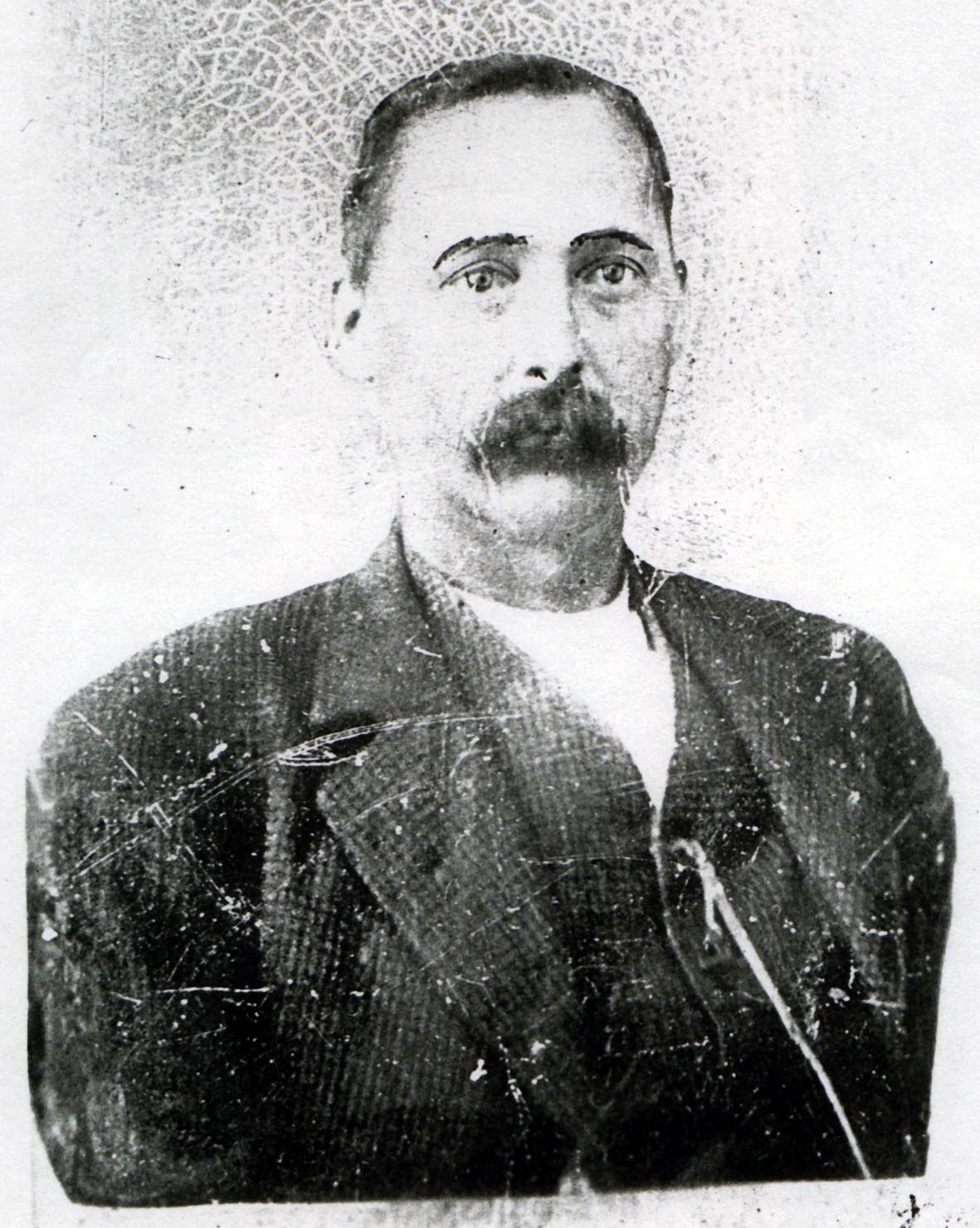
Morris Wentz, West Virginia fiddler
24 Tuesday Sep 2013
Tags
Appalachia, Cabell County, culture, fiddler, Fred B. Lambert, history, life, Morris Wentz, photos, U.S. South, West Virginia
Morris Wentz, West Virginia fiddler
24 Tuesday Sep 2013
Tags
Don Lambert, fiddling, Henry Pauley, Henry Peyton, history, Irvin Lucas, Jack McComas, Jim Franklin, Johnny Dalton, Leander Fry, Lincoln County, Tom Cooper, West Virginia
In 1925, likely stirred by Pomp Wentz’s comment, Fred B. Lambert interviewed Blind Bill Peyton of One Mile Creek, near West Hamlin in Lincoln County. Initially, Mr. Peyton spoke a great deal of his father, Henry Peyton, a fiddler, farmer, and timber man in the Guyandotte Valley.
“My father was among the first settlers on this creek,” Peyton said. “He settled about a mile and a half up from the river and raised all his 13 children in the same house. He followed farming mostly, and timbered some and sold some timber. Raised all kinds of stock — sheep, cows, hogs, horses — one dog at a time. Raised chickens, turkeys, guineas, pea fowls, geese, ducks, etc. My father was a good canoe maker. He made them out of poplar trees by digging out and shaping them, at $12 to $25, according to size. I often went to Logan for rafts. Henry Peyton, my father, Walter Lewis, Bob Lewis, and Dick Cremeans took a big barge of lumber to Cincinnati. Lumber was sawed early by a whip saw.”
“My father was a fiddler — played many a night,” Peyton said. “Young folks had a good many parties. Had all night dances. Uncle John Spears was the oldest fiddler I knew. He lived on Nine Mile Creek of Lincoln up on creek toward head. He was a good one. Some of the old-time tunes were: Maysville, Rebel Raid, Dalton Raid, Sourwood Mountain, Getting Off the Raft, Shelvin’ Rock, Dover, The Coquette, Leather Breeches Full of Stitches, Betsy Walker, Frosty Morning, Rollin’ Down the Sheets, The Grand Spy, Daniel Boone, Capt. Johnson, Cincinnati Belle, Rose in the Mountain, Rocky Mountain, The Blue Rooster, The Morning Star, The Butterfly, Tinpot Alley, Bonaparte Crossing the Alps, Butcher’s Row, The Brush Creek, Peach Tree, Waynesburg, The Basket, Nancy Rowland, The Arkansaw Traveler, and Cumberland Gap.”
Peyton spoke of other Lincoln County fiddlers, some of whom lived in the Harts area during Milt Haley’s time.
“Johnny Dalton, a blacksmith, came from East Virginia, settled at Falls, was a fiddler. Did your work and then played you a tune. Went to Mud River and died. Jack McComas of 6 mi. and Jim Franklin from Upper Two Mile were also fiddlers. Tom Cooper lived on Mud River, in Lincoln, above Hamlin. Morris Wentz and Ben France, who lived in Cabell, often came to Lincoln. Tom Peyton, my brother, Mig Sturgeon, Don Lambert, Irvin Lucas, and Leander Fry were fiddlers. The latter was a good one. Henry Pauley came from Boone County; settled on Parsoner Creek, and removed to near Four Mile of Guyan. He was well liked. Mr. Billy McKendree told of Dangerfield Bryant being a good fiddler and teacher of singing and instrumental music. A shoemaker by trade. He was lame. A good man and perfect gentleman.”
23 Monday Sep 2013
Posted in Music
Tags
Appalachia, Cabell County, fiddler, fiddling, Fred B. Lambert, Guyandotte River, history, J.T. "Pomp" Wentz, music, photos, steamboats, West Virginia

J.T. “Pomp” Wentz, riverboat captain in the Guyandotte Valley. From the Fred B. Lambert Papers, Special Collections Department, Morrow Library, Marshall University, Huntington, WV.
23 Monday Sep 2013
Posted in African American History, Civil War, Ed Haley, Music
Tags
Babe McCallister, banjo, Ben France, Billy Walker, Charley Dodd, civil war, fiddling, Henry France, Henry Peyton, history, J.T. "Pomp" Wentz, Jack McComas, Lincoln County, Morris Wentz, West Virginia, William S. Rogers
By the time of the Civil War, Benjamin France of Cabell County was the chief fiddler in the lower Guyandotte Valley. One person interviewed by Fred B. Lambert referred to him as “the best of all” in a list of fiddlers that included even Ed Haley. Of course, I was immediately interested in him.
According to Lambert’s notes, France was born in 1844. He “learned on a gourd fiddle, and was able to play when he entered the army. He served as a Rebel soldier, throughout the Civil War, entering the army, at the age of 17 years. He was noted as one of the best fiddlers of his time. He won two or three times, in contests, but his medals do not show when, nor whether they were first rank. Henry France, his nephew, says he could play all the old fiddle tunes, and could play all night without repeating the same tunes even once.”
France was a resident of Long Branch, near the Lincoln County line and died in 1918.
“From Cabell County, the principal fiddlers were Morris Wentz, Ben France, William S. Rogers and Charley Dodd,” according to J.T. “Pomp” Wentz, a riverboat captain who spoke with Lambert. “Banjoes were not used so much, in those days, but later Rev. Billy Walker and others used to play them very well. As a fiddler, Ben France played with the most ease of any man I ever saw. Morris Wentz played with some difficulty compared with Mr. France, but he could play almost anything. Morris Wentz used to play: ‘The Cold Frosty Morning’, ‘Going Back to Dixie’, ‘The Arkansas Traveler’, ‘Bonaparte’s Retreat’ (this pleased Billy Bramblett, the Frenchman), ‘Ducks in the Pond’, ‘The Puncheon Floor’, ‘Hop Light Ladies’, ‘The Boatsman’, ‘The Cackling Hen’, ‘Sourwood Mountain’, ‘Soldiers Joy’, ‘Little Birdie’, ‘Old Dan Tucker’, ‘Granny Will Your Dog Bite?’, ‘Liza Jane’, ‘The Shelvin’ Rock’, ‘Knock Kneed Nannie’, ‘Chippy, Get Your Hair Cut’, ‘The Rebel Raid’, ‘Turkey in the Straw’, ‘Sugar In the Gourd’, ‘Ginny, the Gal With the Blue Dress On’, ‘Old Joe Clark’, ‘Birdie’, ‘Old Napper’, ‘The Forked Duck’. After dancing the ‘set’ down, they would close with the ‘winder’.”
Apparently, the popular tunes of the day were “Forked Deer” and “The Peach Tree”.
“Babe McCallister, ‘a darkey’ owned by a farmer named McCallister from upper Mud River, was a master of ‘Forked Deer’,” one fiddler raved. “He ‘played the fiddle with the ‘free arm movement,’ the wrist joint only working, the elbow joint still, while the wrist joint was in active movement. To hear the coon on ‘Forked Deer’, his favorite tune, and call the cotillion figure was a great treat. Could I have inherited such talent with my fondness of and for the violin, it would have been dead easy that I should tour the universe and earn a million playing only ‘Forked Deer’ and ‘Peach Tree’.”
Further up the Guyandotte River from the Cabell County towns, in present-day Lincoln County, were fiddlers of lesser note.
“Some of the best fiddlers I ever knew in Lincoln County, were Henry Peyton, father of ‘Blind’ Bill Peyton, and Jack McComas, both of whom played before the Civil War,” said Pomp Wentz.
23 Monday Sep 2013
Posted in African American History, Logan
Tags
Andrew Bierne, Ann Lawson, Anthony Lawson, Appalachia, England, history, Logan, Logan County, Oceana, slavery, U.S. South, West Virginia, writing
Almost two hundred years ago, an Englishman made his way into the Guyandotte Valley and soon found himself fully engaged in the fur trading business and the creation of a new county.
Anthony Lawson was born on October 31, 1785 in Stanton, Northumberland, England. He was the son of Anthony and Margaret (Carse) Lawson. On May 26, 1806, Lawson married Ann Bilton, a daughter of Lewis and Jane Bilton, at Saint Helens Church in Longhorsley Parish, Northumberland. Ann was born on March 17, 1783 in Fieldhead, England.
In the early summer of 1817, Anthony and his family left England for America aboard the ship Active. “They left England on account of religious persecution,” according to the late Dr. Sidney B. Lawson, who spoke some years ago with historian Fred B. Lambert. Accompanying Lawson were his wife and four children: John Lawson, born in 1807 in Woodcraft, Northumberland; Lewis Bilton Lawson, born in 1808 in Stanhope, Northumberland; James B. Lawson, born in 1808 in Northumberland; and Anthony Lawson II, born in 1813.
On July 12, 1817, the Lawson family arrived at Philadelphia. They settled in Alexandria, Virginia, where Anthony’s uncle, John Lawson, operated a store on Cameron Street. While there, Ann gave birth to a fifth child named George Wilborn Lawson in 1818.
At that time, according to Ragland’s History of Logan County (1896), Lawson was persuaded to move to the Guyandotte Valley. “Col. Andrew Bierne, of Lewisburg, soon made his acquaintance, and induced him to come to the wilds of Guyandotte River and engage in the fur and ginseng trade,” Ragland wrote. “Mr. Lawson first settled near the present site of Oceana, where he remained about four years and then moved to the present site of Logan C.H.”
At Logan, which was then called the “Islands of Guyandot” and situated in Cabell County, Lawson ran a mercantile store. “Anthony had many buying and selling trips to Philadelphia,” writes James Avis of Albuquerque, New Mexico. “He would travel by horseback to the town of Guyandotte and from there by boat to Philadelphia. It is believed that he would visit with relatives living in Philadelphia.”
In 1824, when Logan County was formed from Cabell, Lawson served on the first County Court. His store was chosen as the seat of government for the new county. He also donated land for the construction of a courthouse. Reportedly, Logan was originally named Lawsonville but later had its name shortened to Lawnsville. Later still, it became Aracoma, then Logan Court House.
In 1830, Lawson was listed in the Logan County Census with his wife and four children, as well as two slaves (one female aged 10-24 and one male aged 0-10). His oldest son, John, was enumerator of the county census.
In 1840, Lawson was listed in the Logan County Census with his wife, son Anthony II, and three slaves. In that same year, sons John and James were also living in the county, with no slaves.
In 1847, Lawson became ill while on a return trip from Philadelphia. He was taken from a boat at Guyandotte, now Huntington’s east end, where he died of cholera on May 20. He was buried in the city cemetery. “Col. Anthony Lawson Sr. — Logan County — died at Guyandot aged upwards of 60 on his way home from Philadelphia,” the Richmond Whig wrote on June 17, 1847. “He often spoke of his birthplace as the vicinity of Alnwick Castle, the seat of the Percies in Yorkshire, England. He accumulated a large fortune which he left his children.”
On December 27, 1847, Ann Lawson was murdered by two of her slaves in Logan County. “Ann was mending a shirt for one of the slaves so that he and another slave could go to town for supplies,” Avis writes. “Thinking that they could be free after Anthony’s death, the negro she was mending the shirt for struck her on the head with an iron poker and she died.” After the murder, the slaves robbed Lawson. “The slave knew that money was kept in one of the drawers in the bureau,” according to Avis. “The poker was again used to pry open the drawer and take the money.” Two slaves named Bill and Hardin were accused of the murder. “The one that killed her was hanged, probably on the courthouse lawn,” Avis writes. “The other slave was severely punished.”
21 Saturday Sep 2013
Tags
Appalachia, Clyde Holton, culture, genealogy, Harts, history, life, Lincoln County, photos, timbering, U.S. South, Ward Brumfield, West Virginia
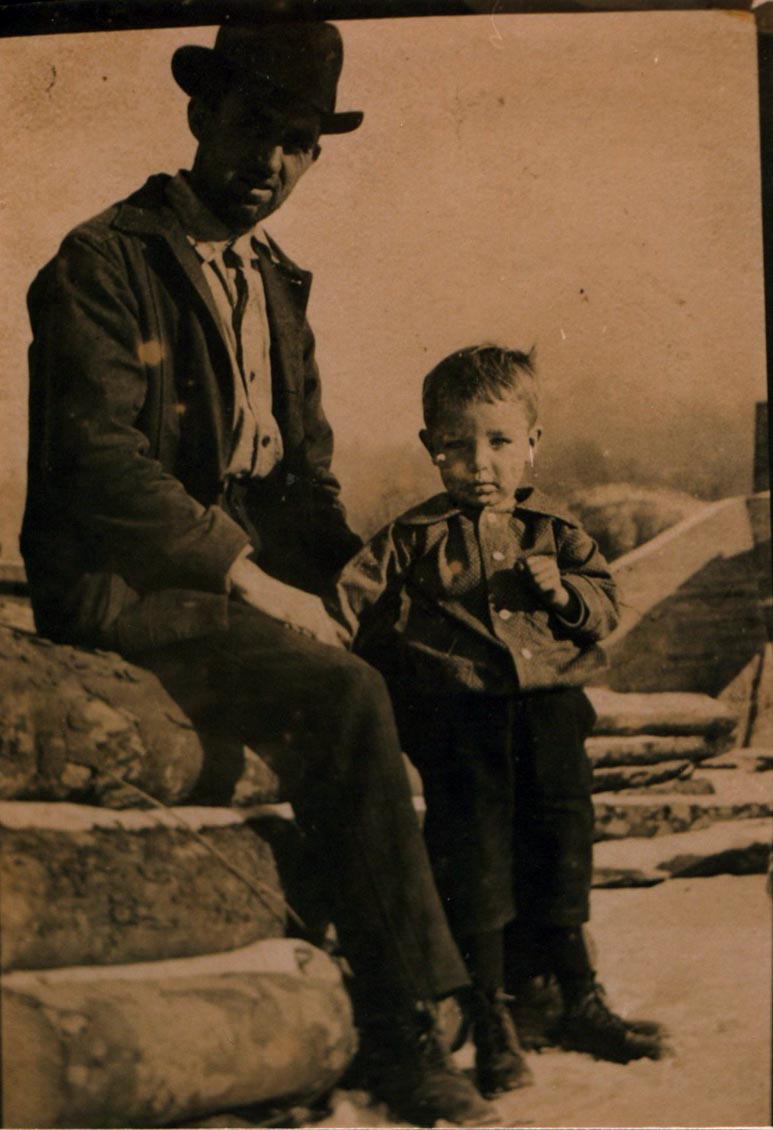
Deputy Sheriff Ward Brumfield with nephew Clyde Holton, taken in Harts, West Virginia, 1918-1920
20 Friday Sep 2013
Posted in Fourteen
Tags
Appalachia, culture, Fourteen Mile Creek, genealogy, history, John Henan Fry, life, Lincoln County, photos, U.S. South, West Virginia
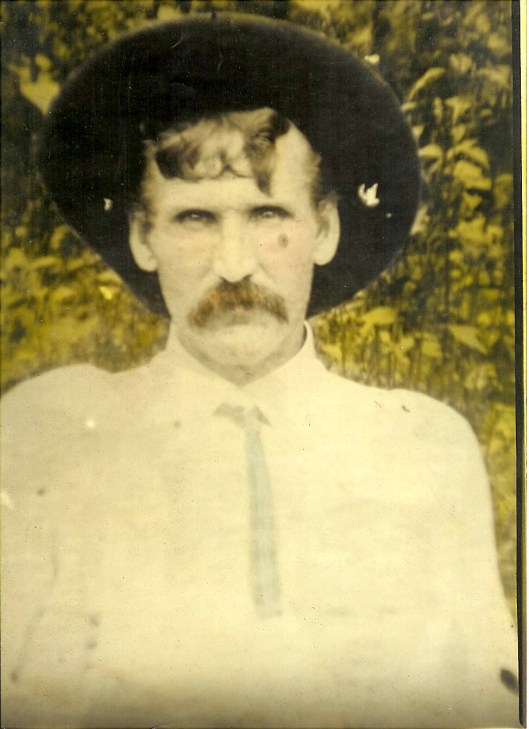
John Henan Fry
20 Friday Sep 2013
Posted in Ed Haley
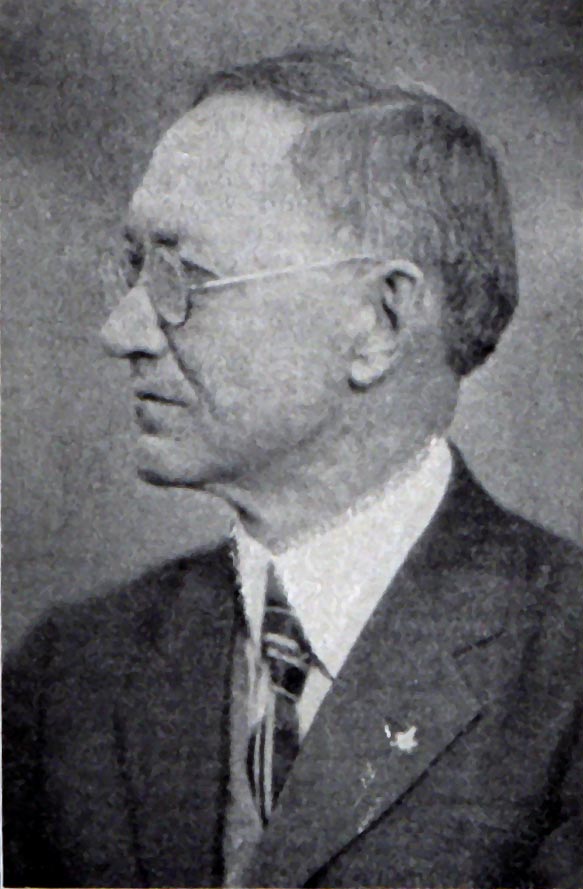
Fred B. Lambert, educator and regional historian
18 Wednesday Sep 2013
Posted in Coal
Tags
Appalachia, coal, culture, history, labor, life, photos, U.S. South, West Virginia
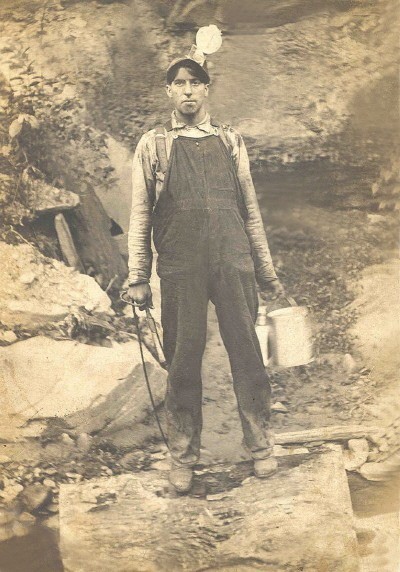
Harrison Smith
18 Wednesday Sep 2013
Posted in Big Ugly Creek, Timber
Tags
Appalachia, Big Ugly Creek, culture, genealogy, history, Leet, life, Lincoln County, photos, timbering, West Virginia

Leet, West Virginia, 1905-1920
17 Tuesday Sep 2013
Posted in Big Ugly Creek, Timber
Tags
B Johnson & Son, Big Ugly Creek, D P Crockett, Henderson Davis, history, Jesse Hobbs, Joe Dodson, Lester Defibaugh, Sam Peyton, Stewart May, T J Bolin, timbering, West Virginia
One hundred years ago, one of the largest tie and timber firms in the nation came to Big Ugly Creek and changed it forever.
Around 1907, B. Johnson & Son of Richmond, Ind. bought several tracts of land on Big Ugly and soon established an extensive tie and lumber business.
B. Johnson & Son was headquartered at Leet, a lumber center at the mouth of Laurel Fork. It built a huge saw mill on large rocks. Nearby was a pond where logs were cleaned before sawing. There was also a row of houses called Stringtown.
T.J. Bolin of Huntington was superintendent of 250 men who worked at the mill. D.P. Crockett was the company doctor, while Jesse Hobbs was the saw filer.
Within a few years, B. Johnson & Son constructed a narrow gauge of railroad called the Guyan, Big Ugly & Coal River Railway (GBU & CRR), which extended ten miles from Gill, at the mouth of Big Ugly, to the head of Laurel Fork.
“There was a small train that used to run up and down this creek,” said the late Adam Adkins of Leet. “My wife’s father used to run it.”
B. Johnson & Son was big news in its hey-day. The county newspaper reported its weekly doings. noting especially when workers were hurt or killed.
“Joe Dodson, 25 years of age, and unmarried who was employed at the logging camp of Stewart May at the B. Johnson and Son’s works on Big Ugly Creek, was so terribly injured Saturday evening that he died the following morning,” according to the Lincoln Republican on November 3, 1910. “Dodson had a team of cattle pulling a heavy log and the latter in some way slipped in the snow that had just fallen and caught Dodson, knocking him down. The log was dragged over his left side and leg, mutilating the flesh of the member in a horrible manner and producing the fatal internal injuries.”
In the summer of 1911, B. Johnson & Son was occupied with extending the GBU & CRR into the head of Big Ugly. B. Spears was in charge of the project.
“The G.B.U. & C.R.R. is completed to Rector Postoffice,” the Republican reported on October 12, 1911.
Meanwhile, the mill experienced periodic setbacks.
“The big saw mill of the Johnson Tie Co. has shut down for a few days, the drive belt having given away,” the Republican noted in a less dramatic story on October 12.
That winter, work slowed down on the railroad, as it only extended one mile beyond Rector by December.
At that time, there was a change in the accounting staff at B. Johnson & Son.
“Lester Defibaugh, who has been the efficient bookkeeper at the B. Johnson & Son’s plant here for over a year has tendered his resignation to accept a place in a business house at Lynn, Indiana,” the Republican reported on December 21. “Henderson Davis, who has been keeping books on Upton, is here to take Defibaugh’s place.”
During the Christmas season of 1911, according to newspaper reports, B. Johnson & Son gave its employees a four-day holiday to spend time with family.
Work on the railroad continued at a snail’s pace.
“The new branch of the Guyan, Big Ugly and Coal River Railway has reached a point near the Big Sulphur Spring up Big Ugly,” according to the Republican. “The work is progressing very slowly now.”
By the following summer, things were in full swing at B. Johnson & Son.
“There are now ten logging jobs at the B. Johnson & Son timber shop above here but they have not yet succeeded in keeping the mill at Leet running every day,” the Republican reported on July 25. “Quite a force of men are in these camps.”
The railroad extension was nearing completion.
“The Big Ugly railroad has been extended three miles above this place and work is progressing nicely. The road will be built one mile further.”
Then, early one August morning, just as things were really chugging along, a terrible fire destroyed the mill at B. Johnson & Son.
“A very disastrous fire broke out about 6 o’clock Saturday morning at the big saw mill of B. Johnson and Son,” the Republican reported on Thursday, August 22. “Sam Peyton, the night watchman, was getting ready to go off duty when he noticed a tiny blaze shooting up from a point midway in the mill. He ran tot he place and prepared to get the fire apparatus about the plant in working order but the fire spread so rapidly over the inflammable stuff about the establishment that Peyton pulled the alarm whistle and then fled from the approaching blaze.”
Thereafter, Superintendent Bolin organized 100 men — the “Bucket Brigade” — to fight the fire using water from the nearby creek.
“Superintendent Bolin got a force of a hundred men to save the valuable lumber on the yard adjacent to the mill and covering some acres. The several ‘Dinky engines’ threw water on the blaze and this with a bucket brigade of scores of men worked for two hours and were finally successful in getting the conflagration under control.”
According to the Republican, Superintendent Bolin had no idea of the loss but speculated that it was near $20,000.
“The mill, one of the largest in this section, is a total loss. $2,000 worth of saws were virtually destroyed and nothing about the mill was saved.”
Fortunately, B. Johnson & Son carried insurance on the property. The company hired Bill Bench of Huntington to rebuild the mill.
In subsequent months, there were minor setbacks for B. Johnson & Son, such as the New Year’s Day train wreck.
“On New Year day the dinky engine, No. 618, on Big Ugly wrecked and had to have engine No. 944 to pull her back on the track,” the Republican reported. “No damage was done.”
By January of 1913, work was completed on the new sawmill, prompting the Republican to happily write, “The big band mill belonging to B. Johnson & Son has gone sawing. The new machinery works fine. The log train will get down to business in a short time as the new mill will whittle lots of logs.”
In that same month, Dr. Skelton replaced Dr. Crockett as the company doctor.
Around 1917, B. Johnson & Son left Big Ugly.
“I was still a little girl when the mill pulled out,” said the late Lula Adkins of Leet. “They tore down the houses at Stringtown and just left here.”
08 Sunday Sep 2013
Posted in Ed Haley
Tags
Allie Trumbo, Cincinnati, Ed Haley, Ella Haley, Harts Creek, history, Imogene Haley, Liza Mullins, Mona Haley, Patsy Haley, Ralph Haley, West Virginia, writing
After getting familiar with the postcards, I called Patsy Haley to see if she could tell me any more about Ella’s young life with Ralph.
“Ralph was about five years old when Mom married Ed Haley,” Patsy said. “Ralph is not by Ed Haley. I figure that Mom and Pop must’ve got married about the end of the teens.”
I asked Patsy if Ed was very close to Allie Trumbo, who often wrote to Ella in her younger days.
“They weren’t really close or anything like that,” she said. “My husband and I moved to Cincinnati and that’s when I got acquainted with Allie and his wife. In fact, we lived right across the street from them. They really didn’t talk too much. Allie used to tell me about their father Mr. Trumbo auctioning off land and selling it for a dollar ’cause he owned quite a bit of land by that college. I think Mom had a falling out with him. Mom used to go and stay with them, like on weekends, when she’d go to Cincinnati to work. Allie had called her ‘Penny Ella’ ’cause when she paid them for staying with them she always paid them with change ’cause that’s what Mom got from selling her newspapers.”
Was Allie a musician?
“No, not that I know of,” Patsy said. “He was a fine pool player.”
Patsy didn’t remember Ralph making the records.
“No, that was just before I come in the family,” she said. “I don’t think he did any more recordings after I came into the family. You know, Mom had divorced when I come in the family and they never got remarried. But he lived in the house because the kids wanted him there. Now I can remember when I first came in the family and Mona and I talked, she was quite afraid of her father when she was a little girl because I guess he must’ve been mean. And he musta been abusive and mean to Mom or she wouldn’t a divorced him. But he was a sweet old guy when I knew him. I never ever saw Pop drunk or drinking. But I do remember one time — it was at the holidays — and Noah took his father and went up to Ferguson’s I believe for Pop to play music for them. Well, he kept them out all night ’cause I guess he got pretty loaded. But I never ever saw Pop drink. Now Pat said she had, but I never had.”
I updated Patsy on some of the things I’d found out about Ed’s past on Harts Creek and asked if she knew anything about his mother.
“He really didn’t talk about her too much,” she said. “Only thing that I understood — and he didn’t tell me this — Mom told me — that she was killed when the father was killed. There was never no bad feelings about his parents, either one.”
Patsy said she learned more about Ed’s parents on a trip to Harts in 1947.
“We went up to Harts Creek because Pop had gone up there and we went to get him back,” she said. “That was the first time I met Aunt Liza.”
Aunt Liza said Milt came from “the other side of the mountain,” and that he and his wife were buried up behind their old log cabin on Trace Fork.
“I can remember Aunt Liza pointing to where they were buried,” she said. “When she pointed up, she pointed over towards where the log cabin was.”
30 Friday Aug 2013
Posted in Calhoun County, Ed Haley, Music
Tags
Akron, Appalachia, Calhoun County, culture, fiddler, fiddlers, fiddling, history, Kerry Blech, life, music, Ohio, photos, Rector Hicks, U.S. South, West Virginia

Rector Hicks, fiddler from Calhoun County, West Virginia, c.1976. Photo courtesy of Kerry Blech
30 Friday Aug 2013
Posted in Ed Haley
Tags
Bob Hutchison, Braxton County, Ed Haley, fiddler, Harold Postalwait, history, Ohio, Ray Alden, Ron Chacey, Ugee Postalwait, Ward Jarvis, West Virginia, writing
By the mid-1990s, after several years of research, word had begun to leak out about my interest in Ed Haley. Around the first of 1995, Bluegrass Unlimited ran a story that prompted Bob Hutchison, a musician from Alledonia, Ohio, to write me.
“I played with an old fella down in Athens county (Ward Jarvis) who had played a lot and learned a lot from Ed Haley,” he wrote. “He played banjo with Ed and learned a lot of his tunes when he was a young man. He said Ed was the best he’d ever seen. Ward was in his 70’s when I got to know him and he was no slouch himself on the fiddle. He said Ed was big on different tunings on the fiddle. I learned the Icy Mountain tune from Ward that he had learned from Ed. Other tunes I remember him crediting Ed with were Camp Chase, Jimmy Johnson, Three forks of Reedy. Banjo Tramp was another of Ed’s. Ward has been dead for several years… Ward was originally from Braxton Co. W.Va.”
Ray Alden offered more information about Jarvis.
“In 1972 I went to Amesville, Ohio to visit instrument craftsman Ron Chacey,” he wrote. “Ron, on a very foggy night, brought me through some hilly back roads up to see Ward Jarvis, who had moved to the area in 1943 from Braxton County, West Virginia. Ward was 78 years old. I remember that special evening in which Ward played many unusual tunes, such as ‘Icy mountain,’ as well as a Kenny Baker Tune he had just learned from a record. It was lucky, since I didn’t have a tape recorder that evening, that Richard Carlin later went to tape Ward Jarvis [in 1976]. Old time musicians Dana Loomis and Grey Larson joined Richard and accompanied Ward at that session. Ward’s source for ‘Banjo Tramp’ was Ed Haley, who had a substantial influence over the Ohio River Valley Musicians in Ward’s younger days.”
Ray Alden’s statement about how Ed influenced a number of “Ohio River Valley Musicians” made me realize that thinking of him as a “Kentucky fiddler” or even a “West Virginia fiddler” was inaccurate. Early on, I’d dismissed the “Kentucky” label used on the Parkersburg Landing album, since he was born and raised in Logan County, West Virginia, and spent a great deal of time in central West Virginia, a hub for great musicians. Also, Lawrence Haley once said that he preferred to think of his father as a West Virginia fiddler because of how he was treated in Ashland. But I had to think, especially after reading Ray Alden’s statement, that it would be best to refer to Haley (in geographical terms) as a middle Ohio River Valley fiddler (or maybe even a Guyandotte-Big Sandy Valley musician) since his sphere of influence wasn’t limited to a single state.
Sometime in the middle of January 1995, I met Ugee Postalwait’s son at one of my shows in Birmingham, Alabama. It was my first encounter with Harold Postalwait, a rather robust man — clean-shaven with a beer gut and decked out in a snap-up shirt, cowboy hat and boots shined to perfection. He showed me Laury Hicks’ fiddle and some old family photographs.
28 Wednesday Aug 2013
Posted in Ed Haley
Tags
Ashland, Calhoun County, Ed Haley, Ella Haley, history, John Hartford, Kentucky, Laury Hicks, Manuel Martin, music, Ugee Postalwait, West Virginia, writing
After hanging up with Pat, I called Ugee Postalwait — Laury Hicks’ daughter in Akron, Ohio — to tell her about getting the picture of Ed from Maxine McClain. Ugee was full of energy. Her memory was obviously working in overdrive.
“I used to know all of them,” she said of the old musicians in her part of the country. “They was all to our house. They’d come from miles around to hear Dad play, especially when Ed was in the country. Maybe they’d stay two or three days at our house. I’d get up of a morning to look see who was in the house asleep and who all I was gonna have to cook breakfast for, when I was a girl growing up. The young men would sleep in the boys’ room and they’d sleep in the floor. Then they’d sleep four crossways in the bed, too. As I get old, I get to thinking about all of them and wonder how in the world my dad ever fed them all. I been a cooking ever since I was nine years old for workhands and people like that. One morning — I never will forget I wasn’t very old, then — got up and got breakfast. We’d had cabbage the day before for supper. A big pot of cabbage. And Ed and Ella was there. I never put cabbage on the table for breakfast. Ed looked at me and he said, ‘Ugee, what did you do with that cabbage last night?’ I said, ‘It’s in there.’ ‘Well why didn’t you put it on the table for breakfast?’ I said, ‘Well who eats cabbage for breakfast?’ He said, ‘I do.’ Now I never seen anyone eat such a mess of cabbage for breakfast. Him and Ella did. Ella said, ‘Oh, we always eat the same thing we had for supper.’ I never will forget that. From that time on, whatever was left over from supper, I’d warm it up, you know, and fix it for their breakfast ’cause they would eat it. They liked cabbage or kraut.”
Ugee really laughed telling about that, then started in with another tale.
“One time they was some Baileys there and I believe they was some of them McClain boys, and I was peeling tomatoes for supper — you know, slicing them and putting them on the plate — and I had a plate on one end [of the table] and one on the other end. And Manuel Martin was there too, and Commodore Cole. And I looked in both places and them tomatoes was gone. ‘What in the world? Some of them’s come in and hid my tomatoes.’ I looked out and Ed was standing there sitting on the walk — I never will forget — a laughing, and he said, ‘Wait till she finds out.’ I said, ‘Ed did you get them tomatoes in there?’ He said, ‘We ate every one of them.’ I said, ‘If I could find the plate, I’d break it over your head.’ That Commodore Cole, he said, ‘You wouldn’t dare do that.’ Ed said, ‘Don’t dare her too much, Commodore. I know her.’ And they was a eating them tomatoes as fast as I was a peeling them. Them ornery birds, I never will forget that.”
“The last time I ever seen Ed was at his house,” Ugee said. “He looked at me and he said, ‘Ugee, can you still make a rhubarb pie?’ I said, ‘Why lord yes, I reckon I can. Why?’ He said, ‘Well, I want a rhubarb pie.’ And I made four and I never seen no such eating as he done that evening, him and Ella, on them rhubarb pies while they was hot — with milk cream over them. I can see them yet. I went down to Ashland, Kentucky. They lived on 45th Street.”
25 Sunday Aug 2013
Posted in Logan
Tags
Appalachia, culture, history, life, Logan, Logan County, photos, U.S. South, West Virginia

Logan Court House, built 1904, destroyed by fire 1911.
21 Wednesday Aug 2013
Posted in Civil War

Home of Confederate General Albert Gallatin Jenkins, Cabell County, WV. 17 March 2013
21 Wednesday Aug 2013
Posted in Ed Haley
Tags
Abner Vance, Baptist Fry, Ben Walker, Ferrellsburg, George Fry, Hezekiah "Carr" Adkins, history, Jake Adkins, Lincoln County, Low Gap, West Virginia, writing, Yantus Walker
Benjamin Wade Walker, the man who organized the Milt Haley burial party, was born in June of 1851 in southwest Virginia. He came to Harts when he was very young with his mother Marinda (Steele) Davis and a few siblings. The family settled near Green Shoal where Marinda soon married Baptist T. Fry. Baptist was the uncle of George Fry — at whose home the Haley-McCoy murders took place — as well as his closest neighbor in 1889. Walker, then, was a step-first cousin (and former neighbor) to George Fry, perhaps explaining why he was inclined to remove Milt Haley and Green McCoy’s battered corpses from his yard and bury them.
Around 1877, Walker married Juliantes Adkins, a daughter of Enos “Jake” and Leticia McKibbon (Toney) Adkins, large landowners at Douglas Branch. Julia was also a first cousin to Al Brumfield. Mr. and Mrs. Walker settled on Walker’s Branch at Low Gap near West Fork. About 1883, Hezekiah “Carr” Adkins sold them this property, 25 acres on Guyan River originally part of a 260-acre 1855 survey for Abner Vance. The Walkers raised nine daughters and a grandson.
In 1889, following Milt and Green’s murder, Walker risked harm by organizing a burial party for them. He reportedly buried the men on his property. A year later, in 1890, he was ordained a minister in the United Baptist Church. In 1898, he was a founding member of the Low Gap United Baptist Church, which met for over forty years in a school building that still stands near the site of the old Walker homestead. He was president of the district board of education in 1902, 1911, 1912, and 1914. He died in December 1917.
“Rev. B.W. Walker, one of the best known citizens of the county, died at his home at Ferrellsburg, on last Wednesday, after a lingering illness of dropsy,” according to a front page story in the Lincoln Republican dated Thursday, January 3, 1918. “Rev. Walker was a great worker in the Master’s vineyard and had been a consistent Christian for years. He is survived by his wife and eight daughters. Burial services were conducted at the Low Gap cemetery.”
At the funeral, Walker’s beard was full of snow.
20 Tuesday Aug 2013
Posted in Native American History
Tags
American Revolution, Appalachia, history, Mason County, Native American History, photos, Point Pleasant, West Virginia
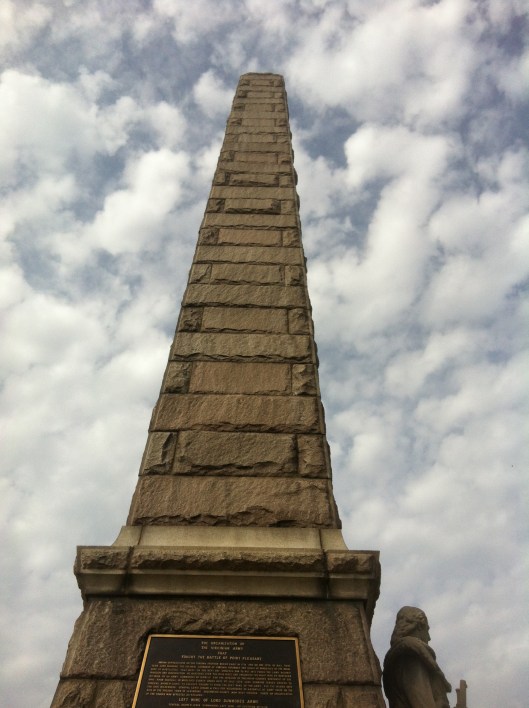
Monument commemorating the Battle of Point Pleasant, which occurred between Native Americans and Virginians at the mouth of the Kanawha River on October 10, 1774. Considered the key event of Dunmore’s War, some regard it as the first battle of the American Revolution. Photo taken in the spring of 2013.
19 Monday Aug 2013
Posted in Native American History
Tags
Appalachia, artifacts, Braxton County, Bulltown, Bulltown Museum, ceremonial pick, chopping tools, history, museum, Native Americans, nutting stone, scraping tools, West Virginia

Native American artifacts in the Bulltown Museum, Braxton County, WV, 9 Feb 2013.
Writings from my travels and experiences. High and fine literature is wine, and mine is only water; but everybody likes water. Mark Twain
This site is dedicated to the collection, preservation, and promotion of history and culture in Appalachia.
Genealogy and History in North Carolina and Beyond
A site about one of the most beautiful, interesting, tallented, outrageous and colorful personalities of the 20th Century
 Brandon Ray Kirk