Tags
Baldwin-Felts Agency, Bluefield, Cabell Testerman, coal, crime, culture, life, Matewan, photos, Sid Hatfield, United Mine Workers of America, West Virginia

Historical marker at Matewan, Mingo County, West Virginia, 2008.

05 Wednesday Feb 2014
Posted in Big Sandy Valley, Coal, Matewan
Tags
Baldwin-Felts Agency, Bluefield, Cabell Testerman, coal, crime, culture, life, Matewan, photos, Sid Hatfield, United Mine Workers of America, West Virginia
Historical marker at Matewan, Mingo County, West Virginia, 2008.
05 Wednesday Feb 2014
Posted in Big Ugly Creek, Civil War
Tags
Archibald Harrison, Arena Ferrell, Burbus Clinton Spurlock, Elizabeth Scites, Ferrellsburg, George W. Ferrell, Guy Fry, history, James D. Cummings, John M. Harrison, Keenan Ferrell, Lincoln County, Logan County, Martha E. Harrison, Micco, Nine Mile Creek, Phernatt's Creek, timbering, Vinson Spurlock, West Virginia, William T. Harrison, writing
In the latter part of the 1880s, Archibald Harrison sold much of his property. In 1886, he sold 30 acres of his 120-acre tract at Nine Mile Creek in Lincoln County, West Virginia, to A.E. Callihan. The next year, he sold his 360-acre tract in Harts Creek District to an unknown party. In that same year, he bought 100 more acres on Nine Mile.
Around that time, Mr. Harrison and his wife Martha may have separated or divorced, based on indications provided by tax records. In 1888, he sold 150 acres of his 230-acre tract at Phernatt’s Creek to D.B. Keck, while Martha sold the 100-acre tract on Nine Mile to Guy Fry. The following year, Martha sold 90 more acres to Fry on Nine Mile and the remaining acreage on Phernatt’s Creek (recorded as 125 acres, not 80) to James D. Cummings.
At that juncture, Martha disappears from local records.
In the 1890s, Mr. Harrison — perhaps recuperating from a second divorce — centered his property acquisitions on Nine Mile Creek. In 1890, he bought 59 acres worth $1.00 per acre from Elizabeth Scites. In 1891, he bought 150 acres worth $3.00 per acre from Guy Fry and 75 acres also worth $3.00 per acre from an unknown party. This latter tract of land he immediately deeded to his son, William T. Harrison, who married Charlotte F. Sias around 1892.
In 1892, Mr. Harrison deeded A.B. Staley 86 acres from the 150-acre tract, which tax records document as being on Fourteen Mile Creek, not Nine Mile. Four years later, William T. sold his 75 acres to Eliza J. Hager. Harrison probably died in that frame of time. His remaining property on Nine Mile was sold by D.E. Wilkinson, special commissioner, to Clinton Spurlock in 1898.
By 1900, Archibald and Martha Harrison were absent from local census records. Their children Daniel H., age 31, Guy French, age 24, and Louisa J., age 21, were also gone from the area. While the fate of Martha, Daniel and Louisa remains unclear, there is some evidence that Guy, who later lived at Micco in Logan County in 1920, moved to Virginia just after the turn of the century.
In 1900, three of Archibald’s sons were still listed in local census records. William T. Harrison and his family were residents of the Laurel Hill District. John M. Harrison was boarding nearby in the home of Vinson Spurlock and was reportedly engaged in some type of timber business. George W. Harrison was at present-day Ferrellsburg in Harts Creek District with his adopted parents, Keenan and Arena Ferrell.
Martha Harrison, the wife of Archibald, reportedly died in 1901.
27 Monday Jan 2014
Posted in Big Ugly Creek, Coal
Tags
Big Ugly Creek, coal, culture, environment, Lincoln County, mining, mountains, photos, West Virginia

Surface mining on Big Ugly Creek, Lincoln County, WV, 2006
27 Monday Jan 2014
Posted in Big Harts Creek, Ed Haley
Tags
Appalachia, culture, Ed Haley, Ewell Mullins, genealogy, Harts Creek, history, Logan County, photos, West Virginia
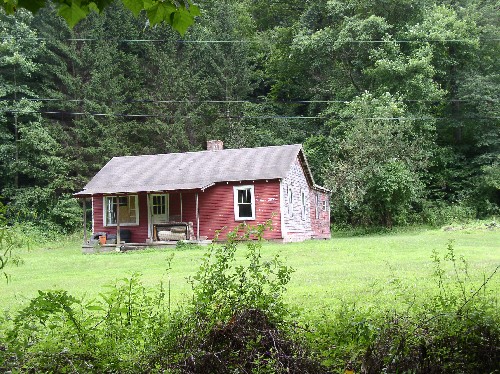
Ewell Mullins residence (part of the old Ed Haley property), Trace Fork of Harts Creek, Logan County, WV, 2006
24 Friday Jan 2014
Posted in Big Harts Creek, Culture of Honor, Harts, Lincoln County Feud, Timber
Tags
Al Brumfield, Appalachia, Brandon Kirk, crime, feud, Green McCoy, Harts Creek, history, logging, Milt Haley, Pelican Publishing Company, photos, timbering, true crime, West Virginia, writers, writing

In June of 2014, Pelican Publishing Company will release my book detailing the true story of the Lincoln County feud.
24 Friday Jan 2014
Posted in Ed Haley
Tags
Andrew D. Robinson, Ben Adams, Boney Lucas, Chloe Mullins, Ed Haley, Harts Creek, Henderson Dingess, history, Imogene Haley, Jackson Mullins, Logan County Banner, logging, McCloud & Company, Paris Brumfield, Peter Mullins, timbering, Turley Adams, Van Prince, Warren, Weddie Mullins, West Virginia, writing
Ed Haley was born in 1885 at Warren, a small post office established the previous year five miles up Harts Creek just below the mouth of Smoke House Fork. It was a place of 300 to 500 people chiefly led in its daily affairs by Henderson Dingess, Andrew Robinson, Anthony Adams, Ben Adams, and Burl Farley — all connected genealogically through the Adams family. At Warren, in 1884, the primary business was a general store called McCloud & Company. Henderson Dingess, father to Hollena and the patriarch of the clan, was a distiller and storekeeper. Ben Adams, a brother-in-law to Dingess, was a general store operator. Andrew Robinson was the local postmaster. Van Prince was a physician, perhaps assisting in Ed Haley’s birth or in the treatment of his measles.
Henderson Dingess, a prominent personality from that era, was the son of pioneer parents, born in 1829 to John and Chloe (Farley) Dingess. His wife, Sarah Adams (1833-1920), was a daughter of Joseph and Dicie (Mullins) Adams, who settled on Harts Creek from Floyd County, Kentucky, in the late 1830s. Henderson and Sarah lived in a two-story log house on land partly granted to him by the Commonwealth of Virginia in 1856. There, at the mouth of Hog Pen Branch, they raised eleven children, many of whom were active in the 1889 troubles. In the late 1880s, roughly the time of Milt Haley’s murder, Henderson and Sarah owned a 93-acre tract of land on Smoke House with a building valued at $100. They also owned an additional 350 acres on main Harts Creek and a 44-acre tract on nearby Crawley Creek worth $6.00 per acre with a $20 building on it.
At that time, Harts was caught up in the regional timber boom. According to The Logan County Banner, an estimated one million dollars worth of timber went out of the area in 1889. Perhaps prompted by this capitalistic invasion of the local economy, violence became the norm in Harts. Beginning with Paris Brumfield’s murder of Boney Lucas “over logs” in the early 1880s, there were at least six area killings before the turn of the century. (The Brumfields were involved in four of them and the Dingesses in three.) It was an era when Harts lost its innocence and began to earn the rough reputation it still carries today.
More than likely, following the horrific events of 1889, little Ed Haley and his mother lived for a brief time with Jackson and Chloe Mullins on Trace Fork. This changed a little later when, in 1891, Jackson and Chloe began to deed property to their three children. On March 18, they deeded their homestead to son Peter for 25 dollars. Deed records specify the property as a 20-acre tract of land, which began somewhere around the mouth of Trace and continued up to the Jackson Mullins Branch (basically the present-day Turley Adams property). The following day, Jackson and Chloe deeded another 20-acre tract to son Weddie Mullins for 25 dollars. This tract basically included everything from Jackson Mullins Branch to Jonas Branch.
On March 19, 1891, Jackson and Chloe deeded Imogene Haley 20 acres of land on Trace Fork for 25 dollars. In the property index, Imogene’s surname was spelled as “Hauley”, while the deed referred to her as “Immagin A. Haley.” Her land began at Jonas Branch and continued on up the creek. In the original deed, it was described as follows:
Beginning at the mouth of William Jonas branch thence up the Branch with the center of the branch to a _______ tree on the right hand side of the Branch as you go up the branch near a Chestnut that ________ on the left side of said branch thence acrosf the fields to some willow bushes at the front of the hill thence up the point with the center of the point to the brow of the Mountain thence with the brow of the Mountain to Mary Mullins line thence down the mountain to a bush thence a strate line crosfing the creek to a ash thence up the hill to the back line of the parties of the first part thence down the creek with the line of the said opposite the mouth of William Jonas branch thence down the hill a strate line to the Beginning supposed to contain 20 acres more or less.
An 1891 tax book listed “Emigene Hawley’s” property as being worth $2.00 per acre and having a total worth of $40. Records do not indicate if there was a house or building located on the property. In any case, Emma died soon after: an 1892 tax book lists her property under the name of “Immogen Hailey heirs”, which would have been Ed Haley. More than likely, seven-year-old Ed remained living in the home of his grandparents, Jackson and Chloe, for several more years.
At that time, Logan County was in the middle of a timber boom, which gave employment to Ed’s family on Trace Fork. “Some of the finest timber in the State is found in Logan county,” writes The Mountain State: A Description of the Natural Resources of West Virginia (1893). “Magnificent forests of oak, poplar, ash, lynn, maples, beech, birch, pines, hickory and other varieties still cover the greater part of the county in their primitive state. For thirty years timber men have been at work, destroying the forests and still in all this time not over a fourth of the timber has been removed. As an estimate of the value of the timber still standing in Logan county, three million dollars will not be far amise.”
24 Friday Jan 2014
Posted in Big Ugly Creek, Civil War
Tags
Archibald Harrison, B.C. Levi, Barboursville, Chambersburg, civil war, Garland Matthews, history, Hurston Spurlock, John McCausland, Mary Harrison, Matt Adkins, Milton J. Ferguson, Monocacy Junction, Murder Hollow, Stephen Lewis, Sylvester Brooks Crockett, Virginia, Wayne, Wayne County, West Virginia, Winfield, writing
In January of 1864, Colonel Milton J. Ferguson’s 16th Regiment, which included Lt. Archibald Harrison, was back in southwestern West Virginia to visit family and restock supplies. On January 1, they crossed a frozen Big Sandy River into Kentucky and attacked a Union force at Buchanan. Eight days later, Ferguson and 150 of his men successfully engaged 75 members of the 39th Kentucky Mounted Infantry at Turman’s Ferry (near Catlettsburg), Kentucky, then made their way to East Lynn in Wayne County, West Virginia, and on to nearby Laurel Creek.
On January 16, a detachment of Union troops arrived in Trout’s Hill (Wayne) to quell the Confederate uprising in the area. Ferguson and the 16th, however, continued to wreak havoc on local Yankees from their base at Murder Hollow. On January 27, Spurlock’s Company (including Harrison) robbed Cabell County’s sheriff. The rebels suffered a mild setback shortly after the robbery: Captain Hurston Spurlock was apprehended by a detachment of the 3rd West Virginia Cavalry at Lavalette in Wayne County.
Early in February, members of the 16th destroyed a Union cargo ship called the B.C. Levi on the Kanawha River near Winfield. They captured General E.P. Scammon, who was sent to Richmond, Virginia, and Captain Pinckard, who was sent to Wayne. (Harrison later claimed to have been present at this event, although history records Company H — not Company E — as being the actual force there.) Colonel Ferguson tried unsuccessfully to exchange Pinckard for Captain Spurlock, who was held at Barboursville.
On February 15, at daybreak, a Union force consisting of the 14th Kentucky Infantry and the 39th Kentucky surprised the 16th Regiment at their camp in Murder Hollow. Historian Stephen Lewis of Wayne records one account of this skirmish: “Garland Matthews told me that when he was a boy an old man by the name of Milt Adkins told him that he, though not a soldier, camped in the hollow with some friends who were Confederate soldiers, and that there were many soldiers camped there. They were attacked at dawn by Federal troops, and four or five Confederates were killed. Many were captured, but some got away. Garland Matthews confirmed that the battle was in winter; bodies froze to the ground and the spring ran red with blood. He also said they carted a number of the bodies away, but some were buried in Murder Hollow.” Colonel Ferguson was one of 42 men taken prisoner at Murder Hollow. Harrison managed to escape.
In July 1864, Lt. Harrison was captured by Union troops at Monocacy Junction, Maryland. Benjamin Dean, a Wayne Countian, wrote of the incident in a letter to his wife dated July 19. “We are under General McCaslin. We have been on a raid ever since the 11th of May. We started at Lynchburgh, from there back to the Valley of Virginia to Winchester, from there to Maryland to Frederick City. We fought 25,000 there. Lt. Harris was wounded and captured. We went near the city of Washington. We came back through East Virginia. I am near Winchester today. We marched all last night. I haven’t had a clean shirt for over five weeks. We manage to get enough to eat. We hook the Yanks at every point we can. We have been commanded by Colonel Graham. He does nothing but drink and curse and if Colonel Ferguson isn’t exchanged by next season I never expect to make another raid in this war.”
Three days after his capture, Harrison escaped and participated in a final engagement at Chambersburg on July 30, when Confederates burned the town.
In 1864, he returned home to Wayne County, at which time he and his wife, Mary Spurlock, were divorced. The former Mrs. Harrison soon remarried to Sylvester Brooks Crockett, who was eleven years her junior, and had several more kids before dying in 1883 on Wilson’s Creek in Wayne County.
22 Wednesday Jan 2014
Tags
Appalachia, culture, genealogy, Harts, Johnny Golden Adkins, life, Lincoln County, photos, West Virginia
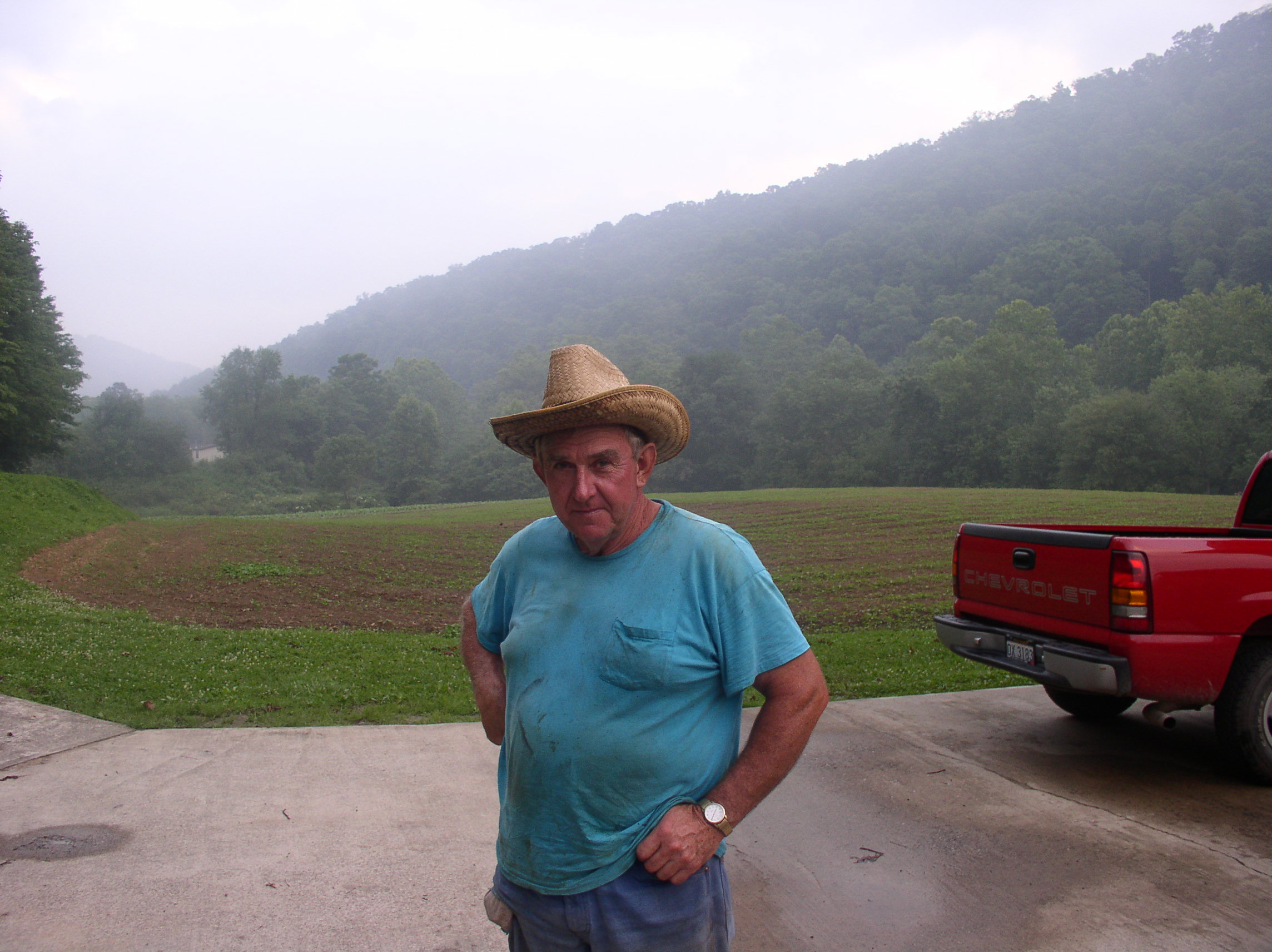
Johnny Golden Adkins of Harts, Lincoln County, WV
22 Wednesday Jan 2014
Posted in Big Ugly Creek, Civil War
Tags
16th Regiment Virginia Cavalry, Albert Gallatin Jenkins, Archibald Harrison, Barboursville, Carnifex Ferry, civil war, Droop Mountain, East Cavalry Battlefield, Fairview Rifles, Ferguson's Battalion, genealogy, Gettysburg, Guy Harrison, history, Hurston Spurlock, Knoxville, Lewisburg, Lincoln County, Mary Harrison, Milton J. Ferguson, Scary Creek, Tazewell County, Virginia, Wayne, Wayne County, West Virginia, writing
For a brief period of time in the 1880s, Archibald Harrison, a veteran officer of the Civil War, made his home in the Harts Creek District of Lincoln County, West Virginia, where he labored as a farmer and timberman.
Archibald was born in January of 1837 to Guy P. and Cleme (Harmon) Harrison in Tazewell County, Virginia. In 1850 census records for Tazewell County, he was listed with his father and stepmother, Nancy Jane Bruster, as well as his brothers and sisters.
By 1860, Harrison had made his way to Wayne County, where he was listed in the census with his older brother, Thomas, aged 35. Later in the year, he married Mary Spurlock, a daughter of Burwell and Nancy Spurlock. Mary’s father was a preacher who, among other things, established a Methodist Episcopal (South) Church at Trout’s Hill (Wayne) in 1846 with 36 charter members.
Archibald and Mary had three children: Laura P., born August 8, 1861, who died in 1879; Nancy C. “Nannie,” born February 1, 1863; and Lemuel, born September 18, 1865, died 1942. Daughters Laura and Nannie apparently spent their lives in Wayne County, while son Lem is probably the same person of that name who shows up in Logan County census records on Mud Fork and at Cherry Tree in 1910 and 1920.
During the Civil War, Harrison served in the Confederate Army and was a participant in many important events: namely General Albert Gallatin Jenkins’ famous march to Ohio in 1862, where his companions became the first Confederates to invade the Buckeye State; at Gettysburg, Pennsylvania under General J.E.B. Stuart in 1863; and at Chambersburg, Pennsylvania under John McCausland in 1864.
In 1861, the first year of the war, Harrison enlisted with the Fairview Rifles, an unorganized Confederate detachment under the command of Captain Milton J. Ferguson of Wayne County. He fought with them at Barboursville (July 14, 1861), at Scary Creek in Putnam County (July 17, 1861) at Carnifex Ferry in Nicholas County (September 10, 1861) and at Lewisburg in Greenbrier County (May 23, 1862). Most of these engagements were Confederate losses.
In August 1862 Harrison and the Fairview Rifles got a huge morale boost when they marched with Colonel Jenkins’s force from Monroe County to the Ohio River, occupying the towns of Buckhannon, Weston, Glenville, Spencer, Ripley, and Ravenswood along the way. At the Ohio, Jenkins and about half of his troops crossed the river and captured Racine (they were the first Confederates to enter Ohio) before re-entering (West) Virginia and heading to Point Pleasant.
On September 15, 1862, the Fairview Rifles were renamed Ferguson’s Battalion and officially mustered into service at Wayne Courthouse. Harrison, who was only 24 years old, was made second lieutenant of Captain Hurston Spurlock’s Company. (Spurlock was probably an in-law.)
On January 15, 1863, the 16th Regiment of Virginia Cavalry was formed when five companies from Ferguson’s Battalion merged with four companies of Major Otis Caldwell’s Battalion. Captain Ferguson was promoted to colonel and placed in command of the 16th, while Lt. Harrison and a majority of Spurlock’s Company were designated as Company E.
In the early summer of 1863, the 16th was attached to General Jenkins’ Brigade and sent north as part of General Robert E. Lee’s invasion force. In June, they moved through the Shenandoah Valley toward Pennsylvania where they fought at 2nd Winchester, Virginia, between June 14-15. They also saw action at Gettysburg on June 26, Harrisburg, Pennsylvania, on June 28-29 and at East Cavalry Battlefield near Gettysburg on July 3.
In the fall of 1863, on November 6, Harrison and the 16th fought at Droop Mountain in Pocahontas County, where the Confederates were defeated by a Union force that helped ensure Union control of the new state. Later in the month, the 16th participated in a siege of Knoxville, Tennessee, until December, 1863.
22 Wednesday Jan 2014
Posted in Ed Haley, John Hartford, Music
Tags
Carol Hardway, Cliff Top, culture, fiddlers, fiddling, history, John Hartford, life, music, photos, West Virginia, Wilson Douglas

Carol Hardway, Wilson Douglas, and John Hartford at the Appalachian String Band Festival in Cliff Top, West Virginia, 1995
19 Sunday Jan 2014
Posted in Harts
Tags
Appalachia, Bob Brumfield, culture, Ethel Brumfield, genealogy, Harts, history, Jessie Brumfield, life, Lincoln County, Nora Brumfield, photos, West Virginia
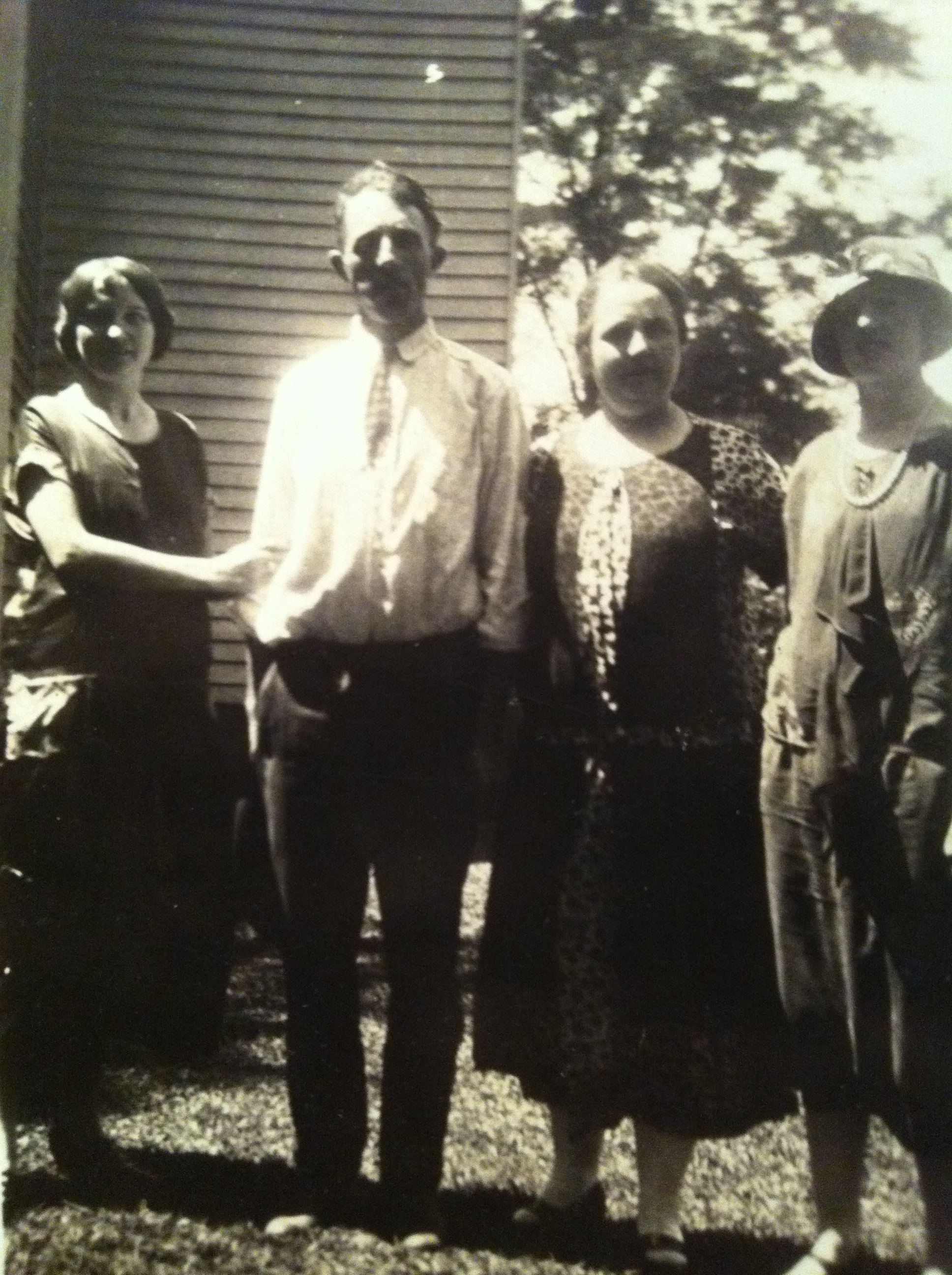
Nora Pack Brumfield, Bob “Jaker” Brumfield, Ethel Brumfield, and Jessie Brumfield, standing by the Charley Brumfield house in Harts, Lincoln County, WV, 1920s
17 Friday Jan 2014
Posted in Big Harts Creek, Lincoln County Feud
Tags
Appalachia, culture, Dave Dingess, feud, Harts Creek, history, life, Logan County, photos, West Virginia

Dave Dingess, resident of Smoke House Fork of Big Harts Creek, Logan County, WV, 1890s
17 Friday Jan 2014
Tags
Appalachia, culture, East Lynn, guitar, history, life, music, photos, Ralph McCoy, Spicie McCoy, Wayne County, West Virginia

McCoy Time Quartet of Wayne County, West Virginia, c.1940
15 Wednesday Jan 2014
Posted in Big Harts Creek, Ed Haley, Whirlwind
Tags
Billy Adkins, Creed Conley, Ed Haley, fiddling, Harts Creek, history, John Hartford, Logan, Minnie Smith, Sherman Smith, Sol Adams, West Virginia, Whirlwind, writing
After lunch, Billy suggested that we go see Sherman and Minnie Smith, who lived a little further up the creek at the old Whirlwind Post Office. Minnie was the granddaughter of Solomon Adams and a great-granddaughter to Anthony Adams. Her father was a nephew to Melvin Kirk, who helped bury Milt and Green.
We soon pulled up to an incredible two-story log home with a remodeled front. We first spoke with Minnie’s husband Sherman who was busy dismantling a chimney labeled “S.A. 1875.” Minnie came out of the house, recognized Billy and started talking to us like we were neighbors. We raved over her log house for several minutes, which caused her to tell us how her grandfather Sol Adams had built it of yellow poplar in 1869. We later discovered that he was born in that year.
We gathered in chairs and sofas in a dimly lit living room with a low ceiling, while Sherman stood nearby in a doorway leading into the kitchen. We told them about my interest in Ed Haley, which caused Sherman to tell about seeing him in Logan when he was a boy. He said Ed was usually by himself but sometimes had a banjo-picker with him.
“Ed Haley used to play here when I was a girl,” Minnie said, adding that she was born in 1933. According to Minnie, Ed played for dances in the Workman home. Her parents would clear all of the furniture out of the living room and an adjacent room on Saturday. Ed came before the dance started and was fed properly, then as people started showing up he was “set up” on a stool in the doorway between the two cleared rooms. From there, he could entertain two rooms of people instead of just one. Minnie remembered him playing tunes like “Blind Man Stackolee” and “Fire on the Mountain”. Creed Conley was usually the caller and would have people dancing so wildly that they’d bump heads. Most were drunk. Minnie said someone passed a hat around for Ed’s pay toward the end of the dance.
14 Tuesday Jan 2014
Posted in Big Harts Creek, Ed Haley, Lincoln County Feud
Tags
Anthony Adams, Appalachia, culture, feud, genealogy, Harts Creek, history, life, Logan County, photos, West Virginia
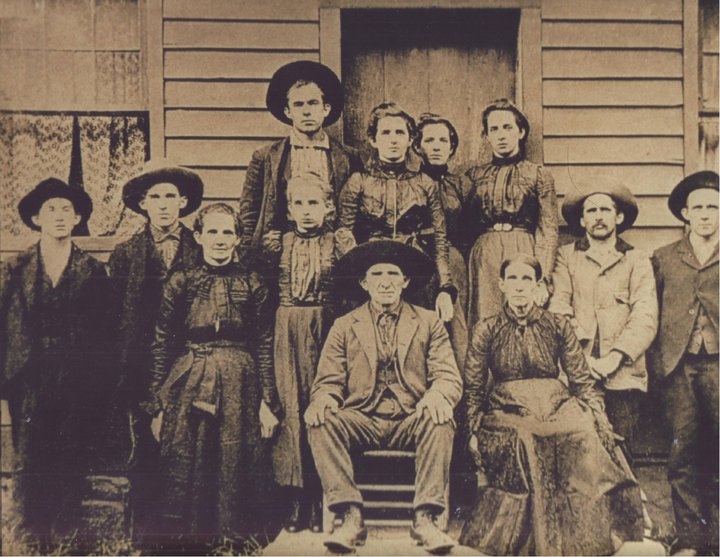
Anthony Adams family, Harts Creek, Logan County, West Virginia, 1890
13 Monday Jan 2014
Posted in Big Harts Creek, Ed Haley
Tags
Appalachia, culture, Great Depression, Harts Creek, history, life, Liza Mullins, Logan County, Peter Mullins, photos, West Virginia

Peter Mullins family, Trace Fork of Big Harts Creek, Logan County, WV, 1940s
11 Saturday Jan 2014
Posted in Ed Haley
Tags
Cary Mullins, Ed Belcher, Ed Haley, fiddle, fiddling, Harts Creek, history, Joe Adams, Logan County, music, Noah Mullins, West Virginia, writing
When I pressed Joe for specific details about Ed’s technique he said, “He’d play up on the bow about four or five inches, but he played the full stroke with the bow all the time. He didn’t jiggle it.”
I asked if he always sat down when he played and Joe said, “I’ve seen him sitting down and standing up both. They said he danced, but I never did see him dance none. He pat his foot when he played. You’d never hardly know he was patting it. He just patted one foot. He had that chin rest…”
“So Ed put the fiddle up under his chin?” I interrupted.
“He put it up under his chin and played,” Joe confirmed. “Ed Belcher, he played with it under his chin, too. Now Robert Martin, sometimes he’d have it under his chin, sometimes he’d have it down here on his chest.”
Brandon asked if Ed packed his fiddle in a case and Joe said, “Yeah, he had a case. If it was raining or something, I’ve seen him with it under his coat. He had two or three bows. I’ve seen him take the bow loose… He took the end of it loose and put it under the string and played some kind of a tune. They was just one tune he played like that. I believe it was some kind of a religious song. I don’t know how he done it.”
I asked Joe if Ed sang any and he said, “I heard him sing a little bit one or two times on one or two tunes. He’d play a verse and then he’d sing a little bit but not much. Seems to me like that his wife sung a little bit with him on some of them but they didn’t do too much singing. He’d play a little bit, then sing a little bit. They was just a few tunes that he done like that. He didn’t play none of this modern music or nothing like that. He played old-time tunes, like ‘The Arkansas Traveler’. He’d play that and some of them boys’d be sitting off someplace and talking about the big rock in the field and all about the feller digging the taters out and that old sow rooting them out. Ed would play the music and they’d put that in. They’re all dead now, them boys that used to do that. Noah Mullins and my brother Howard and Burl Mullins and Cary and them.”
Joe’s memories seemed to stretch back fondly to that time.
“Yeah, it was all right,” he said. “Every time I played with him he played ‘Lady of the Lake’. Real old tunes.”
Joe said Ed played “Love Somebody”, “Birdie”, “Brownlow’s Dream”, “Hell Up Coal Hollow”, “Hell Among the Yearlings”, “Wild Hog in the Red Brush”, and “Jenny’s Creek”. He also played “Mockingbird” with “everything in it.”
“He’d make the bird holler and everything else,” Joe said.
I asked Joe if Ed played a tune for a long time and he said, “Well, some of his tunes he played a long time and some of them were just short and sweet. He put a lot extra in them sometimes. It went along with it but if you didn’t know him pretty well and watch what you was doing you’d get off. It just come natural for me to follow him because he played good time.”
10 Friday Jan 2014
Posted in Ed Haley
Tags
Appalachia, banjo, Boone County, culture, fiddle, fiddler, fiddling, history, Johnny Hager, life, music, photos, U.S. South, West Virginia
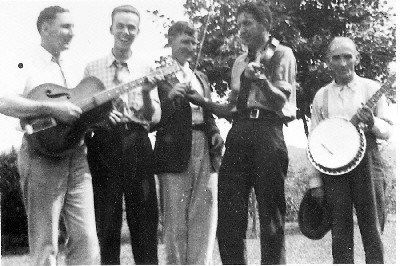
Johnny Hager on extreme right holding a banjo, Boone County, WV, 1950s.
10 Friday Jan 2014
Posted in Ed Haley
Tags
Appalachia, Arthur Smith, banjo, Ed Belcher, Ed Haley, fiddlers, George Mullins, Geronie Adams, Grand Ole Opry, Harts Creek, history, Joe Adams, Johnny Hager, Logan County, music, Robert Martin, West Virginia, writing
I wondered if people around Trace listened to the radio, especially the Grand Ole Opry, in the early days.
“They was a few radios,” Joe said. “We had one here. We ordered it from a company called Jim Brown. It had five batteries. And like Jerry Clower said, you’d take them and set them in front of the fire and get them hot and then plug them in, they’d play. They was kindly hard to get — they didn’t cost much. I think they was about ten or twelve dollars for all of them. But Robert Martin had one on top of that hill and my brother had one on Twelve Pole, and on Saturday night when the Grand Ole Opry come on, it was a sight to watch these people a going. It come in good and clear. Robert learned a lot of Arthur Smith tunes off the radio. Yeah, Arthur Smith come down there at Branchland and stayed a week with him and I was talking to Robert after he left and he said, ‘I wish you boys’d come down.’ I said, ‘Well, if you’d a let us know, we woulda come.'”
Brandon said to Joe, “I remember you were telling me last time I talked to you that you thought Robert Martin was about the best around.”
Joe said, “In the modern music. Now, in the old-time music, you’d take Ed Haley and Johnny Hager and Ed Belcher. Ed Belcher, he stayed at George Mullins’ and he was like my brother: he was an all around musician. He could tune a piano and play it, he could play an organ. He could play anything he picked up. I never did hear him play a banjo but he could play anything on the fiddle or guitar. He’d note the guitar all the time. He played like these fellers play on Nashville. They was several people around here had banjos and played. Geronie Adams — Ticky George’s boy — he played a banjo a little bit. And they was a fella — Johnny Johnson — played with Robert Martin out on that hill. He was from someplace in Kentucky.”
I asked Joe what kind of banjo style Johnny Hager played.
“He played the old…,” he started. “They’s some of them calls it the ‘overhand’ and some of them call it just ‘plunking’ the banjo. They was several people played like that. Bob Dingess down here, he played that a way a little bit. My dad, he played the banjo and he played that.”
I asked Joe how Ed dressed in the early forties.
“Well, he wore dress pants most of the time,” he said. “He wore mostly colored shirts — blue or green or just any color. Work shirts. Most of the time he wore suspenders with them. And had buttons sewed on them to buttom them with. Buttons on the inside. Mostly he wore slippers. They was a lace-up slipper. Three laces. He could tie his shoes just as good as you could tie yorn. He wasn’t a big man — he was a little small man. About 5’4″, 5’5″.”
Brandon asked what Ed was like when he wasn’t playing and Joe said, “Well, he’d just sit around and talk and tell tales about first one thing and then another. They’d just talk about how hard they was raised and how they come up.”
Did the ladies like him?
Joe said, “They all liked him but they wasn’t girlfriends. If he went into a place to play, they’d all come around and hug him and talk to him.”
07 Tuesday Jan 2014
Posted in Cemeteries, Culture of Honor, Harts, Lincoln County Feud
Tags
Al Brumfield, Ann Brumfield, cemeteries, crime, feud, genealogy, history, John Brumfield, Lettie Brown, Moses Brown, Paris Brumfield, Paris Brumfield Family Cemetery, tourism, West Virginia
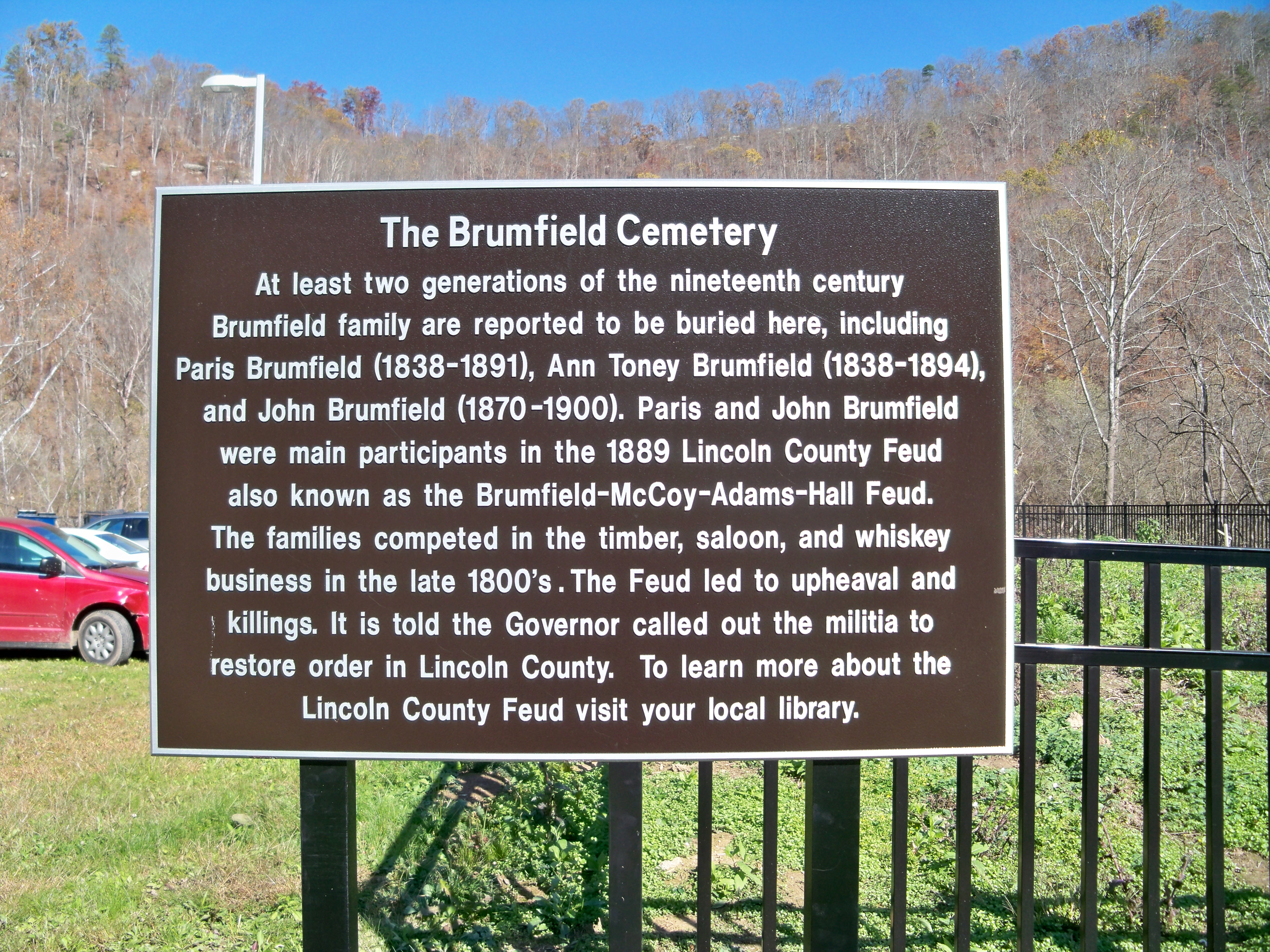
Harts, Lincoln County, WV, c.2012.
Writings from my travels and experiences. High and fine literature is wine, and mine is only water; but everybody likes water. Mark Twain
This site is dedicated to the collection, preservation, and promotion of history and culture in Appalachia.
Genealogy and History in North Carolina and Beyond
A site about one of the most beautiful, interesting, tallented, outrageous and colorful personalities of the 20th Century
 Brandon Ray Kirk