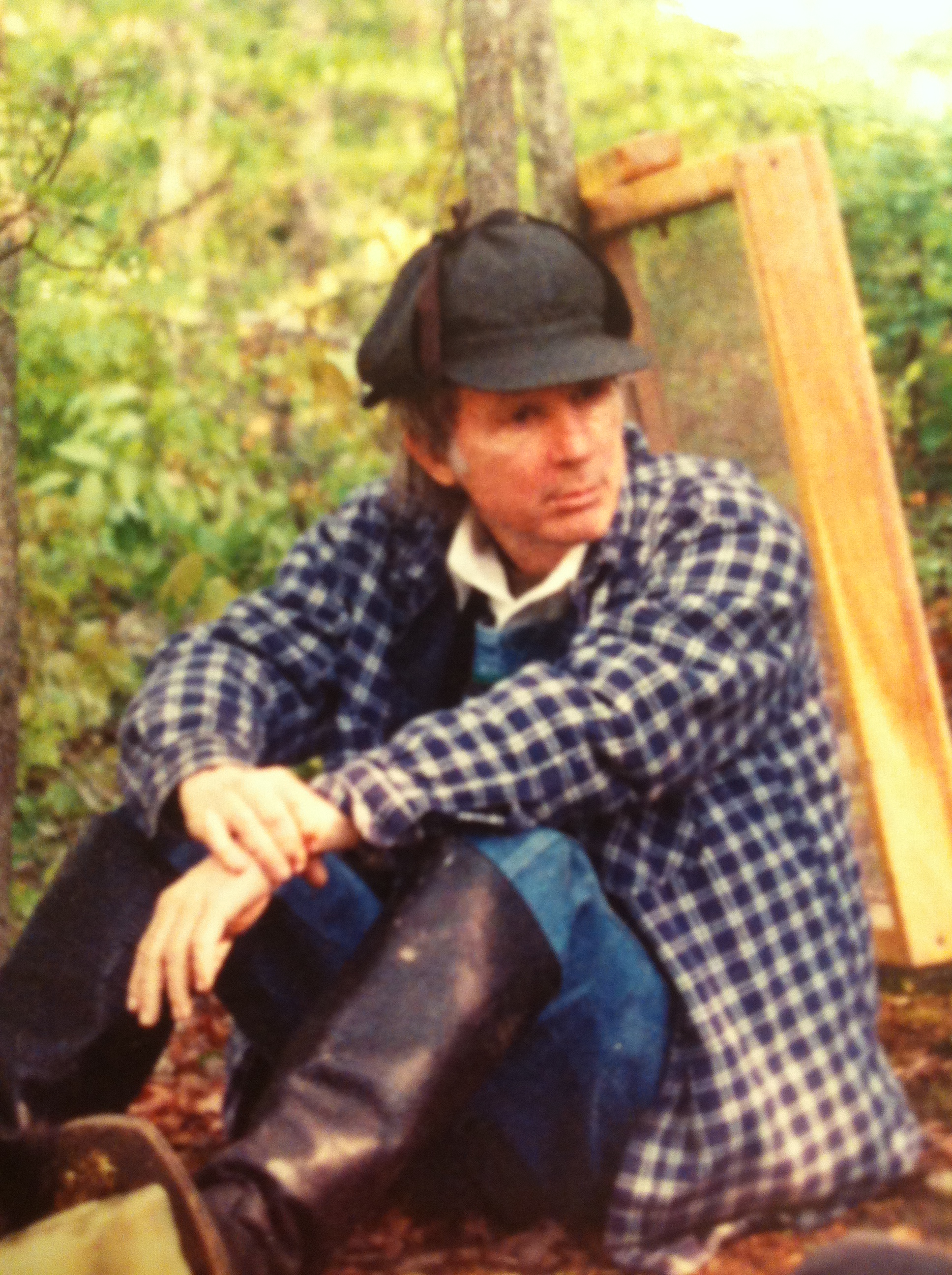
John Hartford at the Haley-McCoy grave
25 Monday Aug 2014
Posted in Big Harts Creek, John Hartford, Lincoln County Feud
25 Monday Aug 2014
Posted in Big Harts Creek, John Hartford, Lincoln County Feud
23 Saturday Aug 2014
Posted in Big Harts Creek, Culture of Honor, Ed Haley, Harts, Lincoln County Feud
Tags
Appalachia, archaeology, Brandon Kirk, Haley-McCoy grave, history, John Hartford, Lincoln County, Malcolm Richardson, Smithsonian Institution, West Fork, West Virginia
Just before Christmas, Brandon and I received a letter from Rich, at the Smithsonian, which provided us with some preliminary information on the gravesite:
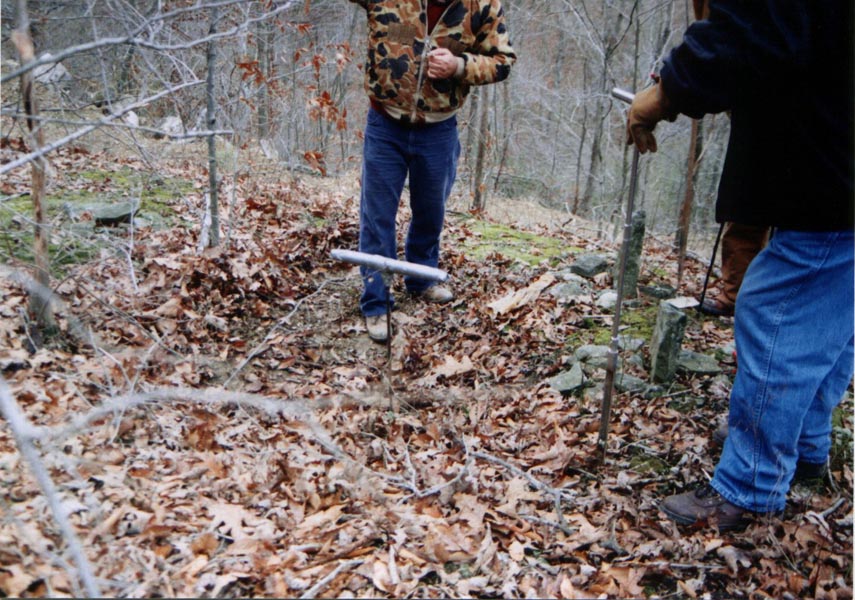
The burial surface is a large shallow depression in the soil located on a steep slope. The depression is approximately one foot deep. The western side of the burial depression, presumably the head, is marked by two small rock cairns that feature natural upright stone slabs projecting from the tops. The opposite end (foot) is marked by two small rock cairns.
The burial appears to be shallow when probing in the deepest part of the depression, with the burial shaft floor located at a depth of approximately 2 feet.
The shaft is of sufficient size to have accommodated two persons lying side-by-side. It is very shallow, but this may have been due to haste during excavation of the burial pit, or it could have resulted from termination of the efforts of the grave diggers when they encountered the underlying siltstone strata.
Two items that could effect bone preservation were noted: oak trees are in the vicinity of the burial, and the tannin from these leaves can elevate the acid content of the soil; and the presence of some white clay also indicates soil acidity. However, the burial is on a steep slope and located high up near the brow of the ridge. The slope and wind action at that elevation could retard a significant accumulation of leaves. The slope also prevents any significant amount of water from collecting in the burial depression.
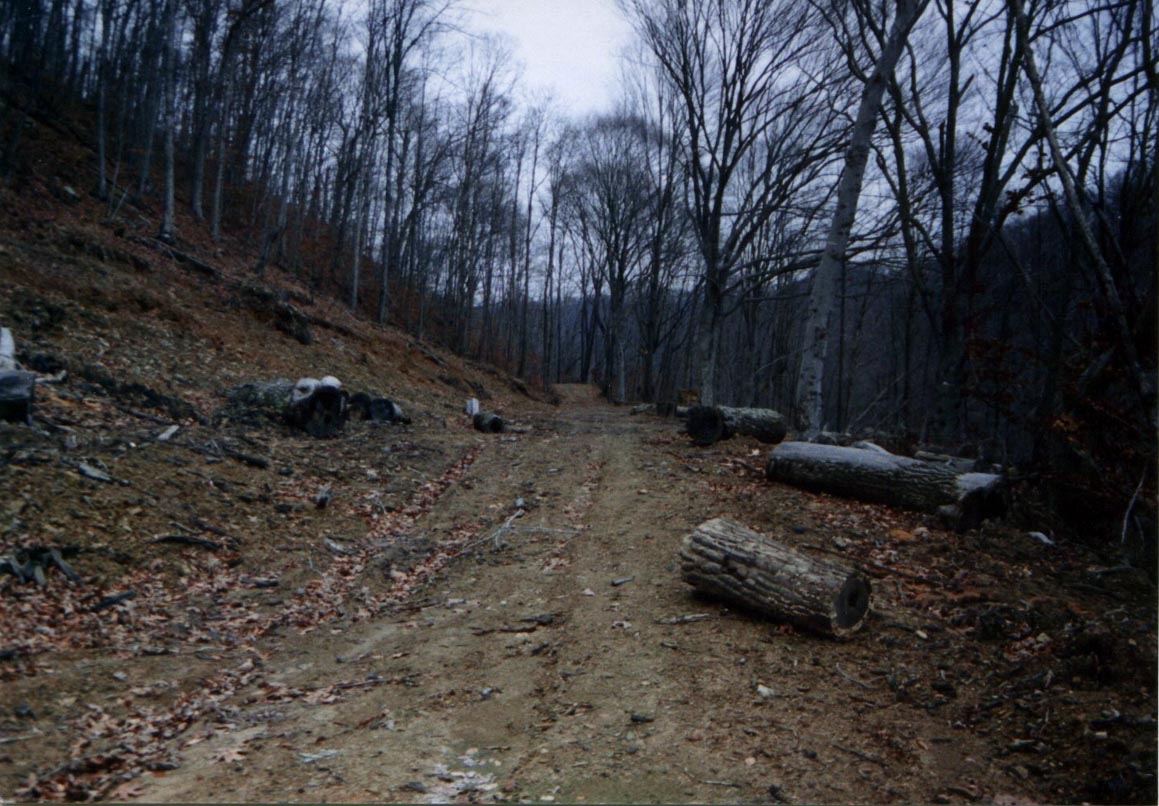
The remoteness of the burial site will make it necessary to complete the disinterment in a single day or else provide overnight guards.
20 Wednesday Aug 2014
Posted in Big Harts Creek, Culture of Honor, Harts, Lincoln County Feud, Timber
Tags
Appalachia, archaeology, Brandon Kirk, Haley-McCoy grave, Harts Creek, history, John Hartford, John Imlay, Lincoln County, Lincoln County Feud, logging, Malcolm Richardson, photos, Smithsonian Institution, Steve Haley, timbering, West Fork, West Virginia

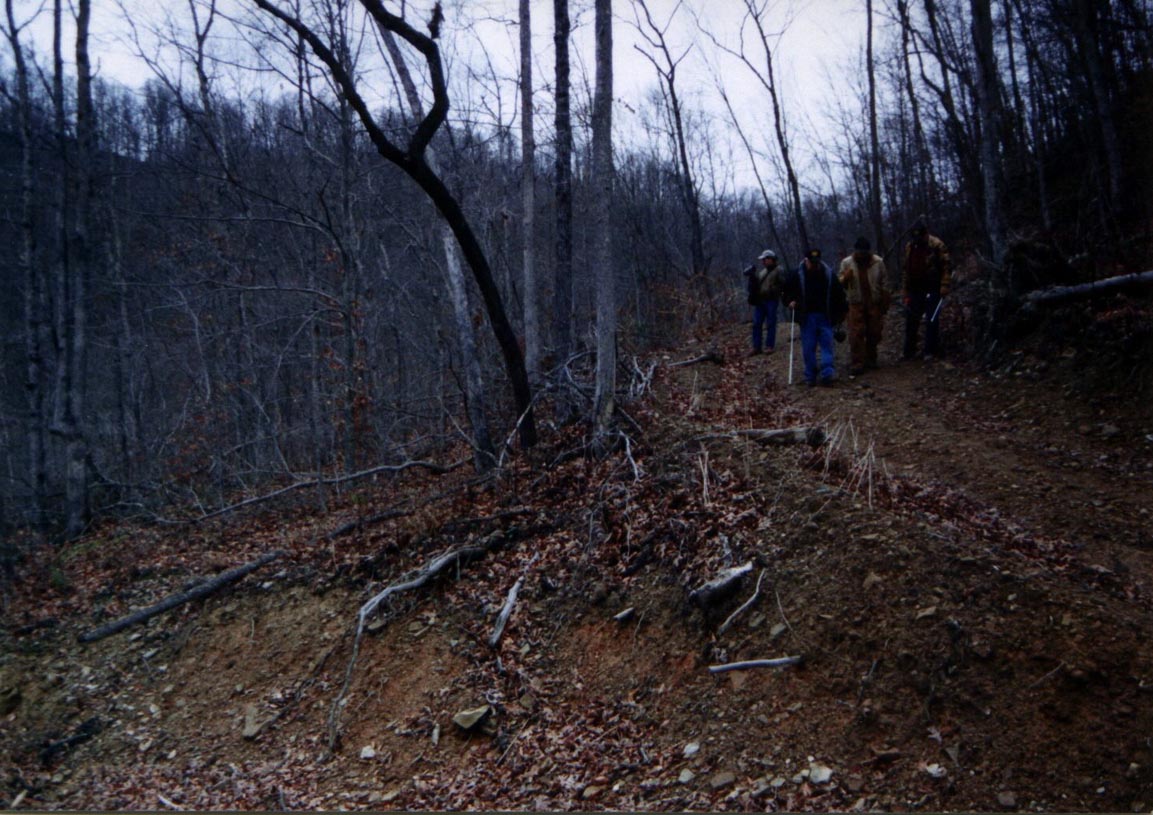
John Hartford and Steve Haley at the Haley-McCoy grave, West Fork of Harts Creek, Lincoln County, WV, 1997

John Hartford and Steve Haley with the Smithsonian crew, West Fork of Harts Creek, Lincoln County, WV, 1997
26 Saturday Jul 2014
Posted in Ed Haley, John Hartford, Lincoln County Feud, Music
Tags
Ashland, banjo, Bobby Taylor, Brandon Kirk, Charleston, Clyde Haley, Cultural Center, Deborah Basham, Ed Haley, Ella Haley, Forked Deer, Green McCoy, Grey Eagle, history, Jack Haley, John Hartford, Kentucky, Lawrence Haley, life, mandolin, Michigan, Milt Haley, Mona Haley, music, Pat Haley, Patsy Haley, Ralph Haley, Ralph Mullins, Rounder Records, San Quentin, Scott Haley, Smithsonian Institution, Steve Haley, West Virginia, writing
Around that time, Brandon and I received confirmation from Doug Owsley at the Smithsonian that he was interested in exhuming the Haley-McCoy grave. Doug gave us instructions on what we needed to do before his office could actually become involved — most importantly, to get permission from the state authorities, as well as from Milt’s and Green’s descendants. We felt pretty good about our chances of getting support from the family but weren’t sure what to expect from “officials.” For some guidance in that department, we called Bobby Taylor and Deborah Basham at the Cultural Center in Charleston, who told us all about exhumation law and codes in West Virginia. They felt, considering the interest of the Smithsonian, that we would have no trouble on the bureaucratic end of things.
Meanwhile, Rounder Records was in the final stages of releasing a two-CD set of Ed’s recordings called Forked Deer. The sound quality was incredible on the re-masters although to the uninitiated ear some of the music still sounded like it was coming from behind a waterfall in a cellophane factory. In addition to Forked Deer, Rounder was slated to release two more CDs of Ed’s music under the title of Grey Eagle in the near future.
I was very excited about all of these tunes getting out because I had fantasies of some “young Turk” fiddler getting a hold of them and really doing some damage.
In July, I called Pat Haley to tell her about the CDs, but we ended up talking more about her memories of Ed.
“I know when we lived in 1040 Greenup — when I first came over here — Pop would play very little. Only if he was drinking and maybe Mona would get him to play. I never knew of Pop ever playing sober. I didn’t hear Pop play too much but then his drinking days were just about over. But Mom would play. They had a mandolin and might have been a banjo and Mom would play a little bit. I didn’t know their brother, Ralph. He passed away, I believe, in ’46 or ’47 and I didn’t come into the family until ’48 — when I met Larry — but we married in ’49.”
Pat and I talked more about Ed’s 1951 death.
“Larry and I lived with Mom and Pop on 2144 Greenup Avenue and little Ralph lived with us,” she said. “Clyde had just come home from San Quentin, and a couple of months before Pop died Patsy was due to have Scott and so she moved into the house with us. Her and Jack had the front living room as their bedroom so that Patsy could be close to the hospital. Scott was born January 4th. My Stephen was born January 27th. We were all in the same house when Pop died. But about three days before Pop died, Clyde decided to rob his mother and came in in the middle of the night and stole her sweeper and radio while we were sleeping and he was picked up by the police and he was in jail when his daddy died. He didn’t get to come to his daddy’s funeral. His mother’s either, actually. He was in a Michigan prison when his momma died.”
14 Monday Jul 2014
Posted in Lincoln County Feud
Tags
Appalachia, archaeology, Blood in West Virginia, book, Council for West Virginia Archaeology, culture, feud, Ghosts of Green Bottom, history, Huntington District, Lincoln County, Marshall University, Marshall University Graduate College, National Geographic Society, National Park Service, Red Salt & Reynolds, Robert Maslowski, Secrets of the Valley, Smithsonian Institution, timbering, U.S. Army Corps of Engineers, West Virginia Archaeologist, West Virignia, writing
I proudly announce Dr. Robert Maslowski’s endorsement of my book, Blood in West Virginia: Brumfield v. McCoy. Dr. Maslowski, President of the Council for West Virginia Archaeology and graduate professor at the Marshall University Graduate College, ranks as one of Appalachia’s most dedicated and accomplished scholars. A retired archaeologist for the Huntington District of the U.S. Army Corps of Engineers, he is popularly known as the editor of West Virginia Archaeologist and as executive producer of three award-winning archaeology films: Red Salt & Reynolds (2003), Ghosts of Green Bottom (2005), and Secrets of the Valley: Prehistory of the Kanawha (2010). Throughout his long professional career, he has worked with the Smithsonian Institution, the National Geographic Society, the National Park Service, and the U.S. military. In so many ways, he has made significant contributions to our understanding of Appalachian history and culture. A personal note: during my time as a graduate student at Marshall University, Dr. Maslowski was my favorite instructor. Receiving praise from such an accomplished scholar and an outstanding instructor means a great deal to me.
Here is Dr. Maslowski’s endorsement of Blood in West Virginia:
“Not only does Blood in West Virginia present a compelling narrative of a little known feud in southern West Virginia, it provides valuable insights into the local politics, economy, timber industry, and family life in Lincoln County during the late 1800s.”
Writings from my travels and experiences. High and fine literature is wine, and mine is only water; but everybody likes water. Mark Twain
This site is dedicated to the collection, preservation, and promotion of history and culture in Appalachia.
Genealogy and History in North Carolina and Beyond
A site about one of the most beautiful, interesting, tallented, outrageous and colorful personalities of the 20th Century