Tags
Appalachia, Cabell County, culture, fiddler, Fred B. Lambert, history, life, Morris Wentz, photos, U.S. South, West Virginia
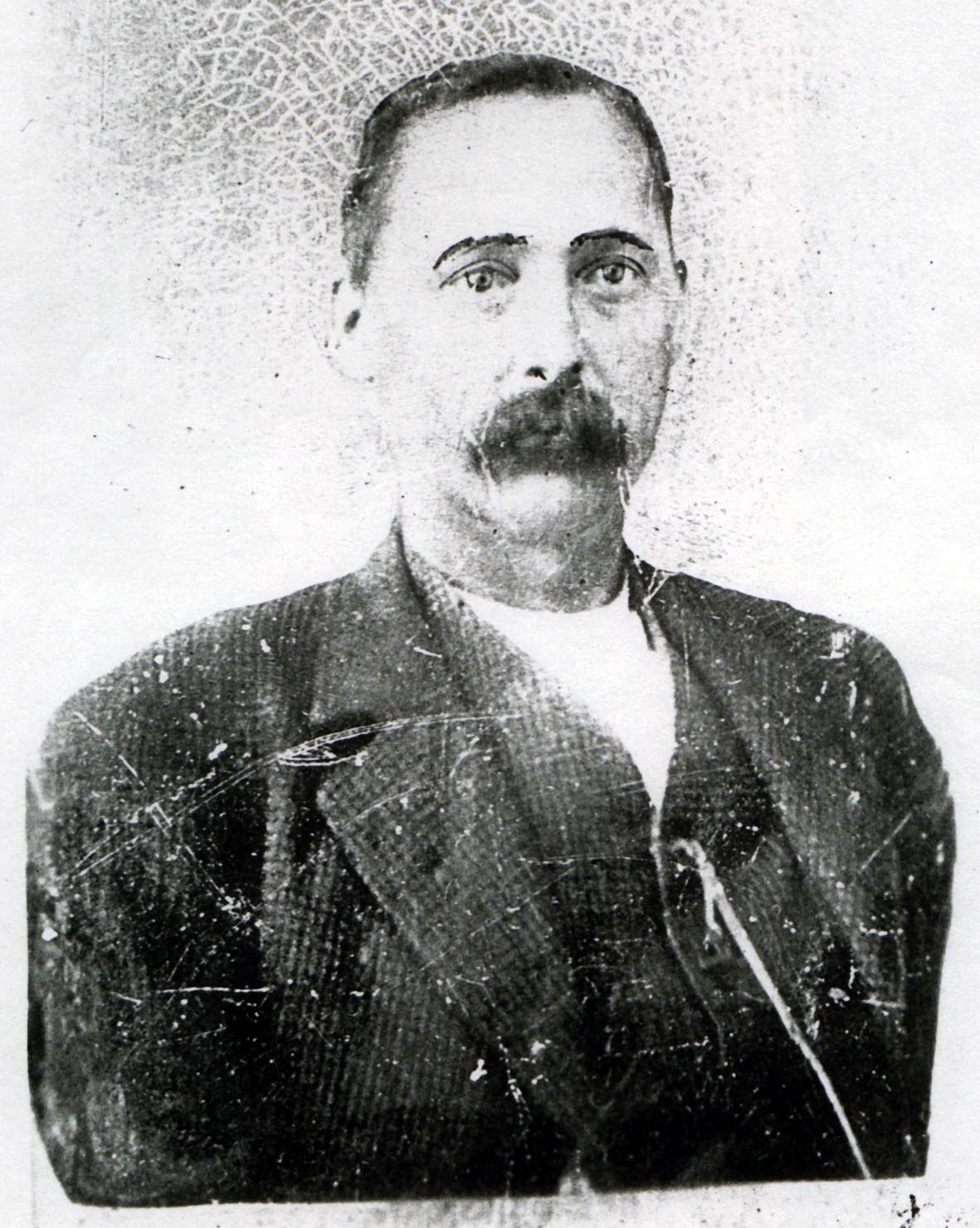
Morris Wentz, West Virginia fiddler

24 Tuesday Sep 2013
Tags
Appalachia, Cabell County, culture, fiddler, Fred B. Lambert, history, life, Morris Wentz, photos, U.S. South, West Virginia
Morris Wentz, West Virginia fiddler
23 Monday Sep 2013
Posted in Music
Tags
Appalachia, Cabell County, fiddler, fiddling, Fred B. Lambert, Guyandotte River, history, J.T. "Pomp" Wentz, music, photos, steamboats, West Virginia

J.T. “Pomp” Wentz, riverboat captain in the Guyandotte Valley. From the Fred B. Lambert Papers, Special Collections Department, Morrow Library, Marshall University, Huntington, WV.
21 Saturday Sep 2013
Posted in African American History, Ed Haley, Music
Tags
fiddling, Fred B. Lambert, George Stephens, Gus Wolcott, history, Ike Handley, Jim Peatt, Jim Wilcot, Morton Milstead, music, Percival S. Drown, Sam Peatt, slavery
“There were other fiddlers of less note than those I have named,” Percival Drown continued. “Jim Peatt was a fiddler of fair attainments only as to the number of tunes. I only remember that he played ‘Pigeon on the Gate’, ‘Indian Eat the Woodcock’ (with words), and ‘Old Dan Tucker’ with words and chorous… Ike Handley and Jim Wilcot, who lived below Guyan seven or eight miles, were of the class with Jim Peatt, as I now regard them and recall their fiddling.”
Around 1846, a “dark-skinned” fiddler named Joplin with a “French-Italian look about him” appeared briefly in Cabell County. He was “an educated fiddler and dancing master.”
“It was charming to me, at least, to listen to Joplin’s refined music and I scarcely let the opportunity pass and not hear him,” Drown wrote.
While a master of the violin in the classical sense, Joplin didn’t impress many locals.
“The average native of Cabell County at the period of which I am writing,” one citizen said, “would be far more entertained listening to George Stephen’s ‘Possum Creek’ or ‘Soap Suds over the Fence’, or ‘Peach Tree’ as he played it by ear, than Joplin’s classics rendered from book Clythe Masters.”
These fiddlers made a great impression on young Percival Drown, who took up the fiddle himself as a teenager.
“As brief as I can make it, I will give an account of my own career as a fiddler, which is of little merit, yet would appear to be in order to detail here with other reminiscent memories,” he wrote.
Early in the 40s my father said to me: “Perl would you like to learn to play the fiddle?” I was in my thirteenth year, I think. “Yes sir, I certainly would,” was about my reply — I think my exact words. He went on at some length in extolling the virtues of the violin — how a fiddler could elevate himself socially, and even become a great and popular personage. I have no idea he had ever listened to Joplin or Turner at that time, and certainly not an Ole Bull, or other high class performers. “Bonaparte’s Retreat” and “Money Musk”, also the “Irish Washerwoman,” were his special tunes to listen to. He then said: “Take this $3.00 and get Vere or Gus Wolcott (who kept the wharfboat at Logan) to send to Cincinnati and get the best instrument the $3.00 will buy, and you can begin and try and learn”. I took the money. Wolcott sent and got the instrument, and I was not long “to try and learn to play on it.” The employment of a teacher was out of the question — not to be thought of. We lived far in the back country, too far from where an instructor of the violin ever came. I could never have paid the tuition of an instructor could one have been engaged, but the husband of a negro woman and two children my father had bought at a public sale of the property of Joe Gardner, dec’d at Guyan, was a fiddler. My father hired the husband [named Sam] every winter to work on the farm. Sam became my teacher. I watched his fingers as he played “Old Grimes”, and by timing the fingers and getting the tune effectively fixed in my mind, it was not long until I could actually play “Old Grimes” myself, by which time I could also “tune up” the instrument. The worst was over.
[I learned] by listening to Geo. Stephens, and every other fiddler that came along the road, closely watching Sam’s fingers and hearing him play every rainy day that we wouldn’t work on the farm (and every night, rain or dry). In four to six months I could play any slow tune and the “Peach Tree” for a dance. For a cotillion I could play one tune, “Rose in the Mountain”. On an occasion, I think it was near 1846, a popular blacksmith and farmer named Stonebreaker who lived out on Beech Fork wanted to give the young people a party. So, he gathered his corn crop, hauled it into the barn, and appointed a day for the husking. “Corn shucking” it was called. The day for the corn shucking was Saturday. George Stephens was sought for, but was away and could not be got in time. Walcott lived twenty miles away, and was not known much anyway. Milstead lived in Ohio, fifteen miles or more. Joplin lived in Gallipolis, thirty miles up the Ohio, too. Hence, he was not available. I had no reputation as a fiddler, and Sam could not leave home — his wife was expecting to be sick of another kid — when it seemed that no fiddler of any known qualification could be engaged. A messenger was sent for me to ascertain if I would come, the time being short. I readily assented. Nothing said about the fiddler’s fee for the service. On the day set I done up the fiddle in my overcoat, and strapping it behind my saddle, mounted “Dave” a very comely animal and away to Stonebreaker’s. Afternoon I went nine or ten miles. Made the trip in good shape, arriving as big as life, fiddle and all. The husking of the corn concluded, the next order of business was to dance. The figures chiefly danced were “Virginia Reel”, “French Four”, and “Dan Tucker”. I could only play the “Peach Tree” in fairly good shape for dancing; and the “Peach Tree” it was for all night, except for supper. We adjourned for about an hour. Then on with the dance for the balance of the night. For this service I received all that was collected, 75 cents, fifteen times five cents in 5 cent pieces… but like George Stephens I felt that I, too, was a lilter. That was my very first playing for the dance. That was fully 68 years ago.
In 1854 I obtained another and superior instrument that, figuring some time ago how many miles I had carried that violin, it amounted to some 38,000 miles.
20 Friday Sep 2013
Posted in Ed Haley
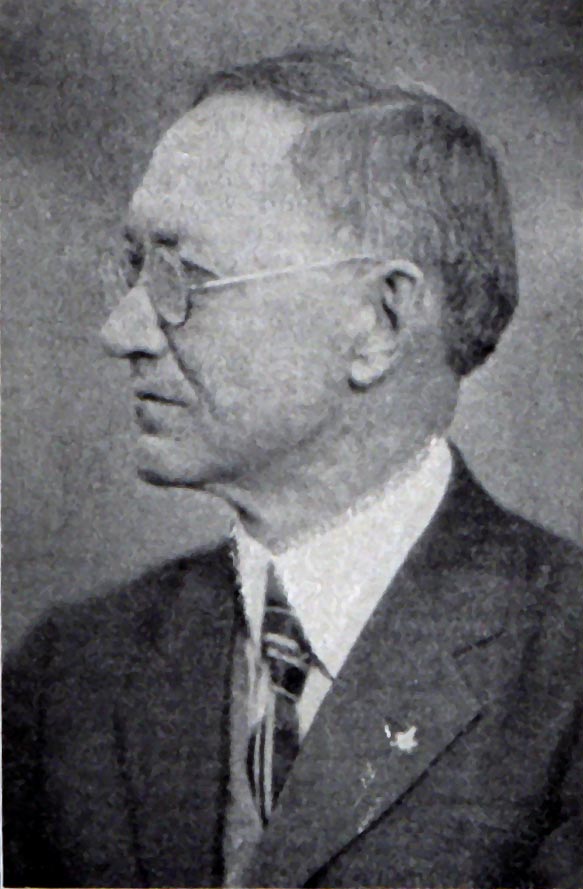
Fred B. Lambert, educator and regional historian
20 Friday Sep 2013
Tags
Anthony Riggs, Barboursville, fiddler, fiddling, Fred B. Lambert, George Stephens, Guyandotte River, history, Morton Milstead, music, Percival S. Drown, Samp Johnson, writing
The next morning, I went to see the Lambert Collection at the Morrow Library in Huntington, West Virginia. According to information at the library, the late Fred B. Lambert (1873-1967), a schoolteacher and administrator, had spent “at least sixty years of his life collecting information about West Virginia history” into a 500-notebook collection, mostly focusing on Cabell, Lincoln, Wayne, and Logan Counties. His notes on fiddling and old-time music were incredibly detailed. In some cases, he documented the first time a tune arrived in the Guyandotte Valley. Incredibly, none of his work was published outside of The Llorrac, an old high school yearbook from the 1920s.
As I flipped through his notebooks, it was difficult to keep my focus — there were stories about murders, genealogy, and life on the river. I took great interest in the stories about early fiddlers in the Guyan Valley. It helped put Ed — at least his early years — into a sort of regional context, the culmination of years of musical evolution. Any one of the mid-nineteenth century Guyan fiddlers may have actually known Ed Haley or, more likely, his father Milt.
In the 1830s and 1840s, according to Lambert’s research, George Stephens was a dominant fiddler in the Cabell County towns situated at or near the mouth of the Guyandotte River.
“George Stephens was a fiddler of wider reputation than most of those old time artists of the ‘fiddle and the bow,'” wrote one Percival S. Drown in a 1914 letter. “In his repertoire was ‘Bonaparte’s Retreat from Moscow,’ ‘Bonaparte Crossing the Rhine,’ ‘Cold, Frosty Morning,’ ‘Puncheon Floor,’ ‘Possum Creek,’ ‘Pop Goes the Weasel,’ ‘Pretty Betty Martin,’ ‘Carry Me Back to Old Virginia,’ ‘Hail Columbia,’ and ‘Star Spangled Banner.’ He had another tune and words ‘Big John, Little John, Big John Bailey.’ The tune Stephens seemed to throw himself away most on was the ‘Peach Tree.’ The meter and time governing this tune permitted its use and adaptation for dance music, and applying a long drawn bow with correct harmony and concord of sound, he carried the listener away in dreamy thought and recollection.
“When about midnight after the day of the ‘quilting,’ ‘Corn Husking,’ and ‘Log Rolling,’ when the ‘dance was on,’ Stephens, well-liquored up on Dexter Rectified, would have his face turned over his right shoulder apparently as much asleep as awake, but never missing a note of the ‘Peach Tree’, while the dancers would be ‘hoeing down’ for dear life. All at once he would order ‘Promenade to Seats’, cease playing, adjust himself in his seat and exclaim with energy ‘if I aint a lilter damme.’ Seemingly he was suddenly inspired with an exalter opinion of his greatness as a fiddler. As much as to say at the same time ‘and don’t you forget it.’ Then he might resen his bow and break out with a few stanzas of ‘Puncheon Floor’ or a tune he called ‘Soap Suds Over the Fence,’ to be followed by a slow tune so everyone could march to the supper table in the kitchen, across the yard (It was a common thing in those dear old times, for the kitchen to be detached from the ‘big house’).”
Samp Johnson was another top local fiddler, according to Percival Drown.
“‘Samp’ Johnson was the first fiddler I heard play ‘Arkansas Traveler’. One of his favorite places to play was at McKendree’s Tavern in Barboursville [on Main Street]. His favorite for playing was during Court days, when fiddler’s drinks were full and plentiful. The sun [was] full at 2 o’clock that day. Court day. The Town was full of visitors, chiefly ‘hayseed’, most of whom were fully equipped for home when they could tear themselves away from ‘Samp’ Johnson’s music. I well remember the day. McKendree’s second story porch was crowded with the audience. Roll Bias, who was a character in his day, lived far up Guyan River. He usually had business ‘at Court’. He was prosperous, in a way. I think he paid for all the drinks flowing from the attraction furnished by Johnson’s music in the street. While endowed with good common sense he could neither write his own or any other name. Poor ‘Samp’ Johnson came to his death at the Falls of Guyan when driving logs at high tide of the river, date not far from the time (1852) of my leaving the State.”
Another great fiddler in that era was Anthony Riggs.
“Anthony Riggs’ favorite tune that I more distinctly remember than others he played was called ‘Annie Hays,'” Drown wrote. “It was that fiddler’s favorite tune and one to suit the step and time for reels, and other ‘figures’ so called. Like all fiddlers of his class, he played ‘Nachez Under the Hill’, now known as ‘Turkey in the Straw.'”
Morton Milstead of Ohio “would come over to Cabell, stay around a few days, in the early 30s, I heard it said, and played the fiddle for drinks, mostly,” Drown wrote. “Milstead was rated as a high-class musician, as I recollect the talk of him. Never heard Milstead play but once, and I well remember now after a lapse of 65 or 70 years that his performance was much below that of George Stephens, Anthony Riggs, or ‘Samp’ Johnson, from my viewpoint at least.”
10 Tuesday Sep 2013
Posted in Ed Haley
Tags
Alva Greene, Brandon Kirk, Ed Haley, fiddling, Fred B. Lambert, Huntington, J P Fraley, John Hartford, Kentucky, Lawrence Kirk, music, Pat Haley, writing
Not long after talking with Patsy, while on a trip through Kentucky, I visited J.P. Fraley. I had Ed’s fiddle with me, which excited J.P. greatly. He fiddled Haley’s version of “Granny Will Your Dog Bite?” as best as he could remember it and said Ed used to sing:
Granny, will your dog bite, dog bite, dog bite?
Granny will your dog bite? “No, child, no.”
Granny will your dog bite, dog bite, dog bite?
“Johnny cut his biter off a long time ago.”
He said Ed also used to play “Hunky Dory”.
Between tunes, J.P. talked about how Haley was the top fiddler in his section of Kentucky. “Daddy and Alva Greene and Doctor Sparks and Frank Clay, Drew Crockett — reputable fiddlers, I called them — ever chance they got, they’d go listen to Ed Haley. He was the yardstick of the fiddlers in this whole area.”
J.P. said, “I’ve kept something for years, buddy. I’ve got a fiddle bridge of Ed Haley’s. I don’t know what it’s made out of.”
Apparently, when he borrowed the Haley fiddle from the Holbrooks years ago, he had kept a little memento before returning it.
In the next couple of weeks, I finalized plans for another “Ed Haley trip.” Pat Haley said I could stay at her place in Ashland, while Lawrence Kirk said I was welcome to stay with him in West Virginia. I called Brandon Kirk, the Harts genealogist, and arranged to meet him at the Morrow Library in Huntington. There he said we would have a lot of genealogical material at our fingertips, as well as all the room we needed to sort through our books and old photographs. I was very interested in the Lambert Collection, which he said was full of local historical information.
24 Saturday Aug 2013
Posted in Ed Haley
Tags
Appalachia, Ashland, Brandon Kirk, Ed Haley, Fred B. Lambert, Green Shoal, history, Lincoln County Crew, Marshall University, Milt Haley, Sam Vinson Harold, Tom Ferrell, writing
Around that time, I received a very important letter in the mail from Brandon Kirk, the Harts genealogist. “Here are some documents pertaining to your research which I found in the F.B. Lambert Collection here at Marshall University,” he wrote. “There is a good chance that there may be more references in the collection regarding old time fiddlers.” Along with Brandon’s note was a single photocopied page of an interview with someone named Sam Vinson Harold on February 22, 1951. “Ed Haley was originally from Kentucky, about Ashland,” Lambert wrote. “I think he is living yet. Milt Haley, Blind Ed’s father, was a great fiddler. Some one shot him, on his porch, at mo. of Green Shoals.” Harold claimed to have penned the tune about Milt Haley’s death, “The Lincoln County Crew”, with someone named Tom Ferrell. This interview — while small in content — was a great find because it was the first solid reference that Milt was a fiddler, which meant Ed would’ve had music around in his childhood and could’ve possibly even begun learning to play by watching him.
Writings from my travels and experiences. High and fine literature is wine, and mine is only water; but everybody likes water. Mark Twain
This site is dedicated to the collection, preservation, and promotion of history and culture in Appalachia.
Genealogy and History in North Carolina and Beyond
A site about one of the most beautiful, interesting, tallented, outrageous and colorful personalities of the 20th Century
 Brandon Ray Kirk