
• About

Brandon Ray Kirk

~ This site is dedicated to the collection, preservation, and promotion of history and culture in my section of Appalachia.

Brandon Ray Kirk

Tag Archives: Brandon Kirk

In Search of Ed Haley 304

13 Tuesday May 2014

Posted by Brandon Ray Kirk in Ed Haley, Stiltner

≈ Leave a comment

Tags

Angeline Lucas, Brandon Kirk, Cain Adkins, Daisy Ross, East Lynn, Faye Smith, genealogy, Green McCoy, Harts Creek, history, John Hartford, Kenova, Lee Adams, Lincoln County, Lynza John McCoy, Mary McCoy, Spicie McCoy, Stiltner, Twelve Pole Creek, Wayne County, West Fork, West Virginia, writing

Things got kind of quiet after that. I asked Faye if we were wearing her mother out and she said, “No, I don’t think so. She sits there and… Of course, she makes quilts. She’s made twenty since the first of the year. We’ve got them stacked upstairs. She made sixty-four the year before last. Last year she only made fifty-four. I don’t know how many she’ll make this year. She makes them upstairs. She pulls herself up there — you know, a handrail.”

Brandon asked if Daisy sold her quilts and Faye said, “Yeah, she sells them. Well, she gives us kids all one every year for our birthday. I’ve probably got forty or fifty.”

I asked how much they sold for and Faye said, “Thirty dollars.”

I said, “Have you got one you’d sell me?” and Faye laughed and said, “I’ve got a dozen if you want them. As a matter of fact, she’s even got her name and the date she completed it on each quilt.”

Faye looked over at her mother and said loudly, “He wants to buy one of your quilts.”

Daisy said, “Well, they’re upstairs.”

Brandon, Faye, and I went upstairs and fished through a bunch of quilts in a bedroom. We bought several; they were great souvenirs.

Back downstairs, Daisy told us more about Green McCoy’s “other family” in Eden, Kentucky.

“He had two children by his first wife,” she said. “Mary come and seen us and we was all tickled about it. I don’t know how she found us. She’d come to Kenova and stayed with some woman and found out where we lived up there above East Lynn in Stiltner way up in the country in a hollow. And she stayed a week or two. I don’t know how long she was aiming to stay, but she’d stayed with some lady and cleaned house and she cleaned out her wardrobe and took it with her and the law came and got ‘er. We don’t know what ever happened to Mary — we never heard from her no more. She was from down in Kentucky somewhere. I was just a little girl when she come up there.”

As for Green’s other child: “They had another’n, but I don’t know whether it was a girl or a boy.”

Not long before we left, Daisy revealed a final interesting connection between Green McCoy’s family and Cain Adkins’ family. She said Green McCoy had a brother named John who came around Cain’s place on Harts Creek.

“He’d go up there when Mom and Green lived out there in one of Grandpaw’s shacks. I think he was younger than Green.”

He might have been the same John McCoy, Brandon said, who land records showed owning 526 acres on Twelve Pole in Lincoln County in 1883.

About two years after Green’s death, John had a fling with Spicie’s sister, Angeline Lucas (Boney’s widow).

“Aunt Angeline went and had a young’n by him,” Daisy said.

A little later, she married Lee Adams and had seven more children, bringing her total to fourteen.
In Search of Ed Haley 302

04 Sunday May 2014

Posted by Brandon Ray Kirk in Culture of Honor, Ed Haley, Lincoln County Feud, Stiltner

≈ 1 Comment

Tags

Angeline Lucas, Bill Frazier, Brandon Kirk, Cain Adkins, Cain Adkins Jr., Daisy Ross, Faye Smith, feud, Harts Creek, history, John Hartford, Laurel Creek, Lee Adams, Lena Adkins, Lincoln County, Liza Adkins, Mariah Adkins, Mittie Adkins, Napier Ridge, Ranger, Sherman McCoy, Spicie McCoy, Stiltner, Wayne County, West Virginia, Winchester Adkins, writing

I asked Daisy again about her mother’s escape from Harts Creek.

“Grandpaw and the oldest boy had to come on out and come down into Wayne County to save their lives,” she said.

This seeming abandonment of his family in such a dark time appeared to be a blemish on Cain’s otherwise “spotless record.” I thought about that and said, “Seems to me like the safest way to get everybody out was to get the menfolk out first. And also, too, the menfolk could have got out of there quicker without the womenfolk.”

Faye said, “Well, I remember Grandmaw saying the Brumfields said they’d kill everything from the housecat up. I guess that’s why Grandpaw left, but I still wonder why he left the womenfolk. I can’t help it if it is my great-grandpaw.”

Not long after Cain left Harts, Daisy’s grandmother, Mariah Adkins, killed twelve sheep and some hogs and stored the meat in barrels, then loaded the barrels and all of the other family possessions onto a rented push-boat.

“They couldn’t get nobody to row the boat,” Daisy said. “Grandmaw tried to hire a colored man and he said he would, but he said, ‘I know they’d kill me.’ So they had to do it all theirselves. And Mom and Sissy done the rowing.”

“It was a pretty big size boat cause they had all the stuff they had in their house and their barrels of meat all in there,” Daisy said. “But they couldn’t get nobody to row the boat. Grandmaw tried to hire a colored man and he said he would but he said, ‘I know they’d kill me.’ So they had to do it all theirselves. And Mom and Sissy done the rowing.”

Those on the boat were 46-year-old Mariah Adkins, 23-year-old Spicie McCoy, 18-year-old Mittie Adkins, 13-year-old Lena Adkins, 13-year-old Liza Adkins, nine-year-old Cain Adkins, Jr., and one-year-old Sherman McCoy. Daisy wasn’t sure if Aunt Angeline (aged 28) was on the boat with her six kids, including a newborn.

“I don’t know whether she was already down here or not,” she said. “She didn’t come on the boat with them, I don’t think. She come down and married Lee Adams and lived out on the Napier Ridge.”

Daisy gave a chilling account of the ride down-river.

“Mom was about four months along with my brother Green and she had that little baby. Sherman was about a year and a half old — and it was raining and cold. 8th day of January. They come down through there and the peach trees was in full bloom, she said. Had been kind of a warm spell and the peach trees bloomed out that year. Mom said she was cold; she was numb.”

As they crept out of Harts, little Sherman McCoy pulled a long hair pin from his mother’s hair and stuck it repeatedly in her breast. She was afraid to take it from him because he might cry and alert the Brumfields of their exodus.

“He’d take that straight pin and poke it in her breast and pull it out,” Daisy said. “She knowed she was gonna be drowned every minute, so she wouldn’t scold him for it. She said, ‘It didn’t hurt and he had fun at it.’ He was just a little fella.”

It was the beginning of a rough ride: Mariah almost tipped the boat twice before allowing her daughter Mittie to pilot it.

The Adkinses spent the night at Ranger where they stored their goods at a local home. The next day, they got off the boat at Branchland and crossed over a mountain to Laurel Creek in Wayne County.

“Then they got Bill Frazier from Stiltner to go back up there to Ranger in a wagon — he was a young man then — and haul whatever they had stored down there,” Daisy said. “By the time he got there, the hams and meat didn’t have much meat on them.”

This story about the Adkins family’s exodus constituted one of those unforgettable tales in our search. Hearing about the Brumfield threat to kill “everything from the housecat up” caused Brandon to feel horrible that his ancestors would’ve perhaps harmed innocent women and children. Things had apparently come to that in Harts. Women shot from ambush. Young widows. Orphans. The entire community seemed to be coming undone. Of course, the determination of the women and children to survive their horrible ordeal was both inspiring and awesome, especially considering they weren’t the strong, raw-boned mountaineer women which one imagines them to have been. (Spicie McCoy only weighed about 91 pounds.)

In Search of Ed Haley 301

02 Friday May 2014

Posted by Brandon Ray Kirk in Lincoln County Feud

≈ Leave a comment

Tags

Boney Lucas, Brandon Kirk, Cain Adkins, crime, Daisy Ross, Eden, Eliza Fry, Faye Smith, feud, Green McCoy, history, Imogene Haley, Kentucky, Logan County, Milt Haley, Paris Brumfield, Randolph McCoy, Sherman McCoy, Spicie McCoy, West Virginia, writing

Brandon asked Daisy about Paris Brumfield.

“Well, he had a band of people. They went around and killed a lot of people, they said. They called them a mob. Mommy said they had a mob and if they didn’t like somebody they’d kill them. The Brumfields was rough. The Brumfields first killed Grandpa’s son-in-law, Boney Lucas, and when Mom married Green McCoy they said they had another one they was gonna kill.”

Daisy told us an incredible story about Green whipping Paris in a fight.

“All I know, they was into a racket beforehand and Green McCoy got him down and pulled his eyes all out and said, ‘Go back.’ He said they was just like rubber — he’d pull his eyeballs out and they’d go back. Said you couldn’t pull them all the way out. He did finally get his sight back. Had to wear a blindfold for two or three weeks or a month. Laid around for a while.”

Faye said, “Mom said Grandma was laughing — she kinda thought it was funny to tell about him pulling that eyeball out and it popping back like a rubber band.”

We could just picture the fight, based on what we’d read in the Lambert Collection.

“Fist fights between neighborhood bullies, or to settle old scores” were a part of local culture in those times. “It was not uncommon for contestants to engage in ‘gouging,’ as a natural sequence of a fist fight. Weapons were banned, but many a man lost an eye, by having it gouged out.”

It probably wasn’t too long after Green’s fight with Paris that he and Milt were murdered. Daisy knew they were killed in October (just after Spicie’s twenty-third birthday) after being captured in Eden, Kentucky, where Green’s first family lived. She said a Brumfield mob easily took possession of them there because “the law was afraid of them.”

“Paris Brumfield was one of the ringleaders,” she said. “They brought them back from Kentucky up to Fry and killed them there. They made Green McCoy play the fiddle and he didn’t want to. They was a gonna kill him, they said. Mrs. Fry — that lived in that house — she crawled under the bed, she said. She was afraid they was gonna kill her.”

Mrs. Fry was a sister to Boney Lucas.

Daisy said some of the younger Brumfields protested Milt’s and Green’s murder.

“They are good Brumfields,” she said. “Like other people, they’re mean people in every generation. Some of the Brumfields was real good people.”

Daisy said Spicie didn’t go with Milt’s wife to beg for Milt’s and Green’s life, as we’d heard from Billy Adkins. Actually, Daisy didn’t think her mother had known Emma Haley but Brandon wondered about that since one of Emma’s uncles had married an aunt to Spicie McCoy years before. (Another confusing, but seemingly relevant, genealogical connection.)

“Then after they shot them and killed them,” Daisy said, “they took a pole axe and beat his brains in and his brains went up on the door, Mom said. Oh, that liked to killed Mom.”

After the murders, the Brumfields warned people not to touch Milt’s and Green’s bodies.

“The Hatfields up there was a friend to Green McCoy ’cause when they murdered them they wasn’t gonna let them be buried, they said, and the Hatfields from Logan County come down there with their rifles to see if Grandpaw had let them bury them on his farm,” Daisy said.

That seemed unlikely to us, considering how the Hatfields were busy feuding with Randolph McCoy’s clan, however, Devil Anse Hatfield’s mother was a first cousin to Spicie McCoy’s grandfather.

In any case, Daisy said there was no Hatfield-Brumfield trouble because Milt and Green were buried on Cain’s farm before the Hatfields arrived in Harts.

In later years, Spicie made several trips to the gravesite with her son, Sherman McCoy — sometimes on paw paw runs. Faye took Daisy and Spicie on a final trip in August of 1953. The graves were in bad shape.

“It looked like it had been neglected,” Daisy said. “They just had little rocks for their tombstone. I couldn’t go up there now — I’m ninety-one years old — but I went there several years ago with my mother.”

In Search of Ed Haley 300

01 Thursday May 2014

Posted by Brandon Ray Kirk in Lincoln County Feud

≈ Leave a comment

Tags

Angeline Lucas, banjo, Brandon Kirk, Daisy Ross, dulcimer, Faye Smith, fiddlers, fiddling, Fire on the Mountain, Green McCoy, history, John Hartford, Kenova, Kentucky, Lincoln County, Mariah Adkins, Milt Haley, music, Spicie McCoy, West Fork, West Virginia, writing

We next inquired about Green McCoy. We were particularly curious about why he left Kentucky and settled in Harts.

“I don’t know why he went up there,” Daisy said. “He was just playing music and started running around, I guess.”

Green and Spicie had a love for music in common.

Daisy said her mother “always liked music” and sung “from the time she was a little girl.” She “could sing any part of music — all four parts” — and “could play a banjo and she was left-handed. Played pretty good. She said she could play a dulcimer.”

Green was Spicie’s “first boyfriend” and she was crazy for him, even though she knew very little about his past.

“Grandma Spicie, she called him Will,” Faye said. “His name was William Greenville.”

“She didn’t even know Green McCoy was married till after she was engaged to him,” Daisy said of her mother. “He come up there with his brother and pretended to be single. Aunt Angeline, I think, was the one who found it out. And after Grandmaw found it out, she tried to keep Mom from marrying him, but Mom loved him so good she couldn’t believe it. They tried to keep Grandmaw from marrying him, but that just made her love him that much more.”

She “loved him so good she went ahead and married him anyhow.”

Green and Spicie settled in one of the small shacks on the Adkins farm. Faye said she’d heard that Green “would go off for a couple of weeks for a time,” then return home to his young wife, who always ran out to hug him. He’d tease her by running through the yard or “maybe around the house a couple of times — make her chase him. She was thrilled to death to see him come back.”

We wondered if perhaps Green was traveling between wives or playing music abroad, since Daisy said he never had any occupation aside from music.

I asked if he was a drinking man and Faye said, “If he had a been, Grandma wouldn’t a told it ’cause that woulda looked bad on him. Grandma Spicie told Green that she would swim the briny ocean for him.”

Okay…so what about Milt Haley?

Daisy said he was a good friend to Green and her mother. I asked if she thought we would ever find that picture of them together and she said, “No, I don’t. Mom kept it in her trunk. My niece has got it but she’s sick and got a house full of junk like I have and will never find it. She got Mom’s pictures. It was a little tintype snapshot of him and Green McCoy standing together. I think he had a hat on — seemed like both of them had a hat on in that picture. That was when they was playing music, but they didn’t have no instruments with them.”

I got a sheet of paper and tried to do a sketch, asking questions like, “Do you remember if he had bushy eyebrows?” or “Thin face, you reckon?”

I was pretty desperate.

Daisy kept insisting, “I can’t remember. I can’t tell you how somebody looks.”

Brandon asked if Milt and Green knew each other in Kentucky, before their move to Harts.

“No,” Daisy said. “Not until he come up there. I don’t know, now, where Milt Haley come from. They played music together.”

I wondered if Milt was the best fiddler between the two and Daisy said, “I don’t know which one was the best.”

“But Grandma thought Green was the best, didn’t she?” Faye said to her mother.

“Oh yeah,” Daisy said. “That was her husband. I never heard her say nothing against Haley.”

I asked if Spicie ever mentioned the names of any tunes that Green played and she said, “She might’ve said some of them. One of them I think was ‘Fire on the Mountain’.”

I got real excited hearing that and asked if she would remember more tunes if I played for her.

“No, I wouldn’t recognize…,” she said. “I never heard fiddles very much. My brothers had them there some, but they never played fiddles too much. They had guitars and banjos and pianos and organs and other stuff.”

I gave it a try but all I got when I played Ed’s version of “Fire on the Mountain” was, “That’s all right, but I don’t feel like dancing.”

We all cracked up and Faye warned us about her mother, who sat stone-faced in her chair.

“Sometimes she’s a smarty,” she said.

In Search of Ed Haley 299

29 Tuesday Apr 2014

Posted by Brandon Ray Kirk in Ed Haley, Lincoln County Feud

≈ Leave a comment

Tags

Ben Walker, Boney Lucas, Brandon Kirk, Cain Adkins, Daisy Ross, diphtheria, education, Faye Smith, feud, Flora Adkins, genealogy, Green McCoy, history, Huntington, Kenova, Low Gap United Baptist Church, Mariah Adkins, medicine, Melvin Kirk, murder, Nancy Adkins, Paris Brumfield, Spicie McCoy, Wayne County, West Virginia, writing

The day after visiting Abe Keibler, I met Brandon Kirk in Huntington, West Virginia. We made the short drive into Wayne County where we located the home of Daisy Ross in Kenova. Her daughter, Faye Smith, met us at the door and told us to come in — her mother was waiting on us. She led us through a TV room and into the dining room where we found Daisy seated comfortably in a plush chair. She was hard of hearing, so Faye had to repeat many of our questions to her.

We first asked Daisy about Cain Adkins. Daisy said he was a United Baptist preacher, schoolteacher, and “had several different political offices.” He was also a “medical doctor” and was frequently absent from home on business.

“I would imagine Grandpaw Cain — I’m not bragging – was pretty well off at that time compared to other people,” Faye said.

Daisy didn’t think Cain was educated — he “just had the brains. Mom said he could be writing something and talk to you all the time.” He was also charitable.

“Lots of times when he doctored, they didn’t have no money,” Daisy said. “They’d give him meat or something off of the farm,” things like dried apples and chickens. “He had little shacks built and would bring in poor people that didn’t have no homes and Grandpaw would keep them and Grandmaw would have to furnish them with food. Kept them from starving to death.”

Cain seemed like a great guy.

Why would the Brumfields have any trouble with him?

Daisy had no idea.

We had a few theories, though, based on Cain’s various occupations. First, as a schoolteacher in the lower section of Harts Creek, he may have provoked Brumfield’s wrath as a possible teacher of his children. As a justice of the peace, he was surely at odds with Paris Brumfield, who we assume (based on numerous accounts) was often in Dutch with the law. As a preacher, Cain may have lectured citizens against living the “wild life” or condemning those locals already engaged in it, which would’ve also made him an “opposing force” to Brumfield.

There is some reason to believe that Cain was a potent religious force in the community during the feud era. Unfortunately, the earliest church record we could locate was for the Low Gap United Baptist Church, organized by Ben Walker and a handful of others in 1898. Melvin Kirk was an early member. More than likely, Cain was an inspiration to Walker, who was ordained a preacher in 1890.

Brandon asked Daisy what she knew about Boney Lucas’ murder.

“They killed him before they killed Green McCoy,” she said.

But why?

“I don’t know,” she said. “They mighta had trouble, too.”

Then came an incredible story, indicating that Boney Lucas was no saint, either.

“He lived about a week after he was hurt,” she said. “He wanted to be baptized and the preachers around there wouldn’t baptize him because he didn’t belong to the church. Grandpaw said, ‘I’ll baptize him.’ Grandpaw was a good preacher. He said, ‘I’ll baptize you, Boney.’ So they made a scaffold and they took him out there and somebody helped him and they baptized him before he died.”

Brandon said, “So Boney was kind of a rough character,” and Faye said, “See, he was connected with Grandpaw’s family and they didn’t tell things. If some of the family was mean, they didn’t get out and tell things.”

Cain had more bad luck when two of his daughters, Nancy and Flora, died of diphtheria.

“They buried them little girls out from the house somewhere up on the hill,” Daisy said. “I don’t know where they were buried. Mom never showed me. I guess they just had rocks for tombstones, you know.”

“Blood in West Virginia” is now available

15 Tuesday Apr 2014

Posted by Brandon Ray Kirk in Lincoln County Feud

≈ Leave a comment

Tags

Blood in West Virginia, Brandon Kirk, feud, genealogy, history, Pelican Publishing Company, writing

If you enjoy Appalachian history, please consider my book, Blood in West Virginia, which is now available at Pelican Publishing Company’s website.

http://www.pelicanpub.com/proddetail.php?prod=9781455619184#.U0zD94_D9dg

You may also find it for sale at the following location, among many others:

Milt Ferrell cabin

10 Thursday Apr 2014

Posted by Brandon Ray Kirk in Big Ugly Creek, Ed Haley, Rector

≈ 1 Comment

Tags

Appalachia, Big Ugly Creek, Brandon Kirk, culture, history, life, Lincoln County, Mayme Ferrell, Milt Ferrell, photos, Rector, U.S. South, West Virginia

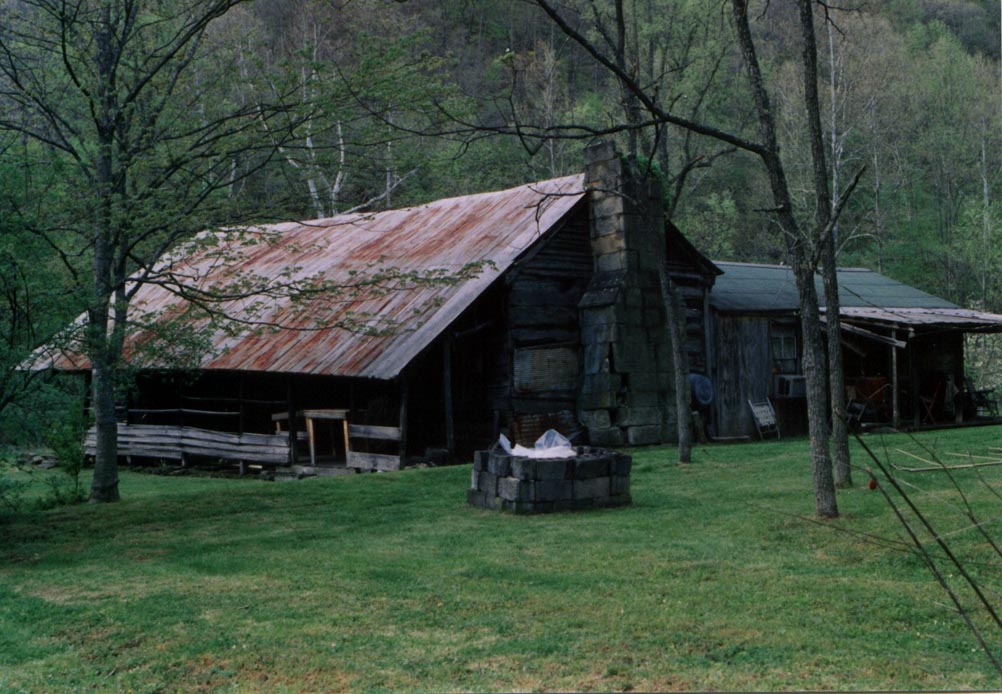
Milt Ferrell cabin, Rector, Big Ugly Creek, Lincoln County, WV, c.1998

Milt Ferrell cabin, Rector, Big Ugly Creek, Lincoln County, WV, c.1998

In Search of Ed Haley 284

09 Wednesday Apr 2014

Posted by Brandon Ray Kirk in Big Harts Creek, Ed Haley, Music

≈ Leave a comment

Tags

banjo, Bill Frazier, Brandon Kirk, Cain Adkins, Daisy Ross, Eternity Is So Long, fiddlers, Green McCoy, Green McCoy Jr., Harkins Fry, Harts Creek, Heaven on My Mind, history, Jesus Walked All the Way, Lincoln County, Milt Haley, music, Ranger, Sherman McCoy, Stamps Baxter, Time Is Passing By, West Virginia, writing

Inspired by Brandon’s visit to Daisy Ross, I called her to ask if she knew that Green and Milt were fiddlers.

“Brother Sherman and brother Green’s father was a fiddle player,” she said. “Mom said he was the best she ever heard. I didn’t know what Milt played — they played together — but Green played the fiddle. Brother Sherman played a banjo. Brother Sherman could play any kind of music. I guess Green McCoy could, too.”

I asked about Sherman’s tunes and Daisy said, “I remember when I was little and I wanted him to play that ‘Indian Girl’ and he’d have to tune that banjo different. He’s been gone fifty-some years but he was a good banjo player. He was a singing teacher. Three of my brothers was singing school teachers. Sherman and Green, and then my full brother Harkins Fry, he made music. He wrote songs all the time. He musta wrote a thousand or more and had them in Gospel songbooks. ‘Heaven On My Mind’, ‘Eternity Is So Long’ and ‘Jesus Walked All the Way’. The first ones he wrote, he was just a teenager; he was about sixteen, I think. ‘Time Is Passing By’ — he sent that off and got a thousand copies made of it and after that they liked his music so they went to putting them in songbooks and they put two in every Stamps Baxter songbook that come out.”

I was really curious to hear more about the Adkins family’s exodus from Harts Creek but Daisy only added a few new details.

“I don’t know exactly where they got on the boat at, but they got off at Ranger and had to store their stuff there at somebody’s house,” she said. “Grandpa got a man down here, Bill Frazier, to go up with a wagon and haul their stuff down. People had a hard time then.”

Daisy Ross Interview in Kenova, WV

08 Tuesday Apr 2014

Posted by Brandon Ray Kirk in Ed Haley, Lincoln County Feud

≈ Leave a comment

Tags

Angeline Lucas, banjo, Boney Lucas, Brandon Kirk, Cain Adkins, Daisy Ross, Eustace Gibson, Faye Smith, fiddler, Green McCoy, guitar, Harts, Harts Creek, history, Huntington Advertiser, John McCoy, Kenova, Lincoln County, Milt Haley, Oscar Osborne, Paris Brumfield, Sherman Boyd, Sherman McCoy, Spicie McCoy, Tug Valley, West Fork, West Virginia, Winchester Adkins, writing

Meanwhile, as I churned up new details about Ed Haley, Brandon was busy chasing down leads on the Milt Haley story in West Virginia. One crisp December day he visited Daisy Ross, the aged daughter of Spicy McCoy, who lived in a nice two-story house at Kenova, a pretty little town just west of Huntington. It was Brandon’s first face-to-face contact with Green McCoy’s descendants and he was anxious to hear more about their side of the tale. Daisy was white-headed and a little hard-of-hearing — but full of information about Green’s family. Her daughter Faye played hostess during Brandon’s visit.

Daisy said Green McCoy was originally from the Tug Fork area. He came to Harts playing music with his brother, John McCoy. He always kept his hair combed and wore a neatly trimmed mustache. Spicy used to have a tintype picture of him with Milt Haley. He and Milt met each other in the Tug Valley.

Daisy said her grandfather Cain Adkins was a country doctor. He was gone frequently doctoring and was usually paid with dried apples or chickens. He feuded a lot with the Brumfields, who killed his son-in-law, Boney Lucas. Boney’s widow Angeline was pretty wild: she had two illegitimate children after Boney’s death. One child belonged to a man named Sherman Boyd and the other belonged to John McCoy — Green’s brother.

When Green McCoy came to Harts, Cain discouraged Spicy from marrying him because he was divorced from a woman living in Kentucky. Spicy didn’t believe the family talk of “another woman” and married him anyway. She and Green rented one of the little houses on Cain’s farm. Green made his living playing music and he was often gone for several days at a time. When he came home, Spicy, ever the faithful wife, ran out of the house to hug him and he would playfully run around the yard for a while before letting her “catch” him. Daisy had no idea where Green went on his trips because he never told her mother. Spicy didn’t really care: she always said she would “swim the briny ocean for him.”

Brandon showed Daisy an 1888 newspaper article he had recently found, documenting Cain’s trouble with Paris Brumfield.

“Paris Brumfield was indicted for felony in five different cases by the grand jury of Lincoln county at its last term,” according to the Huntington Advertiser on June 23, 1888. “He fled the county, not being able to give bail, which was fixed by the Court at $5,000. Brumfield’s latest act of violence was his murderous assault upon Cain Adkins, a staunch Democrat, one of THE ADVERTISER’S most esteemed subscribers. The last act was the straw that broke the camel’s back, and the county became too hot for Paris. Gibson & Michi have been retained by Brumfield’s friends to defend him when brought to trial.”

Daisy blamed Green’s murder on the Brumfields. She said Green once got into a fight with Paris Brumfield and “pulled his eyeballs out and let them pop back like rubber bands.” Brumfield had to wear a blindfold for a while afterward.

After Green’s death, Cain Adkins and his son Winchester fled Harts, probably on horses. Winchester was one of the best local fiddlers in his day. He mostly played with his nephew Sherman McCoy (banjo) and Oscar Osborne (guitar).

In Search of Ed Haley 273

26 Wednesday Mar 2014

Posted by Brandon Ray Kirk in Culture of Honor, Ed Haley, Harts, Lincoln County Feud

≈ Leave a comment

Tags

Billy Adkins, Brandon Kirk, Cain Adkins, Cleveland, Columbus, crime, Daisy Ross, East Lynn, feud, Green McCoy, Green McCoy Jr., history, Huntington, John Hartford, Logan, Luther McCoy, Marango, McCoy Time Singers, music, Ohio, Ralph McCoy, Sherman McCoy, Spicie McCoy, Stiltner, Wayne County, West Virginia, writing

When we got back to Billy’s, we were amazed to find that he’d made contact with Green McCoy’s family. He showed us telephone numbers for two of Green’s grandsons, Ralph McCoy and Luther McCoy, as well as for Spicie McCoy’s daughter, Daisy (Fry) Ross.

I dialed up Ralph McCoy in Marango, Ohio, and explained who I was and what I was doing, then asked about Green McCoy’s murder.

“I’m 72 years old but a lot of that went on before I was born,” he said. “I’ve had two or three strokes and sometimes my memory’s gone. From the way I understood it, it was a Brumfield that killed my grandfather. There was something going on — I don’t know what the feud was about. See, I know nothing first-hand. My dad was born in 1888 and my dad was I think about two years old when his dad was murdered. My grandmother told me this part of it: that her and my dad and somebody else, I believe… My grandmother’s name was Spicie McCoy. I guess my grandfather put her on a raft or something and pushed her out in the river and told her to get out of there, to just keep on going and be quiet about it. She was pregnant for Uncle Green. Then after my grandfather got killed she married Goble Fry and then I think they came on down into Wayne County, which was around Stiltner and East Lynn and in that area.”

I asked Ralph if he knew anything about Green McCoy being a musician and he said, “Yes, very much. I’d say he was just like my dad, Sherman McCoy. He played anything that had strings on it. My dad and my grandmother, they traveled all over Wayne County playing in a quartet. They called themselves the ‘McCoy Time Singers.’ I did some traveling with them but it was just more or less in the Wayne County area. Logan city, I’ve been down that far with my dad and Grandma.”

So Green McCoy’s son Sherman was a musician, too?

“He did play with some people before he became a Christian and he played in Cleveland over the radio and stuff like that, but I wasn’t living with him then,” Ralph said. “I was living with mother. See, I was brought to Columbus, Ohio, and raised from about nine years old, so I lost track of a lot of them. But I did know he played over the radio in Cleveland and I think Huntington and several different places.”

“Have you talked with Luther McCoy?” Ralph asked.

I told him that we had tried calling Luther first but that he was in bed asleep.

“If you can talk with him, I think you’ll find out he’s probably in the same business you’re in,” Ralph said. “He plays, I think, back-up for several bands. From the way I understand it, he might be out on the West Coast.”

This was all great: our first contact with Green McCoy’s descendants.

In Search of Ed Haley 272

25 Tuesday Mar 2014

Posted by Brandon Ray Kirk in Big Harts Creek, Ed Haley, Music

≈ Leave a comment

Tags

banjo, Bernie Adams, Bernie Hager, Billy Adkins, Boone County, Brandon Kirk, Ed Haley, fiddle, fiddler, Harts Creek, history, Hubert Baisden, Ike Hager, Irene Hager, John Hartford, Johnny Hager, Low Gap, music, Robert Adams, Roy Dempsey, West Virginia, writing

The next day, I followed a tip from Billy and Brandon and made the short drive to see Irene Hager and her son Ike at Low Gap in Boone County, West Virginia. Irene was the daughter of Hubert Baisden, a close friend to Johnny Hager, and was the widow of Bernie Hager, Johnny’s nephew. Irene said Johnny used to visit her father at nearby Big Branch when she was a girl. Johnny played the fiddle and banjo and talked frequently about his travels with Ed back in the ’20s and ’30s.

“Ed Haley was an ever day word with Johnny,” Ike said.

Ike said Johnny Hager was most known as a fiddler, not a banjo-picker. He said he “cradled” the fiddle in his arms, never put it under his chin and bowed a lot of long strokes. He was primarily a claw-hammer banjoist but “did have a finger style.” Irene said his favorite song was “Joshua’s Prayer”, while Ike remembered him loving “Will There Be Any Stars in My Crown”. He also played “Rosewood Casket”, “Nelly Gray”, “Ballad of Old Number Nine”, “John Hardy”, “In the Pines”, “Cripple Creek”, “Wreck of ’97”, “Mockingbird on the Hill”, and “Little Log Cabin”.

Ike said Johnny taught his father how to play the banjo.

“He wanted a banjo player in the family to play around the houses and the homes with him,” Ike said. “My dad was musically inclined — he could chord a guitar and follow him along on the fiddle and banjo — so he talked Dad into getting a banjo. Dad traded six or seven hens and walked several mile with them hens upside down for this old banjo and Johnny taught him how to play. He picked up on playing pretty fast. I know they used to go over on Big Ugly and play in a school somewhere. Now they was some more boys that played with them. They was Wilcoxes, down on Mud River.”

That evening, I met up with Brandon at Billy Adkins’ house in Harts. Billy said a local man named Roy Dempsey told him earlier that day about having a genuine Ed Haley fiddle. I didn’t have too much time — I was leaving for Nashville later that night — but I wanted to see Roy. Brandon and I drove a little ways up Harts Creek to the Dempsey place, situated on a hill near the mouth of Big Branch. Roy showed us the fiddle, which he said Ed had given to Bernie Adams. Bernie later gave it to Roy’s father-in-law, Robert Adams. It was the first “Ed Haley fiddle” I’d seen on Harts Creek.

In Search of Ed Haley 272

24 Monday Mar 2014

Posted by Brandon Ray Kirk in Big Harts Creek, Culture of Honor, Ed Haley, Lincoln County Feud

≈ 1 Comment

Tags

Al Brumfield, Albert Dingess, Ben Adams, Brandon Kirk, Charlie Dingess, crime, Dave "Dealer Dave" Dingess, Dave Dingess, feud, fiddler, fiddling, French Bryant, Green McCoy, Harts Creek, Harve Dingess, Harvey "Long Harve" Dingess, Henderson Dingess, history, Hollene Brumfield, Hugh Dingess, Maude Dingess, Millard Dingess, Milt Haley, Thompson Branch, writing

Either way, Milt Haley and Green McCoy were paid a side of bacon and some money to eliminate Al Brumfield. Maude Dingess said Milt and Green ambushed Al and Hollena Brumfield as they rode down Harts Creek on a single horse. Hollena’s brothers, Harvey and Dave, followed behind them on separate horses.

“I guess they thought he was gonna have trouble or they wouldn’t a been doing that,” Maude said, somewhat logically.

As they made their way past Thompson Branch, Brumfield spotted two men hiding in the weeds. He ducked somehow to avoid harm, but Hollena was shot from the horse.

“Al just went on,” Maude said, while Dave and Harve “ran back up here to their mother and daddy’s house to get somebody to go down there with them.”

They later returned with a sled and hauled Hollena’s bloody body back to Smoke House.

In a short time, Milt and Green were rounded up and taken to Hugh Dingess’ home at the mouth of Bill’s Branch.

“I’d say old man Hugh got them kids and took them maybe to some of their relatives’ houses or somewhere else,” Harve Dingess said. “Maybe up to old Albert Dingess’ or somewhere like that. See, old Albert just lived on up the road a mile, mile and a half.”

Harve continued, “They said they all had a big feast there and I guess they had a lot of the corn whiskey there and all of them drinking and playing music. And they said they made the old man Haley — he was a fiddle player — they said they made him play that fiddle all night and all of them drunk a dancing. They said that they just kept telling him to keep that fiddle a going.”

I wondered where Milt got the fiddle at Hugh’s and Maude said, “They sent somebody to somebody’s house that had a fiddle I bet and brought it back. Back in them days you know a lot of households had them old instruments in them.”

I asked if Milt was considered a good fiddler and Harve said, “At that time, I think they said he was. Supposed to’ve been very good.”

Harve had never heard much talk about Green McCoy but stressed: “I know I did hear them talk about them making the old man play the fiddle all night and all of them a dancing and cooking and having a big feast there and drinking their moonshine.”

I said, “Most people that are gonna kill somebody, they don’t want to get to know them. If you have an execution, the executioner don’t want to get to know the prisoner because the more he gets to know that prisoner the harder it is for him to conduct the execution. To have two guys to play music for you before you’re fixing to kill them — that’s a good way to get to know them real quick. Boy, I don’t see how they did that.”

“I guess that’s the reason they kept old French Bryant,” Harve said. “They said he didn’t care for nothing. They said he was one of the leaders. He was a hollering, ‘Let’s go! Let’s do it!’ Pushing the thing, from what I could understand. He was a hollering, ‘Let’s kill the sons of bitches!’ That’s what I heard over the years. I even heard Millard say that one time. French was the one wanting to hang them up to the walnut tree and I think they finally decided against that.”

Brandon wondered who else was in the gang and Maude said, “Hugh and Charlie Dingess was into that. They was Grandpap’s boys — the older boys. Hugh was rough and over-bearing. Harve’s grandfather, ‘Short Harve,’ was into that. Burl Farley was into it, too.”

Maude doubted that Henderson Dingess was involved due to his advanced age (approximately 58 years), but we felt it was entirely possible since (1) men his age and older participated in the Hatfield-McCoy feud and (2) these guys had reportedly shot his daughter. Harve said he figured that his great-grandfather Albert Dingess was in on it because “he was just that kind of guy.”

“Dealer Dave” Dingess was probably involved, too, Harve said, because “them Dingesses all hung together. They was just a band of outlaws, as we would call it, that day and time.”

Harve and Maude hadn’t heard much about the story beyond that, although they knew that Milt and Green were taken away from Hugh’s when the Brumfields learned that another mob was forming to rescue them. They never confessed to committing the ambush on Al and Hollena Brumfield but everyone figured that Ben Adams was behind the trouble. As a result, Maude said the Brumfields and Dingesses were “against” Ben in following years. At one point, they tried to burn his home. Maude’s father was one of the few Dingesses who never held a grudge. He often referred to him as “poor old Uncle Ben.”

In Search of Ed Haley 271

23 Sunday Mar 2014

Posted by Brandon Ray Kirk in Big Harts Creek, Culture of Honor, Ed Haley, Lincoln County Feud, Timber

≈ Leave a comment

Tags

Al Brumfield, Albert Dingess, Ben Adams, Billy Hall, Brandon Kirk, Burl Farley, Charlie Dingess, crime, Dave Dingess, feud, Floyd Dingess, Harts Creek, Harve Dingess, Harvey "Long Harve" Dingess, Henderson Dingess, Hollene Brumfield, Hugh Dingess, John W Runyon, Logan County, Maude Dingess, Milt Haley, Rockhouse Fork, Sallie Dingess, timbering, West Virginia

Brandon asked Maude Dingess about her grandparents, Henderson and Sallie (Adams) Dingess. Maude said Grandpap Henderson was “kindly the leader of his family” but he had a real time keeping his older sons — Charlie, Floyd, and Hugh — in line. They ran around a lot with their uncle Ben Adams, who was Sallie Dingess’ youngest brother. Uncle Ben Adams was pretty tight with the Dingesses in the early years (he named his first three children after them) but was reportedly a bad influence on the Dingess boys. At some point, Maude said, her uncles “turned their meanness on him.”

One time, after Charlie Dingess whipped Ben in a fight, Ben came to complain to Sallie. Henderson saw him coming and told her, “Go out there and tell him to go home. We don’t want no trouble with them.” Sallie went outside and said to her brother, “Now Ben. You just go right back home. Don’t you get off here. There’s no use to quarrel at Charlie and Floyd ’cause you’ve made them what they are. You taught it to them.”

In subsequent years, Henderson tried to “distance” himself from Ben. He often made snide comments, like telling his son Dave that he was “all Adams” when he wouldn’t work.

“If I knew where the Adams vein was in your body, I’d drive a knife in it and let it run out,” Henderson would say.

Brandon asked Maude if her uncle Floyd Dingess was killed over timber in 1888.

“Floyd was tough,” she said. “Floyd was killed there at the mouth of Rock House. He had some logs there and that was his brother-in-law he was into it with, Bill Hall. They just got to quarreling over the logs, I guess. Floyd was bent down to drive the dregs in the logs and Bill Hall run up behind him and knocked him in the head with a pole axe.”

“I’ve heard Maude’s father talk about it,” Harve said. “He said when they’d be a floating the logs out of here — you know, huge water — Floyd Dingess would run them logs like a gray squirrel.”

Maude said, “He was a small man. Dad said Floyd was much of a man to be a little fella like that. He said he saw him do things a big man couldn’t do.”

As soon as we asked about Milt Haley’s death, Harve said, “It was all over timber. The Adamses around in the other creek yonder, they was all wanting to make a dollar out of timber, no doubt. Ben Adams and them had their own dam built somewhere up main Hart — splash dam. Well now, up in this fork, old Albert Dingess had a big one up there. Burl Farley had one too on up above it. They kept a huge dam there and when they’d get ready to float their logs, everybody would turn their dams out at once and let them go. When they would knock them there dams off and everybody had their timber ready to float out of here the timber would get mixed a going down. Naturally, it would. When they’d get down there at Hart — the Brumfields had the boom in there that caught the timber and hold it out of the river and then they’d make up their rafts there — and they’d have to pick through that and sort their timber out. They had their brands on it, but they’d slip and change their brands. Maude’s father, I heard him talk that they’d get down there and they’d get in the awfulest arguments ever was over whose logs were whose and whose belonged to what. I guess they had a time with it.”

In addition to all the hard feelings over people stealing logs, there was a lot of animosity toward Al Brumfield — even among his in-laws — because of the toll he charged at his boom.

“They was having to pay a toll down there at Hollene’s and they didn’t want to pay any toll,” Maude said. “And that’s what Al’s wife was shot over.”

“The Mullinses put this old guy [Milt Haley] up to doing the dirty work, I think,” Harve said. “Now, I ain’t sure on that. I’ve heard that talked a little bit.”

Brandon told Harve and Maude how Ben Adams was supposedly the one who hired Milt and Green to kill Al Brumfield and Maude confirmed, “He did. I thought it was Ben ’cause, you know, they talked that here.”

“That’s what the word was,” Harve said. “The Adamses and Mullinses around there. See, the Adamses and Mullinses was always locked in through marriage. They said that old Ben was the head of it. I just heard Maude’s brothers talking, you know, that he was a pretty ruthless man.”

Maude said, “He was awful hidden in his ways but Dad always bragged on him. Ben was his uncle.”

Brandon said, “People that live in Harts, down at the mouth of the creek, they’ve all been told that John Runyon hired those two men. People up here on the creek have always been told it was Ben Adams. What it looks like is that they both were in on it.”

Harve said, “It’s possible that they were in cahoots because now… Seems to me like, something I did hear… Somebody talked that in the past — might have been Maude’s father — that there was another person or some other people — which could have been the very people you’re talking about — tried to horn in on the Brumfields there at the mouth of the creek at one time and they had some problems with it. Like they tried to put a boom in of their own and squeeze old Hollene out.”

“I think Ben did that,” Maude said.

“Well, Ben could have been in on it with this other guy like he’s talking about,” Harve said.

In Search of Ed Haley 269

17 Monday Mar 2014

Posted by Brandon Ray Kirk in Big Harts Creek, Culture of Honor, Ed Haley, Lincoln County Feud, Little Harts Creek

≈ 1 Comment

Tags

Ben Adams, Billy Adkins, Bob Mullins Cemetery, Brandon Kirk, Cat Fry, Chapmanville, Eunice Mullins, Ewell Mullins, Greasy George Adams, Green McCoy, Harts Creek, Hell Up Coal Hollow, history, Hugh Dingess, Imogene Haley, John Frock Adams, John Hartford, Johnny Hager, Little Harts Creek, Louie Mullins, Milt Haley, Oris Vance, Peter Mullins, Sherman McCoy, Sol Bumgarner, Spicie McCoy, Ticky George Adams, Turley Adams, writing

Back in the car, I mentioned to Brandon and Billy that we hadn’t made any real progress on learning what happened to Emma Haley. Billy suggested trying to locate her grave in the old Bob Mullins Cemetery at the mouth of Ticky George Hollow on Harts Creek. He said it was one of the largest and oldest cemeteries in the area. I told him that I was all but sure that Emma was buried in one of the “lost” graves on the hill behind Turley Adams’ house but wouldn’t mind checking it out anyway.

We drove out of Smoke House and up main Harts Creek to the Bob Mullins Cemetery, which was huge and very visible from the road. We parked the car and walked up a steep bank into a large number of gravestones. Some were modern and easily legible but most were of the eroded sandstone vintage with faded writing or completely unmarked. I located one stone with crude writing which read “E MULL BOR 69 FEB ?8 DEC 1 OCT 1899.” It could have easily been Emma Haley — who was born around 1868 and died before 1900. However, Brandon read it as “E MULL19 SEP 188?-1? OCT 1891.” We couldn’t agree on the markings well enough to satisfy ourselves.

As we stood at the “E MULL” grave, Brandon pointed across Harts Creek.

“Greasy George lived over there where that yellow house is,” he said.

He then pointed across Ticky George Hollow to Louie Mullins’ house, saying, “That’s where ‘John Frock’ Adams lived.”

John Frock was Ed Haley’s uncle and a suspect in the Al Brumfield ambush at Thompson Branch.

“Ticky George lived on up in the hollow,” Brandon said.

We walked down the hill to speak with Louie but learned from his wife Eunice Mullins that he’d passed away several years ago. Eunice was a daughter of Greasy George Adams. She said Ed used to play music at her father’s home. She also confirmed that Ewell Mullins, her father-in-law, bought Ed’s property on Trace. He lived there for years and was a storekeeper before moving to the site of her present home, where he operated yet another store. Ed played a few times at this latter location before it was torn down around 1950.

From Eunice’s, we went to Trace Fork to take a closer look at Ed’s old property. Along the way, as we drove by Uncle Peter’s place, we bumped into Sol Bumgarner walking near the road. He invited us up to his house, where we hung out for about half an hour on the porch. I played a few fiddle tunes and asked about people like Uncle Peter, Ben Adams, and Johnny Hager.

Bum said Uncle Peter Mullins lived at the present-day location of a tree and swing near the mouth of the hollow in a home that was part-log. Ben Adams, he said, lived further up Trace and hauled timber out of the creek with six yoke of cattle. He remembered Ed’s friend Johnny Hager standing on his hands and walking all over Trace.

I reminded Bum of an earlier story he told about Ed splintering his fiddle over someone’s head at Belcher’s tavern on Crawley Creek. He really liked that story — which he re-told — before mentioning that Ed composed the tune “Hell Up Coal Hollow” and named it after the Cole Branch of Harts Creek. Cole Branch, Brandon said, was the home of his great-great-grandfather Bill Brumfield who kept the hollow exciting around the turn of the century.

After an hour or so on Trace Fork, we decided to see Oris Vance, an old gentleman on Little Harts Creek who Billy said was knowledgeable about early events in Harts. We drove out of Harts Creek to Route 10, then turned a few minutes later onto Little Harts Creek Road. As we progressed up the creek on a narrow paved road past trailers, chicken coops, and old garages, I noticed how the place quickly opened up into some beautiful scenery with nice two-story brick homes.

In the head of Little Harts Creek, near the Wayne County line, we found Oris walking around outside in his yard. He was a slender, somewhat tall fellow, well-dressed, and obviously intelligent. His grandfather Moses Toney was a brother-in-law to Paris Brumfield. Toney and his family had fled the mouth of Harts Creek due to Brumfield sometime before the 1889 feud.

Oris told us the basic story of Milt Haley’s and Green McCoy’s murders as we knew it up to their incarceration at Green Shoal. He said Hugh Dingess, a grandson to the “old” Hugh Dingess, was his source for the tale. At Green Shoal, one of the prisoners begged the Brumfield gang not to kill him so that he could see his children, but the mob gave no mercy and blew Milt’s and Green’s brains out.

“Cat Fry looked out of a window in the top of the house and saw out into the yard,” Oris said, apparently referencing her view of their grisly corpses.

Oris said he saw Green McCoy’s widow at a singing convention in Chapmanville in the early ’30s. She was an alto singer in a gospel quartet with her guitar-playing son. When Oris saw her, she was sitting with songbooks in her lap near a hotdog sale across the road from the old high school.

In Search of Ed Haley 266

14 Friday Mar 2014

Posted by Brandon Ray Kirk in Big Harts Creek, Ed Haley, Music

≈ Leave a comment

Tags

Billy Adkins, Brandon Kirk, Carolyn Johnnie Farley, Ed Belcher, Ed Haley, fiddler, fiddling, George Mullins, guitar, Harts Creek, Hattie Farley, history, Hollene Brumfield, Lewis Farley, Logan County, Mary Ann Farley, Mason Conley, music, Rosa Mullins, West Virginia, writing

The next day — the 106th anniversary of Milt Haley’s death – Billy Adkins suggested that we go see Carolyn “Johnnie” Farley on Brown’s Run of Smoke House Fork. She was a granddaughter to Burl Farley, one of the ringleaders of the Brumfield mob. There were other interesting connections: her grandmother was Hollena Brumfield’s sister and her mother was Ben Adams’ niece. Her ancestors, then, represented both sides of the trouble, helping to make her a great source on the 1889 feud. Billy said she was old enough to remember Ed, too. His notes showed her as being born in 1924.

Without really hesitating, we went outside through a small rain shower and boarded the car and took off up the creek. We were oblivious to the poor weather and kept pointing to spots that were probably only significant to us.

“Now that was part of the old Al Brumfield farm.”

“There’s where the old boom was.”

“Here’s where the ambush took place.”

Our fascination with all the sites continued after we turned up the Smoke House Fork.

“There’s the Hugh Dingess Elementary School.”

“There’s the old Henderson Dingess place.”

“There’s where the old Dingesses are buried.”

“There’s Cecil Brumfield’s place. Ed used to visit there.”

We finally reached Browns Run. Johnnie Farley’s white house was just up the branch on the left, accessed by a muddy driveway filled with ruts and sharp jutting rocks. We parked behind the house, where several wooly dogs and a flock of tiny chickens surrounded us — three strangers ankle-deep in mud holes.

Almost immediately, Johnnie came out the back door and spotted Billy — one of the most recognized and popular guys in Harts — and told us to come on inside. She led us through the kitchen and a hallway, past a giant photograph of her grandmother, Mary Ann Farley (Hollena’s sister), and into a very dim living room. We all sat down on furniture that was literally surrounded by papers, books and pictures. Johnnie was obviously a packrat — a woman after my own heart.

Billy began introducing Brandon and I, but Johnnie stopped him short and looked at me with her ice blue eyes and said, “Oh I know who you are. I’ve got some of your records.” Her spirit and energy were immediately apparent — she spoke as if we were old friends. Her husband sat quietly nearby in a comfortable chair. He was in poor health.

I asked Johnnie if she remembered Ed and she said, “Yes, I knowed Ed Haley. He used to come through this country and pick and play the fiddle. I knowed Uncle Ed good. That old man could stop at any man’s house and they’d take him in and keep him all night and feed him. And he’d come through and stop you know and Mom and the girls would have a meal on the table. They’d just say, ‘Uncle Ed, come on.’ And they’d help him, show him the wash-pan and stuff, let him wash his hands, and he’d just go sit right down and eat with us. Whenever he’d come through out of the Chapmanville area he’d stay with one of my uncles and aunts that lived across the hill. That was George and Rosa Mullins. He’d go across the mountain ’cause he liked drinking and they had it over there — moonshine. And he stayed there week in and week out. People was good to him. He wasn’t mistreated.”

I asked Johnnie how old she was when Ed used to come around and she said, “I was about 10, maybe 12.”

She tried to describe him.

“Well, Ed was a little bit maybe heavier than you are, ’bout as tall. I know he kinda had a great, big belly on him. He was a great big fat man. I’d say Ed weighed around 170 pound. To my recollection, Ed had slim hands and slim fingers. He wore shaded glasses and he wore an overcoat — a brown one — and he had an old brown hat. I believe he smoked a pipe. He wore real old-fashioned shoes and old yarn socks. Uncle Ed drunk a lot. He was a good person. He was humble. He didn’t bother nobody. The only harm you could say he done was to hisself and that was drinking. He was around a lot of people, but Uncle Ed didn’t talk too much. He wouldn’t confront his own feelings. He wouldn’t open up fully to nobody.”

I asked Johnnie if she ever saw Ed drunk and she said, “I never did see him drunk — really drunk, no. I’ve seen him drink but not drunk.”

What about singing?

“No. I heard him fiddle but never sing. He played old tunes. ‘Turkey in the Straw’ and just quite a lot of the old-fashioned first fiddle player’s tunes. Uncle Ed was a good fiddler. He could make a fiddle talk. Mason Conley played the guitar and he’d get with him and play. And they was an old man traveled a lot with him named Ed Belcher. They had an old tune they played called ‘Sally Goodin’.”

Now, what happened to Ed Haley?

“I believe Ed died up around Ed Belcher and them. He drinked himself to death.”

Blood in West Virginia

11 Tuesday Mar 2014

Posted by Brandon Ray Kirk in Big Harts Creek, Big Sandy Valley, Civil War, Culture of Honor, Harts, Lincoln County Feud, Music, Timber

≈ 2 Comments

Tags

Al Brumfield, Appalachia, Blood in West Virginia, Brandon Kirk, Cain Adkins, feud, Green McCoy, Henderson Dingess, history, John W Runyon, Lincoln County, Paris Brumfield, West Virginia, writers, writing

You may pre-order my book at Pelican Publishing Company: http://www.pelicanpub.com/index.php

You may pre-order my book directly at Pelican Publishing Company’s website or at the website of any major bookseller. http://www.pelicanpub.com/index.php

In Search of Ed Haley 260

08 Saturday Mar 2014

Posted by Brandon Ray Kirk in Ed Haley, Music

≈ Leave a comment

Tags

Bernie Adams, Brandon Kirk, Dood Dalton, Earl Tomblin, Ed Haley, Ella Haley, Harts Creek, history, John Hartford, Lincoln County, music, Stump Dalton, Uncle Harmon and his Fiddlin Fools, West Virginia, writing

Brandon asked if Ella ever played with Ed at Dood’s and Stump said, “The only time I ever seen her play was when Ed asked her. I’ve seen her come there and not play. Now, she didn’t play a mandolin like I played or say like Bill Monroe or somebody like that. All she done was just chord the thing. Play the second on the guitar you know and strummed it. She was a quiet person and she was a heavy-built woman. She never had much to say to nobody. She sorta give you the impression that she ‘would rather be somewhere else than where I am now,’ you know.”

Thinking of Ed’s accompaniment, Stump said to me, “You ever hear the name Bernie Adams?”

I had, but didn’t know much about him.

“Bernie Adams was a cousin of mine,” Stump said. “Bernie was born and raised up on Hoover and he was one of the best second guitar players I ever heard pick up a guitar. And all he did was drink. He’d been to Nashville maybe twice, I think. Now when Ed Haley come to our house, the first thing he’d ask Dad, he’d say, ‘Dood, where’s Bernie Adams at?’ Back then, you didn’t have no telephone. Big Hart Road was dirt. We’d take a timber truck and hunt Bernie Adams up and bring him down there. If we found him drunk, we’d bring him down there and he’d sober up. Ed told me, he said, ‘I never played with a man that had the timing that Bernie Adams had with that guitar.’ He was one of the best.”

I asked Stump if Bernie played runs and he said, “He could, but he played a follow-up for their music. And you talk about time.”

Stump didn’t know that Bernie ever played over the radio, but we later heard that he played on Logan radio in the mid-40s with a group called Uncle Harmon and his Fiddlin’ Fools.

Bernie died in 1962.

“They found him dead right at the mouth of Hoover when they went down over that little hill next to the creek,” Stump said. “He’d sat down next to a log and they found him laying beside that log. He drank himself to death. He’d left Earl Tomblin’s beer garden up on Big Hart. Somebody probably picked him up and drove him down there and they found him dead the next morning.”

I asked Stump to describe Ed and he said, “Ed was a pretty big man. I’d say Ed Haley woulda weighed 180-185 pounds and I’d say Ed Haley was 5’11” or 6′, too. I particularly noticed his hands. He had long fingers. And he was a fast walker. Ed Haley was the type of feller that would eat anything you put on the table. He liked to cut his onions up in his beans, buttermilk, cornbread, then rub some bacon in it.”

Did Ed do any kind of chores to help out around the house when he was there?

“No, he was just a guest and that was it. We never asked him to do anything, he never done anything. When he come to our house, other than sleep, 75-percent of our time was playing music.”

I asked Stump if Ed ever came around his father’s home drunk and he said no — Ed was always “very mannerly” at the Dalton home.

“Ed Haley was a fine man, buddy,” he said. “He was my idol. Ed Haley was a pretty smart man. He was good when it come to the Bible — he knowed what to do, you know, and they’d sit there and discuss the Bible, but Ed never would accept the Lord as far as being saved. If anybody could’ve ever got Ed to quit drinking, it woulda been Dad.”

Dood Dalton was a moonshiner in his younger days but gave it up just after Stump’s birth.

“Dad was one of the most well thought of men in this country really, if you want to know the truth about it. Dad made a study of the Bible for 62-and-a-half years.”

In Search of Ed Haley 259

07 Friday Mar 2014

Posted by Brandon Ray Kirk in Culture of Honor, Ed Haley, Music

≈ Leave a comment

Tags

Bill Adkins, Brandon Kirk, culture, Devil Anse Hatfield, Dingess, Dood Dalton, Ed Haley, fiddlers, fiddling, history, John Hartford, life, music, Nary Dalton, Stump Dalton, Wog Dalton, writing

I got my fiddle out and played for Stump, hoping to generate some detailed memories of what he’d seen Ed and his father do. He watched me play for a while, then said, “You play exactly like the old-time fiddlers played, and I’m gonna tell you why. You’ve got the smoothest bow of anybody I’ve heard in a long time. Now that’s what they strived for, Ed Haley and Dad — them old-time fiddle players. This herky-jerky stuff, they didn’t go for that.”

Brandon asked, “What about Bill Adkins down at Harts? Did he play that style, too?”

Stump said, “He was pretty good. Bill had a little jerk to his. Bill had what I call a stiff wrist. All these players taught themselves. Dad, all of them.”

Dood Dalton, Stump said, started playing the fiddle when he was about six years old. A little later, he played for dances in the town of Dingess and on Mud Fork near Logan.

Brandon asked Stump if he knew the names of any more old fiddlers around Harts.

“My grandpaw, Wog Dalton, he was a fiddle player. One of the best, they said.”

Did Ed Haley know him?

“Ed said there wasn’t a fiddle player in this country could play with Wog Dalton,” Stump said. “Now, I barely can remember him. He was the spitting image of Devil Anse Hatfield.”

Wog was apparently a pretty rough character, too.

“My granddad was playing for a square dance and he and this guy had been into it,” Stump said. “Somebody came in there and told old man Wog, said, ‘Whatcha call it’s out there and he’s gonna cut you with a knife.’ He just kept playing that fiddle and here come this guy through there. He grabbed Granddad Wog and Granddad Wog just pulled his knife out and they just took each other by the hand, son, and started cutting each other.”

Stump laughed and said, “I think Granddad Wog was laid up about two months over that.”

I wanted to know more about Stump’s memories of Ed’s technique and repertoire, so I asked him the same kind of questions I’d asked Lawrence Haley in previous years.

Did Ed hold the fiddle up under his chin or down on his chest?

“He laid his chin right on it, like he was listening to it,” Stump said.

Did you ever see him play standing up, like at a contest?

“No. Now, old man Ed did play in fiddle contests. I know of two. One of them was in Ohio, ’cause he come in our house right after he done it.”

I wondered if Ed sang much.

“I never heard him sing a song in my life. Maybe a verse — just stop along there and sing a verse. Now, him and Dad both would do that. But to put the poetry to it, I never heard him really do that.”

Did he pat his foot a lot when he played?

“He patted both feet,” Stump said. “He’d switch off, and sometimes he’d pat both of them together. He just got himself into it.”

Did Ed ever play tunes in cross key?

“Now that there one I give you, ‘The Lost Indian’, was a cross key,” Stump said. “I remember that real well. That was one of the prettiest fiddle tunes. I asked Dad, ‘How are you tuning that fiddle?’ and he was tuning it in a banjo tuning.”

I asked if Ed traded fiddles much and Stump said, “No, he didn’t do much trading, I don’t think. And a lot of times he’d come without a fiddle. He knowed Dad had fiddles.”

I wondered if Ed brought a different fiddle every time he came to Dood’s and Stump said, “No, he had one fiddle he’d really like. But now, he’d bring an extra one once in a while.”

Stump thought for a second then said, “Now Ed would bring all his bows to Dad, after he’d broke up the hairs in them. Dad had horses, you know, and Dad would re-string that bow.”

How many bows did Ed carry around?

“Well, he’d just have maybe two in his case.”

Did he always have a case?

“No, a lot of times he’d just have a bare fiddle.”

Did you ever see him play anything besides the fiddle?

“I never seen him pick up anything besides a fiddle.”

Brandon asked Stump if he remembered the first time Ed came to see his father.

“I was born in 1929 but he was coming there, I know, in the thirties,” he said.

There were big musical gatherings at the Dalton home in those days.

“I’ve seen people all over the place,” Stump said. “My mother, she had a long table and she would have any kind of meat on that table you wanted to eat, any kind of bread on that table you wanted to eat. We raised all this stuff now. And sometimes you’d feed two tables full of people just through the week. Instead of cooking one pot of beans, she’d cook two. And we raised our own meat. We’d have sheep meat — what they call mutton — and pork and beef. We ground our own meal. The only thing we went to the store for was sugar, salt, and things like that. And I’ve seen people there lined up to eat — just country people gathering to enjoy themselves and that was it.”

Was there any drinking going on?

“Had one incident: this guy, he thought he was mean. My dad had my sister in his lap and we had music a going. This guy shot down in the floor there near my sister. He didn’t last long. Just somebody a drinking.”

In Search of Ed Haley 258

06 Thursday Mar 2014

Posted by Brandon Ray Kirk in Big Harts Creek, Ed Haley, Music

≈ Leave a comment

Tags

Appalachia, Brandon Kirk, Dood Dalton, Doug Owsley, Ed Haley, fiddlers, Harts Creek, history, John Hartford, Lincoln County, Logan, Starlight Ramblers, Stump Dalton, West Virginia, writing

Late one October night, I rolled into Harts on the bus. I was full of excitement, having just read an article from Smithsonian magazine about Doug Owsley, one of the top forensic anthropologists in the country. According to the article, Doug had worked with the mass graves in Bosnia, identified some of David Koresh’s charred cult members at Waco, and helped to break the Jeffrey Dahmer case in Wisconsin. He was very interested in historical graves, having exhumed western outlaws, Indians, Civil War soldiers and no telling what else. He was known in some circles as “the Sherlock Holmes of Bones.”

The next morning, I told Brandon I had this idea of contacting Owsley to see if he would exhume the Haley-McCoy grave. He thought for a few seconds, then said it was risky. While he was as curious as I in wanting to know what was “down there,” he wasn’t really sure what we would gain by it. Besides, he said, people might think we were taking things a little too far. He could picture us sitting down to interview someone and all of a sudden they say, “Oh, you’re the guys going around digging people up.” He had a point: I wasn’t even sure what we might gain by exhuming the grave. We tabled the notion until later.

Turning our minds to more pressing thoughts, we decided to visit Stump Dalton at Ferrellsburg. Stump had popped onto my bus during my last trip to Harts and, looking very much like a thin-haired George Jones, said, “My family and Ed Haley was close. If he was in Ohio or somewhere and he come here the first place he come was our house. I knowed of Ed to stay as high as two months around there. We had him a bed all the time.”

Stump was a son of Dood Dalton, Ed’s fiddler-friend on the Big Branch of Harts Creek, as well as a former mandolin player for the Starlight Rambers, a local group featured on Logan radio many years ago. He was 66 years old.

“I’ve actually played with Ed Haley,” Stump had told me.

Brandon and I made the short drive to Ferrellsburg where we pulled the car into a wide spot near the railroad tracks. We walked across Route 10 to Stump’s turquoise-colored house. “Come on in, boys,” Stump said at the door. “I’ll tell you what I can about Ed Haley.” Immediately, as we sat down on couches inside, I asked Stump about his father, who was reportedly a great old-time fiddler and a good friend to Ed Haley.

“They called him Dood Dalton,” Stump said. “His real name was Moses. My dad used to play for a lot of them old-time square dances. Music follows the Daltons. Dad could play anything that had strings on it. He was a number one harp player. He could play anything on the French harp.”

Brandon asked Stump if he remembered any of his father’s tunes and he said, “‘Hell Amongst the Yearlings’, ‘Sally Goodin’, ‘Old Joe Clark’, and all that. See, when they would first start playing, Ed would say, ‘Now Dood, I want you to tune that fiddle up and play that ‘Lost Indian’.’ Now they used to take and clamp a little knife on the bridge. It softens that down. Then they would take two little sticks — about the size of straws, you know — and play that ‘Hell Amongst the Yearlings’ and beat on that and man you talk about a tune. Dad would either beat or play it or vice-versa, him or Ed would. That was a favorite tune for them two — that and the ‘Blackberry Blossom’. You know, they revised that ‘Blackberry Blossom’.”

Right away, it sounded a lot like the kind of relationship Ed shared with Laury Hicks, the fiddling veterinarian in Calhoun County.

I told Stump I thought Ed Haley was a master of improvisation and he agreed, saying, “They would play a tune and they’d put their own thing into it, you know. I’ve seen Ed Haley sit down and say, ‘Now Dood, what do you think of this?’ and vice-versa. And they’d sit there all day, all night. They could do about anything they wanted to do with a fiddle, both of them. When they was into fiddle playing, they was into fiddle playing. You didn’t come in there and start a conversation with them.”

I asked Stump if Ed and Dood played at the same time, as he had supposedly done with Hicks, and he said, “Not too much.”

In Search of Ed Haley 257

05 Wednesday Mar 2014

Posted by Brandon Ray Kirk in Ed Haley, Harts, Music

≈ Leave a comment

Tags

Appalachia, Bill Adkins, Billy Adkins, Brandon Kirk, culture, Ed Haley, Ella Haley, Harts, history, Lincoln County, music, Noble Boatsman, Watson Adkins, West Virginia, writing

Thinking it might interest me, Brandon sent some cassette interviews Billy Adkins had conducted with his father Bill years earlier. The first one was dated circa 1982 and mostly featured Bill singing “What Shall I Do With the Baby-O”, “The Preacher and the Bear”, “Wild Hog”, “The Arkansas Song”, “Roman Crocodile”, and “The Old Miller”. The last song on the tape was “Noble Boatsman”, a tune that Lawrence Haley had partially remembered his mother singing. Bill learned it from his uncle Samp Davis.

There was a noble boatsman and noble he did well.

He had a loving wife and she loved the tailor well.

The boatsman went away on a board ship cruise.

Away she went for to let the tailor know.

Said, “My husband’s gone on a board ship crew

And this very night I’ll frolic with you.”

So the boatsman returned about three hours in the night,

Knocked at the door and said, “Strike me up a light.”

She began to slip and slide seeking out a place for the tailor to hide.

She put him in the chest and bid him lay still.

Told him he’s as safe as a mousey in the mill.

Then she jumped up and wide open the door

In stepped the boatsman with three or four.

Said, “I never come to rob you or disturb you of your rest.

I’ve come to bid you farewell and take away my chest.”

The boatsman being very stout and strong

Picked up his chest and went a marching along.

He hadn’t got more than half through the town

Till the weight of the tailor caused his steps to slow down.

He said, “My load’s a gettin’ heavy and I’ll put you down to rest

I believe to my soul they’s a devil in my chest.”

Then he set his chest down and throwed open the door

And there laid the tailor like a piggy in the floor.

Said, “I’ll throw you overboard and I’ll serve the Lord our king

And I’ll put an end to your night’s frolicking.”

Toward the end of the interview, Billy asked his father about general life around Harts Creek in the early part of the century. He said he first saw a car when he was eight or nine years old “right down there in a ferryboat. The river was kind of up a little bit then. The road went along the edge of the river. Somebody put it in the ferryboat, brought it out here and landed it. It climbed the bank over there. Seen them start it up. It was a T-Model Ford.”

What about the first radio?

“Watson had one up here operated by battery. Didn’t have no electric then.”

When did electricity come through here?

“1938, I believe.”

← Older posts
Newer posts →

Feud Poll 1

If you had lived in the Harts Creek community during the 1880s, to which faction of feudists might you have given your loyalty?

Categories

  • Adkins Mill
  • African American History
  • American Revolutionary War
  • Ashland
  • Atenville
  • Banco
  • Barboursville
  • Battle of Blair Mountain
  • Beech Creek
  • Big Creek
  • Big Harts Creek
  • Big Sandy Valley
  • Big Ugly Creek
  • Boone County
  • Breeden
  • Calhoun County
  • Cemeteries
  • Chapmanville
  • Civil War
  • Clay County
  • Clothier
  • Coal
  • Cove Gap
  • Crawley Creek
  • Culture of Honor
  • Dingess
  • Dollie
  • Dunlow
  • East Lynn
  • Ed Haley
  • Eden Park
  • Enslow
  • Estep
  • Ethel
  • Ferrellsburg
  • Fourteen
  • French-Eversole Feud
  • Gilbert
  • Giles County
  • Gill
  • Green Shoal
  • Guyandotte River
  • Halcyon
  • Hamlin
  • Harts
  • Hatfield-McCoy Feud
  • Holden
  • Hungarian-American History
  • Huntington
  • Inez
  • Irish-Americans
  • Italian American History
  • Jamboree
  • Jewish History
  • John Hartford
  • Kermit
  • Kiahsville
  • Kitchen
  • Leet
  • Lincoln County Feud
  • Little Harts Creek
  • Logan
  • Man
  • Matewan
  • Meador
  • Midkiff
  • Monroe County
  • Montgomery County
  • Music
  • Native American History
  • Peach Creek
  • Pearl Adkins Diary
  • Pecks Mill
  • Peter Creek
  • Pikeville
  • Pilgrim
  • Poetry
  • Queens Ridge
  • Ranger
  • Rector
  • Roane County
  • Rowan County Feud
  • Salt Rock
  • Sand Creek
  • Shively
  • Spears
  • Sports
  • Spottswood
  • Spurlockville
  • Stiltner
  • Stone Branch
  • Tazewell County
  • Timber
  • Tom Dula
  • Toney
  • Turner-Howard Feud
  • Twelve Pole Creek
  • Uncategorized
  • Warren
  • Wayne
  • West Hamlin
  • Wewanta
  • Wharncliffe
  • Whirlwind
  • Williamson
  • Women's History
  • World War I
  • Wyoming County
  • Yantus

Feud Poll 2

Do you think Milt Haley and Green McCoy committed the ambush on Al and Hollene Brumfield in 1889?

Blogroll

  • Ancestry.com
  • Ashland (KY) Daily Independent News Article
  • Author FB page
  • Beckley (WV) Register-Herald News Article
  • Big Sandy News (KY) News Article
  • Blood in West Virginia FB
  • Blood in West Virginia order
  • Chapters TV Program
  • Facebook
  • Ghosts of Guyan
  • Herald-Dispatch News Article 1
  • Herald-Dispatch News Article 2
  • In Search of Ed Haley
  • Instagram
  • Lincoln (WV) Journal News Article
  • Lincoln (WV) Journal Thumbs Up
  • Lincoln County
  • Lincoln County Feud
  • Lincoln County Feud Lecture
  • LinkedIn
  • Logan (WV) Banner News Article
  • Lunch With Books
  • Our Overmountain Men: The Revolutionary War in Western Virginia (1775-1783)
  • Pinterest
  • Scarborough Society's Art and Lecture Series
  • Smithsonian Article
  • Spirit of Jefferson News Article
  • The Friendly Neighbor Radio Show 1
  • The Friendly Neighbor Radio Show 2
  • The Friendly Neighbor Radio Show 3
  • The Friendly Neighbor Radio Show 4
  • The New Yorker
  • The State Journal's 55 Good Things About WV
  • tumblr.
  • Twitter
  • Website
  • Weirton (WV) Daily Times Article
  • Wheeling (WV) Intelligencer News Article 1
  • Wheeling (WV) Intelligencer News Article 2
  • WOWK TV
  • Writers Can Read Open Mic Night

Feud Poll 3

Who do you think organized the ambush of Al and Hollene Brumfield in 1889?

Recent Posts

  • Logan County Jail in Logan, WV
  • Absentee Landowners of Magnolia District (1890, 1892, 1894)
  • Charles Spurlock Survey at Fourteen Mile Creek, Lincoln County, WV (1815)

Ed Haley Poll 1

What do you think caused Ed Haley to lose his sight when he was three years old?

Top Posts & Pages

  • Early Anglo Settlers of Logan, WV (1937)
  • "Holly Creek" John Mullins Grave in Clintwood, VA (2018)
  • Levisa Hatfield (1927-1929)
  • Halloween Traditions (1899)
  • Boling Baker and Princess Aracoma (1937)

Copyright

© Brandon Ray Kirk and brandonraykirk.wordpress.com, 1987-2023. Unauthorized use and/or duplication of this material without express and written permission from this blog’s author and/or owner is strictly prohibited. Excerpts and links may be used, provided that full and clear credit is given to Brandon Ray Kirk and brandonraykirk.wordpress.com with appropriate and specific direction to the original content.

Archives

  • February 2025
  • January 2025
  • October 2023
  • September 2023
  • December 2022
  • November 2022
  • May 2022
  • April 2022
  • February 2022
  • November 2021
  • October 2021
  • September 2021
  • June 2021
  • May 2021
  • April 2021
  • March 2021
  • February 2021
  • January 2021
  • December 2020
  • November 2020
  • October 2020
  • July 2020
  • June 2020
  • May 2020
  • April 2020
  • March 2020
  • February 2020
  • January 2020
  • December 2019
  • November 2019
  • October 2019
  • September 2019
  • August 2019
  • July 2019
  • June 2019
  • May 2019
  • April 2019
  • March 2019
  • February 2019
  • January 2019
  • December 2018
  • November 2018
  • October 2018
  • September 2018
  • August 2018
  • July 2018
  • June 2018
  • May 2018
  • April 2018
  • March 2018
  • February 2018
  • January 2018
  • December 2017
  • November 2017
  • October 2017
  • September 2017
  • August 2017
  • July 2017
  • June 2017
  • May 2017
  • April 2017
  • March 2017
  • February 2017
  • January 2017
  • December 2016
  • November 2016
  • October 2016
  • September 2016
  • August 2016
  • July 2016
  • June 2016
  • May 2016
  • April 2016
  • March 2016
  • February 2016
  • January 2016
  • December 2015
  • November 2015
  • October 2015
  • September 2015
  • August 2015
  • July 2015
  • June 2015
  • May 2015
  • April 2015
  • March 2015
  • February 2015
  • January 2015
  • December 2014
  • October 2014
  • September 2014
  • August 2014
  • July 2014
  • June 2014
  • May 2014
  • April 2014
  • March 2014
  • February 2014
  • January 2014
  • December 2013
  • November 2013
  • October 2013
  • September 2013
  • August 2013
  • July 2013
  • June 2013
  • May 2013
  • April 2013
  • March 2013
  • February 2013
  • January 2013
  • December 2012
  • November 2012

Enter your email address to follow this blog and receive notifications of new posts by email.

Join 2,927 other subscribers

Tags

Appalachia Ashland Big Creek Big Ugly Creek Blood in West Virginia Brandon Kirk Cabell County cemeteries Chapmanville Charleston civil war coal Confederate Army crime culture Ed Haley Ella Haley Ferrellsburg feud fiddler fiddling genealogy Green McCoy Guyandotte River Harts Harts Creek Hatfield-McCoy Feud history Huntington John Hartford Kentucky Lawrence Haley life Lincoln County Lincoln County Feud Logan Logan Banner Logan County Milt Haley Mingo County music Ohio photos timbering U.S. South Virginia Wayne County West Virginia Whirlwind writing

Blogs I Follow

  • OtterTales
  • Our Appalachia: A Blog Created by Students of Brandon Kirk
  • Piedmont Trails
  • Truman Capote
  • Appalachian Diaspora

BLOOD IN WEST VIRGINIA is now available for order at Amazon!

Blog at WordPress.com.

OtterTales

Writings from my travels and experiences. High and fine literature is wine, and mine is only water; but everybody likes water. Mark Twain

Our Appalachia: A Blog Created by Students of Brandon Kirk

This site is dedicated to the collection, preservation, and promotion of history and culture in Appalachia.

Piedmont Trails

Genealogy and History in North Carolina and Beyond

Truman Capote

A site about one of the most beautiful, interesting, tallented, outrageous and colorful personalities of the 20th Century

Appalachian Diaspora

  • Subscribe Subscribed
    • Brandon Ray Kirk
    • Join 789 other subscribers
    • Already have a WordPress.com account? Log in now.
    • Brandon Ray Kirk
    • Subscribe Subscribed
    • Sign up
    • Log in
    • Report this content
    • View site in Reader
    • Manage subscriptions
    • Collapse this bar
 

Loading Comments...