Tags
Appalachia, Bill Adkins, culture, genealogy, Harts, history, life, Lincoln County, photos, West Virginia
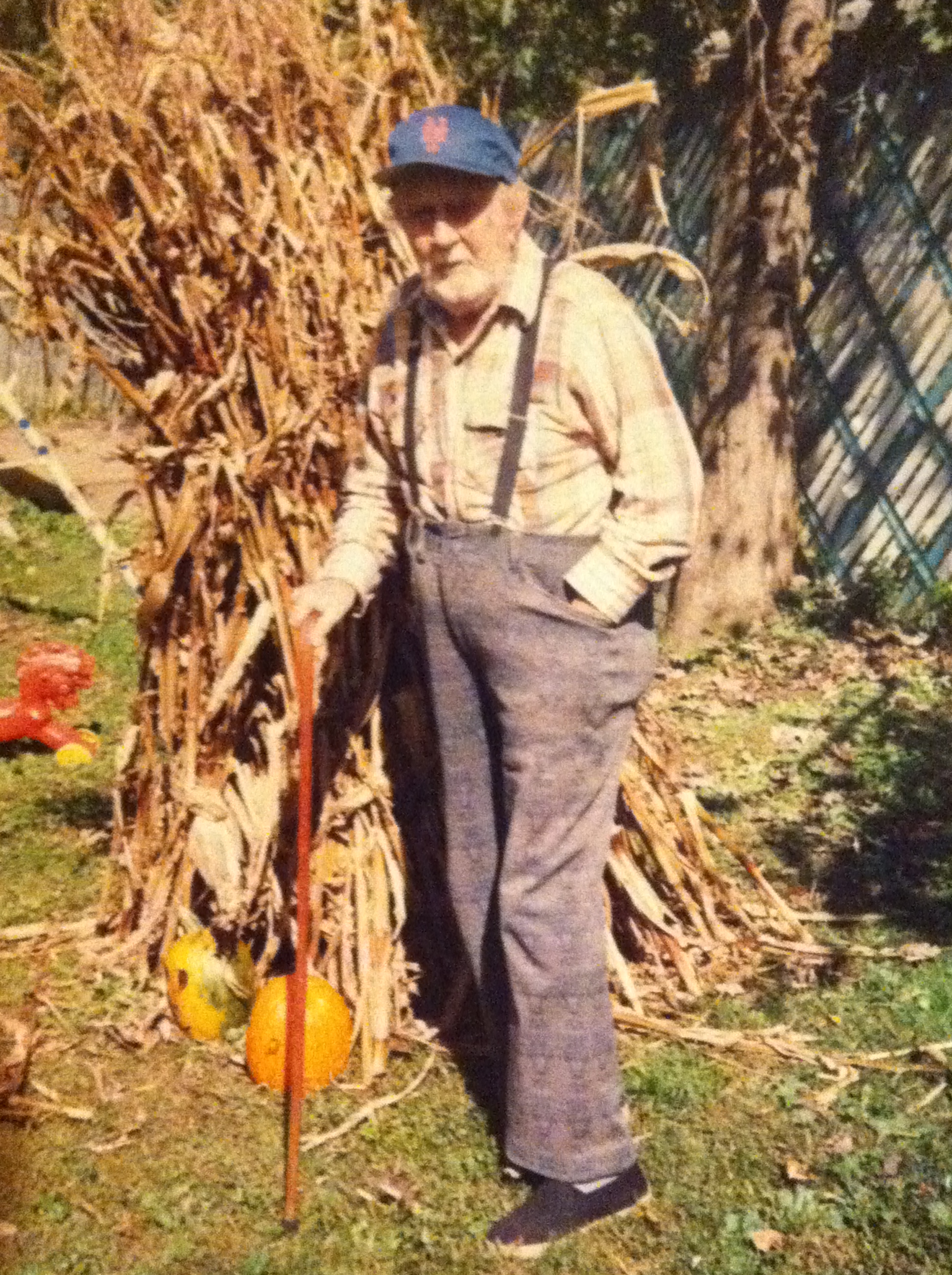
Bill Adkins of Harts, Lincoln County, West Virginia, c.1992

06 Thursday Feb 2014
Tags
Appalachia, Bill Adkins, culture, genealogy, Harts, history, life, Lincoln County, photos, West Virginia
Bill Adkins of Harts, Lincoln County, West Virginia, c.1992
06 Thursday Feb 2014
Posted in Culture of Honor, Ed Haley, Lincoln County Feud
Tags
Aaron Adkins, Al Brumfield, Bill Abbott, Bill Adkins, Bill Fowler, Billy Adkins, Brandon Kirk, Cain Adkins, crime, Fed Adkins, feud, Green McCoy, Harts Creek, history, Isaac Adkins, John W Runyon, Mac Adkins, Milt Haley, Paris Brumfield, Ras Fowler, West Virginia, Will Adkins, writing
In the months following my trip to Harts, Brandon finished his undergraduate work at college and moved into a three-room house at Ferrellsburg. He spent his mornings and afternoons teaching in the local schools and his evenings hanging out with Billy Adkins. One night, he interviewed Billy’s father, Bill, Sr. — that colorful old fiddler laid up with Alzheimer’s. As Billy asked his father questions, Brandon crouched in the doorway prepared to write down his answers. At first they weren’t even sure if Bill was awake. Then, his eyes still closed, he began to tell a little bit of what he knew about the Brumfields and their 1889 troubles.
Al Brumfield, Bill said, put in a four-log-wide boom at the mouth of Harts Creek and charged a tax on all logs passing through it. John Runyon arrived on the scene just as Brumfield was making a small fortune and put in a rival business. “John Runyon was against the Brumfields,” Bill said. He bought twelve Winchester rifles and armed several men to protect his property, then hired Milt Haley and Green McCoy to kill Brumfield. In the ambush, Al was shot in the arm and his wife was shot in the mouth. Haley and McCoy immediately left the area but were soon caught on Tug Fork and jailed in Kentucky. A Brumfield posse got the necessary legal papers and brought the two back to Harts through the Twelve Pole Creek region.
They were on their way down Harts Creek when a spy warned them of an ambush organized by “old man Cain Adkins” at the mouth of Big Branch. Thereafter, the Brumfields went over a mountain to the Guyandotte River and crossed it in boats. They took Haley and McCoy to an old log house later owned by Tucker Fry where they were killed by a mob that included Bill’s uncles Will Adkins and Mac Adkins.
Bill said his uncle Will Adkins died just after the Haley-McCoy killings on November 23, 1889.
“He got drowned in the backwater over here,” he said. “They had a boom across the creek four logs wide. He fell off in the backwater there and drowned hisself. I think Dad was the cause of it. Him and old Bill Abbott was in a row with each other. Uncle Will come along and heard them. He started across there to see what was wrong, to help Dad out if he needed any help. Of course, he fell in that water and drowned himself. He’s buried up on the hill at Ferrellsburg. Old Bill Fowler bought his tombstone. Boy, she’s a big’n. I bet it cost him right smart of money. Uncle Will was named after old Bill Fowler. He was kin through marriage. He married Granddad Aaron’s sister.”
Bill said John Runyon’s attack on Brumfield was one of several violent attempts to secure the property at the mouth of Harts Creek. A little later, Paris Brumfield feuded with Bill Fowler, a local merchant, miller, farmer, and a saloon operator. Fowler was a highly successful businessman; unfortunately, he built his interests on land that Brumfield desperately wanted. Finally, presumably after some trouble, the Brumfields “burned Bill Fowler out”. Bill’s father, Fed Adkins, said he stood at the riverbank watching barrels of alcohol explode straight into the sky as Fowler’s store and saloon burned away.
“The whiskey run into the river,” one Fowler descendant later told Brandon. “They said he had big costly horses and it burned them, too.”
In 1890, after intense pressure from the Brumfields, Fowler sold his property at the mouth of Harts Creek (two tracts of land totaling 165 five acres on the west side of the river) to Isaac Adkins. One tract, according to land records at the Lincoln County Courthouse, was 75 acres and worth six dollars per acre, while the other was 90 acres worth four dollars per acre. Fowler left Harts and settled at Central City in present-day Huntington. Al Brumfield, meanwhile, acquired the Fowler property and employed Ras Fowler, a son of Bill, to work his store. The younger Fowler was a schoolteacher and postmaster. Actually, he was postmaster at the time of the Haley-McCoy trouble.
05 Wednesday Feb 2014
Posted in Big Harts Creek, Ed Haley
Tags
Appalachia, culture, genealogy, Harts Creek, history, life, Logan County, Peter Mullins, photos, West Virginia

Peter Mullins with unknown woman, circa 1890s
05 Wednesday Feb 2014
Posted in Big Harts Creek, Ed Haley, Whirlwind
Tags
Callohill McCloud, Ed Haley, Frank Adams, George Adams, Grover Adams, Harts Creek, history, J.P. Douglas, Lincoln Republican, Lindsey Blair, moonshining, Perris Hensley, Peter Jonas, Peter Mullins, Reece Dalton, Sol Adams, Sol Riddell, W.J. Bachtel, West Virginia, Whirlwind, William Farley, William Tomblin, writing
In that same year, 1912, according to a state business directory, there were a variety of folks with business interests in Whirlwind, West Virginia. Sol Riddell was the postmaster, a lawyer, and part owner of a general store named Mullins & Riddell. Peter Mullins was a carpenter, D. Adams was an apiarist, Grover Adams dealt in ginseng, Sol Adams was a miller and lumber dealer, W.J. Bachtel was a teacher, Reece Dalton dealt in livestock and M. Tomblin was a teamster. Reverend Perris Hensley and Reverend William Tomblin were area preachers.
Between 1916-1918, roughly the time Ed Haley left Harts Creek for Ashland, Kentucky, many of these same folks were listed in business directories for Whirlwind. James Mullins was postmaster in 1916, as well as the local general store operator and photographer. William Farley was a mail dealer. In 1918, Frank Adams was a mail carrier. Sol Adams operated a saw mill. Lindsey Blair was a watchmaker. Callahill McCloud dealt in poultry. C.M. Mullins dealt in ginseng. J.M. Mullins operated a flour mill.
By that time, Peter Mullins served as a sort of surrogate father to Ed Haley. It was Uncle Peter who had given Ed a cornstalk fiddle when he was a young boy and who kept him for years. As Ed became a young man who frequently left Harts with his music, Uncle Peter toiled on Trace Fork as a farmer and occasional timberman. He was perhaps best known for his moonshining, an art form with a long history in his pedigree. In January of 1919, he appeared in The Lincoln Republican in an article titled “Four Moonshiners Caught in Raid.”
A constable and owner of a general store was one of the four men arrested Saturday night in Harts Creek district and taken to Huntington Sunday for arraignment before United States Commissioner J.P. Douglas on a charge of illegally manufacturing liquor. The men were found on Trace Fork of Harts creek.
Peter Mullins is the constable and owns a general store on Harts creek. He is known as ‘Shooting Pete’ and is now in the Cabell county jail in default of bond. In his store were found 900 pounds of meal and 209 pounds of flour. Sol Adams, Peter Jonas and George Adams, the other three arrested, gave bond. All are held to the grand jury at the April term of federal court. At the home of Geo. Adams, were found 200 pounds of meal, 100 pounds of light brown sugar, 200 pounds of bran or ships stuff and one barrel of mash, made up, which Adams said was for his hogs. He had one hog, according to the men on the raid. The arrests were made on Saturday by G.C. Rutheford and Hartley Ferguson, deputy marshals; H.D. Sims and G.L. Hannan, of the internal revenue department; M.E. Ketchem, Frank Adkins and W.F. Porter of the state prohibition commissioner’s force.
05 Wednesday Feb 2014
Posted in Big Sandy Valley, Coal, Matewan
Tags
Baldwin-Felts Agency, Bluefield, Cabell Testerman, coal, crime, culture, life, Matewan, photos, Sid Hatfield, United Mine Workers of America, West Virginia

Historical marker at Matewan, Mingo County, West Virginia, 2008.
05 Wednesday Feb 2014
Posted in Big Ugly Creek, Civil War
Tags
Archibald Harrison, Arena Ferrell, Burbus Clinton Spurlock, Elizabeth Scites, Ferrellsburg, George W. Ferrell, Guy Fry, history, James D. Cummings, John M. Harrison, Keenan Ferrell, Lincoln County, Logan County, Martha E. Harrison, Micco, Nine Mile Creek, Phernatt's Creek, timbering, Vinson Spurlock, West Virginia, William T. Harrison, writing
In the latter part of the 1880s, Archibald Harrison sold much of his property. In 1886, he sold 30 acres of his 120-acre tract at Nine Mile Creek in Lincoln County, West Virginia, to A.E. Callihan. The next year, he sold his 360-acre tract in Harts Creek District to an unknown party. In that same year, he bought 100 more acres on Nine Mile.
Around that time, Mr. Harrison and his wife Martha may have separated or divorced, based on indications provided by tax records. In 1888, he sold 150 acres of his 230-acre tract at Phernatt’s Creek to D.B. Keck, while Martha sold the 100-acre tract on Nine Mile to Guy Fry. The following year, Martha sold 90 more acres to Fry on Nine Mile and the remaining acreage on Phernatt’s Creek (recorded as 125 acres, not 80) to James D. Cummings.
At that juncture, Martha disappears from local records.
In the 1890s, Mr. Harrison — perhaps recuperating from a second divorce — centered his property acquisitions on Nine Mile Creek. In 1890, he bought 59 acres worth $1.00 per acre from Elizabeth Scites. In 1891, he bought 150 acres worth $3.00 per acre from Guy Fry and 75 acres also worth $3.00 per acre from an unknown party. This latter tract of land he immediately deeded to his son, William T. Harrison, who married Charlotte F. Sias around 1892.
In 1892, Mr. Harrison deeded A.B. Staley 86 acres from the 150-acre tract, which tax records document as being on Fourteen Mile Creek, not Nine Mile. Four years later, William T. sold his 75 acres to Eliza J. Hager. Harrison probably died in that frame of time. His remaining property on Nine Mile was sold by D.E. Wilkinson, special commissioner, to Clinton Spurlock in 1898.
By 1900, Archibald and Martha Harrison were absent from local census records. Their children Daniel H., age 31, Guy French, age 24, and Louisa J., age 21, were also gone from the area. While the fate of Martha, Daniel and Louisa remains unclear, there is some evidence that Guy, who later lived at Micco in Logan County in 1920, moved to Virginia just after the turn of the century.
In 1900, three of Archibald’s sons were still listed in local census records. William T. Harrison and his family were residents of the Laurel Hill District. John M. Harrison was boarding nearby in the home of Vinson Spurlock and was reportedly engaged in some type of timber business. George W. Harrison was at present-day Ferrellsburg in Harts Creek District with his adopted parents, Keenan and Arena Ferrell.
Martha Harrison, the wife of Archibald, reportedly died in 1901.
27 Monday Jan 2014
Posted in Big Ugly Creek, Coal
Tags
Big Ugly Creek, coal, culture, environment, Lincoln County, mining, mountains, photos, West Virginia

Surface mining on Big Ugly Creek, Lincoln County, WV, 2006
27 Monday Jan 2014
Posted in Big Ugly Creek, Civil War, Timber
Tags
Archibald Harrison, Big Ugly Creek, Daniel Fry, fiddler, Francis Brumfield, genealogy, George Marshall Fry, Harold R. Smith, Henry H. Hardesty, John H Fry, Jupiter Fry, Levi Rakes, Martha E. Harrison, Nine Mile Creek, Phernatt's Creek, Sampson Brumfield, timbering, William A. Fry, writing
In 1865, Harrison married Martha E. Fry, the 21-year-old divorced wife of Lewis “Jupiter” Fry, a Confederate veteran and well-known fiddler in the Big Ugly Creek area of what was then Cabell County. Martha had been born on September 8, 1844 in Logan County. She was the daughter of Daniel H. and Nancy P. (Bailey) Fry, who lived at Big Creek in Logan County and later at the mouth of Big Ugly. One of her brothers, William A. Fry, died as a POW in a Delaware prison camp during the Civil War.
Archibald and Martha had seven children: William T., born April 18, 1867 in Kentucky; Daniel H., born September 29, 1869 in Kentucky; John M., born October 18, 1871; Mary L., born February 19, 1875, died August 7, 1875; George W., born October 10, 1874; Guy French, born June 18, 1876 in Virginia; and Louisa J., born February 1, 1879.
The first 23 years of Harrison’s second marriage are somewhat of a mystery. During the late 1860s, based on the birthplace of his two oldest children, he and his wife lived somewhere in Kentucky and, based on the birthplace of another child, they were in Virginia in the mid-1870s.
In 1878 Harrison settled near the Bend of the River or the mouth of Big Ugly Creek in the Harts Creek District of Lincoln County. His neighbors, based on the 1880 census, were Levi Rakes and Francis Brumfield, as well as brothers-in-law John H. Fry and Sampson S. Brumfield. Samp was a timber boss with a log boom at the mouth of the creek. George Marshall Fry, another brother-in-law, lived up Big Ugly where he worked as a farmer, timberman, and general store clerk.
On July 1, 1882, Harrison bought 360 acres of land on the west side of the Guyandotte River (near the Bend) in the Harts District from James I. Kuhn, a land agent for Abiel A. Low and William H. Aspinwall. It was worth $1.50 per acre and contained a $50 building, presumably a house or business.
“All that certain piece and parcel of land containing 260 acres more or less, granted by the commonwealth of Virginia to Wm. C. Miller & John H. Brumfield, assignees of Richard Elkins and Richard Elkins, May 1, 1850, lying on the Guyandotte above the mouth of Buck Lick branch,” the deed began. “Also all that part of a survey of 700 acres made for John H. Brumfield, Sept. 11th, 1854, on the east fork of Fourteen Mile Creek. The above described tract 100 acres of land is not to conflict with the lands conveyed to James Marcum.”
(The Kuhn deeds are interesting. In most cases, Kuhn, the grantor, was merely “selling” the surface rights to property already owned by the grantee. Kuhn’s employers claimed the mineral rights.)
In 1883, Harrison bought a 120-acre tract of land worth $2.50 per acre at Nine Mile Creek and a 230-acre tract of land worth $1.50 per acre on Phernatt’s Creek (at what would later be known as Brady) from W.T. Thompson. Harrison and his family soon settled on this latter property.
“Archibald B. Harrison is extensively engaged in farming, in Laurel Hill district, owning 380 acres of land on Guyan river, at the mouth of Phernats Creek,” Henry H. Hardesty chronicled in his history of Lincoln County, with “good improvements upon the farm, large orchard, heavily timbered, coal and iron ore in abundance.”
While Harrison referred to himself as a farmer in Hardesty’s history, there is also some indication that he was a timberman.
“The fact Archibald Harrison owned so much land at the mouth of Phernatt’s Creek is a clue that he was in the timber business,” said Harold R. Smith, Lincoln County genealogist and historian, in a c.2003 interview. “That was during the timber boom and land at the mouth of these creeks was heavily sought by people in that line of work. You could build a boom there and charge people a fee to get their logs out of the creek.”
At the time Harrison was profiled in Hardesty’s history, he and his wife were members of the Christian Church and received their mail at Hamlin.
“I don’t think he stayed at Phernatt’s Creek too long,” said Smith. “I think I read or heard somewhere that he moved to Big Ugly or Green Shoal and did a lot of timbering.”
27 Monday Jan 2014
Posted in Big Harts Creek, Ed Haley
Tags
Appalachia, culture, Ed Haley, Ewell Mullins, genealogy, Harts Creek, history, Logan County, photos, West Virginia
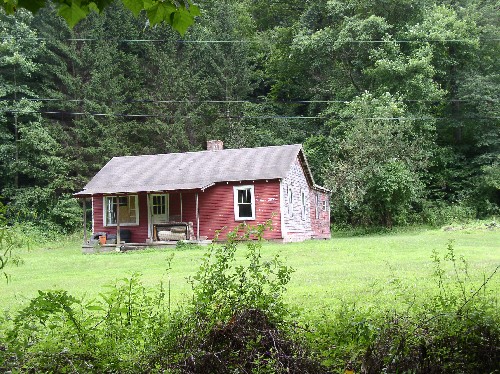
Ewell Mullins residence (part of the old Ed Haley property), Trace Fork of Harts Creek, Logan County, WV, 2006
27 Monday Jan 2014
Posted in Big Harts Creek, Ed Haley, Whirlwind
Tags
Albert Dingess, Albert Gore, Alice Dingess, Anthony Adams, Burl Adams, Chloe Mullins, Dave Dingess, David Kinser, Ed Haley, Ewell Mullins, Frank Collins, genealogy, Henry Blair, history, Imogene Haley, Jackson Mullins, Joe Adams, John McCloud, Liza Mullins, Peter Mullins, Sewell Adams, Sol Adams, Sol Riddell, Spottswood, Thomas J. Wysong, Weddie Mullins, Whirlwind, writing
In spite of new economic developments, educational opportunities for young Ed Haley were limited. As far as can be ascertained, he received no formal education as a child. In that Victorian era of prosperity and refineries, schools (and other forms of improvement) were slow to arrive in the mountains of Appalachia. Joe Adams, whose father was Ed’s age and who was raised at the mouth of Trace Fork, summed it up this way: “All the education they got, they got theirselves.” (He had heard the old-timers speak of the McGuffey Readers.) In August of 1897, Ed got his first chance for an education when Sophia and David Kinser donated land on Trace Fork to the district board of education for the purpose of building a schoolhouse. So far as is known, this was the first school built on the branch. It was easy to picture Ed showing up to visit and entertain students with his amazing fiddle playing…and perhaps to occasionally sit in on school.
In February of 1898, as Ed approached his teen years, Weddie and Peter Mullins swapped property on Trace Fork. Weddie deeded his land to Peter’s wife Liza, who likewise sold her land to Weddie. Thereafter, Peter made his home in the spot where Lawrence Haley and I had visited in the early ’90s, while Weddie lived at the Jackson Mullins home. A few years later, after Weddie was murdered, his widow remarried to Lee Farley — brother to Burl — causing many people to refer to their home as the “old Lee Farley place” (as opposed to the Jackson Mullins place).
In May 1898, the Logan County Court appointed Henry Blair, Jr. as guardian of Ed Haley “an infant under the age of 14 years.” Blair and Albert Dingess paid the bond of 100 dollars. Haley was listed with his maternal grandparents, Jackson and Chloe Mullins, in the 1900 census.
By that time, the Emma Haley property had dropped in value to 33 dollars. Then, for reasons unknown, the value of “Emmagene Haley’s” property increased to $5.50 an acre for a total worth of $110 in 1906. Maybe Uncle Peter or Weddie had made an improvement on the property or maybe someone had appraised it for timber. In any case, Ed would’ve inherited it outright at that time as a person of legal adult age. More than likely, he had no idea of its worth.
The timber boom led directly to the creation of new towns on Harts Creek. Around 1902, a new post office was created at the mouth of Smoke House Fork called Spottswood. According to a 1904 business directory, Sol Adams was a justice at Spottswood. In 1906, Anthony Adams was the operator of a general store, as was J.M. Adams and James Thompson. Berl Adams was a blacksmith, Sewell Adams was a logger, Francis Collins was a miner, Albert Gore was a constable, David Dingess was a lawyer and Sol Riddell was a teacher. Joseph Adams dealt in walnut lumber, while Reverend John McCloud handled local religious matters. Alice Adams was the postmistress at Spottswood. A little later, Berl Adams, Albert Dingess, Alice Adams, Charles Dingess, William Farley and Thomas J. Wysong opened up general stores.
Later, other post offices opened on Harts Creek. In 1910, according to local tradition, Whirlwind Post Office opened in the head of Harts Creek. This replaced Spottswood as Ed Haley’s local post office, although he was traveling away from Harts quite a bit at that time. Whirlwind was roughly sixteen miles from Logan and nine miles from Dingess. (I had seen the remnants of Whirlwind post office on my recent visit to Harts Creek.) It served 250 people and received mail daily.
Ed Haley, meanwhile, sold the only piece of land he would ever own in March of 1911 to his first cousin Ewell Mullins for 25 dollars (1/5 of its appraisal value as per the assessor). In the deed, Jonas Branch was called Gunnel Branch and the size of the tract was given as 25 acres. The deed read as follows:
Beginning at a rock at the mouth of the Gunnel Branch on the right side of Trace creek thence up the hill to the top of the hill; thence up the ridge to opposite a ash corner on a cliff thence down the hill to the ash thence cross the creek to a plum tree thence up the hill to a beech thence a strait line to the top of the hill thence around the ridge to point on the u[p]per side of the Gunnel Branch thence down the point to a stake on the bank of branch thence down the branch and with the division between Ed Haley and Liza Mullins and crossing the creek to the beginning, containing 25 acres more or less.
Tax books first listed the property in Mullins’ name in 1912 and valued it at $140.
24 Friday Jan 2014
Posted in Big Harts Creek, Culture of Honor, Harts, Lincoln County Feud, Timber
Tags
Al Brumfield, Appalachia, Brandon Kirk, crime, feud, Green McCoy, Harts Creek, history, logging, Milt Haley, Pelican Publishing Company, photos, timbering, true crime, West Virginia, writers, writing

In June of 2014, Pelican Publishing Company will release my book detailing the true story of the Lincoln County feud.
24 Friday Jan 2014
Posted in Ed Haley
Tags
Andrew D. Robinson, Ben Adams, Boney Lucas, Chloe Mullins, Ed Haley, Harts Creek, Henderson Dingess, history, Imogene Haley, Jackson Mullins, Logan County Banner, logging, McCloud & Company, Paris Brumfield, Peter Mullins, timbering, Turley Adams, Van Prince, Warren, Weddie Mullins, West Virginia, writing
Ed Haley was born in 1885 at Warren, a small post office established the previous year five miles up Harts Creek just below the mouth of Smoke House Fork. It was a place of 300 to 500 people chiefly led in its daily affairs by Henderson Dingess, Andrew Robinson, Anthony Adams, Ben Adams, and Burl Farley — all connected genealogically through the Adams family. At Warren, in 1884, the primary business was a general store called McCloud & Company. Henderson Dingess, father to Hollena and the patriarch of the clan, was a distiller and storekeeper. Ben Adams, a brother-in-law to Dingess, was a general store operator. Andrew Robinson was the local postmaster. Van Prince was a physician, perhaps assisting in Ed Haley’s birth or in the treatment of his measles.
Henderson Dingess, a prominent personality from that era, was the son of pioneer parents, born in 1829 to John and Chloe (Farley) Dingess. His wife, Sarah Adams (1833-1920), was a daughter of Joseph and Dicie (Mullins) Adams, who settled on Harts Creek from Floyd County, Kentucky, in the late 1830s. Henderson and Sarah lived in a two-story log house on land partly granted to him by the Commonwealth of Virginia in 1856. There, at the mouth of Hog Pen Branch, they raised eleven children, many of whom were active in the 1889 troubles. In the late 1880s, roughly the time of Milt Haley’s murder, Henderson and Sarah owned a 93-acre tract of land on Smoke House with a building valued at $100. They also owned an additional 350 acres on main Harts Creek and a 44-acre tract on nearby Crawley Creek worth $6.00 per acre with a $20 building on it.
At that time, Harts was caught up in the regional timber boom. According to The Logan County Banner, an estimated one million dollars worth of timber went out of the area in 1889. Perhaps prompted by this capitalistic invasion of the local economy, violence became the norm in Harts. Beginning with Paris Brumfield’s murder of Boney Lucas “over logs” in the early 1880s, there were at least six area killings before the turn of the century. (The Brumfields were involved in four of them and the Dingesses in three.) It was an era when Harts lost its innocence and began to earn the rough reputation it still carries today.
More than likely, following the horrific events of 1889, little Ed Haley and his mother lived for a brief time with Jackson and Chloe Mullins on Trace Fork. This changed a little later when, in 1891, Jackson and Chloe began to deed property to their three children. On March 18, they deeded their homestead to son Peter for 25 dollars. Deed records specify the property as a 20-acre tract of land, which began somewhere around the mouth of Trace and continued up to the Jackson Mullins Branch (basically the present-day Turley Adams property). The following day, Jackson and Chloe deeded another 20-acre tract to son Weddie Mullins for 25 dollars. This tract basically included everything from Jackson Mullins Branch to Jonas Branch.
On March 19, 1891, Jackson and Chloe deeded Imogene Haley 20 acres of land on Trace Fork for 25 dollars. In the property index, Imogene’s surname was spelled as “Hauley”, while the deed referred to her as “Immagin A. Haley.” Her land began at Jonas Branch and continued on up the creek. In the original deed, it was described as follows:
Beginning at the mouth of William Jonas branch thence up the Branch with the center of the branch to a _______ tree on the right hand side of the Branch as you go up the branch near a Chestnut that ________ on the left side of said branch thence acrosf the fields to some willow bushes at the front of the hill thence up the point with the center of the point to the brow of the Mountain thence with the brow of the Mountain to Mary Mullins line thence down the mountain to a bush thence a strate line crosfing the creek to a ash thence up the hill to the back line of the parties of the first part thence down the creek with the line of the said opposite the mouth of William Jonas branch thence down the hill a strate line to the Beginning supposed to contain 20 acres more or less.
An 1891 tax book listed “Emigene Hawley’s” property as being worth $2.00 per acre and having a total worth of $40. Records do not indicate if there was a house or building located on the property. In any case, Emma died soon after: an 1892 tax book lists her property under the name of “Immogen Hailey heirs”, which would have been Ed Haley. More than likely, seven-year-old Ed remained living in the home of his grandparents, Jackson and Chloe, for several more years.
At that time, Logan County was in the middle of a timber boom, which gave employment to Ed’s family on Trace Fork. “Some of the finest timber in the State is found in Logan county,” writes The Mountain State: A Description of the Natural Resources of West Virginia (1893). “Magnificent forests of oak, poplar, ash, lynn, maples, beech, birch, pines, hickory and other varieties still cover the greater part of the county in their primitive state. For thirty years timber men have been at work, destroying the forests and still in all this time not over a fourth of the timber has been removed. As an estimate of the value of the timber still standing in Logan county, three million dollars will not be far amise.”
24 Friday Jan 2014
Posted in John Hartford, Music
Tags
bluegrass, fiddlers, fiddling, Gillian Welch, John Hartford, Larry Cordle, music, Nashville, Nashville Bluegrass Band, photos, Ronnie McCoury, Station Inn, Tennessee
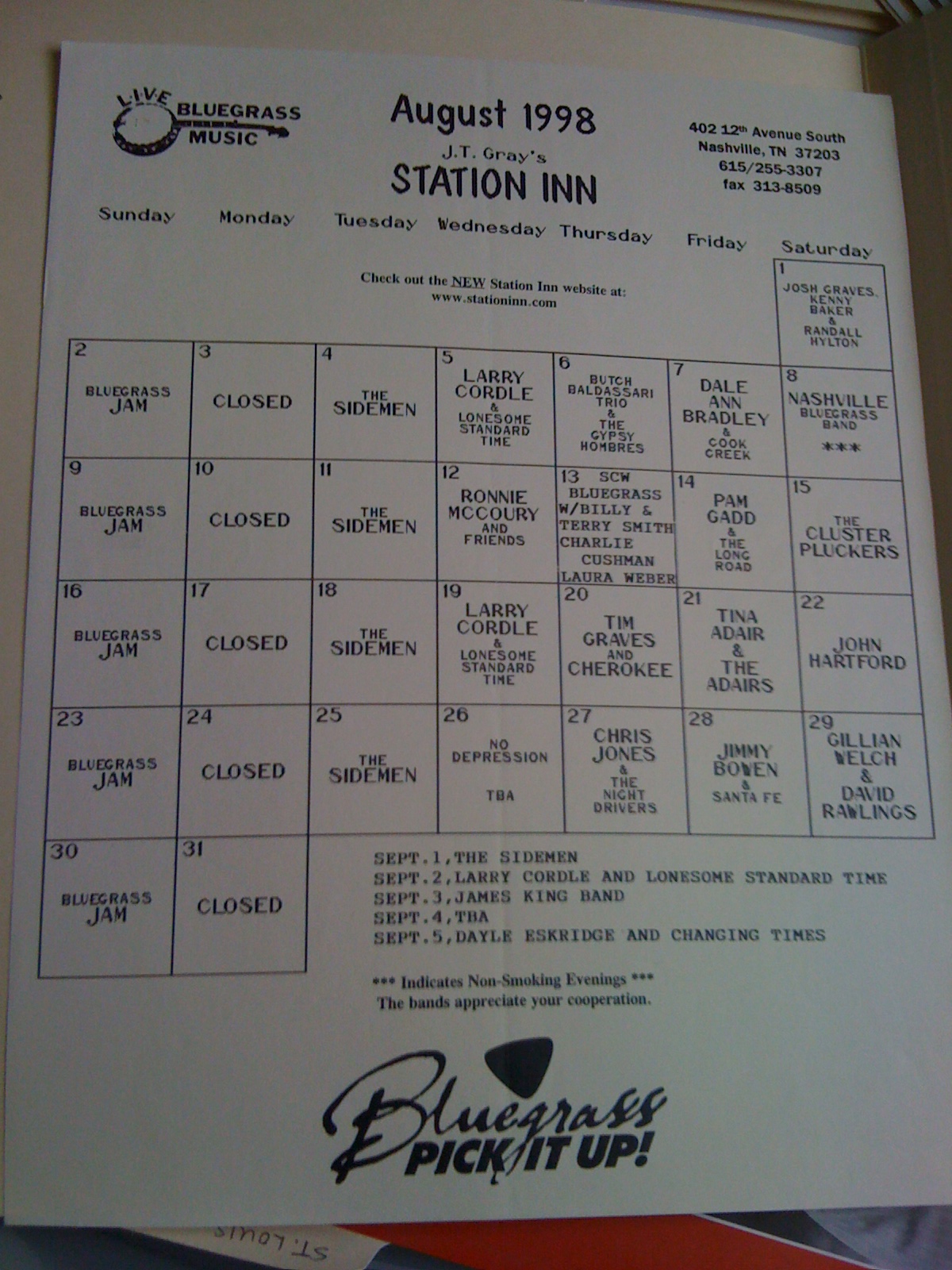
Station Inn, Nashville, TN, August 1998
24 Friday Jan 2014
Posted in Big Ugly Creek, Civil War
Tags
Archibald Harrison, B.C. Levi, Barboursville, Chambersburg, civil war, Garland Matthews, history, Hurston Spurlock, John McCausland, Mary Harrison, Matt Adkins, Milton J. Ferguson, Monocacy Junction, Murder Hollow, Stephen Lewis, Sylvester Brooks Crockett, Virginia, Wayne, Wayne County, West Virginia, Winfield, writing
In January of 1864, Colonel Milton J. Ferguson’s 16th Regiment, which included Lt. Archibald Harrison, was back in southwestern West Virginia to visit family and restock supplies. On January 1, they crossed a frozen Big Sandy River into Kentucky and attacked a Union force at Buchanan. Eight days later, Ferguson and 150 of his men successfully engaged 75 members of the 39th Kentucky Mounted Infantry at Turman’s Ferry (near Catlettsburg), Kentucky, then made their way to East Lynn in Wayne County, West Virginia, and on to nearby Laurel Creek.
On January 16, a detachment of Union troops arrived in Trout’s Hill (Wayne) to quell the Confederate uprising in the area. Ferguson and the 16th, however, continued to wreak havoc on local Yankees from their base at Murder Hollow. On January 27, Spurlock’s Company (including Harrison) robbed Cabell County’s sheriff. The rebels suffered a mild setback shortly after the robbery: Captain Hurston Spurlock was apprehended by a detachment of the 3rd West Virginia Cavalry at Lavalette in Wayne County.
Early in February, members of the 16th destroyed a Union cargo ship called the B.C. Levi on the Kanawha River near Winfield. They captured General E.P. Scammon, who was sent to Richmond, Virginia, and Captain Pinckard, who was sent to Wayne. (Harrison later claimed to have been present at this event, although history records Company H — not Company E — as being the actual force there.) Colonel Ferguson tried unsuccessfully to exchange Pinckard for Captain Spurlock, who was held at Barboursville.
On February 15, at daybreak, a Union force consisting of the 14th Kentucky Infantry and the 39th Kentucky surprised the 16th Regiment at their camp in Murder Hollow. Historian Stephen Lewis of Wayne records one account of this skirmish: “Garland Matthews told me that when he was a boy an old man by the name of Milt Adkins told him that he, though not a soldier, camped in the hollow with some friends who were Confederate soldiers, and that there were many soldiers camped there. They were attacked at dawn by Federal troops, and four or five Confederates were killed. Many were captured, but some got away. Garland Matthews confirmed that the battle was in winter; bodies froze to the ground and the spring ran red with blood. He also said they carted a number of the bodies away, but some were buried in Murder Hollow.” Colonel Ferguson was one of 42 men taken prisoner at Murder Hollow. Harrison managed to escape.
In July 1864, Lt. Harrison was captured by Union troops at Monocacy Junction, Maryland. Benjamin Dean, a Wayne Countian, wrote of the incident in a letter to his wife dated July 19. “We are under General McCaslin. We have been on a raid ever since the 11th of May. We started at Lynchburgh, from there back to the Valley of Virginia to Winchester, from there to Maryland to Frederick City. We fought 25,000 there. Lt. Harris was wounded and captured. We went near the city of Washington. We came back through East Virginia. I am near Winchester today. We marched all last night. I haven’t had a clean shirt for over five weeks. We manage to get enough to eat. We hook the Yanks at every point we can. We have been commanded by Colonel Graham. He does nothing but drink and curse and if Colonel Ferguson isn’t exchanged by next season I never expect to make another raid in this war.”
Three days after his capture, Harrison escaped and participated in a final engagement at Chambersburg on July 30, when Confederates burned the town.
In 1864, he returned home to Wayne County, at which time he and his wife, Mary Spurlock, were divorced. The former Mrs. Harrison soon remarried to Sylvester Brooks Crockett, who was eleven years her junior, and had several more kids before dying in 1883 on Wilson’s Creek in Wayne County.
22 Wednesday Jan 2014
Tags
Appalachia, culture, genealogy, Harts, Johnny Golden Adkins, life, Lincoln County, photos, West Virginia
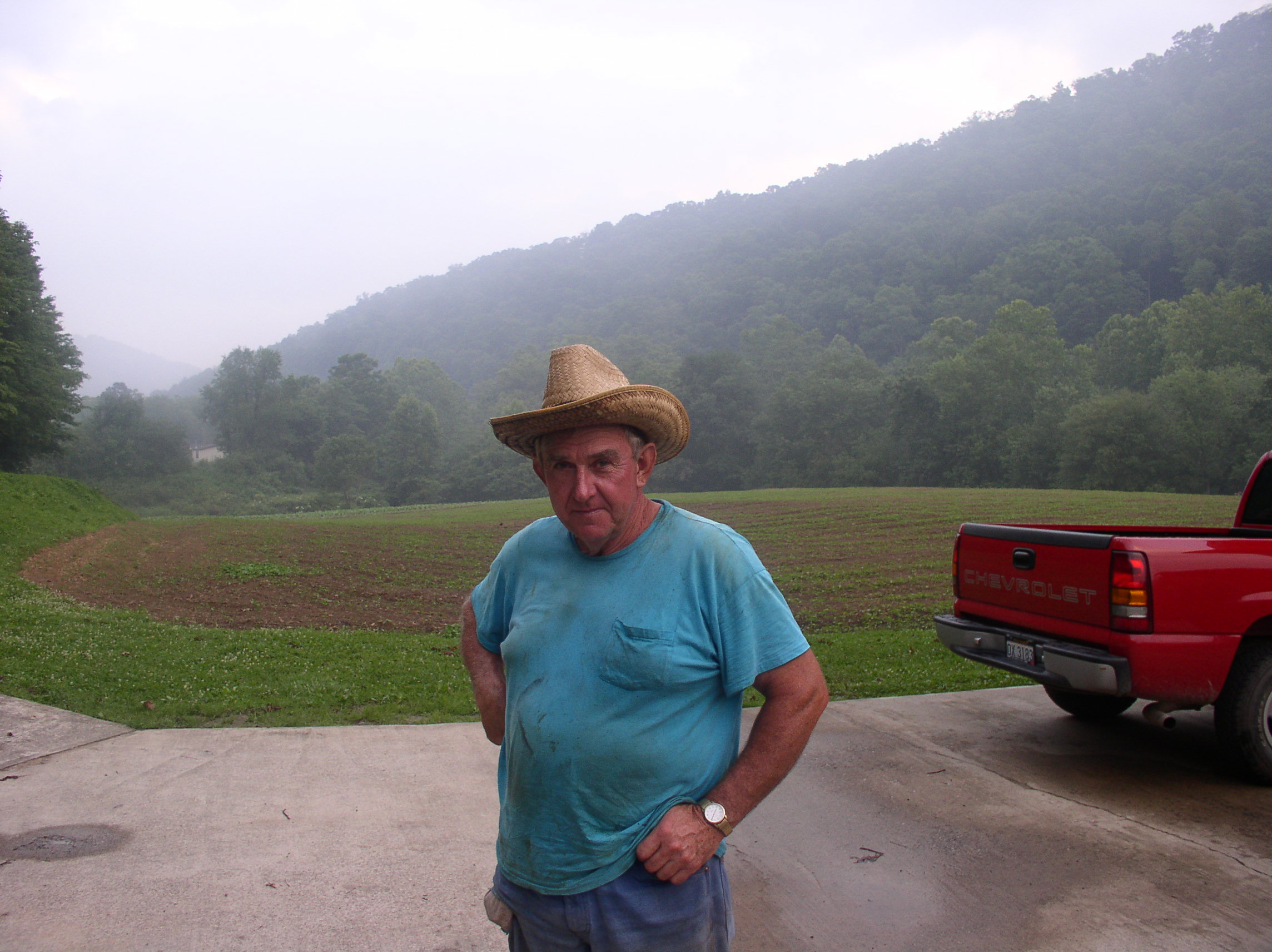
Johnny Golden Adkins of Harts, Lincoln County, WV
22 Wednesday Jan 2014
Posted in Ed Haley, Lincoln County Feud
Tags
Ben Adams, Bert Dingess, Billy Adkins, Cat Fry, crime, Ferrellsburg, feud, Fisher B. Adkins, Garnet Adkins, Green McCoy, history, Hollene Brumfield, Hugh Dingess, Johnny Golden Adkins, Milt Haley, writing
As we stood at Runyon’s Branch staring at weeds and trying to imagine John Runyon’s 1889 spread, Billy said Garnet Adkins and her son Johnny lived nearby. Garnet was a granddaughter of Hugh Dingess and had been raised at Huey Fowler Hollow just off the hill from the Haley-McCoy grave. Perhaps more interesting, her son Johnny had told Billy recently that his grandfather Adkins used to talk about John Runyon being his neighbor.
We quickly drove to Garnet’s where Billy spotted Johnny working with a mule in the yard. In no time, we were in the living room listening to Garnet talk about the Haley-McCoy murders.
“Well, I’ve heard Mommy talk about it, but it’s been so long ago I’ve about forgot about it,” she said. “She said her and Cat Adkins got in there and got in under the bed — or behind the bed or something — when they was a doing that.”
Your mother was there?
“Yeah, she was just a young’n, though,” Garnet said. “She said one of them said to the other… One had the headache and he said, ‘I can’t eat no supper.’ And he said, ‘You better eat your supper. This’ll be the last supper you’ll ever eat.’ And they just took them out there and killed them. I guess they shot them, I don’t know.”
I asked Garnet if she thought the mob might have shot Milt and Green at the table right after they ate and she said, “No, they took them outside, I think. I’ve heard Mommy talk about it. See Cat lived there in that house where Mommy was at. That’s where they killed them at.”
Garnet said she had seen the house.
“Yeah, I’ve saw it,” she said. “It’s up here across from Fry.”
Wait a minute. That was the same side of the river as what Lawrence Kirk had shown me in 1993.
Milt and Green were killed on the other side of the river, right?
“No,” Garnet said.
Her son Johnny, however, agreed with the popular notion that the killings took place at the Fry house on Green Shoal.
“That’s what Granddad Aaron said,” Johnny said. “An old hued log house is what Granddad said. He said it sat there at Fry. There where Lon Lambert lives.”
Garnet insisted otherwise: “It was on this side of the river, just an old flat house.”
Perhaps sensing that we were not going to agree on the location of the murders, Garnet changed the direction of the conversation.
“You know, that was a mighty cruel thing to take them men out and kill them,” she said. “They claimed my granddaddy Hugh Dingess was in on that but I don’t believe he was. Course Aunt Hollene was his sister, you know. Aunt Hollene came up there to his house one Sunday and lord it scared me to death when I seen her face. I run off and hid. She was mean as a hound dog. She carried a pistol and a watch and pocketbook and all kinds of stuff in a big apron pocket swinging down on her.”
Billy said to Johnny, “Down here on this end of the creek, we’d never heard about Ben Adams a being in on it, had we?”
Johnny answered, “Yeah, oh yeah. Well he knowed them Adamses. That’s the reason they brought them in this other way ’cause they was supposed to been, Granddad told me, men a waiting to take them away from them fellers when they brought them back in here. But they come this other way — the back way — on horses. Come back in through Chapmansville and down this a way. They thought they’d be a coming down Harts Creek but they didn’t come that way. They brought them down around the river way.”
Garnet said Milt and Green’s grave wasn’t marked when she was a little girl.
“They just threw them in a hole really,” she said. “Somebody said Ben Walker buried them.”
Johnny said, “Well now Mother. didn’t they come over there and visit that grave after you was a great big girl?”
“Yeah, I was a young woman,” she said. “Now I don’t know where she was from. I just heard them talk about their uncle living over there in Fisher’s place where Irv Workman lives. They went up that hill a crying and carrying on and I didn’t know what to think. I was just an old big young’n there with the young’ns. Mommy and Poppy both was gone. And I’d think, ‘Lord, who in the world is that coming up through there carrying on like that?’ And I kept seeing them motioning over there across the creek to where Fisher’s place was talking about… Seems to me the man’s name was Ben. Ben Adkins.”
To get an idea of when it was that people used to come to the grave I asked Garnet what year she was born.
“I was born in 1909,” she said. “June 26th. I was born up here at Ferrellsburg.”
22 Wednesday Jan 2014
Posted in John Hartford, Music
22 Wednesday Jan 2014
Posted in Big Ugly Creek, Civil War
Tags
16th Regiment Virginia Cavalry, Albert Gallatin Jenkins, Archibald Harrison, Barboursville, Carnifex Ferry, civil war, Droop Mountain, East Cavalry Battlefield, Fairview Rifles, Ferguson's Battalion, genealogy, Gettysburg, Guy Harrison, history, Hurston Spurlock, Knoxville, Lewisburg, Lincoln County, Mary Harrison, Milton J. Ferguson, Scary Creek, Tazewell County, Virginia, Wayne, Wayne County, West Virginia, writing
For a brief period of time in the 1880s, Archibald Harrison, a veteran officer of the Civil War, made his home in the Harts Creek District of Lincoln County, West Virginia, where he labored as a farmer and timberman.
Archibald was born in January of 1837 to Guy P. and Cleme (Harmon) Harrison in Tazewell County, Virginia. In 1850 census records for Tazewell County, he was listed with his father and stepmother, Nancy Jane Bruster, as well as his brothers and sisters.
By 1860, Harrison had made his way to Wayne County, where he was listed in the census with his older brother, Thomas, aged 35. Later in the year, he married Mary Spurlock, a daughter of Burwell and Nancy Spurlock. Mary’s father was a preacher who, among other things, established a Methodist Episcopal (South) Church at Trout’s Hill (Wayne) in 1846 with 36 charter members.
Archibald and Mary had three children: Laura P., born August 8, 1861, who died in 1879; Nancy C. “Nannie,” born February 1, 1863; and Lemuel, born September 18, 1865, died 1942. Daughters Laura and Nannie apparently spent their lives in Wayne County, while son Lem is probably the same person of that name who shows up in Logan County census records on Mud Fork and at Cherry Tree in 1910 and 1920.
During the Civil War, Harrison served in the Confederate Army and was a participant in many important events: namely General Albert Gallatin Jenkins’ famous march to Ohio in 1862, where his companions became the first Confederates to invade the Buckeye State; at Gettysburg, Pennsylvania under General J.E.B. Stuart in 1863; and at Chambersburg, Pennsylvania under John McCausland in 1864.
In 1861, the first year of the war, Harrison enlisted with the Fairview Rifles, an unorganized Confederate detachment under the command of Captain Milton J. Ferguson of Wayne County. He fought with them at Barboursville (July 14, 1861), at Scary Creek in Putnam County (July 17, 1861) at Carnifex Ferry in Nicholas County (September 10, 1861) and at Lewisburg in Greenbrier County (May 23, 1862). Most of these engagements were Confederate losses.
In August 1862 Harrison and the Fairview Rifles got a huge morale boost when they marched with Colonel Jenkins’s force from Monroe County to the Ohio River, occupying the towns of Buckhannon, Weston, Glenville, Spencer, Ripley, and Ravenswood along the way. At the Ohio, Jenkins and about half of his troops crossed the river and captured Racine (they were the first Confederates to enter Ohio) before re-entering (West) Virginia and heading to Point Pleasant.
On September 15, 1862, the Fairview Rifles were renamed Ferguson’s Battalion and officially mustered into service at Wayne Courthouse. Harrison, who was only 24 years old, was made second lieutenant of Captain Hurston Spurlock’s Company. (Spurlock was probably an in-law.)
On January 15, 1863, the 16th Regiment of Virginia Cavalry was formed when five companies from Ferguson’s Battalion merged with four companies of Major Otis Caldwell’s Battalion. Captain Ferguson was promoted to colonel and placed in command of the 16th, while Lt. Harrison and a majority of Spurlock’s Company were designated as Company E.
In the early summer of 1863, the 16th was attached to General Jenkins’ Brigade and sent north as part of General Robert E. Lee’s invasion force. In June, they moved through the Shenandoah Valley toward Pennsylvania where they fought at 2nd Winchester, Virginia, between June 14-15. They also saw action at Gettysburg on June 26, Harrisburg, Pennsylvania, on June 28-29 and at East Cavalry Battlefield near Gettysburg on July 3.
In the fall of 1863, on November 6, Harrison and the 16th fought at Droop Mountain in Pocahontas County, where the Confederates were defeated by a Union force that helped ensure Union control of the new state. Later in the month, the 16th participated in a siege of Knoxville, Tennessee, until December, 1863.
22 Wednesday Jan 2014
Posted in Ed Haley, John Hartford, Music
Tags
Carol Hardway, Cliff Top, culture, fiddlers, fiddling, history, John Hartford, life, music, photos, West Virginia, Wilson Douglas

Carol Hardway, Wilson Douglas, and John Hartford at the Appalachian String Band Festival in Cliff Top, West Virginia, 1995
21 Tuesday Jan 2014
Posted in Ed Haley
Tags
Al Brumfield, Ben Walker, Billy Adkins, Brandon Kirk, Burl Adkins, Cain Adkins, Fed Adkins, Harts, history, John Hartford, John W Runyon, Mose Adkins, timbering, writing
The next day, Billy directed Brandon and I up Walker Gap to the old Ben Walker farm. Walker was the man who reportedly organized the Haley-McCoy burial party in 1889. Once there, we found no buildings remaining so we stopped at the family cemetery, which was just off the hill from the Haley-McCoy grave. Ben’s grave was marked by a simple rock.
From there we headed to “Runyon’s Branch,” a small stream emptying into the Guyandotte River just above the mouth of Harts Creek. Supposedly, John Runyon once lived near the mouth of this branch while operating a sawmill at its head. It was a great set-up: Runyon owned his own hollow and could float his timber directly into the Guyan River, thus avoiding Al Brumfield’s boom and tax. Nearby on a bluff was the probable site of his “blind tiger,” where he would’ve had a great view of Brumfield’s timber operations just across the mouth of Harts Creek. At this location, Runyon was surrounded by members of the Adkins family. Some of his neighbors were Burl Adkins (a brother-in-law to Fed Adkins), Mose Adkins (Fed Adkins’ brother), Ben Walker, and Cain Adkins.
Writings from my travels and experiences. High and fine literature is wine, and mine is only water; but everybody likes water. Mark Twain
This site is dedicated to the collection, preservation, and promotion of history and culture in Appalachia.
Genealogy and History in North Carolina and Beyond
A site about one of the most beautiful, interesting, tallented, outrageous and colorful personalities of the 20th Century

 Brandon Ray Kirk