• About

Brandon Ray Kirk

~ This site is dedicated to the collection, preservation, and promotion of history and culture in my section of Appalachia.

Brandon Ray Kirk

Category Archives: African American History

Republicans Driven from Logan County by Gunmen (1914)

01 Friday Dec 2017

Posted by Brandon Ray Kirk in African American History, Logan

≈ Leave a comment

Tags

African-Americans, Appalachia, coal, Con Chafin, crime, Democratic Party, deputy sheriff, Don Chafin, E.T. England, guitar, Guyandotte River, Herald-Dispatch, history, Huntington, Ira P. Hager, John B. Wilkinson, Ku Klux Klan, lawyers, Logan, Logan Banner, Logan County, mine guards, O.J. Deegan, politics, prosecuting attorney, Republican Party, sheriff, timbering, W.C. Lawrence Jr., West Virginia

From the Herald-Dispatch of Huntington, WV, comes this story printed by the Logan Banner of Logan, WV, dated October 30, 1914:

Republican Voters Driven from Co. by Gunmen

Deputy Sheriffs, Acting as Mine Guards, Are the Law and Enforcement Thereof.

Many Believe Martial Law Will be Sequel to Rule of Thugs.

Democratic schemes for the intimidation of Republican voters, for the prevention of a Republican victory in the state next Tuesday, whether by fair means or foul, have reached their climax in Logan county. If there is a place in West Virginia where lawlessness has succeeded law and order, where the persons chosen to enforce the law have initiated a system of rule by force and intimidation, a rule by force of clubs and pistols, a rule by thugs and gunmen, that place is Logan county.

A thorough investigation of conditions in Logan county today proves that the Ku Klux Klan in the south were mere pikers. There are men in Logan county who could beat them blindfolded.

The man, woman or child who would enjoy life–aye, who are willing to accept life or pass through Logan county, must be careful not to cross the paths of Sheriff Don Chafin and his force of about two hundred armed deputies.

And it can be truthfully said that the paths of these men extend to every nook and corner of the county. And several newly-made graves along the banks of the Guyandotte river and its tributaries shows who is the law and the enforcement thereof.

Several men have been shot, two negroes fatally, others have been clubbed and driven out of the county, women and children have been forced to flee clad only in their night-clothes, upon order of the Chafin deputies.

And all this because some Republicans desired to be registered in order that they might cast their votes for the Republican candidates next Tuesday.

Logan county is about to throw off the yoke of Democracy. The coal and lumber industries are rapidly being developed, and, as is always the case in progressive communities, the Republicans are making large gains.

If the voters of Logan county are allowed to cast their ballots as they desire, and those ballots are counted as cast, the Republican candidates will be elected.

If the conspiracy which has been formed by and in the interest of the Democrats is allowed to be carried out, the Democrats will continue in control of the county, the enforcement of law will be a mere joke and there will be probably a score added to the newly made graves along Old Guyan after next Tuesday.

Opinions vary as to what the outcome will be. Some believe that only martial law will prove a solution. Others are of the opinion that conditions will grow gradually worse and that the enforcement of law and order in Logan county will be a subject for investigation by the next legislature which convenes in January. Most certainly, if the threats of the Democrats are carried out, the Republicans are driven from the polls next Tuesday, the legislature will be asked to make a sweeping investigation and their findings will reveal conditions incredible in a civilized state.

Don Chafin is high sheriff of Logan county. His cousin, Con Chafin is prosecuting attorney. All the county officials are Democrats. Circuit Judge Wilkinson is a Democrat, though a man who wants the law enforced.

Sheriff Chafin, it is estimated, has about two hundred deputies. When he was elected, a part of his platform was that he would drive out the Baldwin mine guards from Logan county. No Baldwin men are known to be in this county now but these deputy sheriffs are known as mine guards. All of them are supposed to be armed with pistols, black-jacks and the usual weapons of gunmen. But few of them are licensed to carry such weapons and there is no trouble to find evidence that they have these weapons in violation of the law. Some of them are known to be ex-convicts and as such would not be licensed to carry revolvers, etc.

They shoot, club, slug and thug at will. But they are not arrested and imprisoned. For they are the law and the enforcement thereof.

Events of the past few weeks show the effectiveness of this organization of deputies and the way in which they operate. When the registrars were on their rounds registering the voters some of the deputies were on hand and even the Democratic registrars were afraid not to obey their orders. To go back further, they were on hand at the Democratic primaries and the Democratic nominees were the men of their choice and of that of their chief.

The Democratic registrars refused to register many Republicans, especially among the colored voters. When the county commissioners met to canvass the registration, four Republican lawyers State Senator E.T. England, Ira P. Hager, W.C. Lawrence, Jr., and O.J. Deegan, the latter being Republican county chairman, took the lead to see that Republicans entitled to vote were registered. One hundred colored voters were brought into Logan for examination and registration.

Threats have been made by deputies against the journeying of negroes to the court house, there to demand their rights, and the republican leaders realized there was danger.

The work before the county court was slow, as the democratic leaders challenged every step of the republicans. But eleven men were passed upon the first day, five of whom were registered, six turned down. That night the apparent cause for delay came. A colored family lived at Monitor, a mile from the court house. It was supposed that some of the negroes awaiting registration were there. This gave the conspirators a chance and the gunmen got busy.

Soon after dark a band of armed men raided the house, shot out the windows, fired bullets into bodies of two colored men, beat up others and drove a woman and child into the hills without giving them time to dress. The raiders said they were looking for “strange niggers.” As the result of that raid one colored man lies in an unmarked grave on the hillside and another is likely to join him soon. No “strange niggers” were in that house.

A colored man owned a cleaning and pressing establishment within a couple of squares of the court house. His windows were demolished and his place of business next morning looked as though a German siege gun had been turned on it.

A score of colored men awaiting registration were quartered for the night in the office of Senator England, and adjoining offices. About 11:30 o’clock at night some of the negroes were awakened by noises in the hallways and a sensation of not being able to breathe. They rushed to the windows and threw them open, but met with a shower of stones from the outside.

Piled on Senator England’s desk can be seen the stones hurled with force as is shown by the scars on the walls. Some of the stones were thrown from the court house steps.

No arrests were made. A grand jury was in session and Judge Wilkinson instructed the jurors to ferret out the dastardly assault and bring the miscreants to justice. But not an indictment resulted. It is no mystery in Logan as to who committed the deed. Any citizen not afraid to talk, and they are few, will name half a dozen deputy sheriffs as being in the party.

A telephone exchange girl next door to where some of the negroes were attacked made an outcry and was told that she would not be hurt if she kept still. She knows who told her to keep quiet, but would hardly give his name, probably not if she faced a jail sentence for contempt of court. It is not safe to talk in Logan county. “Don’t mention my name,” is what they all say when discussing the outrages.

A short distance from Logan is a construction camp. A large crowd of deputies raided the camp. One negro was playing the guitar and singing. No “strange niggers” were found there, but the one negro sang his last song. He, too, lies in an unmarked grave along the banks of Old Guyan. “Resisting arrest” was the excuse given.

Such depredations naturally drove many colored voters away and they will not vote.

Though threats have been made against the life of Senator England and his followers, they are putting up a game fight. By agreement the county court was to hold a night session to get through with the registration. England was later notified that nothing further would be done that night but the work would be taken up the next day he was amazed to find the court was no longer sitting. He went before Judge Wilkinson, mandamused the county court to sit again, and got ninety-eight colored voters registered.

The democrats were beaten in that game. “What’s the difference,” said a deputy when the court reconvened. “We will get them election day.” It has been openly boasted by the democrats that in many precincts the republicans, especially the colored voters, will not be allowed at the polls next Tuesday.

The sheriff and his deputies form an organization with unlimited power. Every little town or village, every public works, has the deputies. By intimidation and force in most instances and by favors in others, these deputies can run things to suit themselves. Infractions of the law by supporters of the organization can easily be overlooked, while on the other hand, the slightest technical violation can be punished to the full extent of the law.

The high-handed way in which the Democratic county organization is running things has caused a ruction in the Democratic ranks and many of them will quietly vote the Republican ticket. Many members of the old-time militant Democracy, some of them ex-Confederate soldiers, have assured the Republican leaders that they can no longer approve the Democratic methods employed in Logan County and will record their votes against it.
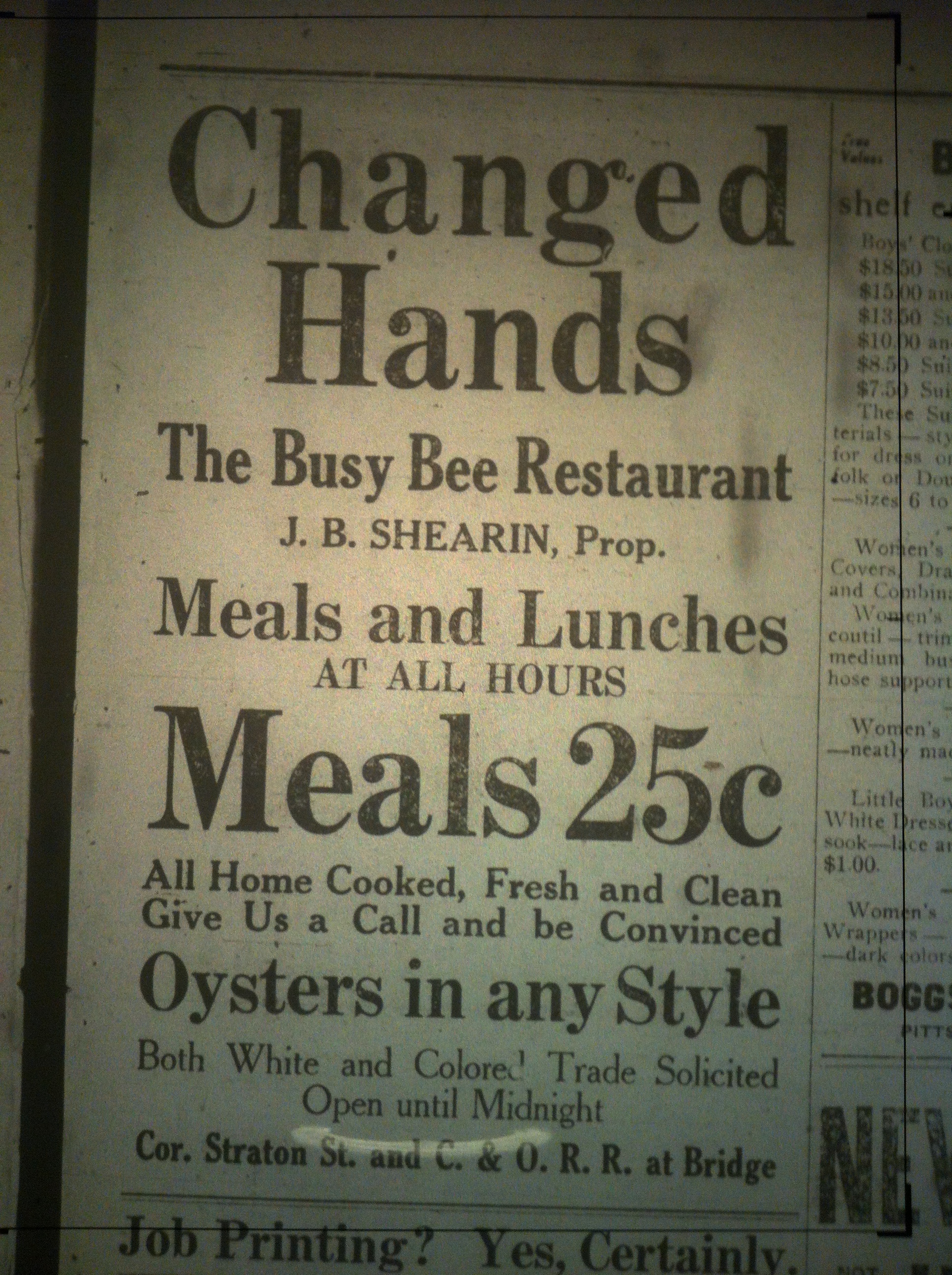
The Busy Bee Restaurant Changes Hands in Logan, WV (1913)

28 Tuesday Nov 2017

Posted by Brandon Ray Kirk in African American History, Logan

≈ Leave a comment

Tags

Appalachia, Busy Bee Restaurant, history, J.B. Shearin, Logan, Logan Banner, Logan County, Stratton Street, West Virginia

Busy Bee Changes Hands LB 01.10.1913 1.JPG

Logan (WV) Banner, 10 January 1913.

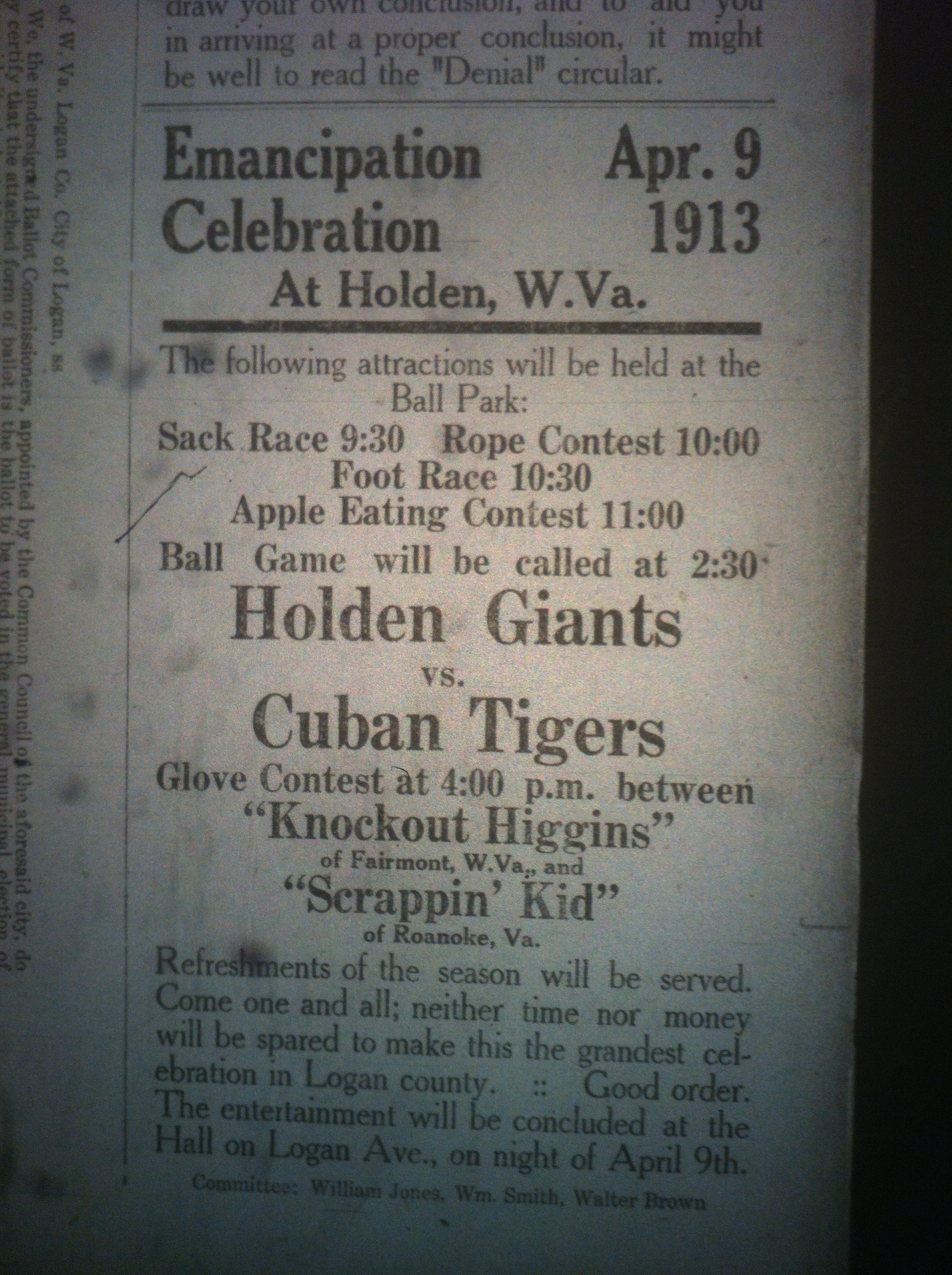
Emancipation Celebration at Holden, WV (1913)

31 Tuesday Oct 2017

Posted by Brandon Ray Kirk in African American History, Holden

≈ Leave a comment

Tags

Appalachia, baseball, boxing, Cuban Tigers, Emancipation Celebration, Fairmont, history, Holden, Holden Giants, Logan Banner, Logan County, Roanoke, Virginia, Walter Brown, West Virginia, William Jones, William Smith

Emancipation Celebration at Holden LB 03.28.1913.JPG

Logan (WV) Banner, 28 March 1913.

Busy Bee Restaurant in Logan, WV (1913)

27 Friday Oct 2017

Posted by Brandon Ray Kirk in African American History, Logan

≈ Leave a comment

Tags

Appalachia, Aracoma, Busy Bee, history, Logan, Logan Banner, Logan County, Straton Street, West Virginia

Busy Bee Advertisement LB 01.10.1913.JPG

Logan (WV) Banner, 10 January 1913.

Democratic Party Editorial in Logan County, WV (1916)

21 Saturday Oct 2017

Posted by Brandon Ray Kirk in African American History, Logan

≈ Leave a comment

Tags

Abraham Lincoln, Appalachia, Democratic Party, Henry D. Hatfield, history, Logan, Logan Banner, Logan County, Logan Democrat, politics, Republican Party, West Virginia

From the Logan Democrat of Logan, WV, we find the following editorial dated February 24, 1916:

CONFESSION!

The following was prominently displayed in fourteen point type under the bold, three-column heading, “What Does It Profit a Young Man to Be a Logan County Democrat?” on the front page of the Logan Banner last week. We cheerfully aid in giving it the widest possible publicity and commend its careful reading to all of the conscientious and thoughtful citizens of Logan county:

“To the young men of Logan county, who are to cast their first vote this year and hereafter participate in the political life of the commonwealth:

“For Forty Years Logan county has given stupendous democratic majorities. It has always had the largest percent of democratic votes of any county in the state.

“Logan county has never been recognized by the Democratic party by awarding any one of its citizens a nomination upon the state ticket.

“Logan county Democracy has never had a member of the state committee.

“Not one of its citizens holds an appointment under the national administration other than postmasters of the local offices.

“You, as a Democrat, are just voted like dumb cattle.

“In the Democratic organization of Logan county the highest achievement to be obtained by ambitious youth is to become a deputy sheriff with a tin badge and a gun.

“The Republican party welcomes the vaulting ambition of youth.

“It meets young men on the first round and lifts them higher.

“Logan county Republicans have a voice and exert a powerful influence in the councils of the party in the state.

“It dwindled the Forty Years of Huge Democratic Victories in Logan county to the necessity of a recount in the election two years ago.

“This year the Democratic Hurrah and Horrors will be as naked as Robinson Crusoe’s summer underwear.

“Choose which primary you will go into.”

“Honest confession is good for the soul.” But, whoever expected anything honest from the source from which the foregoing sprung? Yet there it is, and seeing is believing, and we have no choice other than to congratulate the author of the superlative exposure of the designs and ambitions of the so-called Republican organization of Logan county.

Public office, spoils, graft, gratification of personal desires and ambitions, such is the bait brazenly held out in the effort to tempt good men to desert principle and aid in the maintenance of the most corrupt political organization known under the sun, the state Republican machine and its Logan tentacle. The implied promise may be within the Corrupt Practices act, but never was there a more damnable attempt to influence or corrupt voters than The Banner’s public solicitation.

Logan has never had a citizen on the state Democratic ticket; never had a delegate to a national convention; none of its citizens holds an appointment other than postmasters, etc., says the Banner. Undoubtedly true. But for fifty years the Democrats of Logan county along with those throughout the country have battled for something that they prized and still prize far more than self-advancement and this Principle.

How many Presidents has the Democratic party had in fifty years? How many Democratic governors has the state of West Virginia had in the past 20 years? But, has the rank and file of the Democratic party of the nation or state wavered in its allegiance to principle? Not that you could notice it; it has fought steadily on in the face of repeated failure, and discouragement and was finally crowned with a glorious success in the nation in the year 1912, and it is now strongly entrenched and fully prepared to turn the rascals out of the West Virginia state house in the year 1916. The Banner can read the signs, and its outrageous plea for succor is a forcible admission that its organization is in dire distress and will go the limit for votes. Votes to carry on the nefarious work of an organization that has bankrupted the state and sullied its reputation; votes to keep in office the plunderers who have done nothing but feed from the public trough from time immemorial and would not know how to work if cast adrift; votes to maintain a system of subsidized newspapers to outrage the public while at the same time subsisting from public funds lavishly distributed through administrative favor. It is obvious that the Banner is correct when it asserts that its organization, posing as the Republican party, can feed its swine. There is no room for argument on that score; but, where is the honest man of principle that wants that kind of success? He is not in the Democratic party, whether he be young or old, about to cast his first vote or his last this year.

The Banner boasts that Logan county Republicans exert a powerful influence in the councils of the party in the state. No they don’t, and the Banner knows it lies when it says they do. The Republicans of Logan county have no more influence in their so-called party affairs than the editor of the Democrat has with Hatfield, et al. The true Republicans of Logan county are a negligible quantity when it comes to influence, but the so-called Republicans who wear the administration, stand-pat collar, who dictate the policies and the utterances of the Banner, and who are in the political game to rule or ruin are high with the powers that be, but so far as can be noticed they have never let anything get away from them that was at all valuable or that they could use. The very existence of the Banner is a testimonial to the selfishness and applications of this little coterie to whom principle is an unknown quantity and the dough bag and preferment the swaying elements of their lives.

Principles not spoils nor selfish ambition sway the Democratic voter, and one of his foremost principles is directed against this very system of corruptness that the Banner so valiantly expounds as good Republican doctrine. Reduced to the naked truth, the battle of ballots in the state of West Virginia for the past 12 years has been between Democrats and Grafters, the Republicanism of Lincoln has long since been routed out. Democrats vs. Graft, and up to this time Graft has won, but the battle is to be renewed with increased vigor next November and w hen the smoke has cleared away there is every indication that at last Right will have come into its own.

The Banner’s closing paragraph is worthy of another repetition: “Choose which primary you will go into.” Yes, choose! But be not too hasty. Consider well the situation from every angle. If you are a Republican in principle, and you can discover any Republican principle in the organization posing as that of your party in the county or state, do your duty; if you are a Democrat in principle now is the time of times to assert yourself and your manhood, without thought of personal advancement or selfish ambition, but for the satisfaction of assisting in achieving the goal of Democratic ambition, the betterment of the condition of all the people.

Democrats will be confronted this fall with a condition that will take concerted action and shoulder-to-shoulder advance to successfully combat. Negroes, the secret of the Banner’s boast of reduced Democratic majorities in Logan county, will be voted in increased numbers and every artifice and design, legitimate or otherwise, that can be devised will be used to stay the tide of public indignation and resentment against Republican gang politics, so it behooves all true party men to stand-pat and go into the fight prepared to battle for and with his neighbor of the true faith for the common wealth.

Gang Attacks Black Residents of Monitor Junction (1914)

19 Thursday Oct 2017

Posted by Brandon Ray Kirk in African American History, Logan

≈ Leave a comment

Tags

Appalachia, crime, E.T. England, Hallie Wootson, Logan, Logan Banner, Logan County, Mingo County, Monitor Junction, West Virginia

From the Logan Banner of Logan, WV, we find the following story dated October 16, 1914:

THUGS AND OUTLAWS IN FORCE

MONITOR JUNCTION, NEAR THIS PLACE IS THE SCENE OF UNLAWFUL CARNAGE

TWO COLORED MEN ARE SHOT

Last Monday Night, Oct. 12, Was a Period of Unlawful Foray in Logan County.

Unlike the posse who ran to earth in a few hours the robbers and murderers so recently killed in Mingo County, the Logan County officers have turned not one stone to apprehend what seems to be the most dastardly and cowardly criminals now loose in any county. Rumor has it that the beginning of these depredations was the day of registration before the County Court on last Monday. Upon that day there were some colored men in Logan City for the purpose of registration, more than certain people thought were best, and these latter began to lay sneaking plots to drive the colored men away. On the evening of last Monday, certain men went over the bridge at the lower end of the town to some box cars used as shanties by colored laborers. These colored men were asked by their visitors if there were any strangers in the shanties and especially any who had come to Logan to get registered. The white men received a negative reply and went on up the creek. It seems very clear that the purpose of this visit was to ascertain just where these colored men were stopping for the night, so that a night attack could be made upon them and thus run them away. About 500 yards up the creek from the shanties above mentioned there stands an old two-story framed house. In the upper story of this house lives a family by the name of Spears; in the first floor lived some colored people. About midnight two men pushed open the back door of the colored people’s abode and began shooting: one going to a bed where with a revolver he beat up a colored fellow, while his partner thug proceeded further into the house, firing his pistol at the windows and furniture. Both colored men who were lying in the bed were shot several times and are in a precarious condition. During the melee, Hallie Wootson, a colored woman staying at the house, ran between the would-be murderers and pleaded with them to cease firing till she could get her baby from the room; with an oath the thug forced her from the room, not even allowing her to properly dress herself. This woman states that there were from 15 to 20 men on guard.

Mrs. Spears, the white woman living in the upstairs of this house, states that two of the men came upstairs to her room and knocked. She told them to come in, to which they replied, “No, you don’t want to see us, go to bed, we won’t hurt you.” However a bullet was fired into the very room in which Mr. and Mrs. Spears were sleeping. From the looks of the windows and doors of this house, one hundred shots must have been fired. Mrs. Spears also states that an automobile was in the vicinity and was driven away soon after the band of men left.

About one hour after the above mentioned attack, another attack was made on Senator E.T. England’s offices. Cobble rocks were thrown through the front windows breaking them into countless pieces. Someone who knew a little more than the ordinary along certain lines was present either in person or by advice since certain well known gases were inserted under the two outside office doors. This last ruse did not avail the highwaymen of anything since their purpose was in no wise accomplished.

***

Courting Trouble.

The question that naturally comes to us is, “Why have not the officers of Logan County–and there are over 100 in number we understand–taken up the Monitor Junction matter and attempted to  bring the guilty ones before the bar of justice?” Is it because some of them know more than they care to tell? We will say this, that the circumstances surrounding this trouble are, to say the least, very suspicious, as far as some of the officers of Logan County are concerned. The antagonism which the colored people of this County meet when they attempt to register for the purpose of voting is extreme and even unlawful. The Federal Constitution gives them the right to vote providing they can properly qualify themselves. Therefore we ask: How can they qualify themselves when they are not allowed the right to go before the proper tribunal which the law establishes for that purpose? There is not a single fact concerning the trouble that occurred at Monitor Junction and in the city of Logan but what points to the fact that there is an unlawful conspiracy on the part of certain persons to intimidate the colored voter, and to kill him if necessary if that is the only way to keep him from voting.

Source: Logan (WV) Banner, 16 October 1914.

Whipple, WV (2015)

02 Monday Oct 2017

Posted by Brandon Ray Kirk in African American History, Coal

≈ Leave a comment

Tags

Appalachia, Brandon Kirk, Carlisle, coal, Fayette County, Gentrytown, history, National Register of Historic Places, Oakwood, photos, Scarbro, West Virginia, Whipple, Whipple Company Store, Wingrove

IMG_5319

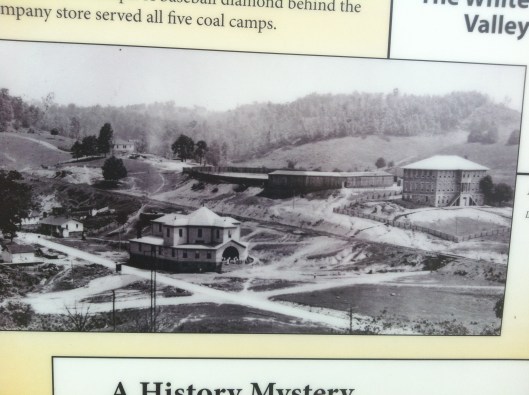
Whipple Company Store, Whipple, WV. 29 July 2015.

IMG_5320

Whipple Company Store, the “hub of the coal camp,” was built about 1900 and closed in 1957.

IMG_5317

The Whipple Company Store is listed on the National Register of Historic Places. 29 July 2015.

IMG_5316

Today, the Whipple Company Store is a museum. For more info, follow this link: http://www.whipplecompanystore.com/

IMG_5324

You can find more history for Whipple right here: http://www.wvexp.com/index.php/Whipple,_West_Virginia

IMG_5321

Map of Whipple and surrounding area. 29 July 2015.

IMG_5323

Coal brought more ethnic and cultural DIVERSITY to southern West Virginia.


Republicans to Invade Chapmanville District (1926)

02 Monday Oct 2017

Posted by Brandon Ray Kirk in African American History, Chapmanville, Logan

≈ Leave a comment

Tags

A.B. Eubanks, Appalachia, assessor, Chapmanville District, Charles Ritchie, Cole Hatfield, constable, county clerk, Democratic Party, E.R. Chapman, E.T. England, G.R. Claypool, history, Ira Hager, J.G. Hunter, James French Strother, Joe Buskirk, Johnny Pack, Lloyd P. Hager, Logan, Logan Banner, Logan County, Naaman Jackson, Noah Browning, politics, Republican Party, Superintendent of Schools, W.N. Bechtel, West Virginia

From the Logan Banner of Logan, WV, we find the following story dated September 10, 1926:

Groundwork for an energetic campaign was laid at a meeting of the candidates, committeemen and other party leaders and workers at a meeting held in Republican headquarters Wednesday afternoon. For more than two hours there was a frank discussion of local political conditions. Every appeal for party harmony–and these appeals came from all quarters–was greeted with applause and called forth unreserved pledges of loyalty to the whole ticket. Those present declare that so convincing was the evidence of a general determination to lay aside past differences about candidacies and party management that during the meeting and afterward predictions were advanced that the Republicans would carry the county by not less than 2,000 and more probably by 3,000. After the general meeting, local candidates and members of the committee met to formulate plans for the campaign. As a result of these meetings, it may be announced that this year the Republican campaign will be extended into every district. For the first time in the party’s history Chapmanville district is to be considered part of the battle-ground. That old Gibraltar of the Democracy is to have an opportunity at last, it is asserted, to hear both sides.

E.T. England, former attorney general and now the Republican nominee for representative in congress from the Sixth district, opened the general meeting by a fervent appeal for harmony and a whole-hearted effort in behalf of every candidate from Congressman James French Strother to Johnny Pack, candidate for constable. Notwithstanding his own candidacy, he declared that nothing interested him more in a political way than to see Logan county definitely fixed in the Republican column. “I have no personal interest at stake here,” he said, “yet if you think I’m needed at any time in the campaign let me know and I’ll come if it is possible. But you won’t need my services. All that is necessary to do is to go to the people and tell them in detail of what a Republican county court, a Republican sheriff, and a Republican assessor and magistrates have done; and then contrast that record with the record of the Democratic machine.” Until there was a political change in the administration of affairs, General England pointed out, the casual meeting of three or more Republicans on the street was considered by the authorities as an unlawful assembly. “Remind the people of the greater measure of liberty now, accorded to every man,” he advised. “Explain so all can understand that a Republican regime has lowered taxes, in spite of a reduced valuation of property for taxation purposes. It was the first time the taxpayers’ interest had been served; in fact for many years the subject of economy was never mentioned in Logan county.”

G.R. Claypool, chairman of the county committee, presided at the meeting and called on representatives of every element and of every section to discuss the party’s problems and prospects. Each speaker was able to present some new thought concerning the situation and as the meeting progressed enthusiasm waxed steadily higher. A climax was reached near the close of the session when Ira Hager, after adverting the registration figures showing a Republican margin of about 1,800, turned to General England and said: “You need not be troubled by the situation here; Logan county will give a Republican plurality of 3,000 all along the line.” Charles Ritchie, law partner of General England and a former assistant attorney general, recalled the court battle involving title to county offices in which he participated and commended Republican officials on the basis of reports he had received as to the record they are making. “No matter how earnestly you may have differed in the primary, you should abide by the expressed will of the majority,” he admonished. Senator Naaman Jackson urged the prompt discarding of minor grievances and differences tot he end that a vigorous canvass might be waged and a substantial victory won on November 2. Rev. A.B. Eubanks, introduced as one who had been made to feel the ruthless power of the Democratic machine, told of the interest of the colored voters in the impending contest.

Among others who spoke briefly were Joe Buskirk, candidate for county clerk; Noah Browning, candidate for county superintendent of schools; County Assessor J.G. Hunter; Cole Hatfield, Lloyd P. Hager, City Treasurer Nowlan, E.R. Chapman, Mr. Claypool, and W.N. Bechtel, who said he had been a member of the county committee for 30 years.

Source: “Republicans Form Plan for Spirited Campaign This Fall: Purpose to Invade Chapmanville Dist.,” Logan (WV) Banner, 10 September 1926.

Chapmanville District Schools (1927) 1

14 Wednesday Jun 2017

Posted by Brandon Ray Kirk in African American History, Banco, Big Creek, Big Harts Creek, Chapmanville, Civil War, Guyandotte River, Holden, Native American History, Stone Branch, Timber

≈ Leave a comment

Tags

36th Virginia Volunteer Infantry Regiment, African-Americans, Appalachia, Battle of Kanawha Gap, Big Creek, Big Creek School, Burley Stollings, Buzzard Hill, Chapmanville District, Chapmanville School, Charles I. Stone, civil war, Confederate Army, Crispin Stone, Daisy Pettit, Daisy School, Dare Devils, Ed Stone School, Edith Richardson, education, Fort Sumter, French Dingess, Garrett Fork, genealogy, George Hill, Godby Branch, Guyandotte River, history, Holden, Hugh Thompson School, Hugh Toney, J.A. Vickers, J.G. Beymer, John Conley, John Garrett, John Godby, John stone, Kitchen School, Lane School, Local History and Topography of Logan County, Logan County, Lot W. Adams, Mabel Lowe, Native American History, Native Americans, Pigeon Mountain, Poplar Camp Creek, Prudential Coal Mine, Rosa Barker, Sid Ferrell, Simon Girty, Spanish-American War, Stone Branch, Stone Branch School, Thomas Huff, Thomas School, Union Army, Vette, Violet H. Agee, West Virginia, World War I

Teachers identified the following schools in Chapmanville District of Logan County, WV, and offered a bit of local history in 1927:

Big Creek School, est. 1852

Edith Richardson, teacher

Big Creek School was built of logs in 1870. Crispin S. Stone taught the first free school in his kitchen in 1870. A log building was erected the next year by the people. A Baptist Church exists here as of 1906. Many soldiers of the Civil War served from here. Two are still living. George Hill of Holden served in the Spanish-American War. Sid Ferrell of Big Creek was wounded in World War I when he left the trenches ahead of his command. The first merchant started here in 1904. Prudential was the first coal mine, just below here, in 1905. The first gas well was drilled here in 1909. Big Creek was formerly named “vette.” On the left of Big Creek (stream) looking downstream is Buzzard Hill and on the right is Pigeon Mountain. Pigeon Hill was named due to the great number of pigeons resting there. Big Creek was formerly called Poplar Camp Creek from a surveyor’s camp made of logs. The town was pretty well built up since 1902.

Lane School, est. 1887

Mable Lowe, teacher

Two room frame building

Four Confederate soldiers and one Union soldier lived here during the war. Garrett Fork was named for John Garrett, an old soldier.

Under the entry for Godby Branch: Godby Branch was named for John Godby. Old settlers claim that Simon Girty who married an Indian squaw lived on Godby Branch for several years. He cut his name on a large beech tree that fell in 1890. John Godby told the story.

Chapmanville School, est. 1892

Lot W. Adams, teacher

Four rooms and two outside rooms

There is a large Indian mound in Chapmanville. French Dingess reportedly fired the first gun at Fort Sumter. The Guyandotte River was reportedly named from the Indian word meaning “narrow bottoms.” Company D, 36th Virginia Infantry, known as the Dare Devils, organized here in May 1861 with Charles I. Stone as captain. Later it combined with Co. C, 36th Virginia Volunteer Infantry and was known as the Logan Wildcats with Hugh Toney as captain. The Battle of Chapmanville Mountain was fought in the fall of 1861 here. Major Davis was wounded and captured and his original is still kept by his relatives. He charged fifty cents a month per pupil and the textbooks were free. A large beech and a large white oak plainly marked a corner trees on the Thomas Huff 850-acre survey made on June 3, 1784.

Stone Branch School (colored), est. 1902

Violet H. Agee, teacher

Kitchen School, est. 1905

Uses three one-room buildings

John Stone said there were a few straggling bands of Indians here when he came to Stone Branch in 1807 but committed no depredations after he settled. John Stone taught the first school in this district and maybe in the county at Stone Branch in 1812. The textbooks were made by him with goose quill pens.

Hugh Thompson School, est. 1916

J.G. Beymer, teacher

One room frame building

A school house erected in 1916 was blown down in a heavy storm, killing John Conley, an old citizen who had taken shelter under the floor. The house was not used for school this year but was rebuilt the following year.

Ed Stone School, est. 1919

Rosa Barker, teacher

One room frame building

One Confederate soldier lived here during the war.

Thomas School, est. 1919

Burley Stollings, teacher

One room frame building

Two Confederate soldiers lived here during the war.

Daisy School, est. 1920

Daisy Pettit, teacher

One room frame house

Source: Local History and Topography of Logan County by J.A. Vickers (Charleston, WV: George M. Ford, State Superintendent, 1927).

Ripperville Restaurant for Colored Folks in Logan, WV (1921)

09 Friday Jun 2017

Posted by Brandon Ray Kirk in African American History, Logan

≈ Leave a comment

Tags

African-Americans, Appalachia, Elias Tripplett, history, Logan, Logan Banner, Logan County, Ripperville Restaurant, West Virginia

Ripperville Restaurant for Colored Folks in Logan LB 02.04.1921

Logan (WV) Banner, 4 February 1921.

Colored Fraternal Club in Logan, WV (1926)

30 Sunday Apr 2017

Posted by Brandon Ray Kirk in African American History, Logan, Music

≈ Leave a comment

Tags

Appalachia, Colored Fraternal Club, history, jazz, Logan, Logan Armory, Logan Banner, Logan County, music, The Charleston, West Virginia

Free Colored Dance in Logan LB 06.04.1926

Logan (WV) Banner, 4 June 1926.

Beloved Colored Woman Dies in Barboursville, WV (1899)

22 Wednesday Feb 2017

Posted by Brandon Ray Kirk in African American History, Barboursville

≈ Leave a comment

Tags

Appalachia, Barboursville, Cabell County, Clarence Dean, genealogy, Gertrude Dean, Harvey Dean, history, Huntington, Huntington Advertiser, Patsy Dean, slavery, West Virginia

aunt-patsy-dean-colored-woman-dead-hua-1899

Patsy Dean Obituary, Huntington (WV) Advertiser, 29 March 1899. According to the 1870 Cabell County Census, Patsy was born about 1837. The census enumerator identified her as a mulatto. Based on the 1880 Cabell County Census, Patsy was born about 1840 and was the mother of three children: Harvey Dean (born about 1873), Gertrude Dean (born about 1875), and Clarence Dean (born about 1878). The census enumerator identified her as black.


Adkins Slave Cemetery (2016)

22 Wednesday Feb 2017

Posted by Brandon Ray Kirk in African American History, Civil War, Harts

≈ Leave a comment

Tags

Appalachia, Brandon Kirk, cemeteries, Elizabeth Adkins, genealogy, Harts, history, Isaac Adkins, Lincoln County, slavery, West Virginia

111_0091

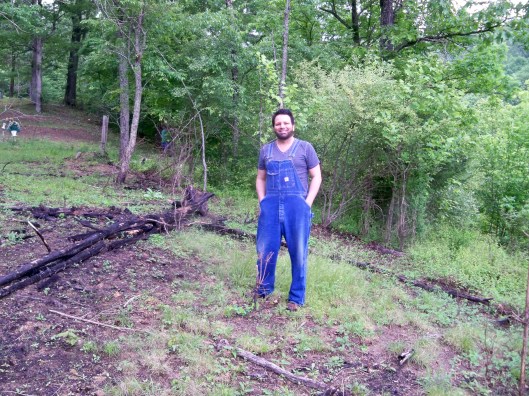
Isaac and Elizabeth Adkins section of the Adkins Family Cemetery in Harts, WV, 21 May 2016. The slave cemetery is located just beyond the trees.

bk-in-slave-cemetery-1

Here I am standing in the old Adkins slave cemetery. Isaac Adkins is my great-great-great-great-great-grandfather. 21 May 2016.

Jones Chapel Cemetery (2016)

29 Saturday Oct 2016

Posted by Brandon Ray Kirk in African American History, Cemeteries, Civil War, Kiahsville, Queens Ridge

≈ Leave a comment

Tags

Alberta Jones, Anna Mae Slade, Annie Slade, Appalachia, Betty E. Ramey Jones, Brack Jones, Calista Jones, cemeteries, civil war, Cubie Jones, Cubie Workman, Dova Manns, Eddie Jones, Elizabeth Maynard, Ellen A. Jones, Eugene Manns, Fanny Rigsby, Flora Etta Slade, genealogy, Geraldine Curry, Golden Jones, history, Howard Queen, Isaac Slade, J.B. Rigsby, James Maynard, Jenny Slade, Jesse F. Jones, Jesse Jones, John Jones, Johnny Slade, Jones Chapel Cemetery, Joseph Slade, Josephine Slade, Kiahs Creek, Leonard Manns, Lila Jones, Major Curry, Margaret Jones, Maxine Queen, Nelven Queen, Noah Queen, Noah Slade, Normal Queen, Ora T. Curry, Ossie Rigsby, Polly Slade, Ray Manns, Robert H. Hughes, Rufus Slade, Sallie Jones, slavery, Tennessee Queen, Twelve Pole Creek, Union Army, Virgie Jones, Virginia Ramey, Wayne County, West Virginia, Willie Jones, Yorkie Rigsby

The Jones Chapel Cemetery, which I visited on 29 October 2016, is located at Kiahs Branch of Twelve Pole Creek in Wayne County, West Virginia.

Level 1

Row 1

Little Brack Jones (17 May 1912-6 May 1925)

Eddie Jones (28 April 1868-17 March 1937)

Sallie Jones (19 October 1881-28 January 1957)

Robert H. Hughes (30 May 1910-29 May 1965)

Level 2

Row 1

L. Leonard Manns (13 February 1925-7 October 1994)

Ray Manns (16 March 1931-25 May 1949)

Dova Manns (8 July 1904-10 February 1933)

Eugene Manns (28 December 1932-28 December 1932)

Row 2

Cubie Jones (1890-1954); m. Willie Jones

Willie Jones (1884-1973); s/o Robert L. and Elizabeth Jones

Fanny Rigsby (1865-1955)

J.B. Rigsby (1857-1925)

Ossie Rigsby (12 June 1887-13 February 1919)

Yorkie Rigsby (1 December 1916-10 April 1919)

Geraldine Curry (9 May 1934-19 May 1935)

Major Curry (1882-1955)

Ora T. Curry (1896-1974); m. Major Curry

Level 3

Row 1

John Jones (17 February 1817-15 August 1903)

Margaret Jones (19 September 1839-1920); d/o ___ Helms; m. John Jones

Row 2

Alberta Jones (1905-1936); mother to Quentin Ferrell

Jesse F. Jones (1883-1911); s/o John and Margaret Elizabeth (Helms) Jones

Ellen A. Jones (1886-1909); d/o Sanders and Mary Elizabeth (Maynard) Adkins; m. Jesse F. Jones

Virgie Jones (1905-1908)

Level 4

Row 1

Golden Jones (19 May 1919-17 October 1981)

Jesse Jones (12 July 1904-25 December 1971)

Lila Jones (1877-1965); d/o ___ Maynard; m. John B. Jones

John Jonnie Jones (1873-18 March 1955); s/o John and Margaret Elizabeth (Helms) Jones

little square headstone

rock headstone and footstone

rock headstone and footstone

Row 2

Cubie Workman (12 August 1945-16 September 1945)

(little gap between graves)

Betty E. Ramey Jones (1 November 1861-14 February 1906); m. Robert L. Jones

(little gap between graves)

square headstone and round footstone

rock headstone and footstone

(little gap between graves)

rock headstone and footstone

rock headstone and footstone

Row 3

Maxine Queen (23? April 1933-18? June 1933)

Queen (baby)

Tomblin (baby)

Tennessee Queen (1894-1934); d/o Robert L. and Elizabeth Jones; m. Noah Queen

Noah Queen (1883-1968)

Howard Queen (27? December 1929-February 1936)

Nelven Queen (29 January 1919-24? July 1935)

Chlista Jones (8 June 1888-10 June 1905); d/o Robert L. and Elizabeth Jones

Virginia Jones Ramey (26 April 1881-13 December 1902); d/o Robert L. and Elizabeth Jones; m. Kelly Ramey

Row 4

Normal Queen (9 January 1914-12 October 1964)

Nelven Queen (9 November 1935-24 February 1968)

Slade Section

Row 1

rock headstone and footstone

rock headstone and footstone

Row 2

Jenny Slade

Joseph Slade

rock headstone and footstone

rock headstone and footstone

Row 3

Noah Slade

Polly Slade (12 December 1917-15 March 1920); d/o Joseph and Anna (Park) Slade

Josephene Slade (3 July 1902-27 June 1926); d/o Joseph and Anna (Park) Slade

Annie Slade (20 September 1881-6 July 1921); m. Joseph Slade

Joseph Slade (2 August 1877-15 July 1944)

Row 4

Anna Mae Slade (2 February 1931, only date)

Rufus Slade (12 November 1925-2 October 1926)

Isaac Slade (13 February 1904-1931); s/o Joseph and Anna (Park) Slade

Row 5

Floraetta Slade (6 May 1940-20 January 1941)

Johnny Slade (26 February 1934-24 July 1934)

***

John: Freed Slave of John Jones (c.1850-c.1875)

Level 5

Row 1

James Maynard (November 1814-August 1862); born 19 November 1813; s/o Jesse and Sarah (Welch) Maynard; Union soldier killed during Civil War on 9 August 1862; Damron’s Co., Independent WV INF

Elizabeth Maynard (1817-Unknown); born 13 June 1814; d/o James and Sarah (Ratliff) Maynard; m. James “Tar Keg” Maynard

John Doe, Negro Soldier, Died August 1862

Infant Maynard (death date unknown)

Recollections of the Civil War in Eastern Kentucky and Southwestern Virginia (1862)

20 Tuesday Sep 2016

Posted by Brandon Ray Kirk in African American History, Civil War

≈ Leave a comment

Tags

Appalachia, civil war, Confederate Army, Cumberland Mountains, David Stuart Hounshell, E.H. Perry, From Youth to Old Age, history, James Stephens, John B. Floyd, Kentucky, King Salt Works, Louis Bledsoe, Prestonsburg, slavery, Thomas H. Perry, Virginia

About 1910, Rev. Thomas H. Perry reflected on his long life, most of which was spent in the vicinity of Tylers Creek in Cabell County, West Virginia. In this excerpt from his autobiography, Mr. Perry recalled his participation in Civil War activity in eastern Kentucky and southwest Virginia.

After the night fight, above Prestonsburg, we knew the Federals were above us and we would have to fight if we ever got back to Dixie. The cold weather and deep snow and timber across the road and Federals to contend with, we moved very slowly. One morning we stopped, as I thought for breakfast, and as I was almost frozen I rejoiced because I thought we will all get warm and some beef, as I saw one man shoot down a cow. But just at that time the Federals run in our pickets and began shooting at us, but I was so hungry I ran to the cow and cut two or three pounds out of the hind-quarter and took it with me. We ran about one mile and there we saw Colonel Hounshal’s regiment in battle line, who held the Federals off us until we could get our breakfast. I took my beef without salt and put it on the end of my ramrod and held it to the fire and cooked an ate it, and it was good.

The next day my company was the rear guard and it was reported to the captain that the Federals had got between us and our command. The captain said: “Men, we will have to fight or we will be taken prisoners.” There was a preacher with us that day. He said: “Captain, I did not intend to fight, but rather than be a prisoner I will fight. Give me a gun.” When I saw him shoulder his gun, it did me good. I thought if a preacher could fight it was not bad for me to fight, as I was only a prospective preacher.

One very cold night I was detailed on the outer picket post, the orderly said: “You can not have fire as they are likely to slip upon you and shoot you.” I said to the orderly: “I cannot stand it without fire.” I thought I would freeze to death. The orderly said: “I cannot excuse you.” Just at that time Louis Bledsoe said to the orderly he could stand more cold than Perry could and he would go in my place and I could go in his place some other time. Never did I forget the kindness Mr. Bledsoe showed me that night.

When we were within fifteen miles of the Cumberland mountains, our army cattle, prisoners and all we had was on one creek; that creek led to the main road across the mountains into Dixie. On either side of this creek, the mountains were high and very rough and covered with snow. The Federals cut timber across the creek above us, and had a strong army below us, and held us here three days and would have captured us and all we had if General Floyd had not come with his artillery and drove the Federals away from the head of the creek, and let us out. The first night after we crossed the mountain into Dixie, E.H. Perry, one of my brothers came to my captain’s tent and said: “Captain, are my brothers all here?” He said: “Yes.” Then my brother exclaimed: “Thank the Lord for that.” Never will I forget the tone of my brother’s voice that night for he knew we had been gone for forty-one days, and it was by the hardest work that we landed back in Dixie.

Once more after this we went into winter quarters near the King Salt works, and they sent me to a farm house to nurse three sick soldiers. We had a large nice room, well furnished and the landlord was rich and good to us. He and his good wife would help me in waiting on the sick; he furnished us with everything we could ask for to eat. We stayed there more than three months. I saw in the beginning that I would not have much to do, and as I had the money and there was a book store at that place, I bought a complete set of school books and studied them hard that winter and it did me good. It helped me to keep down the roughness of a soldier’s life, and also to educate. Along the back yard there was a row of one-story brick buildings in which the negroes lived. Some nights I would go and hear them tell ghost stories, and they knew how to tell them for they had seen a great many ghosts. I deny superstition, but I noticed when these negroes had told me some of the most fearful ghost stories, if it was a very dark night I would ask some of them to go apart of the way home with me.

Mr. James Stephens, one of my patients, died; the other two got well. We left that place about the first of May. I saw then that the south could not gain her independence, and I told these negroes I thought they would soon be free and advised them to learn to read and write. I talked with a good many old men in the south about the war. They said they should have raised the “Old Flag” and contended for the constitution, and as for slavery, they said it was dying out in the south anyway.

Source: From Youth to Old Age by T.H. Perry, Chapter 8, p. 20-22.

Poor Whites (1896)

18 Sunday Sep 2016

Posted by Brandon Ray Kirk in African American History, Coal, Native American History

≈ Leave a comment

Tags

Adirondack Mountains, Allegheny Mountains, Appalachia, Blue Ridge Mountains, Chattanooga, Chattanooga Times, Cherokee, Choctaw, culture, history, Huntington, Huntington Advertiser, indentured servants, Native Americans, New York, North Carolina, Pennsylvania, slavery, Tennessee, Virginia, West Virginia

On July 15, 1896, the Huntington Advertiser of Huntington, West Virginia, printed a story titled “The Poor Whites: Origin of a Distinct Class Living in the South.” Subtitled “The ‘Cracker of the Hills’ is the Direct Descendant of the ‘Sold Passengers’ Who Came to This Country in the Seventeenth Century,” the story initially appeared in the Chattanooga Times of Chattanooga, Tennessee. And here it is:

The notion that the poor white element of the southern Appalachian region is identical with the poor people generally over the country is an error, and an error of enough importance to call for correction. The poor white of the south has some kinfolk in the Adirondack region of New York and the Blue and Alleghany [sic] mountains of Pennsylvania, but he has few relatives any place else about the Mason-Dixon line. The states of New York and Pennsylvania were slave states until the early part of this century.

This poor white mountaineer descends direct from those immigrants who came over in the early days of the colonies; from 1620 to about or some time after the Revolutionary war period, as “sold passengers.” They sold their services for a time sufficient to enable them to work out their passage money. They were sold, articled to masters, in the colonies for their board and fixed wage, and thus they earned the cost of their migration.

The laws under which they were articled were severe, as severe as apprentice laws in those days. The “sold passenger” virtually became the slave of the purchaser of his labor. He could be whipped if he did not do the task set [before] him, and woe to the unlucky wight [sic] if he ran away. He was sure to be caught and cruelly punished.

And though he was usually a descendant of the lowest grade of humanity on the British islands, he still had enough of the Anglo-Saxon spirit about him to make him an unsatisfactory chattel.

From 1620 forward–the year when the Dutch landed the first cargo of African slaves on the continent–the “sold passenger” was fast replaced by negroes, who took more naturally and amiably to the slave life.

The poor white naturally came to cherish a bitter hatred for the blacks that were preferred over him. He already hated his domineering white master. When he was free to go, he put as many miles as his means and his safety from Indian murderers permitted between himself and those he hated and hoped he might never see again. In that early time the mountain region was not even surveyed, let alone owned by individual proprietors.

The English, Scotch, Irish and continental immigrant who had some means sat down on the rich valleys, river bottoms and rolling savannahs, and the poor white was made welcome to the foothills and mountain plateaus.

These descendants of the British villain of the feudal era grew and multiplied, became almost as distinct a people from the lords of the lowlands as the Scotch highlander was, as related to his lowland neighbor, in the sixteenth and seventeenth centuries.

The stir of the period since the close of our civil war has made somewhat indistinct the line that separates the mountaineer from the plainsman of the south, especially in the foothills and at points where the two have intermingled in traffic, in the schoolhouse and church, and especially where the poor whites have been employed at mining, iron making, etc. But go into the mountains far enough and you will find the types as clear cut as it was 100 years ago, with its inimitable drawling speech and curious dialect, its sallow complexion, lanky frame, lazy habits and immorality–all as distinctly marked as they were when hundreds of these people found Cherokee wives in Georgia and Tennessee in the early part of the century and bleached most of the copper out of the skin of the Choctaw as well as out of the Cherokee.

It is a pity that some competent anthropological historian has not traced the annals of this interesting and distinctive section of our population, and made record of it in the interest of science, no less than in the interest of the proper education and elevation of the mountain people. It has become, especially in the Piedmont section of the south, a most important labor element. The cotton mill labor by thousands comes from the “Cracker of the Hills,” and it is destined o become a great power, that labor population, social and political.

The redemption of the poor white began when slavery went down in blood and destruction, and it has gone on faster and traveled further than some of us think.

Thursday Cook Obituary (1895)

28 Monday Mar 2016

Posted by Brandon Ray Kirk in African American History, Logan, Wyoming County

≈ Leave a comment

Tags

Appalachia, genealogy, history, Huff's Creek, J.J. Dolliver, John Cook, Logan County, Logan County Banner, Methodist Episcopal Church, R.M.L. Cook, slavery, Thursday Cook, West Virginia, Wyoming County

Former Slave Obit LCB 09.04.1895

Thursday Cook obituary, Logan County (WV) Banner, 4 September 1895.

A Romance of Coon Hollow (1895)

04 Sunday Oct 2015

Posted by Brandon Ray Kirk in African American History

≈ Leave a comment

Tags

A Romance of Coon Hollow, Davis Theater, Gallick's Book Store, history, Huntington, Huntington Advertiser, play, theater, West Virginia

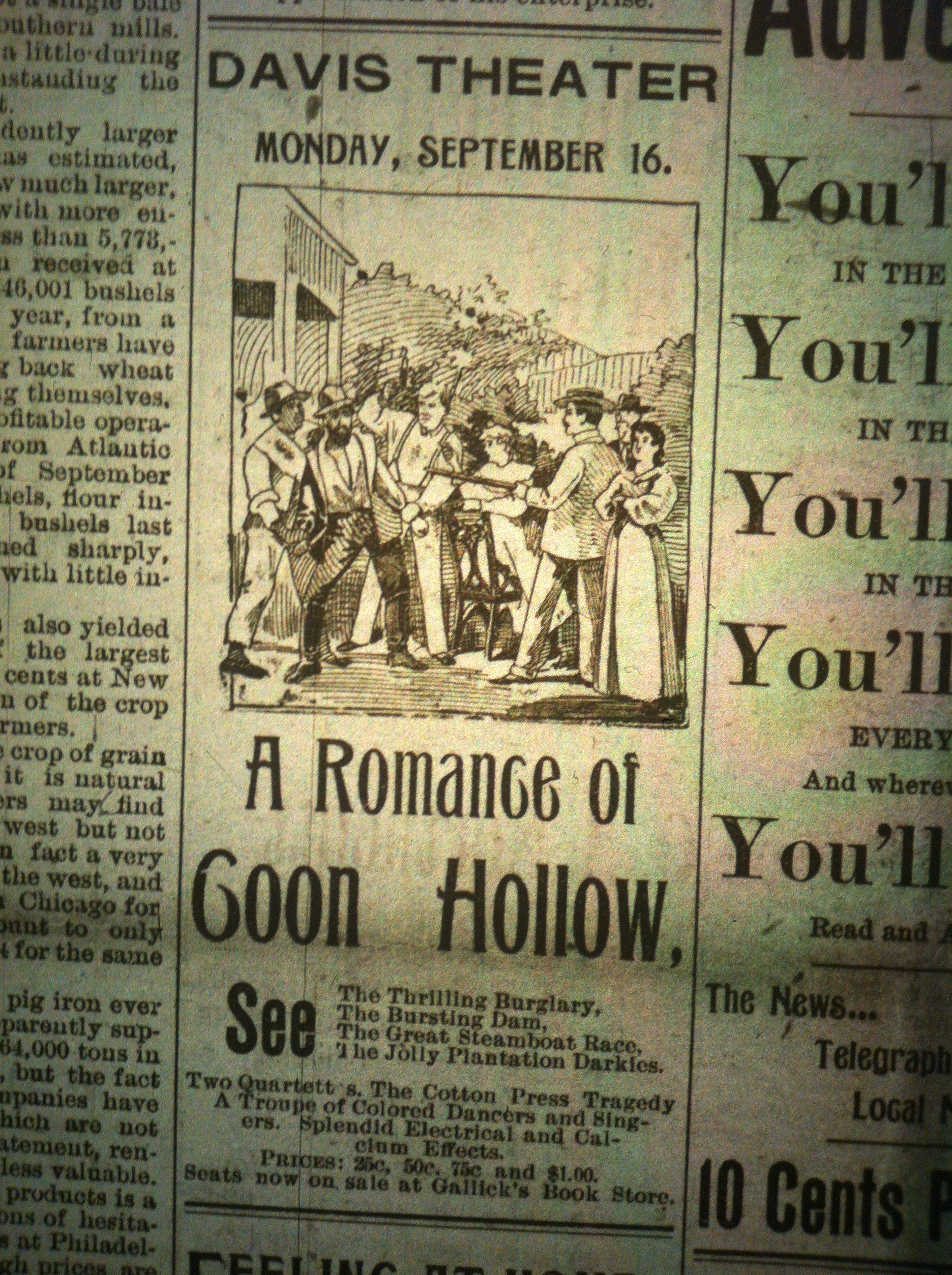
“A Romance of Coon Hollow,” Huntington (WV) Advertiser, 14 September 1895

Isaac Adkins grave (2003)

30 Tuesday Jun 2015

Posted by Brandon Ray Kirk in African American History, Harts

≈ Leave a comment

Tags

Adkins Family Cemetery, Appalachia, cemeteries, genealogy, Harts Creek, history, Isaac Adkins, Lincoln County, Logan County, slaves, U.S. South, Virginia, West Virginia

The Isaac Adkins grave is located at the Adkins Cemetery in Harts, Lincoln County, WV. Isaac (1790-1854), my great-great-great-great-great-grandfather was the second-largest slave-owner in Logan County in 1850

Isaac Adkins (1790-1854), my great-great-great-great-great-grandfather, was the Harts Creek community’s wealthiest resident and Logan County’s second-largest slave-owner as of 1850. His grave is located at the Adkins Cemetery in Harts, Lincoln County, WV. 2003

Hill Family Cemetery (2013)

30 Tuesday Jun 2015

Posted by Brandon Ray Kirk in African American History, Cemeteries, Chapmanville

≈ 4 Comments

Tags

Acre Wilson, Allen Johnson, Appalachia, Benjamin L. Hill, Carrie Lowe, Chapmanville, Crawley Creek, Della Ferguson, Dorsey M. Moon, Ethel D. Lowe, Fannie Johnson, Floyd Johnson, genealogy, George Hill, Guyandotte River, Hattie Lowe, Hattie Wilson, Hiram Hill, history, Hugh Hill, Jack Hill, James A. Johnson, James Arden Lowe, James Hill, Joseph M. Kitchens, Juanita M. Moon, Juley Hill, Lewis Hamilton, Logan County, Lorenzo D. Hill, Martha Hill, Mary Hill, Molly Claytor, Myrtle A. Johnson, Nancy Hill, Ned Johnson, Nellie Jo Akers, Paradazie Stuart, Patrick D. Williams, Peter H. Hill, Robert E. Lowe, Robert Nelson Lowe, Sarah Hill, slaves, Stone Branch, Thomas Hill, U.S. South, West Virginia, Will Hill, William Craddock Ferguson, William Johnson, William Ward Hill

The Lorenzo D. Hill Family Cemetery, which I visited on 20 September 2013, is located across the Guyandotte River from Stone Branch in Logan County, West Virginia. Prior to the War Between the States, Lorenzo Dow Hill was a prominent resident and slave-owner in the Crawley Creek section of Logan County. This cemetery is also noteworthy in that it contains the final remains of numerous African-American residents. The cemetery can be accessed by following Sawmill Road, near Chapmanville.

Row 1

Robert E. Lowe (1851-1936); s/o Elisha and Elizabeth (Doss) Lowe

Carrie Lowe (1856-1947); d/o Lorenzo Dow and Nancy (Browning) Hill; m. Robert E. Lowe

Row 2

Hattie Lowe (1878-1908); d/o Robert and Caroline (Hill) Lowe

Pearl F. Lowe (1893-1909); d/o Robert and Caroline (Hill) Lowe

Row 3

James Hill (no dates); s/o Lorenzo Dow and Nancy (Browning) Hill

Thomas Hill (no dates); s/o Lorenzo Dow and Nancy (Browning) Hill

Sarah Hill (no dates); d/o Lorenzo Dow and Nancy (Browning) Hill

Robert Nelson Lowe (1916-1918); s/o Jim Lowe

Row 4

Ethel D. Lowe (1882-1903); d/o Robert and Caroline (Hill) Lowe

Nancy Browning Hill (1811-1891); m. Lorenzo Dow Hill

Lorenzo D. Hill (1808-1904); s/o Jacob and Sarah (Thomas) Hill

James Arden Lowe (1884-1930); s/o Robert and Caroline (Hill) Lowe

Row 5

unmarked rock headstone

Joseph M. Kitchens (29 April 1871-31 August 1905)

unmarked small rock headstone

unmarked rock headstone

unmarked rock headstone

Row 6

sunken spot — possible grave

unmarked rock headstone

unmarked rock headstone

unmarked rock headstone and footstone

unmarked rock headstone and footstone (child)

unmarked rock headstone

(pine tree)

unmarked rock headstone

Row 7

Dorsey M. Moon (1900-1957); s/o Samuel H. and Hattie (Stratton) Moon

Della Ferguson (30 January 1888-14 February ____); d/o George and Martha Hill; m. William Craddock Ferguson

W.C. Ferguson (08 August 1873-14 September 1945); s/o Joshua and Ellen (Craddock) Ferguson

(pine tree)

sunken spot — possible grave

Jack Hill (dates are buried); born 1858; died after 1930

Row 8

sunken spot — possible grave

Molly Claytor (03 July 1894-22 October 1946); d/o George and Martha Hill; m. Daniel Claytor of Floyd County, VA

unmarked rock headstone and footstone

Hiram Hill (30 March 1896-14 July 1919); s/o George and Martha Hill

unmarked rock headstone and footstone

unmarked rock headstone

mossy mound — perhaps a grave

George Hill (died 08 December 1930); s/o Hiram and Mary (Hill) Hill

Martha Hill (died 24 August 1906); m. George Hill

Peter H. Hill (22 December 1894-22 April 1958); s/o George and Martha Hill; WV PVT CO D 3 DEVELOPMENT BN WWI; fiddler who played with Dick Justice

Acre Wilson (1888-1959); s/o General and Adaline (Jones) Wilson

Row 9

sunken spot — possible grave

William Ward Hill (19 September 1923-09 January 1953); WV PVT WWII

unmarked rock footstone

unmarked rock headstone and footstone

Will Hill (15 June 1878-11 October 1896)

unmarked rock headstone and footstone

Row 10

unmarked rock headstone

unmarked rock headstone

(gap in graves, perhaps one or two graves here?)

unmarked rock headstone

unmarked rock headstone and footstone (baby?)

unmarked rock headstone

perhaps another grave, no rock markers

Row 11

Benjamin L. Hill (16 June 1916-07 July 1958); WV PVT CO E 357 ENGINEERS WWII

sunken spot — no rock markers

unmarked rock footstone

Juley Hill (1900-1922); d/o Melvin and Parlena J. (Robertson) Hill

Hugh Hill (12 November 1883-27 December 1904)

sunken spot — possible grave

unmarked rock headstone and footstone

Row 12

unmarked rock headstone

(pine tree)

Hariam Hill (1831-1913)

Mary Hill (1832-1907); d/o Lorenzo Dow Hill (master) and Julia the slave; m. Hiram Hill

unmarked rock headstone and footstone

perhaps one more grave, no rock markers

Row 13

Lewis Hamilton (1880-1916); m. Paradazie Hill

rock

unmarked rock headstone

(pine tree)

(gap)

Paradazie Stuart (14 August 1892-18 April 1960); d/o George and Martha Hill; m1. Lewis Hamilton; m2. John C. Stuart

John C. Stuart (05 March 1885-10 April 1961); PFC CO D 327 SERVICE BN QMC WWI

Hattie Wilson (1904-1961); likely Hattie Inez Bickley; d/o Charles and Mary (Black) Bickley; m. Acre Wilson

Row 14

Juanita M. Moon (1933-1971)

Row 15

Patrick D. Williams (18 September 1961-10 January 1962)

unmarked rock headstone and footstone

unmarked rock headstone and footstone

Row 16

Floyd Johnson (07 April 1895-21 December 1975); s/o Charles Johnson/ PVT US ARMY WWI

Ned Johnson (16 January 1893-16 October 1973); s/o Charles Johnson; PVT US ARMY WWI

William Bill Johnson (10 October 1890-27 June 1970); s/o Charles Johnson

Allen Johnson (1880-1960); s/o Charles and Mary Johnson

Row 17

Fannie Johnson (29 March 1903-23 January 1977); m. Willie Johnson

James A. Johnson (1949-still alive)

Myrtle A. Johnson (1955-2003); m. James A. Johnson

Nellie Jo Akers (13 January 1938-03 March 2009)

← Older posts
Newer posts →

Feud Poll 1

If you had lived in the Harts Creek community during the 1880s, to which faction of feudists might you have given your loyalty?

Categories

  • Adkins Mill
  • African American History
  • American Revolutionary War
  • Ashland
  • Atenville
  • Banco
  • Barboursville
  • Battle of Blair Mountain
  • Beech Creek
  • Big Creek
  • Big Harts Creek
  • Big Sandy Valley
  • Big Ugly Creek
  • Boone County
  • Breeden
  • Calhoun County
  • Cemeteries
  • Chapmanville
  • Civil War
  • Clay County
  • Clothier
  • Coal
  • Cove Gap
  • Crawley Creek
  • Culture of Honor
  • Dingess
  • Dollie
  • Dunlow
  • East Lynn
  • Ed Haley
  • Eden Park
  • Enslow
  • Estep
  • Ethel
  • Ferrellsburg
  • Fourteen
  • French-Eversole Feud
  • Gilbert
  • Giles County
  • Gill
  • Green Shoal
  • Guyandotte River
  • Halcyon
  • Hamlin
  • Harts
  • Hatfield-McCoy Feud
  • Holden
  • Hungarian-American History
  • Huntington
  • Inez
  • Irish-Americans
  • Italian American History
  • Jamboree
  • Jewish History
  • John Hartford
  • Kermit
  • Kiahsville
  • Kitchen
  • Leet
  • Lincoln County Feud
  • Little Harts Creek
  • Logan
  • Man
  • Matewan
  • Meador
  • Midkiff
  • Monroe County
  • Montgomery County
  • Music
  • Native American History
  • Peach Creek
  • Pearl Adkins Diary
  • Pecks Mill
  • Peter Creek
  • Pikeville
  • Pilgrim
  • Poetry
  • Queens Ridge
  • Ranger
  • Rector
  • Roane County
  • Rowan County Feud
  • Salt Rock
  • Sand Creek
  • Shively
  • Spears
  • Sports
  • Spottswood
  • Spurlockville
  • Stiltner
  • Stone Branch
  • Tazewell County
  • Timber
  • Tom Dula
  • Toney
  • Turner-Howard Feud
  • Twelve Pole Creek
  • Uncategorized
  • Warren
  • Wayne
  • West Hamlin
  • Wewanta
  • Wharncliffe
  • Whirlwind
  • Williamson
  • Women's History
  • World War I
  • Wyoming County
  • Yantus

Feud Poll 2

Do you think Milt Haley and Green McCoy committed the ambush on Al and Hollene Brumfield in 1889?

Blogroll

  • Ancestry.com
  • Ashland (KY) Daily Independent News Article
  • Author FB page
  • Beckley (WV) Register-Herald News Article
  • Big Sandy News (KY) News Article
  • Blood in West Virginia FB
  • Blood in West Virginia order
  • Chapters TV Program
  • Facebook
  • Ghosts of Guyan
  • Herald-Dispatch News Article 1
  • Herald-Dispatch News Article 2
  • In Search of Ed Haley
  • Instagram
  • Lincoln (WV) Journal News Article
  • Lincoln (WV) Journal Thumbs Up
  • Lincoln County
  • Lincoln County Feud
  • Lincoln County Feud Lecture
  • LinkedIn
  • Logan (WV) Banner News Article
  • Lunch With Books
  • Our Overmountain Men: The Revolutionary War in Western Virginia (1775-1783)
  • Pinterest
  • Scarborough Society's Art and Lecture Series
  • Smithsonian Article
  • Spirit of Jefferson News Article
  • The Friendly Neighbor Radio Show 1
  • The Friendly Neighbor Radio Show 2
  • The Friendly Neighbor Radio Show 3
  • The Friendly Neighbor Radio Show 4
  • The New Yorker
  • The State Journal's 55 Good Things About WV
  • tumblr.
  • Twitter
  • Website
  • Weirton (WV) Daily Times Article
  • Wheeling (WV) Intelligencer News Article 1
  • Wheeling (WV) Intelligencer News Article 2
  • WOWK TV
  • Writers Can Read Open Mic Night

Feud Poll 3

Who do you think organized the ambush of Al and Hollene Brumfield in 1889?

Recent Posts

  • Logan County Jail in Logan, WV
  • Absentee Landowners of Magnolia District (1890, 1892, 1894)
  • Charles Spurlock Survey at Fourteen Mile Creek, Lincoln County, WV (1815)

Ed Haley Poll 1

What do you think caused Ed Haley to lose his sight when he was three years old?

Top Posts & Pages

  • Big Coal Deals for Logan County, WV (1917)
  • Civil War Gold Coins Hidden Near Chapmanville, WV
  • White Family History at Pecks Mill, WV (1937)
  • West Virginia Banjo Player 5
  • William Lucas, Revolutionary War Veteran of Giles County, VA

Copyright

© Brandon Ray Kirk and brandonraykirk.wordpress.com, 1987-2023. Unauthorized use and/or duplication of this material without express and written permission from this blog’s author and/or owner is strictly prohibited. Excerpts and links may be used, provided that full and clear credit is given to Brandon Ray Kirk and brandonraykirk.wordpress.com with appropriate and specific direction to the original content.

Archives

  • February 2025
  • January 2025
  • October 2023
  • September 2023
  • December 2022
  • November 2022
  • May 2022
  • April 2022
  • February 2022
  • November 2021
  • October 2021
  • September 2021
  • June 2021
  • May 2021
  • April 2021
  • March 2021
  • February 2021
  • January 2021
  • December 2020
  • November 2020
  • October 2020
  • July 2020
  • June 2020
  • May 2020
  • April 2020
  • March 2020
  • February 2020
  • January 2020
  • December 2019
  • November 2019
  • October 2019
  • September 2019
  • August 2019
  • July 2019
  • June 2019
  • May 2019
  • April 2019
  • March 2019
  • February 2019
  • January 2019
  • December 2018
  • November 2018
  • October 2018
  • September 2018
  • August 2018
  • July 2018
  • June 2018
  • May 2018
  • April 2018
  • March 2018
  • February 2018
  • January 2018
  • December 2017
  • November 2017
  • October 2017
  • September 2017
  • August 2017
  • July 2017
  • June 2017
  • May 2017
  • April 2017
  • March 2017
  • February 2017
  • January 2017
  • December 2016
  • November 2016
  • October 2016
  • September 2016
  • August 2016
  • July 2016
  • June 2016
  • May 2016
  • April 2016
  • March 2016
  • February 2016
  • January 2016
  • December 2015
  • November 2015
  • October 2015
  • September 2015
  • August 2015
  • July 2015
  • June 2015
  • May 2015
  • April 2015
  • March 2015
  • February 2015
  • January 2015
  • December 2014
  • October 2014
  • September 2014
  • August 2014
  • July 2014
  • June 2014
  • May 2014
  • April 2014
  • March 2014
  • February 2014
  • January 2014
  • December 2013
  • November 2013
  • October 2013
  • September 2013
  • August 2013
  • July 2013
  • June 2013
  • May 2013
  • April 2013
  • March 2013
  • February 2013
  • January 2013
  • December 2012
  • November 2012

Enter your email address to follow this blog and receive notifications of new posts by email.

Join 2,927 other subscribers

Tags

Appalachia Ashland Big Creek Big Ugly Creek Blood in West Virginia Brandon Kirk Cabell County cemeteries Chapmanville Charleston civil war coal Confederate Army crime culture Ed Haley Ella Haley Ferrellsburg feud fiddler fiddling genealogy Green McCoy Guyandotte River Harts Harts Creek Hatfield-McCoy Feud history Huntington John Hartford Kentucky Lawrence Haley life Lincoln County Lincoln County Feud Logan Logan Banner Logan County Milt Haley Mingo County music Ohio photos timbering U.S. South Virginia Wayne County West Virginia Whirlwind writing

Blogs I Follow

  • OtterTales
  • Our Appalachia: A Blog Created by Students of Brandon Kirk
  • Piedmont Trails
  • Truman Capote
  • Appalachian Diaspora

BLOOD IN WEST VIRGINIA is now available for order at Amazon!

Blog at WordPress.com.

OtterTales

Writings from my travels and experiences. High and fine literature is wine, and mine is only water; but everybody likes water. Mark Twain

Our Appalachia: A Blog Created by Students of Brandon Kirk

This site is dedicated to the collection, preservation, and promotion of history and culture in Appalachia.

Piedmont Trails

Genealogy and History in North Carolina and Beyond

Truman Capote

A site about one of the most beautiful, interesting, tallented, outrageous and colorful personalities of the 20th Century

Appalachian Diaspora

  • Subscribe Subscribed
    • Brandon Ray Kirk
    • Join 789 other subscribers
    • Already have a WordPress.com account? Log in now.
    • Brandon Ray Kirk
    • Subscribe Subscribed
    • Sign up
    • Log in
    • Report this content
    • View site in Reader
    • Manage subscriptions
    • Collapse this bar
 

Loading Comments...