
• About

Brandon Ray Kirk

~ This site is dedicated to the collection, preservation, and promotion of history and culture in my section of Appalachia.

Brandon Ray Kirk

Monthly Archives: September 2023

Interview of Dr. Leonard Roberts, Part 3 (Summer 1982)

29 Friday Sep 2023

Posted by Brandon Ray Kirk in Big Sandy Valley, Civil War, Hatfield-McCoy Feud

≈ Leave a comment

Tags

civil war, crime, Floyd Hatfield, Hatfield-McCoy Feud, Kentucky, Leonard Roberts, Preacher Anse Hatfield, Preservation Council Press, Randolph McCoy, Truda McCoy, West Virginia

Truda Williams McCoy’s The McCoys: Their Story (1976) is a classic book about the Hatfield-McCoy Feud. Truda, a McCoy descendant born in 1902 who married a grandson of Ran’l McCoy, collected her stories directly from feud participants and close family members prior to and during the 1930s. Truda was unable to publish her manuscript, but after her death in 1974 Dr. Leonard W. Roberts located and edited the manuscript, then published it through Preservation Council Press. In this 1982 interview, Dr. Roberts contemplates general issues about the feud:

Was the Hatfield-McCoy Feud one in which more people were killed?

I suppose there were fewer people killed in this feud than say some others, although we don’t have any documentation of that one. But the number killed runs anywhere from 20 to 75, let’s say, Hatfields and McCoys. Some of the elements in this fight might be noted. Notice the first time there was some fighting was over a hog that had pigs and the owner Randolph McCoy had marked his ears with a mark. He found those in a pen of a Hatfield. Now rather than pulling a gun—guns on each other—they weren’t that savage, all they wanted was law to take its course. Randolph simply went to the magistrate of the district and brought out a warrant against Floyd Hatfield for the return of his hogs. The old sow had had pigs, you see, by this time. And what happened? The magistrate was a Hatfield. And he knew it. Yet he thought that everybody would play fair and square. We had just come out of the Civil War. We were righting wrongs. They were going to, if they were ever going to. And it seemed they wanted law and order to take over. But it didn’t hardly take over in this case. The fellow Hatfield [presumably, he means Preacher Anse] who brought the trial decided on a jury. Rather than just have two or three testify here or there and let him then make the decision himself, he called in twelve jurors. And then they started voting. And they came out 7 to 5 in favor of Hatfield to keep the hogs.

What should we really remember about the feud? How is it important to us today?

Well that it was simply honest men and women living in a kind of rough and tumble era, especially just after the Civil War when emotions and values were pretty badly mocked and pretty badly thrown aside. But remember that some people including Hatfields and McCoys tried to see that law was established again. Rather than simply running amuck as they had done in small groups, robbing and killing. Remember the Civil War and the conditions of the times. Coming out of the war was this idea of posse or idea of organizing a group. It was almost as if any time there was a fight going between one man and another, pretty soon he was backed by fifteen or twenty men that he’d drawn in, either through persuasion or through kinship or access to mercenary ways—they offered him a piece of land or help him build his home or something of that kind to come in and fight—and so it developed in some cases into a kind of mercenary situation. But let’s remember that there weren’t too many actually killed and eventually the governors began to try to stop it and almost got in a war themselves. Finally threw the thing in the courts and even the Supreme Court made a decision about what states could do and what they couldn’t do in handling and controlling their citizens. So law and order did begin to develop. And of course we began to have the recovery of America after the Civil War. Timber. Lots of fuel and coal, things of this kind. So pretty soon, business began to boom in the mountains where there was plenty of timber, plenty of coal, plenty of resources. And so by 1900 the thing had sort of drifted over. And nowadays when you go into the area, here’s a McCoy that’s married to a Hatfield, Hatfield married to a McCoy, and down and down the line. And unless you name it to them they have forgotten about anything like a feud.

Is there anything else you would want someone to know about the story?

Well, I guess it’s generally unknown or understood that Hatfields and McCoys are simply decent, honest, migratory people who had come into the mountains from their areas back in the east and eventually further back, you know, in Scotland and Ireland. And they settled here in the mountains and they began to pick up land in the legal and rightful ways and establish their families. And actually the first decade or the first generation, they’d married within one another. They’d lived on the West Virginia side at the time and then later on the Kentucky side. What drove a wedge between them probably was not the Civil War alone but notice what the Civil War produced. It produced a separation of Virginia from West Virginia. Now how would you feel if you were fighting for your mother country living across here on the Tug River side and all at once you were, you became another state that was with the Union? So the people was thrown into kind of a quandary. The Hatfields on the West Virginia side were largely Southern because they were for the South and their mother country immediately was changed for the North. And so they were trying to live a decent life going along with the Southerners and here these people just across the river accusing them of course of rebellion and joining and fighting against the Union. That’s one big thing that we might leave out, the historical patterns and problems that developed pretty fast on the frontier here.

Image

Coal Miners in Ethel, Logan County, WV (1913)

29 Friday Sep 2023

Tags

Appalachia, Asbury Stidham, blacksmith, brakeman, C.W. Small, carman, carpenter, Cleve Craddock, coal, Ethel, Jerry Stidham, Logan County, Lou Davis, mine foreman, mining, motorman, West Virginia

Logan Coal Company, Ethel, Logan County, WV. L-R: Mr. Richardson, carman; Cleve Craddock, carpenter; C.W. Small, motorman; Lou Davis, mine foreman; Asbury Stidham, blacksmith, Jerry Stidham, brakeman.

Posted by Brandon Ray Kirk | Filed under Coal, Ethel

≈ 3 Comments

Interview of Dr. Leonard Roberts, Part 2 (Summer 1982)

28 Thursday Sep 2023

Posted by Brandon Ray Kirk in Big Sandy Valley, Civil War, Hatfield-McCoy Feud

≈ Leave a comment

Tags

Appalachia, Bill Staton, civil war, Confederate Army, Dr. Leonard W. Roberts, Harmon McCoy, history, Kentucky, Lexington, Paris McCoy, Randolph McCoy, Squirrel Huntin' Sam McCoy, Truda McCoy, Union Army

Truda Williams McCoy’s The McCoys: Their Story (1976) is a classic book about the Hatfield-McCoy Feud. Truda, a McCoy descendant born in 1902 who married a grandson of Ran’l McCoy, collected her stories directly from feud participants and close family members prior to and during the 1930s. Truda was unable to publish her manuscript, but after her death in 1974 Dr. Leonard W. Roberts located and edited the manuscript, then published it through Preservation Council Press. In this 1982 interview, Dr. Roberts recollects the story of Squirrel Huntin’ Sam McCoy and contemplates bigger questions about the feud:

Did Squirrel Huntin’ Sam McCoy ever kill anyone?

He doesn’t say that he did in his manuscript. He says that he protected people. Now outside of the manuscript, he tells a story to his grandson who was visiting that “Yes, I did kill a man. It’s not in my manuscript. I just skipped it. I didn’t like to have it in there.” Or something like that. But when he and his brother Paris were out hunting they ran into one of the Ellison [Bill Staton] boys—I can’t think of the name right quick—ran into one of the boys that was on the other side most of the time. And this boy began to shoot and pretty soon he and Paris had been shot through and had fallen to the ground and—what was his name—Ellison [Bill Staton] was on top and was trying to twist this fellow’s head off or something like that and Squirrel Huntin’ Sam said, “I saw then I just had to shoot.” And he got up and shot and killed him. But then in telling this story, he said, “The reason I don’t tell this story much, I dread that it happened.” And you ask him why and he’d say, “Well, when we went up there to him, my enemy’s gun was already empty.”

Why did this feud get such nationwide attention?

Well, about three or four things there that maybe I can’t think of… One at a time. Let’s start out with the, let’s say problems with the Civil War. It’s a long story, but one of Randolph McCoy’s brothers had gone into the army on the Union side in the State of Kentucky. Went and fought in Kentucky down around Lexington and central Kentucky. Got discharged. Come back home. By that time the rebels had been organizing posses and groups to patrol the whole situation. So they’d heard that Harmon—this was the person’s name—had come back home. Been out fighting for the Union. Now he’s come back home. So they traced him down. And it seems that he stayed with his family only one night after two years in the war until he was shot at. Nobody could go out and get wood or water. Why, they’d be shot at. So he slipped out after midnight and went to the little cave back on the hillside. Well, by then, by the time he escaped it had been snowing a bit. So this posse who had come after him traced him in the snow and found him back in that cave, dragged him out, and killed him. The war was going on then. And everybody was away from home fighting on one side the other. And that sort of didn’t take hold, didn’t cause any hard feelings, until they all came back. And then it was understood that Harmon’s—he had four sons and two daughters—the four sons seem to have sworn that they would avenge their father’s murder now or sometime else. So they started to look for the enemy and continued looking for almost twenty years almost before it broke out into fighting.

How does this feud compare to the other feuds?

When you read about… Now we’re beginning to study Appalachia really in some depth and we find out that there were probably two hundred small or large blood feuds that happened before the war, you know, fighting over which ones are going and why you’re going, during the war when the posses and the bushwhackers began to come in, and then as soon as it settled down and the South was whipped, we might say, or worsted, and they came back, those soldiers came back and began to try and establish their names, the first thing they’d try to do is run for office and then they would hear sharp criticism about what they did and how they fought for the enemy and how they were beaten and so forth. And so the feuds began to erupt soon after the Civil War all up and down the Mississippi, Ohio, and up and down the mountains and rivers and so forth of the middle area. See, we’re talking about the buffer area here. When the Civil War was going on was between Kentucky, Arkansas, Tennessee, those are buffer states that goes between North and South.

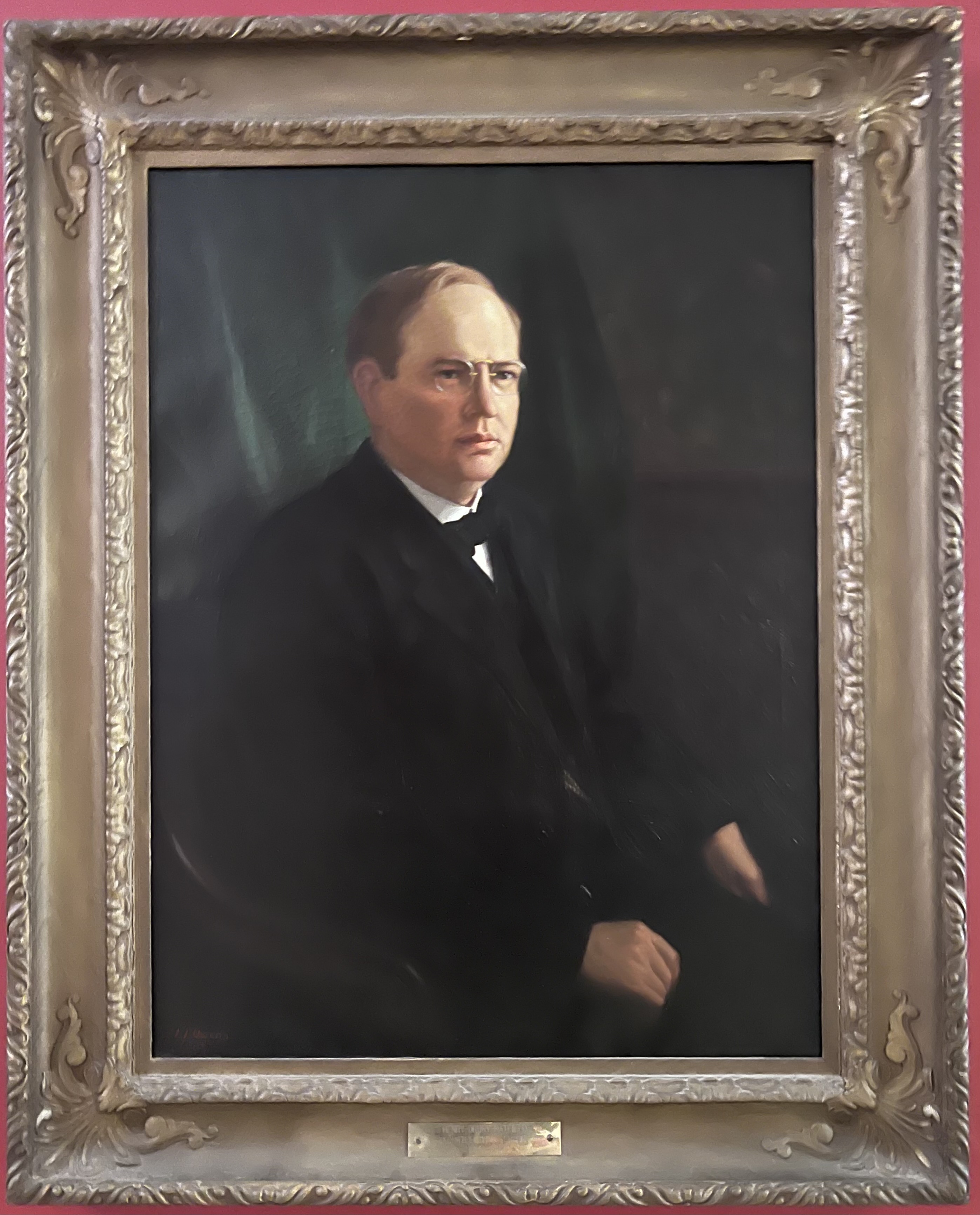
Dr. Henry Drury Hatfield

27 Wednesday Sep 2023

Posted by Brandon Ray Kirk in Hatfield-McCoy Feud, Logan

≈ 1 Comment

Tags

Betty Hatfield, Elias Hatfield, governor, Henry D. Hatfield, politics, West Virginia

Dr. Henry Drury Hatfield, son of Elias and Betty (Chafin) Hatfield. This is his official portrait as West Virginia’s 14th governor.

Interview of Dr. Leonard W. Roberts, Part 1 (Summer 1982)

27 Wednesday Sep 2023

Posted by Brandon Ray Kirk in Big Sandy Valley, Hatfield-McCoy Feud, Pikeville

≈ 2 Comments

Tags

Appalachia, Bill Staton, Dr. Leonard W. Roberts, Hatfield-McCoy Feud, Judith Bowling, Kentucky, Orville McCoy, Paul McCoy, Pike County, Pikeville, Pikeville College, Preservation Council Press, Randolph McCoy, Squirrel Huntin' Sam McCoy, Truda McCoy

Truda Williams McCoy’s The McCoys: Their Story (1976) is a classic book about the Hatfield-McCoy Feud. Truda, a McCoy descendant born in 1902 who married a grandson of Ran’l McCoy, collected her stories directly from feud participants and close family members prior to and during the 1930s. Truda was unable to publish her manuscript, but after her death in 1974 Dr. Leonard W. Roberts located and edited the manuscript, then published it through Preservation Council Press. In this 1982 interview, Dr. Roberts recollects the story behind the book and how it led him to find another manuscript written by Squirrel Huntin’ Sam McCoy:

How did you get involved in Hatfield-McCoy research?

Well, if you want me to come right down to a fine point, it happened one spring when we were putting on a little program of art exhibitions and so forth in the little park of Pikeville, near Pikeville College, where I taught. And the leader of the arts and crafts just happened to be talking you know about how he would get up and steer the county and this sort of thing and finally he said something like, “We’d like to name this road from here to Williamson, West Virginia, the Hatfield-McCoy Highway, but we don’t know much about the Hatfields and McCoys. It’s just largely hearsay.” Well almost before he snapped off, a woman called him and said, “Wait a minute now, why my mother (which most people know was a poet) wrote a pretty good history of the feud, but she sent it off and she couldn’t get it published so she willed it to my brother and he has it in his trunk right now.” Well that liked to bowled a man over. We didn’t expect that sort of windfall. So I was on the group… I was secretary, actually. And as secretary, I got to go and hunt this person and she let me have a copy of this manuscript and I was reading it before we heard from the owner who began to object by saying he “hadn’t give permission for her to give that to you.” And so after a good bit of wrangling and so forth I finally got to read the manuscript. And it was an excellent almost unheard of story of the Hatfield-McCoy Feud. Because she had been a teacher. Truda McCoy was her name. And she had walked all over Pike County teaching and that sort of thing and interviewing people in the ‘30s. And built up a manuscript of four or five hundred pages. And there it was.

It reads almost like fiction with dialect and all. You edited this book. How much did you change it?

How much did I change it? I changed it so little that you can’t tell it really. As the editor said in the preface, Leonard has taken this material and seemingly has done a good job but we can’t see his tracks anywhere. I simply touched it here and there in a matter of maybe a word or something of this kind and that’s all that I did for it. And since it’s the first story written especially with the viewpoint of the McCoys, the only one that we have, alongside numbers of books by the Hatfields, this turns out to be probably the best history now and probably the best history we will ever have of the Hatfield-McCoy Feud entirely. She didn’t just talk about the McCoys. She showed the compassion and so forth of the Hatfields in the story, too.

How important was her documentation of where she found the stories?

Well, she knew that… Since she was trying to sell it apparently as documentary material, she footnoted it herself. Her material. I think that certainly is what saved the book and made it authentic. Because she, in the early thirties and even before that, had interviewed people still alive who knew about the feud and even had been in the feud, had fought and died and sweated in the feud. And she put those names, well she footnoted the original manuscript. I simply left it out to some extent and put them in separate statements below the end of chapters. So it seems an authentic book by having those documented there by the McCoys and Hatfields themselves.

Why were the people willing to talk to her?

That was the key to the entire thing because after the feud was over and everybody had been killed off that was going to be killed off the thing settled down into kind of a limbo. The Hatfields had been put away pretty well, you see, in the novels and books that had been written about them. But the McCoys had not had that much publicity and most of it seemed bad so they simply did not talk about the feud. Didn’t want to talk about the feud. And I’ve met people who still won’t talk about the feud. But some few that I got the names of from Mrs. McCoy’s book and from inquiring, while I was at their home they did let me hear from them. And especially when they showed me McCoy artifacts that they had. And them show me pictures on the wall that had been taken back during the time. And so you see the pictures are quite authentic and valuable too that fill the book.

What are the feelings today about the feud?

Well now that we have heard from the McCoys and they have taken… When this book came out, some McCoys maybe didn’t want to buy it. But when it caught on, you might say, we began to get orders from all over the United States from both Hatfields and McCoys, and in-laws and so forth, saying they were kin to the Hatfields and McCoys. So it seems except for rare exceptions the McCoys have simply gone ahead and accepted the story and accepted the material. And some have been willing to offer their information fairly freely. After the book came out, I’ve been able to collect a good bit of stuff, including the old Squirrel Huntin’ Sam McCoy manuscript that I found with another McCoy: Orville McCoy.

Does he talk about the feud?

Squirrel Huntin’ Sam McCoy was in the feud. And here’s the only person I’ve heard from on either side that really can tell almost all of the feud. So he fled under attack as late as 1910 from people who was still picking at him and went West. And when he settled out at Joplin… He first went all around the United States. But he settled in Joplin. And there in 1931… He got a little tablet, a schoolroom tablet, and he started writing and putting chapters and verses and subject matter of the heading and he was writing an epic. Wrote page after page, handwriting. And he condensed it. And he told a pretty good story in 52 pages of manuscript. And Orville McCoy had that and was willing, after the other book had come out and after he had learned me and came and visited me, and I promised him of course them royalties, that I was able to put together the Squirrel Huntin’ Sam McCoy manuscript.

Feud Poll 1

If you had lived in the Harts Creek community during the 1880s, to which faction of feudists might you have given your loyalty?

Categories

  • Adkins Mill
  • African American History
  • American Revolutionary War
  • Ashland
  • Atenville
  • Banco
  • Barboursville
  • Battle of Blair Mountain
  • Beech Creek
  • Big Creek
  • Big Harts Creek
  • Big Sandy Valley
  • Big Ugly Creek
  • Boone County
  • Breeden
  • Calhoun County
  • Cemeteries
  • Chapmanville
  • Civil War
  • Clay County
  • Clothier
  • Coal
  • Cove Gap
  • Crawley Creek
  • Culture of Honor
  • Dingess
  • Dollie
  • Dunlow
  • East Lynn
  • Ed Haley
  • Eden Park
  • Enslow
  • Estep
  • Ethel
  • Ferrellsburg
  • Fourteen
  • French-Eversole Feud
  • Gilbert
  • Giles County
  • Gill
  • Green Shoal
  • Guyandotte River
  • Halcyon
  • Hamlin
  • Harts
  • Hatfield-McCoy Feud
  • Holden
  • Hungarian-American History
  • Huntington
  • Inez
  • Irish-Americans
  • Italian American History
  • Jamboree
  • Jewish History
  • John Hartford
  • Kermit
  • Kiahsville
  • Kitchen
  • Leet
  • Lincoln County Feud
  • Little Harts Creek
  • Logan
  • Man
  • Matewan
  • Meador
  • Midkiff
  • Monroe County
  • Montgomery County
  • Music
  • Native American History
  • Peach Creek
  • Pearl Adkins Diary
  • Pecks Mill
  • Peter Creek
  • Pikeville
  • Pilgrim
  • Poetry
  • Queens Ridge
  • Ranger
  • Rector
  • Roane County
  • Rowan County Feud
  • Salt Rock
  • Sand Creek
  • Shively
  • Spears
  • Sports
  • Spottswood
  • Spurlockville
  • Stiltner
  • Stone Branch
  • Tazewell County
  • Timber
  • Tom Dula
  • Toney
  • Turner-Howard Feud
  • Twelve Pole Creek
  • Uncategorized
  • Warren
  • Wayne
  • West Hamlin
  • Wewanta
  • Wharncliffe
  • Whirlwind
  • Williamson
  • Women's History
  • World War I
  • Wyoming County
  • Yantus

Feud Poll 2

Do you think Milt Haley and Green McCoy committed the ambush on Al and Hollene Brumfield in 1889?

Blogroll

  • Ancestry.com
  • Ashland (KY) Daily Independent News Article
  • Author FB page
  • Beckley (WV) Register-Herald News Article
  • Big Sandy News (KY) News Article
  • Blood in West Virginia FB
  • Blood in West Virginia order
  • Chapters TV Program
  • Facebook
  • Ghosts of Guyan
  • Herald-Dispatch News Article 1
  • Herald-Dispatch News Article 2
  • In Search of Ed Haley
  • Instagram
  • Lincoln (WV) Journal News Article
  • Lincoln (WV) Journal Thumbs Up
  • Lincoln County
  • Lincoln County Feud
  • Lincoln County Feud Lecture
  • LinkedIn
  • Logan (WV) Banner News Article
  • Lunch With Books
  • Our Overmountain Men: The Revolutionary War in Western Virginia (1775-1783)
  • Pinterest
  • Scarborough Society's Art and Lecture Series
  • Smithsonian Article
  • Spirit of Jefferson News Article
  • The Friendly Neighbor Radio Show 1
  • The Friendly Neighbor Radio Show 2
  • The Friendly Neighbor Radio Show 3
  • The Friendly Neighbor Radio Show 4
  • The New Yorker
  • The State Journal's 55 Good Things About WV
  • tumblr.
  • Twitter
  • Website
  • Weirton (WV) Daily Times Article
  • Wheeling (WV) Intelligencer News Article 1
  • Wheeling (WV) Intelligencer News Article 2
  • WOWK TV
  • Writers Can Read Open Mic Night

Feud Poll 3

Who do you think organized the ambush of Al and Hollene Brumfield in 1889?

Recent Posts

  • Logan County Jail in Logan, WV
  • Absentee Landowners of Magnolia District (1890, 1892, 1894)
  • Charles Spurlock Survey at Fourteen Mile Creek, Lincoln County, WV (1815)

Ed Haley Poll 1

What do you think caused Ed Haley to lose his sight when he was three years old?

Top Posts & Pages

  • Baisden Family Troubles
  • History for Boone County, WV (1928)
  • Armed March Trial (1923): Convicted Man Flees to Mexico
  • Civil War Gold Coins Hidden Near Chapmanville, WV
  • Crotch Grabs

Copyright

© Brandon Ray Kirk and brandonraykirk.wordpress.com, 1987-2023. Unauthorized use and/or duplication of this material without express and written permission from this blog’s author and/or owner is strictly prohibited. Excerpts and links may be used, provided that full and clear credit is given to Brandon Ray Kirk and brandonraykirk.wordpress.com with appropriate and specific direction to the original content.

Archives

  • February 2025
  • January 2025
  • October 2023
  • September 2023
  • December 2022
  • November 2022
  • May 2022
  • April 2022
  • February 2022
  • November 2021
  • October 2021
  • September 2021
  • June 2021
  • May 2021
  • April 2021
  • March 2021
  • February 2021
  • January 2021
  • December 2020
  • November 2020
  • October 2020
  • July 2020
  • June 2020
  • May 2020
  • April 2020
  • March 2020
  • February 2020
  • January 2020
  • December 2019
  • November 2019
  • October 2019
  • September 2019
  • August 2019
  • July 2019
  • June 2019
  • May 2019
  • April 2019
  • March 2019
  • February 2019
  • January 2019
  • December 2018
  • November 2018
  • October 2018
  • September 2018
  • August 2018
  • July 2018
  • June 2018
  • May 2018
  • April 2018
  • March 2018
  • February 2018
  • January 2018
  • December 2017
  • November 2017
  • October 2017
  • September 2017
  • August 2017
  • July 2017
  • June 2017
  • May 2017
  • April 2017
  • March 2017
  • February 2017
  • January 2017
  • December 2016
  • November 2016
  • October 2016
  • September 2016
  • August 2016
  • July 2016
  • June 2016
  • May 2016
  • April 2016
  • March 2016
  • February 2016
  • January 2016
  • December 2015
  • November 2015
  • October 2015
  • September 2015
  • August 2015
  • July 2015
  • June 2015
  • May 2015
  • April 2015
  • March 2015
  • February 2015
  • January 2015
  • December 2014
  • October 2014
  • September 2014
  • August 2014
  • July 2014
  • June 2014
  • May 2014
  • April 2014
  • March 2014
  • February 2014
  • January 2014
  • December 2013
  • November 2013
  • October 2013
  • September 2013
  • August 2013
  • July 2013
  • June 2013
  • May 2013
  • April 2013
  • March 2013
  • February 2013
  • January 2013
  • December 2012
  • November 2012

Enter your email address to follow this blog and receive notifications of new posts by email.

Join 2,925 other subscribers

Tags

Appalachia Ashland Big Creek Big Ugly Creek Blood in West Virginia Brandon Kirk Cabell County cemeteries Chapmanville Charleston civil war coal Confederate Army crime culture Ed Haley Ella Haley Ferrellsburg feud fiddler fiddling genealogy Green McCoy Guyandotte River Harts Harts Creek Hatfield-McCoy Feud history Huntington John Hartford Kentucky Lawrence Haley life Lincoln County Lincoln County Feud Logan Logan Banner Logan County Milt Haley Mingo County music Ohio photos timbering U.S. South Virginia Wayne County West Virginia Whirlwind writing

Blogs I Follow

  • OtterTales
  • Our Appalachia: A Blog Created by Students of Brandon Kirk
  • Piedmont Trails
  • Truman Capote
  • Appalachian Diaspora

BLOOD IN WEST VIRGINIA is now available for order at Amazon!

Blog at WordPress.com.

OtterTales

Writings from my travels and experiences. High and fine literature is wine, and mine is only water; but everybody likes water. Mark Twain

Our Appalachia: A Blog Created by Students of Brandon Kirk

This site is dedicated to the collection, preservation, and promotion of history and culture in Appalachia.

Piedmont Trails

Genealogy and History in North Carolina and Beyond

Truman Capote

A site about one of the most beautiful, interesting, tallented, outrageous and colorful personalities of the 20th Century

Appalachian Diaspora

  • Subscribe Subscribed
    • Brandon Ray Kirk
    • Join 787 other subscribers
    • Already have a WordPress.com account? Log in now.
    • Brandon Ray Kirk
    • Subscribe Subscribed
    • Sign up
    • Log in
    • Report this content
    • View site in Reader
    • Manage subscriptions
    • Collapse this bar
 

Loading Comments...